Fortune & Misfortune On Kerala’s Backwaters

Reuters_KeralaFloodingAugust2018_web.jpg

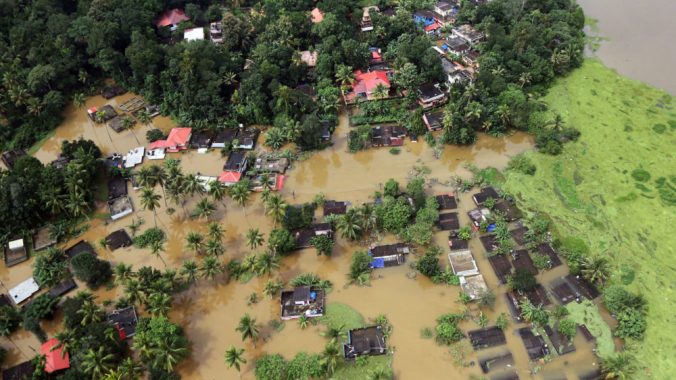
Partially submerged houses in Kerala, India last August. REUTERS / SIVARAM V

Any picture of a houseboat reminds me of our good fortune to live among the people of Kerala’s backwaters from 2010-2017. The photo below is no exception and I thank Fred Pearce, writing for Yale e360, for bringing to my attention the scale of misfortune facing our old neighbors from the most recent flooding. I knew about the disaster, but had not read in any detail until now what this implies for the future. Maybe this fortune could be applied to address those challenges:

In India, Nature’s Power Overwhelms Engineered Wetlands

The picturesque Kerala backwaters in southern India, increasingly popular with tourists, form a network of engineered canals, lagoons, lakes, and rice paddies. But a fatal monsoon deluge has highlighted the global problem of how developed wetlands often lose their capacity to absorb major floods.

GettyImages-1020694038_Kerala-Flooding_web.jpg

Floodwaters inundated much of Kerala’s low-lying coastal plain, including the village of Pandanad, pictured here. MANJUNATH KIRAN / AFP / GETTY IMAGES

In India, they call the state of Kerala in the country’s far south “God’s own country.” That wasn’t how it felt last August, when monsoon floods devastated its densely populated low-lying coastal plain. Around 500 people drowned, in an area best known to outsiders for its placid backwatersa network of brackish lakes, lagoons, and canals where growing numbers of Western tourists cruise the picturesque waterways aboard luxury houseboats.

Pearce_IMG_5233_Houseboat_web (1)

A luxury houseboat moored along Lake Vembanad near the tourist town of Kumarakom in Kerala. FRED PEARCE / YALE E360

Now that the floodwaters have abated, questions are being raised about whether the disaster was made worse by water engineering projects in the backwaters designed to feed the state’s population and attract tourists. Increasingly, Kerala residents are wondering if “God’s own country” is damned as well as dammed.

The floods came out of the Western Ghats. This chain of mountains down the west side of India is one of the country’s wettest places, drenched from June to September in monsoon. In early August, the rains there were exceptionally intense and unremitting. The rivers flowing from the mountains west toward the Arabian Sea dumped their water into the backwaters on a coastal plain that is largely below sea level.

Sixty-mile-long Lake Vembanad, at the heart of the backwaters, rose up and flooded surrounding wetlands and rice paddies, cities, and farming villages. A quarter-million people took refuge in 1,500 relief camps; 6,200 miles of roads and 115 square miles of farmland were damaged. Cochin International Airport was awash. Continue reading

Resist Screaming

Today’s absurd news of a government shutdown in the USA provided me an important indicator that nothing much shocks me anymore. And that seems as dangerous as the shocking things that now fail to shock. In the last week I resolved to take care with words. And I stand by that. But still, watch the video above and see if you can resist the headline’s claim:

Americans Should Be ‘Screaming Mad’ About Amazon’s Free Money

You may have heard by now that Amazon’s new headquarters will soon call the New York and Washington, D.C., metropolitan areas home. Continue reading

Foraged Wild Foods

Thanks to National Public Radio (USA) for this brief story by Maia Stern, which expands our knowledge of foraged wild foods:

The first insect that Pascal Baudar ever tried eating was an ant he found in his kitchen. The verdict? “It tasted like some kind of chemical,” says Baudar.

Most people would have probably given up on the bug-eating experiments right there. But Baudar? He’s made it part of his life’s calling. Continue reading

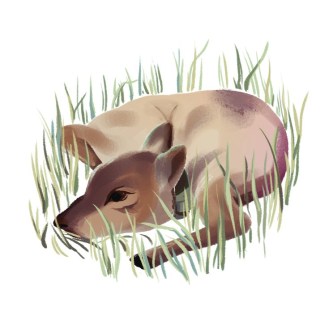
Conservation Innovation, First Nations & Caribou


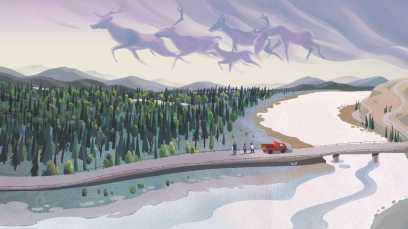
1920b.jpg

Cornelia Li

Thanks to Hilary Rosner for her penetrating longform reporting on these species at the edge of existence, part of the Atlantic’s Life Up Close project (and thanks for the support provided by the HHMI Department of Science Education for such a publication):

Pulling Canada’s Caribou Back From the Brink

First Nations communities are leading the effort to rescue the last remaining caribou herds from extinction.

a88f72d05

Cornelia Li

On a family vacation last summer, driving along the empty highways of northern Idaho near the Canadian border, I saw an unlikely road sign—a relic. Diamond-shaped with a yellow background, the sign featured the familiar black silhouette of a deerlike animal. But unlike those on deer-crossing signs, the animal pictured had large antlers and appeared to be ambling toward the road, not leaping. It took me a moment to realize that it was a caribou.

Seeing a caribou wander onto an Idaho highway is about as likely as watching a UFO land there. The South Selkirk herd—the only remaining caribou herd that roamed the continental United States—has dwindled to just two animals, both female. “Not even Noah could save them,” a Canadian biologist told me. Last spring, scientists declared the herd functionally extinct. Continue reading

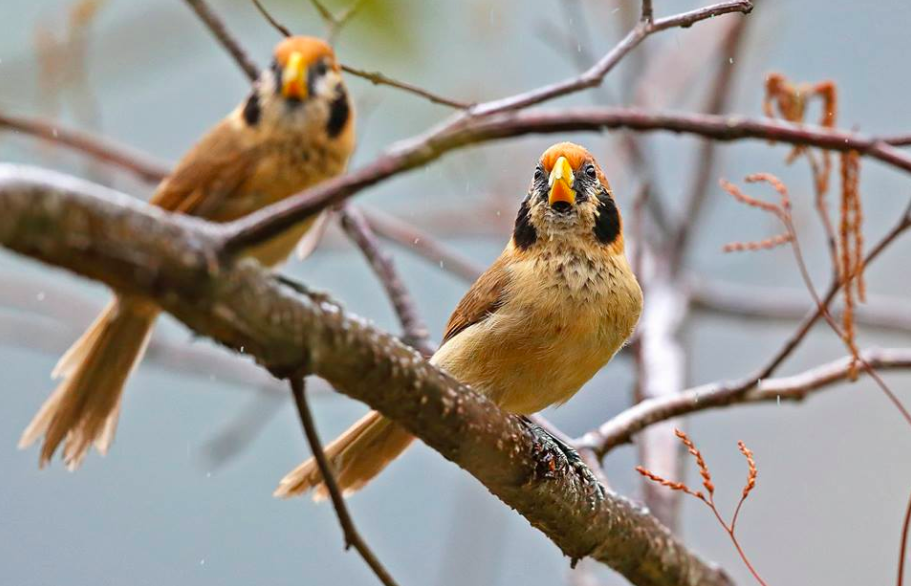
Birds, Beacons Of Good Fortune

1984-83-1

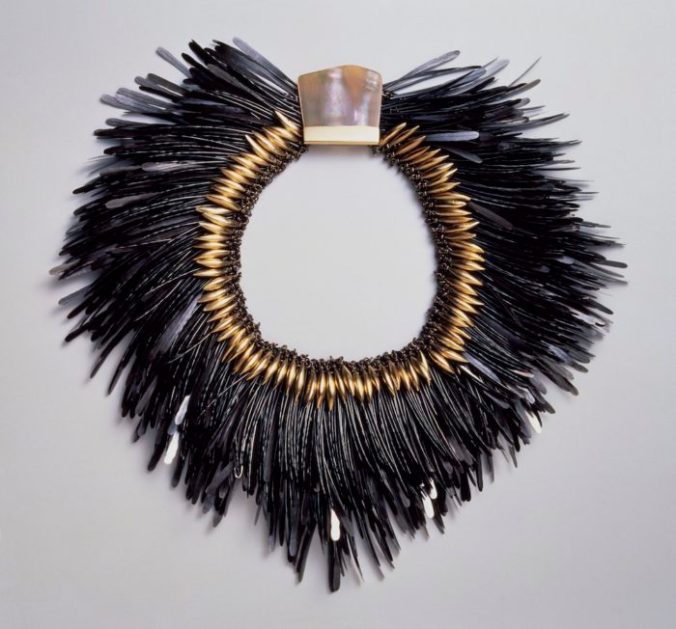
Necklace, designed by Tone Vigeland (Norwegian, born 1938)

HistoirenaturelIILeVa_0032-700x1063

Book, Histoire naturelle des oiseaux de paradis et des rolliers: suivie de celle des toucans et des barbus (Natural History of Birds of Paradise and Rollers: Followed by that of Toucans and Barbets), Volume 2; 1806; Written by François Levaillant (French, 1753–1824); Illustrated by Jacques Barraband (French, 1767–1809); Smithsonian Libraries, QL674.L65 1806

An exhibit at the Cooper Hewitt comes to my attention thanks to Dylan Kerr, whose essay The Mandarin Duck and Avian Art at the Cooper Hewitt makes an interesting link between the choices Rebeca Mendez made as a curator and a recent unusual bird sighting in New York City:

For the past several weeks, New Yorkers have been abuzz over a mysterious visitor. A mandarin duck, an intricately colored waterfowl native to East Asia, has taken up residence alongside the mallards in the Central Park Pond, drawing crowds and inspiring memes, dog costumes, and a Twitter account (bio: “I’m not from around here”). Pundits have argued that the frenzy betrays a desire for good news. But perhaps, the Mexico City-born designer Rebeca Méndez suggested the other day, something deeper is at play. “In our own normal life, we have patterns that we are so used to.

1950-111-10-700x1156

Sidewall; 1905–13; Manufactured by Zuber & Cie (Rixheim, Alsace, France); Block-printed on paper; Gift of James J. Rorimer, 1950-111-10

My immediate reaction is yes. We are bombarded with more negative information more quickly, more constantly than ever in my lifetime. We need relief, and nothing like an exotic bird coming to town to bring it:

When something”—an anatine interloper, say—“comes in and breaks that, it’s incredibly exciting,” she said. “The world suddenly collapses—it’s like a wormhole from far-east Asia to Manhattan.”

Méndez recently curated an exhibition of avian art at the Cooper Hewitt, Smithsonian Design Museum, across the street from the Park. It’s part of the “Selects” series, in which the museum invites a guest to put together a show from objects in its collection. Continue reading

A Blue Carbon Sink In Australia’s Midst

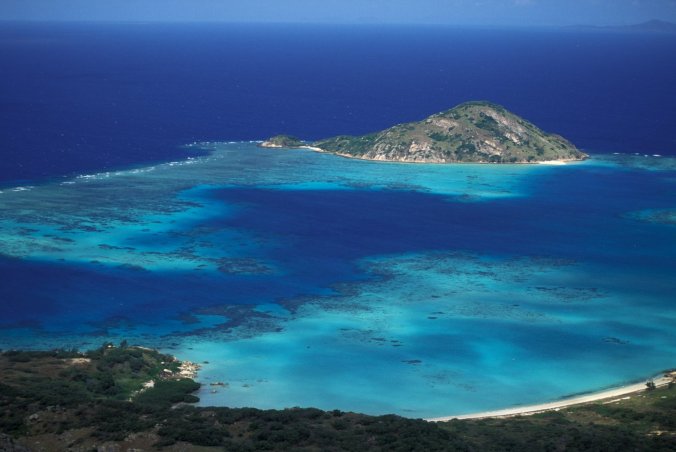
gettyimages-454427891_custom-36d471720410cb6431d89e0c31878279437006c1-s1400-c85

Researchers studied the carbon storage of deep-water seagrasses living at Lizard Island, Australia. Education Images/UIG via Getty Images

Thanks to National Public Radio for this:

Amid a sea of dire climate change news, researchers say they’ve found a rare bright spot.

A meadow of seagrass among Australia’s Great Barrier Reef — estimated to be twice the size of New Jersey — is soaking up and storing carbon that would otherwise contribute to global warming.

Scientists call this carbon-removal powerhouse a “blue carbon sink.” The term refers to an ocean or coastal ecosystem — including seagrasses, salt marshes and mangrove forests — that captures carbon compounds from the atmosphere, effectively removing carbon dioxide, a known greenhouse gas that contributes to climate change. Continue reading

All We Are Saying

1600 (1)

‘Eco-warriors’ and ‘climate hawks’: is it time to ease up on the war metaphors? Photograph: Amelia Bates/Grist

We connected a series of dots that we felt told a story. Get mad. I know I sure have felt mad in the midst of such alarming inaction. Maybe there is a better way to motivate and get something tangible done. Considering the stakes, I am willing to listen to and try just about anything. And in this essay Kate Yoder reminds me that when we launched this platform in 2011 we felt sure that wordsmithing was part of the solution we wanted to highlight. All that we have been saying since then, and how we have been saying it, was meant to be about a better future–so back to the words for inspiration:

To take on climate change, we need to change our vocabulary

When we talk about saving the planet, we employ the narrative of war. Does it only deepen our divisions?

4298

 A study found the language of war was effective in conveying urgency to participants. But does it work for everyone? Photograph: Damian Klamka/Zuma Wire/Rex/Shutterstock

Each dead house fly was worth a quarter, my mom told us kids, but I never earned any money. Every time I cornered a fly, I pictured goo marks left on the wall – spots splayed with tiny black guts and twisted legs. My halfhearted swats gave even the most sluggish fly time to escape.

That I genuinely couldn’t hurt a fly might have been something I picked up in church. I grew up attending a Mennonite congregation in Indiana. We weren’t the bonnet-wearing, buggy-riding sort, but we embraced some traditions, like the Anabaptist teaching of nonviolence. This sometimes expressed itself in an instinct for conflict avoidance.

So I was surprised when violence crept into my speech three years ago when I started working as a journalist covering climate change. Some ancient spirit took hold of me, and I found myself deploying the narrative of war. Carbon tax proposals were “battles” to be fought. Greenhouse gas emissions had to be “slashed”. “Eco-warriors” and “climate hawks” were leading the charge. Continue reading

New Species Discovered, A Swamp Creature Worthy Of Cinematic Stardom

18SCI-SALAMANDER2-jumbo-v2.jpg

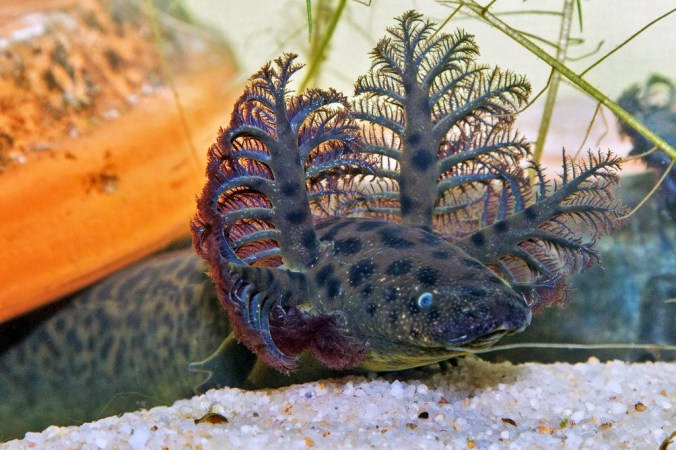
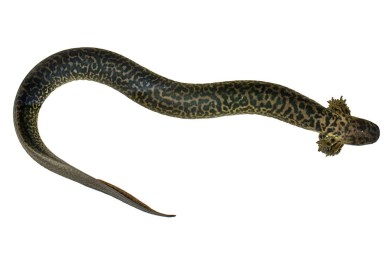
The reticulated siren is so mysterious to researchers that they didn’t even know how they reproduced until 2013. Like fish and unlike other salamanders, they fertilize eggs externally. Credit Pierson Hill

It has been a while since we saw news of a species discovery, and this is no small matter, so thanks to Asher Elbein for this:

A Salamander of Legend Emerges From Southern Swamps

The reticulated siren is the largest vertebrate discovered in the United States in decades.

18SCI-SALAMANDER1-jumbo-v2

The newest named salamander in the animal kingdom: the reticulated siren. Credit David Steen

It’s eel-shaped and leopard-spotted, and it has no hind-limbs. It grows to two feet long. And yet until recently, hardly anyone had ever seen it.

A team of researchers has discovered of new species of salamander in the pine forests of northern Florida and southern Alabama. The so-called reticulated siren is the largest vertebrate found in the United States in decades, and the first new member of its family since 1944.

“It’s a really cool animal,” said David Steen, a conservation biologist at the Georgia Sea Turtle Center and an author of a genetic analysis of the salamander published in PLOS One. The salamander’s distinctive patterning “jumps out immediately,” he said.

Known for their size and bushy gills, sirens are a fixture in Southeastern swamps and watery ditches. Previously, Dr. Steen said, the genus was assumed to contain only two species: the lesser siren and greater siren, which can grow to three feet in length, one of the longest American salamanders. Continue reading

Is Neutrality The Best Option?

lead_720_405A.jpg

A rending of Powerhouse Brattørkaia, an “energy-positive” building that will open to the public next year in Norway SNØHETTA

Thank you Norway, for demonstrating that we can do better than neutrality:

Norway Is Entering a New Era of Climate-Conscious Architecture

The country now has a suite of buildings that generate more energy than they use.

The European Union has a target of making all new buildings zero-energy by 2020, but in Norway, carbon neutrality isn’t enough.

A consortium in Oslo made up of architects, engineers, environmentalists, and designers is creating energy-positive buildings in a country with some of the coldest and darkest winters on Earth. “If you can make it in Norway, you can make it anywhere,” says Peter Bernhard, a consultant with Asplan Viak, one of the Powerhouse alliance members. Continue reading

Climate Change’s Impact On Everyday Life

Lobster

Illustration: Joey Yu/Joey Yu for Guardian US

When more people feel their livelihoods affected by climate change, then we might expect politicians to pay the price for inaction. Josh Wood, writing for the Guardian from Stonington, Maine has this evidence:

‘We live in a lobstocracy’: Maine town is feeling the effects of climate change

When lobsters are life, environmental change affects livelihoods, and warming waters will ultimately bust the lobster industry

3000 (4)The American lobster is a symbol of Maine, central to the state’s ethos and economy.

Its image appears on license plates, restaurant signs and clothing. It is sold alive, with its claws banded shut, on docks, at highway rest stops and supermarkets. Cooked, it is served everywhere from seaside shacks to the finest restaurants.

Lobster attracts tourists, feeds locals and is a lifeblood for coastal towns.

Its importance has even swelled in recent years as lobsters have been caught in record numbers. Lobster landings – or the amount of lobster caught – have risen fivefold in the past three decades. Lobster has become a half-billion-dollar industry in Maine. And the reason for the boom, according to scientists, is climate change. Continue reading