The Only Virtual Reality A Surfer Might Enjoy

181217_r33425.jpg

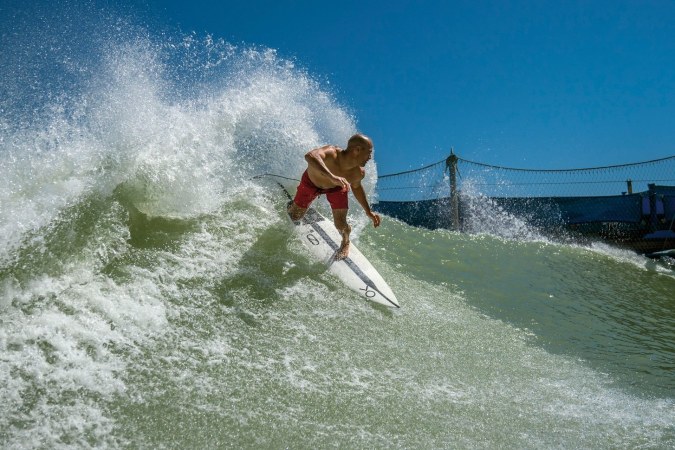
Slater has spent a career searching the world for waves, adapting to tricky conditions with unparalleled intuition. Now his Surf Ranch, in California farm country, can produce a perfect wave on demand. Photograph by Ben Lowy for The New Yorker

I have surfed, but I am not a surfer. I have surfer friends, including some who have travelled the world searching out the waves described in the story below, and family friends of ours have an adult child ranked in the top ten in the world. I do not care about surfing as much as any of them, but because of them I care deeply about surfing. Evidence of that is the fact that surfing is the #1 metaphor I use within my own family to describe the pivots we make from time to time, explaining a move to France, Croatia or India or back to Costa Rica is due to a new wave of opportunity that we might catch. Below is a story I appreciate for other reasons as well, because it is about a man-made replica of the ultimate pleasures of a real-life experience. This is kind of what we do for a living. But it is really about surfing. And even non-surfers can enjoy this. William Finnegan’s story is complemented by two interactive features, the first with the author himself and the second a remarkably clear explanation of the technology.

Kelly Slater’s Shock Wave

The best surfer in history made a machine that creates perfect conditions on demand. Will his invention democratize surfing or despoil it?

The first few hours I spent at the W.S.L. Surf Ranch, a wave pool built for surfing in the farmlands south of Fresno, California, were for me a blur. I was fine on arrival, hiking through a little forest of scaffolding, eucalyptus, and white tents with a publicist from the Kelly Slater Wave Company, which built and runs the place. The valley heat was fierce but dry. House music rode on a light northwest breeze. We passed a bright-red antique row-crop tractor parked on wood chips. Then I looked to my right and felt my mind yaw. The wave was probably six hundred yards away, a sparkling emerald wall, with a tiny surfer snapping rhythmic turns off the top. I had come expecting to see this wave, out here in cotton fields a hundred-plus miles from the coast. Still, my reaction to it was involuntary. Kelly’s Wave, as it’s known, seems designed to make someone who surfs, which I do, feel this way: stunned, turned on, needy. Surfers spend much of their lives looking for high-quality waves. Now a machine has been invented that churns out virtually flawless ones on command. “We call it the smile machine,” someone, possibly the publicist, said. I had trouble paying attention. Every four minutes, I had to turn and crane to watch a wave make its way the length of the pool. Continue reading
Impact, Photography, Understanding

main_600m.jpg

Grand-Prize Winner: Thousands of Volkswagen and Audi cars sit idle in the middle of California’s Mojave Desert. Models manufactured from 2009 to 2015 were designed to cheat emissions tests mandated by the U.S. Environmental Protection Agency. Following the scandal, Volkswagen recalled millions of cars. By capturing scenes like this one, I hope we will all become more conscious of and more caring toward our beautiful planet. # © Jassen Todorov / National Geographic Photo Contest

I never tire of reminders of how greed is never good. It is unbecoming. But visual reminders of this are especially welcome. When the story broke about this audacious scam that showed how profit can motivate evil, it gave me pause, if momentarily, because our entrepreneurial conservation business model is premised on the possibility that profit can motivate good outcomes. Thanks to Alan Taylor for reminding us it is awards season for photography that impacts our understanding of the world, and especially for the link to this photo that tells one outcome of the VW scandal with such impact:

Winners of the 2018 National Geographic Nature Photographer of the Year Contest

National Geographic magazine has announced the winning entries in its annual photo competition. The grand-prize winner this year is Jassen Todorov, who will take home a $5,000 prize for his aerial image of thousands of recalled Volkswagen and Audi cars in the Mojave Desert. The contest organizers have shared with us the top winners and honorable mentions below, selected from a pool of  nearly 10,000 entries. Captions are written by the individual photographers and lightly edited for content.

At first, this runner up photo looks too composed to my eye, but the more I look at it the urge to weep gets stronger. Kind of like when I gaze long enough at this photo, the urge to stay still and observe grips me. Or when I look at this photo, I can explain the best of life in India. Same for any of Milo’s series. Photographic impact.

main_600 (6)

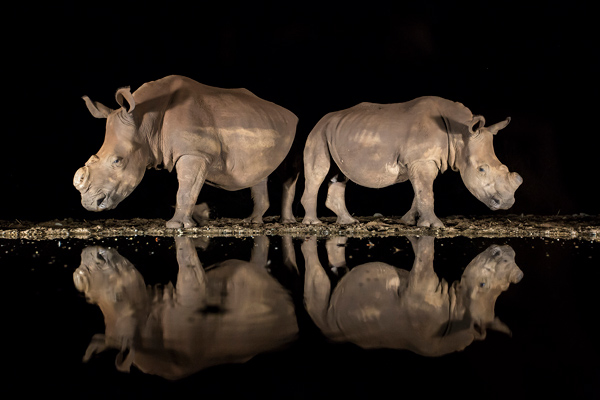
3rd Place, Wildlife: As the late-night hours ticked by and my eyelids grew heavy, two southern white rhinoceroses appeared silently from the shadows to drink from a watering hole in South Africa’s Zimanga Game Reserve. On alert, they stood back-to-back, observing their surroundings before lowering their heads. I felt privileged to share this moment with these endangered animals. While I was well prepared technically, with my camera set correctly on a tripod, I underestimated the emotional impact the magnificent beasts would have on me. I had photographed them months earlier, and now both rhinos sported a new look: They had been dehorned to deter poachers. I had heard about this development but had not yet seen them. I was full of emotion—and horror—that poaching had such a devastating effect. It must have been a hard decision to dehorn their rhinos, and I am grateful for the reserve’s efforts. # © Alison Langevad / National Geographic Photo Contest

Read the whole story here.


The Upped Ante Of Vegan

181217_r33421.jpg

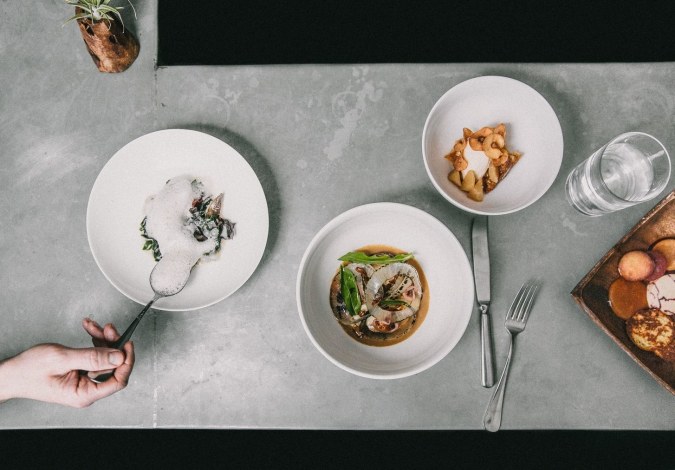
At Sans, the former Eleven Madison Park sous-chef Champ Jones gives vegan food the fine-dining treatment, offering a five-course tasting menu with optional beverage pairing, in addition to an à la carte selection.Photograph by Haruka Sakaguchi for The New Yorker

In her review titled An Eleven Madison Park Alum Does Vegan Fine Dining at Sans Hannah Goldfield asks in the header Would an omnivore give up meat if she could still have foie gras?  and then at the end of the first paragraph shows the image to the left below. This question rings out to me because from the days when I worked for a chef known for his preparation of this delicacy, I have thought it the ultimate test of whether I could swear off animal protein permanently.

181217_r33443.jpg

A beautifully marbled disk of black-plum terrine—made with plum jam and fair-trade palm oil and served with slices of fresh and pickled plum and neat rounds of toast—is as silky as foie gras. Photograph by Haruka Sakaguchi for The New Yorker

Long gone are the days when vegan restaurants in New York were limited to places like Candle 79, a sort of bistro on the Upper East Side trading in unapologetically hippie-ish fare like black-bean burgers, seitan piccata, and spaghetti and wheat balls. We have vegan diners now, serving comfort food like vegan tatertachos and Nashville Hot Chik’n sandwiches, vegan fast-casual chains and bakeries, vegan omakase counters, and vegan dim-sum parlors. We have big-name chefs—Jean-Georges Vongerichten, John Fraser, and Brooks Headley among them—operating buzzy vegetarian restaurants (abcV, Nix, and Superiority Burger, respectively), where it’s easy to eat vegan. We even have vegan foie gras.

This review continues a trend of raising the stakes for going vegetarian, including gauzy photos that project status with simplicity.

181217_r33421.jpg

At Sans, the former Eleven Madison Park sous-chef Champ Jones gives vegan food the fine-dining treatment, offering a five-course tasting menu with optional beverage pairing, in addition to an à la carte selection. Photograph by Haruka Sakaguchi for The New Yorker

I am all for that. Bring on the images that make vegetables and greens and other non-animal edibles look as tempting as their meaty counterparts:

181217_r33444

Grilled onion in a pool of smoked-onion purée, garnished with fried shallot and dandelion leaves. Photograph by Haruka Sakaguchi for The New Yorker

 Does a vegan want to eat foie gras? And would an omnivore give up animal products if it meant she didn’t have to give up things like foie gras? The latter question, in particular, seems to be what Champ Jones, a former Eleven Madison Park sous-chef and an omnivore himself, is exploring with Sans, which opened in September and is described on its Web site as a “dynamic one-year project where non-vegans do vegan food.” Much of vegan food culture centers on substitution, on manipulating plant-based ingredients to approximate meat, milk, eggs, and cheese, a challenge that Jones seems to be facing with particular ambition.

181217_r33445.jpg

From left to right: Maine seaweed with “frothy ocean broth” and tapioca pearls; the onion; parsnip cake with pear and cashew-milk sherbet; and the black-plum terrine.Photograph by Haruka Sakaguchi for The New Yorker

In fact, if you didn’t know going in, it wouldn’t necessarily be apparent that Sans is a vegan restaurant. Continue reading

Enough Is Not Enough

181217_r33437web.jpg

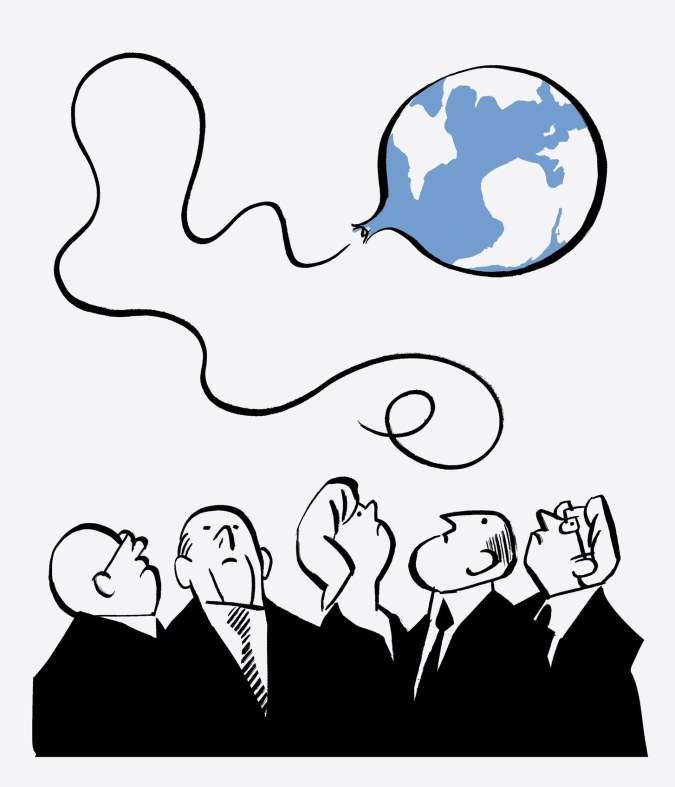
Illustration by João Fazenda

Tired as we may be of reading about, talking about, posting about it, enough is not enough on this topic, so here goes (thanks as always to Elizabeth Kolbert):

Coal for Christmas at the U.N. Climate Conference

As negotiators from around the world gathered in Poland to discuss how to lower carbon emissions, the Trump Administration unveiled two schemes promoting fossil fuels.

Last week, representatives from around the world gathered to begin another round of climate negotiations in Katowice, a city in the heart of Poland’s coal-mining country. Delegates arriving at the meeting, known in United Nations-speak as a Conference of the Parties, or cop, were treated to an outdoor performance by a Polish coal miners’ band. Inside the convention pavilions, they found mounds of coal displayed behind glass, like objets d’art, as well as arrangements of coal-based cosmetics and coal-encrusted jewelry. Poland gets about eighty per cent of its electricity from coal, the most carbon-intensive of carbon-based fuels, and the Polish President, Andrzej Duda, noted in his opening remarks that the country had enough as yet unmined supplies to last another two centuries. “It would be hard not to use them,” he said.

Depending on how you look at things, a coal-stuffed climate summit is either completely absurd—“beyond parody,” as one commentator put it—or merely appropriate. With each passing month, the threat posed by global warming grows clearer. And so, too, does the world’s failure to take that threat seriously. “We are in trouble,” the United Nations’ Secretary-General, António Guterres, said at the cop’s opening session. “It is hard to comprehend why we are collectively still moving too slowly—and even in the wrong direction.” Continue reading

Liberalism, Leadership, & The Fourth Estate

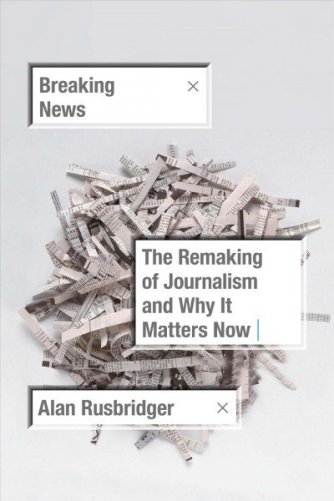
9780374279622_custom-5d7f03d8b126fd10509c68fad812ee37387aae6b-s600-c85When we started this platform in 2011 our primary interest in the Guardian was its excellent environmental reporting, and at least one opinion writer whose 2012 environmental views made him regularly welcome in our pages ever since. Today I can amplify how important this newspaper is based on an interview I just listened to with its former longtime editor, the author of this book to the right.

He mentions several points that I have been prone to believe over the last two decades, particularly about the poisoning of the well of public discourse by Rupert Murdoch’s approach to the business of media.

In the classic sense of liberal perspective that should make me think twice, so as not to lean into my own biases. He also helps me to understand the quite unique value of the Guardian, which I was also already prone to believe. Their endowment and general funding model, which I had only vaguely known about, is well explained in this interview and frankly, difficult as it is to be these days, inspiring. Careful as I may be about confirmation bias, I pass this suggestion along; listen to the interview here (just over half an hour), or read the summary below:

gettyimages-453300937_wide-6c2265f11615cc079ab72d2d1e0808c72ab720f4-s1200-c85

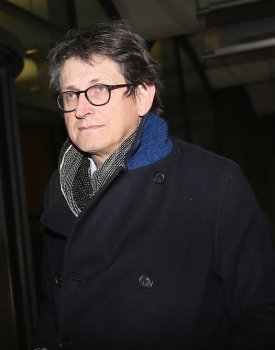
On Dec. 3, 2013, Guardian editor Alan Rusbridger faced questions from the British Parliament about his newspaper’s decision to publish material leaked by former NSA contractor Edward Snowden.
Oli Scarff/Getty Images

Alan Rusbridger knows a thing or two about high-stakes journalism.

During his 20-year tenure running the British newspaper The Guardian, he collaborated with NSA contractor Edward Snowden and WikiLeaks founder Julian Assange on blockbuster stories drawn from secret government documents. Though Rusbridger left The Guardian in 2015, he remembers the stress vividly.

“We were publishing every minute of the day around the world,” he says. “It’s a matter of deadlines and never enough information and people trying to sue you and generally harass you.” Continue reading

Graphics For Better Comprehension

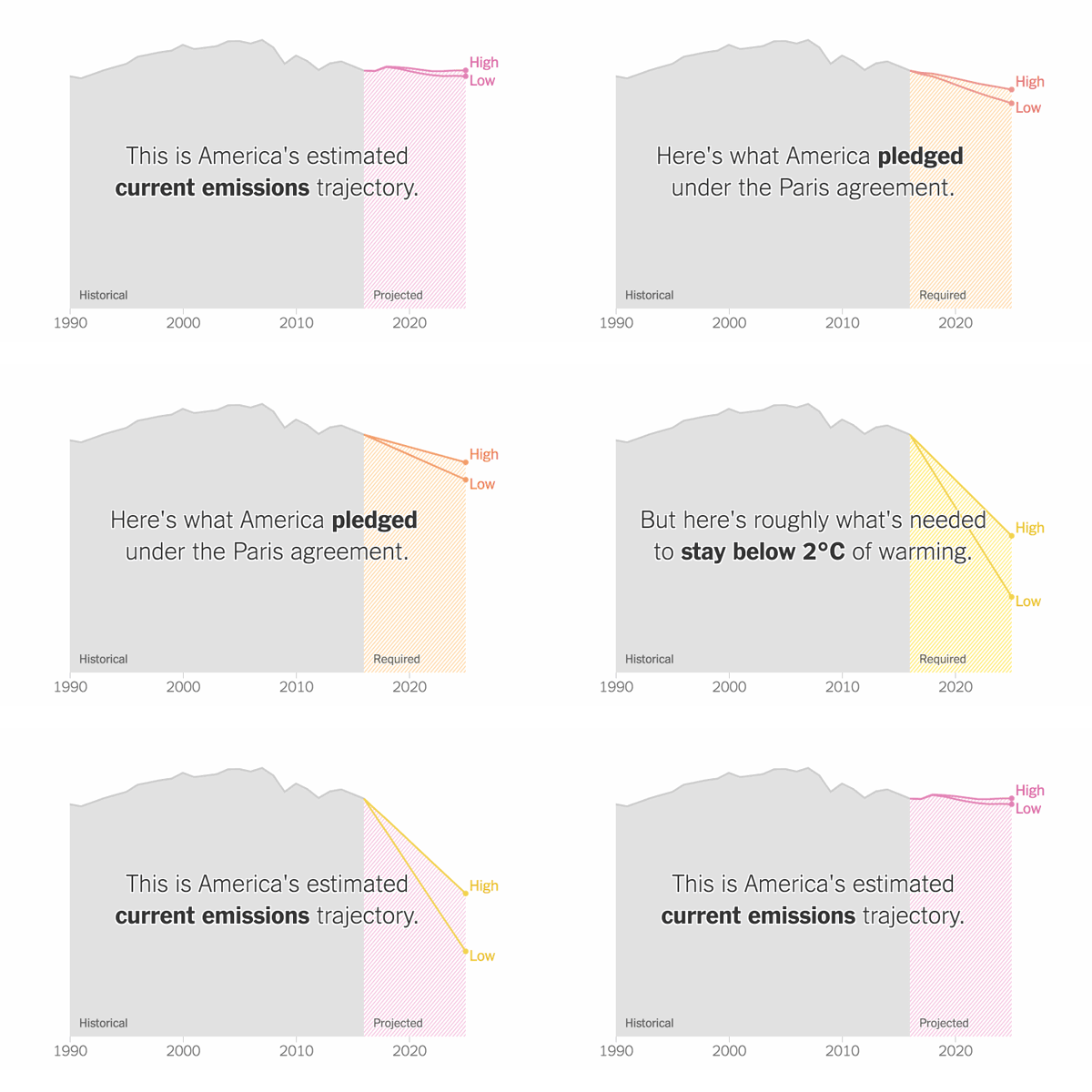
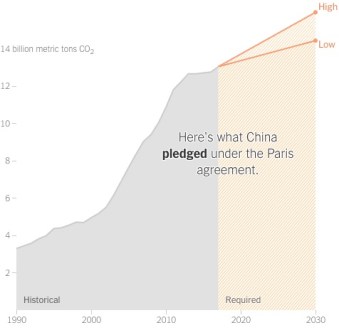
world-emissions-paris-goals-not-on-track-promo-1544191333747-threeByTwoSmallAt2X-v18.gif

Yesterday I was struck by a set of graphics that helped me see an old story in a new light. That was not a particularly important old story, as history of the planet goes; but it gave the manufacturing consent theme a new shine–in technicolor, black and white, and finer shades of gray. Today, on a story that is definitely of historic proportions related to the planet, my thanks again to Brad Plumer and his occasional writing partner Nadja Popovich, especially for its accompanying graphics:

Graphics For A Better World

09meanwhile-image1-superJumbo.jpg

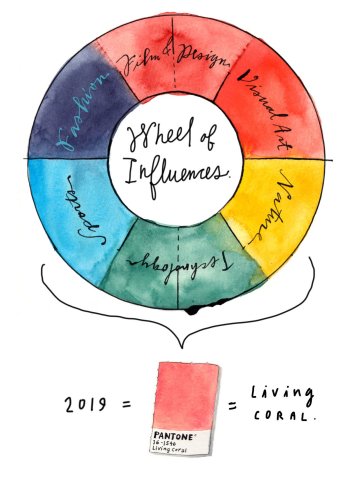
09meanwhile-image7-superJumbo.jpgClick the image above or to the left to go to the graphic narrative published in the New York Times by Wendy McNaughton, whose website is a treasure chest of visual wit and explanatory power.

I have heard of Pantone before, and probably even their Color of the Year tradition. But until seeing this I never cared enough to understand the meaning behind it.

Now I care. I will not explain why, instead suggesting you take three minutes to see how you respond.

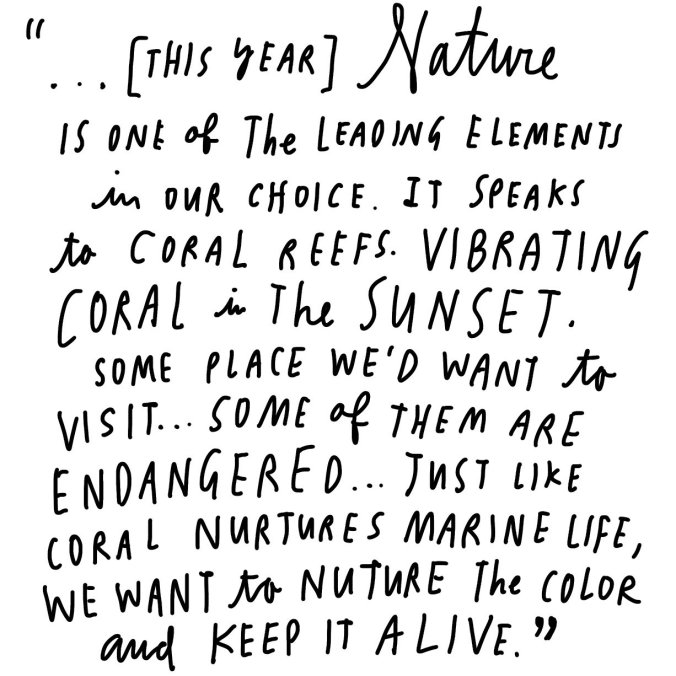
Or maybe I will just hint that for me it has something to do with this panel, not just the words but how they appear on the page, and the communication of how corporate communications can sometimes be tone deaf if not color blind:

09meanwhile-image8-superJumbo.jpg

Naughty Behavior Will Not Be Tolerated

Thanks to the Guardian for the latest story in this series. We have avoided adding our voice to the many rightly concerned about the radically pro-extraction, carbon-freewheeling policies of the United States since early 2017. The concern is loud and widespread. We have listened. Today, reading this story, I pictured a naughty boy, a bully, getting away with bad behavior for an extended period. Any period of bad boy behavior is intolerable but it happens. Until it is no longer tolerated. Which eventually always happens. And that may be the best stand-in for optimism these days:

Lost lands? The American wilderness at risk in the Trump era

Exclusive: a new study reveals the vast extent of public lands being opened up to the energy industry. The Guardian heard from three communities on the frontlines

by Charlotte Simmonds, Gloria Dickie and Jen Byers

3872 (2).jpg

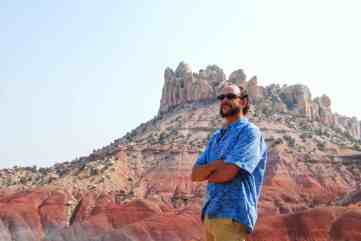
Colter Hoyt, an outdoors guide and conservationist, at Grand Staircase-Escalante. Photograph: Charlotte Simmonds for the Guardian

In the great expanses of the Grand Staircase-Escalante national monument, the silence hits you first. Minutes pass, smooth and unbroken as glass. The smallest sound – a breath of wind, a falling rock – can seem as loud as passing traffic.

Colter Hoyt knows this landscape well. As an outdoor guide, he walks the monument almost daily. Yet these days he is full of fear. This remote paradise of red rocks, slot canyons and towering plateaus faces an uncertain future, following a controversial presidential proclamation that removed 800,000 acres from the monument and opened land up for potential energy development.

When Trump took office in 2016, he promised the energy industry a new era of “American energy dominance”. This would only be possible by exploiting America’s 640m acres of public land: mountains, deserts, forests and sites of Native American history that cover more than a quarter of the country. Continue reading

Part Of The Solution

06CLI-AGRICULTURE1-jumbo.jpg

Harvesting soybeans in Mato Grosso, Brazil. Credit Yasuyoshi Chiba/Agence France-Presse — Getty Images

Thanks to Brad Plumer, whose reporting on environmental issues has been illuminating, for this fifth feature in our links out to stories that help us understand what we might do to be part of the solution:

Can We Grow More Food on Less Land? We’ll Have To, a New Study Finds

06CLI-AGRICULTURE2-jumbo

A farm in the Pays de la Loire region of France. Cows have an especially large environmental footprint. Credit Loic Venance/Agence France-Presse — Getty Images

WASHINGTON — If the world hopes to make meaningful progress on climate change, it won’t be enough for cars and factories to get cleaner. Our cows and wheat fields will have to become radically more efficient, too.

That’s the basic conclusion of a sweeping new study issued Wednesday by the World Resources Institute, an environmental group. The report warns that the world’s agricultural system will need drastic changes in the next few decades in order to feed billions more people without triggering a climate catastrophe.

The challenge is daunting: Agriculture already occupies roughly 40 percent of the world’s land and is responsible for about a quarter of humanity’s greenhouse gas emissions. But with the global population expected to grow from 7.2 billion people today to nearly 10 billion by 2050, and with many millions of people eating more meat as incomes rise, that environmental impact is on pace to expand dramatically. Continue reading

Spare, Share, Protect

CoffeePlantation_Indonesia_CIFOR_web.jpg

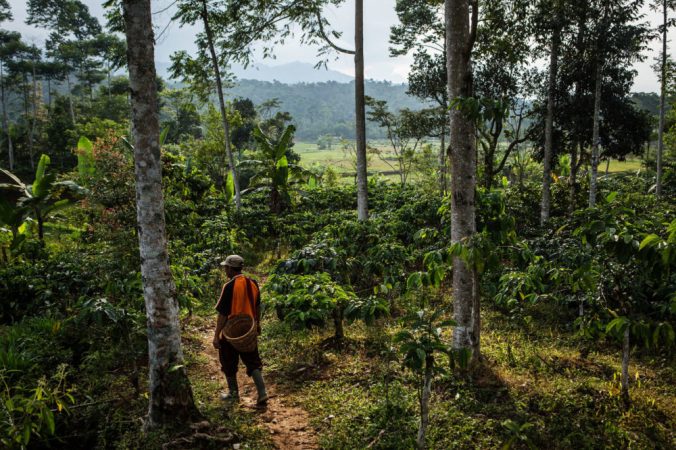
A farmer walks through his coffee plantation, which is integrated into the forest, in Lampung province, Indonesia. ULET IFANSASTI/CIFOR

Our work has required occasional philosophical reflection to get our bearings on the choices we have made on how to approach conservation. Share approaches such as the duck farming mentioned here, or the coffee farming mentioned here are equally as common as the spare approaches in our practice. I had not encountered these two terms until now, so thanks to Fred Pearce for this expansion of my vocabulary:

Sparing vs Sharing: The Great Debate Over How to Protect Nature

What is the best way to save nature – to cordon off areas for parks and open space or to integrate conservation measures on working lands? Recent research makes a case for each of these approaches and has reignited a long-standing debate among scientists and conservationists.

Vietnam_agriculture_CIFOR_web.jpg

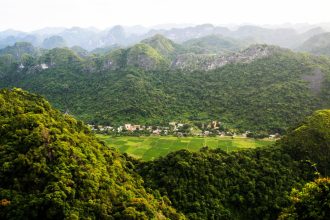
A farming village surrounded by undeveloped forests in the province of Quang Ninh, Vietnam. TERRY SUNDERLAND/CIFOR

It is one of the biggest questions in conservation: Should we be sharing our landscapes with nature by reviving small woodlands and adopting small-scale eco-friendly farming? Or should we instead be sparing large tracts of land for nature’s exclusive use – by creating more national parks and industrializing agriculture on existing farmland?

Wildebeest_Migration_in_Serengeti_National_Park_Tanzania_web.jpg

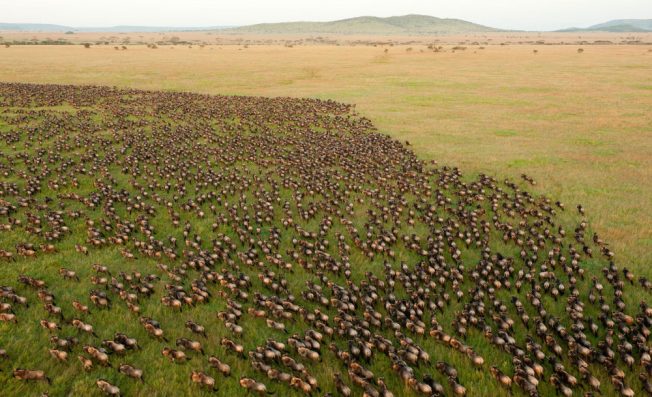
More than 1.5 million wildebeest migrate annually across Tanzania’s Serengeti National Park, which covers 5,700 square miles. DANIEL ROSENGREN / WIKIMEDIA

The argument between “sparing” and “sharing” as a conservation tool has been raging since researchers first coined the terms more than a decade ago. Arguably it began almost half a century before when Norman Borlaug, the father of the Green Revolution of high-yielding crop varieties, declared that “by producing more food per unit of cultivated area, more land would be available for other uses, including recreation and wildlife.”

LRivera_SparingSharing-print_web.jpg

LUISA RIVERA FOR YALE E360

E.O. Wilson’s 2016 book Half-Earth upped the ante by calling for us to extend protected areas from the current 15 percent of the earth’s land surface to 50 percent. Research studies and critiques have flourished on both sides. Continue reading