
Mandala, Arunachal Pradesh
Mandala, Arunachal Pradesh

‘Whatever’s in the fridge’: a traditional cottage pie. Photograph: neiljlangan/Getty Images/iStockphoto
This time of year, harvests finishing in many places, abundance is about to give way to the longer lean season. Maybe that is the perfect time to start thinking about stretching the ingredients at hand:
How to avoid food waste: top chefs on their grandparents’ favourite dishes – and what they taught them
Angela Hartnett, Fergus Henderson, Raymond Blanc and many others describe the frugal simplicity – and delicious flavours – that inspire their cooking today
Summer pudding with ‘beautiful glossy purple juice’. Photograph: Katherine Anne Rose for the Observer
It is all too easy to romanticise the past, particularly with food. In Britain, rationing created a postwar generation that was very well-nourished, but also utterly bored by the meals it ate … or endured. Similarly, for all the criticism levelled at processed foods (“Don’t eat anything your great-grandmother wouldn’t recognise as food,” as the writer Michael Pollan famously advised), food has never been cheaper, nor easier to access and prepare. In 1957, as a proportion of their weekly income, UK households spent roughly double what they now spend on food – 33% of their money. There is a kind of liberation in the Pot Noodle.
Yet among many chefs and campaigning food writers, the sense persists that on a number of issues – particularly food waste, but also obesity, nutrition, cost, pleasure even – there is much to admire in how our grandparents ate. In an era of limited choice and tight budgets, they made a virtue of the necessity to cook with whatever fresh ingredients were available. “My grandparents didn’t cook ‘sustainably’, but they did cook every day, one of life’s best skills, and they didn’t throw leftovers away. To that extent, they were thrifty,” says Tom Hunt, the self-styled eco-chef and Guardian columnist.
To examine that idea, we asked a number of top chefs to choose a meal that encapsulates how their grandparents cooked and to explain how, in its frugal simplicity, it still influences them. Call it going back to the future. Continue reading
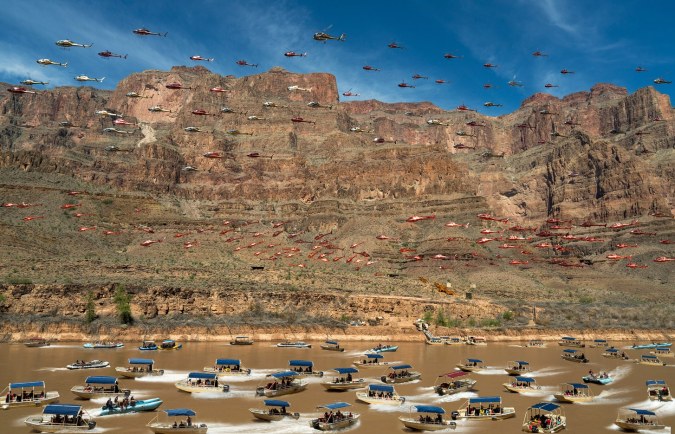
In a merged image, the photographer Peter McBride captured a vision of the Grand Canyon choked by noise and exhaust. Photograph by Pete McBride
Noise pollution was the topic of several of the first posts on this platform when we started it in 2011, and has been a persistent theme ever since then. We especially appreciate those related to noise in wilderness areas, so thanks to Nick Paumgarten for this story:
The Grand Canyon Needs to Be Saved By Every Generation
Hiking in the Grand Canyon can be a perilous pursuit. Photograph by Pete McBride
Three years ago, in the course of thirteen months, the photographer Peter McBride and the writer Kevin Fedarko hiked from one end of the Grand Canyon to the other. They did it in eight sections, mainly so that McBride could shoot in different seasons. In all, it took them seventy-one days to cover two hundred and seventy-seven river miles and some eight hundred shoe-leather miles, through some of the continent’s roughest hiking terrain—“a whole lot of scratching around the rock puzzles in that giant abyss,” as McBride put it recently.
Before they set off, the Grand Canyon had been hiked nose to tail only nine times in recorded history. There is also a handful of obsessives who have chipped away at it, piece by piece, in the course of decades. “Maybe some crazy ancestral Puebloan did the whole thing, but that wouldn’t make logical sense—they wouldn’t have had any reason to,” McBride said.
panoramic view of the confluence of the Colorado and the Little Colorado. Photograph by Pete McBride
McBride, a native Coloradan who shoots for National Geographic, has been documenting the Colorado River for a decade, sometimes from a perch in an ultralight aircraft. Fedarko, who lives in Flagstaff, Arizona, has guided on the river and is the author of “The Emerald Mile,” an account (with many historical tributaries) of a harrowing speed run of the Grand in a dory during the biggest flood in generations. (As it happens, Kenton Grua, the boatman in the book, was also the first person to walk the canyon, in 1976.) McBride and Fedarko have both become persistent, ardent advocates for preserving the place, in all its spellbinding, inhospitable glory, in abidance with Teddy Roosevelt’s famous dictum, issued during his one visit, in 1903: “Leave it as it is. Man cannot improve on it; not a bit.” Still, this was the first time, and surely the last, that either of them had tried to walk it. Continue reading
Sanjay Van Forest, Delhi
Eric Nyquist
Two years of working in southern Chile taught me just enough about the complexity of this particular issue (among the many complex issues in our practice)to appreciate the article below by Emma Marris, who we already knew to be provocative, enough that she could challenge Bill McKibben two minutes into her TED talk, and does so convincingly. The primary reason I appreciate this article, is the same reason this platform has showcased the best of this genre of writers over the years. Scientists, translated into regular language we non-scientists can understand:
When Conservationists Kill Lots (and Lots) of Animals
Invasive species are sometimes trapped, poisoned, and shot in large numbers to save native species from extinction. Some scientists say the bloodshed isn’t worth it.
Eric Nyquist
The desert of south-central Australia is crenellated with sandstone hills in shades of ivory, crimson, and apricot. The ground is littered with dead trees and tree limbs, big hunks of transparent mica, dried cow dung, and thousands of stone spearheads and blades made by the Aboriginal people who lived here for tens of thousands of years—and live here still. Around the few water holes are the doglike tracks of dingoes, wild canines that were brought to Australia thousands of years ago and are now the country’s top predators.
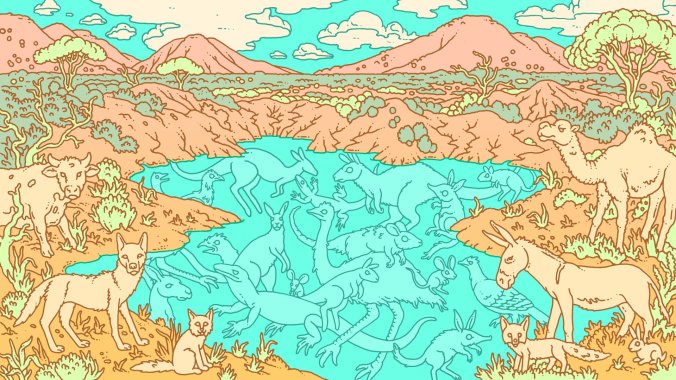
I have come to the Evelyn Downs ranch, on the famously remote highway between Adelaide and Alice Springs, to meet Arian Wallach, a conservationist who thinks there is too much killing in conservation. Wallach has come to this massive 888-square-mile ranch because it is one of the few places in Australia where people aren’t actively killing wild animals. Tough, outback Herefords share the landscape with kangaroos, wild horses, wild donkeys, camels, emus, cats, foxes, native rodents, dingoes, and very large antediluvian-looking reptiles called perenties. Of the animals on this list, dingoes, cats, foxes, horses, camels, and donkeys are all killed in large numbers throughout Australia—but not here. Wallach has convinced the owners to experiment with a more hands-off approach. Continue reading
Mysore, Karnataka
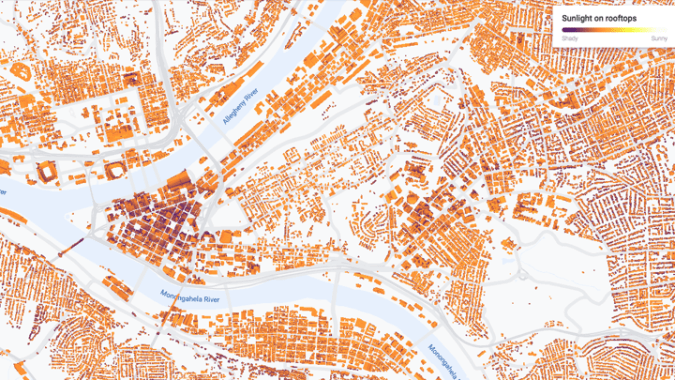
What gets measured gets managed. In the realm of climate science, national governments have the scale and responsibility to be involved in measurement. But if a skeptic is in charge of the government apparatus, good luck with that. With the national government of one of the big carbon footprint countries abandoning science and dropping out of the fight to reduce climate change, one of that country’s biggest companies is stepping up to offer an alternative. It may be too little too late but under the circumstances we may have no choice but to cheer it on:
Google’s New Tool to Fight Climate Change
The company will begin estimating local carbon pollution from cities around the world.
In the next decade or so, more than 6,000 cities, states, and provinces around the world will try to do something that has eluded humanity for 25 years: reduce their emissions of greenhouse gases, which warm the atmosphere and cause climate change.
The city-level leaders overseeing this task won’t have the same tools available to their national peers. Most of them won’t have an Environmental Protection Agency (or its equivalent), a meteorological bureau, a team of military engineers, or nasa. So where will they start? Never mind how to reduce their city’s greenhouse-gas emissions; how will they know what’s spewing carbon dioxide in the first place?
Maybe Google will do it for them. Or, at least, do it with them.
Google has started estimating greenhouse-gas emissions for individual cities, part of what it recently described as an ambitious new plan to deploy its hoard of geographic information on the side of climate-concerned local leaders. Continue reading
Crooked Tree, Belize

Utah used to be home to the largest national monument in the continental United States. Now the owners of Hell’s Backbone Grill are fighting to restore it. Photograph by Jim Mangan for The New Yorker
We wrote once prior, a couple months ago, on this book but we see reason to post a bit more on it here. Here is a New Yorker profile-length detailed description of the story briefly mentioned in the prior post. Thanks to Kathryn Schulz for keeping our eyes on the prize that these two chefs have decided to fight for:
Why Two Chefs in Small-Town Utah Are Battling President Trump
The owners of an improbably successful restaurant at the gate of a vast wilderness are fighting to keep it unspoiled.
Blake Spalding with two of her seven goats. Photograph by Jim Mangan for The New Yorker
In south-central Utah, where the topography is spectacular, desolate, and extreme, the pessimistic tradition in place-names runs strong. Head south from Poverty Flat and you’ll end up in Death Hollow. Head east from Dead Mare Wash and you’ll end up on Deadman Ridge, looking out toward Last Chance Creek and down into Carcass Canyon. During the Great Depression, when the whole state turned into a kind of Poverty Flat, the Civilian Conservation Corps sent a group of men to the region to carve a byway out of a virtually impassable landscape of cliffs and chasms. The men nicknamed the project Poison Road: so steep that a single drop would kill them. Midway up, the ridge they were following gaped open and plunged fifteen hundred feet to the canyon floor. They laid a span across it, and called it Hell’s Backbone Bridge.
Today, the entire route built by those men is known as Hell’s Backbone Road. Still largely unpaved, still treacherous in bad weather, it connects the town of Escalante to the tiny hamlet of Boulder, long reputed to be one of the most remote settlements in the continental United States. As late as 1940, the mail there was delivered via an eight-hour trek by mule team; the first lights did not flicker on until Christmas Eve, 1947. Until the nineteen-seventies, locals had to spend up to forty-eight hours in transit to obtain any number of essential goods and services: a new pair of socks, medical care, anything beyond an eighth-grade education. Continue reading
Boston Gardens, Massachusetts, USA
Derek Thomson and his Crazy Genius crew over at the Atlantic’s podcast division have hit on a winning formula, at least for me. They take a big issue question we hear about and think about frequently, like the question of what to do about meat consumption–as in what to do about the extremely obvious problem of meat consumption levels–and they apply some creative pod knowhow. One of the best motivators for going meatless, or at least eating less meat, that I have come upon in ages.
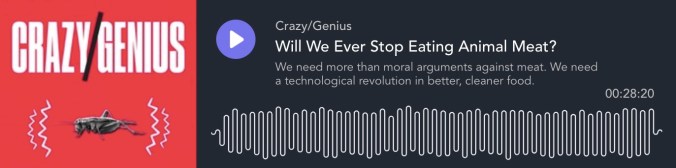
Will We Ever Stop Eating Animal Meat?
Americans eat more meat now than ever. That’s a problem for the planet’s future. Animal farming takes up 30 percent of the earth’s landmass (the equivalent of Asia), and livestock causes one-sixth of global greenhouse gas emissions. We need more than moral arguments against meat. We need a technological revolution in better, cleaner food.
If you do not have half an our for the podcast, take five minutes to read the summary here:
There are two big truths about eating meat from animals.
First, animal flesh imposes a high moral and ecological price for a tender medallion of food. Factory farming incurs the torturous treatment of millions of chickens, cows, and pigs each year. This constitutes a rolling moral catastrophe. What’s more, one-sixth of the world’s greenhouse gas emissions are directly attributable to raising livestock, and the figure is rising as more countries enter the global middle class. For most Americans, cutting meat out of their diets would reduce global warming more than giving up driving. Continue reading

Jekyll Island, Georgia, USA

Some of the world’s oldest structures have survived for 5,000 years in the Orkney Islands. Kitchens. Forges. Round houses. Now they face dire threats from climate change.
Collateral damage to cultural heritage may seem less pressing than the future human lives at risk, but it is worth taking note of and adding it to the ledgers:
Saving Scotland’s Heritage From the Rising Seas
Jim Dwyer, a New York Times reporter, and Josh Haner, a Times photographer, traveled to a Scottish archipelago in the North Atlantic to see how people are trying to save thousands of ancient structures.
Skara Brae.
Off the north coast of Scotland, Orkney’s soft green landscapes hold a trove of things from everyday life before history was written.
More than 3,000 archaeological sites — among them standing stone circles, Norse halls and a Neolithic tomb graffitied by Vikings — have endured for millenniums, scattered across the roughly 70 islands that make up the Orkney archipelago.
By Sarah Almukhtar | Source: Historic Environment Scotland Canmore. Note: Archaeological sites date from prehistoric times through the 20th century.
At Skara Brae, one of Europe’s best-preserved Stone Age villages, kitchens built around 3180 B.C. are fitted with hearths and cupboards, bedsteads and doors that could be bolted shut.
Today, in forays to remote spits of land, people are working to save some of these places for posterity from the climate changes accelerated by human activity.
About half of Orkney’s 3,000 sites, many built before Stonehenge or the pyramids, are under threat from those changes, according to the county archeologist. Some are already being washed away.
Tresness, a Neolithic chambered tomb on Sanday Island.
Since 1970, Orkney beaches have eroded twice as fast as in the previous century. Others that had been stable are now shrinking. Rains, falling heavier and more often, are dissolving the crusts of soil and sand packs that protect remnants of civilizations.
These threats, now familiar at world heritage sites around the globe, are being answered in Scotland by archaeologists, citizen-scientists, students, government agencies and academics. Continue reading

Leimhakong, Manipur
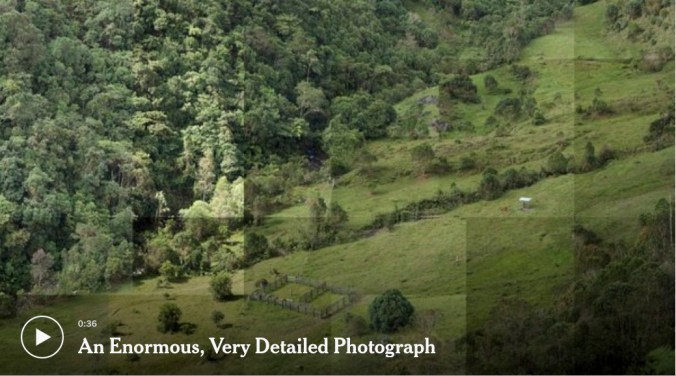
GigaPan technology, developed for NASA’s Mars mission, combines dozens of digital images to create high resolution panoramas.Credit Image by Stuart Pimm
 Thanks to Kathryn McManus for bringing SavingSpecies to our attention through this excellent review of their work based on the experience that she and her daughter had with its founder, Dr. Pimm:
Saving Hummingbirds Is One Small Step in Saving the Planet
High in the Andes Mountains in Colombia, a reforestation project led by SavingSpecies works to protect one of the world’s most renowned bio hot spots.
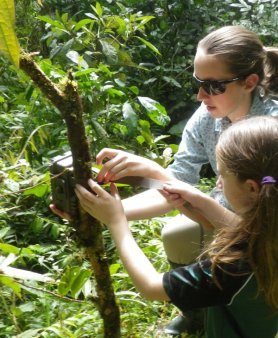
WESTERN ANDES CLOUD FOREST, Colombia — Just before sunrise on a crisp summer morning high in a rain forest in Colombia’s Western Andes, the renowned ecologist Stuart Pimm gathered his research team over breakfast and made final plans for that morning’s journey to install motion-sensor cameras to monitor hummingbirds.
In just a few hours, the installations would be done by Andrea Kolarova, 20, who was here with other students from Duke University, where Dr. Pimm holds the Doris Duke Chair of Conservation. She was getting some advice from him and from Luis Mazariegos, founder of the Hummingbird Conservancy of Colombia.
Andrea Kolarova, a student from Duke, sets up a camera with help from Alexandra McManus, 11. Michael LaPorte
My daughter, Alexandra, 11, a student at Saxe Middle School in New Canaan, Conn., had also been invited to participate in the Colombia project, which is how I found myself for two weeks this summer living in a cabin in this remote mountainous territory. Although not far from the town of Jardin, which is about two and a half hours from Medellin, it takes a slightly harrowing hourlong ride in an ATV along a dirt switchback road to get here.
Ms. Kolarova’s hummingbird research will be used by Dr. Pimm’s organization, SavingSpecies, which he founded in 2007 to combat global warming using money he was awarded as a recipient of the Heineken Prize for Environmental Sciences a year earlier. SavingSpecies works with local organizations around the world to buy land with the goal of restoring forests that have been destroyed, often because of logging, agricultural expansion, mining and oil extraction, and protecting the species that are under threat as a result.

The ecologist Stuart Pimm describes the dangers of deforestation as a warming climate drives species like hummingbirds to move to higher land.Credit Image by Duke University

male – Chich Lodge, Orange Walk District, Belize
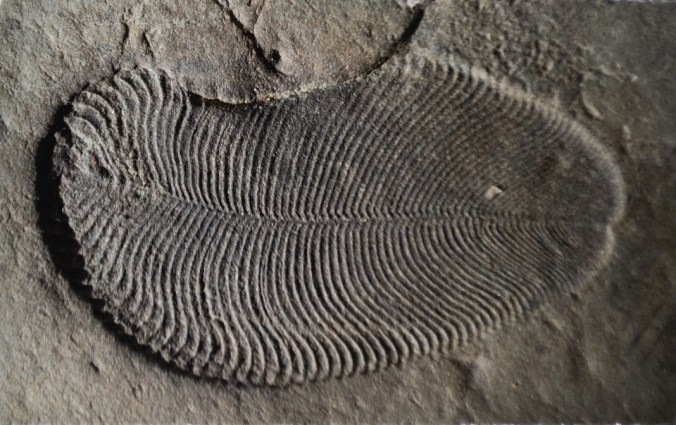
ILYA BOBROVSKIY / AUSTRALIAN NATIONAL UNIVERSITY
Thanks to Ed Yong for this:
A 558-Million-Year-Old Mystery Has Been Solved
Scientists have finally confirmed that a weird ribbed oval called Dickinsonia is an animal.
A Dickinsonia fossilILYA BOBROVSKIY / AUSTRALIAN NATIONAL UNIVERSITY
While it sits in place, petrifying, waiting, the world around it changes. The Earth’s landmasses merge into a single supercontinent before going their separate ways. In the ocean, animal life explodes; for the first time, the world is home to eyes, shells, and mouths. Living things invade the land, coating it first in thin films of moss and lichens, and then covering it in huge forests. Insects rise, into existence, and then into the skies. A dinosaur empire rises and falls. Mammals finally take over, and one of them—a human by the name of Ilya Bobrovskiy—finally unearths the fossilized ribbed oval from its resting place. Continue reading
Valladolid, Mexico
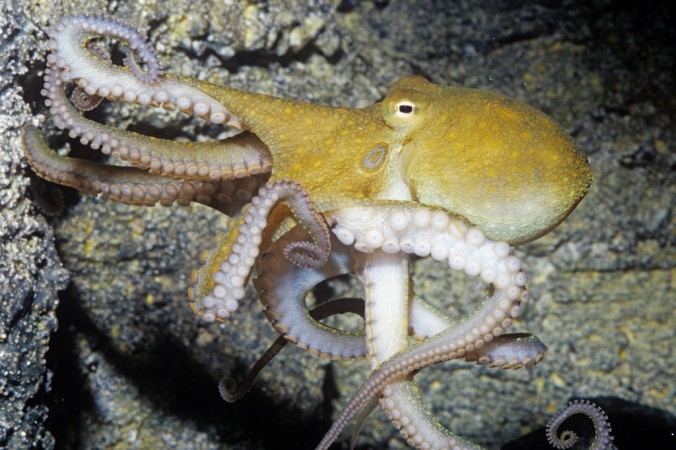
An octopus on its way to an underwater EDM festival. Credit Ken Lucas, via Getty Images
Thanks to JoAnna Klein a regular contributor for The New York Times Trilobites feature, for this:
On Ecstasy, Octopuses Reached Out for a Hug
By dosing the tentacled creatures with MDMA, researchers found they share parts of an ancient messaging system involved in social behaviors with humans.
Octopuses are smart. They open jars, steal fish and high-five each other.
Though interactive, they’re generally asocial, and temperamental, with unique behavior patterns, like those shown by Otto, who caused blackouts at a German aquarium and Inky, who famously escaped a tank in New Zealand.They learn through experience and observation, forming lasting memories with brain-like bundles of hundreds of millions of neurons in each arm and a centralized bundle in the middle.
A desire to understand the evolutionary underpinnings of this brain power led scientists to give octopuses ecstasy. Yes ecstasy — molly, E, MDMA, the party drug, which in humans reduces fear and inhibition, induces feelings of empathy, distorts time and helps people dance to electronic music all night. Continue reading
Baja California Sur, Mexico





 Organikos