Perspective On The Plastic Straw

906318ab3.jpg

A typical Stone straw ad from a newspaper in 1899 (Google Books)

When we arrived in south India mid-2010 our toolkit was full of fifteen years worth of entrepreneurial conservation initiatives, starting in Costa Rica and followed by work in the Galapagos Islands, Chilean Patagonia, Montenegro, Croatia and Siberia. It took us a year to understand all the important ways India differed from everything we knew from elsewhere. Then Amie started targeting the elimination of plastic from our hotel operations, starting with bags in the gift shops. She might have been a latter-day Doña Quixote, tilting at packaged water bottles. All tourists had been instructed by guide books and travel agents to insist on these, and it was not as simple as deciding we knew better.

I might have been a latter-day  Sancho Panza, with a front row seat to the action and as occasional contributor to solution-sourcing. But nevermind the literary allusions. We did eliminate plastic bottles, and then moved on to straws, both in India and back in Costa Rica. We are still working on straws, which oddly enough are more puzzling than disposable water bottles. Alexis Madrigal, as always, has our gratitude for this illuminating history and perspective that helps stoke our motivation:

Disposable America

A history of modern capitalism from the perspective of the straw. Seriously.

lead_720_405.jpg

MIRAGEC / GETTY

A straw is a simple thing. It’s a tube, a conveyance mechanism for liquid. The defining characteristic of the straw is the emptiness inside it. This is the stuff of tragedy, and America.

Over the last several months, plastic straws have come under fire from environmental activists who rightly point out that disposable plastics have created a swirling, centuries-long ecological disaster that is brutally difficult to clean up. Bags were first against the wall, but municipalities from Oakland, California, (yup) to Surfside, Florida, (huh!) have started to restrict the use of plastic straws. Of course, now there is a movement afoot among conservatives to keep those plastics flowing for freedom. Meanwhile, disability advocates have pointed out that plastic straws, in particular, are important for people with physical limitations. “To me, it’s just lame liberal activism that in the end is nothing,” one activist told The Toronto Star. “We’re really kind of vilifying people who need straws.” Other environmentalists aren’t sure that banning straws is gonna do much, and point out that banning straws is not an entirely rigorous approach to global systems change, considering that a widely cited estimate for the magnitude of the problem was, umm, created by a smart 9-year-old. Continue reading

Rewilding The Farm, An English Experiment In Entrepreneurial Conservation

7360.jpg

Starting in May, Amie and I have been living on a dairy farm in the mountains on the northern side of Costa Rica’s Central Valley. We will be here until at least the end of July, brainstorming about the dairy’s future. There is already much to say about that, but we will share that soon enough. For today, just a shout out to fellow brainstormers across the Atlantic. When we first learned of Paul Lister’s initiative, it sounded like a far-fetched experiment. Now we see another experiment further south on the same island:

The magical wilderness farm: raising cows among the weeds at Knepp

You can’t make money from letting cows run wild, right? When Patrick Barkham got access to the sums at a pioneering Sussex farm, he was in for a surprise.

7360 (1)

Wild ponies at dusk. Photograph: Anthony Cullen for the Guardian

Orange tip butterflies jink over grassland and a buzzard mews high on a thermal. Blackthorns burst with bridal white blossom and sallow leaves of peppermint green unfurl. The exhilaration in this corner of West Sussex is not, however, simply the thrilling explosion of spring. The land is bursting with an unusual abundance of life; rampant weeds and wild flowers, insects, birdsong, ancient trees and enormous hedgerows, billowing into fields of hawthorn. And some of the conventional words from three millennia of farming – ‘hedgerow’, ‘field’ and ‘weed’ – no longer seem to apply in a landscape which is utterly alien to anyone raised in an intensively farmed environment. Continue reading
Elephants Can Smell

ElephantNose.jpg

Elephants have a keen nose. They have more smell receptors than any mammal – including dogs – and can sniff out food that is several miles away. A new study tests their ability to distinguish between similar smelling plants. Image by akrp, via Getty Images

It is true that elephants can smell. As in, be smelly. But they can also smell well, better than I knew. Yesterday’s elephant mention was the first in a long time, reminding us how frequently we posted about them from India. When we were in the land of elephants, and other charismatic megafauna, we ran stories frequently about their mega-wondrousness. Now, a welcome reminder about how amazing these big creatures are in smaller ways too. Click above to go to the video accompanying this story below by James Gorman:

The Elephant’s Superb Nose

In the world of noses, the elephant’s trunk clearly stands out for its size, flexibility, strength and slightly creepy gripping ability.

Go ahead, try to pluck a leaf with your nostrils and see how you fare. So perhaps it should come as no surprise that the elephant’s sense of smell is also outstanding. Continue reading

Ultra Premium Coffees

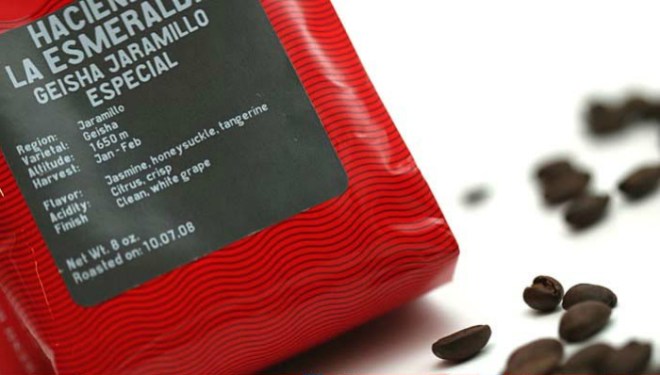
Hacienda-La-Esmeralda-edited-image.jpg

We favor coffee from Costa Rica. Full stop. But we recognize excellence elsewhere. Even selling for $350/pound, this coffee is not at the top of the list, but we must anyway share congratulations with our neighbors to the south, just for making this list:

This coffee has won numerous first place awards in worldwide coffee contests over the past many years. It is cultivated on the sides of Mount Baru in Panama in the shade of guava trees. This rare coffee delicacy offers a once-in-a-lifetime experience for connoisseurs with its fantastic taste and rich flavor. It bagged a whopping $350.25 per pound at a recent auction.

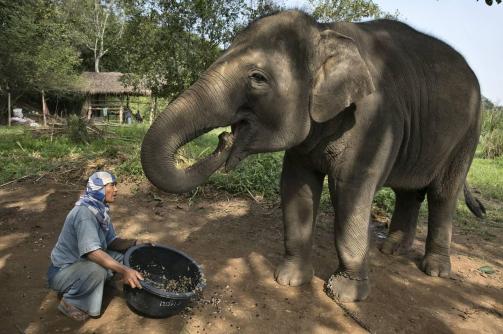
We knew that coffee passing through the civit cat was a thing, but now we learn that coffee passing through an elephant is an even bigger thing (scroll to the end of the list):

black_ivory-min.jpg

First step in the elaboration process

This coffee is made from Arabica beans by the Black Ivory Coffee Company in Thailand. Similar to civet coffee, it is prepared by elephants that consume the Arabica coffee beans and process them during digestion. Their stomach acid breaks down the bean proteins and provides a characteristic robust flavor to the drink. This coffee is rare and expensive because only a small amount of beans are available at any time. You need to shell out about $50 for a cup of black ivory coffee which makes it currently the most expensive coffee in the world.


A Familiar Pleasure That May Save Species

Sage_Down-from-Stairs-overview-180-dpi_web.jpg

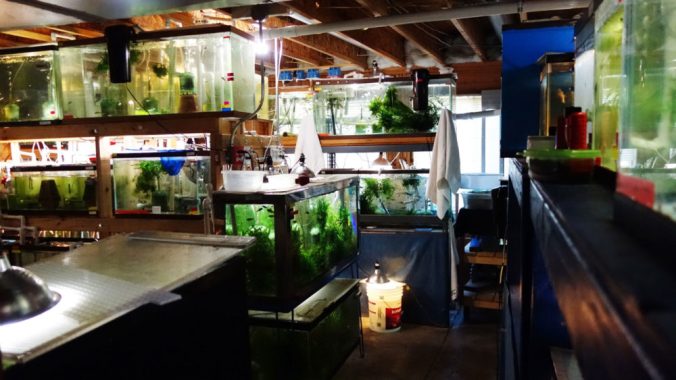
Fish tanks in the basement of a home in Erie, Colorado containing dozens of threatened species, including some that are extinct in the wild. COURTESY OF GREG SAGE

Thanks to Adan Welz and colleagues at Yale e360:

Basement Preservationists: Can Hobbyists Save Rare Fish from Extinction?

Freshwater fish are the most endangered group of vertebrates on earth. Now, networks of home-based aquarists are trying to save some of the most threatened species, keeping them alive in basement aquariums in the hope they might someday be reintroduced into the wild.

Koeck_Bild7_web

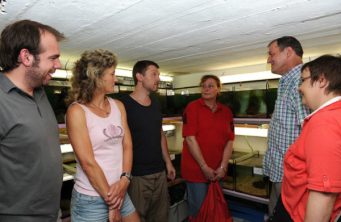
Michael Koeck [center left] gives a tour of the 90 tanks he manages in the basement of the Haus des Meeres aquarium in Vienna. CREDIT: JUTTA KIRCHNER

In August 1940, just after the first-ever British bombing raid on Berlin in World War II, Hitler decided to construct colossal Flakturme — fortified anti-aircraft towers, supporting gun batteries and radar dishes — in important cities of the Reich. Their walls were up to 3.5 meters thick, which is why Flakturm V-L in Vienna proved impossible to demolish after the war, and why we now know that the basement of a Nazi blockhouse is the perfect place to keep 90 glass tanks full of obscure Mexican fish. Continue reading

Plastic Reduction Via Straws Off The Menu

3500 (5).jpg

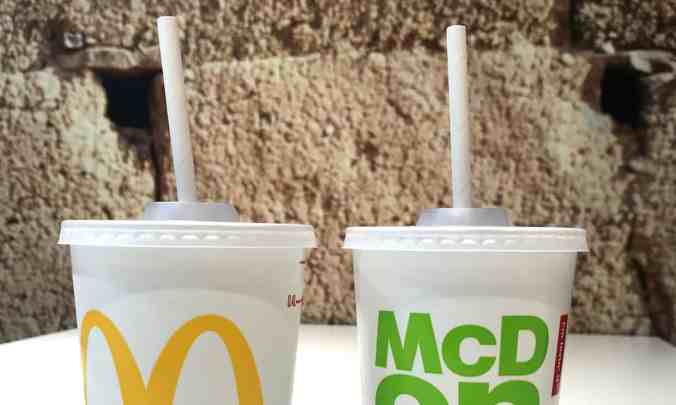
The switch will affect McDonald’s 1,361 outlets in Britain but not the rest of its 36,000 restaurants worldwide. Photograph: McDonald’s/PA

Most of the stories we link out to are examples of revolution, or at least incremental innovation, by way of market forces. At a time when there appear to be incentives for sliding backwards, it is even more important to highlight the rationality and logic of conservation. One small but important example here on the plastic reduction front, where the clientele of a large company take the lead:

McDonald’s to switch to paper straws in UK after customer campaign

Fast-food chain, which uses 1.8m straws a day, says plastic straws will go by 2019

McDonald’s will end the use of plastic straws in its British restaurants next year, after nearly half a million people called on the company to ditch them.

The decision by the US fast-food chain to switch from plastic to paper straws follows a trial at a number of outlets in the past two months. The firm uses around 1.8m straws a day in the UK.

The switch will affect McDonald’s 1,361 outlets in the UK, but not the rest of its 36,000 restaurants worldwide. Continue reading

Ornithology, Methods & Mystery

17Johnson-jumbo

Ping Zhu

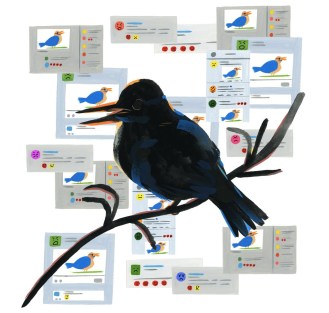
Some contributors to our pages here would likely have much more clear views on this story than I do. I am certain that I favor scientific method, and this scientist followed protocol. And yet, the fallout from his scientific methods was intense. And it was not as simple as trolls gonna troll. I understand the fallout but instead of outrage I am full of questions about this story about The Ornithologist the Internet Called a Murderer by Kirk Wallace Johnson:

merlin_139634919_bab85c0d-98d8-41e1-a5ad-d910a49a3232-jumbo.jpg

The mustached kingfisher. Robert Moyle

For some time, I’d been searching for Christopher Filardi, a biologist with decades of field experience in the Solomon Islands. I wanted to interview him for a book I was writing, but the email system at the American Museum of Natural History, which once listed him as the director of Pacific programs at its Center for Biodiversity and Conservation, bounced back my message.

The auto-reply said that he’d moved to another organization, Conservation International. When I wrote him there, another auto-reply informed me that he had moved on. I couldn’t find him on Facebook or Twitter. The man seemed to have vanished.

When I finally found a working number for him, he was reluctant to talk. Three years ago, his life was overturned by an online mob that accused him of murder. The fact that the mob’s outrage was driven by ignorance didn’t make it any less frightening. Continue reading

Extreme Measures, No Good Outcomes

5616 (3).jpg

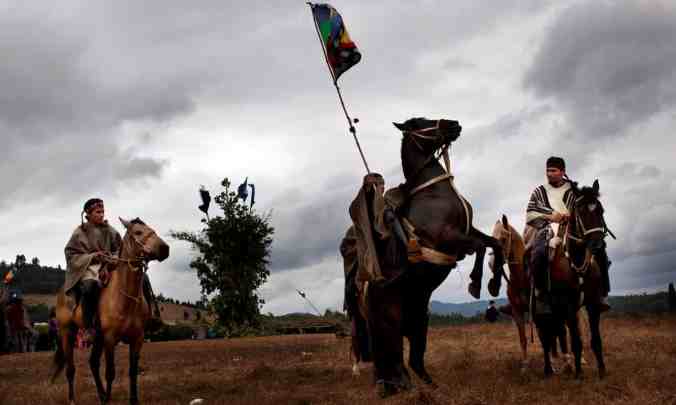
A Mapuche gathering in Ercilla, Chile. The Mapuche are protesting the presence of agricultural firms on their land. Photograph: Rodrigo Abd/AP

During the two years I worked in southern Chile, 2008-2010, I had the opportunity to listen to the concerns of members of the Mapuche community, and heard a deep frustration bordering on despair. Their forests were being extracted, wholesale and rapaciously and there was little to nothing they could do about it. The news here, even with the exposure I had to the situation, still shocks me. It is not good news:

‘We burned the forest’: the indigenous Chileans fighting loggers with arson

Chile’s Mapuche people are resorting to increasingly radical tactics to reclaim their ancestral land from exploitive industries

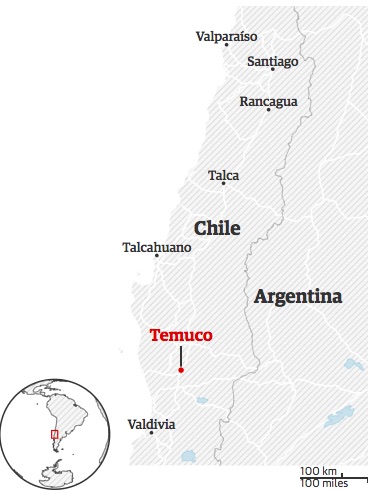
Screen Shot 2018-06-14 at 6.00.13 PM.jpgIt is late autumn in southern Chile, and in the region of Araucanía, the leaves have turned copper and gold. But on the road to the mist-shrouded town of Lumaco, the hills are covered with rows of charred pines.

“We burned these forests as an act of legitimate resistance against the extractive industries that have oppressed the Mapuche people,” says Hector Llaitul. “If we make their business unprofitable they move on, allowing us to recover our devastated lands and rebuild our world.” Continue reading

Audubon’s Reasonable Request

apa_2016-a1_2147_4_northern-harrier_diana_whiting_kk.jpg

Northern Harrier. Photo: Diana Whiting/Audubon Photography Awards

A message from friends:

NEW YORK — “Audubon is committed to protecting birds and the places they need — and the greatest threat to birds and people is climate change,” said David Yarnold (@david_yarnold), president and CEO of National Audubon Society.

“While some may be holding out for a perfect solution to climate change, we know that it will take an array of approaches to reduce planet-warming pollution.

“The Carbon Capture Coalition is pursuing many avenues—including a market-driven approach that has deep bipartisan support. Audubon is excited to be at the table with a range of voices exploring policy options that accelerate a reduction in carbon pollution,” Yarnold added.

The Carbon Capture Coalition is led by the Center for Climate and Energy Solutions and the Great Plains Institute. With over 50 members ranging from the energy industry, agriculture, labor unions and conservation leaders, the coalition is non-partisan and solutions-oriented. Recently, the coalition successfully advocated for improving and extending the carbon capture tax credit, known as the 45Q tax credit, led by Senators Heidi Heitkamp (D-ND), John Barrasso (R-WY), Sheldon Whitehouse (D-RI) and Shelley Moore Capito (R-WV). Continue reading

Apricots, Comfort & Inspiration

13ottolenghi3-jumbo.jpg

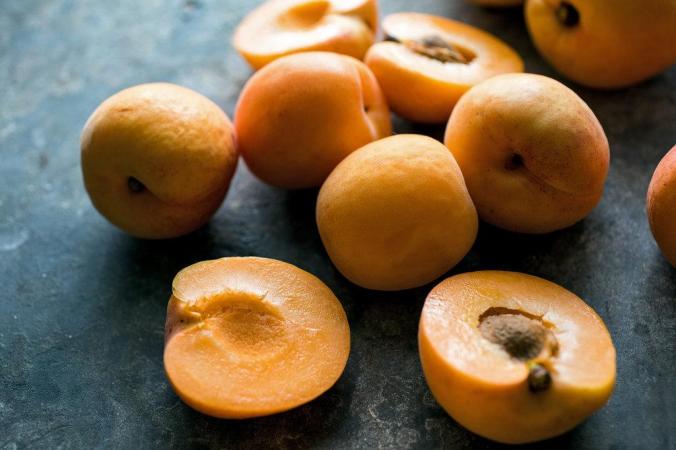
Apricots were often featured in the intricate dessert displays of 18th-century France. Andrew Scrivani for The New York Times

Two seemingly opposed ideas can, sometimes be compatible. For example, even though this post made me think about traveling to taste the place, I can also relate to Yotam Ottolenghi’s opening paragraph, entirely:

13ottolenghi-new-superJumbo.jpg

A tart made with poached apricots, marzipan, pistachios and pastry cream was inspired by the elaborate pastry-making at Versailles. Andrew Scrivani for The New York Times

People tend to belong to one of two opposite camps: those who like their food to impress and surprise and those who want it to comfort and delight. These days, I find myself steadily drifting from the contrived faction to the comfort camp. This, I suspect, has to do with age and a certain wish to reconnect with my childhood.

But my interest in that other extreme was recently piqued by the exhibition “Visitors to Versailles,” which is on view through July 29 at the Metropolitan Museum of Art in New York. I am hosting an evening there this month to celebrate the exhibition, and I asked a group of world-class pastry chefs to create highly elaborate cakes inspired by the court of Versailles. Continue reading