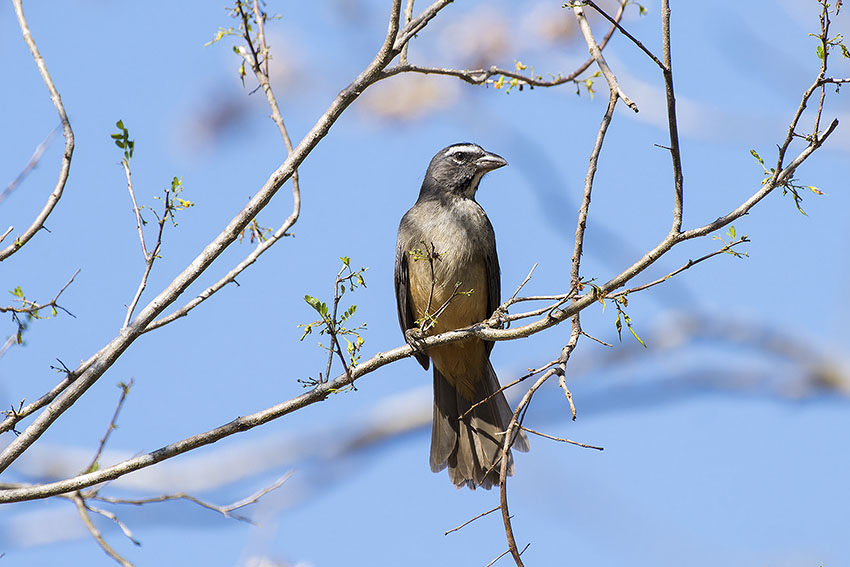
Ek Balam, Mexico
Can You Top This Birding Experience?
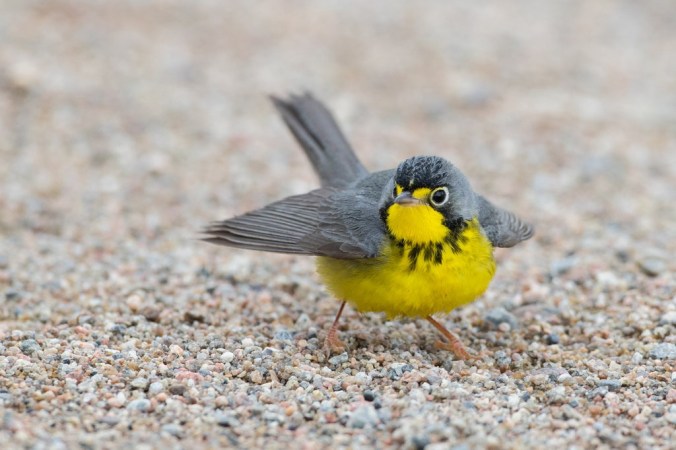
A Canada warbler. Credit Ian Davies
We have wow posts about birds all the time, but this one will have to take the cake, for now:
A River of Warblers: ‘the Greatest Birding Day of My Life’
At an observatory in Quebec, they were hoping for a 50,000-bird day. They saw more than half a million.
By James Gorman
Ian Davies got hooked on birds when he was 12. He went to a site near Plymouth, Mass., where volunteers were putting bands on migrating birds.
“They let me release a Canada warbler,” he said, “and that was just game over.”
On Monday, he saw an estimated 700,000 warblers and set the birding world all atwitter with a posting on the site eBird describing the astonishing event. Continue reading
Bird of the Day: Bay Woodpecker
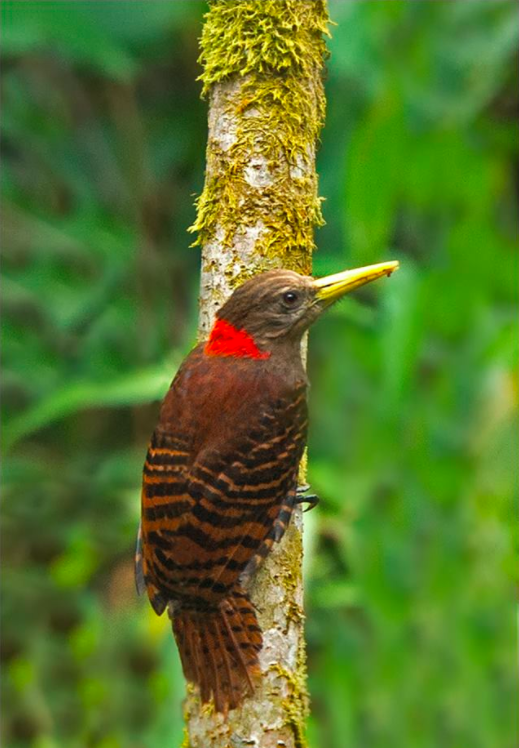
Lava, Sikkim
Renewables In Our Midst

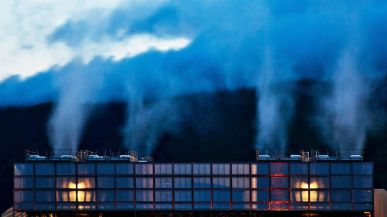
When it opens in 2020, Facebook’s new data center in Odense, Denmark will channel its waste heat to warm nearly 7,000 homes. FACEBOOK
Thanks to Nicola Jones and colleagues at Yale Environment 360 for this:
Waste Heat: Innovators Turn to an Overlooked Renewable Resource
Nearly three-quarters of all the energy produced by humanity is squandered as waste heat. Now, large businesses, high-tech operations such as data centers, and governments are exploring innovative technologies to capture and reuse this vast renewable energy source.
Heat radiates from the Grangemouth Oil Refinery in Scotland. About 70 percent of all the energy produced globally gets discarded as waste heat. CHRISTOPHER FURLONG/GETTY IMAGES
When you think of Facebook and “hot air,” a stream of pointless online chatter might be what comes to mind. But the company will soon be putting its literal hot air — the waste heat pumped out by one of its data centers — to good environmental use. That center, in Odense, Denmark, plans to channel its waste heat to warm nearly 7,000 homes when it opens in 2020.
Data centers, such as Google’s facility in Dalles, Oregon, generate huge amounts of waste heat. GOOGLE
Waste heat is everywhere. Every time an engine runs, a machine clunks away, or any work is done by anything, heat is generated. That’s a law of thermodynamics. More often than not, that heat gets thrown away, dribbling out into the atmosphere. The scale of this invisible garbage is huge: About 70 percent of all the energy produced by humanity gets chucked as waste heat. Continue reading

Bird of the Day: Phainopepla
male – Estero San José, Baja California Sur, Mexico
Aspirational Recycling & Bigger Problems

Tony Cenicola/The New York Times
I recall reading this article by Livia Albeck-Ripka and thinking that I would like to read more from anyone who can write clearly and creatively about topics that are central to our purpose here. And so today, my wish was granted, twice. In this first one, I am introduced to a term, aspirational recycling, that I had not heard until now:
6 Things You’re Recycling Wrong
Can you recycle coffee cups or greasy pizza boxes? If you’re tossing things in the recycling bin out of sheer hope, you might be an “aspirational recycler.”
We have all done it: a greasy pizza box, a disposable coffee cup, the odd plastic bag. Sometimes, we want things to be recyclable, so we put them in the recycling bin.
Waste managers often call this wishful or aspirational recycling. But, unfortunately, putting these objects in with the rest of the recycling can do more harm than good. While rules differ in every municipality (check your local recycling website to find out what’s acceptable), we have picked out some key offenders to keep in mind.
Too many of these items will contaminate a batch of recycling. That means waste managers might not be able to find buyers for the materials — especially now that China, one of the world’s main importers of recyclable waste, has said it will reject shipments that are more than 0.5 percent impure. Contaminated loads could be sent to the landfill instead…
Same day, same publication, same author, an eye-opener for anyone who diligently follows all the rules made plain in the article above:
Your Recycling Gets Recycled, Right? Maybe, or Maybe Not
Plastics and papers from dozens of American cities and towns are being dumped in landfills after China stopped recycling most “foreign garbage.”
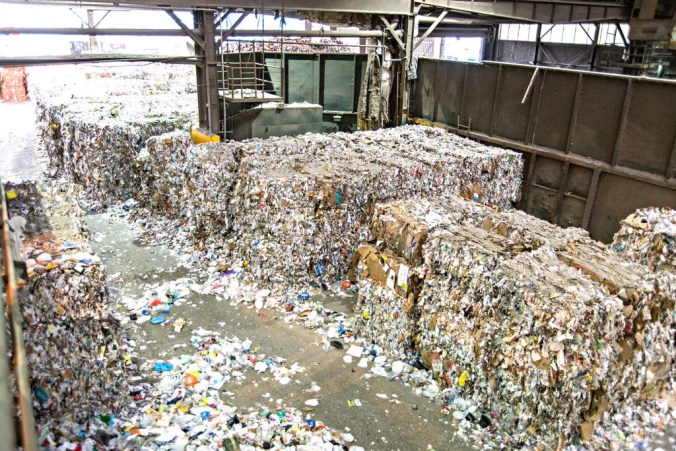
Bales of recyclable waste in Seattle. American waste managers are struggling to find plants to process their recyclables. Credit Wiqan Ang for The New York Times
Oregon is serious about recycling. Its residents are accustomed to dutifully separating milk cartons, yogurt containers, cereal boxes and kombucha bottles from their trash to divert them from the landfill. But this year, because of a far-reaching rule change in China, some of the recyclables are ending up in the local dump anyway. Continue reading
Bird of the Day: Asian Pied Starling
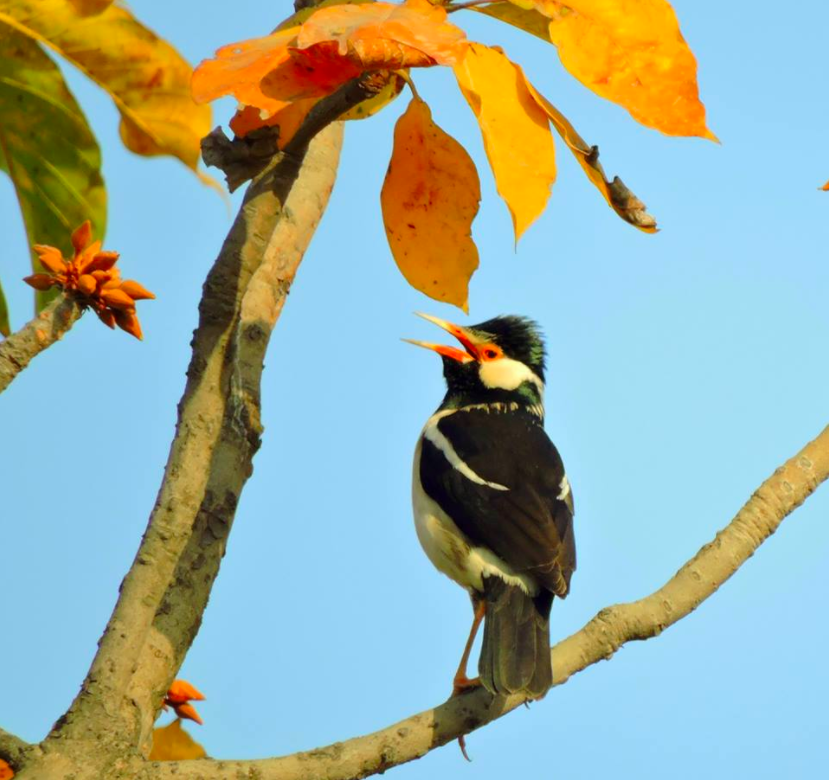
Lucknow, Uttar Pradesh
Paddlefish, Pioneers Of Sustainability
Janie Osborne for The New York Times
Thanks to Jim Robbins, whose work we have appreciated not least for its culinary intrigue, but especially for the sustainability angles:
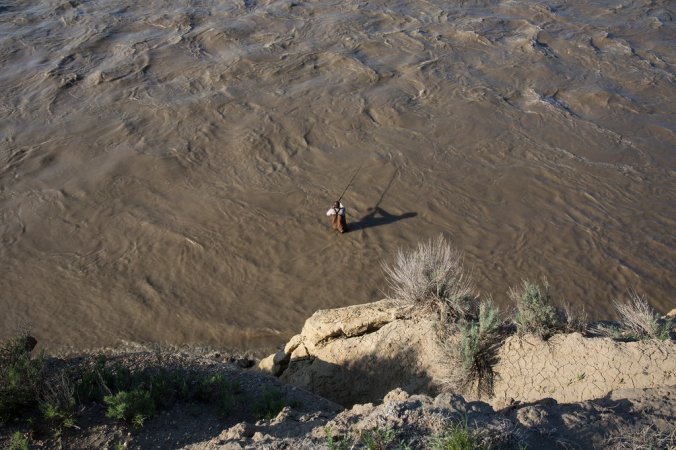
Hooking the Dinosaur of Fish
It’s paddlefish season in Montana. Programs to harvest the giant’s caviar and sell it have helped to create a model for sustainable fishing.
Janie Osborne for The New York Times
GLENDIVE, Mont. — Fishing here conjures images of waders and featherweight flies landing softly on lazy rivers, an irresistible lure for the one- or two-pound trout swimming beneath.
Catching a giant paddlefish weighing 50 or 100 pounds is an altogether different pursuit. And in an unusual twist, the end result is a bounty of an unusual delicacy: roe sold around the country as caviar.
“It winds up on cruise ships, it winds up in restaurants, it winds up everywhere,” said Dennis Scarnecchia, a professor of fisheries at the University of Idaho. Continue reading

Bird of the Day: River Lapwing
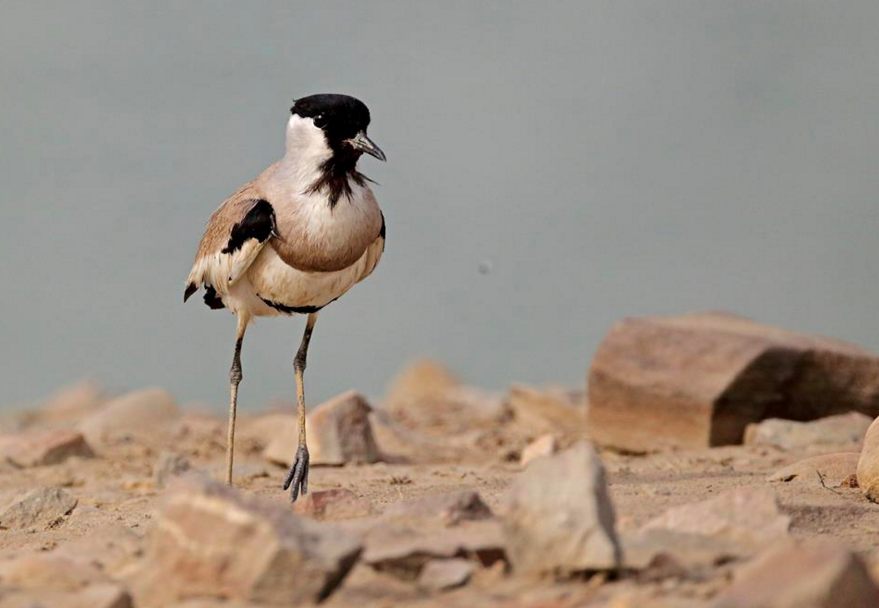
Ramganga River, Jim Corbett Tiger Project, Uttarakhand
Food For Thought & Thought For Food

Enzo Pérès-Labourdette
The food for thought is by way of Curt Stager, a professor of natural sciences, who celebrates citizen science in a powerful ominously-titled op-ed:
Why care about this new silence of the bugs? An across-the-board decline in flying insects, if true, means that an entire sector of the animal kingdom is in trouble, representing an immense diversity of life-forms, from butterflies and beetles to hoverflies and damselflies. The eminent biologist Edward O. Wilson, who has spent much of his life studying ants, has warned: “If all mankind were to disappear, the world would regenerate back to the rich state of equilibrium that existed ten thousand years ago. If insects were to vanish, the environment would collapse into chaos.”
And the thought for food is also from an op-ed:
Why You Should Be Drinking Weird Wines
By Jason Wilson

Alicia Adamerovich
…For years, the global wine industry had been devolving toward a monoculture, with local grape varieties ripped out in favor of more immediately profitable, mass-market types. There are 1,368 known wine grape varieties, but nearly 80 percent of the world’s wine is made from just 20 kinds of grapes. Many of the rest face extinction. Continue reading
Bird of the Day: Laughing Kookaburra

Social Media Needs Rethinking

It is so freshly pressed that there are no reviews to cite yet, but the author himself previewed the ideas here, which I remember reading and thinking that his big, important thoughts would get lost in the momentary hysteria of relatively small potatoes news (Cambridge Analytica) breaking at the time:
Be a pioneer – delete Facebook
Quitting means beating the addiction, making a political statement and redefining social life. Are you ready?
‘Facebook deleters are indispensable. They should be celebrated. We all benefit from them.’ Photograph: GETTY IMAGES
When I wrote an about-to-be-published book last year about problems with social media, I thought it would be cute to call it Ten Arguments for Deleting Your Social Media Accounts Right Now. And then the Cambridge Analytica scandal broke, motivating a modest but notable wave of Facebook deletions in protest, including by prominent tech figures such as Elon Musk and Brian Acton, the co-founder of WhatsApp.
So much for the novelty of my book title. The biggest surprise was not the movement to delete accounts, but that the deleters have not been received well by pundits and commentators. The response has often been smug, dismissive, even scolding. Deleters are told they are abusing their privilege; that they are leaving behind the less fortunate, who cannot afford to quit. They are said to be abandoning society or distracting from the more important process of petitioning governments to regulate Facebook. They are accused of tilting at windmills…

In early 2013 an article in Smithsonian first brought my attention to Jaron Lanier, and since then we have not featured him again on this platform, which is strange. I recall last year reading a short think piece by him, and listening to him, as he promoted an earlier book and finding him very compelling. Just today, he was back in the Guardian with another one-two punch of these ideas, in the effort to promote this new book. The book’s title tells me that even though I am already a convert to the basic principle, I want to know how he explains these ten ideas. And I admit I am susceptible to publishers’ blurbs when written by someone I respect: Continue reading
Bird of the Day: Pintailed Ducks
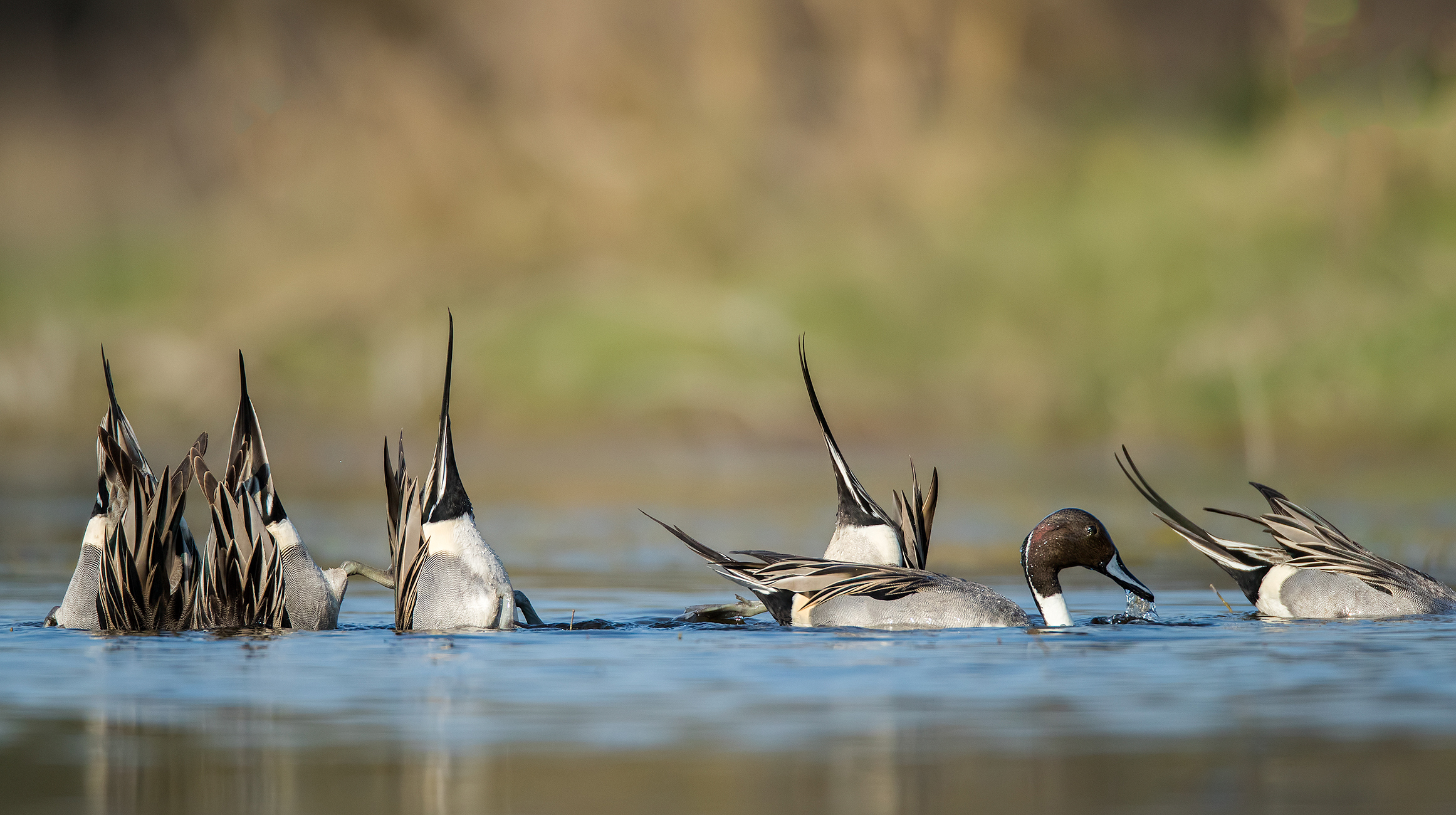
Bharatpur Bird Sanctuary, Rajasthan
Adaptation’s Appetite
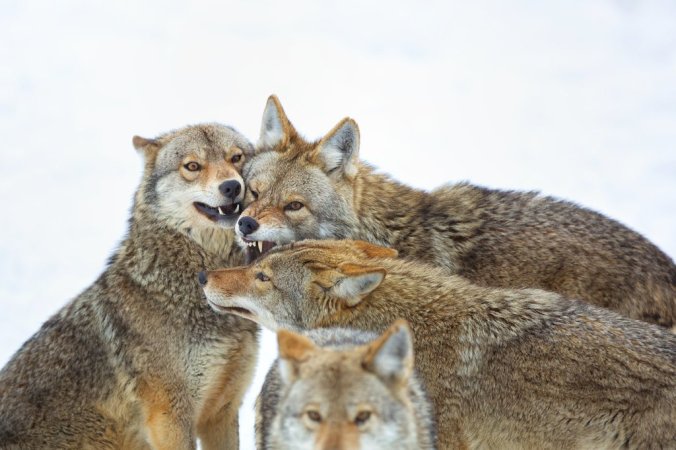
“They have to be one of the most adaptable animals on the planet,” said one ecologist who studies coyotes. Credit Perry McKenna/Getty Images
On this platform we have been in favor of celebrating conservation rather than doomsday. Science is key, but we also think entrepreneurship can be harnessed in the right direction, publicly and privately. There is not much to celebrate in the following story. The animals in the photo above, without any further details, could be granted wild beauty status. But context is everything. So we celebrate the writers who illuminate important scientific ideas, and their stories. Thanks to JoAnna Klein, who we have linked to many times (but missed this related recent story) for providing those details:
Coyotes Conquered North America. Now They’re Heading South.
New maps seek to update the historical range of our continent’s toughest canids, which have thrived as other predators experienced decline.
A coyote crossing U.S. Highway 120 near Groveland, Calif. Credit Justin Sullivan/Getty Images
Coyotes are excellent colonizers.
They breed fast, eat almost anything and live just about anywhere. You can find them in fields, forests, backyards, parks and even parking decks. They’re living in cities like Los Angeles, New York and Chicago. They’ve even made it to the Florida Keys and Long Island. In 2010, they crossed the Panama Canal. Now, the only thing keeping them from entering Colombia is a dense patch of forest called the Darien Gap. And camera traps have caught them heading that way. Continue reading
Bird of the Day: Red-headed Bullfinch
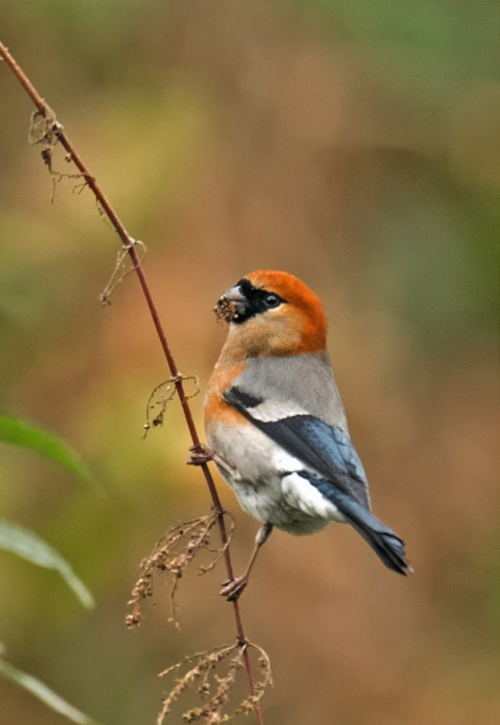
male – Pangolakha Wildlife Sanctuary, Sikkim
Bee-Saving In Costa Rica
Thanks to Rainforest Alliance, who sent its polite email asking whether we wanted to stay on their mailing list. Of course we do (but thanks for asking) because we believe in their work. And we have believed for a long time. Too long since our last post referencing them, but see this:
Liz Paniagua, Co-founder Api-Agricultura
Introducing Costa Rican pro surfer Carlos Cortes and his partner Liz Paniagua. The husband-wife-apiarist-activist team is part of a growing movement working to save bees from the global crisis of colony collapse.
Their bee rescue organization, Api-Agricultura, works with a model Rainforest Alliance Certified banana farm in Costa Rica to save bee colonies from destruction and educate local communities about the importance of bees. By encouraging others to live in harmony with nature, Carlos and Liz exemplify the Costa Rican ethos of “pura vida.” Continue reading

Bird of the Day: Brown Pelican

Rio Lagartos, Mexico
Bolivia’s Boggling Biodiversity
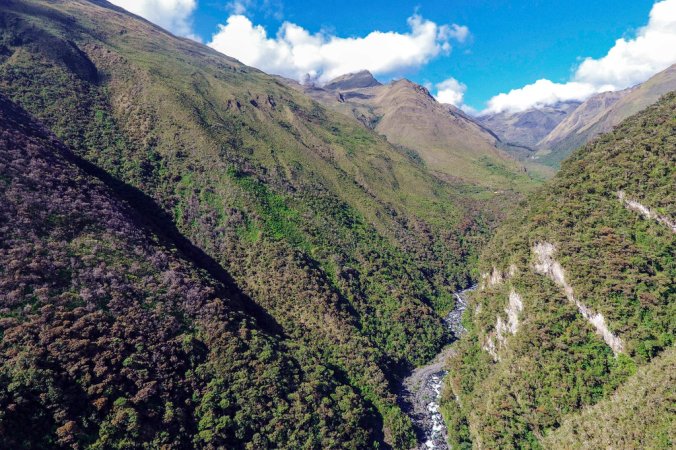
Keara valley Credit Omar Torrico/Wildlife Conservation Society
Whether or not the title is a rhetorical question does not matter; what does matter is our thanks to James Gorman, a science writer at large for The New York Times for this story about the work of Rob Wallace and colleagues at the Wildlife Conservation Society:
Is This the World’s Most Diverse National Park?
Bringing the numbers to life for the jewel in Bolivia’s conservation crown.
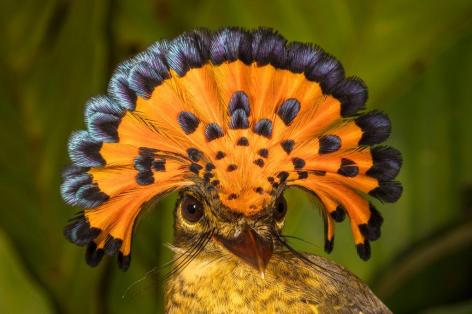
Royal flycatcher Credit Rob Wallace/Wildlife Conservation Society
The credit to Mr. Wallace and colleagues for these photos alone would be worthy of a post, but the creation of such a park in Bolivia is no small wonder:
Madidi National Park in Bolivia goes from lowland to mountaintop, from 600 feet to almost 20,000 feet above sea level. It covers more than 7,000 square miles of wildly different habitats. It is, says Rob Wallace, an ecologist with the Wildlife Conservation Society in Bolivia, “a place where the Amazon meets the Andes.”

Rob Wallace/Wildlife Conservation Society
“Madidi was put together on the hypothesis that it could be the world’s most biologically diverse protected area,” Dr. Wallace said. And, he said, it is — for mammals, birds, plants and butterflies. Continue reading
Bird of the Day: Spotted Laughingthrush
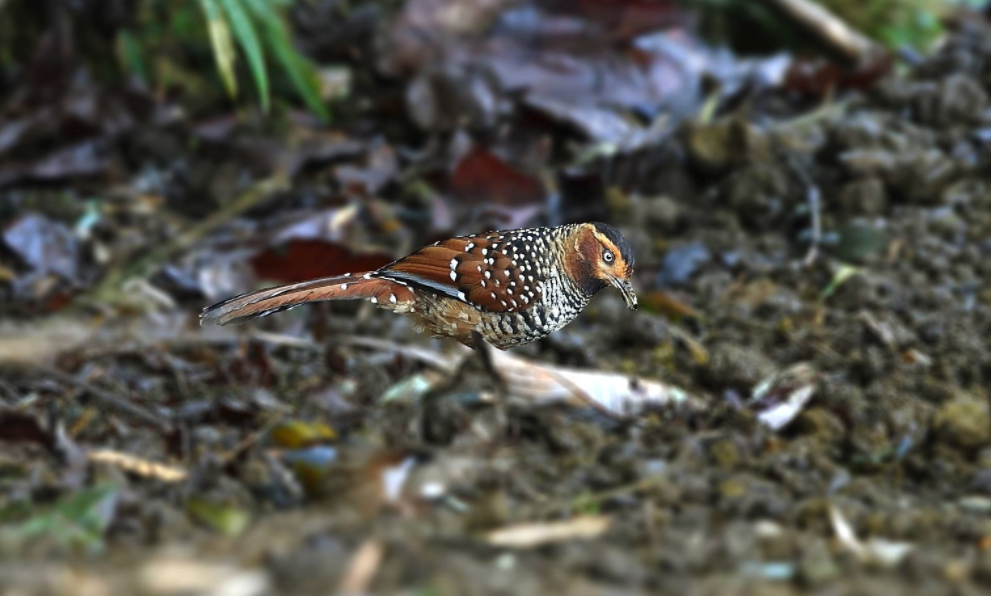
Tumling, Nepal
Bob Moore And His Red Mill

Marcus Marritt for NPR
47 minutes well spent with one of our heroes, who we realize now is not featured enough in our pages relative to how much he has inspired our work. Here is a quick start at repairing that oversight (click the image above to go to the podcast):
In the 1960s, Bob Moore read a book about an old grain mill and was inspired to start his own.
Using giant quartz stones from the 19th century, he ground and packaged dozens of different cereals and flours, quickly positioning his company at the forefront of the health food boom.
Despite a devastating fire in the 1980s, Bob’s Red Mill grew into a $100 million business – and although Bob is nearly 90, he goes to work at the mill every day.
 Organikos