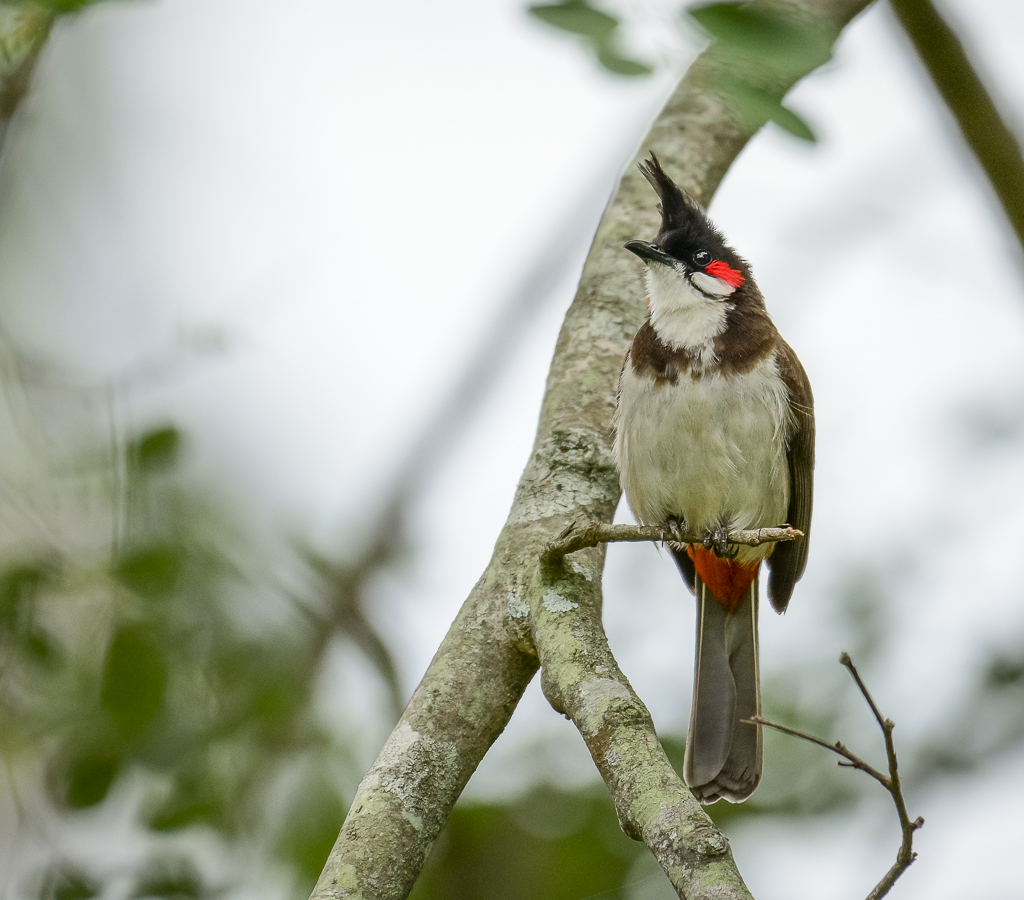
Hassan, Karnataka
Hassan, Karnataka
Thanks to Emily Buder at the Atlantic for this five minute recommended viewing. In the video above, by Nani Walker and Alan Toth, the question is:
Can Humans and Lions Get Along?
“Lions are really causing us havoc,” laments an African pastoralist in Nani Walker and Alan Toth’s short documentary, Living with Lions. Continue reading

Manipur, India

Take a minute to watch this video, and you may find the article below worth the read:
World’s first electrified road for charging vehicles opens in Sweden
Stretch of road outside Stockholm transfers energy from two tracks of rail in the road, recharging the batteries of electric cars and trucks
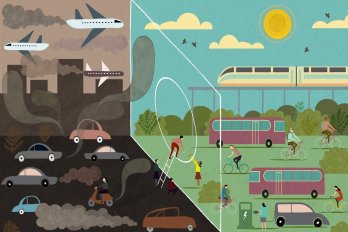
The world’s first electrified road that recharges the batteries of cars and trucks driving on it has been opened in Sweden.
About 2km (1.2 miles) of electric rail has been embedded in a public road near Stockholm, but the government’s roads agency has already drafted a national map for future expansion.
Sweden’s target of achieving independence from fossil fuel by 2030 requires a 70% reduction in the transport sector. Continue reading
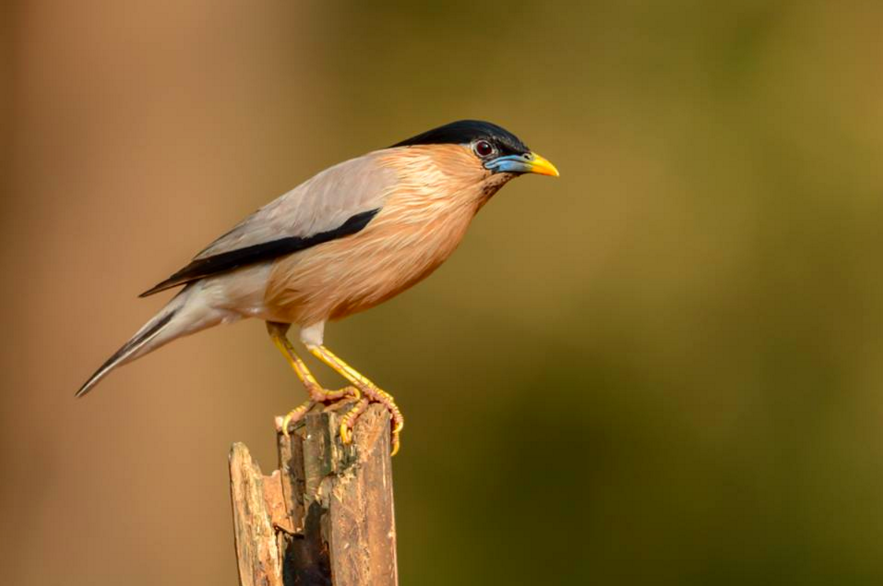
Masinagudi, Tamil Nadu

A chromolithograph of Christopher Columbus arriving at the Caribbean. Credit Louis Prang and Company/Getty Images
Thanks to Carl Zimmer for this 1493-ish story:
All by Itself, the Humble Sweet Potato Colonized the World
Many botanists argued that humans must have carried the valuable staple to the Pacific from South America, a hidden chapter in human history. Not so, according to a new study.
The distribution of the sweet potato plant has baffled scientists. How could the plant arise from a wild ancestor in the Americas and wind up on islands across the Pacific? Credit Karsten Moran for The New York Times
Of all the plants that humanity has turned into crops, none is more puzzling than the sweet potato. Indigenous people of Central and South America grew it on farms for generations, and Europeans discovered it when Christopher Columbus arrived in the Caribbean.
In the 18th century, however, Captain Cook stumbled across sweet potatoes again — over 4,000 miles away, on remote Polynesian islands. European explorers later found them elsewhere in the Pacific, from Hawaii to New Guinea.
The distribution of the plant baffled scientists. How could sweet potatoes arise from a wild ancestor and then wind up scattered across such a wide range? Was it possible that unknown explorers carried it from South America to countless Pacific islands? Continue reading

Athoor, Dindigul, Tamil Nadu
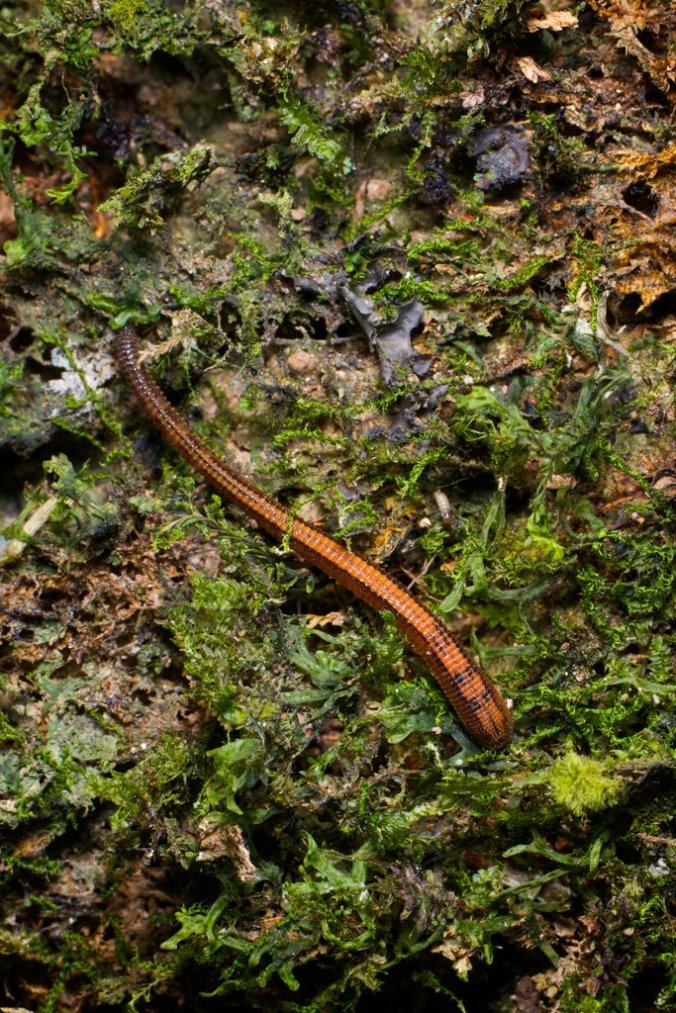
A leech, Haemadipsa zeylanica, in Thailand. Scientists have found they can survey the biodiversity of a forest with DNA analysis of leeches’ last blood meals. Credit Thailand Wildlife/Alamy
If you’ve been in the forests of south India, and like several of our most prolific contributors you have had the creatures creeping in your pant legs, you know that the thought of it is much worse than the reality of it. But now, my esteem for this creature has just increased manyfold thanks to Rachel Nuwer:
It’s the Latest in Conservation Tech.
And It Wants to Suck Your Blood.In the digestive tracts of leeches, scientists find evidence of elusive forest species.
Haemadipsa zeylanica, a leech, in Malaysia after a meal. Leeches can swell to 10 times their body weight after feeding. Credit Bernard Dupont
Michael Tessler realized his life had taken an odd turn. His days were spent not in an office, not out with friends — but alone in the woods, attracting leeches.
Sometimes, they were so bountiful that “it was like the forest floor was moving toward me,” he recalled. “Even for someone who’s used to having swarms of leeches coming at me, it could be intimidating to see that many of them.” Continue reading
Ventanilla, Peru

Illustrations by R. Kikuo Johnson
Yesterday our attention was riveted by heroic efforts in the Highlands to re-wild, and today it is back to the sadder topic of un-wilding. Thanks to Rachel Nuwer for this article on a topic long of interest in these pages:
That Python in the Pet Store? It May Have Been Snatched From the Wild
R. Kikuo Johnson
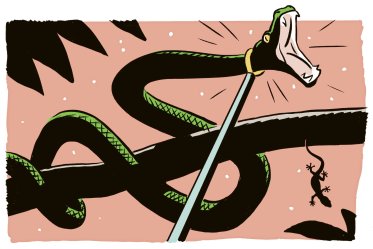
JAKARTA — In the market for a new pet? Maybe something a bit exotic? For many consumers, reptiles and amphibians are just the thing: geckos, monitors, pythons, tree frogs, boas, turtles and many more species are available in seemingly endless varieties, many brilliantly colored, some exceedingly rare.
Exotic reptiles and amphibians began surging in popularity in the early 1990s, not only in the United States but also in Europe and Japan. From 2004 to 2014, the European Union imported nearly 21 million of these animals; an estimated 4.7 million households in the United States owned at least one reptile in 2016.
But popularity has spawned an enormous illegal trade, conservationists say. Many reptiles sold as pets are said to have been bred in captivity, and sales of those animals are legal. In fact, many — perhaps most, depending on the species — were illegally captured in the wild. Continue reading
Prospect Park, Brooklyn, NY

Eurasian grey wolves at the Highland Wildlife Park, Kingussie, Scotland.
Photograph: Alamy
Thanks to Kevin McKenna and the Guardian for this profile of an entrepreneurial conservation project that is quite in the spirit of our work over the last two decades. We salute Paul Lister and his team for this wonder:
One man’s plan to let wolves roam free in the Highlands
The ‘custodian’ of the Alladale estate wants to turn it into a fenced-off wildlife reserve
The Alladale estate. Photograph: Alamy
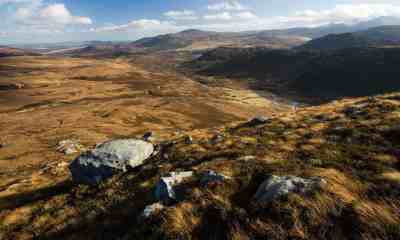
The echoes of Scotland’s predator prince faded into silence three centuries ago. The wolf was once lord of these Sutherland slopes and the forest floors beneath and now a voice in the wilderness is calling him home.
Paul Lister acquired the Alladale estate, 50 miles north of Inverness, in 2003 and immediately set about creating a wilderness reserve according to his perception of what these wild and beautiful places ought to look like. He can’t imagine them without the packs of wolves that once roamed free here.
But his views are considered eccentric by ramblers and conservationists, who view them as a rich man’s caprice, centring their objections on his plans to fence off the vast reserve. Continue reading
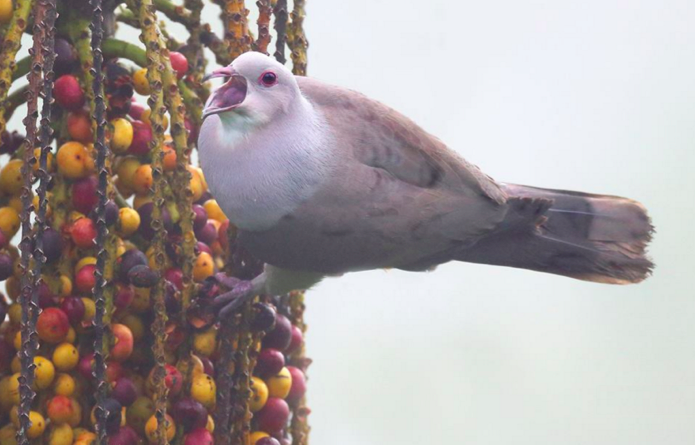
Western Ghats, Kerala
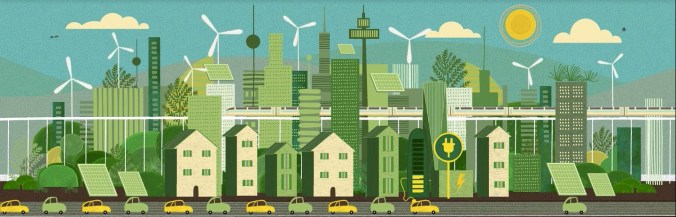
Thanks to Livia Albeck-Ripka and the New York Times for this
How to Reduce Your Carbon Footprint
What Is a Carbon Footprint?
Climate change can be overwhelming. The science is complex, and when it comes to future impacts, there are still a lot of unknowns. While real solutions will require action on a global scale, there are choices you can make in your day-to-day life to lessen your personal impact on the environment. This guide will walk you through some of them.
DRIVE LESS
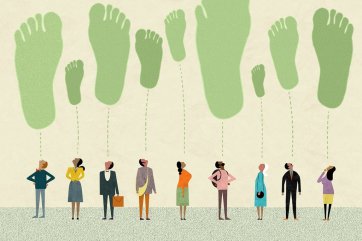
A carbon footprint is the total amount of greenhouse gas emissions that come from the production, use and end-of-life of a product or service. It includes carbon dioxide — the gas most commonly emitted by humans — and others, including methane, nitrous oxide, and fluorinated gases, which trap gas in the atmosphere, causing global warming. Usually, the bulk of an individual’s carbon footprint will come from transportation, housing and food.
You can start the process by calculating your carbon footprint here. You will need to know the following: Continue reading
female – Baja California Sur, Mexico

iStock
We are already big fans of this fruit, for all kinds of reasons, so this is like icing on the cake:
Bananas vs. Sports Drinks? Bananas Win in Study
A banana might reasonably replace sports drinks for those of us who rely on carbohydrates to fuel exercise and speed recovery, according to a new study comparing the cellular effects of carbohydrates consumed during sports.
It found that a banana, with its all-natural package, provides comparable or greater anti-inflammatory and other benefits for athletes than sports drinks. But there may be a downside, and it involves bloating.
For decades, athletes and their advisers have believed, and studies have confirmed, that eating or drinking carbohydrates during prolonged exertion can enable someone to continue for longer or at higher intensities and recover more quickly afterward than if he or she does not eat during the workout. Continue reading

female – Thattekad Bird Sanctuary, Kerala
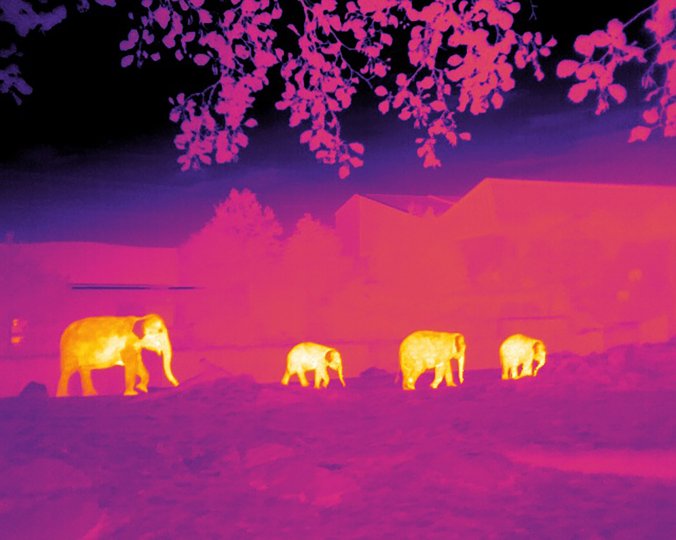
A thermal image of elephants, part of an effort to apply tools from astronomy to help conservationists and fight poaching. Credit Endangered Wildlife Trust/LJMU
We have noted this technology more than once in recent years, and who can resist the images? But Joanna Klein’s story here is a bit different from our earlier notes:
How Do You Count Endangered Species? Look to the Stars
The research team has been working with a local safari park and zoo to film and photograph animals, like these chimpanzees, to build up a reference library of different animals. Credit Endangered Wildlife Trust/LJMU
The conversation started over a fence dividing two backyards. On one side, an ecologist remarked that surveying animals is a pain. His neighbor, an astronomer, said he could see objects in space billions of light years away.
And so began an unusual partnership to adapt tools originally developed to detect stars in the sky to monitor animals on the ground. Continue reading
Parque del Acueducto, Cali, Colombia
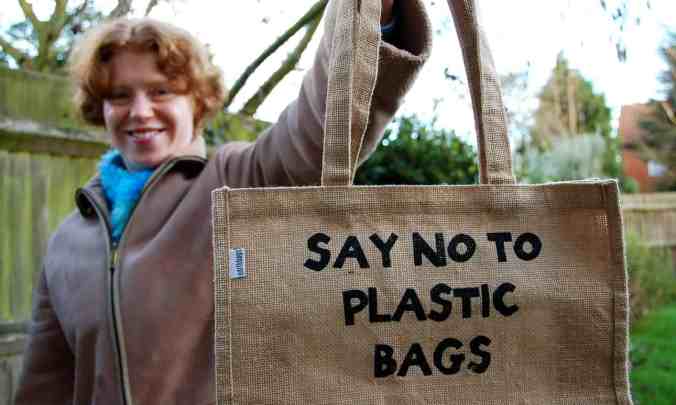
A UK levy of 5p per bag introduced in 2015 has already reduced single-use plastic bags by 85%. Photograph: Stuart Kelly/Alamy Stock Photo
We never tire of reporting on efforts at plastic-reduction, so thanks to Juliette Jowit and the Guardian for this update:
Drop in plastic bags littering British seas linked to introduction of 5p charge
Scientists find an estimated 30% drop in plastic bags on the seabed in the same timeframe as charges were introduced in European countries
A big drop in plastic bags found in the seas around Britain has been credited to the introduction of charges for plastic bags across Europe. Continue reading


 Organikos