
Nilgiris, Tamil Nadu
Nilgiris, Tamil Nadu

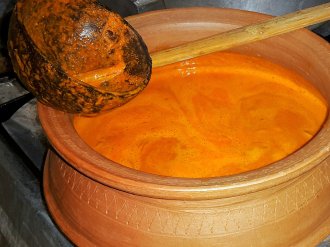
Fish curry inflected with coconut is a staple dish in the coastal Indian state of Goa. It’s usually eaten accompanied by unpolished rice, fried fish and a dab of pickle. Once all the fish has been eaten up, the leftover curry is reheated over a low flame until it condenses and thickens. At that point, it is reborn as Kalchi koddi, which literally translates to “yesterday’s curry.” Joanna Lobo
Local food-ways have long been an interest on this platform, especially when spice is involved. Thanks, once again, to the Salt and Joanna Lobo for sharing this story.
An Ode To Leftover Curry: The Next-Day Treasure Of Coastal India
Old-timers will tell you that the vessel you use to make kalchi koddi can make all the difference in its taste. Fish curry is traditionally cooked, or reheated, in a kunddlem, an earthen pot.
Alves FernandesWhen I was growing up in a village in India’s then-smallest state, Goa, my family had a Sunday tradition. We love to eat and we have the hips to show for it.
Located on India’s west coast, Goa is known for its sun, sand and beaches. A typical Goan meal is xitt-koddi-nustem (rice, curry and fish). A long coastline meant a lot of wealth came from the sea; an easy availability of coconuts meant they often found their way into the food – which, like all aspects of Goan life, is heavily imprinted by four-and-a-half centuries of Portuguese rule. Continue reading

Mahananda Wildlife Sanctuary, West Bengal

Femmes attablées (Women at table), 1947. Gouache on board, 19 1⁄2 x 25 7⁄16 in. (49.5 x 64.6 cm). Collection of Adrien Maeght, Saint-Paul-de-Vence, France
How is it possible that we’re just learning of this autodidactic painter who inspired two of the 20th Century’s greatest painters now? If you’re lucky enough to be in New York through the end of March, get yourself to the NYU Grey Art Gallery and bask in color, especially during the current snowy days!
Baya: Woman of Algiers is the first North American exhibition of works by the self-taught Algerian artist Baya Mahieddine (1931–1998). Known as Baya, she was born in Bordj el-Kiffan and orphaned at age five. Encouraged by her adoptive French mother to pursue art, she began as an adolescent to paint gouaches and make ceramics. Her work was soon discovered by fabled gallerist Aimé Maeght who, along with André Breton, organized an exhibition in Paris in 1947. Baya’s colorful depictions of women, rhythmic patterns, and bright palette drew the attention of Henri Matisse and Pablo Picasso, with whom she later collaborated in the renowned Madoura pottery studio in Vallauris. Celebrated in both Algeria and France, Baya has yet to gain international recognition. Woman of Algiersreexamines Baya’s career within contemporary, Surrealist, “outsider,” and Maghreb post-colonial art contexts. The exhibition features works drawn from the Maeght Family Collection, Paris, as well as several Madoura ceramics by Picasso and a video by London-based French-Algerian artist Zineb Sedira. Baya is curated by Natasha Boas and will be accompanied by an illustrated catalogue with essays by Boas, André Breton, Assia Djebar, and Menna Ekram.
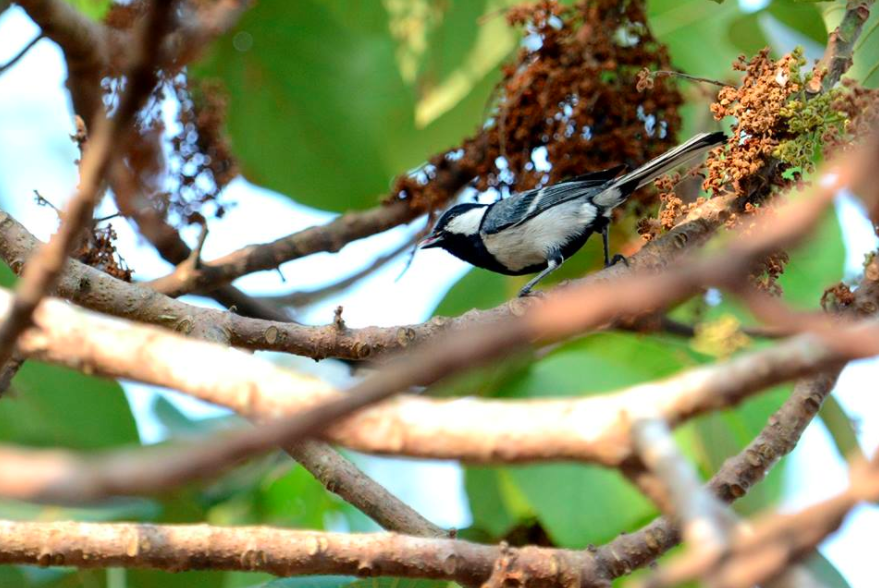
Mulanthuruthy, Kerala
Thanks to for this story about how a Robotic Fish Moves Like The Real Thing — So It Can Observe The Real Thing:

SoFi, the robotic fish, swims in for its close-up. MIT computer scientists hope SoFi will help marine biologists get a closer (and less obtrusive) look at their subjects than ever before. MIT CSAIL
Scientific advancement: It’s all in the wiggle.
OK, it’s a lot more complicated than that. But when a team of researchers at MIT unveiled their robotic fish Wednesday, one of the keys they emphasized was the graceful undulation of the prototype’s tail — which, besides being rather eye-catching, serves a crucial role in the robot’s ultimate mission: giving scientists the ability to unobtrusively observe marine wildlife remotely.
“Because the fish moves through undulating movement rather than thrusters, the impact it has on how the water moves around it is much more like what is expected of physical fish,” Daniela Rus, director of the school’s Computer Science and Artificial Intelligence Lab, tells NPR. Continue reading
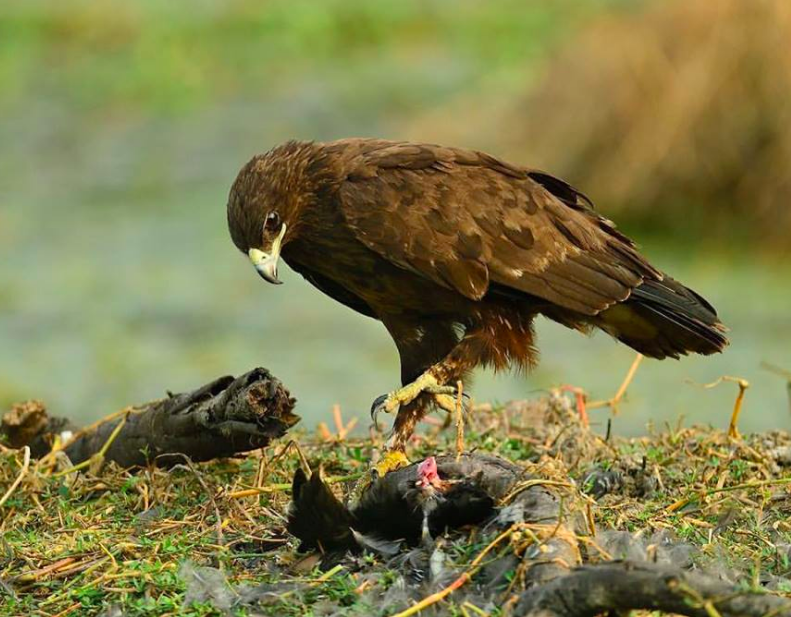
Keoladeo Ghana National Park, Rajasthan
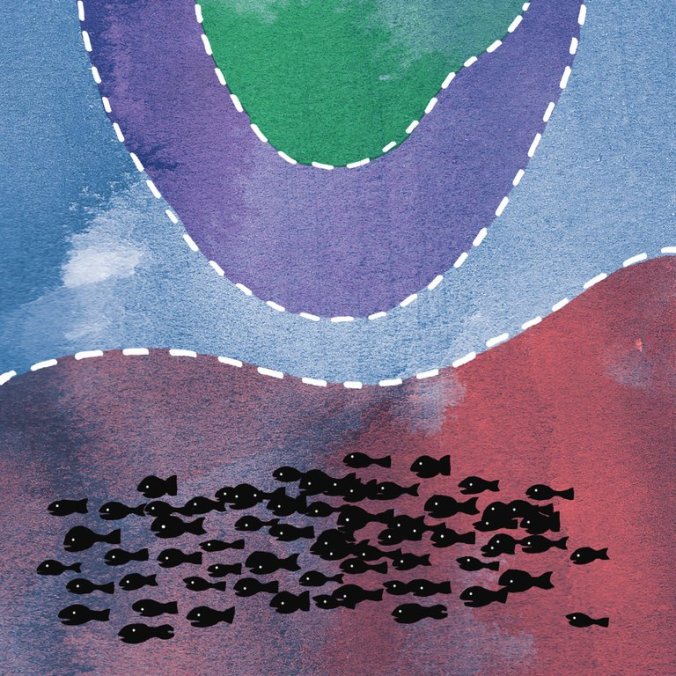
Nathaniel Russell
Our favorite stories on conservation challenges–whether marine or terrestrial–are those that highlight entrepreneurial approaches. Those stories, though, have multiple counterparts related to government approaches to conservation. In our many celebrations of various forms of ocean conservation, we have probably tended to favor quantity and scale more than emphasizing the value of science. Guilty as charged, but ready to remedy:
Bigger Is Not Better for Ocean Conservation
SAN FRANCISCO — I have spent my entire life pushing for new protected areas in the world’s oceans. But a disturbing trend has convinced me that we’re protecting very little of real importance with our current approach.
From Hawaii to Brazil to Britain, the establishment of large marine protected areas, thousands of square miles in size, is on the rise. These areas are set aside by governments to protect fisheries and ecosystems; human activities within them generally are managed or restricted. While these vast expanses of open ocean are important, their protection should not come before coastal waters are secured. But in some cases, that’s what is happening.

Baja California Sur, Mexico

Credit: Dan Charles/NPR
Thanks to Dan Charles and his salt colleagues at National Public Radio (USA) for this look at one of machine-learning’s agricultural challenges:
Robots Are Trying To Pick Strawberries. So Far, They’re Not Very Good At It
Robots have taken over many of America’s factories. They can explore the depths of the ocean, and other planets. They can play ping-pong.
But can they pick a strawberry?
The strawberry-picking robot enters a field near Duette, Fla.
Dan Charles/NPR“You kind of learn, when you get into this — it’s really hard to match what humans can do,” says Bob Pitzer, an expert on robots and co-founder of a company called Harvest CROO Robotics. (CROO is an acronym. It stands for Computerized Robotic Optimized Obtainer.)
Any 4-year old can pick a strawberry, but machines, for all their artificial intelligence, can’t seem to figure it out. Pitzer says the hardest thing for them is just finding the fruit. The berries hide behind leaves in unpredictable places. Continue reading
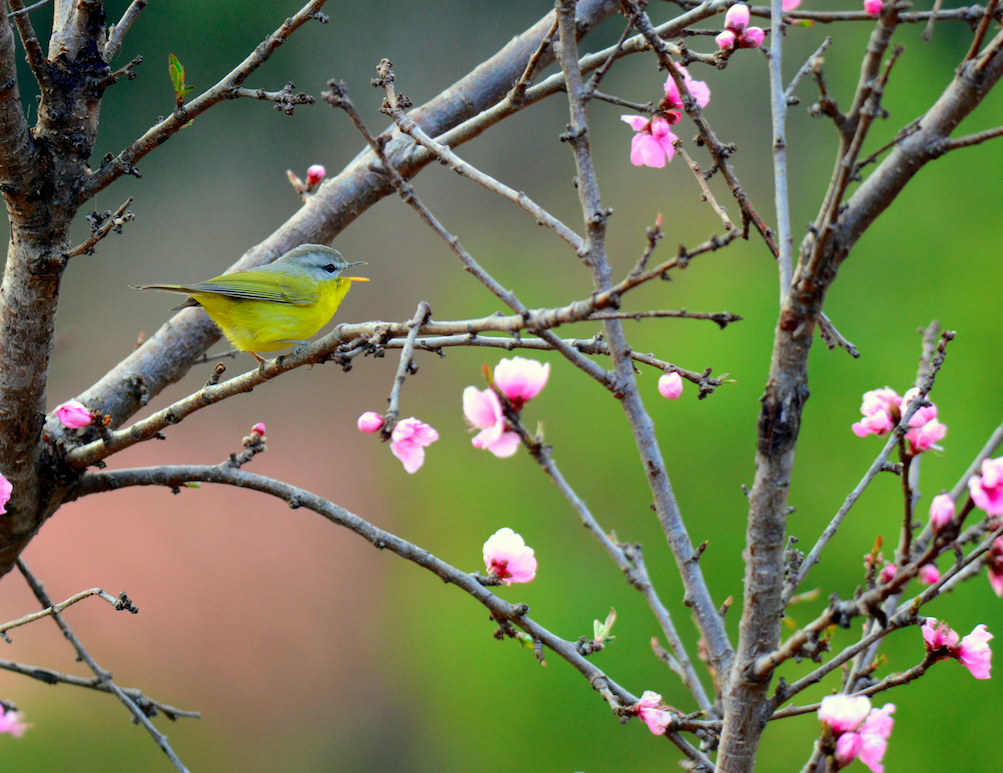
Pangot, Uttarakhand
Happy to hear that there are still such efforts (conferences such as the one described below) underway and that they are inclined to the audacious. Thanks to Brad Plumer, at the New York Times, for this report:
Kelp Farms and Mammoth Windmills Are Just Two of the Government’s Long-Shot Energy Bets
Thousands of entrepreneurs gathered near Washington this week for an annual government conference. On the agenda: unusual solutions to major clean-energy problems.
A kelp forest off Mexico’s Pacific coast. A project presented this week at an energy research conference proposes using tiny robots to farm seaweed for use in biofuels. Credit Reinhard Dirscherl/ullstein bild, via Getty Images
Off the coast of California, the idea is that someday tiny robot submarines will drag kelp deep into the ocean at night, to soak up nutrients, then bring the plants back to the surface during the day, to bask in the sunlight.
The goal of this offbeat project? To see if it’s possible to farm vast quantities of seaweed in the open ocean for a new type of carbon-neutral biofuel that might one day power trucks and airplanes. Unlike the corn- and soy-based biofuels used today, kelp-based fuels would not require valuable cropland. Continue reading

Jim Corbett National Park, Uttarakhand
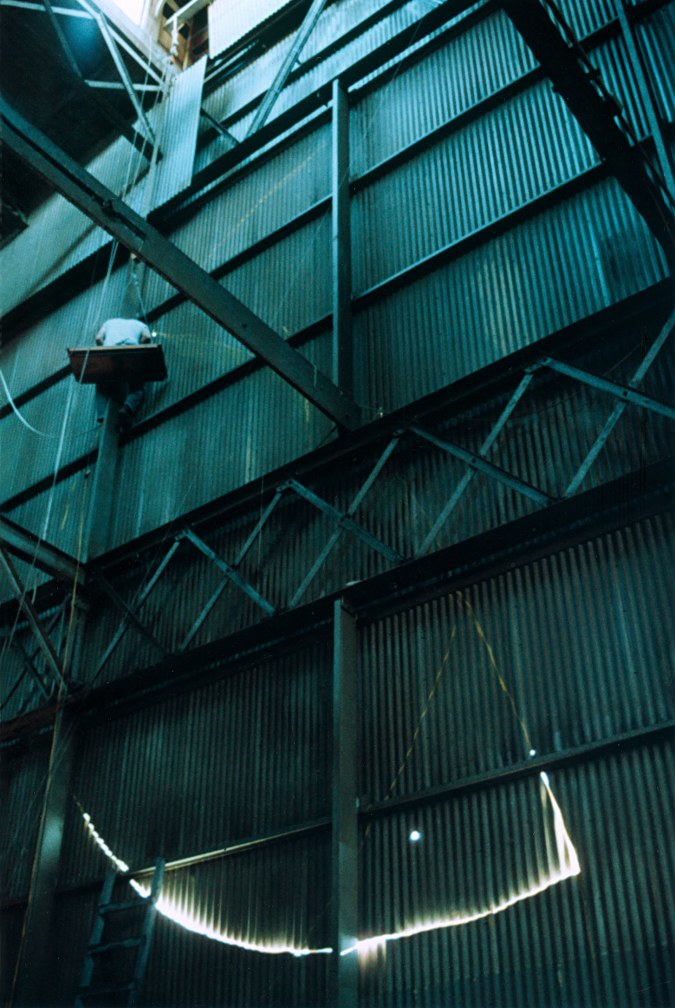
Gordon Matta-Clark’s “Day’s End” (Pier 52), 1975. Photograph Courtesy the Estate of Gordon Matta-Clark / ARS / David Zwirner
Renaissance is a word that sounds like it means something good. But not necessarily so. Sarah Cowan has this review of a show in the Bronx that sounds worthy of a visit:
The Future Did Not Have to Be Luxury Condos: Revisiting Gordon Matta-Clark
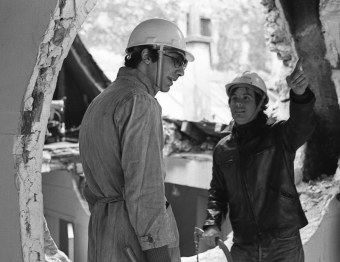
Gordon Matta-Clark (pictured left, in 1975) folded urban decay into his art. Move ahead forty years and the city’s debris is from new development. Photograph by Harry Gruyaert. Courtesy the Estate of Gordon Matta-Clark / ARS / David Zwirner
In the film “Day’s End,” the artist Gordon Matta-Clark rides a whale-size piece of corrugated metal as it is hoisted away from the wall from which he just cut it. He’s a young man, age thirty-two. The feat was filmed in the summer of 1975, in Chelsea’s abandoned Pier 52 building, where Matta-Clark attempted to make an “indoor park.” His silhouette, against the sunlight streaming in from his new view of the Hudson River, is heroic. Continue reading
juvenile – Parque del Acueducto, Cali, Colombia
 Nearly one month ago, Vox launched a new way for us to source stories. We have sourced from their website when the story fits our mission. For us to scan the news daily and link to at least one article or book review or other media that seems consistent with our mission, we increasingly bump up against the fact that producers of and channels for accessing relevant information seem to be increasing faster than we can possibly keep up.
Today we sampled from their sonic venture, a story about changes way up north, wrought by climate change, geopolitical ambitions, head in the sand-ism and other intrigue. Finding an episode like this one stretches our horizons in a healthy, productive manner:

There’s a new Cold War being fought in the North Pole between the United States and Russia (but also China, Finland, Norway, Canada, Greenland and more). Fueling the battle is the melting Arctic, which just had its warmest winter in recorded history. Vox’s Brian Resnick gives us the science before Yochi Dreazen takes us to the war.
It must also be mentioned that having outlets we trust recommend other outlets is a must. And here is an example of one we appreciate:
“Today, Explained”: An Edgy New Vox Podcast to Compete with “The Daily”
By Sarah Larson
Hosted by Sean Rameswaram, the Vox podcast “Today, Explained” feels funny, knowing, and energetic—which, in this news climate, isn’t easy. Photograph by James Bareham / Vox Media
Podcast-wise, 2017 was arguably the year of “The Daily,” the beautifully produced, gently voiced narrative-news offering from the Times, hosted by Michael Barbaro, which started last January and quickly became indispensable. The show, which parses a different news story in each episode, through a conversation with a reporter or other guest, then delivers a brief news roundup, has sufficient perspective and empathy that it produces in its listeners an intoxicating, if temporary, feeling of sanity; by now, its theme song alone cues in me a Pavlovian calm. The show garners 4.5 million unique listeners each month; in April, it will expand to public-radio syndication. Continue reading

Jim Corbett Tiger Reserve, Uttarakhand
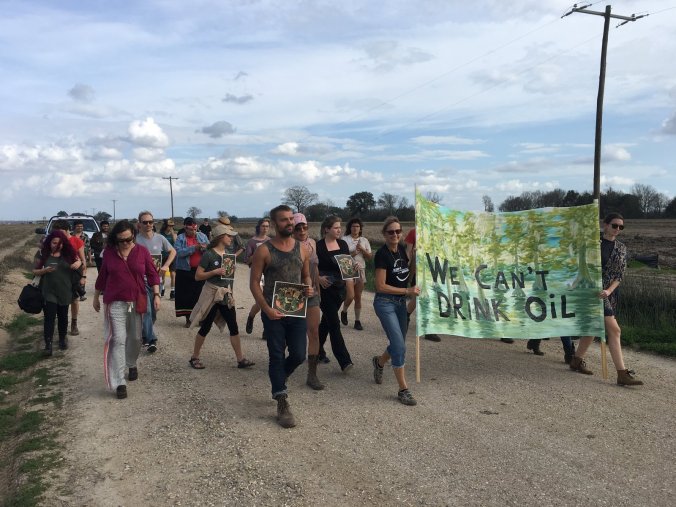
“Keep it in the ground” activists protesting the Bayou Bridge Pipeline on February 17, 2018 near Belle Rose, Louisiana. Travis Lux/WWNO
Under the current circumstances in the USA (you know what we mean) it is not straightforward to consider optimism obvious. But stranger things have happened. Thanks to National Public Radio (USA) for reminding us that when times get tough, the tough tough it out on behalf of us all:
Activist Cherri Foytlin vows to physically block construction of the Bayou Bridge Pipeline in Louisiana.
Travis Lux/WWNO
The United States oil business is booming and the country could soon be the largest crude oil producer in the world. Despite this record-breaking production, climate change activists campaigning to move away from fossil fuels say they are making progress.
Here’s the idea underpinning the ‘keep it in the ground‘ movement: to address climate change, activists say known reserves of fossil fuels will have to be left untouched instead of burned. In the meantime, they want countries to transition to renewable forms of energy such as solar and wind. Continue reading

Leander Khil photography
Volga Delta, Russia
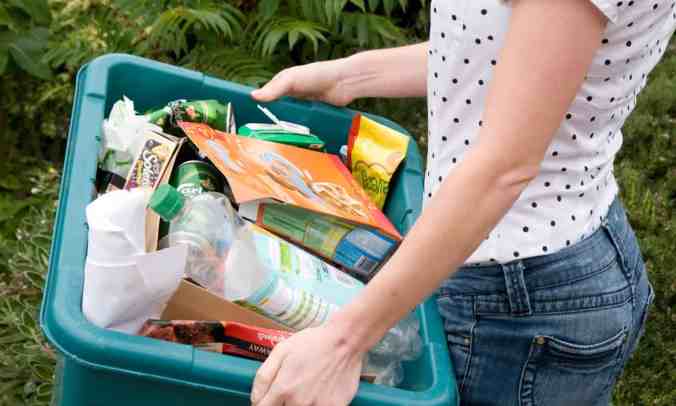
Many people aren’t sure which plastics they can recycle – and which they can’t. Photograph: Alamy
Thanks to Angela Monaghan, at the Guardian, for this reminder of the basics of recycling:
Which items can’t be recycled?
Many people think items such as plastic bags and coffee cups can be recycled when they can’t. Here are the do’s and don’ts
British consumers are increasingly willing to recycle their household waste but are failing to grasp the basics, according to the latest research by the British Science Association. Failure to get it right means that a lot of recyclable waste is going to landfill, the BSA says.
The issue is further complicated by inconsistency among councils, which make their own rules and funding decisions on recycling collections.
Common mistakes include putting tissue boxes in the recycling bin without first removing the plastic insert. On the flipside, people often wrongly think that empty deodorant aerosols cannot be recycled. Continue reading



 Organikos