
Atlanta, Georgia
Atlanta, Georgia
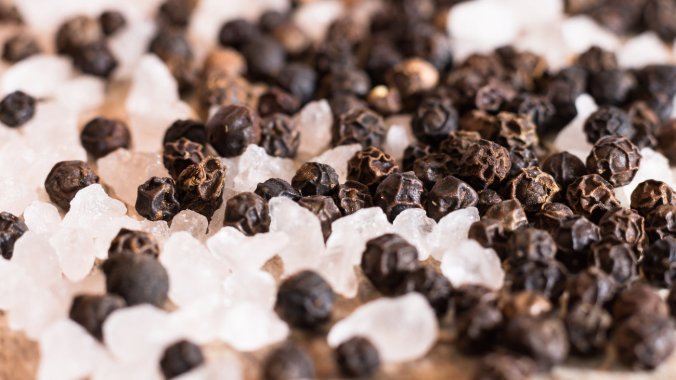
In European cooking, salt reigned supreme, and pepper was one of many spices used in heavily seasoned dishes. When they met, they were destined to be. Or, rather, it was destined that they would meet. Theo Crazzolara/Flickr
For this story, thanks to Natalie Jacewicz, a science writer based in New York City, and to National Public Radio (USA) whose attention to foodways is always welcome:
Salt and pepper shakers are so omnipresent on tabletops that adding a dash of the white or black stuff (or both!) is almost a dining rite. The seasonings pair well with just about everything and they go together like — well, salt and pepper. Continue reading

Gallon Jug Estate, Belize
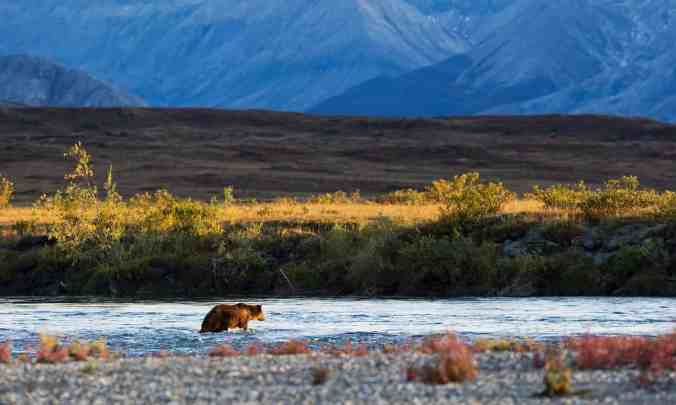
America’s public lands belong to all of us. We owe it to ourselves to save them
A truly noble idea – one deeply democratic in its inspiration and one that honors the human need to be in relationship to awe and majesty.
America’s public lands.
This idea was seeded by early American settlers, who came here to escape a class system in Europe that excluded them from land – owning it, hunting on it, surviving on it. Conservation was articulated as a national endeavor by hunters and foresters with the unique discernment that our game and timber resources were not boundless, and required professional management to remain bountiful.
This was a hard-won national ethos. From the pitch battles for their existence, our public lands were imbued with moral standing and national sanction: the idea that they “belong” to all of us. Continue reading

Dinokeng Game Reserve, Pretoria, SA

Pregnant female sawfish found by Dr. Dean Grubbs and team at Andros Island. Photo © Dean Grubbs
Thanks to Ted Williams at Cool Green Science:
Recovery: Smalltooth Sawfish Flickering Back
What goes down April 12, 2017 on a Sanibel, Florida beach is both encouraging and discouraging.
Angler and shark tagger Elliot Sudal hooks something huge. A crowd gathers including Vice President Mike Pence accompanied by his entourage of Secret Service agents who rifle through Sudal’s tackle box. Not surprisingly, they find (and temporarily confiscate) knives. But Sudal, seated and straining on the rod with blistered hands, is hardly a threat. Pence safely takes photos, then poses for a photo next to the embattled Sudal. Continue reading
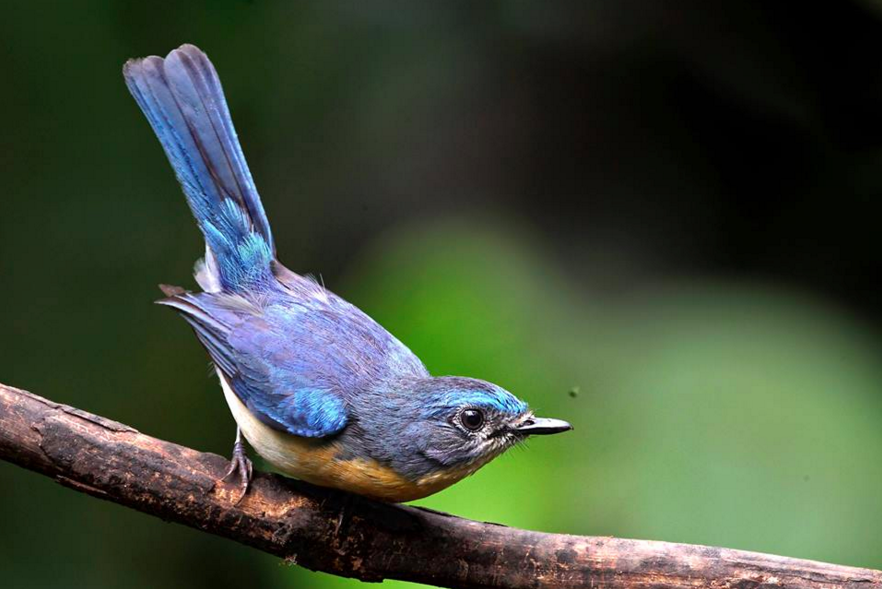
Mysore, Karnataka
Amid the Plunder of Forests, a Ray of Hope
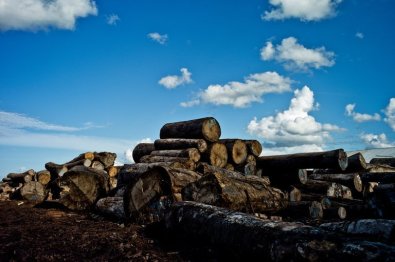
A sawmill in Peru, where more than half of the logging operations are illegal. Credit Tomas Munita for The New York Times
Strange as it may sound, we have arrived at a moment of hope for the world’s forests. It is, admittedly, hope of a jaded variety: After decades of hand-wringing about rampant destruction of forests almost everywhere, investigators have recently demonstrated in extraordinary detail that much of this logging is blatantly illegal.

Mar-a-Lago, Entrance to Master Suite from Cloister, 1967,
United States Library of Congress’s Prints and Photographs
This recent op-ed has a perfect final thought, and the photo here to the left is our way of offering a preview to that point. Richard Conniff, the op-editorialist, has frequently been featured in our pages, linking this type of story. You might also click the green cover below to go to one example of how this progress has been years in the making), but read this editorial all the way through before being distracted by the side stories, though they are equally relevant and important. Conniff continues:

And surprisingly, people actually seem to be doing something about it. In November, the European Court of Justice put Poland under threat of a 100,000-euro-per-day fine for illegal logging in the continent’s oldest forest, and early this month Poland’s prime minister fired the environment minister who authorized the logging.
In Romania, two big do-it-yourself retail chains ended purchasing agreements with an Austrian logging giant implicated in illegal logging there. And in this country, the Office of the United States Trade Representative, normally dedicated to free trade at any cost, has barred a major exporter of Peruvian timber from the American market after repeated episodes of illegal shipments. Continue reading
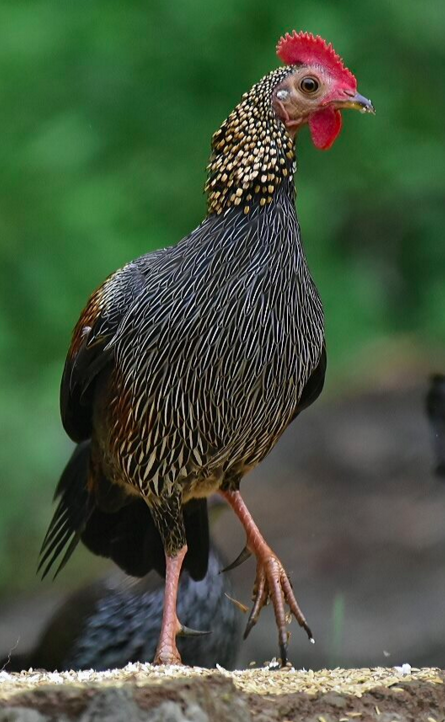
male –Thattekkad Bird Sanctuary, Kothamangalam, Kerala
I don’t normally expect to get my daily news from Instagram, unless it’s an update from a personal friend. I follow the company Patagonia because they feature beautiful photos like those above, but yesterday they shared this fantastic announcement. Visiting Patagonia about a decade ago was an amazing experience that I hope to repeat before too long, and I am thrilled that there will be some new national parks to visit. Jonathan Franklin reports for The Guardian:
McDivitt Tompkins, the former chief executive of the outdoors company Patagonia, handed over 1m acres to help create the new parks. The Chilean government provided the rest in federally controlled land.
McDivitt Tompkins has spent 25 years working on land conservation in Chile with her late husband Doug, who founded North Face and Esprit. Doug Tompkins died in a kayaking accident in Chile in 2015.
“This is not just an unprecedented act of preservation,” said [Chile’s President Michelle] Bachelet, who flew to this remote Patagonian valley on Monday to receive the donation. “It is an invitation to imagine other forms to use our land. To use natural resources in a way that does not destroy them. To have sustainable development – the only profitable economic development in the long term.”

Eaglenest Wildlife Sanctuary, Arunachal Pradesh

In his nearly five years aboard H.M.S. Beagle, Charles Darwin catalogued a dizzying array of new creatures. But how to show them to the people back home? Illustration by R. Fresson

It is a fine way to start a new week, thinking of a young person setting sail, and to narrow the focus of that thought, consider color. We appreciate the notice by Michelle Nijhuis in the current issue of the New Yorker magazine about the upcoming re-issuing of this book, and her comment about it is welcome. Less welcome is the fact that if you click on her link to the book, or search on the title of the book with a fresh search, you will be directed to Amazon. At least if you are searching from the USA. Even from a USA-based search you can find alternatives, but from sources in places such as this excellent shop in the UK, or this one in Scandinavia. With that in mind, if the review below makes you think about purchasing the book, please consider clicking the image to the left which will link you to a bookstore in the USA that is offering it for pre-sale. Either way, enjoy this for now:
The Book That Colored Charles Darwin’s World
“I had been struck by the beautiful colour of the sea when seen through the chinks of a straw hat,” Charles Darwin wrote, in late March, 1832, as H.M.S. Beagle threaded its way through the Abrolhos Shoals, off the Brazilian coast. The water, he wrote, was “Indigo with a little Azure blue,” while the sky above was “Berlin with [a] little Ultra marine.”
Darwin, then twenty-three, was only three months into the nearly five-year adventure that would transform his life and, eventually, the way that humans saw themselves and other species. As the voyage’s so-called scientific person, he would collect masses of rocks, fossils, animals, and plants, periodically shipping his specimens to Cambridge in containers ranging from barrels to pillboxes. Like other naturalists of his time, though, his primary documentary tool was the written word, and during the voyage he drew many of his words from a slim volume called “Werner’s Nomenclature of Colours,” published in 1814 by the Scottish artist Patrick Syme.
Syme’s guide, a facsimile of which will be released in early February by Smithsonian Books, contains samples, names, and descriptions of a hundred and ten colors, ranging from Snow White to Asparagus Green to Arterial Blood Red to, finally, Blackish Brown. Based on a color-naming system developed in the late eighteenth century by the German mineralogist Abraham Werner, the guide is full of geological comparisons: Grayish White is likened to granular limestone, Brownish Orange to Brazilian topaz. Syme, a flower painter and art teacher, added comparisons from the living world. To Werner’s eyes, the Berlin Blue that Darwin saw in the Atlantic sky resembled a sapphire; to Syme, the wing feathers of a jay. Continue reading
Baja California Sur, Mexico
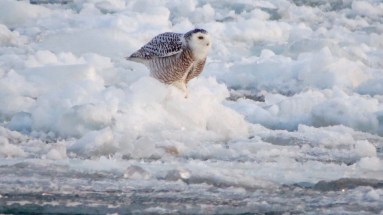
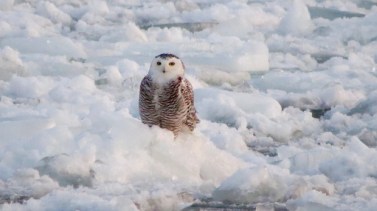
Every now and then, it is good to stop and smell the roses, which if you are a snowy owl looks like the scene above. Thanks to National Public Radio (USA) for bringing this to our attention:
Facebook | Gary Cranfield
Gary Cranfield recorded the video last weekend while he was out on a walk with his girlfriend, Betsy Waterman, along Lake Ontario near Oswego, N.Y.
“There are usually sightings this time of year and historically there have been snowy owls in this place for years and we decided to check it out,” Cranfield, 69, told Syracuse.com.
You can watch the results of that wintry expedition above. And for those of you out there worrying, Waterman assures us the bird was not stuck — they watched it chill for 30(!) minutes on the floe before it flew away to another one.
And to David Figura for this original report:
Facebook | Gary Cranfield
Cayuga County resident Gary Cranfield and his girlfriend, Betsy Waterman, enjoy the outdoors and love to go in search of wildlife to take pictures.
The two were out Saturday looking for snowy owls after hearing some might be out on the southeastern shore of Lake Ontario near Oswego. What they ended up getting was mesmerizing – a captivating video and photos of a snowy perched on some ice in a bay and bobbing with the waves.
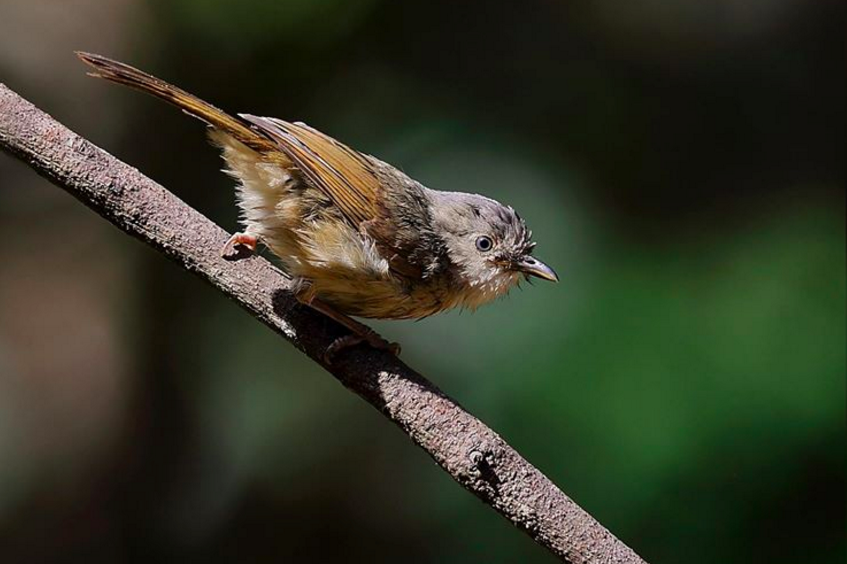
Dandeli Wildlife Sanctuary, Karnataka

Coogan’s faced a rent increase so extreme that it could not be misconstrued as a negotiating ploy. The response from the neighborhood was swift and overwhelming. Animation by Christopher Hopkins-Ward
Jim Dwyer, a New York Times reporter who we have only had reason to feature once in these pages, should have remained on our radar once we saw his attention to one of our heroes, Chuck Feeney. In particular, if we had snooped around one year ago after reading that article, we would have found this. Interesting fellow, beyond his journalistic talents. But he dropped off our radar, and for the last year we have probably missed many stories that would fit in these pages. Case in point, he wrote a story a couple weeks ago that failed to capture our attention.
And what a failure, though we might be forgiven the mistake. In the early paragraphs he mentions that the bar at the center of the story is closing because its landlord, a hospital, has plans for the building where the bar is located. That sounds not only ho-hum, but perhaps like progress; hospitals are the most communitarian of institutions, right? We correct that now:
Coogan’s, an Uptown Stalwart, Makes Its Last Stand
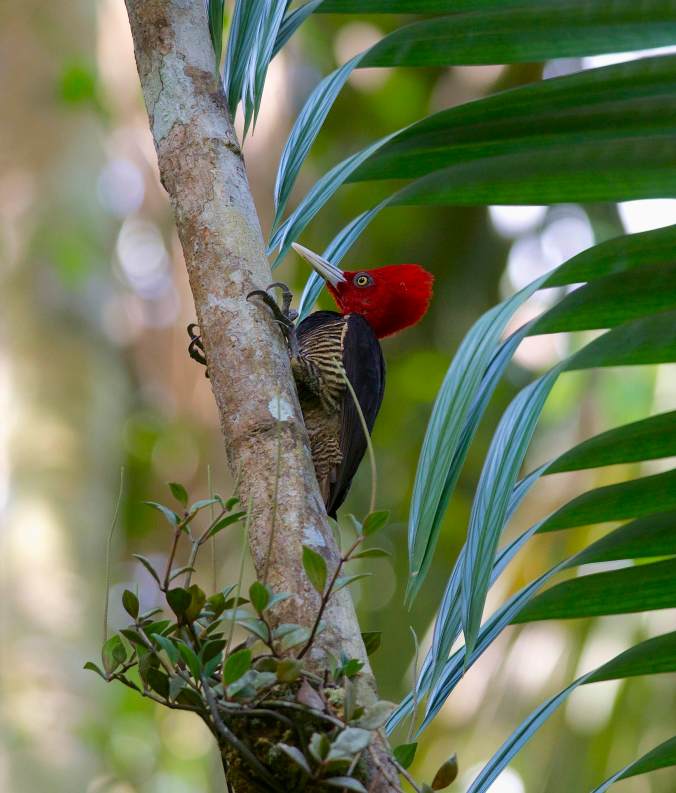
Gallon Jug Estate, Belize
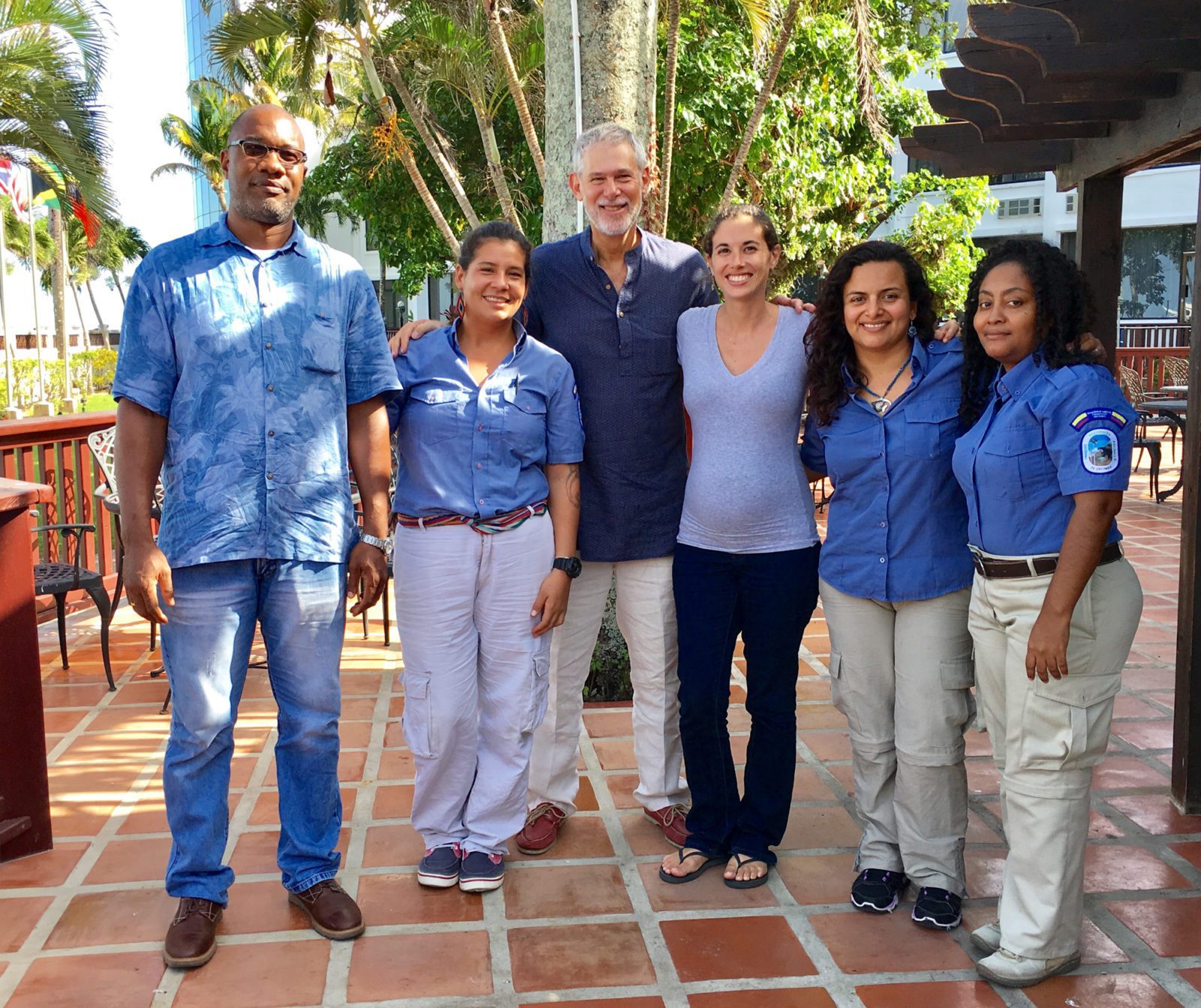
The four Colombian exchange delegates with Phil Karp and Jen Chapman, Blue Ventures’ Country Coordinator in Belize.
As in other fields of capacity building for development there is a growing recognition within the marine conservation community of the power of practitioner–practitioner exchange. Whether they take the form of ‘barefoot’ exchanges between fishers, or more formal exchanges involving Marina Protected Area (MPA) managers and policymakers, such exchanges are emerging as an extremely effective way of sharing, replicating, adapting and scaling up successful solutions to the challenges of marine protection and avoiding repetition of unsuccessful approaches. Practitioner exchanges are particularly effective for sharing ‘how to’ or tacit knowledge about solutions, as such tips and tricks tend not be fully recorded in written descriptions or case studies.
Practitioner exchange as a form of capacity building represents a departure from more traditional approaches such as technical assistance or deployment of expert advisors. In the latter case, external experts are relied on to share successful solutions with which they are familiar only through research, and may therefore lack a complete understanding of the full range of factors and potential pitfalls that could influence the successful implementation of an approach elsewhere.
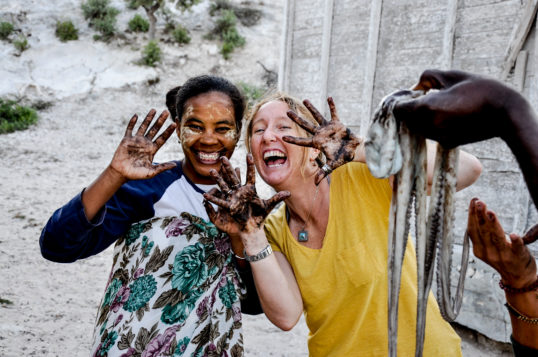
Read more about Blue Ventures sharing the temporary fisheries closure model through community exchange.
Blue Ventures has been very active in practitioner exchanges for some time, focused on sharing its pioneering work on the use of periodic, short-term fishery closures as an effective solution to balancing species conservation and livelihoods. Continue reading

Rarely sighted in India
Loktak Lake, Manipur

Thanks to Chris Goodall for this quick check-list, mostly relevant to northern clime folks:
How to reduce your carbon footprint
From cutting down on meat to contacting your local representatives and investing in clean energy, here are 15 ways to help reduce global carbon emissions Continue reading

 Organikos