
Outskirts of Bangalore, Karnataka
Outskirts of Bangalore, Karnataka
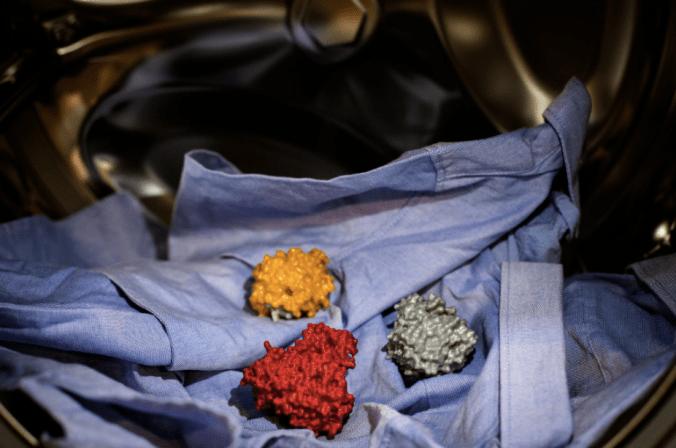
Models of stain-fighting enzymes, displayed on clothes in a washing machine. Credit Carsten Snejbjerg for The New York Times
We’ve been highlighting mycological innovation since the early days of this site, and our enthusiasm has yet to wane. The range of fungi-power will never cease to amaze.
Fighting Climate Change,
One Laundry Load at a TimeA Danish biotechnology company is trying to fight climate change — one laundry load at a time. Its secret weapon: mushrooms like those in a dormant forest outside Copenhagen.
In the quest for a more environmentally friendly detergent, two scientists at the company, Novozymes, regularly trudge through the mud, hunting for oyster mushrooms that protrude from a fallen beech or bracken fungi that feast on tough plant fibers. They are studying the enzymes in mushrooms that speed up chemical reactions or natural processes like decay.
“There is a lot going on here, if you know what to look for,” said Mikako Sasa, one of the Novozymes scientists.
Their work is helping the company develop enzymes for laundry and dishwasher detergents that would require less water, or that would work just as effectively at lower temperatures. The energy savings could be significant. Washing machines, for instance, account for over 6 percent of household electricity use in the European Union.
Enlisting enzymes to battle dirt is not a new strategy. Over thousands of years, mushrooms and their fungi cousins have evolved into masters at nourishing themselves on dying trees, fallen branches and other materials. They break down these difficult materials by secreting enzymes into their hosts. Even before anyone knew what enzymes were, they were used in brewing and cheese making, among other activities. Continue reading

Cherai, Kerala

A traditional pot of Yemeni coffee, mixed with cardamom and ginger, is served with a Yemeni sweet honey bread at a new Yemeni coffee shop in Dearborn, Mich. Owner Ibrahim Alhasbani sees himself as part entrepreneur, part cultural ambassador for his home country. Zahir Janmohamed
The salt, at National Public Radio (USA) has a story today about coffee, entrepreneurship and cultural illumination that is about tasting the place, a once and future key theme of our pages:
The 35-year-old owner of a new Yemeni coffee shop in Dearborn, Mich., never imagined he would enter the coffee business. Ibrahim Alhasbani was born in Yemen and grew up on a coffee farm outside the country’s capital city of Sana.
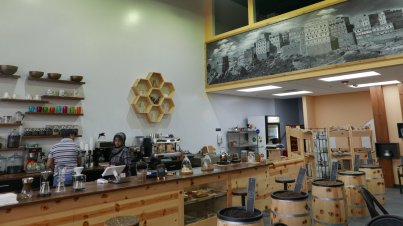
A view inside Qahwah House, a Yemeni coffee house in Dearborn, Mich. The city has a high concentration of Arabs and Arab Americans (qahwah means coffee in Arabic). Zahir Janmohamed
“I had enough coffee in my life,” Alhasbani says. “But when I moved to America and the problems started back home, I told myself I have a chance to show that Yemeni coffee is really good and that Yemen is more than just violence and war.”
A couple of months ago, he opened Qahwah House in Dearborn, a city with a high concentration of Arabs and Arab Americans (qahwah means coffee in Arabic). Continue reading

Dinokeng Game Reserve, Pretoria, SA
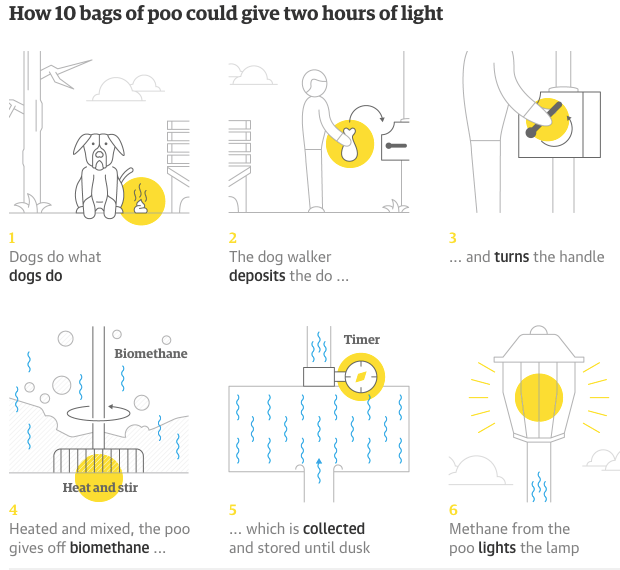
Guardian Graphic
Biomethane is an age-old concept in much of what is frequently called the “developing world”, so it’s difficult to overstate the irony of “1st world” adoption. That said, it’s heartening to read of more projects aimed at maximizing poo’s full potential.
From stools to fuels: the street lamp that runs on dog do
A long winding road climbs into a gathering dusk, coming to an abrupt dead end in front of a house. Here, a solitary flickering flame casts out a warm glow, illuminating the nearby ridge line of the Malvern Hills.
Below the light sits a mysterious green contraption resembling a cross between a giant washing machine and a weather station. This is the UK’s first dog poo-powered street lamp, and it is generating light in more ways than one.
The idea seems simple enough: dog walkers deposit the product of a hearty walk into a hatch and turn a handle. The contents are then broken down by microorganisms in the anaerobic digester, producing methane to fuel the light, and fertiliser…
…Humans have used animal dung as fuel since the neolithic period, and have known how to get flammable gas from decaying organic matter since the 17th century. Small-scale anaerobic digesters are commonplace in many developing countries, while larger plants producing heat and electricity from animal manure and human sewage have long been used in the west.
Yet the energy in most excrement still goes to waste. Continue reading
Lohktak Lake, Manipur

At Opal Springs Water Company in Oregon, raw water is prepared for shipping to the company Live Water. Credit Leah Nash for The New York Times
Closing out 2017, a note on water. Nellie Bowles wrote this story, Unfiltered Fervor: The Rush to Get Off the Water Grid, for the Food section of the New York Times. It could just as well have been in either the Science or the Tech section.
One new technology allows anyone, in dry or humid climates, to produce and store their own drinking water. The story is in the Food section presumably because it is a luxury for the improvement of your drinking pleasure; but the implications for natural resource management are interesting. And what about the projects that societies have embarked upon, forever, to determine ever-better ways to distribute necessities like water?
SOURCE: a HydropanelTM that makes drinking water from sunlight and air

A standard residential SOURCE array is made up of two panels: one primary panel and one additional panel with array sizes designed to meet your drinking water needs.
The story includes several technologies that seem worth knowing about:
Gallon Jug Estate, Belize
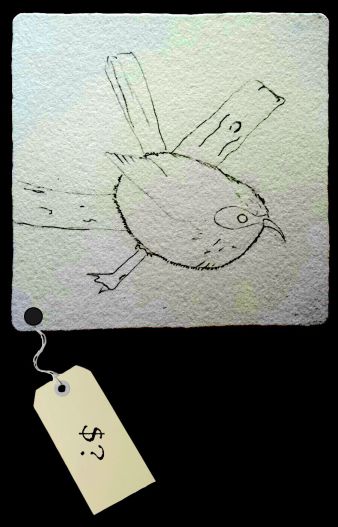
Image by the author
I recently came across an Oxford professor’s blog that revolves mostly around conservation and birding, and one of his posts was particularly interesting to me. In it, Professor Paul Jepson discusses the increasing presence of photography in the British birding sphere, and what bird photography means for the hobby of birding/birdwatching. I encourage you to read his article (I’ll put a link below), but will first share one idea that Jepson brings up toward the end of the piece, and which was very thought-provoking:
Bird photography is part of the socio-technological assembly that is shaping futures. If birdwatching is to be a cultural force in the twenty-first century, our bird reserves will need to embrace developments and directions in digital technologies. … My thought experiment imagines a system of pay-for nature hides with an observation tower, like the one in Muritz National Park outside Berlin, as its centre piece. Birding has a strong ‘nature as a public good’ mentality. While many bird photographers agree with this principle, they are also willing to pay for entry to the facilities and special places that enable them to get the shot they desire. Nature hides are popping up across Britain and 2017 hide day rates are £75 for the opportunity to photograph Common Kestrels Falco tinnunculus, £99 for Kingfishers and £150 for Black Grouse.
Although I enjoy taking photos of birds and sharing them online, I do not consider myself a bird photographer, partly because I don’t have the specialized gear (my camera is a point-and-shoot model, though its exceptional 65x optical zoom is useful for bird photos). That being said, Continue reading

Tiruchirappalli, Tamil Nadu
Thanks to Fred Pearce over at Yale Environment360 for this puzzler:
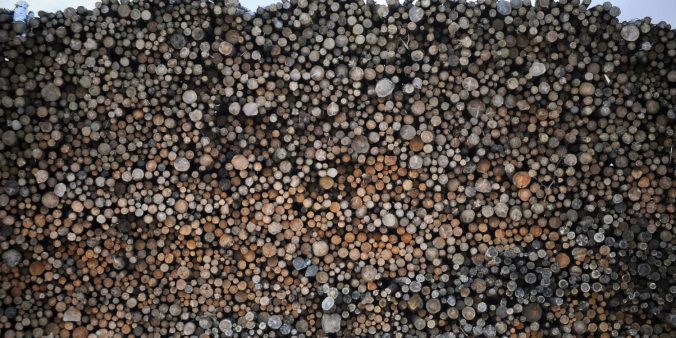
Carbon Loophole: Why Is Wood Burning Counted as Green Energy?
A loophole in carbon-accounting rules is spurring a boom in burning wood pellets in European power plants. The result has been a surge in logging, particularly in the U.S. South, and new doubts about whether Europe can meet its commitments under the Paris accord. Continue reading

Leimhakong, Manipur
 Battery technology is the thing. It seems to be a holy grail that environmentalists and technologists can agree on for helping us, humans who want a habitable planet for generations to come, mitigate climate change. And occasionally it is at the core of short term fixes. Once the dust has settled on 2017, and we are looking back on stories that were on the positive side of long term impact on the planet, this story will probably get more attention. For now it seems like a footnote at the end of the year to note that this Tesla scheme actually seemed to work:
Tesla Grid Storage Battery Reacts Insanely Fast To Coal Power Outage
Last spring, Elon Musk made a daring bet. He claimed he could build and install the world’s largest grid storage battery in South Australia within 100 days of the date a contract was signed or the system would be free. The contract was signed on September 29. Installation was completed by the third week of November. On December 2, the giant 129 MWh system was activated. Continue reading

Dinokeng Game Reserve, Pretoria, South Africa

John Hersey

Korangumudi, Valparai, Tamil Nadu

Felisa Rogers at the Guardian provides some much needed late 2017 perspective on opportunities to collaborate for the common good:
How the fight to save a bird species shows how to bridge the red/blue divide
A plan to save the sage grouse was a rare instance where ranchers, the timber industry, scientists, landowners and environmentalists all agreed on something
At 5am, the day is black, and resounds with the steady drum of rain. My husband Rich is getting ready for work. He oils his leather gloves and fills a Thermos. He’ll spend a 10-hour day in the downpour: tramping through thorny salmonberry and wading through the roaring creeks. Continue reading

Gallon Jug Estate, Belize

Roy Miller fills cans with cooked collard greens. Dan Charles/NPR
Thanks to the salt at National Public Radio (USA):
In A New Deal-Era Cannery, Old Meets New
Allie Hill got really serious about eating local food about eight years ago. She was cooking for three young children. “I was able to go to the farmers’ market and find my produce — fruits and veggies,” she says. “I was able to find meat, and even some dairy.”
She simply couldn’t find local version of other foods, though. These are foods that fill her pantry, like marinara sauce, apple sauce and everything else that comes to us preserved in sealed jars and cans. Continue reading
 Organikos