
male – Outskirts of Mahananda Wildlife Sanctuary, West Bengal
male – Outskirts of Mahananda Wildlife Sanctuary, West Bengal

The Estonian government is so eager to take on big problems that many ambitious techies leave the private sector to join it.Illustration by Eiko Ojala
This is about people with an idea pursuing it with confidence in the ability of government to achieve something that its people want. Not everyone, everywhere, would want this to be sure. But it is a vote in favor of pursuing the common good together. It is worth the read, on a cold winter’s night (or wherever you may be) for a glimpse of the future for those in small, flexible places:
Estonia, the Digital Republic
Its government is virtual, borderless, blockchained, and secure. Has this tiny post-Soviet nation found the way of the future?
Up the Estonian coast, a five-lane highway bends with the path of the sea, then breaks inland, leaving cars to follow a thin road toward the houses at the water’s edge. There is a gated community here, but it is not the usual kind. The gate is low—a picket fence—as if to prevent the dunes from riding up into the street. The entrance is blocked by a railroad-crossing arm, not so much to keep out strangers as to make sure they come with intent. Beyond the gate, there is a schoolhouse, and a few homes line a narrow drive. From Tallinn, Estonia’s capital, you arrive dazed: trees trace the highway, and the cars go fast, as if to get in front of something that no one can see. Continue reading

Cherai, Kerala
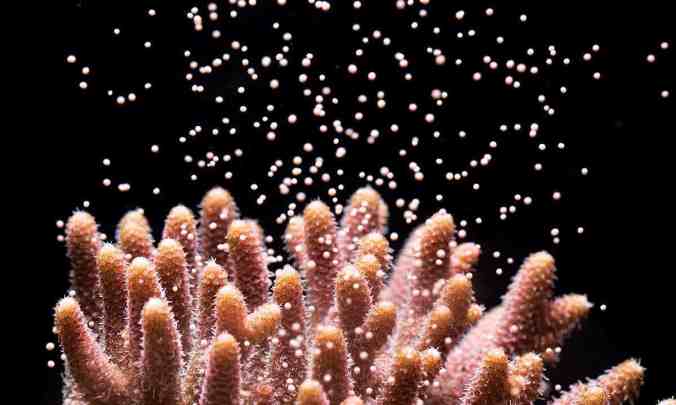
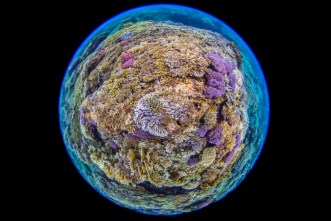
Coral spawning at the Horniman museum. Photograph: James Craggs/Horniman Museum
The Horniman Museum and Gardens in the UK is doing important work related to coral reef regeneration. Thanks to Damian Carrington and the Guardian for bringing this to our attention:
New lab-bred super corals could help avert global reef wipeout
Pioneering research on cross-species coral hybrids, inoculations with protective bacteria and even genetic engineering could provide a lifeline for the ‘rainforests of the oceans’
Coral reefs are globally important habitats
New super corals bred by scientists to resist global warming could be tested on the Great Barrier Reef within a year as part of a global research effort to accelerate evolution and save the “rainforests of the seas” from extinction.
Researchers are getting promising early results from cross-breeding different species of reef-building corals, rapidly developing new strains of the symbiotic algae that corals rely on and testing inoculations of protective bacteria. They are also mapping out the genomes of the algae to assess the potential for genetic engineering.
Planulae held in the tentacles of Tubastrea coccinea prior to release
Innovation is also moving fast in the techniques need to create new corals and successfully deploy them on reefs. One breakthrough is the reproduction of the entire complex life cycle of spawning corals in a London aquarium, which is now being scaled up in Florida and could see corals planted off that coast by 2019. Continue reading

Dinokeng Game Reserve, Pretoria, SA
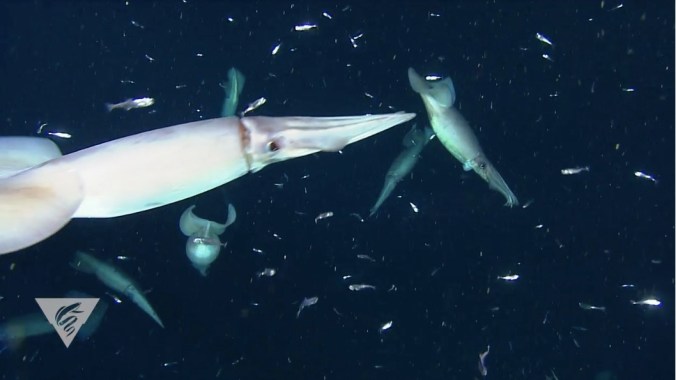
MBARI
Thanks to Joanna Klein:
What Eats What: A Landlubber’s Guide to Deep Sea Dining
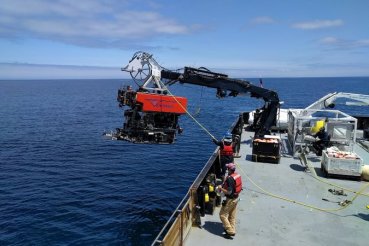
A remotely operated underwater vehicle, or R.O.V., deployed by the Monterey Bay Aquarium Research Institute, which captured images of underwater creatures devouring each other — at least, those that didn’t flee it. CreditAnela Choy/Monterey Bay Aquarium Research Institute
You’ll never go to dinner in the deep sea. It’s dark, vast and weird down there. If the pressure alone didn’t destroy your land-bound body, some hungry sea creature would probably try to eat you.
Fortunately for you, something else has spent a lot of time down there, helping to prepare this guide to deep sea dining.
For nearly three decades, robots with cameras deployed by the Monterey Bay Aquarium Research Institute have glided through the ocean off the coast of central California at depths as deep as two and half miles below. Continue reading
Mahananda Wildlife Sanctuary, West Bengal

Time and again, the petroleum industry has used its political might to stymie global action on climate change. Now cities and states have become the new battleground. Photograph by Robert Nickelsberg / Getty
Some things we lose slowly, which seems better than losing them quicker; other things we gain too slowly:
The Movement to Divest from Fossil Fuels Gains Momentum
Tuesday should have been a day of unmitigated joy for America’s oil and gas executives. The new G.O.P. tax bill treats their companies with great tenderness, reducing even further their federal tax burden.
Part of the Arctic National Wildlife Refuge, known as the 10-02 area, serves as the summer breeding ground for two hundred thousand caribou. Photograph by The Asahi Shimbun via Getty
And the bill gave them something else they’ve sought for decades: permission to go a-drilling in the Arctic National Wildlife Refuge. But, around four in the afternoon, something utterly unexpected began to happen. A news release went out from Governor Andrew Cuomo’s office, saying that New York was going to divest its vast pension-fund investments in fossil fuels. The state, Cuomo said, would be “ceasing all new investments in entities with significant fossil-fuel-related activities,” and he would set up a committee with Thomas DiNapoli, the state comptroller, to figure out how to “decarbonize” the existing portfolio. Continue reading

Cherai, Kerala

 We are among those hoping that the future of chocolate is tastier, but we thankfully missed the mistaken headlines highlighted in this story below (thanks to the salt at National Public Radio, USA). So no false hopes dashed, but we pass this along in the interest of science. And to highlight an author who has recently come to our attention. A couple of us who contribute here have a copy of Simran Sethi’s book Bread, Wine, Chocolate: The Slow Loss of Foods We Love (click to the right to go to there) on our nightstand currently; she also podcasts on the topic of chocolate over at The Slow Melt (click above to go there).
Sorry Folks, Climate Change Won’t Make Chocolate Taste Better
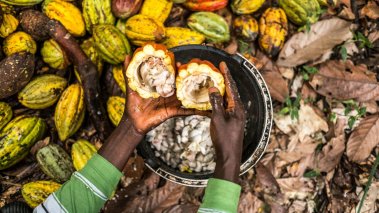
A cocoa farmer opens cacao pods with a stick to collect cocoa beans at his farm in Beni in the Democratic Republic of Congo. Eduardo Soteras/AFP/Getty Images
Two years ago, news headlines blared, “Cheese really is crack,” citing research that was widely misinterpreted as asserting cheese was addictive. Now, it’s chocolate’s turn.
Last week, several publications celebrated a new study that highlights the impacts of climate change on cocoa, stating global warming might make chocolate taste better. “Good news, chocolate-lovers,” wrote one outlet, “climate change may have a silver lining.”
Sadly, it’s not true. Continue reading
Gallon Jug Estate, Belize

Heterosphecia tawonoides puddling on a dry leaf washed out by the river. Photograph: Courtesy of Marta A. Skowron Volponi
Thanks to the Guardian for sharing this bit of good news:
Lost species of bee-mimicking moth rediscovered after 130 years
The rare oriental blue clearwing, that disguises itself as a bee, was spotted in the Malaysian rainforest
A moth that disguises itself as a bee and was previously only identified by a single damaged specimen collected in 1887 has been rediscovered in the Malaysian rainforest by a lepidopterist from Poland.
The oriental blue clearwing (Heterosphecia tawonoides) was seen “mud-puddling” – collecting salts and minerals from damp areas with its tongue-like proboscis – on the banks of a river in Malaysia’s lowland rainforest, one of the most wildlife-rich – and threatened – regions on Earth. Continue reading

Bangalore, Karnataka
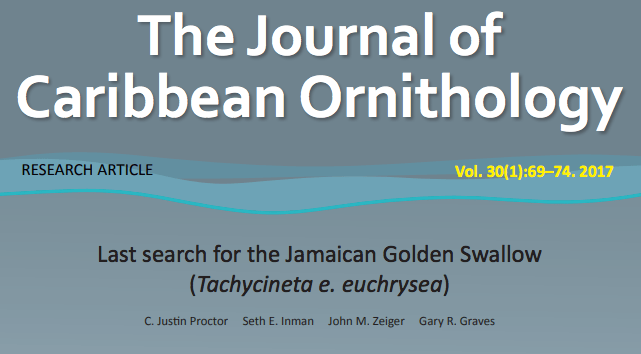
Spoiler alert: the search occurred about three years ago. We didn’t find any Golden Swallows.
If you were a regular visitor to this site in the first half of 2015, you probably remember the slew of posts we had on the Smithsonian Institution’s expedition to Jamaica to search for the subspecies of Golden Swallow (a type of bird, in case that needs clarification). The only other known population of this species is on the island of Hispaniola, in the countries of Haiti and Dominican Republic, but the Jamaican population hadn’t been seen in about thirty years, and Justin, John and I were tasked with scouring the final remote areas of the Jamaican mountains that hadn’t been rigorously checked yet.

Pingtung, Taiwan
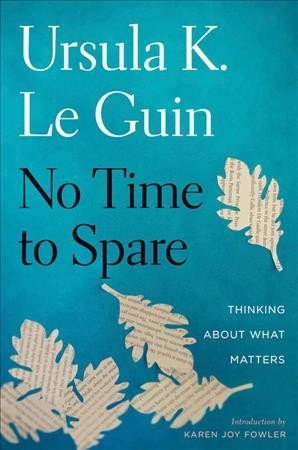 The author does not frequently show up in these pages. But when she does, it is worth noting because she says things that matter, and that gets us thinking. In the case of this book she is stating the obvious, that there is no time to spare. But sometimes it is good that someone of her stature states it anyway. Thanks to National Public Radio (USA) for this review:
Ursula K. Le Guin’s mastery of fiction has remained so consistent throughout her decades-long career, it’s easy to overlook her accomplishments in other forms. Sure, she’s the author of iconic, award-winning science fiction novels such as 1969’s The Left Hand of Darkness and 1971’s The Lathe of Heaven, not to mention the beloved fantasy series The Earthsea Cycle, which began in 1968. But those distinct works share Le Guin’s firm grasp of poetic language, science, and history. Accordingly, she’s a brilliant poet, albeit a less recognized one. Even further down on her résumé are her wins as a nonfiction writer. Her 2016 collection of essays and reviews, Words Are My Matter, won the Hugo Award for Best Related Work in 2017, despite the fact that the book did not focus exclusively on science fiction — nor do her other nonfiction collections, including The Wave in the Mind from 2004 and now, No Time to Spare, a new book that assembles some of her most cogent ruminations on everything from gender politics to anthropology to, yes, science fiction and fantasy. Continue reading
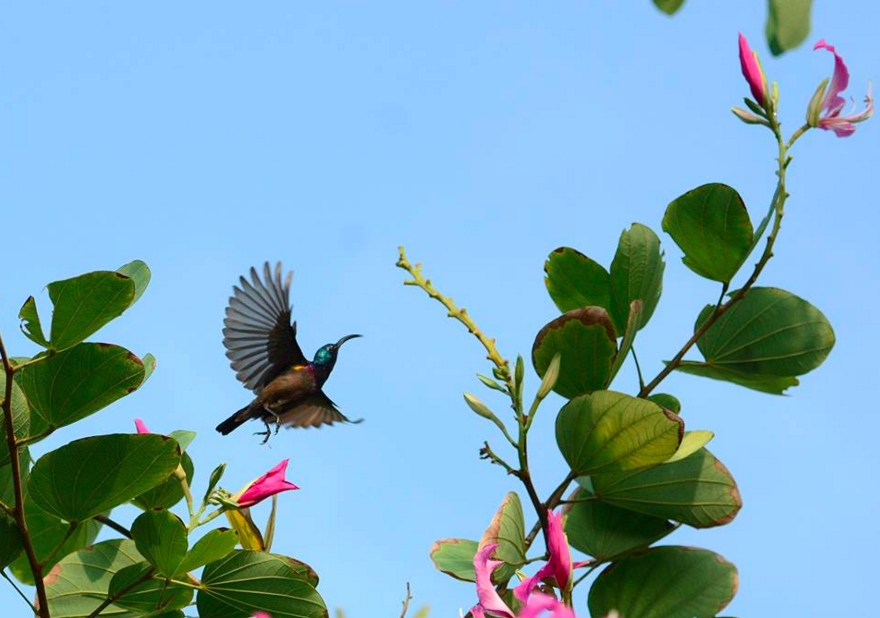
Cherai, Kerala
Ancient Penguins Were Giant Waddling Predators
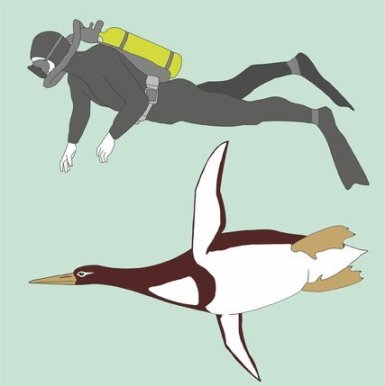
An artist’s rendering compares Kumimanu biceae, an extinct giant penguin, to a human diver. Kumimanu stood 5 feet 7 inches and weighed 220 pounds. It is among the earliest known penguin species. Credit G. Mayr/Senckenberg Research Institute
The 57 million-year-old fossil is both fearsome and comical: a long-beaked penguin that stood 5 feet 7 inches tall and weighed about 220 pounds.
“It was as tall as a medium-sized man,” said Gerald Mayr, a paleontologist at the Senckenberg Research Institute in Frankfurt, Germany, and lead author of a report in Nature Communications on Tuesday announcing the discovery.
By comparison, the tallest living species, the emperor penguin, reaches about four feet in height. Kumimanu biceae, as the fossil was named, would have towered above the emperor, and above just about all other known ancient penguins. Continue reading
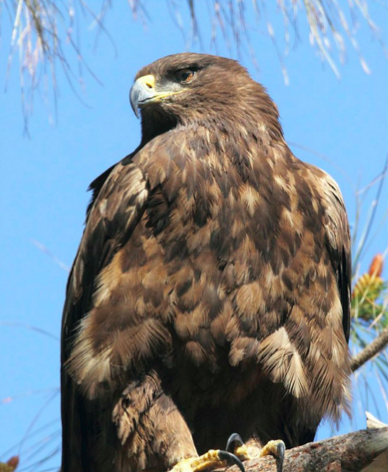
Ranikhet, Uttarakhand
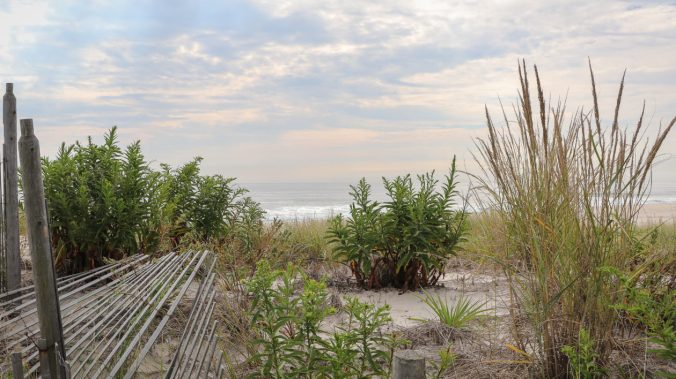
The dunes of Midway Beach have a secret ingredient hiding beneath the sand. © Cara Byington/The Nature Conservancy
Thanks to Cool Green Science:
The Secret in the Sand Dunes
Dominick Solazzo likes to say the healthy dunes at Midway Beach and South Seaside Park on the Jersey Shore have a “secret ingredient.” Of course, it’s a secret that gives itself away pretty readily when the wind blows.
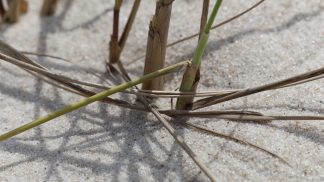
Dune grasses have deep roots that help trap sand and anchor the dunes, and help them grow and resist wind erosion. © Cara Byington/TNC
“It’s Christmas trees,” Solazzo says with a smile. Discarded (natural) Christmas trees donated by the city of Secaucus, New Jersey and given a second life – so to speak – as sand dunes. And, yes, according to him and a few of his neighbors, you can smell the sharp, familiar scent of fir through late winter and part of the spring.
But why Christmas trees? In a word: structure.
“They’re like re-bar in concrete,” explains Solazzo. “They help hold the sand and the dune in place, and give it structure. And good structure matters for dunes. It matters a lot.” Continue reading


 Organikos