Avoiding Misery Can Take Decades

19doerr-master768

Thanks to Anthony Doerr for this opinion, which we tend to agree with:

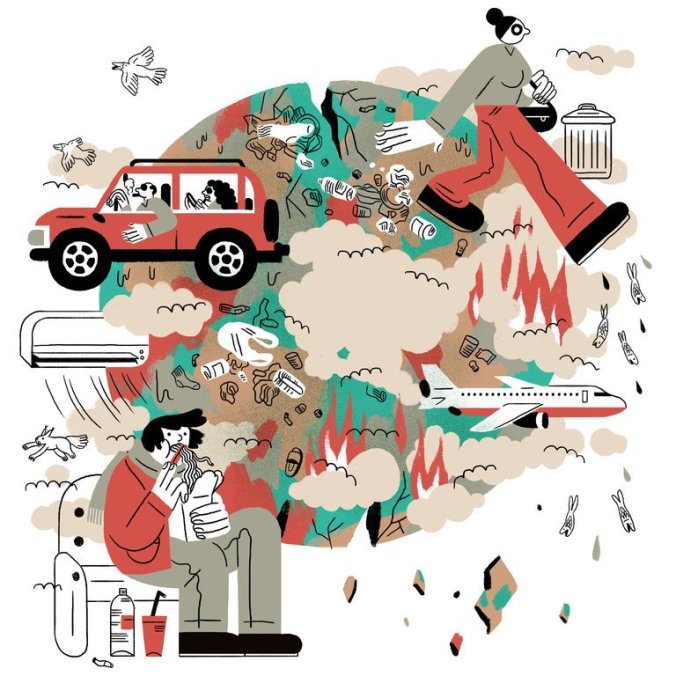
We Were Warned

Boise, Idaho — Twenty-five years ago this month, more than 1,500 prominent scientists, including over half of the living Nobel laureates, issued a manifesto titled “World Scientists’ Warning to Humanity” in which they admonished, “A great change in our stewardship of the earth and the life on it is required if vast human misery is to be avoided and our global home on this planet is not to be irretrievably mutilated.” Continue reading

With Gene-Altering Schemes, Be Careful What You Wish For

merlin_130180247_f155f48f-78b8-4667-8348-506d3ed9edeb-master768

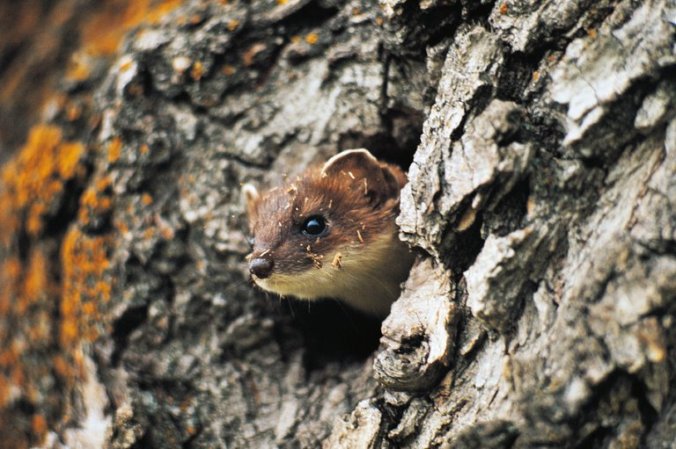
The short-tailed weasel, or stoat, decimated native bird populations after it was introduced to New Zealand. Altering the genes of invasive animals might save threatened species, scientists said, but could also have devastating consequences. Credit DeAgostini, via Getty Images

Two days ago we were intrigued by the notion; today, not so much. Is it a cat fight between two of the science writers most often linked to in these pages? Or perhaps it is an example of how scientific consensus is built:

‘Gene Drives’ Are Too Risky for Field Trials, Scientists Say

In 2013, scientists discovered a new way to precisely edit genes — technology called Crispr that raised all sorts of enticing possibilities. Scientists wondered if it might be used to fix hereditary diseases, for example, or to develop new crops.

One of the more intriguing ideas came from Kevin M. Esvelt and his colleagues at Harvard University: Crispr, they suggested, could be used to save endangered wildlife from extinction by implanting a fertility-reducing gene in invasive animals — a so-called gene drive. Continue reading

How Many Trees On This Planet?

19GARDEN-slide-7SIM-videoSixteenByNineJumbo1600

The scientific journal Nature is not one of our regular sources for stories here, but when the Science section of the Times points out a good story, we listen. To our surprise, even the Real Estate section of the Times can point out must-read stories from Nature (the slide show is worth the click):

Time to Put the Garden to Bed?

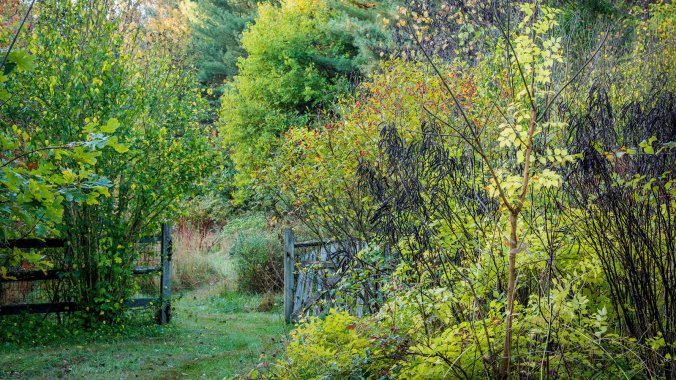
There are 422 living trees for every human on Earth — 3.04 trillion overall — and during a couple of weeks each fall, a person can feel plainly outnumbered. Is it possible that a trillion of those trees have deposited their leaves in the front yard? And why are so many of them still green? Continue reading

New Zealand, Invasive Species & Gene Editing

1920

Thanks to Ed Yong and his editors at The Atlantic for this story on one country’s approach to rats:

New Zealand’s War on Rats Could Change the World

The nation wants to eradicate all invasive mammal predators by 2050. Gene-editing technology could help—or it could trigger an ecological disaster of global proportions.

The first thing that hit me about Zealandia was the noise.

I was a 15-minute drive from the center of Wellington, New Zealand’s capital city, but instead of the honks of horns or the bustle of passersby, all I could hear was birdsong. It came in every flavor—resonant coos, high-pitched cheeps, and alien notes that seemed to come from otherworldly instruments. Continue reading

Fruit With Alternative Beauty

3860

And now for something completely different:

Morrisons to sell ‘wonky’ pomegranates to meet rising demand

Fruit will come in different sizes and have blemishes but will cost 30p, compared to average 74p in UK supermarkets

A UK supermarket is to be the first to sell misshapen or “wonky”pomegranates, in order to keep prices down in the face of surging demand from consumers.

Packs of four will be sold in Morrisons for £1.20 – equivalent to 30p per fruit – when the average price of a pomegranate in UK supermarkets is 74p. Continue reading

Heroes Come And Go, Climate Change Marches On

McKibben-Jerry-Brown-Bonn-Climate-Summit

For all their tough-on-carbon rhetoric, Governor Jerry Brown, of California, and other leaders are ignoring a key component of the fight against global warming. Photograph by Lukas Schulze / Getty

The song Kermit used to sing was cute. Until it was no longer cute. Saying it is not easy is a vast understatement in an era when bombast reigns. Bill McKibben, who we probably highlight more in these pages than any other single author, reminds us of this every time we read what he has to say. If you can call it a luxury, McKibben is more free to speak truth to power than a normally standup politician, who sometimes will take a position that pure activists are correct to oppose. Case in point, here is an erstwhile leader who pure activists will not allow to have it both ways:

Why Governor Jerry Brown Was Booed at the Bonn Climate Summit

Spare a little pity for Jerry Brown. The California governor has been standing up admirably to Donald Trump on many issues, but especially on climate change—even threatening to launch scientific satellites to replace the ones that Washington wants to ground. This week, he’s in Bonn, Germany, at the global climate talks, spearheading the drive to show that America’s states and cities have not forsaken the promises made last year in Paris. On Saturday, barely a minute into his big prime-time talk, Brown was rewarded for his pains with booing. He was visibly startled when demonstrators interrupted his speech and began chanting, “Keep it in the ground!” Continue reading

Carbon Engineering, Bill Gates, And Long-Shot Answers To Climate Change

171120_r30938

Carbon-dioxide removal could be a trillion-dollar enterprise, because it not only slows the rise in CO2 but reverses it. Photo-Illustration by Thomas Albdorf for The New Yorker

If you read the caption to the photo above, and then the first sentence of the story it headlines, you could come away with the thrilling sense that there is an entrepreneurial opportunity associated with climate change. There is something reassuring about the fact that Bill Gates has made some bets in this realm. Pasted below is also the last paragraph of the story. We recommend reading the whole long-form reporting that goes in between:

Can Carbon-Dioxide Removal Save the World?

CO2 could soon reach levels that, it’s widely agreed, will lead to catastrophe.

What Is A Hut?


colorhut_2-final_custom-09aeb5ea9bba873e9bc96c627d2154710c4b6e11-s1300-c85

Malaka Gharib/NPR

Thanks to National Public Radio (USA) for bringing this to our attention:

Is It Insulting To Call This A ‘Hut’?

The complaints came in shortly after we ran a story on a government aid program that gave cash to the poor in Zambia. The piece included a profile of a young woman who, along with her husband, had used the money to start a business that had lifted their family to a level self-sufficiency they’d never enjoyed before.

Several readers — okay, just two, but still, it made us take note! — wrote to take issue with my use of the word “hut” to describe the family’s dwelling. Continue reading

Nature’s Silence Is Golden

rainforest-slide-S9Y8-jumbo

Yesterday’s post, linking to an article from the same source, combines with this one to confirm that some venerable members of the “mainstream media” see an audience (us, for example) for green-leaning reporting. Then we found this, about a remarkable Norwegian silence-hunter who has gone to the ends of the earth; and now finds himself in the East Village of New York City. Instead of featuring that story, this one below is must-read on the topic of quietude:

Lessons in Stillness From One of the Quietest Places on Earth

In the wilderness of Washington State’s Hoh Rain Forest, a poet searches for the rare peace that true silence can offer.

THE OLYMPIC NATIONAL PARK stretches down coastal Washington and east toward Seattle on a thumb of land known as the Olympic Peninsula, some 60 miles long by 90 miles wide. Around a three-hour ride by car from Seattle, it feels much farther, as if you have passed into an otherworldly realm. Within it are volcanic beaches scattered with the remains of massive Sitka spruces, evergreen-crowded mountains, broad, flat valleys and the Hoh Rain Forest, through which 12 miles of hiking trails and the glacier-formed Hoh River run. The Park, in total nearly a million acres, is home to what may be the most complex ecosystem in the United States, teeming with big-leaf maples, lichens, alders, liverworts, Monkey flowers, licorice ferns, club mosses, herbs, grasses and shrubs of remarkable abundance. Today, thanks to federal protections, it is home to some of the largest remaining stands of old-growth forest in the continental U.S. Continue reading

The Business of Arctic Anti-Stewardship

SCE034-00038_hr.JPG

The upper Colville River and headwaters on Alaska’s North Slope | Joel Sartore

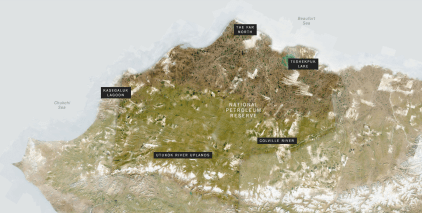
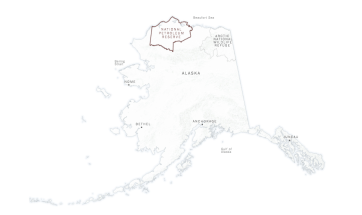
Screen Shot 2017-11-11 at 8.40.28 AMThanks to Christopher Solomon, contributing editor at Outside magazine, for this important story published in the New York Times. The interactive element highlighting each ecosystem, followed by migration visuals drive home the extremity and unprecedented nature of the policies that the federal government of the United States of America is now promoting.

America’s Wildest Place Is Open for Business

Screen Shot 2017-11-11 at 8.42.01 AMSeveral years ago a mapping expert pinpointed the most remote place in the Lower 48 states. The spot was in the southeast corner of Yellowstone National Park, 20 miles from the nearest road. Roman Dial read the news and wasn’t much impressed. To him, 20 miles — the distance a hungry man could walk in a long day — didn’t seem very remote at all.

Mr. Dial is a professor of biology and mathematics at Alaska Pacific University in Anchorage, and a National Geographic explorer. He decided to figure out the most remote place in the entire nation. His calculations led him to the northwest corner of Alaska, where the continent tilts toward the Arctic Ocean. The spot lay on the Ipnavik River on the North Slope, 119 miles west of the Haul Road (otherwise known as the Dalton Highway), which brings supplies and roughnecks to the oil fields at Prudhoe Bay. Continue reading