
Mandvi Beach, Gujarat
Mandvi Beach, Gujarat

Lummi Nation fishermen work to capture Atlantic salmon that escaped an aquaculture pen near Cypress Island, in Washington State. Photograph by Brandon Sawaya / SOULCRAFT ALLSTARS
With big weather news recently holding our attention, it is easy to miss smaller scale natural disasters, so thanks to E. Tammy Kim for ensuring this story made it to our pages:
Washington State’s Great Salmon Spill and the Environmental Perils of Fish Farming
Just after the thrill of the total solar eclipse, a troubling nature story emerged from northwestern Washington State. On August 22nd, Cooke Aquaculture, a multibillion-dollar seafood company, reported that, three days earlier, extreme tides coinciding with the eclipse had torn apart its enormous salmon farm off Cypress Island, a teal idyll near the college town of Bellingham. Continue reading
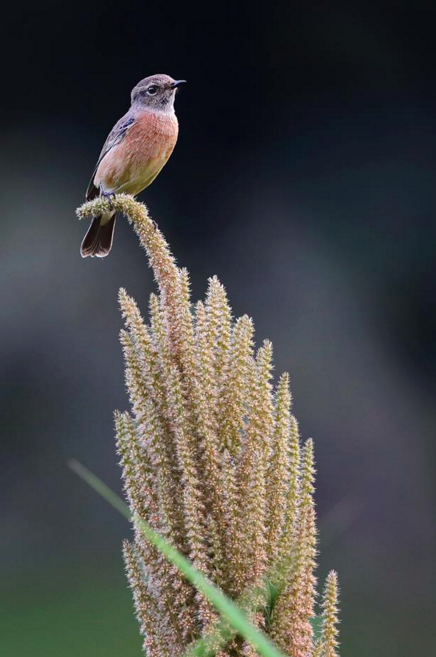
Chopta, Uttarakhand
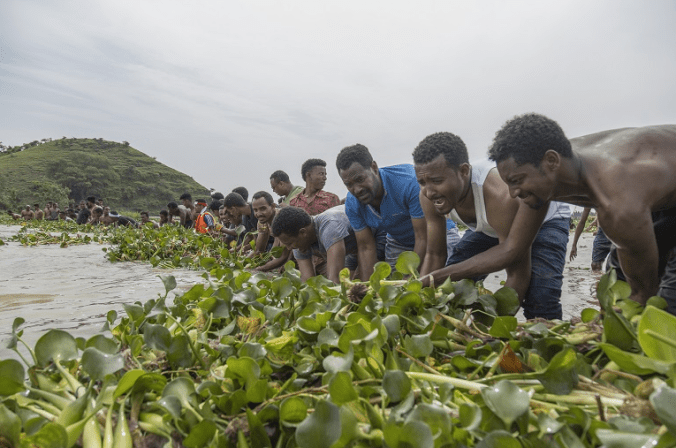
People come up with different strategies to remove as many weeds as they can. One of those is to stand in line and push segments of weeds together. Maheder Haileselassie Tadese/Mongabay
This isn’t the first time the subject of water hyacinth has shown up on this site – it would be impossible to spend seven years in Kerala without coming into contact with the invasive weed.
Innovative solutions abound to harvest the fast growing plant for the labor intensive creation of consumer goods, or creative farming techniques, but in cases such as Ethiopia’s Lake Tana, communities unite to attempt manual eradication.
Community pulls water-thirsty invasive weeds from Ethiopia’s Lake Tana
Last week thousands of people in northwest Ethiopia marched to Abay River and Lake Tana as part of the “Save Lake Tana” movement to remove invasive water hyacinth by hand. The free-floating, water-thirsty perennial can grow up to three feet tall and is swallowing the northeast shores of Lake Tana, impacting both aquatic habitat health and local fishermen.
Lake Tana is the source of the Blue Nile and the largest lake in Ethiopia. The lake is frequently used for transport, tourism, hydroelectric power generation, ecological conservation and fishery operations. It is home to 28 fish species, out of which 16 are endemic.
A team of university researchers discovered in 2012 that 20,000 hectares of the lake’s body was covered by invasive water hyacinth (Eichhornia Crassipes). Since then, it’s gone to a peak infestation of 40,000 hectares. At first, the hyacinth was mainly found in an area with three tributaries to Lake Tana. Continue reading
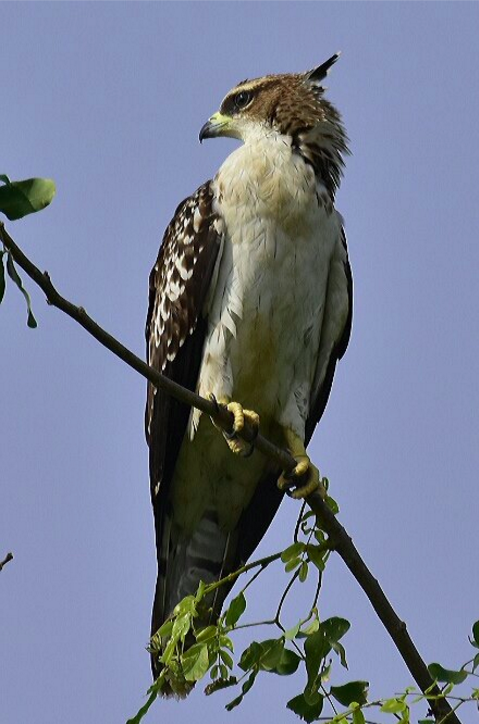
juvenile – Sivarpanam Palace, Tamil Nadu

The bees’ home at the Javits. Beekeeping was illegal in New York until 2010 when the ban was lifted. Credit Chang W. Lee/The New York Times
It’s impossible to overstate the importance of bees, both environmentally and agriculturally. So we’re suckers for happy bee stories, especially urban bees. Kudos to the New York City Board of Health for lifting the Giuliani-era ban against urban bee-keeping, not to mention the Javits Center green-roof sustainability project!
Atop a Manhattan Convention Center, a Harvest of Honey
Let us begin not with the who, which was several thousand bees and a bunch of people in anti-sting gear that looked like spacesuits, or the what, which was harvesting honey. Let us go directly to the where.
It was not a bosky setting that would bring to mind the Robert Frost poem about good fences and good neighbors, but the south roof of the Jacob K. Javits Convention Center on Manhattan’s Far West Side. Here the neighbors are the unfinished towers of the Hudson Yards development. They ring what has become an urban meadow — the south roof, mostly covered by 6.75 acres of kaleidoscopic sedum. It is yellowish green. It will turn red in time for Christmas.
The bees have been in residence since spring. The first 12,000 came from California, transplanted in a three-pound container that looked like a shoe box with screens on both sides. They were placed in wooden hives, which look like stackable drawers. There were 60,000 to 80,000 by midsummer.
The accommodations are typical of urban apiaries. Liane Newton, the director of nycbeekeeping.org, who tends them, described her role as “convincing them they live in a tree trunk when they live in a file cabinet.”
Her persuasion seems to have paid off. “They made cells for closets, cells for babies, cells for storing pollen,” she reported one morning last week. “One amazing thing about bees is they have this architectural inclination.” Continue reading
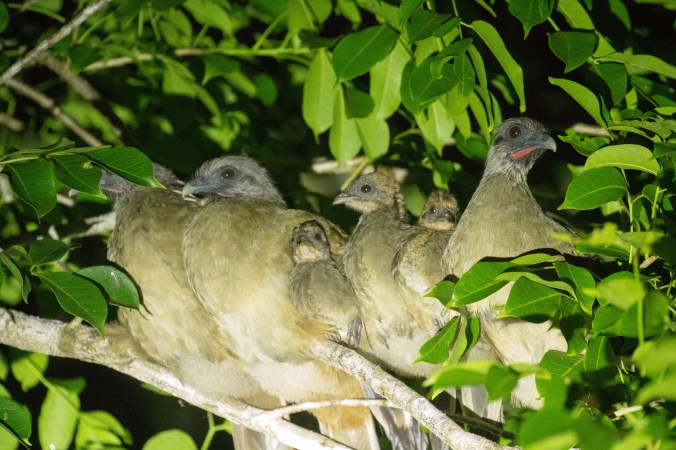
Hens with chicks on night roost
Orange Walk District, Belize

Yurok dance feather regalia in cedar boxes, at Dave Severns’s camp on the Yurok Indian reservation. Credit Talia Herman for The New York Times
As important as cultural conservation is to us it gets half as much attention in these pages as nature conservation (a matter of life and death), so we are more than happy to share stories like this one (thanks to Patricia Leigh Brown) when they land on our desk:
Dance feather regalia dry in the sand, made by Dave Severns, whose culture camp teaches young men a nearly forgotten art form. Credit Talia Herman for The New York Times
KLAMATH, Calif. — The gathering known simply as “Uncle Dave’s camp” begins at daybreak on the pebbled banks of the Klamath River, the age-old spruce and redwoods on the bluffs shrouded in mist.
Here on the Yurok Indian Reservation near the Oregon border, so remote that certain areas have yet to receive electricity, young male campers sit on cedar logs while keeping tabs on a river rock heated in a fire. The rock, hand-hollowed and chiseled with basketry patterns, contains a molten glue made from the dried air bladders of sturgeons. The syrupy concoction is a crucial ingredient for making feathered headdresses, hide quivers, obsidian-blade sticks and other forms of ceremonial dance ornaments, or regalia, that are at once works of art and living conduits to the spirit world. Continue reading

Pangot, Uttarakhand

A life of hunting and gathering had advantages over one of farming and settlement. Illustration by Golden Cosmos
John Lanchester’s article, pondering technology versus science, gives fire its due in the course of reviewing a new book about how hunting and gathering gave way to progress. At the same time, Lanchester raises reasonable doubts about the gains:
…We don’t give the technology of fire enough credit, Scott suggests, because we don’t give our ancestors much credit for their ingenuity over the long period—ninety-five per cent of human history—during which most of our species were hunter-gatherers. “Why human fire as landscape architecture doesn’t register as it ought to in our historical accounts is perhaps that its effects were spread over hundreds of millennia and were accomplished by ‘precivilized’ peoples also known as ‘savages,’ ” Scott writes. Continue reading
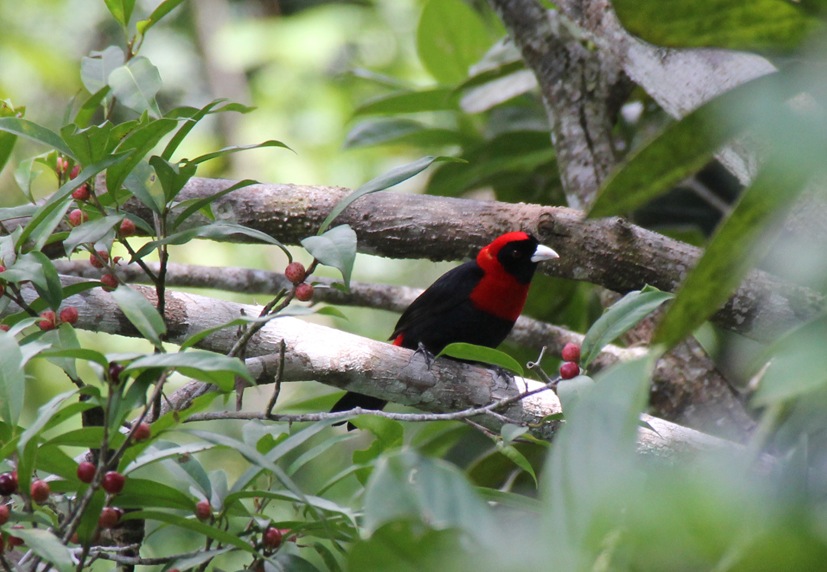
Photo credit: Stephen Crafts
Rio Blanco National Park, Belize

Ori Gersht’s Off Balance, 2006. Photograph: Ori Gersht/Aperture.org
I highly recommend this combination of retro covers from classic food and homemaking publications, stylized food presentations and deconstructed recipe imagery. Guaranteed to make you smile. (Check below the jump for more of my personal favorites.)
Repast lives: a history of food photography – in pictures
In this taster from her new book Feast for the Eyes, curator and writer Susan Bright brings into focus the rich history of food in pictures. From Man Ray to Cindy Sherman and Martin Parr, it is an artful exploration of how the edible vastly exceeds the simple things we put on our plates.
Pangot, Uttarakhand

A special section in Utrecht’s new underground bike parking garage is for bigger bikes, which usually have children’s seats attached. Credit Ilvy Njiokiktjien for The New York Times
If You Build It, the Dutch Will Pedal

As fast as Utrecht can build underground bike parking garages, most spots are taken. Credit Ilvy Njiokiktjien for The New York Times
The city recently surpassed Amsterdam in a widely respected ranking of bike-friendly cities and is now second only to Copenhagen, which is more than twice its size. Continue reading

Tiruchirappalli, Tamil Nadu
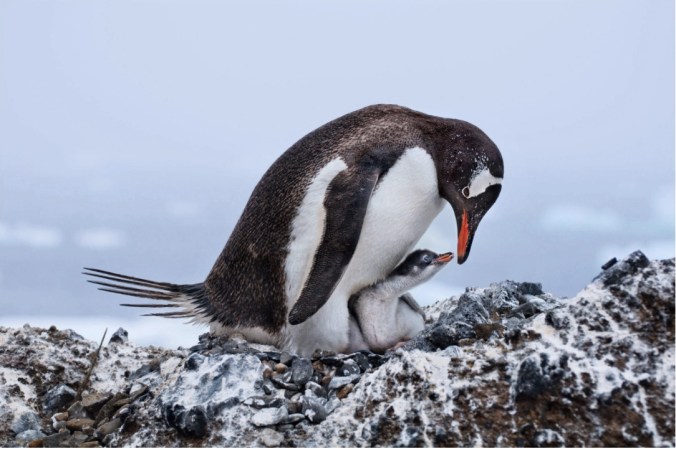
Gentoo Penguins. Photo: Deborah Albert/Audubon Photography Awards
Thanks to the judges who chose the Grand Prize Winner (above) in this year’s contest, among an impossibly great selection:
The more than 5,500 photos entered in this year’s contest, our eighth, show birdlife at its most vivid, vulnerable, formidable, and elegant. Photographers from 49 states and eight Canadian provinces submitted images in three categories: professional, amateur, and youth. While it wasn’t easy whittling those down, the following seven images proved exceptional. The category winners, in addition to garnering cash and trip prizes, are being displayed within the 2017 Nature’s Best Photography Exhibition at the Smithsonian National Museum of Natural History. Continue reading

Jageshwar, Uttarakhand
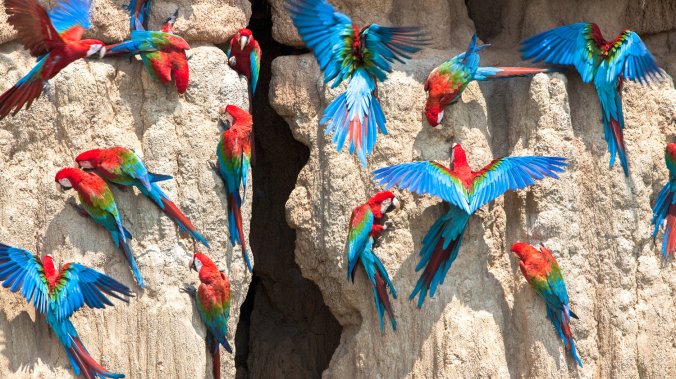
Parrots at an exposed cliff in Peru, where they gather to eat clay, which is richer in sodium than plants in the area. Frans Lemmens/Getty Images
Thanks to Carolyn Beans and the salt colleagues at National Public Radio (USA) for this:
Why Do Parrots (And People) Eat Clay?
The parrots of Southeastern Peru crave an earthy delicacy: dirt. At the Colorado clay lick, a cliff face rising above the Tambopata River in the western Amazon Basin, parrots — often hundreds at a time from up to 18 species — gather each day to feast on sun-hardened clay. Continue reading

Gallon Jug Estate, Orange Walk District, Belize
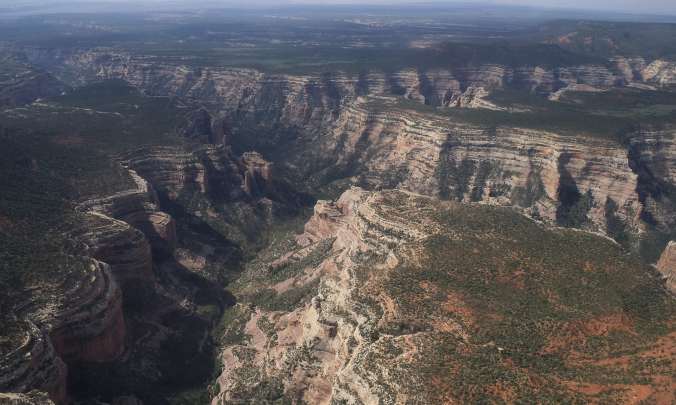
Arch Canyon, within Bears Ears national monument in Utah. Bears Ears is under threat from the Trump administration. Photograph: Francisco Kjolseth/AP
More examples of corporate social responsibility and activist collaboration taking the higher ground position over flawed public policy.
Native Americans and environmental advocates get help from outdoor retailers as they battle proposal to change monuments’ boundaries
Environmental activists, Native American groups and a coalition of outdoor retailers have vowed to redouble their efforts to protect public lands, after the US interior secretary, Ryan Zinke, recommended on Thursday that Donald Trump change the boundaries of a “handful” of national monuments.
“Secretary Zinke’s recommendation is an insult to tribes,” said Carleton Bowekaty, co-chairman of the Inter-Tribal Coalition, which asked Barack Obama to create the Bears Ears monument in Utah in 2015, citing increasing thefts and vandalism at more than 100,000 native cultural sites in the area.
Millions of petitioners have joined an urgently assembled advocacy effort to dissuade the Trump administration from moving against the monuments. On Friday, the outdoor retailer Patagonia, which spearheaded the industry initiative, said the group would continue its efforts. Continue reading

 Organikos