
male – Baja California Sur, Mexico
male – Baja California Sur, Mexico

Partnering with programs like the Atlanta Community Food Bank Garden Program and the Cornell Lab of Ornithology to bring bird friendly and healthy food education to youngsters connects well with our ethos. Citizen Science participation starts early. We hope our readers will share with public and private K-12 schools!
SCHOOL GARDEN GRANTS to grow healthy, happy, nature-connected kids!
School gardens provide an exciting context for cross-disciplinary learning and a wonderful opportunity to engage students in hands-on activities, project-based learning, and citizen science. Kids benefit from gardens in academic, physical, emotional, social, and behavioral ways. We are excited to support teachers’ efforts to engage kids in outdoor learning and all its benefits!
We will award 20 grants to teachers within the United States who strive to take the classroom outside, reconnect students with the natural world, and teach them valuable concepts and skills that integrate across all subjects. In partnership with our amazing sponsor, Alaska Fertilizer, we’re thrilled to support 20 teachers with a $500-$2,000 grant, gardening supplies, and BirdSleuth’s Habitat Connections kit. Funds can support a new garden or the revitalization of an existing one. In addition to funding food/veggie gardens, preference will be given to bird, pollinator, native habitat, rain, and other natural projects. Continue reading
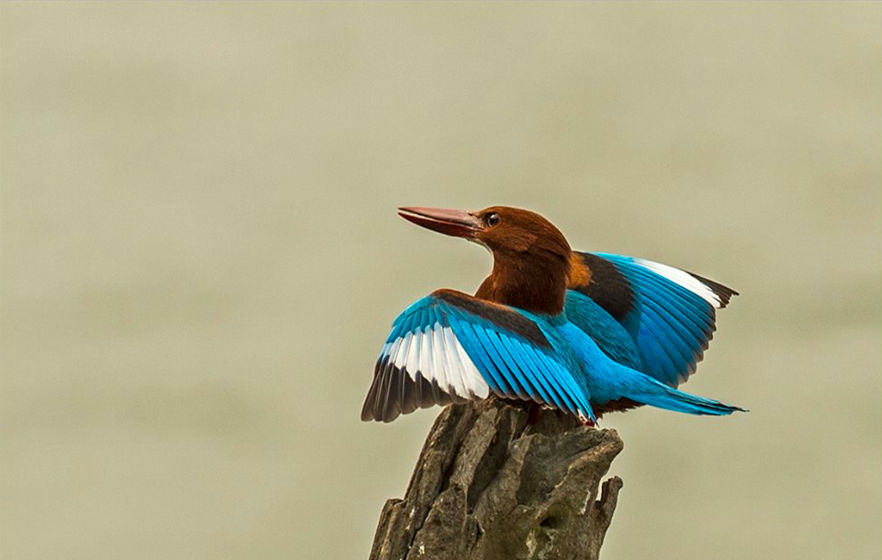
Jim Corbett National Park, Uttarakhand

A series by Mr. Guariglia depicting the impacts of agriculture and mining on the Asian continent. The shimmering panels are layered with gold and other precious-metal leaf, gesso and acrylic ink. Below right is botryoidal slab of malachite from a mine in Africa. Credit Nathan Bajar for The New York Times
Tapping into a long, intertwined history of “photographers depicting nature with an eye to its fragility”, multimedia artist Justin Brice Guariglia translates his unprecedented access to NASA mission flights to visually quantify what is currently coined the Anthropocene Era.
Readers lucky enough to have the opportunity to view his coming exhibition, at the Norton Museum of Art in West Palm Beach, Fla., from Sept. 5 to Jan. 7 should do so!
Earlier this year at the Telluride Mountainfilm Festival, the artist Justin Brice Guariglia fell into conversation with a stranger.
“I got stuck on a gondola ride with a climate change denier,” Mr. Guariglia said recently. The stranger clearly had no idea who he was dealing with.
Not only had Mr. Guariglia previously talked his way into joining a NASA scientific mission over Greenland so that he could photograph melting polar ice caps. He also had even created a mobile app called After Ice, which allows users to take a selfie that is overlaid with a watery filter indicating the sea level projected in their geo-tagged location in the 2080s.
So when the man on the gondola said the earth’s warming temperatures were just part of a cycle, Mr. Guariglia recalled, “I took off my jacket and I said, ‘Does this look like a cycle to you?’” Continue reading
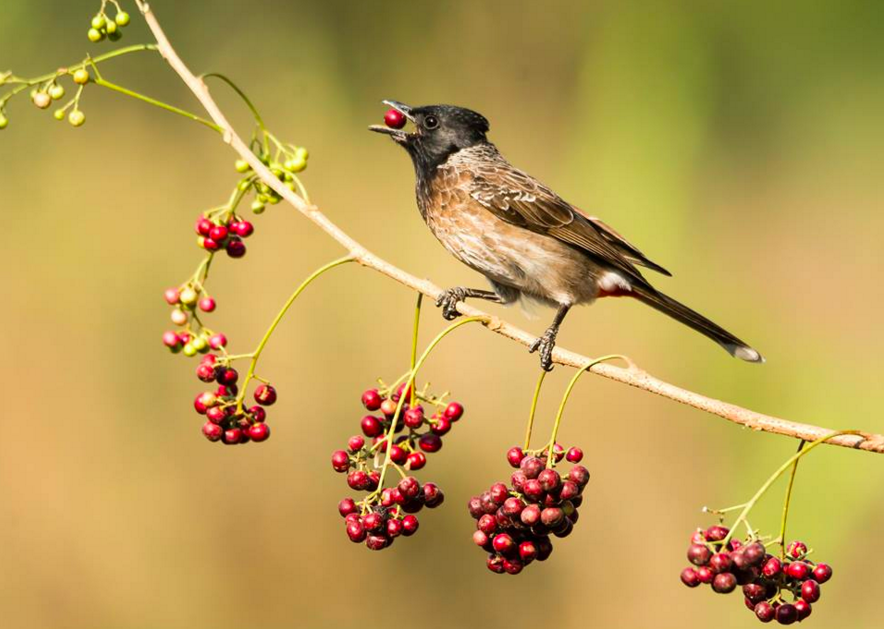
Bengaluru, Karnataka

A collection of Gowin’s photographs from “Mariposas Nocturnas,” taken in February, 2007, at the Integral Forest Otonga, El Reventador, and Otongachi Reserve, in Ecuador.Photographs by Emmet Gowin / Pace/MacGill Gallery / © Emmet and Edith Gowin
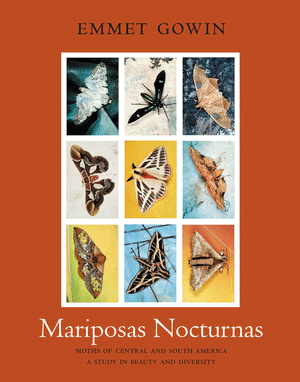 We have occasionally “discovered” the inspirational aspect of moths in all their variations, but had not thought so much of their beauty. Thanks to Andrea K. Scott for bringing our attention to the photography of Emmet Gowin, whose “Mariposas Nocturnas: Moths of Central and South America, A Study in Beauty and Diversity” will be published this month by Princeton University Press. Also we thank her for mentioning that an exhibition of Emmet Gowin’s work will be shown at Pace/McGill Gallery from September 28th through January 6th, 2018:
The moth doesn’t enjoy the same charmed reputation as its lepidopteran cousin, the butterfly. Continue reading
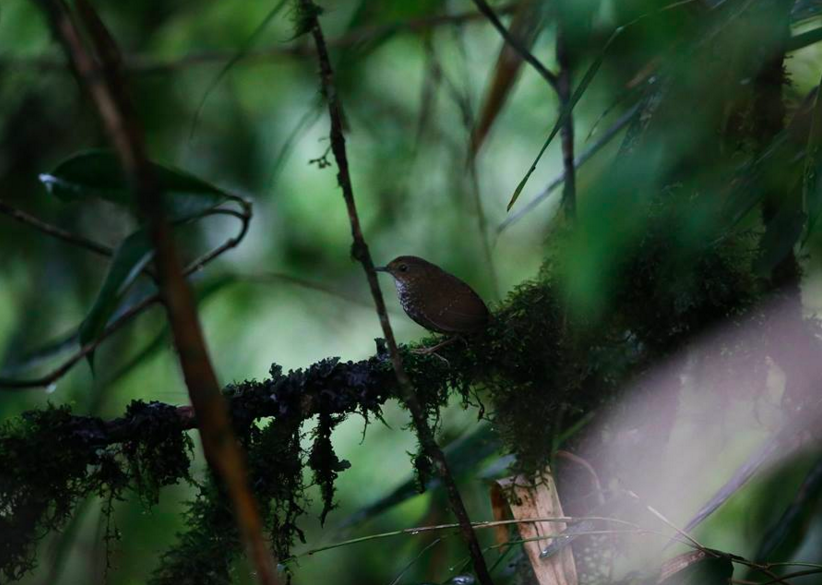
(Mishmi, Arunachal Pradesh)
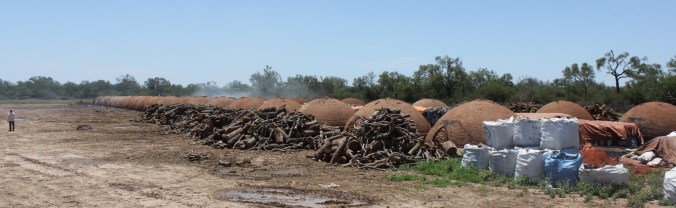
Bricapar charcoal facility at Teniente Ochoa ©Earthsight
The picture above, and the picture below, will suffice if you do not have the half hour required to read the details. Earthsight is a non-profit organization that uses in-depth investigations to expose environmental and social crime, injustice and the links to global consumption. One such investigation provides these images, and it is worth a read, especially if you are in Europe and you use charcoal for barbecue. Thanks to the folks in the Guardian’s Environment team for bringing the report and its consequences to our attention.

Figure 1: Jaguar photographed in the Gran Chaco forest ©Hugo Santa Cruz & Fundación Yaguareté
Choice Cuts
How European & US BBQs are fuelled by a hidden deforestation crisis in South America
Summary
On a vast, hot plateau in Paraguay, in the centre of South America, lies a little-known environmental crisis, and a dirty secret that can be traced to the supermarkets of Europe.
The dry tropical forests of the Chaco are being destroyed faster than any other forests on earth. The trees felled as a result of the advance of industrial agriculture into pristine wilderness are being turned into charcoal to feed demand in Europe.
Described by David Attenborough as “one of the last great wilderness areas in the world”,[1] the Chaco is home to a plethora of precious wildlife and one of the world’s last tribes living in voluntary isolation, the Ayoreo. Continue reading

Blue Creek rice fields, Orange Walk District, Belize
Photograph by Simone Lueck for The New Yorker
Although our most consistent feature suggests obsession (yesterday completing the 72nd month and 2,217 dailies in a row of bird photos, we know how it looks), we are anything but obsessed. That word implies trouble. We are looking for anti-trouble. We mostly post stories and images that imply reduction of trouble–through more information, and better quality of information, and useful case studies in trouble management.
This has led us to post 8,500 times (including this one) covering dozens of themes over the years. Usually several per day. Recently, in addition to our daily bird photo we are trying to post just once per day on something that highlights a remarkable example or explanation of any of those themes. Taste of place is on our minds now, more than anything else. So it is time for another restaurant review. Thanks to the reliably concise Nicolas Niarchos for this opening line:
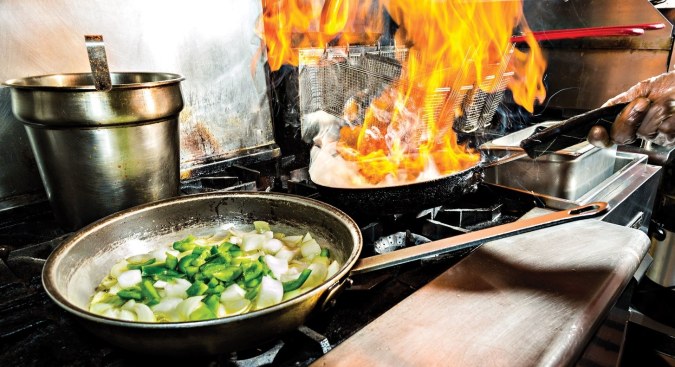
In the nineteen-nineties, the late, great writer Denis Johnson once followed a group of Somalis across the border from Ethiopia and into the heart of their turbulent country. One of the images that endures from the piece he wrote afterward is of Somali food—“chunks of goat and spaghetti”—and of his narrator being taught “how to eat pasta the Somali way, without utensils, taking a shock of it in his right hand, turning it this way and that and gathering the long strands up into his palm, and then shoving it into his face.” Continue reading
female – Pudukkottai, Tamil Nadu
 14 years ago, the word organikos crept into my vocabulary. My family’s company had recently been transformed from an advisory service to a management company. They were one year into the process of establishing protocols for “hospitality with sense and sensibility” and some generalizable principles for entrepreneurial conservation.
In the summer of 2003, having focused for the previous four years on rainforest conservation in the Osa Peninsula of Costa Rica, leveraging the economics of lodging and guided nature immersions, my family moved to France, to live in the 14th arrondissement of Paris. My brother and I would learn a new language and my parents would plan out a new business for when we returned to Costa Rica. They used organikos as a codeword for that future initiative. The initiative would provide the tastes–from beverages, spices, foods–associated with the places they had been working in recent years; it would provide those tastes as pre-experience of those places. Most obvious was coffee from Costa Rica.
 There were small experiments over the years since then, starting with a single estate coffee from Costa Rica’s Tarrazu region; then wine from the Croatian island of Hvar; then monsooned coffee from the Malabar coast of India.
Now my parents are planning their move back from India to our home in Costa Rica. And I am planning to spend the next couple years in graduate school. We are talking about Organikos again, and it looks like the time is right to formally launch it as a business. I will tell you about that as the idea develops. First, how about some Tarrazu single estate coffee? Hacienda La Minita was a pioneer in single estate coffee, an early inspiration for us in terms of tasting the place, and it continues to be one of our favorites. We can get it to you. And if you want to visit the estate, or get to know any other place in Costa Rica, we can help with that as well.
Gazaldoba, Siliguri, West Bengal
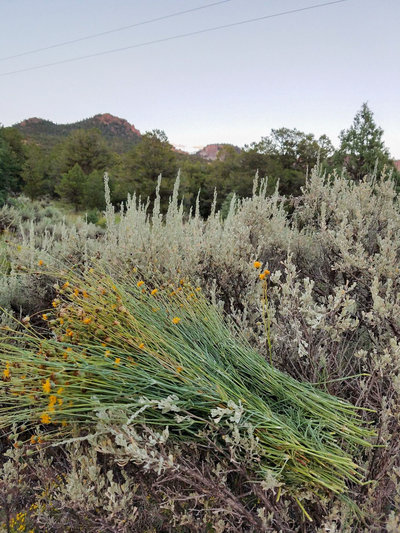
Greenthread (Thelesperma) is a wild plant that thrives in the mid-summer heat of the American Southwest. This bunch is freshly cut, and waiting for rinsing and drying to make Navajo tea. Courtesy of Deborah Tsosie
Give yourself a few minutes for this story about the link between seasonal produce and cultural patrimony:
In the dusty red earth of eastern Arizona’s portion of the Navajo Nation, the main road stretches out beneath the massive white-cloud sky and rubs against barren, chalky mesas; sometimes it skirts the deep, dry crack of a canyon stubbled with sagebrush. Small fields of corn occasionally sprout up beside the road, the short stalks still far from ripe.
But away from the road, tucked beside lakebeds or the foot of a hillside, a mid-summer visitor will find bright yellow flowers beginning to open. They are the crowning blooms of a thin plant that can grow up to two feet tall and which thrives in the heat of this arid region. Called greenthread (Thelesperma), it is used to make Navajo “tea.”
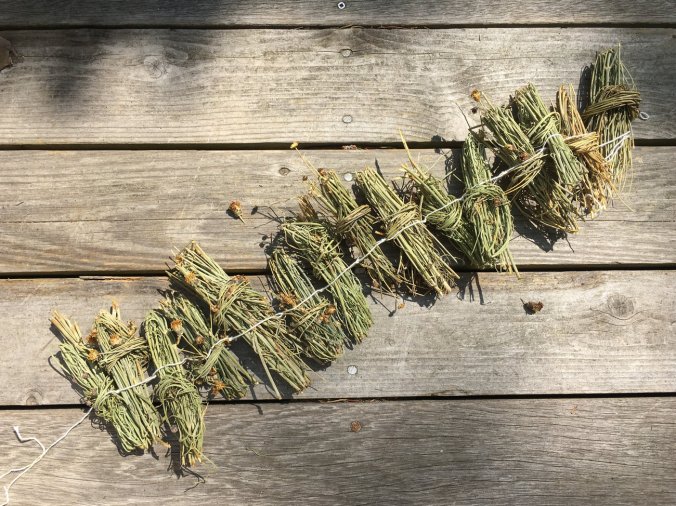
A garland of greenthread. The dried bundles are brewed with sugar or honey. Courtesy of Ada Cowan
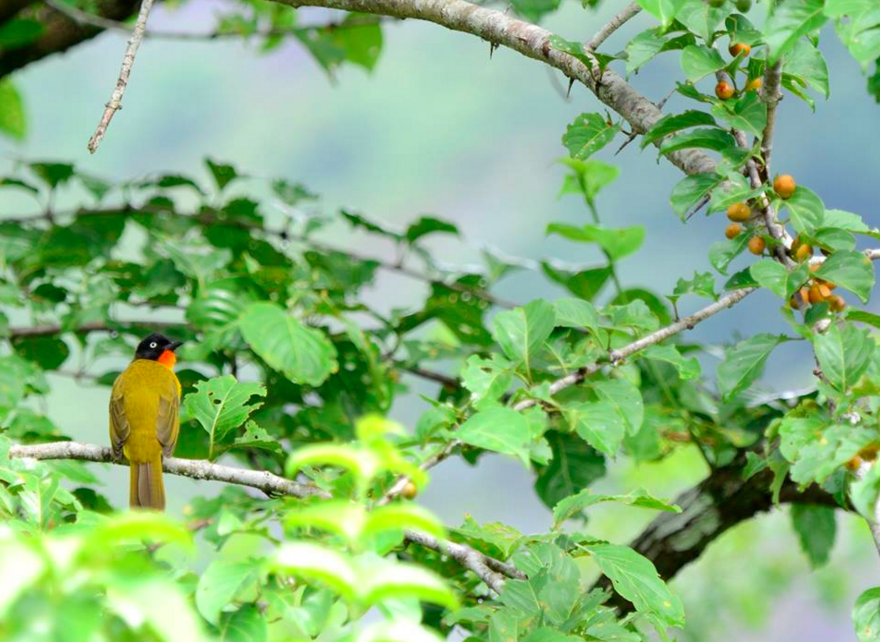
(Thattekad Bird Sanctuary, Kerala)
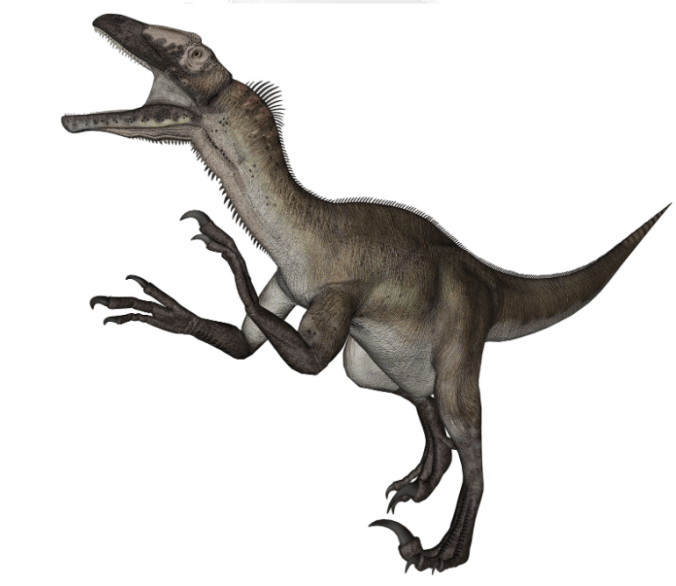
An artist’s rendering of a Utahraptor, several specimens of which were found in a massive slab of sandstone in eastern Utah in 2001. Scientists are seeking to raise money to remove the remaining bones from the giant trove of fossils, a slow and painstaking process. Credit Elena Duvernay/Stocktrek Images, via Science Source
There’s no age limit to the human fascination with dinosaurs, so it’s good news for science that interest translates to collaborative efforts when public funding for exploration and documentation run low.
Raptor Cam? Sounds enticing!
Utah Paleontologists Turn to Crowdfunding for Raptor Project
Millions of years ago, on a mud flat somewhere in Cretaceous Utah, a group of Utahraptors made a grave mistake: They tried to hunt near quicksand. The pack’s poor fortune has given modern paleontologists an opportunity to decode the giant raptor — its appearance, growth and behavior — but only if they can raise the money.
Enter “The Utahraptor Project,” started on GoFundMe last year with a $100,000 goal. It offers backers access to a field worker’s blog, a live “Raptor Cam” and digital models of the find put together through the process of photogrammetry. While it is far from reaching its goal, the team is optimistic.
“Once we get this up and running, with all the cameras and gizmos to record the action on a micro and macro level,” said Scott Madsen, a fossil preparator, “I think we can give the public a good show for their money. Continue reading

Lamanai Maya Site, Orange Walk District, Belize
Credit Zoe Keller
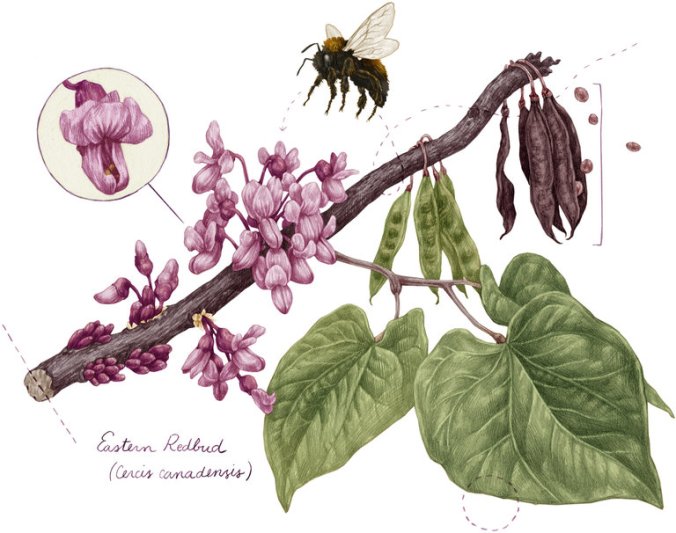
Economic value from trees is as old as mankind. Timber for homes and ships and all variety of implements. Nutritional value also: olives and their oil; figs; nuts. In the last year while in the forests of northwest Belize we were on the lookout for something new, something we had not yet known, something that would reveal new value within the forest; we had no clue what it might be. We were looking for the intersection between economic, nutritional and ecological value.
And finally a few months ago we came upon a nut that was new to us, and the trees it grows upon are particularly valuable from an ecosystem perspective. And an ethnobotanical perspective. So we are on the lookout for tree stories, especially those that overlap with themes we tend to in these pages–ecological, cultural and edible. We have linked to articles by Gabriel Popkin a couple of times previously, so we are not surprised by this editorial fitting our schema so well:
For several years, I’ve led tree walks in Washington, D.C. I start by asking participants who they are and why they want to spend precious hours looking at trees. My students are nearly all highly educated, successful people who work impressive jobs, speak multiple languages and effortlessly command sophisticated computers and phones. Yet most know barely the first thing about the trees around them. They want to change that. Continue reading

Hassan, Karnataka
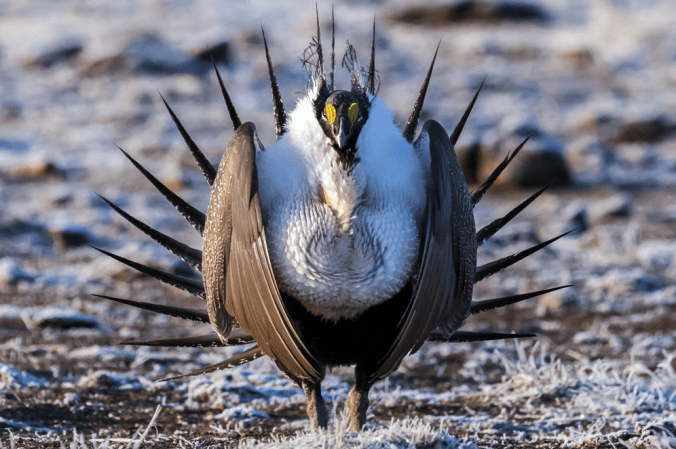
The greater sage grouse is a favorite among birders. Credit Rick McEwan
As protected areas and wildlife come under threat through lessening of restrictions on invasive oil and gas exploration, the importance of proving the economic value of conservation tourism become more and more evident.
Birders and Naturalists Ponder the Fate of the Greater Sage Grouse
Evan Obercian says it is the highlight of his Colorado birding tours every spring, even though he has to wake his clients up before 5 a.m. to be in the sagebrush flats before the sun comes up. And there they wait in Mr. Obercian’s van, listening to strange whoops and popping sounds that float magically from the predawn darkness.
The first rays of a new day’s sun reveal what is making the noise: large brown birds more than twice the size of a barnyard chicken, strutting and shaking while thrusting bulbous yellow air sacs out of their chests, and fanning a fantastic spread of pointy tail feathers. The bird is the greater sage grouse, and the sight is their spring mating ritual on their dancing grounds, called leks.
“It’s profoundly moving for me, and my clients,” said Mr. Obercian, “watching this ancient nuptial dance that’s been performed since way before there were any people on this land. It’s something way beyond just checking another bird off a list.”
The van acts like a blind, so the sage grouse do not notice that people are nearby, watching. Sometimes the grouse will dance right up to the tires. Birders are under strict orders not to get out, because as Mr. Obercian says, sage grouse “are very sensitive.” Continue reading
 Organikos