Graduation Day in Sylvester Village

IMG_0767

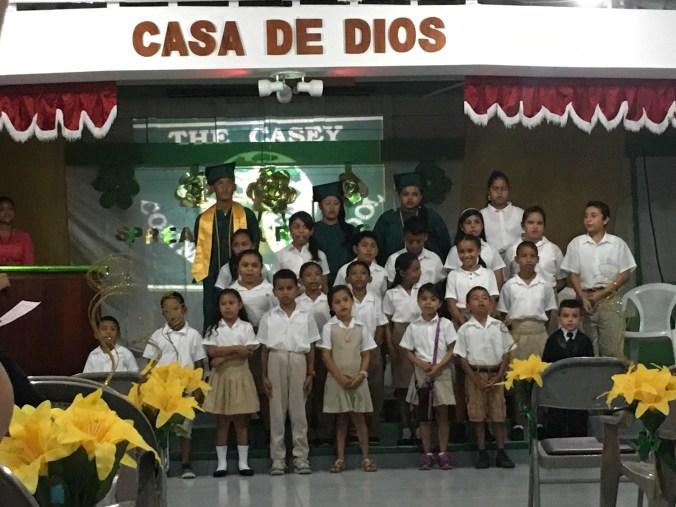
Earlier this week I did something that I couldn’t possibly have anticipated would be part of my Chan Chich experience: I attended a primary school graduation.

Sylvester Village is a community where employees of Chan Chich and Gallon Jug Farm live with their families. The Casey Community School is where many of the village’s children go for their first years of education. As one might imagine, the school is not very big. In fact, this year the school only had one kindergartner. Growing up in suburban America, this was very different from my early education which had about 24 kids in a first grade class with multiple classes per grade. However, perhaps the biggest difference from my experience was the school’s emphasis on community.

Continue reading

Collaborating In Nepal For Wildlife

Thanks to EcoWatch for bringing this to our attention:

This fall, rangers protecting rhinos, tigers and other endangered wildlife in Nepal’s famous Chitwan National Park will get a solar system that powers one of their isolated stations deep in the jungle. At the same time, local women will get the training and tools they need to sell low-cost clean energy technologies to people living in the buffer zone that surrounds the park. Continue reading

Thanks Again, China

Canby-China-Closing-Ivory-Trade-1-1-800

It is always worth celebrating when China takes action against elephant poaching. Let’s hope one or more of these numerous actions has an impact. We are happy to read this news, and the hope trudges on:

On the last day of March, the State Forestry Administration, the Chinese agency that monitors the trade in elephant ivory, closed sixty-seven ivory factories and retail outlets across the country. Continue reading

Stephen Greenblatt & Old School Text, Messaging About Our Future

170619_r30116-800.jpg

Poring over the story of Adam and Eve, Augustine came up with original sin. Illustration by Malika Favre

I recall the odd thrill of almost missing The Swerve and then realizing that in my remote location in the East, the classical canon of the West was more important than ever. And this scholar has a way with words, which now more than ever is much-needed balm. So, I am looking forward to this new installment of his work:

…Hardly a world-historical event, but the boy was named Augustine, and he went on to shape Christian theology for both Roman Catholics and Protestants, to explore the hidden recesses of the inner life, and to bequeath to all of us the conviction that there is something fundamentally damaged about the entire human species. There has probably been no more important Western thinker in the past fifteen hundred years. Continue reading

Illicit Eel

01.-Slider-Eel.jpg

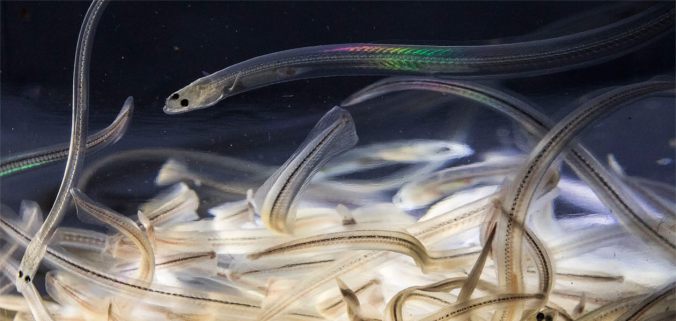
The movement of wild animals, a topic we have covered in these pages dozens of times already, never stops providing surprises; thanks to the FERN for the story on this one:

Inside the multimillion-dollar world of eel trafficking

Agents with the U.S. government’s ‘Operation Broken Glass’ have nabbed more than a dozen men for smuggling valuable baby eels to Asia Continue reading

Rabbit Returning

Released_NEC_TomBarnes_USFWS1-1260x708.jpg

Zoo-bred New England cottontail being released. Photo © Tom Barnes / USFWS

Thanks to Ted Williams at Cool Green Science for this story:

Recovery: Second Chance for Yankee Cottontails

Stunned but delighted is how Dr. Robert McDowell, Director of Wildlife at the University of Connecticut, sounded when I arrived at his office to learn about New England cottontail rabbits.

Finally someone other than himself was interested in these vanishing natives. We pored over skulls and skins and vainly patrolled early successional woods for live specimens. McDowell seethed about the mindset of state fish and game bureaucrats: we can’t waste time on a few native rabbits when we have so many look-a-like non-natives and when license buyers want more pheasants, ducks and deer. Continue reading

An Alternate Model For Books

Piazza-A-CSA-For-Books-1-1200.jpg

When Samantha Haskell took over a bookstore in Maine, she looked to local farms, and “community-supported agriculture,” for commercial inspiration.ILLUSTRATION BY SALLY DENG

Combining some of our favorite topics, including agriculture and books and transferable models of agriculture, our thanks to Adrea Piazza for A C.S.A. FOR BOOKS:

Mariah Hughs and her husband, Nick Sichterman, founded Blue Hill Books in 1986. It sits on Pleasant Street, in Blue Hill, Maine, a coastal town with a population that swells during the warmer months and thins out again each winter, reduced to its cast of fewer than three thousand year-round residents. This past winter, in the midst of that slow season, Hughs and Sichterman retired, leaving the bookstore in the hands of Samantha Haskell, who had been their full-time employee since 2010. Haskell had working capital to survive the first year, but, in order to maintain the breadth of the store’s inventory, she needed to raise additional funds. Rather than compromise the shelves, she looked to local farms for inspiration, devising a plan modelled after “community-supported agriculture,” commonly referred to by its initials, C.S.A. Blue Hill Books would become a community-supported bookseller: a C.S.B. Continue reading

Smith Island’s Odd, Earned Confidence

170522_Smith Island selects-018.jpg

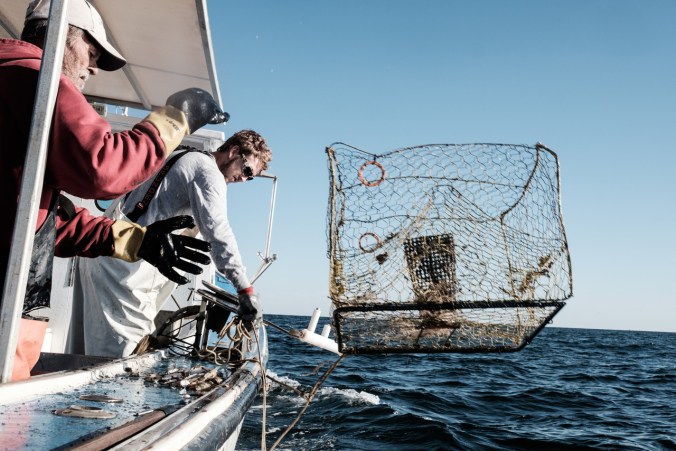
Tyler G. Tyler, right, pulls crab pots at the start of blue crab season. ALL PHOTOS AND VIDEO: ROB KUNZIG

Not worried about the future that climate change has in store for us? Does not sound too cool, or smart. But then, hmmm. Maybe these folks are on to something. Thanks to Atlas Obscura:

Maryland’s Smith Island, Home to a Vanishing Dialect and Rising Sea Levels

Despite climate scientists’ predictions, the laid-back inhabitants aren’t too concerned. Continue reading

Diversifying & Betting The Farm

060617_COSTCO_Corn_2.jpg

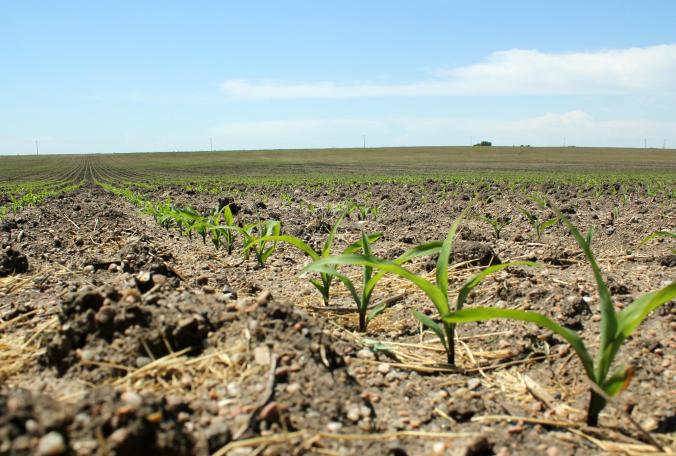
Mueller plans to build his chicken barns in the corner of this corn field just south of his home. His barns would house “breeders,” the hens that lay the eggs that will hatch to be raised for meat. Credit Grant Gerlock / Harvest Public Media

Thanks to Harvest Public Media for this story on diversification that some farms take on in order to take advantage of growing demand, and open space:

The Gamble Of The Farmers That Raise Our Chicken

Tim Mueller has raised corn and soybeans on 530 acres near the city of Columbus, Nebraska, for decades, but today he is planning to take a big gamble.

The big box retailer Costco is building a new chicken processing plant in Fremont, about an hour from Mueller’s farm. The company plans for the plant to slaughter 2 million birds per week. To raise all those chickens, the company is recruiting about 120 farmers to sign on as contract poultry farmers.

Mueller wants in. But to do that, he plans to take out a massive $2 million loan to finance the construction of four chicken barns. Continue reading

El Capitan Never Disappoints

Mackinnon-Alex-Honnold-Perfect-Climb-Featured-1200

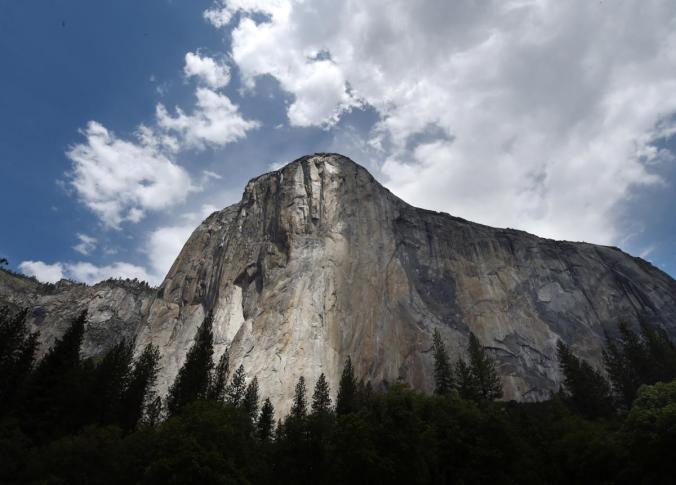
El Capitan, the towering stone heart of Yosemite National Park and a sweep of golden granite reaching twenty-seven hundred feet into the sky. PHOTOGRAPH BY MARK RALSTON / AFP / GETTY

I am not a climber and I do not generally favor extreme sports where someone else has to come in and clean up after an adventurer’s misfortune. I am in awe in this case, and so make an exception. It never bores me to look again at the image above. But it electrifies me more than usual when it accompanies a story like this one:

…Four hours later, that lone figure, the thirty-one-year-old professional climber Alex Honnold, had completed the first ascent of El Cap in the free-solo style. In other words, he had climbed the cliff alone and without a rope or protective equipment of any kind. Had he fallen, he would have died.

The achievement had long been predicted but never quite accepted as possible. The iconic face of El Capitan—photographed by Ansel Adams, praised by John Muir as “the most sublime feature of the Valley”—has long been the proving ground for American rock climbing. It has been climbed at incredible speeds and via routes of extraordinary difficulty; a ropeless ascent was the last “big psychological breakthrough” that remained, as Peter Croft, who completed groundbreaking free solos in the nineteen-eighties and nineties, put it. There was no real competition to be the first to meet the challenge. Either Honnold would do it, or he would leave it to future generations. Or he would try, fail, and fall…

A sports writer for the New York Times titles it perfectly:
10duaneWeb-master768.jpg

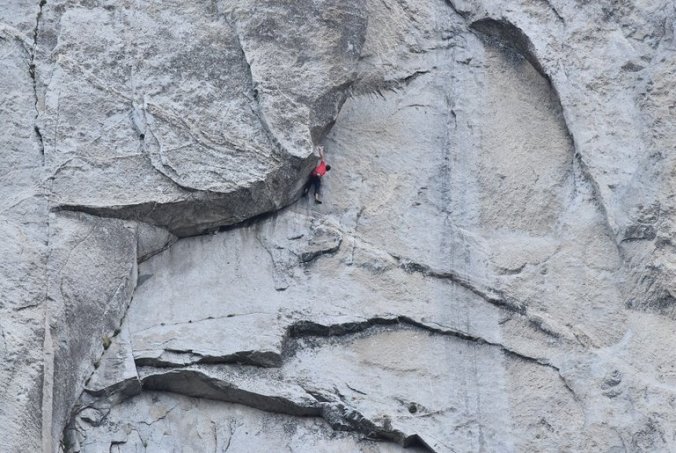
Alex Honnold at the 1,000-foot level of his free-solo climb of El Capitan. CreditTom Evans

El Capitan, My El Capitan

Alex Honnold woke up in his Dodge van last Saturday morning, drove into Yosemite Valley ahead of the soul-destroying traffic and walked up to the sheer, smooth and stupendously massive 3,000-foot golden escarpment known as El Capitan, the most important cliff on earth for rock climbers…
Ammonia, Who Knew?

4617875064_daab01704d_o-1260x708

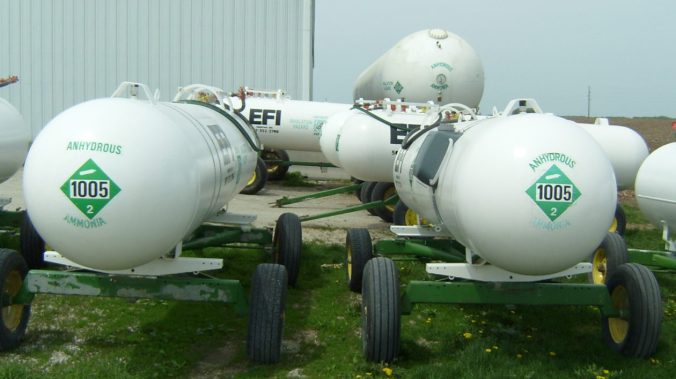
Anhydrous ammonia. Photo © Thirteen Of Clubs / Flickr through a Creative Commons license

Recognizing its utility as a household cleaner, especially to remove grease, ammonia has a smell that is familiar to most of us. But, nearly all of the annual industrial production of ammonia goes into other products, especially nitrogen fertilizer. Some farms inject ammonia directly into the soil. Others apply urea or ammonium phosphate fertilizers made from ammonia. All aim to supplement the availability of nitrogen for crop growth. Not all the ammonia gets into the crop. Inadvertent losses of nitrogen from fertilizers to the atmosphere account for about ten percent of fertilizer applications across the USA. Some nitrogen is also lost in the runoff to streams and rivers. Continue reading

Lost & Found, Lizard Edition

Holloway-Lizard-1200

For nearly two centuries, Varanus douarrha was an enigma. Now it has been resurrected. PHOTOGRAPH COURTESY VALTER WEIJOLA

In our book, lost and found is normally half glass full (versus half empty) new that we enjoy sharing, and this one counts as more than half full due to the intrigue of the history and the odd charisma of the creature:

A LIZARD LOST AT SEA MAKES ITS RETURN

By Marguerite Holloway

On June 27, 1824, a trading vessel en route from Mauritius to England was caught in a powerful gale. For ten days, winds pounded the King George IV until it could no longer hold together. In three perilous traverses, a small rescue boat shuttled those aboard to a beach near the Cape of Good Hope. “Neither myself nor the passengers have saved a single article,” the captain later wrote. “Probably they may cast up in time.” Amid the lost cargo—mostly sugar, cotton, and cloves—were three cases of scientific specimens. Continue reading

Sustainable Education

outdoor compost rendering CCL

To me, conservation tourism isn’t just about facilitating guest experiences in nature, but rather, it is about ensuring that guests walk away from their experience having gained a new appreciation for the systems they have interacted with. When I first spoke with Crist about spending my summer at Chan Chich, we mostly discussed working on developing a hydroponic food production system at the lodge. Not only would this system serve as a food supplier for the kitchen, but would also have an interactive educational aspect so guests could learn about the process. While this project is still a focal point of my internship, sustainability isn’t just about improving one aspect of a system, just like good conservation tourism is about having a medley of experiences.

When strengthening both the guest experience and sustainable operations at Chan Chich, it isn’t enough to just focus on what is going in to the kitchen. Rather, it is essential to focus on what is coming out of the kitchen as well.

Sustainable waste management has been important to the operations at Chan Chich for some time now. However, never before has these processes been visible to guests. While the hydroponic project is still under development, applying the project’s ideas of sustainable technology and guest education to waste management in the meantime is highly beneficial.

The result?

Continue reading

Atlas Obscura, Miscellanea

AtlasObsc.jpg

Bumblebees pollinating flowers during the study. NICOLE MILLER-STRUTTMANN

The story connected to the photo above is worth the few minutes, just as the dozens of other bee stories you will find in these pages have been. After reading it I started exploring the site where I found it. Finally. I see that Amie linked to and commented on this story reported in Atlas Obscura last year. I remember reading her post and then going to the source, as I did each of several other times when we have featured their work in these pages.

For well over two years we linked to their stories without any of our individual names attributed to the commentary on the story being linked to. When a post on our site has no name other than La Paz Group it just means here is our kind of story, enjoy. When a post has one of our names on it, it means the same thing only with more attention to detail. Today I finally had reason to explore Atlas Obscura, and realize that as much as I am committed to what we do and our communication about that work and related miscellanea, I might be just as happy doing what they are doing:

Atlas Obscura is the definitive guide to the world’s wondrous and curious places

In an age where everything seems to have been explored and there is nothing new to be found, we celebrate a different way of looking at the world. If you’re searching for miniature cities, glass flowers, books bound in human skin, gigantic flaming holes in the ground, bone churches, balancing pagodas, or homes built entirely out of paper, the Atlas Obscura is where you’ll find them.

Atlas Obscura is a collaborative project. We depend on our far-flung community of explorers (like you!) to help us discover amazing, hidden spots, and share them with the world. If you know of a curious place that’s not already in the Atlas, let us know.

There is plenty out there to discover, so let’s start looking!

Snorkeling in Cabo Pulmo

We’ve mentioned Cabo Pulmo here several times in the context of marine conservation, as well as from a personal visit. Although I still haven’t had a chance to go out on a scuba diving expedition here, a couple weeks ago Jocelyn and I were able to accompany some Villa del Faro guests on a snorkeling trip outfitted by Cabo Pulmo Sport Center, which is run by members of the Castro family mentioned in the posts linked above. The tour took two hours, but I’ve condensed the experience into almost fifteen minutes of video that I took on a rented GoPro:

Continue reading