Keep This Place Out Of Bounds

4256b.jpg

The letters come amid fears that the Trump administration will favor the powerful mining lobby, increasing the risk, particularly, of uranium contaminating water flowing into the Grand Canyon. Photograph: Stephen Yelverton Photography/Getty Images

Arizona officials, sensing an opportune moment, are using one of the most iconic places on earth to make a point. And the point is at one with the reason given for the USA pulling out of an environmental treaty, that every last buck to be raked out of the earth is more important than the earth as a whole, or a particular spot on the earth, or those living on the planet generations from now. The headline and story below fail to shock. This is how things are lately. Getting numbed to it is not an option. Arizona officials have made their point clear, but the point cannot be conceded. Boundaries still exist and must be protected. Thanks to the Guardian for its vigilance in its This is Your Land series:

Grand Canyon at risk as Arizona officials ask Trump to end uranium mining ban

Exclusive: Powerful regional officials to ask administration to end 20-year ban, saying it is unlawful and inhibits economic opportunity Continue reading

Stanford Earth’s Rosemary Knight

Thanks to Stanford News for this short video on important innovation related to ensuring we all stay hydrated well into the future:

Mapping groundwater from the air

Stanford Earth’s Rosemary Knight recently spearheaded a project to map underground freshwater resources and forecast the intrusion of saltwater into aquifers beneath the California coastal town of Marina. The project, a collaboration between Stanford, the Marina Coastal Water District, and Aqua Geo Frameworks, involved a low-flying helicopter towing a giant, instrument-laden fiberglass hoop that generated ground-probing magnetic fields that penetrated 1,000 feet beneath the surface.

First Day at Chan Chich

Hi! My name is Emily, and I am one of the La Paz interns for summer 2017. As an environmental science and engineering student, I have never had an internship at a hotel, let alone one in a remote location in a foreign country. However, the College of Agriculture and Life Sciences at Cornell University has prepared me for work in another large aspect of the Chan Chich property: sustainable agriculture. Ultimately, this is where my work will lead me, but until then I am becoming integrated with the lodge as a whole.

My first surprise during my experience so far was the actual lodge itself. On the drive to Chan Chich, we passed a great deal of farmland, with each area becoming less and less populated as we went on. However, as we turned down a road marked Chan Chich, the landscape instantly changed from cleared pastureland to a road densely surrounded by large trees draping over us as we drove. Soon, a sprinkling of lights entered our view, dotting the driveway and welcoming us to Chan Chich. Suffice it to say that my time searching Chan Chich on Google and Instagram did not do it justice. The greens of the grass and trees blended with the variety of flowers abundant across the property. The lodge and cottages were far more magnificent in real life making them feel humble and authentic while also luxurious all at once.

Continue reading

Sea Shepherd & Cuvier’s Beaked Whales

It has been a long while since our last link to Sea Shepherd news, shame on us, but today we rectify it with news from Seth and Jocelyn’s neighborhood–actually on the Pacific side of Mexico’s Baja California Sur but as close as most people get:

Sea Shepherd Records Never Before Seen Footage of Rare Cuvier’s Beaked Whales During Expedition in Mexico

Sea Shepherd’s research vessel the R/V Martin Sheen returned to Mexico’s Guadalupe Island to continue its study of Cuvier’s beaked whales, capturing never before seen drone footage of these rare and elusive cetaceans.

During the two-week expedition, Mexican lead-scientist Gustavo Cardenas Hinojosa and American collaborator Jenny Trickey, deployed various acoustic devices to compare their effectiveness. The scientists will return and leave these devices for a longer period of time. Continue reading

Foraging Forays

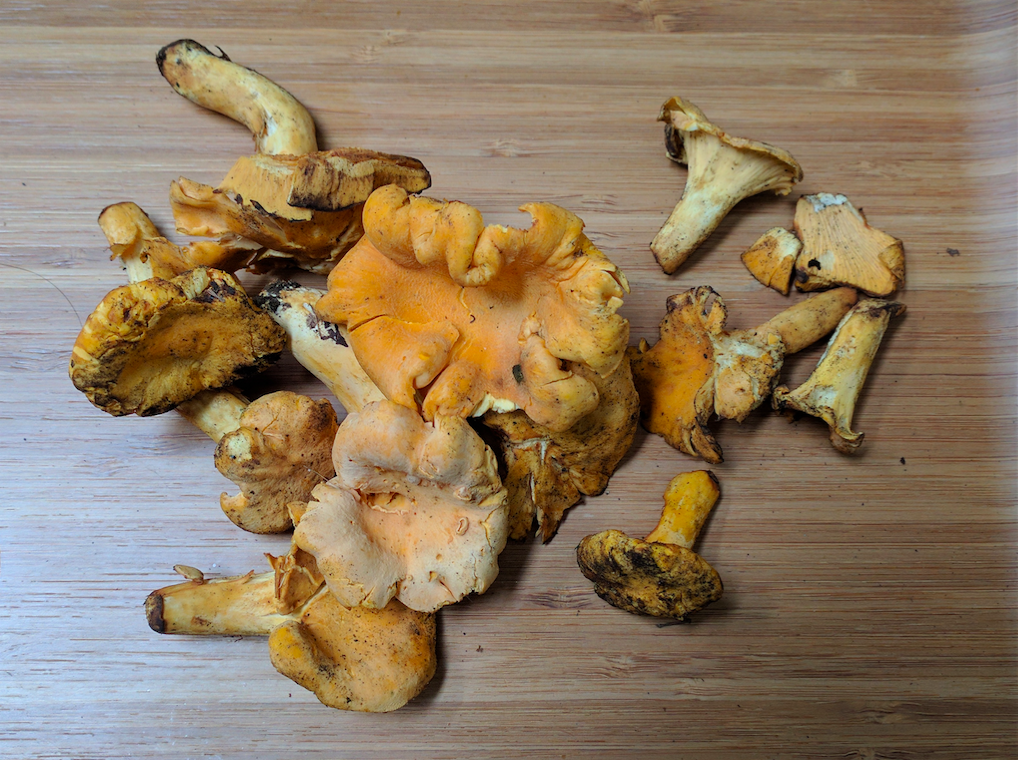
Taking a break from packing for my upcoming return to Belize, I joined a group of old friends from the Georgia Mushroom Club in a foray near the Georgia/South Carolina border. Fresh air, a walk in the woods, good company, and foraging for mushrooms – what better way to spend a morning?

The weather has been warm and wet, great conditions for mushrooms and we were happy to find patches of chanterelles. As we searched we talked about Chan Chich Lodge and Belize, and that we’re in the midst of brainstorming collaborations with the staff and local community who carry the ancestral knowledge of the old Mayan and Belizean foodways, and chefs who focus on foraging in the creation of their menus. We’ve recently discovered a variety of foods that are plentifully available from the Chan Chich forests, and are excited to incorporate them into our culinary story.  Continue reading

Rome Rewilded

viscosa.jpg

Image: Planet World / Flickr

Thanks again to one of our most reliable sources for the summary of conservation-oriented science, and specifically to Brandon Keim for this one:

An Anthropocene wildness grows in Rome

Even in one of the most densely urbanized places on Earth, wildness and natural abundance may yet flourish again, sustained by both neglect and stewardship. Continue reading

Climate, Agriculture & Disruption

corn-shot_custom-954dc74482bc59c82397d81f4660d015b059809a-s1400-c85

Journalist Chris Clayton writes for an audience filled with climate skeptics: farmers and leaders of agricultural businesses. He’s telling them that a changing climate will disrupt their lives. Courtesy of Chris Clayton

From the salt over at National Public Radio (USA), here is an interview in keeping with the spirit of yesterday’s post on peaches:

…Clayton is a Midwesterner and agricultural policy editor at DTN/The Progressive Farmer. He’s also the author of The Elephant in the Cornfield: The Politics of Agriculture and Climate Change, which describes in detail how farmers and farm lobbyists have dealt — or, more often, refused to deal — with a changing climate.

It has sometimes put Clayton in an awkward spot, as he acknowledged when I reached him this week in his office in Omaha, Neb.

Does it make you nervous, as a reporter at a farm publication, talking about climate change?

All the time. I feel like the guy who has to tell people things they don’t want to hear. But if I simply ignore the topic or ignore the issues, am I doing anybody any favors? Continue reading

I Love Peach

31PEACHES1-superJumbo.jpg

Peaches that bloomed late and thus missed the March freeze at Pearson Farm in Georgia. Production in the state this year might be just a quarter of what it was in 2016. Credit Maura Friedman for The New York Times

I have family in Georgia, and can attest to the state’s obsession described in the first paragraph of the article below. I have visited the state when peach is at its best, and the obsession makes sense to me. Although the article does not mention climate change, per se, considering the news I cannot help filtering this story through that one.

Farmers in the south are part of “the base” that have been led to believe that climate change is a hoax, and that efforts to mitigate it are wasted, even wasteful. Which leads me to wonder whether peach farmers at a moment like this might be on particularly fertile ground–whether they might be inclined to listen to science that can help them understand the season’s tragedy in a new light. For as long as there have been farmers they have been inclined to listen to all kinds of explanations for why things happen the way they do. Maybe climate change has just not been presented by the right messenger with the right message. I love peach enough to want to find out:

The South Faces a Summer With Fewer Peaches

By

ATLANTA — Peaches are such a part of Georgia’s identity that schools, streets and health care plans are named after them. Even the sticker you get when you vote is in the shape of the fruit. South Carolina, one state over, grows more peaches than Georgia. A giant statue of a peach is its most famous roadside attraction. Continue reading

Leadership On Climate Change Is Alive And Well

California Gov. Jerry Brown talks with Sharon Dijksma, Netherlands Minister for the Environment, during the joint Netherlands and California Environmental Protection Agency conference called, “Climate is Big Business,” at the Presidio Wednesday, May 24, 2017, in San Francisco; Photo: Eric Risberg, Associated Press

The news yesterday that the USA is exiting the Paris climate accord was in a font size the New York Times only uses at times of true tragedy–i.e. big news. Editorials accompanying that headline on the front page were proportionately big with invective:

Our Disgraceful Exit

Trump’s Stupid and Reckless Climate Decision

Brooks: Trump Poisons the World

Krugman: Trump Gratuitously Rejects the Paris Accord

All consistent with the implications of the news. There is no discounting the scale of that tragedy, so it is possibly not the right moment to look for silver linings. But that is what we do here, so here goes. In the model mad series we linked to a story about California Governor Jerry Brown, who has been making a stand during decades of public service, and he clearly has no intention of slowing down. The governors of California, New York and Washington on Thursday announced a new “alliance of states dedicated to fighting global warming and urged others to join them”.

“California will resist,” Brown told journalists on a conference call, going on to say that  the administration may well create the exact opposite of what is intended –

an aroused citizenry — and an aroused international community — who will not tolerate this kind of deviant behavior from the highest office in the land.”

Brown and his counterparts, Jay Inslee of Washington and Andrew Cuomo of New York, announced that they would join forces in a United States Climate Alliance, a coalition of states committed to upholding the goals of the Paris agreement.

The three states, combined, represent more than 20 percent of the U.S. population and at least 10 percent of the country’s greenhouse-gas emissions, according to the governors. Continue reading

The Wonders Of Trees Never Cease

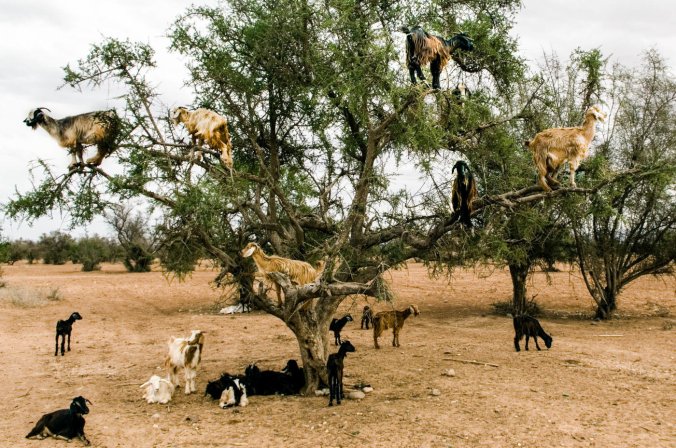
goat-02_custom-060bac4eeff1a0b290ff201210009e650a2025d0-s1400-c85.jpg

Goats climb an argan tree in Morocco to dine on its fruit. Jeremy Horner/Getty Images

At Chan Chich Lodge we are just embarking on a tree-related culinary journey, so any counterintuitive story about trees is likely to catch my attention these days.

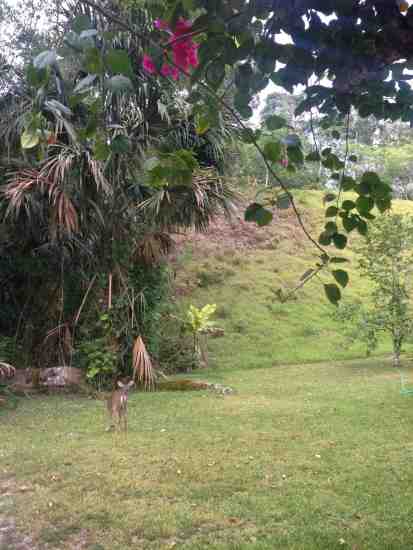
FigDeer.jpg

Thanks to Marc Silver at National Public Radio for the story about the picture above, Do Tree-Climbing Goats Help Plant New Trees? It is a short read and worth every second of your attention if you are interested in arboreal foodstuff.

This image to the left, while not as amusing as the one above, shows a deer doing the same thing with less panache. That deer will spread the seeds of that wild fig far and wide in the forest, increasing food supply. Continue reading

If You Happen to Be in Washington DC…

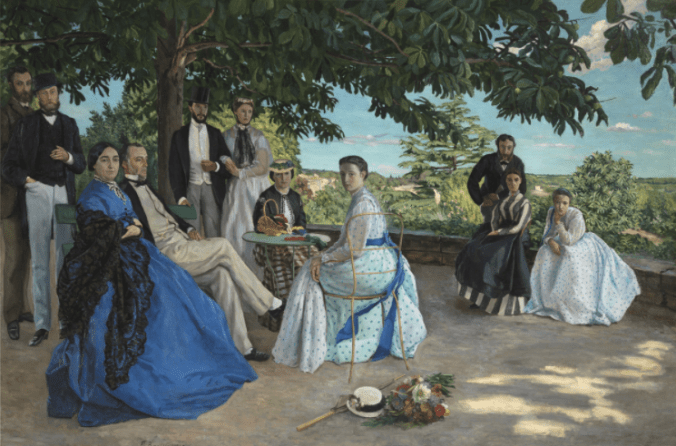
Frédéric Bazille’s The Family Gathering has none of the quick, airy brush strokes his future impressionist peers would discover; but the sunshine is there, as are the bright colors. Musée d’Orsay, Paris/Courtesy of the National Gallery of Art

Considering the changes in the air of the 1860’s Paris art scene, the “might have been” aspect of this story about a lesser known 19th century French painter is poignant, to say the least. Thanks, once again, to NPR for sharing this story about what could have been.

France’s ambassador to the United States, Gérard Araud, is a fan of 19th-century French painter Frédéric Bazille. But I had a confession to make when I spoke with him about the National Gallery’s “Frédéric Bazille and the Birth of Impressionism” exhibition. I said that I usually walk right past Bazille’s paintings and go straight to the impressionists — and I assume I’m not the only one who does that.

Araud understands, but says he likes Bazille for the opposite reason: The impressionists are so well-known, he says, “I’ve reached a point where I don’t look at them anymore.”

Those impressionists were also Bazille’s pals. Continue reading

When Life Gives You Lionfish…

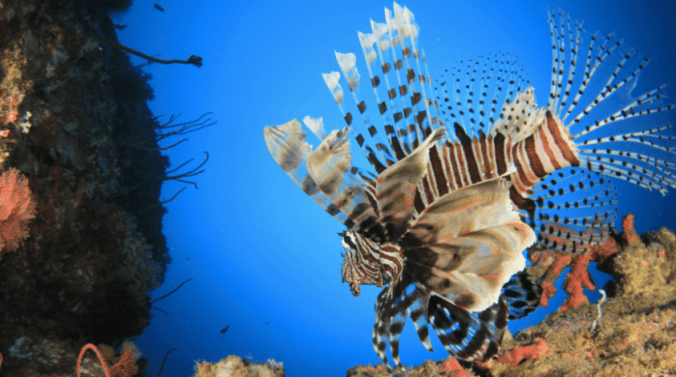
Market-based approaches to controlling invasive lionfish populations were highlighted at a recent GEF event in Grenada.

La Paz Group contributor Phil Karp has long been our guide into marine ecosystems, with both citizen science and social entrepreneurship posts on his work with groups in Belize and other parts of the Caribbean focused on these goals.

This collaboration with Sarah Wyatt,  a colleague from the Global Environment Facility, illustrates the on-going market-based approaches to managing the invasive species while creating new cottage industry opportunities.

Seeing a lionfish while diving in the Caribbean is a cause for mixed emotions.  On the one hand, one marvels at the exquisite beauty of the fishes’ flowery fins and its amazing adaptability to a range of habitats, from shallow estuaries with low salinity to deep reef environments. But then you remember that these fish don’t belong in the Caribbean, and that the very versatility noted above makes them an invasive menace. Indeed, if the fish you are looking at is a female, she may be carrying up to 30,000 eggs, and may have thirty or more native fish or crustaceans in her stomach.

One of the many impacts of the Anthropocene era on global biodiversity is the increased spread of invasive species, like the lionfish, due to rapid globalization. With the United Nations Ocean Conference taking place in New York next week, the conservation and sustainable use of the oceans and marine resources is high on the international agenda.  While long recognized as an environmental and biodiversity threat, invasive species also pose a threat to livelihoods, particularly in developing countries where incomes may be heavily dependent upon a single sector or product.

Traditionally, efforts to eradicate or control invasive species have been focused on public sector interventions.  But control efforts are often expensive and are either out of reach, or pose severe strains on limited budgets of developing countries.  Hence there has been growing attention to identification of market-based control approaches which create commercial incentives for removing the invaders, providing a financially sustainable means of control… Continue reading

Cactus Tales

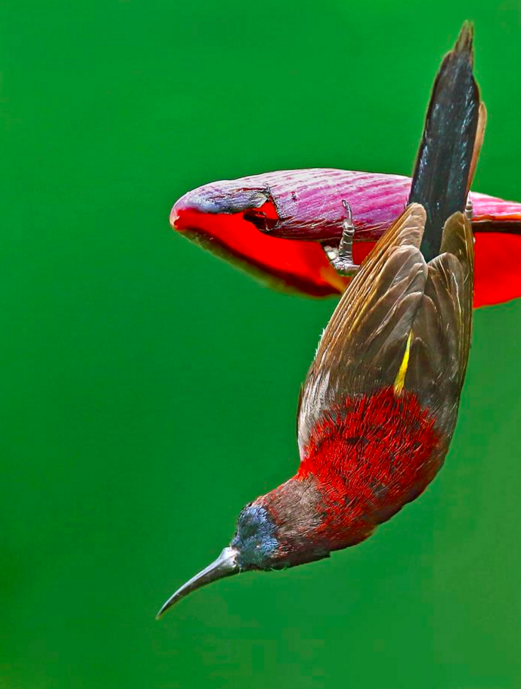
On Seth’s invitation, I am honored to have a chance to contribute to the group. I have a biology background, but am now retired and have an interest in photographing birds. I use point and shoot cameras, starting two years ago with a Canon SX60HS, graduating to a Sony RX10iii this year. I teach classes in bird photography with these cameras. My interests are in telling a story of birds in a small ecotype such as a pond, or in this case one plant species, a cactus, the cardon of the deserts of Northwest Mexico. These photos were taken over two trips to the Baja California Sur Cape Region, and the majority were on one cardon that was outside the bungalow I was staying at in Cabo Pulmo, Mexico while having my morning coffee.

Pachycereus pringlei, also known as Mexican giant cardon or elephant cactus, is a close relative of the Saguaro of the desert southwest. It is the tallest cactus in the world, lives for several hundred years, and has a fungal-bacteria symbiotic relationship that allows it to grow on bare rock. For birds, it is the perch of choice for everything from hawks to wrens, a source of abundant food,  a prolific producer of fruit and used by all woodpeckers for their nesting holes. On larger cardons it is not uncommon to see several bird species on a cactus at once and most birds whose territory includes a cardon will touch it several times a day for a song, a snack, and good luck.


Consumables Containing Consumables

31PACKAGE1-master768.jpg

The design company Ecovative makes a variety of packaging materials using mycelium fungus. Credit Nathaniel Brooks for The New York Times

Thanks again to Stephanie Strom for a story about ecology that surprises:

Packaging Food With Food to Reduce Waste

For the environmentally conscious eater, they are among the most inconvenient truths: Too much food goes to waste. Too much packaging comes with the food. And too much of the packaging is made to last for ages.

Now there may be a single answer to all three problems: using excess food to make the packaging. Continue reading

Richard O. Prum’s Beauty Challenge

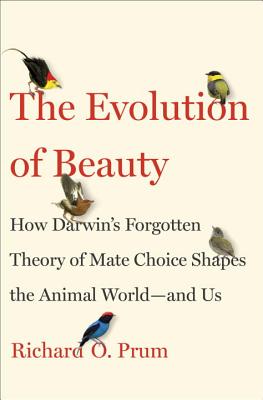
EvolutionBeautyFor evolutionary biology, on this platform we have favored E.O. Wilson because of his biophilia ideas (about which, plenty). For ornithology, we have leaned heavily on the Lab at Cornell and its many wonderful folks. Now, a scientist at Yale combines both of those fields and takes on the topic of beauty in a challenging manner–I am looking forward to this.

Click the book image at the left to go Indie Bound, a community of independent local bookstores, or if you need more convincing, read the beautifully illustrated Challenging Mainstream Thought About Beauty’s Big Hand in Evolution by James Gorman in the Science section of the New York Times. It is as much profile as review and asks:

Are aesthetic judgments about mates invariably tied to traits we see as adaptive and worth passing on Or, does beauty just ‘happen’?

Not long ago, a physicist at Stanford posed a rhetorical question that took me by surprise.

“Why is there so much beauty?” he asked.

Beauty was not what I was thinking the world was full of when he brought it up. The physicist, Manu Prakash, was captivated by the patterns in seawater made as starfish larvae swam about. But he did put his finger on quite a puzzle: Why is there beauty? Why is there any beauty at all? Continue reading