Lost Rice, Found Alive

image005_custom-74fcf2c593047698233b11f237300862d88e143a-s1400-c85.jpeg

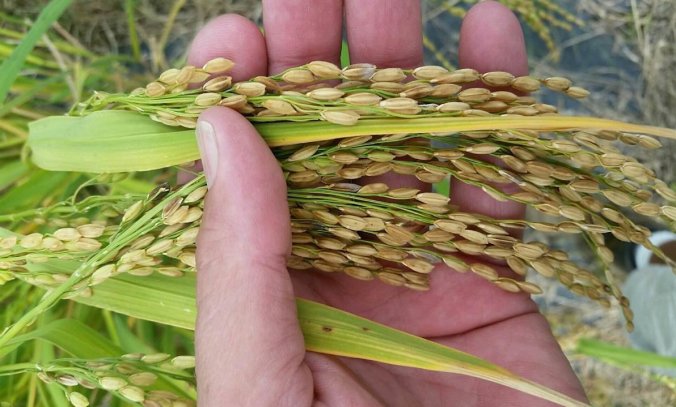
An upland rice strain. Courtesy of Brian Ward

Thanks to the salt and National Public Radio (USA) for this story about the strain of a grain means so much to billions of people around the world:

A grain of rice, like a grain of sand, sifts through your hands with a mysterious and lovely sameness. Mostly white or tan, hundreds or thousands of grains pour smoothly out of buckets, out of burlap, into bowls, with a sound like small waterfalls. Rice seems so simple, really. And yet, because it plays a central role in world cuisines, these modest grains can carry the weight of history. Sometimes that history is deeply surprising. Continue reading

Another Hirst Heist?

Head

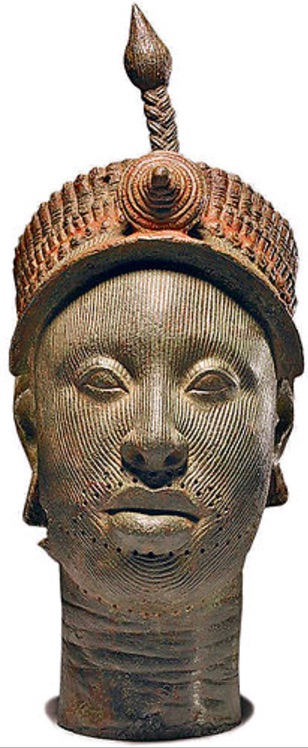
HEAD OF IFE
Brass statue, from Nigeria (A.D. 1400-1500)
“It is one of a group of 13 heads, superbly cast in brass, all discovered in 1938 in the grounds of a royal palace in Ife, Nigeria, which astonished the world with their beauty. They were immediately recognized as supreme documents of a culture that had left no written record, and they embody the history of an African kingdom that was one of the most advanced and urbanized of its day.’’
Credit: Trustees of the British Museum

The first podcast I ever listened to was this one, back earlier in this decade.World100 Although neither the BBC nor the British Museum is maintaining the website, it is still there. I recommend getting ahold of the podcast that you can find here among other places.

Object #63 did not particularly stand out more than any of the others chosen for this innovative historical exhibit that I listened to without visual cues. But I do remember it because the description was as vivid as any (pasted after the jump). So, I am sorry to be reminded of this piece again due to the modern world’s confused and confusing approach to art as represented by this so-called bad boy (aka fraud), who is still at his naughty ways according to this news item today:

There’s controversy in Venice for Damien Hirst, the British artist who has occasionally drawn accusations that his pieces are not always wholly original but inspired by others’ work.

At the Venice Biennale this week, the Nigerian artist Victor Ehikhamenor accused Mr. Hirst of copying a well-known ancient Nigerian brass artwork, “Head of Ife,” found in 1938 in Ife, Nigeria, without giving it the proper historical recognition it deserves. Continue reading

Model Mad, Down Under

John Church in Hobart in September 2010. He is known internationally for helping to bring statistical and analytical rigor to longstanding questions about sea level rise. Credit Peter Boyer

We continue to keep our eyes open for stories that offer inspiration even in the face of apparent adversity.

A Parable From Down Under for U.S. Climate Scientists

HOBART, TASMANIA — John A. Church, a climate scientist, did not look or sound like a man who had recently been shoved out of a job.

Speaking softly and downing coffee at an outdoor cafe in this old port city, he sounded more like a fellow fresh off a jousting match. “I think we had a win — a bigger win than I ever anticipated,” Dr. Church said in an interview last month.

Australian climate science went through an upheaval last year, one that engaged the press and the public in defending the importance of basic research. In the end, Dr. Church did indeed lose his job, but scores of his colleagues who had been marked for layoffs did not. Some of them view him as having sacrificed his career to save theirs.

What happened in Australia shows the power of an informed citizenry keeping watch on its government. And it may turn out to be a precursor to an attack on fundamental climate research in the United States.

Continue reading

Free Will, An Idea We Normally Do Not Question

Sapolsky.jpgThanks to WNYC, a radio station that has innovated the proliferation of the podcast with shows like Radiolab, for all that it brings to our attention on a regular basis. Seems strange to say it, but one reason we listen, related to the reasons why share on this platform and more broadly explaining (we think) why we do what we do: we choose to do all this because we care and our free will allows us the choice to do this rather than other things.

I cannot remember the last time I thought about free will, it is so obvious and taken for granted. So thanks also to WNYC for old school interviewers like Leonard Lopate, who also shine in the podcast ecosystem. His show is how I came to know of this new book, which led to my (surprised) thinking now about free will. Click the image above to go to the half-hour conversation. It motivated me to find out more. In addition to this 2009 TED Talk this brief interview in the newsfeed of his university is a compelling soundbite on a very  after listening to the broad-ranging topics of the WNYC conversation:

Stanford biologist Robert Sapolsky ponders the best and worst of us, plus free will

With the publication of his latest book, Robert Sapolsky tackles the best and worst of human behavior and the nature of justice in the absence of free will. Continue reading

Sound, Noise & Wilderness

lead_960c

I’m sorry, what was that? Ints Kalnins / Reuters

Sound is often profound. Noise often annoys. Thanks as always to Ed Yong, touching on a topic we have been sensitive to for some time now:

A Not-So-Silent Spring

Even America’s protected areas are being subjected to harmful levels of noise pollution.

If a tree falls in the forest, and there’s no one around, the National Park Service will still hear it. Continue reading

Communicating An Idea Clearly

yuval8.jpg

When I followed a link to a recording of his lecture, which happened after reading a review of his book, I could not yet have answered clearly as I can now an important question related to Yuval Noah Harari. Is it the core idea, or is it how he communicates that is more compelling? Yesterday I read this op-ed of his in the Guardian and it was as sticky for the last 24 hours as what I heard in that lecture in March, but perhaps not because of the idea.

I say this because the future he describes, in which artificial intelligence is pervasive and essential to the sense of value guiding our lives, is not one I am immediately attracted to, to put it mildly (I say this surrounded by a half million acres of very real forest and very real wildlife and a community of wonderfully real people with whom I enjoy hosting other wonderfully real visitors). And yet the argument he makes, and specifically the structure and description he uses for that argument, are compelling. And worth a few minutes of reading:

Most jobs that exist today might disappear within decades. As artificial intelligence outperforms humans in more and more tasks, it will replace humans in more and more jobs. Many new professions are likely to appear: virtual-world designers, for example. But such professions will probably require more creativity and flexibility, and it is unclear whether 40-year-old unemployed taxi drivers or insurance agents will be able to reinvent themselves as virtual-world designers (try to imagine a virtual world created by an insurance agent!). Continue reading

Welcome News From Brazil

Thanks to Anthropocene for a moment of relief:

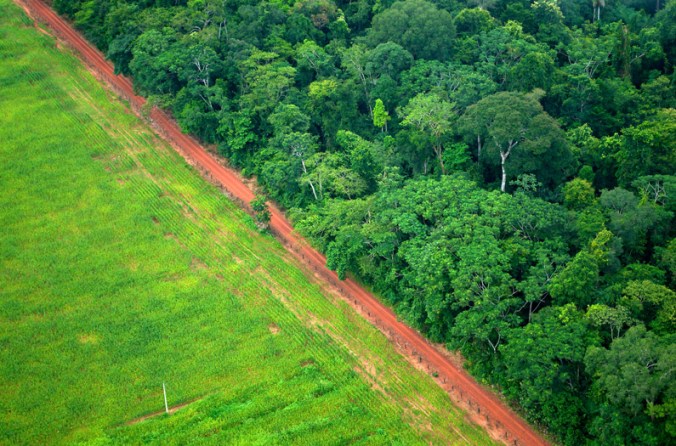
In Brazil, signs that a soy moratorium is slowing down deforestation

Baja Desert Birds

As I approach my 100th checklist submitted to the Villa del Faro eBird hotspot, I’ve been putting together video compilations of footage taken over the last seven months here. The one in this post happens to be about birds, and most of them are, but I’ll also be sharing some whale breaches, ray jumps, and non-avian desert animal behavior. In the video below you can see two Greater Roadrunners (filmed months apart), a California Quail, and a Gray Thrasher (endemic to the Baja Peninsula) recorded at or ten minutes from Villa del Faro.

Make sure you have the volume up for the Greater Roadrunner section in particular, as the first individual engages in some interesting bill-clacks, and the second one was vocalizing in a low toot that I’ve only heard the one time so far, but seems to be a mating call.

Continue reading

Community, Collaboration & Conservation in Mozambique

Thanks to contributor Phil Karp for sharing this great example of how peer-peer knowledge exchange can help to replicate and scale up innovative solutions.

For communities, by communities

Experience from around the world shows that managing fisheries and marine resources works best when responsibility is placed in the hands of local communities. This is particularly true in low-income countries, where there is often limited capacity and infrastructure for fisheries management and conservation.

Locally Managed Marine Areas (LMMAs) are areas of ocean managed by coastal communities to help protect fisheries and safeguard marine biodiversity. Found throughout the world’s tropical and subtropical seas, and encompassing diverse approaches to management and governance, their sizes and contexts vary widely, but all share the common theme of placing local communities at the heart of management.

Continue reading

Counting Down To Global Big Day

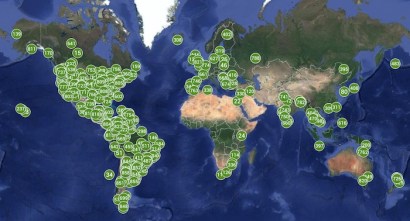
Global-Big-Day-map

A world of birders has already marked out where they’ll be on 13 May. Where’s your place? Add it today!

Thanks to eBird for the one week marker until Global Big Day, which we look forward to supporting at Chan Chich Lodge. Click the map to the left to mark your territory, so to speak. This countdown notice uses one species to illustrate a conceptual premise of the annual event, and we are happy to report that this species is frequently seen at Chan Chich Lodge on birding walks, and excursions to Gallon Jug Farm, where the barns are accommodating:

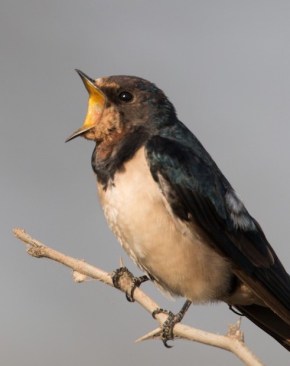
The familiar Barn Swallow (right) has been recorded in eBird from 222 countries. You can hope to spot a Barn Swallow almost anywhere on the planet, from Alaska to Argentina, Siberia to Australia, Iceland to South Africa. Barn Swallows criss-cross the equator and traverse the Eastern and Western Hemispheres. Their movements not only span an entire planet of birds, but connect a worldwide community of birders.

In the same way, Global Big Day and eBird connect all of your local birds with the rest of the world, making a real difference in the collective understanding of birds worldwide. On 13 May, every bird that you report contributes to the global team total for an unprecedented snapshot of our planet’s bird diversity. Every bird counts.

To join the Global Big Day team from more than 150 countries, all you have to do is go birding on 13 May!  Continue reading

Citizen Science, Mushroom Edition

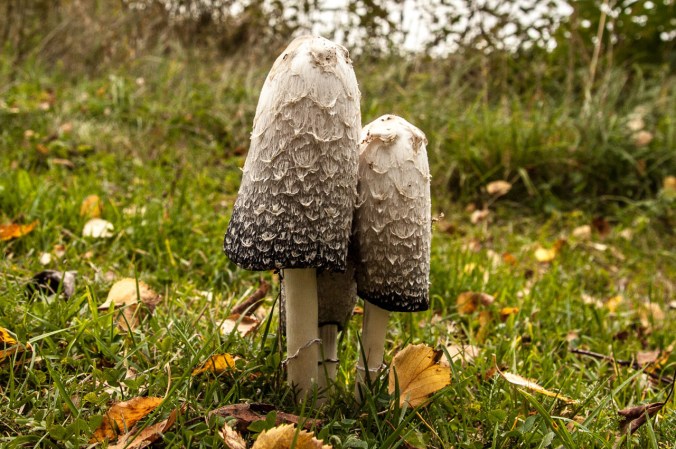
04-magic-mushrooms.w710.h473.2x.jpg

Photo: Johan Hansson/Creative Commons Attribution

We have a mycological leaning on this platform, which started due to Milo’s interest, which was infectious.  So, our news filters pick up stories like this; normally I avoid sharing the stories involving hallucinogens, though I read the serious ones myself. I do not expect stories like this one below from New York Magazine, so this was a pleasant surprise:

Meet the Citizen Scientists Who Think Mushrooms Have Superpowers

By

Last month, around 2,500 people with some connection to hallucinogenic drugs gathered at the Oakland Marriott City Center in Oakland, California for what might best be described as the psychedelics state of the union. Psychedelic Science 2017, as it was more formally known, drew professionals of all stripes: chemists who make the hallucinogens, neuroscientists who study their effects on the brain, therapists who discuss their after-effects on patients, shamans and healers who administer the drugs, and anthropologists like Joanna Steinhardt, who are trying to make sense of the meaning of psychedelic culture. Continue reading

Foxes, Habitat & De-Wilding

Five red fox kits around the tree.jpg

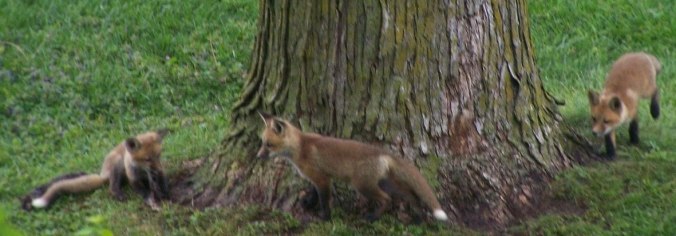
I recently received some photographs showing a family of foxes that had taken up residence near a home in the countryside an hour away from Kansas City. The foxes were wild, but even in this semi-rural landscape the foxes did not appear wild to me.

Vixen near the lakeIt was something about the context, seeing them in a yard I recognized well, that made me think about the essence of wildness. In the last year I have seen a number of grey foxes in the forests of Chan Chich and like most of the wild animals they do not seem to be afraid of humans; neither attracted to nor repelled by fear.

Vixen Apr 27 2017.jpgThe animal-human dynamic in both cases, the semi-rural home (of my in-laws, as it happens) setting of the foxes as well as those at Chan Chich seem to be one of peaceful coexistence, even apparent disinterest.  The human-animal dynamic is anything but disinterested, which the photos illustrate and that we see evidence of every day among Lodge guests. People want to see animals in their natural habitat. The animals’ apparent lack of fear of humans is related to the fact that there has been no hunting in the surrounding half million acres of forest for a couple generations.

It may also be that the foxes around the yard of the home in these photos also have not been hunted but something tells me that the foxes that seem habituated in and around human populations are different from those in these wild forests. I cannot quite articulate why I think that but today this book review got me thinking differently about the essence of wildness:
zuk-master180Imagine a time when scientists worked in secret, wondering if government officials would declare their research counter to state interests, endangering not only the personal liberty of the scientists themselves but their ability to let the experiments take them where the facts led. A time when how good a scientist you were was not all that mattered — what was important was how well you fit into political and ideological dictates. No, this is not a setup for a book ripped from yesterday’s CNN feed. Instead, it is the backdrop to a story that is part science, part Russian fairy tale and part spy thriller.

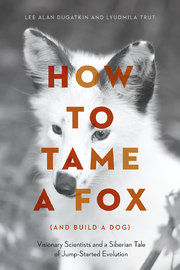
“How to Tame a Fox” sets out to answer a simple-seeming question: What makes a dog a dog? Put another way, how did an animal that started out as a bloodthirsty predator become one that now wants nothing more than a nice belly rub and the chance to gaze adoringly at a member of another species? Continue reading

One Possible Future of Fish

Open-ocean aquaculture could reduce environmental concerns associated with aquaculture in coastal waters. Photo courtesy of NOAA Fisheries.

We’re always looking for well-balanced discussions on innovative but occasionally controversial forms of food production.  Open ocean aquaculture is an example, and we appreciate the Food & Environment Reporting Network for offering just that, suggesting that many of the environmental concerns with aquaculture are mitigated by using deep water locations.

President of the New Orleans–based Gulf Seafood Institute, Harlon Pearce knows better than anyone that wild fisheries alone can’t supply U.S. consumers’ growing demand for fish. Which is why he’s doing his best to bring everyone to the table to achieve one goal: farming the Gulf of Mexico. Continue reading