Optimal Mangrove

sundarbans.jpg

Photo: NASA

Thanks to Anthropocene’s Brandon Keim for the summary and insights from  Mangroves optimized: How to make coastal habitats sequester even more carbon:

Of all the carbon buried in the floors of Earth’s oceans, most of it is found in the narrow strip of tidal marshes, seagrass beds, and mangroves along their edge. Known as blue carbon ecosystems, these vegetated coastal habitats “occupy only 0.2% of the ocean surface, yet contribute 50% of the total amount of carbon buried in marine sediments,” write researchers, led by Deakin University ecologist Peter Macreadie, in the journal Frontiers in Ecology in the Environment. Meter for meter, they’re some of the most effective carbon storage systems we have. But could people make them even more effective? Continue reading

Preserving Biodiversity to Feed the World

BioDiv.jpg

Thanks again to Atlantic for its occasional short film series, and in this case specifically to Erica Moriarty for bringing our attention to a video by Independent Lens available for sampling over at PBS (click the image above):

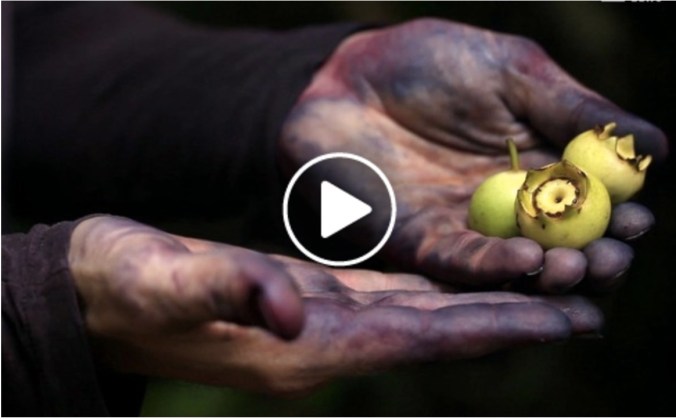
In the last century, 94% of the world’s seed varieties have disappeared. Family farmsteads have given way to mechanized agribusinesses to sow genetically identical crops on a massive scale. In an era of climate uncertainty and immense corporate power, farmers, scientists, lawyers, and indigenous seed keepers are on a mission to defend the future of food. Botanical explorer Joseph Simcox has been to over 100 countries, collecting thousands of seeds. In this documentary from Independent Lens, he travels to the Peruvian Amazon. Continue reading

Cosmic Crisp

img_4971-2-_custom-32c796fc06c225a286485fa8bc034cc5f61b7652-s1400-c85.jpg

A worker takes a break after planting young Cosmic Crisp trees in an orchard near Wenatchee, Wash. Dan Charles/NPR

The folks at the salt, over at National Public Radio, deliver (click the image above to go to the story) the crispest, juiciest food stories:

Get ready for a new kind of apple. It’s called Cosmic Crisp, and farmers in Washington state, who grow 70 percent of the country’s apples, are planting these trees by the millions. The apples themselves, dark red in color with tiny yellow freckles, will start showing up in stores in the fall of 2019.: Continue reading

Ranching, Recovery & Reason

MasterSceneofSilverCreek-GuiseppeSiata-1260x708.jpg

If you missed this post, it is worth a read for perspective either before or after the story below, and even if you do not read the story below that one should not be missed. Thanks to Cool Green Science:

Ridding the West of cattle remains a priority for some organizations and individuals. “Ranching,” the director of one prominent group told High Country News, is among “the most nihilistic lifestyles this planet has ever seen. Ranching should end. Good riddance.” Another group charges that ranching causes “desertification.” Another proclaims that “grazing spreads weeds.” Still another cites as a “myth” that “profitable livestock production and ecological preservation can coexist.” Continue reading

Happy Plants?

04GARDEN1-master768.jpg

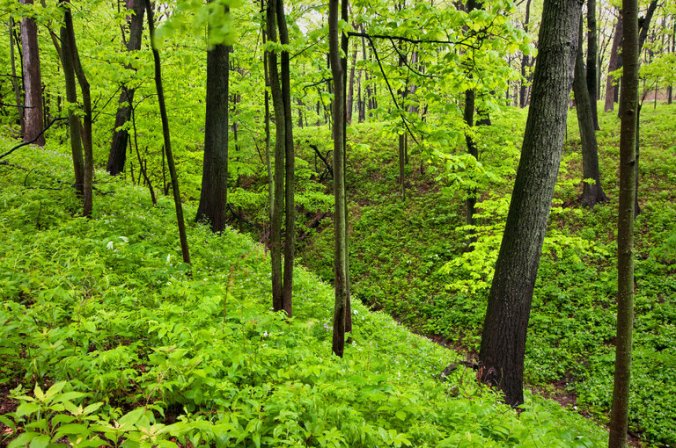
A dense carpet of woodland perennials. Thomas Rainer, a landscape architect, calls plants “social creatures” that thrive in particular networks. Credit Mark Baldwin

Thanks to the landscape architect Thomas Rainer, and the author, for these observations:

Thomas Rainer and I have both been doing the botanical thing for decades; we know, and use, many of the same plants — and even much of the same horticultural vocabulary. But what he and I see when we look at a butterfly weed or a coneflower, or what we mean when we say familiar words like “layering” or “ground cover,” is surprisingly not synonymous. Continue reading

Song of the Sloth Bear

Much of our efforts on this site go to honoring the efforts of conservationists, in the form of scientists, activists, and writers. A special appreciation go to the photographers, filmmakers and artists whose work brings nature into the lives of many who may not normally be exposed to the incredible biodiversity of our world.

Longtime contributor Sudhir Shivaram is one such photographer, and we appreciate his  introduction to this lovely film Daroji by Sugandhi Gadadhar currently in final deliberation at the 2017 Wild & Green Shorts Film Festival, Montana.

Daroji is a short film for children, introducing them to wildlife, specifically those from in and around Daroji Sloth Bear Sanctuary in Karnataka, India. Bindu, a female Indian Sloth Bear, tells the story of different families, including her own, and shares a friendly note with her audience, suggesting that man and animal can co-exist in harmony.

We wish Ms. Gadadhar the best of luck!

Bioluminescence, Fungi, Science


27TRI-MUSHROOM1-superJumbo

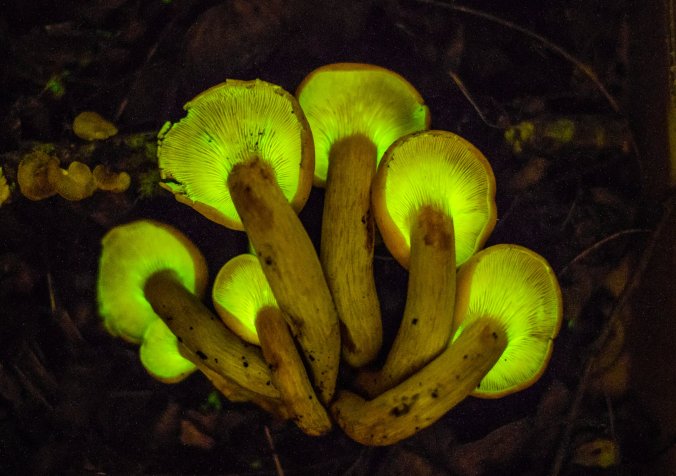
A bioluminescent jack-o’-lantern mushroom found in Pisgah National Forest, near Asheville, N.C. Credit Mike Belleme for The New York Times

Three of our favorite topics in one, thanks to Joanna Klein, the New York Times, and Science (the section of the paper and the thing itself):

PISGAH NATIONAL FOREST, N.C. — Here’s what I was told: Get away from the city, go during a new moon and keep my flashlight off. When the sky faded black enough to spot stars twinkling, I’d be able to see mushrooms glowing. Continue reading

Keystone Continues Calling

3733.jpg

Thanks to the Guardian for keeping attention where it is due:

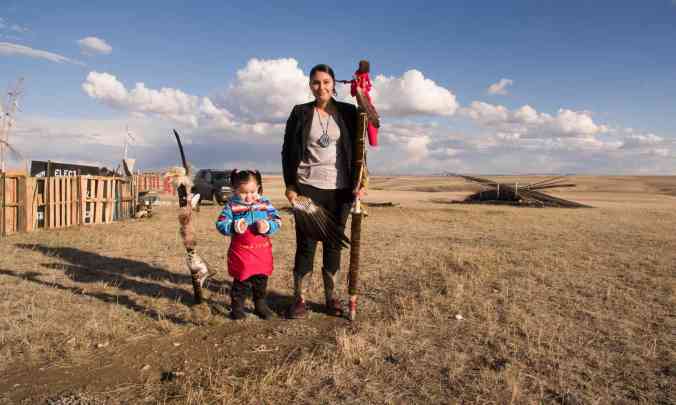
Life on the Keystone XL route: where opponents fear the ‘black snake’

Part one: In Montana, Native Americans fear a leak could destroy their way of life, but local politicians worry about the threat of protesters above all else

Words by Oliver Laughland, photos and video by Laurence Mathieu-Léger

“)ur people call it the black snake because it is evil,” says Tressa Welch, as thunder clouds steamroll the blue sky over the plains of Wolf Point. “And like snakes they come out of nowhere, they slither and strike unknown.” Continue reading

Historians Do Not Get Mad, They Give Perspective

ian-frazierNormally we clip short excerpts and link to full articles, or whatever it is we think worth sharing from a third party source. The exception is, on rare occasions, with important news that should be read in full at once, such as a public service announcement. Here is one of those, in our estimation. We suggest you read it to the end, now. Ian Frazier, a staff writer at The New Yorker, has avoided the sap, but treads close to the heartwarming notion that folks in a divided, tense situation might be able to listen to one another, with the help of a mission-driven historian:

Patricia Limerick, well-known historian of the American West, gave a talk at the community center in the town of Burns, Oregon, one evening not long ago with her heart slightly in her throat. Limerick belongs to the small category of historians who are occasionally recognized on the street, and she gives talks all the time. What made this one different was that Burns is the county seat of Harney County, home of the Malheur National Wildlife Refuge, the site, last year, of a six-week takeover by armed protesters, who demanded that the federal government return the land—though to whom was not exactly clear. One of the occupiers was killed in the standoff. Limerick knew that her audience, about seventy-five county residents, included both supporters and opponents of the protest. The mood in the room seemed congenial, not tense, but she couldn’t be sure. A local man had told her about a past confrontation between the two sides in which many had likely carried firearms. He said he thought that if someone had dropped a book people might have started shooting. Continue reading

Reminder Of Why Global Big Day Matters

CloudCrowd.pngNot every episode needs to be a crowd-pleaser, but this one catches the attention of our crowd more than the first three episodes had. It reminds us that while Global Big Day is intended to be fun, with a hint of competitive spirit, it is all in the interest of science and ultimately for the benefit of conservation of bird habitat (reminder to pledge). Thanks to The National Science Foundation for funding this! Thanks to PBS for making it available to watch online, even outside the USA (at least in Belize):

TheCrowdandTheCloud.jpg

Citizens4Earth, Ep. 4

Counting birds for more than 100 years generates data on a changing climate and there’s an app for that: eBird. Surfer science using smart tech tracks ocean acidification and coastal temperatures in the Smartfin project. Spend “A Year in the Life of Citizen Science” with California’s monarch butterflies and horseshoe crabs in Delaware. Continue reading

Bedazzled

Works that can be seen in “CHIHULY,” Dale Chilhuly’s exhibition at the New York Botanical Garden. Credit Photographs by Vincent Tullo for The New York Times

Although fairly ubiquitous in Botanical Gardens and museum rotundas, Dale Chihuly’s colorful and primarily organically shaped glass installations add an intriguing juxtaposition with the spaces they inhabit. Despite his popularity, opinion varies whether his work enhances or detracts. Whichever camp you choose, there’s a fertile ground for conversation.

The single-word, all-caps title — “CHIHULY” — of a new show at the New York Botanical Garden conveys immediately exactly what visitors will be getting: vibrant glass sculptures in a familiar style, one that often recalls nature, and sometimes competes with it.

He started by weaving glass into tapestries but, eventually, the weaving part, once his primary technique, fell away.

“There is something about glass, one of the few materials that light goes through,” Mr. Chihuly said. “You’re looking at light itself.”

The shapes that Mr. Chihuly has spread to institutions worldwide remind many people of organic forms. But he has always maintained that copying nature has never been his goal. “I’m not conscious of mimicking,” he said. “I don’t study plant books. Glass wants to make forms like that, if you let it.” Continue reading

Does The Monkey Smile?

SpiderMonkey.jpg

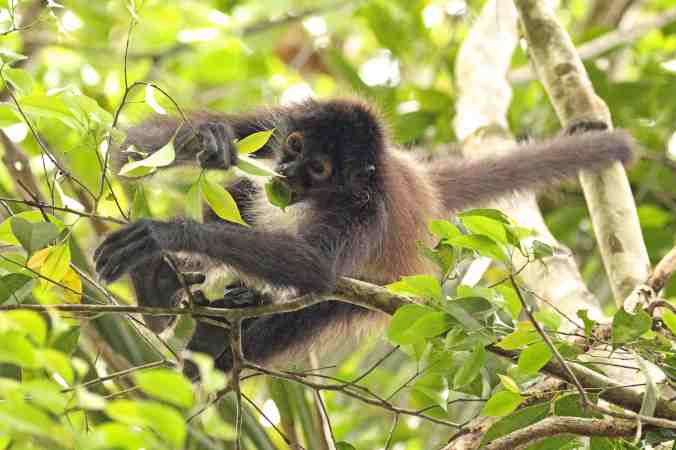
When sharing wildlife photos here, whether from guests or some of our own, the idea is to provide constant reminders, to ourselves and to everyone else, of the value of conservation. Even with a title of a post meant to draw a smile, it is not to be cute so much as to address the wonder of the moment captured in the camera. I really do wonder whether the margay purrs. And Chrissy Mason’s photo of the margay helped me wonder that more effectively.

The photo above, and the one below–both also shared by Chrissy–got me thinking about whether primates really smile, or whether it just looks that way to us (you must have seen that photo, reportedly a selfie taken by a macaque, that sure looks like a knowing grin). Continue reading

Citizen Science, 2017 & Beyond

tnc_90078497_preview_cropped-e1493211756535-1260x708.jpg

We have an event coming up that is our main focus now with regard to citizen science. After a few years of linking out to plenty of initiatives in this realm, 2017 is our big year, so to speak. And not only for us, nor only for 2017. We see the trend building momentum. Thanks to the Nature Conservancy and Cool Green Science for this story reminding us of the variety of citizen science projects are out there waiting to be discovered:

As a remotely operated vehicle (ROV) descends into the ocean depths, inky blackness slowly consumes all sunlight. Jellyfish and unidentified floating objects drift by, marine snow shimmers in the vehicle’s headlights. Suddenly, mountains and canyons taller and deeper than any on land materialize out of the darkness. Then, a voice breaks over the intercom, “Bridge, this is Nav, can we move five-meters South and hold position? Okay, let’s get underway again. Bearing 180°, 20 meters.” Continue reading

Learning Archeology In Situ At Chan Chich Lodge

2013 Burial 10.jpg

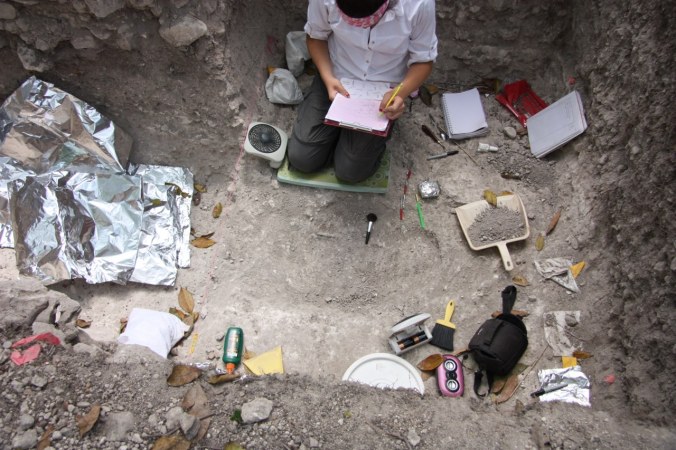
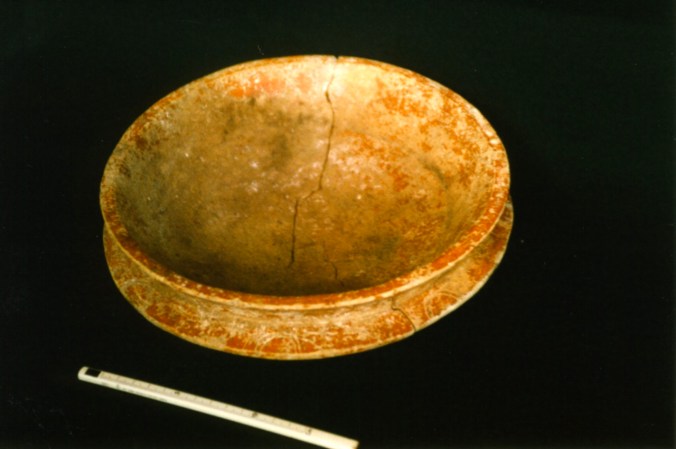
We recently posted a brief description of this program in the events section on the Chan Chich Lodge website, and here we provide a longer description written by the program organizers. The photos are from recent years of the program. I am looking forward to welcoming Professor Houk and his team of archeology students to Chan Chich Lodge few weeks from now, and especially looking forward to the opportunity guests of the lodge will have to join the evening lecture series, discussing the history of the location and particular discoveries from the site:

1997 Tomb 2 Plate.jpg

Guests of Chan Chich Lodge are the most recent inhabitants of the ancient Maya city of Chan Chich. Abandoned around AD 900, the once proud buildings, plazas, courtyards, reservoirs, gardens, and fields were gradually reclaimed by the jungle for over 1,100 years… Continue reading

Noting Progress When It Becomes Visible

2500.jpg

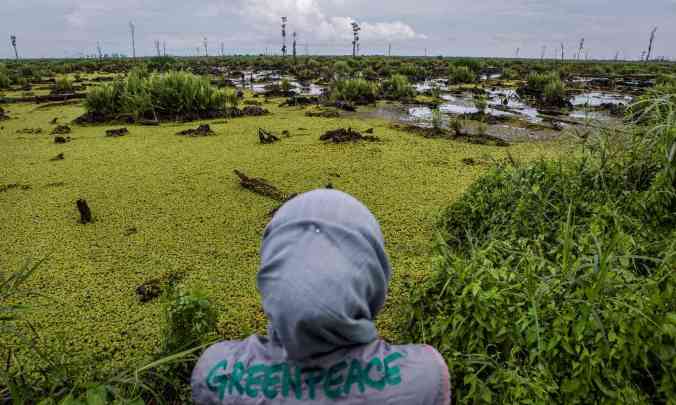
A Greenpeace investigator surveys an IOI palm oil concession in Ketapang, Indonesia. Photograph: Ulet Ifansasti/Greenpeace