Why Net Neutrality Matters To All Of Us

28wu-master768.jpg

Tim Wu has shown up on these pages exactly once in the past. Today marks #2 with a link to his op-ed The ‘Fix’ for Net Neutrality That Consumers Don’t Need, which helps strengthen the case we tried to make in the first post about him. He is a gifted explainer. This seemingly innocuous policy issue, which might otherwise get ignored and thereby also allow another gain of the wrong type to the wrong people, is suddenly clearly a very big deal thanks to Mr. Wu:

Netflix and Amazon have been nominated for hundreds of Emmys and Golden Globe awards in recent years, and that is a testament to both the quality of those companies and the transformation of television. But some of the credit is also due to “net neutrality,” the legal regime that nurtured and protected the open internet and streaming TV in the first place. Continue reading

Model Mad, Painter

Mr. Bradford surveying the rotunda of the pavilion replica. Joshua White

We appreciate Mark Bradford’s concern about how he can represent the United States when he no longer feels represented by his government. Many of us on this platform are trying to find ways to express the same concern without resorting to nihilism, dystopic or other forms of hopelessness.

It takes an artist like Mr. Bradford to remind us of how we can creatively address this concern. It has the true ring of the same core concern driving others in the arts we have been pointing to in the model mad series. Thanks to Jori Finkel and the Arts section of the New York Times for An Artist’s Mythic Rebellion for the Venice Biennale:

LOS ANGELES — Mark Bradford, one of America’s most acclaimed painters, could not figure out what to put in the grand rotunda.

This artist, who is set to represent his country in May at the 2017 Venice Biennale, found an unusual way of working long-distance. In a warehouse in South Los Angeles, not far from where he grew up, he created a full-size model of the Biennale’s United States pavilion, a stately building with echoes of Monticello. Continue reading

Plants, Water & Sound

flower-and-earbuds.jpg

Thanks to Brandon Keim and Anthropocene for this summary of some recent science exploring the reactions of flora to sound in their search for water:

Plants can hear water. Could noise pollution interfere?

There’s a transformation underway in how people think about plants: not just as inanimate biological objects, but as capable of perceptions and actions that resemble the intelligent behaviors of animals. Continue reading

A Big Fish Story We Can Get Behind

Cool video from the Red Sea of a moray eel (Gymnothorax javanicus) preying on a lionfish (Pterois miles).

Morays are quick to chow down on lionfish carcasses in the Caribbean and will readily accept (or steal) lionfish off of a spear (although such feeding is a BAD idea as it causes them to associate divers with food).

Let’s hope they will begin to hunt lionfish o their own in the Caribbean as well.

Whispering Whales

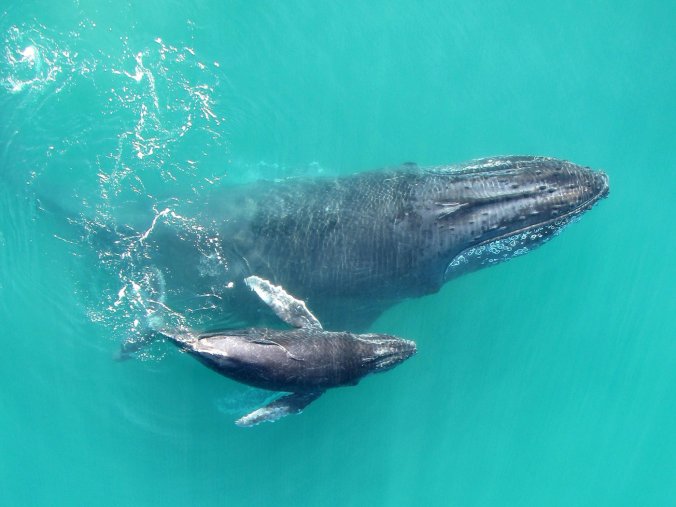
whispering-whales-1-737094c2b8f1aaac28bc47183219c85f80bea1a7-s1400-c85.jpg

A mother and calf humpback whale swim in the Exmouth Gulf in Western Australia. Fredrik Christiansen/Functional Ecology

Thanks to National Public Radio (USA) for this story:

Recordings Reveal That Baby Humpback Whales ‘Whisper’ To Their Mothers

by Nell Greenfieldboyce

Whalesound.jpgBaby humpback whales seem to whisper to their mothers, according to scientists who have captured the infant whales’ quiet grunts and squeaks.

The recordings, described in the journal Functional Ecology, are the first ever made with devices attached directly to the calves. Continue reading

Big Day Pledge

clo_logo_2_351px

As we have in past years, in solidarity with our friends and colleagues at the Cornell Lab of Ornithology, we are sharing the pledge drive as far and wide as we can, and look forward to doing our part more specifically in a couple weeks:

BigDay_Email-banner_032817

On May 9th, the Cornell Lab of Ornithology’s top birding team will begin the long journey to the Yucatan Peninsula for Big Day 2017. Big Day is an all out midnight-to-midnight birding event to see who can identify the most species in a 24 hour period. Team Sapsucker hopes to find the most birds yet — by identifying 300 bird species. Continue reading

Escapist Noir

Print

In Melville films starring Alain Delon, cops and robbers feel interchangeable. Illustration by Malika Favre

In these pages our norm is to give visitors reasons to escape urban life and immerse in nature, join conservation initiatives, support communities at home and in faraway places alike. When we need a brief getaway from all that, we occasionally do it in reverse. In places where we can be reminded of mankind’s occasional flashes of genius. One of my favorite critics has me thinking about being in a big, dark room in New York City in the coming days:

This is how you should attend the forthcoming retrospective of Jean-Pierre Melville movies at Film Forum: Tell nobody what you are doing. Even your loved ones—especially your loved ones—must be kept in the dark. If it comes to a choice between smoking and talking, smoke. Dress well but without ostentation. Wear a raincoat, buttoned and belted, regardless of whether there is rain. Any revolver should be kept, until you need it, in the pocket of the coat. Finally, before you leave home, put your hat on. If you don’t have a hat, you can’t go.

Melville was born almost a hundred years ago, on October 20, 1917. The centennial jamboree starts on April 28th and ends on May 11th, followed by a weeklong run of “Léon Morin, Priest” (1961), starring Jean-Paul Belmondo in the title role. (Thanks to Godard’s “Breathless,” released the year before, Belmondo was at the time the coolest Frenchman alive, so what did Melville do? Put him in a dog collar and a black soutane.) In all, the festival, which after New York will travel to other cities, comprises twelve features and one short. Only a single work is missing, a rarity entitled “Magnet of Doom” (1963). Continue reading

Lowly Creature May Represent Saving Grace

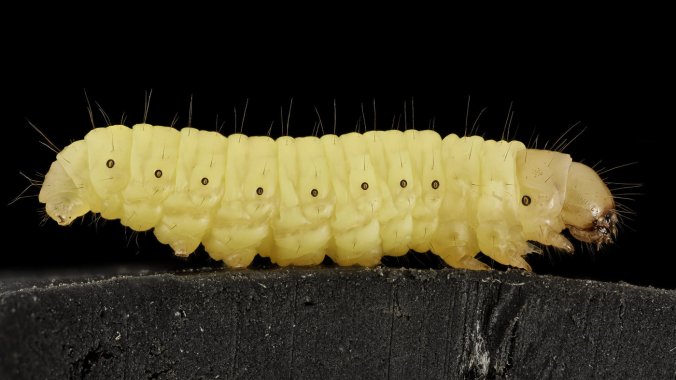
19051745004_4c6553e683_k_wide-1e3d66a2290ab61ffd5a504c2440c34d0aa5fde2-s1400-c85.jpg

Wayne Boo/USGS Bee Inventory and Monitoring Lab

Thanks to National Public Radio (USA) for this new appreciation for an otherwise underappreciated creature:

A Worm May Hold The Key To Biodegrading Plastic

MERRIT KENNEDY

People around the world use more than a trillion plastic bags every year. They’re made of a notoriously resilient kind of plastic called polyethylene that can take decades to break down.

But a humble worm may hold the key to biodegrading them. Continue reading

For The Wordies In Our Midst

ap_070703038854_wide-8db38f345e52dcc1cd10af2ed21699e9704f7293-s1400-c85

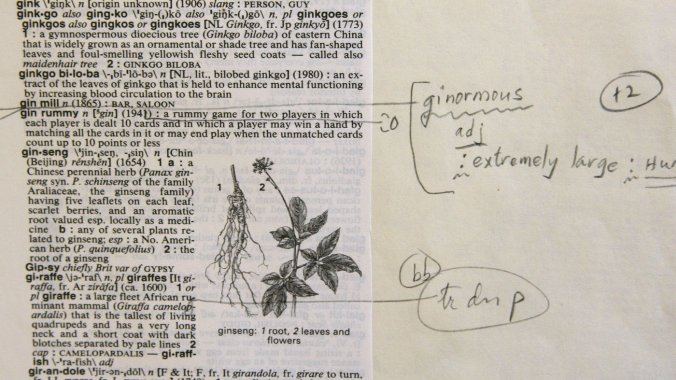
A galley proof shows some of the work that went into adding “ginormous” to Merriam-Webster’s 2007 collegiate dictionary. Charles Krupa/AP

We care about the meaning and use of words about as much as we care about the specific themes words are used in these pages to evoke in all manner of variation: conservation, community, collaboration, food, etc. Among us are perhaps some repentant grammar scolds, so thanks to the Atlantic’s Megan Garber for this review, which I was led to read after listening to an interview with Kory Stamper (click the image above to go to that podcast):

The Case Against the Grammar Scolds

The lexicographer Kory Stamper’s new book, Word by Word: The Secret Life of Dictionaries, is an eloquent defense of a “live and let live” approach to English.

lead_960 (7)

Louis du Mont / Getty

Continue reading

Not Quite Water Into Wine, But Righteous Indeed

26ALEweb-3-master675.jpg

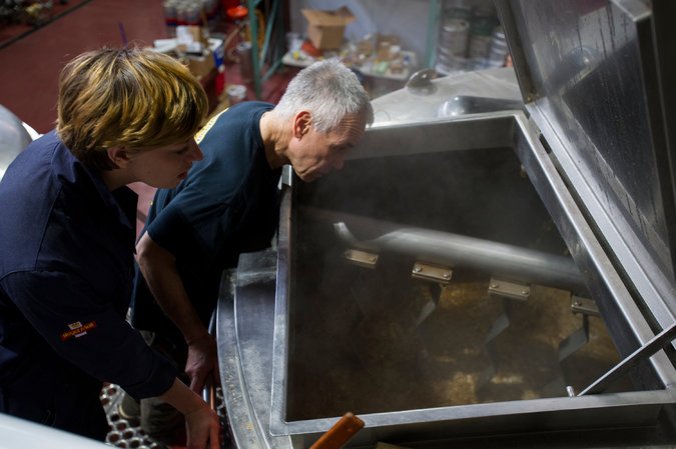
Mark Szmaida, right, Chelsea Craft Brewing’s head brewer, and Devin Hardy, the co-leader of Toast Ale’s American project, inspected the bread mash for the first batch. Credit Gregg Vigliotti for The New York Times

We have featured plenty stories about reducing food waste, and plenty about brewing various beverages, but this is the first story we have found at the intersection of the two:

Toast Ale, From Recycled Bread, Is Now Brewed in New York

By

Overproduction is built right into the business model of most bakeries. While we devour much of what is made, huge quantities of perfectly good grain are tossed.

But Tristram Stuart, an Englishman who began battling food waste 15 years ago, long before it became a popular cause, discovered a way to turn bread, an inexpensive product with a short shelf life, into one that’s long-lived and lucrative: craft ale. Continue reading

Does The Margay Purr?

MargayC1

Thanks for this photo go to a mom and daughter team who were out every day recently from pre-dawn until late evening, absorbing all on display at Chan Chich Lodge and its surrounding forests. Their last night, sharing the night safari with the family who contributed here, was a golden opportunity, so to speak. This margay looks so content, and intent, in a feline way, that I cannot help but wonder whether these wild cats purr.

Breaking Rules When The Result Is Worth It

19berries-1-superJumbo

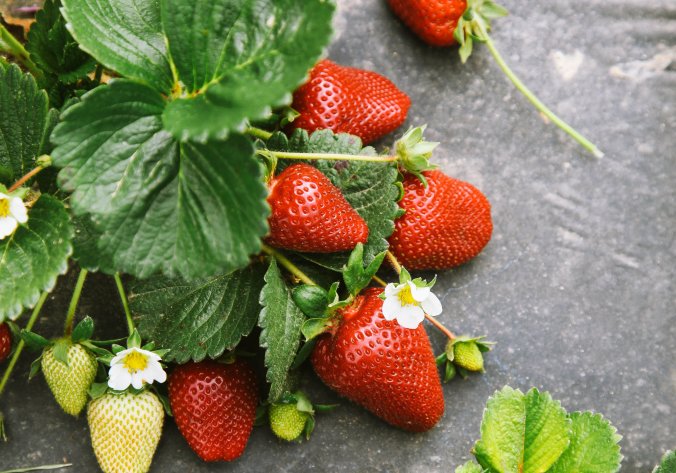
The strawberries at Harry’s Berries, grown in Oxnard, Calif., are harvested only once every five days, to give the fruit time to reach its peak flavor. Credit Amy Dickerson for The New York Times

Renegade behavior in the abstract attracts us almost always. We admit to favoring examples, cases, histories that point to unusual choices that we think provide a model for others to follow to solve problems. However, sometimes there is no choice but to point to the downside of renegade behavior, aka breaking the rules on which society depends. And there are plenty of lousy renegades we read about but do not foul up these pages with. Today, it’s coming up strawberries. Thanks to Rick and Molly and to Karen Stabiner for bringing this story forward:

Red, Ripe and Renegade: Berries That Break All the Rules

“This one should be O.K.,” he said, sounding not quite convinced. Then again, his definition of ripe is more stringent than most. Continue reading

Osage Nation’s Reign Of Terror

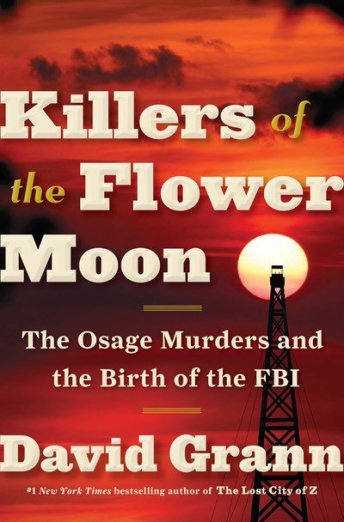
20253bbcb2dd6c45dd81207b5472e853c352bbd3Many of our links to the too many stories of injustice perpetrated against Native Americans in the last year had to do with pipelines.  Some stories focus on the positive, but there remains plenty of negative. The only time we have noted the Osage Nation in these pages, it was under the happier circumstances of someone doing the right thing by them.

David Grann’s new book is being reviewed, and he is being interviewed, just as one of his earlier articles has become a powerhouse cinematic experience. He is our kind of sleuth, and so it is strange that we have not linked to his work before. Thanks to Theodore Ross in the New Republic for bringing this to our attention:

…In the early 1900s, the Osage were among the wealthiest people in the United States, after a large oil reservoir was discovered beneath the barren Oklahoma scrubland they had been driven to by white settlers and the federal government. Then tragedy: a string of murders, each following close on the heels of the next, as a bloody plot to separate the Osage from their money and land unfolded.

Grann tells the story of these murders, the conspirators, and the new breed of lawmen from the FBI who hunted them down. He also reveals a far worse scheme, one that encompasses America’s institutional racism and violence, and the exploitation of Native Americans… Continue reading

Skip The Machine, Skip The Packs, Come To Where The Juice Is Fresh Every Day

Juicero.jpg

Do You Need a $400 Juicer?

Anything that can be labeled “the Keurig of” makes my skin crawl. Thanks to Ellen Huet and Olivia Zaleski at Bloomberg for pointing out more anecdotal evidence of the genius of PT Barnum. Why put juice in plastic packs? Why then squeeze it from a machine, let alone such a pricey one? Why not take a week off grid, let us pluck the fruits and vegetables of your choice, and have it served as often as you like as a refresher on the back to nature idea? From many cities in the USA, you can buy a round trip ticket to Belize for the same cost of a machine that will squeeze juice packs for you. Juicero will set you back, while Chan Chich Lodge will set you forward:

Silicon Valley’s $400 Juicer May Be Feeling the Squeeze

Two investors in Juicero were surprised to learn the startup’s juice packs could be squeezed by hand without using its high-tech machine. Continue reading

If You Happen to Be at the Smithsonian – But You Don’t Have to Be

Science, entrepreneurship, conservation and innovation converge at this amazing open source summit with events in multiple Smithsonian locations ranging from New York City, Washington DC and Panama City.

Frequent contributor to this site Phil Karp, will participate in a forum on Restoring Nature. The synergy of forum subjects with our interest in wild foods and our work in conservation focused hospitality makes us wish we were there.

What’s Working in Conservation

Earth Optimism celebrates a change in focus from problem to solution in the area of global conservation with an unprecedented gathering of thought leaders, scientists, environmentalists, artists, civic leaders and international media.

The global conservation movement has reached a turning point. Continue reading