Liquid Renaissance

28tmag-cocktails-slide-3bo4-master768

Sullivan Doh, owner-mixologist at Le Syndicat in Paris.Credit Charissa Fay

We are pleased to read of Mr. Field, in some ways doing in Paris what we have just noted happening with cacao in the Caribbean–a kind of renaissance of beverages that is also on our agenda in Belize:

The Slow Rise of Craft Cocktails in Paris

By

28tmag-cocktails-slide-Q0D3-master180.jpgIn her new book, “The New Paris: The People, Places & Ideas Fueling a Movement” ($30, amazon.com), the writer (and T contributor) Lindsey Tramuta documents the creative and cultural shift she has witnessed in the city in recent years. Below is a passage on the rise of craft cocktails there.

To say that cocktails are a new phenomenon in Paris is to overlook a culture of distilling liquors dating back to the 1800s, one that gained greater traction more than one hundred years later during American prohibition, when newly unemployed bartenders came to Europe in droves and landed in some of the continent’s best hotel bars. Continue reading
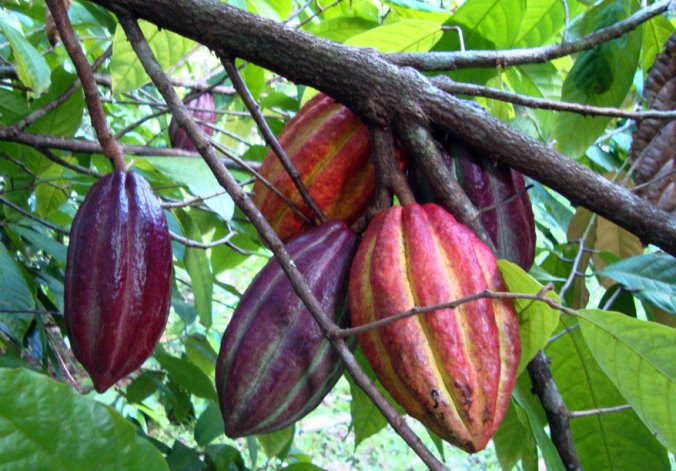

Reviving Cacao

59417_orig_custom-915406cf70e2af518f4441fd5d23a7fd2512008d-s1400-c85-1

Cacao pods ready for harvest at the Loiza Dark Chocolate farm. Courtesy of Loiza Dark Chocolate

Thanks to Dan Charles and his colleagues at the salt, over at National Public Radio (USA) for telling us about that something speaking to Mr. Vizcarrondo; we, working in Belize, working on farm revival among other things, also hear that something and we are inspired to hear of others who hear it too:

The dream of reviving Puerto Rico’s chocolate tradition took root in Juan Carlos Vizcarrondo’s mind years ago.

He’s always been obsessed with flowers and trees. As a boy, he planted so much greenery in his mother’s backyard, there was hardly room to walk.

But in his thirties, he started planting cocoa trees, with their colorful pods full of magical seeds. “Something told me, just keep planting, because nobody has it! It’s so strange, nobody has it!,” he recalls. Continue reading

Install Solar Power In Your Home

Solar.jpg

Thanks to the Guardian for this series of videos:

Every day, the sun kickstarts mini power plants in about 942,000 homes around America. We are of course talking about solar energy – and in 2017, it’s never been cheaper to invest in it for your home. The Guardian looks at key tips for installing solar panels and why now is the time to switch

How to install solar panels at home

You Had Us At Non-Toxic

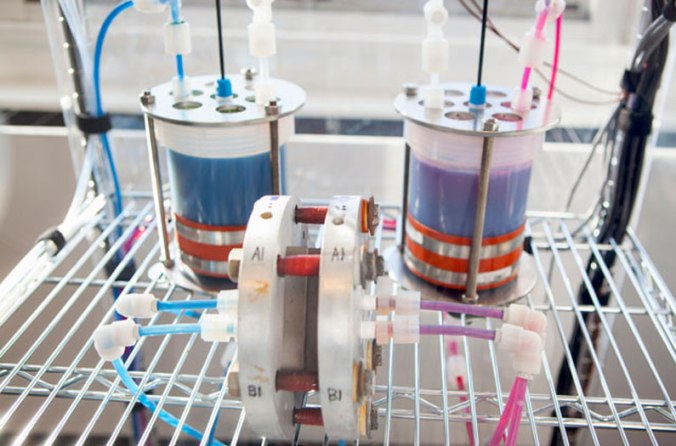
flow-battery2

Photo: Organic mega-flow battery in the Harvard SEAS lab. (Photo by Eliza Grinnell, Harvard School of Engineering and Applied Sciences)

Thanks to Anthropocene:

This non-toxic battery lasts a decade, could be renewable energy’s missing piece

by Prachi Patel

As more and more people install solar panels, the need to store solar power is growing. Batteries that store sun-generated electricity are key for houses to have power at night or when it’s cloudy. But today’s battery technologies are riddled with issues such as high cost, toxicity, and short life. Continue reading

Demanding Action From Those Accountable

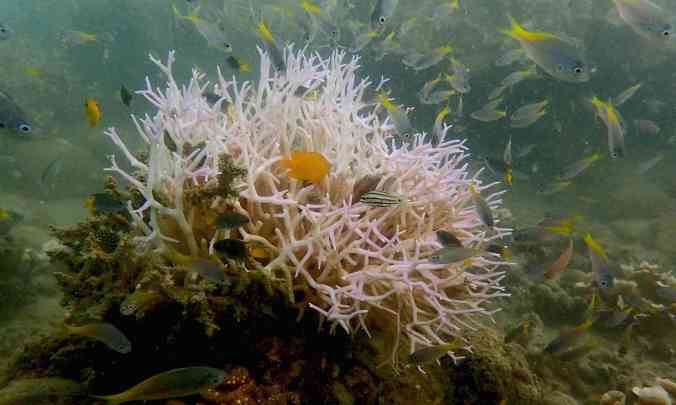
3110

Newly bleached coral on the Great Barrier Reef near Palm Island in February. Photograph: Australian Marine Conservation Society

We could not have said it better:

As the Great Barrier Reef faces the return of coral bleaching, why are Mantra, Accor and Marriott still silent on Adani? Continue reading

The Nature Fix, Interview & Links

LopateNature.jpgThis is 20 minutes well spent if you share our interest in the links between nature and wellbeing; one hypothesis on this topic we favor being biophilia. But science is the realm of the nonstop quest, so the author’s explanation in this interview, of her motivations and her methodology, are worth hearing.

lopatenat2We have a preference for supporting independent bookstores so if this book goes onto your shopping list, before you otherwise get pulled in the direction of an online superstore, Powell’s is a great option; see what they have to say about the book:
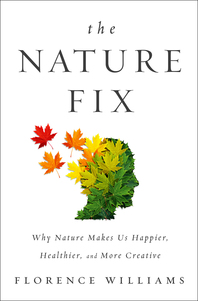
9780393242713_198An intrepid investigation into nature’s restorative benefits by a prize-winning author.

For centuries, poets and philosophers extolled the benefits of a walk in the woods: Beethoven drew inspiration from rocks and trees; Wordsworth composed while tromping over the heath; and Nikola Tesla conceived the electric motor while visiting a park. Intrigued by our storied renewal in the natural world, Florence Williams set out to uncover the science behind nature’s positive effects on the brain. Continue reading

Eat Your Vegetables, If You Can Find Them

vegcrisis_1-2-5a935c2edcf303caf9d2c322914a74c41ca02089-s1400-c85

Vegetables were rationed at supermarkets in the U.K. due to poor weather conditions in Europe. Here, lettuce, broccoli and zucchini were rationed at a Tesco store in London. Victoria Jones/PA Images via Getty Images

Thanks to National Public Radio (USA) and the folks at the salt for this story about the implications of vegetable shortages in the UK:

It started in late January. At my local grocery store in South London, salad seemed to be just a few pence pricier than usual. But I didn’t think much of it.

Later that week, the same market had conspicuously run out of zucchini. I’m not particularly fond of it, but I lamented for the carb-conscious yuppies who depended — and subsisted — on spiralized zucchini spaghetti. How would they cope? Continue reading

Energy Incubator, Alive And Well, For Now

ARPA_TA-610327846.jpg

STEVE PROEHL/GETTY IMAGES

Thanks to Wired for a story whose title starts The Government’s Green Energy Incubator Fights for Survival and is worth the read:

LIKE MANY FEDERAL employees, Eric Rohlfing will be watching President Trump on Tuesday night as he addresses a joint session of Congress. Specifically, the chemist will be listening carefully for clues to his future employment status. Rohlfing is the leader of a unique science and technology start-up agency tucked inside the Department of Energy, and he and his staff have been trying to convince the new administration to keep it alive. Continue reading

Model Mad, Marcus

0749redrooster

[Update: this post was originally published 48 hours ago but it definitely needs further attention so please do listen to Marcus]

This book came out late last year, and ever since I started sharing links to this man’s wonders  a of couple years ago, I keep watching for more reasons to do so; he always moves me. Today, again. Below is a link to a podcast he recently recorded to promote the book above. The conversation is artful. Powerful.

MarcusP.jpg

Marcus is an immigrant to the USA, so his reflections on recent policy shifts in the ultimate country of immigrants are worth a listen even if you are not a foodie. If those observations do not move you, all I can say is wow. It fits the “model mad” theme we have been linking to in recent weeks–people and organizations speaking out and creatively resisting when something is wrong; and doing so at risk of significant loss. Continue reading

What To Expect When You Are Expecting An EPA

121415_stavins_184_605.jpg

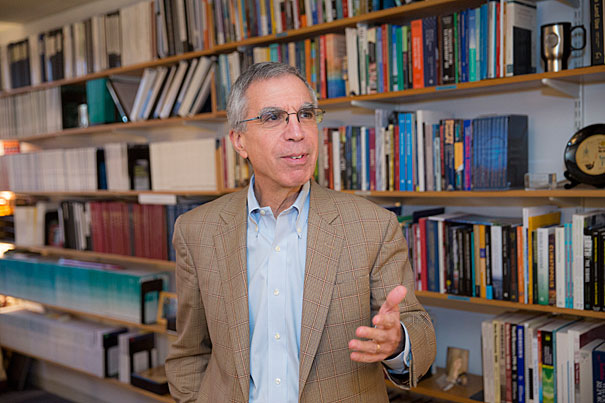
“For some environmental problems that are truly localized, there is little argument against a state approach,” said Stavins. “However, for environmental problems that are interstate … and for a global commons problem, such as climate change, the federal government really should take the lead.” File photo by Kris Snibbe/Harvard Staff Photographer

We are thankful to the Harvard Gazette for this summary of Professor Stavins by Alvin Powell:

The Senate’s confirmation of former Oklahoma Attorney General Scott Pruitt as administrator of the Environmental Protection Agency (EPA) has alarmed environmentalists.

In Oklahoma, Pruitt prided himself on fighting the agency he will now run, with his website describing him as “a leading advocate against the EPA’s activist agenda.” He sued the agency to fight regulation and expressed doubt about the human causes of climate change, though he moderated those views in his confirmation hearings.

Robert Stavins is the Albert Pratt Professor of Business and Government at the Harvard Kennedy School, director of the Harvard Project on Climate Agreements, and a past member of the EPA’s Science Advisory Board. The Gazette asked him about the EPA’s future under Pruitt. Continue reading

Beyond Zen Architecture

karuizawa-japan-slide-ABND-master675.jpg

There is not a single right angle in the Hoshino Wedding Chapel’s cascading concrete arches and soaring interior of inlaid stone. CreditPhotograph by Mikael Olsson. Producer: HK Productions

Anyone who followed our design and development process, or who has been to the property we created on the beach in Kerala between 2012-2014, will understand why this architecture, from one of Japan’s masters, speaks to us:

Otherworldly Architecture in Japan’s Magical Mountainside

In the leafy hamlet of Karuizawa, distinctive design is the expression of the uninhibited self. Continue reading

Her Majesty’s Secret

adolescjags

The guests of Chan Chich Lodge who had the good fortune to see her majesty last week were kind enough to share their photos. Thanks again to Al Erickson for his follow up visit the day after the mother jaguar was spotted, back to the same general location; this time he spotted these two adolescents wandering on the road. They must have been out of sight the day prior, mother guarding her secret while she posed for a portrait. This day, no secrets. Only pride.

For Consideration, On Climate Change

Nijhuis-AreConservationistsWorryingTooMuchAboutClimateChange-1200.jpg

This post on the New Yorker website from some months ago caught our attention but we resisted linking it here for some reason now forgotten. But it should be read by anyone interested in conservation and climate change. The title is provocative, no doubt attractive to deniers but instead meant to raise attention on an issue we are sure most people of all walks of life, and all around the world have reason to be concerned about:

ARE CONSERVATIONISTS WORRYING TOO MUCH ABOUT CLIMATE CHANGE?

By Michelle Nijhuis

In January of this year, James Watson, an Australian scientist who works for the Wildlife Conservation Society, noticed an image that had been tweeted by a friend of his, a physician in Sydney. With a chain of progressively larger circles, it illustrated the relative frequency of causes of death among Australians, from the vanishingly rare (war, pregnancy and birth, murder) to the extremely common (respiratory disorders, cancer, heart disease). It was a simple but striking depiction of comparative risk. “I thought, ‘Why hasn’t anyone done something like this for the rest of nature?’ ” Watson recalled.

The answer was that, until recently, nobody had the data. While many scientists have studied the vulnerability of individual species or groups of organisms (corals, say, or birds) to extinction, only in 2010 did ecologists, conservationists, taxonomists, and naturalists begin to more comprehensively assess the threats posed to species of all kinds—an effort to assemble what the biologist E. O. Wilson has called a “barometer of life.” Continue reading

Baltimore Water Wheel & A Vision Of Recovery

baltwheel

If Mr. Trashy has a silly ring to it, so be it. The medium is the message:

USING THE POWER OF NATURE TO KEEP OUR HARBOR CLEAN

The Inner Harbor Water Wheel, or “Mr. Trash Wheel” to locals, combines old and new technology to harness the power of water and sunlight to collect litter and debris flowing down the Jones Falls River.

The river’s current provides power to turn the water wheel, which lifts trash and debris from the water and deposits it into a dumpster barge. When there isn’t enough water current, a solar panel array provides additional power to keep the machine running. When the dumpster is full, it’s towed away by boat, and a new dumpster is put in place. Voilà!

Thank you, Mr. Trash Wheel.

BaltWaterWheel1.jpg

Great Backyard Bird Count at Villa del Faro

a male Xantus' Hummingbird, endemic to Baja California Sur

a male Xantus’ Hummingbird, endemic to Baja California Sur, photographed during the GBBC

For last year’s GBBC, I was working in Costa Rica, in the Central Valley. This time around, I was on the job in Baja California Sur, Mexico, at Villa del Faro. Over the course of the four days that comprise the Great Backyard Bird Count, I was able to go out three mornings and one afternoon in search for birds.

By the last day, I had seen most of the usual suspects, although I was unable to spot a Pyrrhuloxia, one of my favorite species here in Baja, which is quite shy. In total, however, I saw 38 species around Villa del Faro, which has a hotspot with 76 species, so I saw exactly half the birds recorded here so far (and two of them were only just reported for the first time yesterday).  Continue reading

You Had Us At Sweet Potato

logoWe have only recently discovered this resource but I expect you will start seeing a flow of interesting stories. sourced from Harvest Public Media, that touch on topics of interest to us here. For example, the mere mention of sweet potatoes was enough to get us interested:

011317_sweet_potatoes_chopped

According to the USDA, sweet potato consumption in the U.S. nearly doubled in just 15 years, from about 4 pounds per person in 2000. (U.S. Department of Agriculture/Flickr)

Sweet potatoes are undergoing a modern renaissance in this country.

While they have always made special appearances on many American tables around the holidays, year-round demand for the root vegetables has grown. In 2015, farmers produced more sweet potatoes than in any year since World War II. Continue reading