
Thattekadu Bird Sanctuary, Kerala
Thattekadu Bird Sanctuary, Kerala
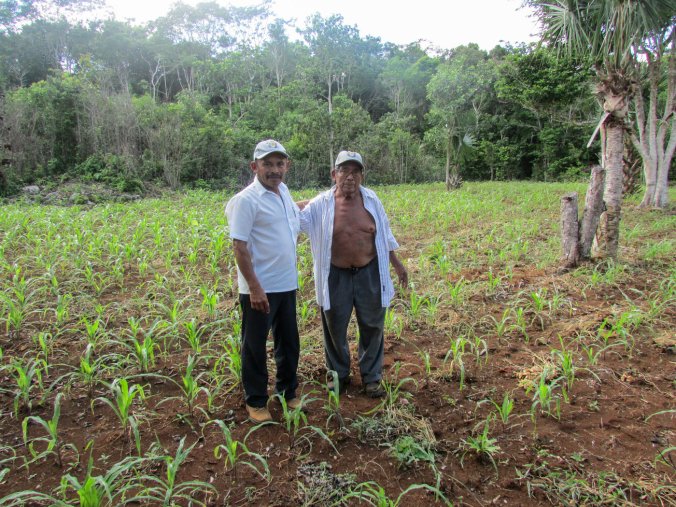
Farmers Gualberto Casanova (left) and Dionisio Yam Moo stand among young corn plants in Yam Moo’s improved milpa plot. Gabriel Popkin
We are grateful as always to our friends at the salt, one of National Public Radio (USA)’s great occasional series, for this story (the photo after the jump is a beauty, so read on):
Mayans Have Farmed The Same Way For Millennia. Climate Change Means They Can’t
by Gabriel Popkin
Dionisio Yam Moo stands about four-and-a-half-feet tall, and his skin is weathered from years in the tropical sun. A “proudly Mayan” farmer, he grows corn, beans and vegetables on a six-hectare farm in Mexico’s Yucatán peninsula. The farm is surrounded by dense tropical forest, and crops grow amid fruit trees in thin soil, with the peninsula’s limestone bedrock protruding in places. Continue reading
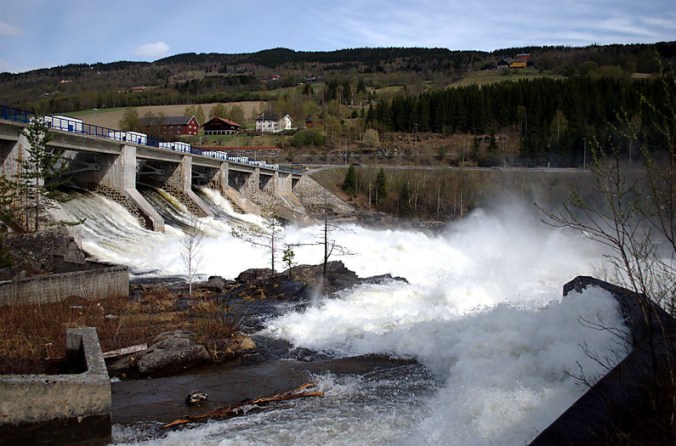
Hunderfossen Dam, Norway via Sigurd Rage/Flickr
Thanks to Anthropocene:
Nordic countries offer important lessons for clean-energy transition

Utah’s congressional delegation has vigorously fought to open Ute tribal land, currently partially protected by the Bears Ears National Monument, above, to drilling. Photograph: Francisco Kjolseth/AP
Thanks to the Guardian for first bringing this to our attention, another example of model mad, and a pretty big deal too:
Republicans back off bill to sell 3.3m acres of public land after outcry
Congressman Jason Chaffetz withdraws House bill 621 as conservationists and outdoorsmen vow to continue fight over similar legislation Continue reading
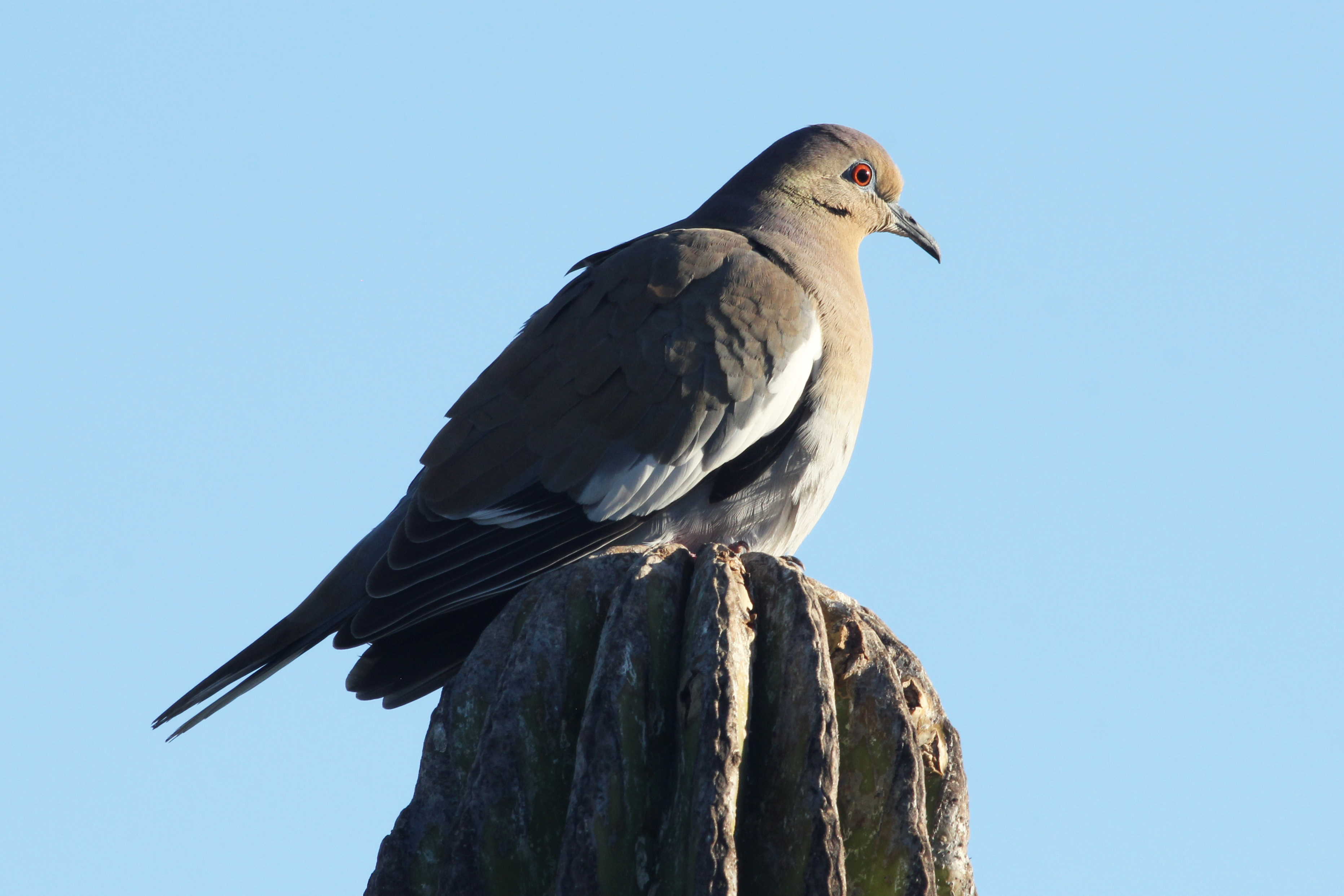
Baja California Sur, Mexico
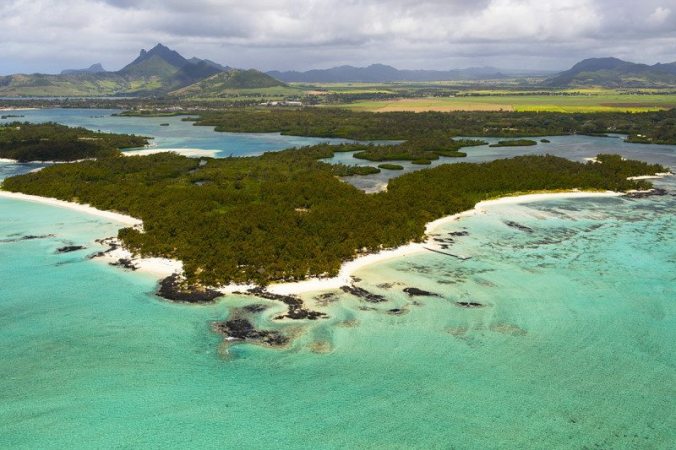
Mauritius sits on part of an ancient continent. Keystone USA-ZUMA/REX/Shutterstock
Long-lost continent found submerged deep under Indian Ocean
An ancient continent that was once sandwiched between India and Madagascar now lies scattered on the bottom of the Indian Ocean.
The first clues to the continent’s existence came when some parts of the Indian Ocean were found to have stronger gravitational fields than others, indicating thicker crusts. One theory was that chunks of land had sunk and become attached to the ocean crust below. Continue reading
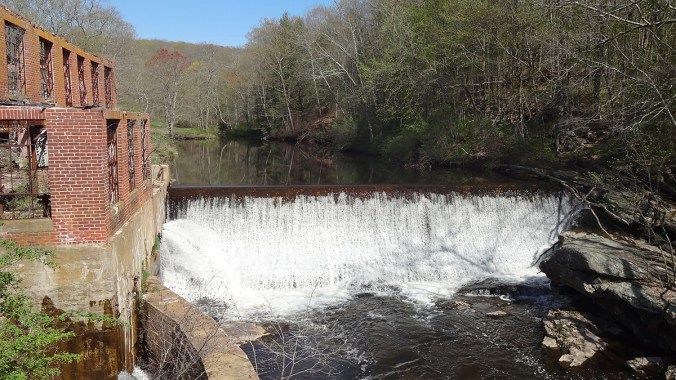
Norton Mill Dam view from the bridge. Photo © Lia McLaughlin / USFWS through a Creative Commons license
Outtakes: Exploring America’s Most Dammed Waterways
by JENNY ROGERS
Sally Harold has one eye on the river and one on the cars whizzing by as we stand on a road near the freeway. A river restoration specialist for The Nature Conservancy’s Connecticut River program, she’s showing me a map of the state, obscured with dots representing dams. To our left, a burned-out mill building looms over a small river. To our right, the road that leads northeast to Hartford. Continue reading
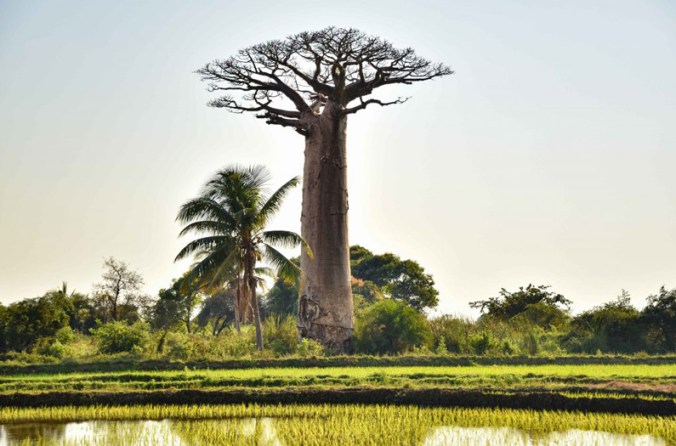
Baobab and palm tree/Rod Waddington via Flickr
Thanks to Anthropocene for this summary:
Trees improve the environment—and bottom line—on small African farms

Vijayapura, Karnataka
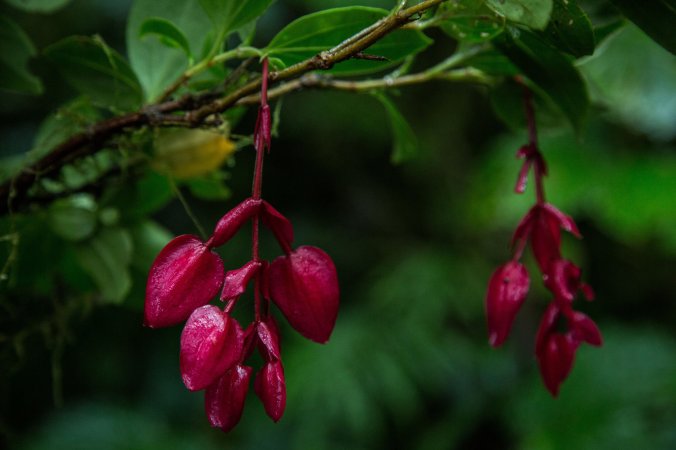
Tagimoucia has attained a kind of celebrity status because of its beauty and rarity. Credit Lam Yik Fei for The New York Times
For Fijians, this flower is viewed rarely enough to enhance its sacred status; for the rest of us, a photograph like the one above is like a siren call to come, behold it:
A Rare Pacific Islander Captivates Its Neighborhood
TAVEUNI ISLAND, Fiji — In Fiji, flowers can take on a spiritual, magical significance. They are strung together as garlands for ceremonies and festivals or worn as an ornament behind the ear on any given day.
The South Pacific archipelago is home to about 800 species of plants found nowhere else in the world. But the most special is the tagimoucia, a crimson and white flower that hangs down in clusters like a chain of ruby raindrops. Because of its beauty and rarity, it has attained a kind of celebrity status. Continue reading
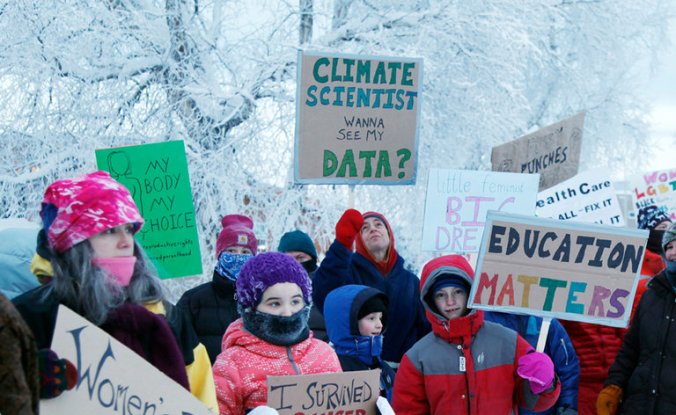
A women’s march in Fairbanks, Alaska, last month. The movement inspired a group of scientists to organize their own demonstration in Washington. Credit Robin Wood/Fairbanks Daily News-Miner, via Associated Press
We have not had a shortage of model mad stories, which may be the silver lining to the cloud, so thanks to the Science section of the New York Times for this contribution:
Listen to Evidence’: March for Science Plans Washington Rally on Earth Day
Within a week of its creation, the March for Science campaign had attracted more than 1.3 million supporters across Facebook and Twitter, cementing itself as a voice for people who are concerned about the future of science under President Trump.
Now, hoping to transform that viral success into something approaching the significance of the women’s march last month, the campaign has scheduled its demonstration in Washington for Earth Day, April 22. Continue reading

Mysuru, Karnataka
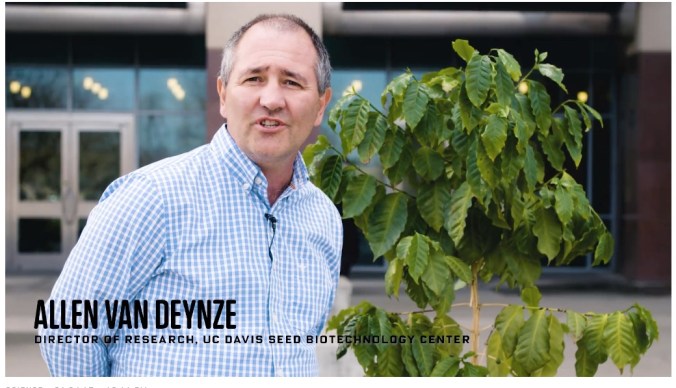
Thanks to Wired for this (click the image above to go to the video) informative brief on the next wave of scientifically improved coffee:
Get Ready for a Coffee Renaissance. Thanks, Genetics!
Scientists have sequenced the genome of the coffee plant and made the data public. That means we’re about to see a coffee renaissance.
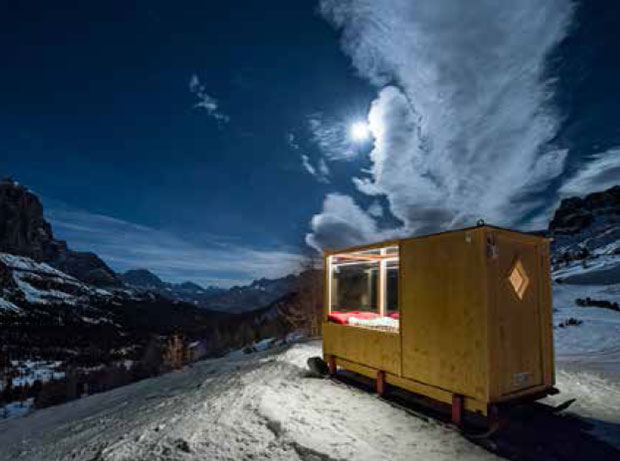
The Starlight Room – Raniero Campigotto
Thanks to Phaidon for its always-interesting new books for coffee table-pondering:

Adaptable, intelligently put together, responsive to local conditions and able and willing to travel almost anywhere with ease – but enough about you, we’re here to tell you about mobitecture. What’s mobitecture we hear you ask? Well it’s mobile architecture and Mobitecture is the name we’ve smartly bestowed on it in our latest book.
Mobitecture looks at 250 examples of mobile architecture from around the world that enable the almost universal dream of upping sticks, moving somewhere and changing the way your world looks. The structures in it roll, inflate, unfold, flat-pack or pop-up, slide on sleds and float across water in a book that brings together a spectacular collection of structures in which to revel, live, work, pause – or just simply escape. Continue reading

Andrew Walsh, Flickr Creative Commons
Thanks to Anthropocene for this summary of the latest findings on how far we can expect renewable resources to take us in our efforts to reduce our carbon footprint:
Bioenergy has its limits for cutting emissions

Atlanta, Georgia
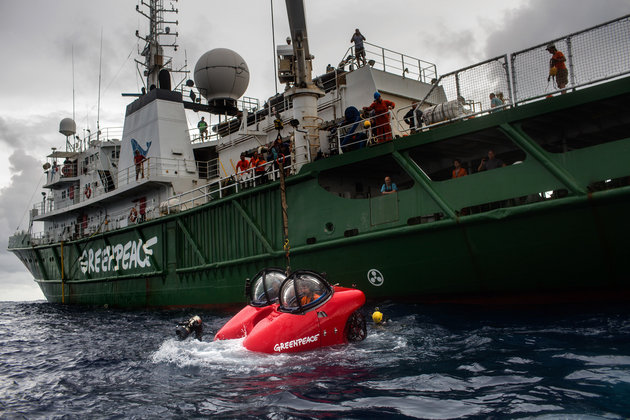
GREENPEACE
Thanks to the old school model mad outfit, Greenpeace, for bringing this to our attention in a fresh press release today, that adds urgency to earlier announcements starting last year on this rare and unexpected find:
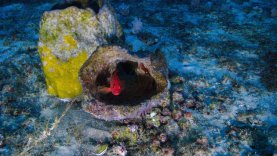
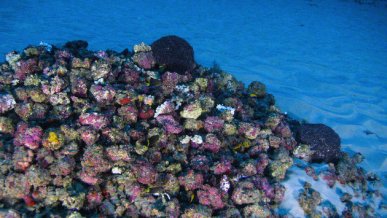
Greenpeace captures first underwater images of Amazon Coral Reef
GREENPEACE
Amapá state, Brazil, 28 January 2017 – Greenpeace Brazil has captured the first underwater images of the Amazon Reef, a 9500 km2 system of corals, sponges and rhodoliths located where the Amazon River meets the Atlantic Ocean – an area that the Brazilian government has opened for oil exploration.
GREENPEACE
A team of experts, including several oceanographers who announced the discovery of the reef last year, have joined the Greenpeace ship Esperanza on an expedition to document this new biome, which runs from French Guyana to the Brazilian state of Maranhão, an area larger than the cities of São Paulo or London.[1] Oil companies Total and BP could start drilling in this area if they obtain authorization from the Brazilian government. Continue reading

Canadian scientists were not allowed to talk to the media on certain topics during the premiership of Stephen Harper. Photograph: Alamy
Thanks to the Guardian for reporting on the decision by some Canadian scientists to model mad in that distinctly polite, mild-mannered and highly effective way they have of doing things up north:
Canadian scientists offer support to muzzled US counterparts
For nine years under Canada’s previous government, science suffered harsh restrictions. Now US scientists may be facing a similar fate
by Ashifa Kassam in Toronto
Canadian scientists – who were muzzled for nearly a decade by the country’s previous Conservative government – have been making contact with their counterparts in the US to offer their support and solidarity amid mounting fears that Donald Trump’s presidency will seek to suppress climate science.
For nine years, scientists with Canada’s federal government grappled with what many described as an all out assault on science. Continue reading
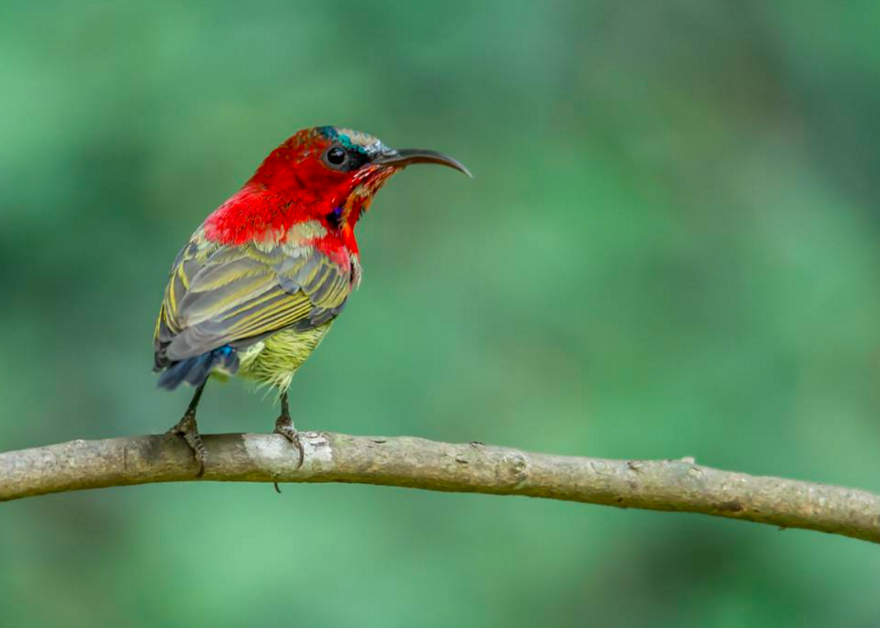
Dehra Dun, Uttarakhand
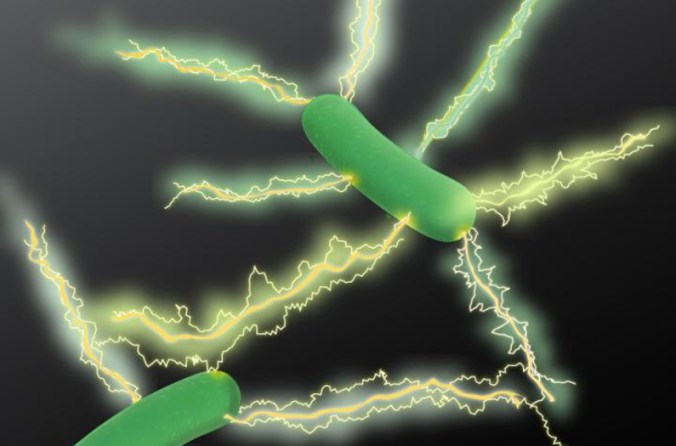
An artist’s rendition of Geobacter expressing electrically conductive nanowires. Credit: UMass Amherst
Thanks to Anthropocene for a great title to this summary of important recent research finding:
From the swamps of the Potomac, new hope for green electronics
Protein filaments just 3 nanometers wide that are produced by certain species of bacteria could be a key to environmentally friendly electronics manufacturing, according to microbiologists at the University of Massachusetts at Amherst.
Scientists discovered the filaments, dubbed “nanowires,” about 5 years ago. Bacteria use them to make electrical connections with other bacterial cells or to generate reactions with metals in the environment. Continue reading
 Organikos