Chan Chich Lodge, According To Fodor’s

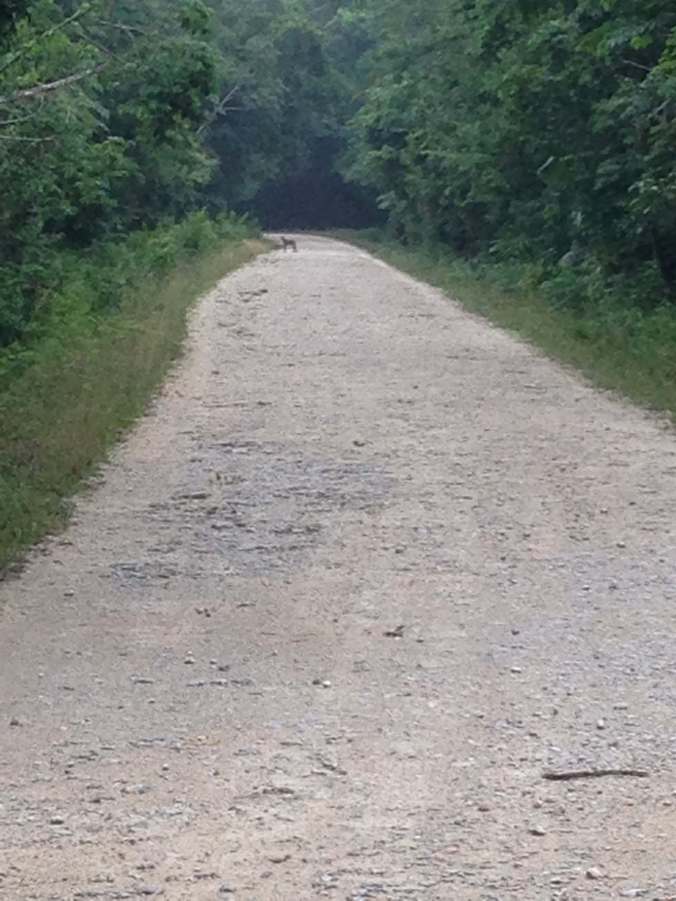
fodors-belizeA guest recently left a copy of this guidebook and I just picked it up. After my puma sitings yesterday and today, I am not surprised to read what one of the most respected travel guides has to say about Chan Chich Lodge:

Arguably the best lodge in Belize and one of the top lodges in all of Central America, Chan Chich is set in a remote, beautiful area … with 12 rustic yet comfortable cabañas. Just outside your door you’re likely to encounter legions of tropical birds and wild animals, even jaguars Continue reading
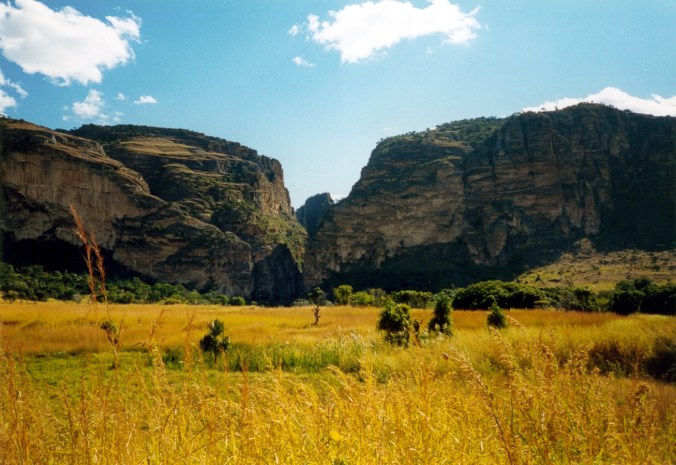
National Park of the Week: Isalo National Park, Madagascar

banner20

Photo via jenmansafaris.com

With its multitude of intersecting rivers within deep canyons, yellow savannah grasses carpeting the bottoms of vertical gorges, and domineering sculpted buttes, Isalo National Park is an artist’s canvas of a desert canyon. Jocularly called “Madagascar’s Colorado,” Isalo was founded in 1962 and is located in the southern highlands of the island. The park covers an area of 800 sq km and offers prime hiking opportunities among natural pools and uniquely carved landscapes. Continue reading

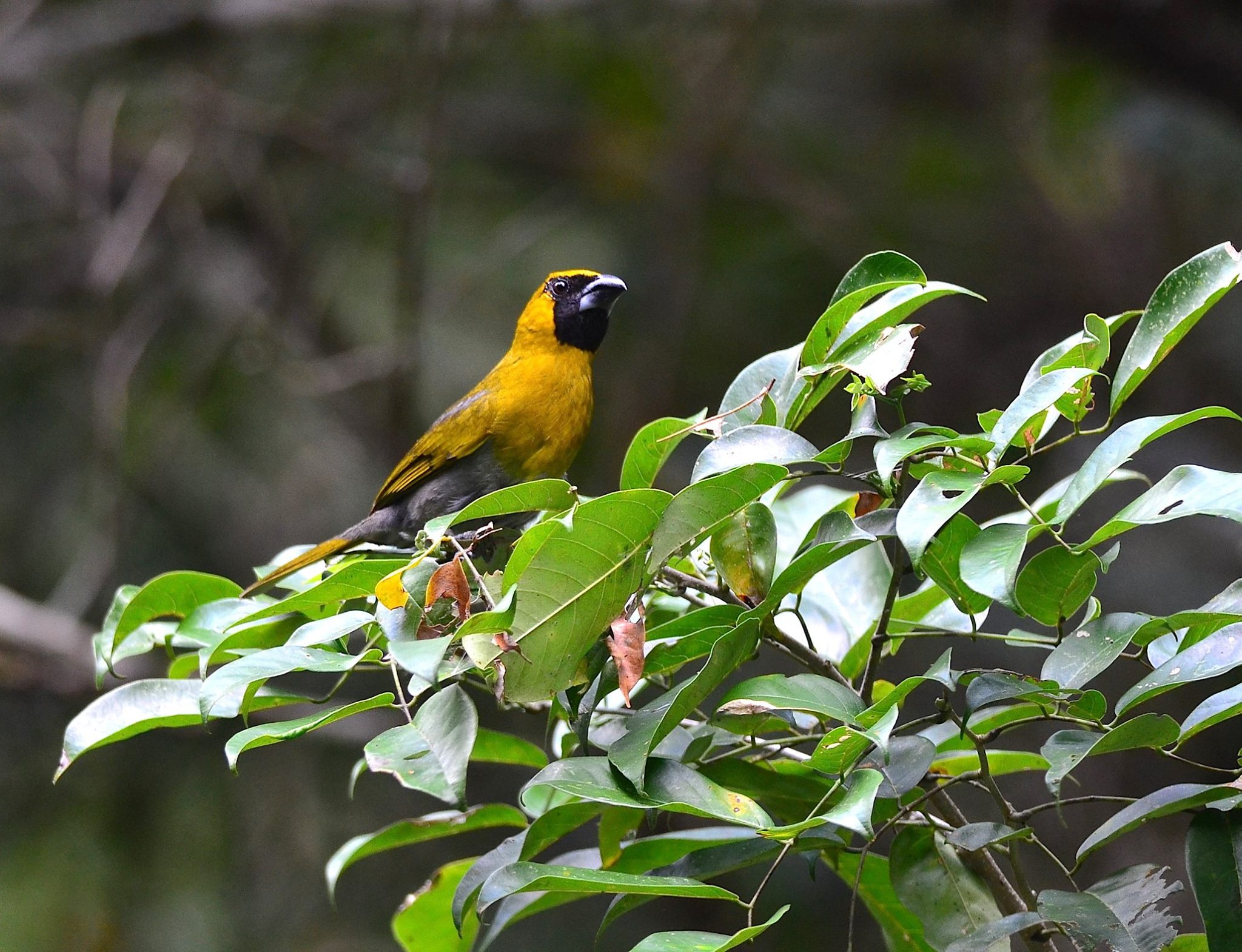
Puma, Chan Chich Lodge, & Me (Or You)

puma

Trekking in a protected area, my hopes and expectations balance each other to create a happy medium: if I can see evidence of the ecosystem’s health, and can believe that it supports the entire food chain, I get that biophilia sensation. I do not need to see the top of the food chain, which frequently is a big cat (tigers and leopards in India, jaguars and pumas in Latin America, lions and cheetahs throughout Africa) as much as I would want to. Or as much as I am elated, on days like today and yesterday, when I do see a healthy mature cat. Continue reading

Bolivia & Chinese Oil Exploration

5040

Thanks as always to the Guardian for its coverage of important environmental issues:

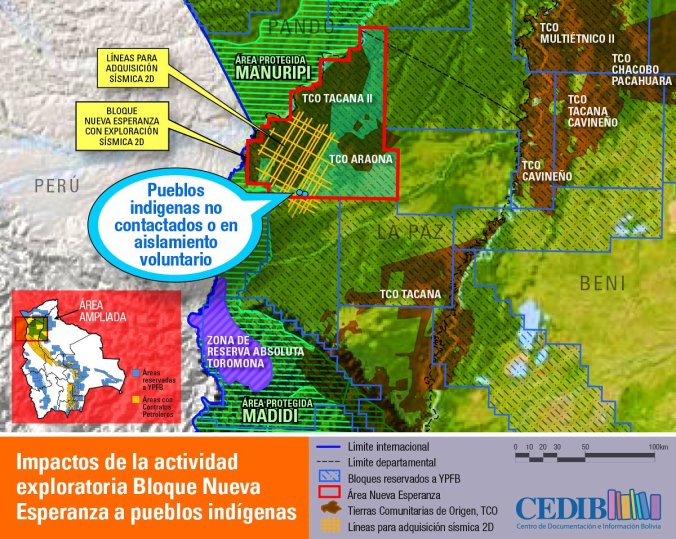
Fears for isolated Bolivian tribe met by Chinese oil firm in Amazon

Company operating near the border with Peru has reportedly had near encounters with indigenous people living in “isolation

David Hill

Teams from a Chinese oil and gas company exploring in the remote Bolivian Amazon have reportedly had near encounters with a group of indigenous people living in what the United Nations calls “isolation”, raising major concern for the group’s welfare. Continue reading

Perfectly Good Imperfect Food

24UGLYFOOD-web01-master768.jpg

A customer shopped at Fruta Feia, a Portuguese cooperative created to sell imperfect food. The food industry has begun looking for ways to reduce waste. Bargain-hunting consumers seem to be going for the deals.CreditPatricia De Melo Moreira for The New York Times

Increasing attention to the inherent waste in judgements about imperfection is a welcome topic in our pages:

Food Industry Goes Beyond Looks to Fight Waste

Continue reading

World’s Largest Marine Reserve, Another Accomplishment Of 2016

ap_16302025591684_custom-392a50abd26d8fdc885b7c2a23b34b542c8d806c-s1100-c85

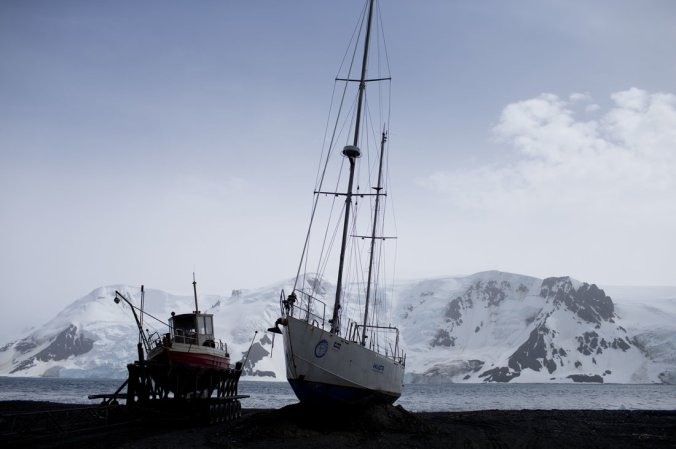
Boats sit on the beach at Bahia Almirantazgo in Antarctica. An agreement was reached on Friday to create the world’s largest marine protected area in the ocean next to the frozen continent. Natacha Pisarenko/AP

In an otherwise dismal year for the environment, we have tried to keep track of the few actions taken that are noteworthy for their scale and ambition. This week, and this month, are ending on a high note in that regard:

Nations Agree To Establish World’s Largest Marine Reserve In Antarctica

MERRIT KENNEDY

After years of negotiations, nations have reached an agreement to establish the world’s largest marine sanctuary in Antarctica’s Ross Sea.

Twenty-four countries and the European Union reached the unanimous deal at an international meeting of the Commission for the Conservation of Antarctic Marine Living Resources in Hobart, Australia on Friday. Continue reading

Dakota, Keystone & Resistance

29mckibbenWeb-master768.jpg

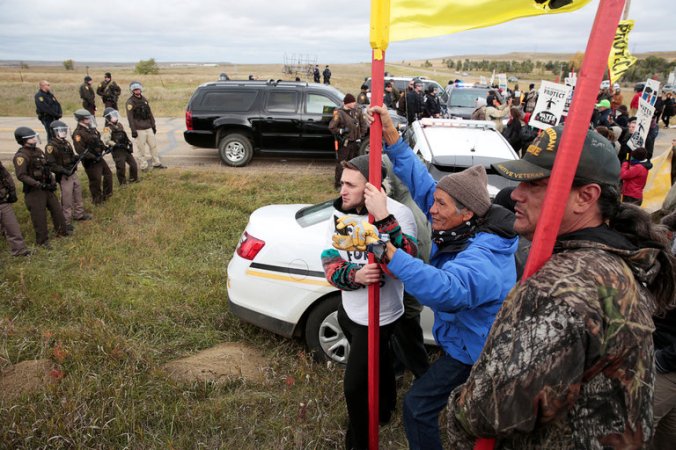
Dakota Access Pipeline protesters facing police officers in North Dakota this month. Credit Terray Sylvester/Reuters

As usual, Mr. McKibben is on the correct side of the debate and urges the rest of us to join that side and resist in solidarity:

Why Dakota Is the New Keystone

By

MIDDLEBURY, Vt. — The Native Americans who have spent the last months in peaceful protest against an oil pipeline along the banks of the Missouri are standing up for tribal rights. They’re also standing up for clean water, environmental justice and a working climate. And it’s time that everyone else joined in.

The shocking images of the National Guard destroying tepees and sweat lodges and arresting elders this week remind us that the battle over the Dakota Access Pipeline is part of the longest-running drama in American history — the United States Army versus Native Americans. In the past, it’s almost always ended horribly, and nothing we can do now will erase a history of massacres, stolen land and broken treaties. But this time, it can end differently. Continue reading

Divest, Nobel

980x-10

Thanks to 350.org for this one, via EcoWatch:

Nobel Prize, It’s Time to Divest From Fossil Fuels

350.org

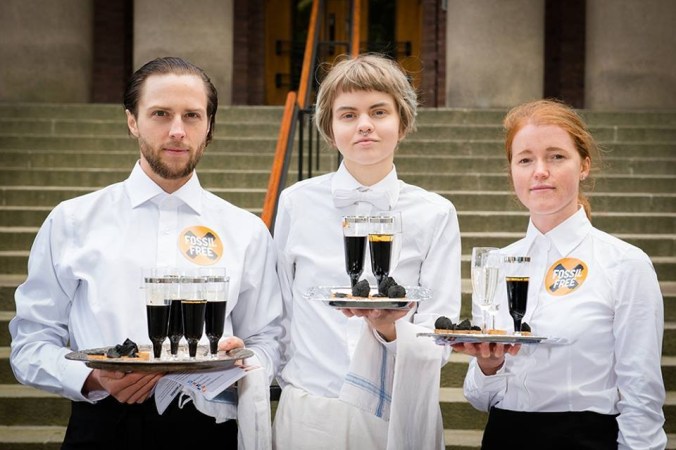
Last Tuesday, Fossil Free Sweden finally received confirmation from the Nobel Foundation that it does not intend to adopt rigid sustainable investment guidelines which entirely exclude investments in the least sustainable companies on the planet—those driving climate change through the exploitation of fossil fuels.. Continue reading

Tree Elders & Drought

sequoias-1_custom-9d831bf09949d38d3d16746b895b30fc2bfa786a-s1100-c85.jpg

Giant sequoias in the Sierra Nevada range can grow to be 250 feet tall — or more. John Buie/Flickr

Thanks to National Public Radio (USA):

How Is A 1,600-Year-Old Tree Weathering California’s Drought?

It’s been a brutal forest fire season in California. But there’s actually a greater threat to California’s trees — the state’s record-setting drought. The lack of water has killed at least 60 million trees in the past four years.

Scientists are struggling to understand which trees are most vulnerable to drought and how to keep the survivors alive. To that end, they’re sending human climbers and flying drones into the treetops, in a novel biological experiment. Continue reading

Late October’s Flame Red Trees

26tb-foliage-superjumbo

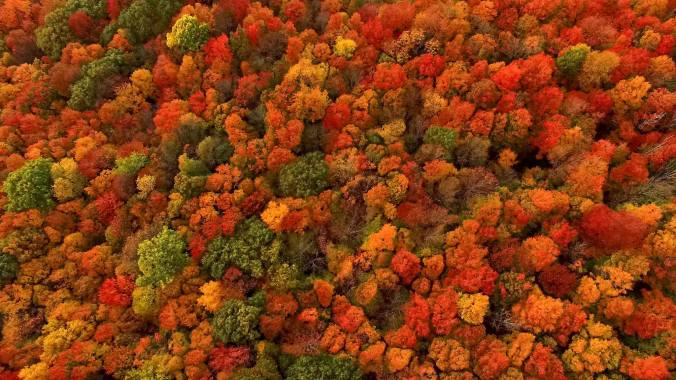
Treetops near Song Mountain in Tully, N.Y., last week.CreditLauren Long/The Syracuse Newspapers, via Associated Press

We do not need to understand it to appreciate the beauty, but the science behind it is another wonder of its own:

Why Does Fall Foliage Turn So Red and Fiery? It Depends.

By

Leaves scream their final cries in color before dropping to the ground. Their shouts — in golden, crimson or scarlet — eventually fade to brown bellows, and their lifeless bodies dry up on the forest floor. It absorbs their crinkly corpses and that’s it — worm food. The fall of a leaf in autumn is an orchestrated death. A complex, brilliant, beautiful death.

Right now across the United States, fall foliage season is peaking, and everyone’s out to get a peep at the fiery show. Hiking trails are crowded. Mountain roads are packed, and leaf cams are getting lots of love. When you think of it as watching the death of leaves, it sounds morbid, but it’s captivating nonetheless. Does the way some turn red in the process serve any purpose? Continue reading

Trees & Wine

02pour1-master768

The wine writer Hugh Johnson in Central Park, where he admired one of the last stands of American elms in North America. Credit Andrew White for The New York Times

The New York Times keeps us looking at the trees…

Hugh Johnson’s Lifelong Journey Among the Trees

By

Hugh Johnson, the venerable English wine writer, had just arrived in New York City on a trip he tries to make every year, especially in the fall when “the elms start to fire up.”

As is his custom, he visited old friends, took in a few restaurants — Le Coucou, the new Rouge Tomate Chelsea and an old favorite, Jean-Georges Vongerichten’s JoJo. He stopped at a few museums and strolled through Central Park, where he indulged another passion that is as dear to his heart as wine — trees. Continue reading

Generosity’s Change Agents

Vara-Charity-1200.jpg

The rise of a new, fast-growing class of charities known as donor-advised funds represents a momentous shakeup in charitable giving in the U.S. ILLUSTRATION BY MARCUS BUTT / GETTY

Thanks to the contributors to the New Yorker’s website, we get frequent updates on topics we are interested in that might not make it into the long form reportage of the print magazine; case in point:

THE WEALTH GAP IN PHILANTHROPY

By Vauhini Vara

Each year, Stacy Palmer, the editor of the Chronicle of Philanthropy, compiles a list of the U.S. charities that have raised the most money from private sources. In the twenty-six years that the Philanthropy 400 ranking has been published, one thing has stayed constant: United Way Worldwide is at the top. (The one exception was in 1996, when the Salvation Army briefly displaced it.) But when the results started coming in for this year’s list, which was published on Thursday morning, it became clear that a new No. 1 had emerged—an organization affiliated with Fidelity Investments, called Fidelity Charitable, which has grown to become one of the most influential charities in the world. “I was stunned,” Palmer recalled. The details were especially striking. Fidelity Charitable collected 4.6 billion dollars, a twenty-per-cent increase from the previous year. United Way ranked a distant second, with donations dropping by four per cent, to 3.7 billion dollars. “Not only were they”—Fidelity—“going to be No. 1, but they were going to be No. 1 by a lot,” Palmer remembered realizing. Continue reading

Iridescence & Pretty, Shiny Natural Things

lead_960-5

Matthew Jacobs

The Atlantic’s science writers are back in the saddle, leading the way with the best stories recently:

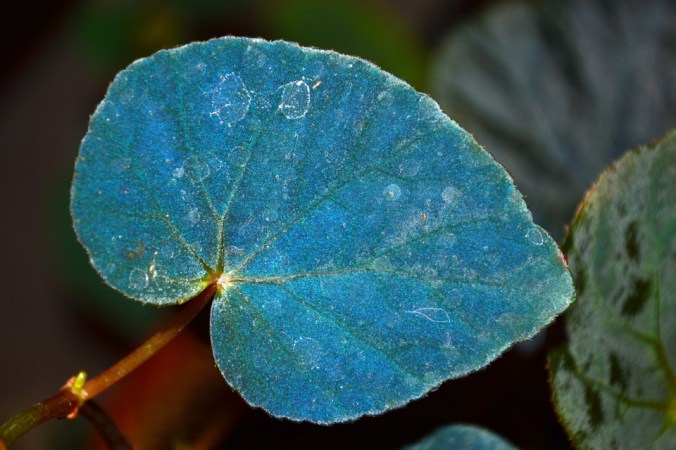
Why Do These Plants Have Metallic Blue Leaves?

Ooh, shiny

ED YONG

Roses are red but violets aren’t blue. They’re mostly violet. The peacock begonia, however, is blue—and not just a boring matte shade, but a shiny metallic one. Its leaves are typically dark green in color, but if you look at them from the right angle, they take on a metallic blue sheen. “It’s like green silk, shot through with a deep royal blue,” says Heather Whitney from the University of Bristol.

And she thinks she knows why. Continue reading

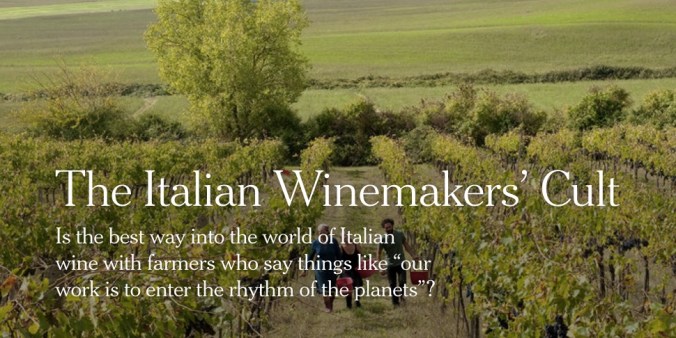
Traditions Taken Beyond The Limit Of Logic

wine

The annual harvest of the sangiovese grapes at the tiny Colombaia winery outside Siena. Credit Susan Wright for The New York Times

This story touches on many of our favorite themes, so thanks to Mr. Pergament for telling it well (click the image above to go to the original, at the New York Times website):

By DANIELLE PERGAMENT

It was a hot, late summer evening in Tuscan wine country — and, unexpectedly, I was getting a lesson in astrology.

Inside a grid of cool, lush green vines, amid hills and valleys rippling toward the horizon, a cherubic woman in a wide straw hat named Helena Variara was pointing toward the sky.

“You have days of fire, air and days of earth — the 12 constellations are our helpers,” she said matter-of-factly. “Our work is to enter the rhythm of the planets.” Continue reading

Rewilding, North America Edition

636129948116675648-elk-in-pickens-county-by-caleb-cassell

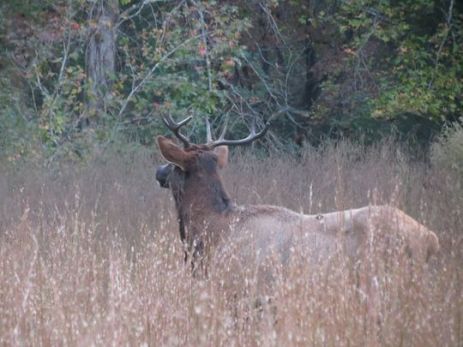
An elk, the first seen in South Carolina in centuries, gazes across a field in northern Pickens County. (Photo: provided/Caleb Cassell)

We would much rather that original nature was protected in its original state, but that does not keep us from celebrating the various efforts we see to reintroduce species, especially when they show signs of success as in this case from South Carolina, USA:

In Pickens County, first elk sighting in state for centuries

Ron Barnett

For the first time since the Upstate was Cherokee territory, a wild elk has been seen roaming the woodlands of South Carolina. Continue reading

Centennial Portraiture

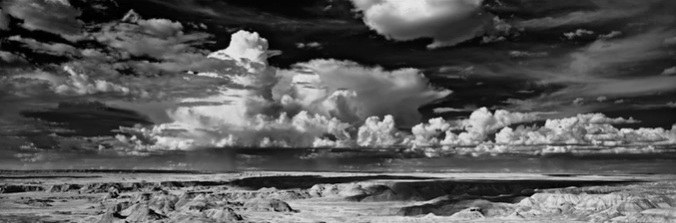
Painted Desert by Cody Brothers

Since August this year a multitude of events have occurred to honor the 100th birthday of the U.S. National Park Service. Aside from the obviously wonderful wilderness experiences available in the country’s 58 parks, as well as our own National Park of the Week series on this site, there are cultural events that highlight the beauty and history of the amazing achievement that is the preservation of our national patrimony for future generations.

Photographers have documented the landscapes of our national parks from the moment the technology made it possible, and the haunting beauty of the panoramas draw artists, explorers and dreamers still.

National Endowment for the Arts grant recipient Cody Brothers is all three. Continue reading