Solar Energy Benefits for All

h_bostonia_16-9939-solarpanel-116

All photos from: Boston University Bostonia

It seems obvious that investing in renewable solar energy saves money for those who install photovoltaic (PV) systems for their homes. However, what might not be so obvious is that PV systems also reduce electricity prices for all those with no solar panels, as professor Robert Kaufmann from Boston University discovered. His research revealed that the approximately 40,000  households and community groups with solar panels in Massachusetts reduce electricity prices for all of the three million electricity ratepayers in the state, including those with no solar panels.

“Until now, people have focused on how much was being saved by those who owned PV,” says Kaufmann. “What this analysis quantified was that it actually generates savings for everybody.”

Continue reading

If You Happen to be in Hong Kong

e10171af-5ded-4e02-ad2a-89768ff00b5e

Source: globaltimes.cn

Milk tea is the liquid blend of East and West, and if you happen to be in Hong Kong, you will find yourself among a populace that covets this sweet, aromatic drink just as much as Americans crave their daily coffee. Milk tea is the equivalent fast and convenient to-go drink in Hong Kong, and the city gulps down about 2.5 million cups a day. The drink is a a local institution that has a a yearly Hong Kong milk tea contest and this year’s competition was steep, to put it mildly.

Milk tea is a blend of black teas, combined with a high proportion of either evaporated milk and sugar, or simply sweetened condensed milk. The use of concentrated milk products gives milk tea a very thick, creamy consistency, and a high sugar content makes the beverage a harder, stiffer, bolder drink than many Americans would associate with tea.

The specific methods and materials are closely kept secrets of individual diner-like cha chaang tengs, the primary drinking establishments for milk tea, but some of the basics remain the same.

Continue reading

Using Drones in Ag Optimization

Precision agriculture: there’s a drone for that.
Image: ©Mauricio Lima/Flickr via conservationmagazine.org

Earlier today we referenced the changing assumptions in how plants retain water during high carbon dioxide conditions. Luckily for farmers with a little tech-savviness, they may have a new tool available to quantify water stress in plants: drones fitted with infrared thermometers. Catherine Elton reports:

In the quest to maximize the efficiency of agriculture for a growing planet, farmers have recently turned to drones. They are using them to detect pests and to map weeds. More recently, researchers have demonstrated that they can aid farmers in making smarter, more efficient use of irrigation water. This helps farmers not only increase yield, but also conserve a valuable resource in high demand.

Researchers’ early forays into employing drones for this end involved mounting them with thermal cameras to take measurements of canopy-air temperature above the crops. Canopy-air temperature is the basis of a widely used index for water stress in plants. The problem with this system is that thermal cameras are expensive, putting them out of reach of many farmers.

Continue reading

VLMPAs Face Risks of Becoming Paper Parks

Image © CNN

President Obama at Midway Atoll. Image © CNN

Two definitions are needed here at the outset: VLMPAs are “very large marine protection areas” and “paper parks” is a phrase used by conservationists and researchers to convey the idea of parks designated by governments only on paper – that is, they don’t get appropriate funding or management to create actual conservation within park limits. Most paper parks are found in developing nations where politicians may have good intentions in setting aside land to protect, but then don’t have enough resources to enforce the rules adequately, or in worse-case scenarios turn a blind eye to extraction if it favors them. Last week I discussed a possible race for bigger parks, and both examples happened to be marine in nature. Two researchers have commented in the academic journal Marine Policy to warn against creating ever-larger marine parks in remote areas that might be hard to monitor, unless there’s commitment for real enforcement. John Vidal reports:

“It is not enough to simply cover the remotest parts of our oceans in notional ‘protection’ – we need to focus on seas closer to shore, where most of the fishing and drilling actually happens,” said Peter Jones, a marine researcher at University College London.

Co-author Elizabeth de Santo, an assistant professor at Franklin and Marshall College in Pennsylvania, added that the push for quantity over quality threatens to undermine sustainability.

Continue reading

More CO2 Means Less Water for Plants

160829163305_1_540x360

Credit: © yommy / Fotolia

A new study on plant water retention from the University of California, Irvine and the University of Washington might rescind some of our assumptions of climate change impacts on agriculture, water resources, wildfire risk, and plant growth. Their findings reveal that water conserved by plants under high CO2 conditions compensates for much of the effect of warmer temperatures, which means more water is retained on land than predicted in commonly used drought assessments. ScienceDaily reports:

The study compares current drought indices with ones that take into account changes in plant water use. Reduced precipitation will increase droughts across southern North America, southern Europe and northeastern South America. But the results show that in Central Africa and temperate Asia — including China, the Middle East, East Asia and most of Russia — water conservation by plants will largely counteract the parching due to climate change.

Continue reading

The Essayist Essay

Heller-Trump-Oberlin-Collapse-of-Public-Language-1200.jpg

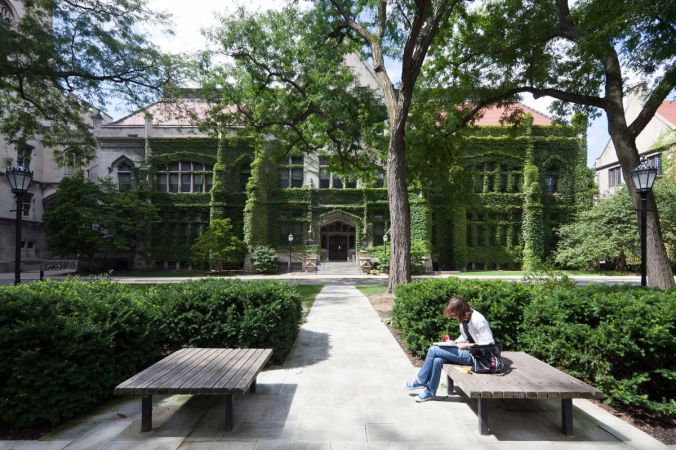
A student at the University of Chicago, which recently declared itself a space safe from safe spaces. PHOTOGRAPH BY B. O’KANE / ALAMY

I have just read the most remarkable short essay (or is it a blog post?), the best in a very long time because it is eloquent, wrestles with important ideas, and is very timely. Although the title of the essay has a reference to a divisive character who I do not look forward to reading more about, I nonetheless waded in because the writer has written some of my favorite reported pieces in the last couple years.

And it was rewarded quickly, because as soon as the second paragraph he used a word that I did not know, a beautiful word. And followed that with a couple beautiful sentences opening the third paragraph. I was hooked. And in less than half an hour I was fully rewarded with inspiration and motivation.

Essays and the essayists have been the topic of numerous posts here over the years, because we have many language-lovers and word-players among our ranks. (For silly example, the first word in the title of this post is meant to convey “the most essay-ish of all” while using the word that normally just means someone who writes an essay.)  But also because, as we have tried to also communicate, words matter alot in translating ideas and ideals into actions. So, may I recommend: Continue reading

Joining the Sustainable Fishing Soupbowl

ap_150457879317

Illegally harvested shark fins. Source: shareamerica.com

Given the critical decline of fish populations worldwide, it’s reassuring to hear that high-profile U.S. corporations, and ones in the hotel industry at that, are taking a stand against unsustainable fishing practices. Here’s the story as told on Share America:

Rogue vessels use banned equipment, damage breeding grounds and destroy tons and tons of by-catch, marine life that is caught in nets but not desirable in the markets.

Thirty percent of world fisheries are tapped beyond their limits, while another 60 percent are being fished at maximum capacity.

Major U.S. hotel chains, restaurants and supermarkets have responded by requiring that fish they serve be harvested sustainably.

Continue reading

Lights Out for Halogens in Europe

4608

Image source: The Guardian

A new light display is illuminating Europe – one that is more energy efficient. As of today, no new retail orders will be possible for directional halogen bulbs in EU countries and therefore the last halogens left in stores will not be replaced with new stock.  Halogen bulbs can waste up to 10 times more energy that LEDs and the first targets of the halogen bulb ban, which will go into full effect in 2018, are GU10 spotlights and PAR30 floodlights.

Which? magazine last month advised its readers to switch to LEDs, which can cut lighting electricity bills by up to 90%, according to the cool products efficiency campaign.

“With bulb purchase costs included, British homes on the average tariff will pay £126 per socket over a 10-year period for halogen lights, compared to £16 for LEDs,” said Jack Hunter, a coolproducts spokesman.

Continue reading

Bluestem Ranch Returns to Osage Nation

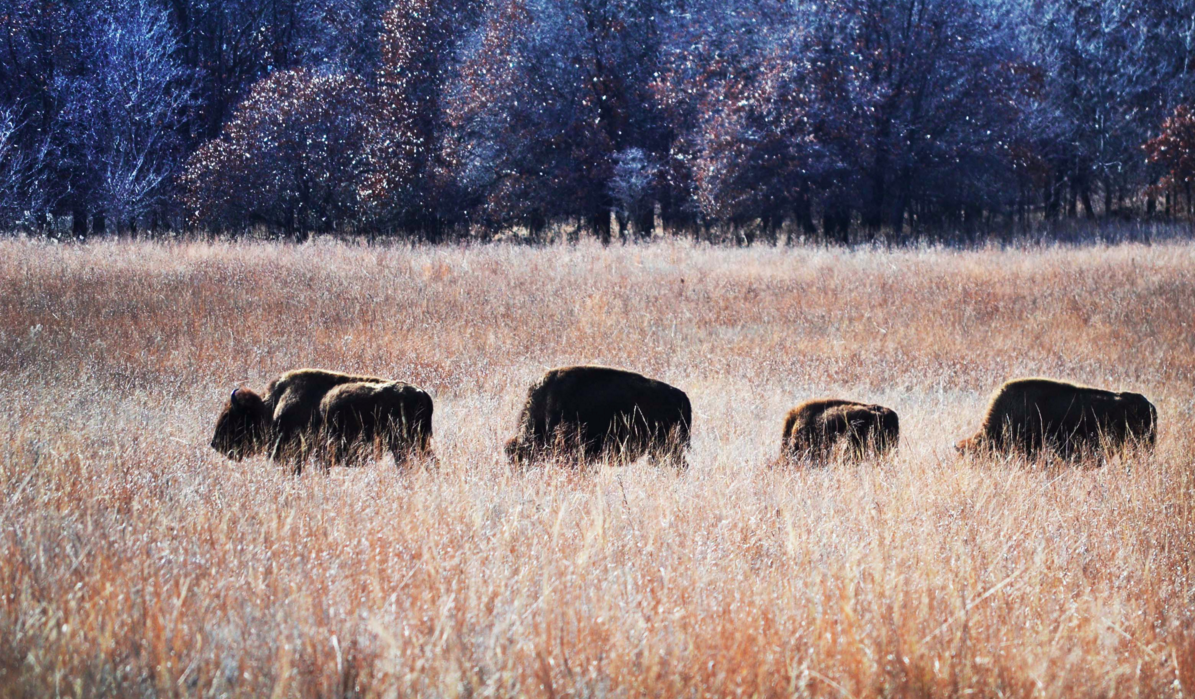
Bison on the Bluestem Ranch

Bison on the Bluestem Ranch

Osage Nation Takes Ownership of Ted Turner’s 43,000-Acre Ranch

Ted Turner is the second largest individual landowner in North America, with approximately two million acres of personal and ranch land. His lands are more than conservation, as he’s managed to unite economic viability with ecological sustainability and environmental projects including water resource and timber management, and the reintroduction of native species to the land.

Although the recent news of the sale of Bluestem Ranch back to the Osage Nation might impact his land holdings, it certainly adds to his legacy of positive land management.

The Osage Nation is filing applications for federal trust status to protect the land from future sale…. Continue reading

Of Salt and Stories

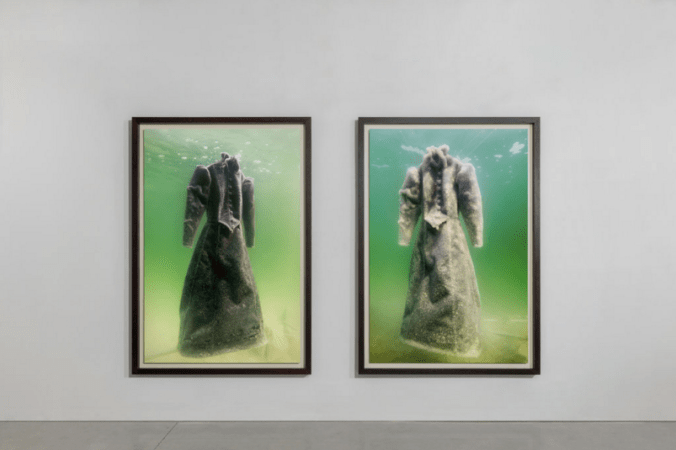
“Salt Crystal Bridal Gown III” (left) and “Salt Crystal Bridal Gown VI,” both 2014. Courtesy of the artist and Marlborough Contemporary

“Salt Crystal Bridal Gown III” (left) and “Salt Crystal Bridal Gown VI,” both 2014.
Courtesy of the artist and Marlborough Contemporary

It starts with a story. Written by Russian playwright S. Ansky in the early 20th century, The Dybbuk is an expressionistic drama about a young bride possessed by the malicious spirit of a dead suitor, and subsequently exorcised.

Jerusalem-born artist Sigalit Landau took inspiration from the story and her powerful connection to the Dead Sea, an otherworldly place she grew up visiting frequently with her family, and that she has incorporated into her art for years. Her “Salt Bride” installation at London’s Malborough Contemporary, enlists the work of the sea itself, in which a traditional black Hasidic gown (a replica of the costume worn by the bride in The Dybbuk, as portrayed by legendary actress Hanna Rovina) is submerged into the sea’s hypersaline waters. The salt crystals accumulated naturally over the net-like weave of the dress, left submerged over a period of 3 months, during which the process was photographed as an organic time-lapse. “Over time, the sea’s alchemy transforms the plain garment from a symbol associated with death and madness into the wedding dress it was always intended to be.” Continue reading

Some Ants Fight Fungus with Fungus

Leaf-cutter ants carrying leafy loot back to their underground colony in Carara National Park, Costa Rica

I’ve covered some ants in the past, discussing their fungal friends that provide them food, as well as their foes that turn them into zombies. A recent article by a team of researchers that included members of the Smithsonian Tropical Research Institute has found that most species of leaf-cutter ants have a practice that helps defend their young against parasitic fungi: wrapping them in the same fungi that they use to digest the leaves they bring underground!

Sarah Puschmann reports:

In the dark recesses of an underground fungus garden, a Panamanian leaf-cutting ant plucks a tuft of mycelia, the wispy part of the basidiomycete fungus these ants grow and eat, and carries it to a nearby ant pupa. The ant licks the pupa’s body before patting the fungus into place, continuing until it appears, when viewed under a powerful microscope, as though the pupa is webbed in short strands of spaghetti.

Continue reading

Pope Francis says Destroying Environment is a Sin

Photograph: Galazka/Sipa/Rex Shutterstock via The Guardian

We don’t have any religious affiliation here on the site, but understand that the Roman Catholic Pope has a tremendous influence in the world given his position. Any stance that he takes to protect the environment through denouncing pollution and agents of climate change is a good one in our book regardless of the church or theological basis. Josephine McKenna reports:

Pope Francis has called for urgent action to stop climate change and proposed that caring for the environment be added to traditional Christian works of mercy such as feeding the hungry and visiting the sick.

In a message to mark the Catholic church’s World Day of Prayer for the Care of Creation that he launched last year, Francis said the worst impact of global warming was being felt by those who were least responsible for it – refugees and the poor.

Continue reading

Guilt In The Eye Of The Beholder

00otg-losangeles-master768.jpg

A raspberry dessert at Café Gratitude in Hollywood. Credit Monica Almeida/The New York Times

A few days back I was struck by a post on this site about lab-grown foods, and wanted to continue the thought exercise by sharing a few comments on a brief article I had just read elsewhere on the intersection between performance art and food issues. Two more cents to add here, by way of a few excerpts from this fascinating, if alarming, article:

Eschewing a Vegan Lifestyle at Home, but Still Embracing It at Work

Continue reading

Understanding Biomaterials

shutterstock_90501193

Source: Greenbiz.com

Bio-based materials are becoming more mainstream and according to Duke University’s Center for Sustainability & Commerce, over $400 billion worth of conventional manufacturing products are produced each year using biomass, which in many cases are more sustainable than older alternatives. Nonetheless, bio-based alternatives have yet to reach scale due to traditional industry adhering to classic chemistry.

This is beginning to change, as breakthroughs in bio-based materials engineering reach a tipping point. Collective understanding of how microbes work is, for the first time, allowing us to make chemicals in a safer and more environmentally friendly way. It is possible for us to engineer microbes to have specific functions, including a variety of sustainability applications.

Continue reading

High Fashion Upcycling

om-archist_upcycling

Source: triplepundit.com

The concept of upcycling has become a movement thanks to innovative and sustainable companies that divert our wasteful habits and produce other goods in order to recreate the cycle in nature: nothing goes to waste. An example of one of these companies in the clothing industry is Looptworks. The company only uses excess materials that would have otherwise been incinerated or ended up in landfills to create high-quality bags, accessories and apparel.

Co-founder Scott Hamlin noticed the issue of clothing material waste in the manufacturing process during the time he worked for a large outdoor apparel company.

“Thirty percent of our materials never actually got used in manufacturing,” Hamlin said of his prior work experience with an outdoor gear company. “To me, that was a huge issue that nobody was talking about. It was dealt with as ‘business as usual.’”

Continue reading

Kiwis Were Diversified by Glaciers in NZ

Tasman Lake, which is fed by melt water from the retreating Tasman Glacier. Photo by Trevor Chinn

The kiwis referred to here are cute, small, fluffy, brown birds, not to be confused with small fuzzy brown fruit nor with the people who live in New Zealand. These flightless and nocturnal birds used to be divided in three to five species, but new DNA evidence from extensive blood sampling conducted over the last couple decades in their island home is indicating that there is in fact much more genetic diversity – which is often separated geographically – than previously thought, perhaps even enough to declare new species, or at the very least certainly new subspecies. And this might affect conservation strategies for these birds, which are all either endangered or vulnerable to endangerment. Ed Yong reports:

Several million years ago, a small bird flew to New Zealand. Arriving there, it found few threats and plenty of opportunities. In the absence of mammals, its descendants gradually lost the ability to fly, as island birds are wont to do. They also evolved to fill those niches that mammals typically occupy, rootling around the leaf litter in search of worms and grubs. They transformed into that icon of New Zealand—the adorable, bumbling kiwi.

Or rather, they transformed into the kiwis.

Continue reading

Anthropocene Closer to Becoming Officially Declared

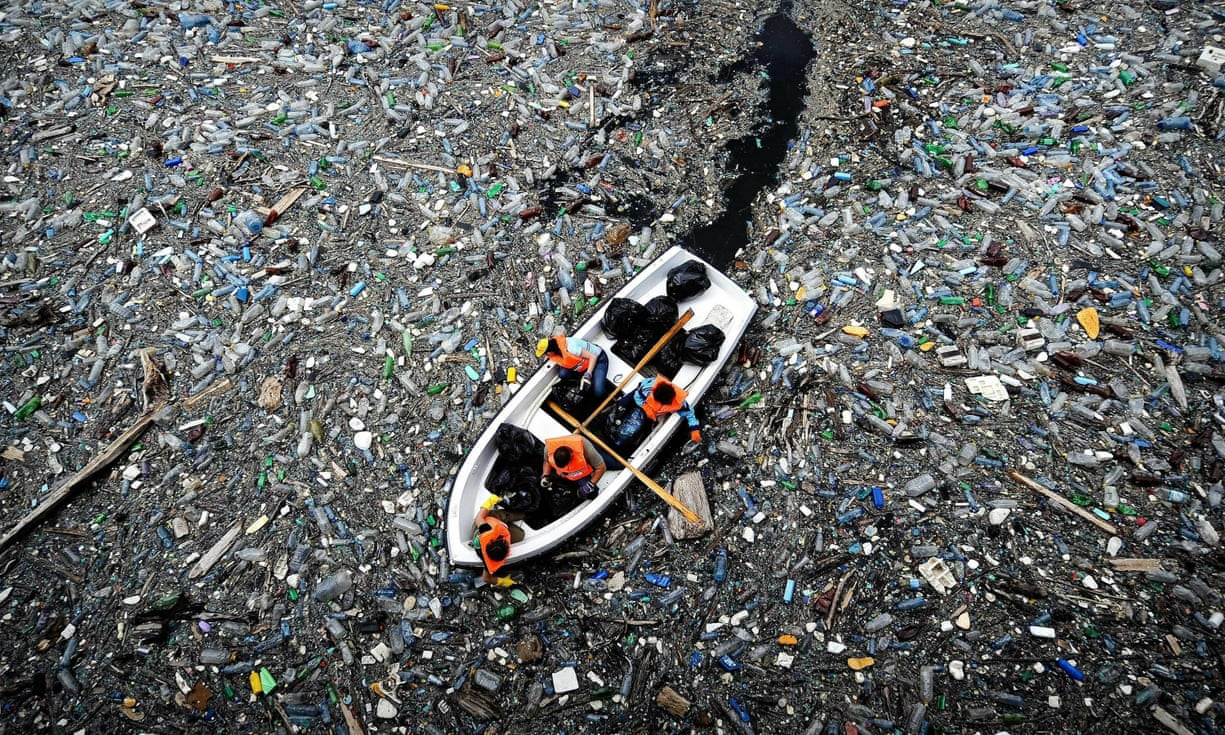
One candidate to be considered as evidence of the Anthropocene is plastic pollution. Photograph: Dimitar Dilkoff/AFP/Getty Images

We’ve covered the science and evidence behind the idea of our new geological epoch – one influenced by human activity – several times over the years, quoting various sources like The New Yorker, the New York Times, and The Economist.  Now, the Working Group on the Anthropocene has presented their official recommendation to the International Geological Congress that the Anthropocene be declared a new epoch starting around 1950, based on world-wide evidence such as radioactive elements from nuclear bomb explosions, plastic pollution, and even domesticated chicken bones. Damian Carrington reports:

The current epoch, the Holocene, is the 12,000 years of stable climate since the last ice age during which all human civilisation developed. But the striking acceleration since the mid-20th century of carbon dioxide emissions and sea level rise, the global mass extinction of species, and the transformation of land by deforestation and development mark the end of that slice of geological time, the experts argue. The Earth is so profoundly changed that the Holocene must give way to the Anthropocene.

Continue reading