The Chan Chich Lodge Night Sky

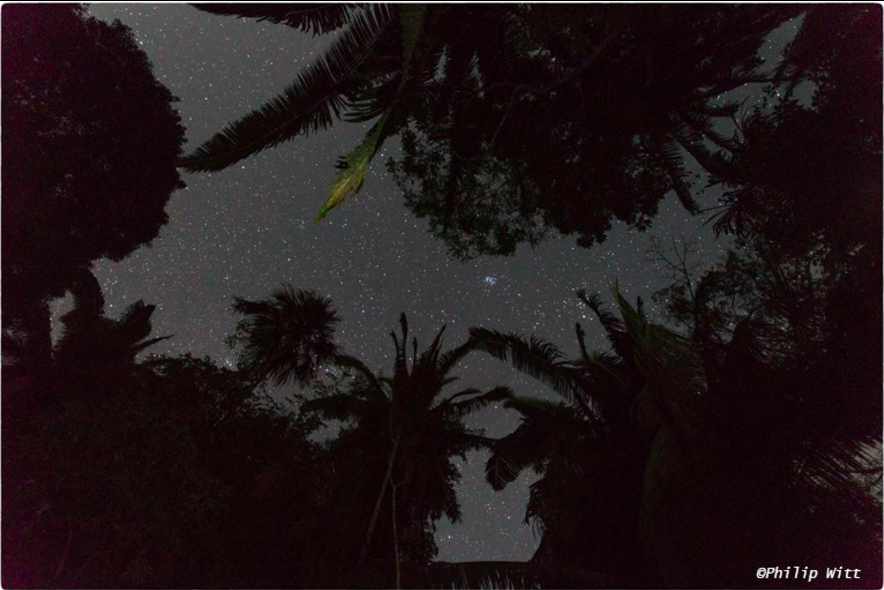
Night Sky by Chan Chich Lodge guest Phillip Witt

Night Sky by Chan Chich Lodge guest Philip Witt

A ping from my electronic calendar recently reminded me of the upcoming appex of the Perseid Meteor Shower between August 11th and 12th. I’d specifically marked it because this will be one of the first times I’ll be in a location so beautifully free of light pollution.

Although we do much of our work in remote locations, it’s surely a matter of luck to be in one of them at just this moment and this year,  when scientists say the meteor fall will be of the greatest density in 20 years. Chan Chich Lodge is located in the midst of 33,000 acres of private land, with the only infrastructure other than the lodge itself being a small village and the farming operations of Gallon Jug. 9-plus miles of trails branch off from the lodge, as well as simple gravel access roads. Continue reading

Conservationists and Climate Change

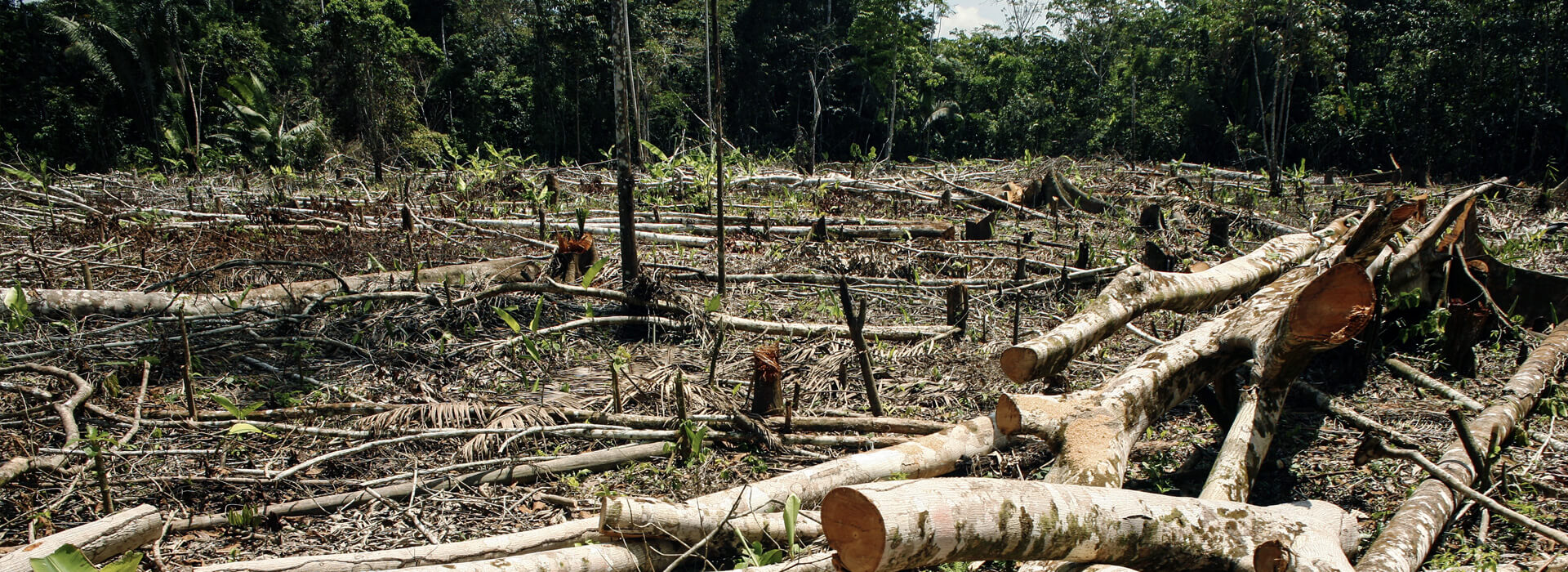
Deforestation in Peru, photo via the American Bird Conservancy’s habitat loss webpage

Almost two weeks ago, we shared a story from Conservation Magazine that covered a recent discussion piece published in the academic journal Biological Conservation, which was titled, “From biodiversity-based conservation to an ethic of bio-proportionality.” The author argued that the word ‘biodiversity’ limited conservationists to too small a goal in policy changes; in her opinion, ‘bioproportionality’ would be a better baseline. Today, we consider another contrasting view on conservation and what it should focus on when biodiversity is threatened, this time sourced from a commentary article in Nature, and covered by environmental writer Michelle Nijhuis for the New Yorker:

In January of this year, James Watson, an Australian scientist who works for the Wildlife Conservation Society, noticed an image that had been tweeted by a friend of his, a physician in Sydney. With a chain of progressively larger circles, it illustrated the relative frequency of causes of death among Australians, from the vanishingly rare (war, pregnancy and birth, murder) to the extremely common (respiratory disorders, cancer, heart disease). It was a simple but striking depiction of comparative risk. “I thought, ‘Why hasn’t anyone done something like this for the rest of nature?’ ” Watson recalled.

Continue reading

Figs and Ficus

Photo by Milo Inman

A past employee who used to be a regular contributor here, writing about all things Indian – and in particular, from Kerala – would publish frequently about plants and animals, among other subjects, and once, he wrote three posts in quick succession about three trees in the Ficus genus: the Elephant Ear, the Country Fig, and the Sacred Bodhi. The following month, another author here wrote on his feelings about ficus. This week, journalist Ben Crair writes about figs for the New Yorker:

The produce section of the grocery store is a botanical disaster. Most people know that a tomato is technically a fruit, but so is an eggplant, a cucumber, and a spaghetti squash. A banana, which grows from a flower with a single ovary, is actually a berry, while a strawberry, which grows from a flower with several ovaries, isn’t a berry at all but an aggregate fruit. The most confusing classification, though, will start showing up on American shelves this month. Shoppers will find mission figs with the grapes, kiwis, and other fruit, but a clever botanist would sell them at the florist, with the fresh-cut roses. Although many people dismiss figs as a geriatric delicacy or the sticky stuff inside bad cookies, they are, in fact, something awesome: enclosed flowers that bloom modestly inward, unlike the flamboyant showoffs on other plants. Bite a fig in half and you’ll discover a core of tiny blossoms.

Continue reading

Honoring World Lion Day

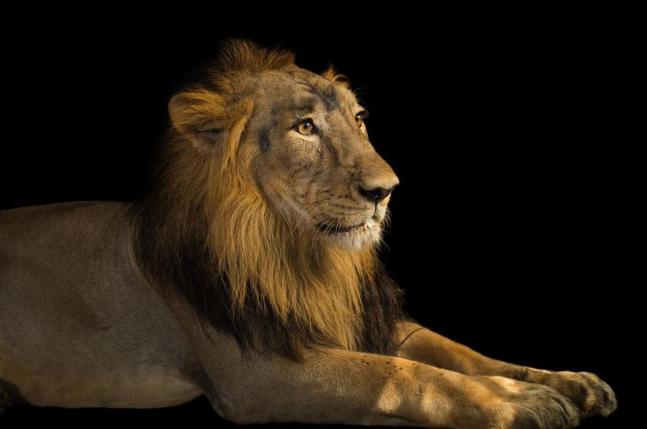
01-asiatic-lion-ngsversion-1470838592918-adapt-885-1

A male Asiatic Lion. Source: National Geographic

In celebration of World Lion Day (August 10th), here’s a motivational and uplifting conservation story of Asiatic Lions in west India’s Gir National Park:

The Asiatic lion once roamed vast swaths of the Middle East and Asia, but indiscriminate hunting and killing to protect livestock led to their mass slaughter. By the late 1800s, as few as 10 of the animals remained on Earth.

Their last refuge became western India’s Gir National Park, a protected area where these endangered animals are now on an upward trend. According to a 2015 census, a little more than 500 lions—the world’s total wild population—live in Gir, up from 411 in 2010. In comparison, about 20,000 African lions remain in the wild. (See a map of the lion’s decline worldwide.)

Continue reading

Piezoelectricity Going to California

A piezoelectric pad on the Shibuya subway station in Tokyo. Image © Vimeo

We’re always on the lookout for alternative energy options, especially those that are linked with big carbon producers like transportation. But unlike many of the options we’ve shared about before, piezoelectric crystals generate power from mechanical stress, and they can be installed in roads or walkways, as they already have been elsewhere in the world. Now, California is looking to take a step in the same direction with a pilot program, Laura Goldman reports for care2.com:

Energy conservation is probably not the first thing that comes to mind when you think about freeways jammed with idling vehicles.

But in California, which has some of the most congested freeways in the country, that’s about to change. The California Energy Commission (CEC) has approved a pilot program in which piezoelectric crystals will be installed on several freeways.

Continue reading

Pepper’s Historical Place

A painting of Muziris by the artist Ajit Kumar. In 2004, excavations in Kerala sparked new interest in this lost port. Illustration: KCHR

A painting of Muziris by the artist Ajit Kumar. In 2004, excavations in Kerala sparked new interest in this lost port. Illustration: KCHR

Our first exposure to the name Muziris was during the planing stages of the 1st edition of the eponymous Kochi-Muziris Biennale in 2012. The flurry of activity in Fort Kochi not only brought Kochi into the spotlight of the international Art World, but added focus to the archeological works at Kerala’s ancient port.

Lost cities #3 – Muziris: did black pepper cause the demise of India’s ancient port?

Around 2,000 years ago, Muziris was one of India’s most important trading ports. According to the Akananuru, a collection of Tamil poetry from the period, it was “the city where the beautiful vessels, the masterpieces of the Yavanas [Westerners], stir white foam on the Periyar, river of Kerala, arriving with gold and departing with pepper.”

Another poem speaks of Muziris (also known as Muciripattanam or Muciri) as “the city where liquor abounds”, which “bestows wealth to its visitors indiscriminately” with “gold deliveries, carried by the ocean-going ships and brought to the river bank by local boats”.

The Roman author Pliny, in his Natural History, called Muziris “the first emporium of India”. The city appears prominently on the Tabula Peutingeriana, a fifth-century map of the world as seen from Rome. But from thereon, the story of this great Indian port becomes hazy. As reports of its location grow more sporadic, it literally drops off the map.

Continue reading

You’ve Seen Bird Cams – How About a Salmon Cam?

Resolution is low, probably due to poor internet where the fish is and where I am, but you can see a coho, just like they say you might when watching the cam!

Resolution is low, probably due to poor internet where the fish is and where I am, but you can see a coho, just like they say you might when watching the cam!

We’ve shared various of the “bird cam” projects here before: websites, often run by universities like Cornell’s Lab of Ornithology, that host a live-streaming video of a nest somewhere so that people around the world with internet can tune in to the parent or chicks’ activities at any time of day. In some circles, similar videos of cats are also available. Now, not necessarily for the first time but at least the first I’ve heard of personally, there’s a live-streaming site of a real-life stream owned by The Nature Conservancy (I’m surprised their blog writers didn’t pun their way into that one). Matt Miller and Chris Babcock write about the new Salmon Cam:

Welcome to Salmon Cam, where you can enjoy the underwater happenings of a California salmon river throughout the day, on your computer or device.

The Salmon Cam is located in a tributary creek on The Nature Conservancy’s Shasta Big Springs Ranch. The camera is powered on in daylight hours (currently between 7 am and 7 pm Pacific time). Throughout the season, it will provide a view of migrating Chinook and coho salmon and steelhead trout.

Continue reading

Chan Chich Field Notes: Black Howler Monkey

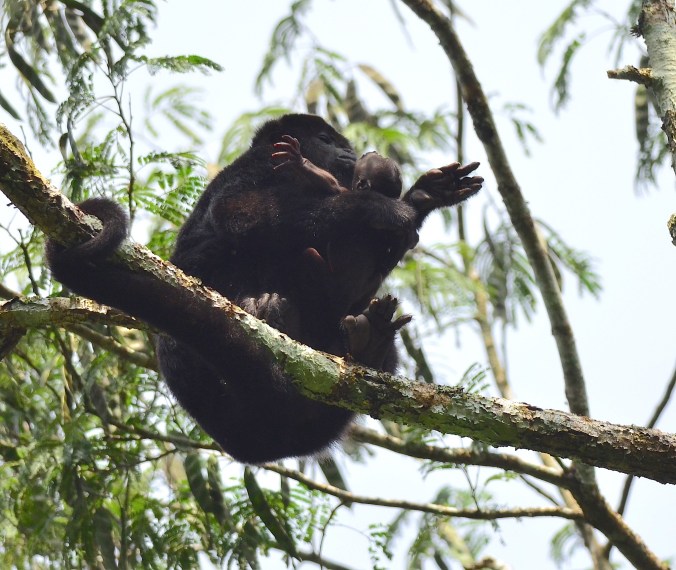
Female howler monkey with newborn by Emil Flota - La Paz Group

After my morning shift I went for my usual walk with my camera on Sylvester Village Road, looking at the beautiful surroundings and listening to the sounds of the forest. I heard something very unusual, which was a little frightening when I realized the sound was coming from above me. I looked up just in time to see a howler monkey giving birth. It was a very emotional moment, and when I finally felt calm enough to lift my camera I caught the mother bringing the baby up to her face on film.  Continue reading

The New Green Building Certification on the Block


3810_b

UWC Dilijan College in Armenia, the first BREEAM certified building. Source: idea.am

The two most recognized sustainable building certifications in the U.S., Energy Star and LEED, now have a new companion joining the movement within home territory. BREEAM (Building Research Establishment Environmental Assessment Methodology), a 25-year-old sustainability evaluation method officiated by the U.K consultancy BRE, offers a practical and more affordable online self-assessment tool for building owners who want to elevate their commitment to sustainability. BRE is working in collaboration with BuildingWise to focus on evaluations for existing buildings and tackle the estimated 5.6 million commercial buildings in the U.S. that are not being benchmarked using a “scientifically based” certification. Continue reading

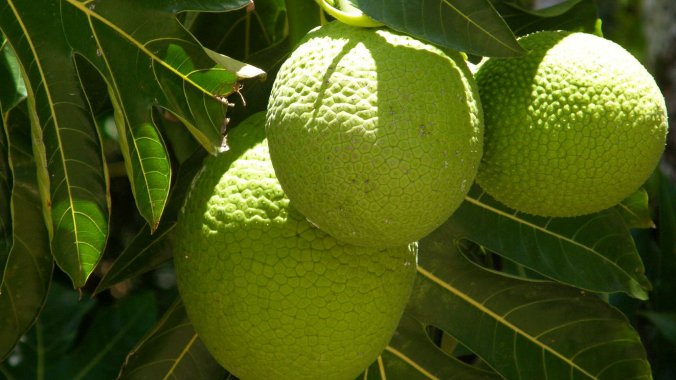
Breadfruit, Tropical Wonderfood

breadfruit_wide-4cafd8f5b004aa375b43dfd527929b0cc8e60e29-s1400-c85.jpg

Breadfruit is a protein and nutrient-rich staple in Hawaii and other islands in the Pacific Ocean. Malcolm Manners/Flickr

We have had these trees growing all around us in more than one tropical zone where we operate, but had not realized just how high their nutritional value is, nor their potential for doing more to alleviate hunger (thanks to the folks at the salt, National Public Radio USA):

Productive, Protein-Rich Breadfruit Could Help The World’s Hungry Tropics

Packed with nutrients, easy to grow and adaptable to local cuisines, this tropical superfood could bring more food and cash to poor farmers around the world.

On a muggy morning on Kauai’s south coast, ethnobotanist Diane Ragone inspects a dimpled bright green orb, the size of a cantaloupe. She deems the fruit mature, at its starchy peak. Perfect for frying or stewing. Continue reading

10,000 Suns

We have a long fascination with Land Art Installations and urban land reclamation going back to the earliest days of this site.  Learning about landscape architect Adam E. Anderson’s public art project in Providence, Rhode Island was exciting news.

This summer long “botanical performance” takes land that until recently was covered by an elevated highway system and cultivating it with volunteers into a different sort of public space.

Rather than using high maintenance and energy intensive large swaths of turf grass, the installation uses the bio-accumulating (removes toxins) and habitat creating properties of Helioanthus (aka, Sunflower) planted in rows in a series of large circles, leaving paths in-between for intimate exploration. Continue reading

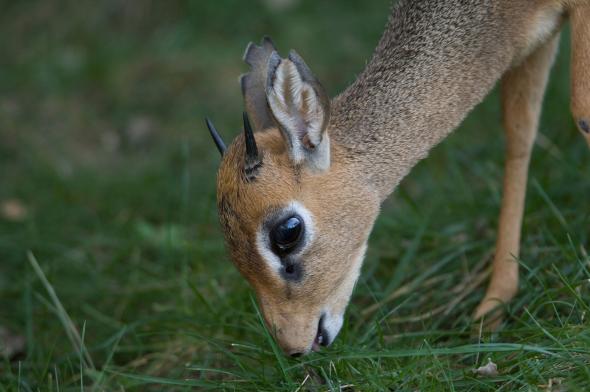
All About Horns

05waqanimalhorns-adapt-590-1

A dik-dik, a type of dwarf antelope with tiny horns. All photos by National Geographic

Horns are a curious biological development that come in all shapes and sizes and serve different purposes. There are plenty of white-tailed deer around the Gallon Jug Estate, some of which are young bucks with anywhere from one- to five-point antlers, and last night two guests actually watched a pair of these males butting heads within Chan Chich Lodge. An article by National Geographic enlightens us to the horny way of life:

Horns evolved independently in many animals to meet similar needs—first as weapons, and then as defenses against rivals, says Don Moore, director of the Oregon Zoo in Portland.

Horns likely initially inflicted body blows, but became larger and more elaborate as they absorbed blows to the head. This strategy led some animals, like pronghorns, to essentially wrestle (watch a video), whereas others, like sheep, ram their opponents.

Continue reading

Panthera onca

video taken by author on August 5th

Chan Chich is known for being pretty much the best place in Belize to spot a jaguar (scientific name, Panthera onca) in the wild, given the Lodge’s huge amount of protected land (30,000 acres) adjacent to hundreds of thousands of acres similarly preserved, or under government conservation that together form the international Jaguar Corridor Initiative.

The word Panthera comes from the ancient Greek pánthēr (πάνθηρ), which essentially means “predator of everything,” and is a scientific genus comprised of the five big cat species in the world: snow leopards, tigers, lions, jaguars, and leopards. The latter four of these are the only cats that can roar, given morphological differences in their bones and throat.

Continue reading

Watch the Perseids this Week

Photographer Ruslan Merzlyakov captured this spectacular photograph of the Perseid meteor shower filling the Danish sky in the early morning of Aug. 13, 2015. Photo via space.com

Sometimes you should just sit back, relax, and enjoy the show, especially when it’s broadcast by nature itself. This week, between August 11th and 12th, try to find time to stay awake once the moon has set, and a place you can be as far from light pollution as possible, and watch the sky for what promises to be a particularly active meteor shower from the Swift-Tuttle Comet, near the Perseus constellation:

According to NASA meteor expert Bill Cooke, the Perseids are perhaps the most popular meteor shower of the year. They will be in “outburst” in 2016, which means they’ll appear at double the usual rates. Learn more about the 2016 Perseid meteor shower in this video.

“This year, instead of seeing about 80 Perseids per hour, the rate could top 150 and even approach 200 meteors per hour,” Cooke said. It’s the first such outburst since 2009.

Continue reading

National Parks Valorizing Flora & Fauna

5616.jpg

Glad to see chefs in South America leading this innovative form of entrepreneurial conservation, and crossing country borders to do so:

Bolivian national park serving up sustainable ingredients for fine dining

Chefs among travellers proving there is demand for produce from Madidi – and helping communities understand commercial potential of their flora and fauna

Deep in Bolivia’s Madidi national park, Kamilla Seidler – the head chef of the Gustu restaurant in La Paz – was looking at a basket of cusí, the fruit of the babassu palm. An oil processed from the seeds is already marketed as a hair and skin product, but Seidler suspected it could have culinary potential, too.

“Bring me three kilos of it and in a month I can tell you all kinds of things you can do with it,” she told Agustina Aponte, who was representing a group of women from Yaguarú, one of 31 campesino and indigenous communities living within Madidi’s 1.89m hectares.

Continue reading

The “Wildman” in You


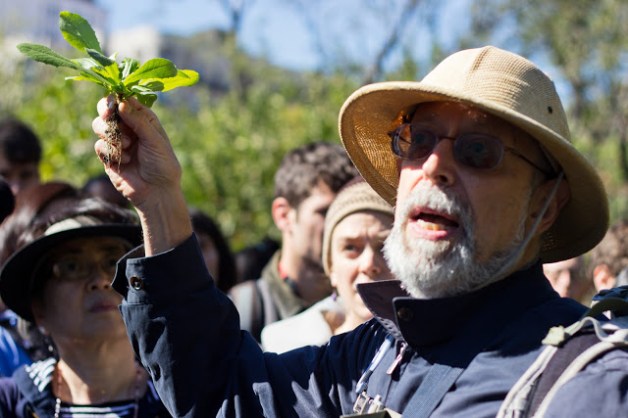
Whether you live in an urban or rural setting, the abundance of edible plants that surround us typically remains unconsumed unless we are referring to the plants that are growing in our own gardens. “Wildman” Steve, NYC’s famed foraging expert, is an avid naturalist who learns about the properties of common plants growing in neighborhoods in order to identify their utility for human consumption, including their medicinal attributes in some cases. He shares his findings through various forums and even has a phone application to offer a practical and user-friendly tool for those who want to get “in the field” and learn.

All of his videos, like the one below, remind us of the plethora of flavorful plant species right in our own backyard or neighborhood park and the following one highlights the joy it can be to do it with someone you love.

Continue reading

Restorative Justice, Environmental Case Study

1500.jpg

I am linking to this with a long series of links to rewilding stories in mind. Thanks to the Guardian for occasional environmental rags to riches stories:

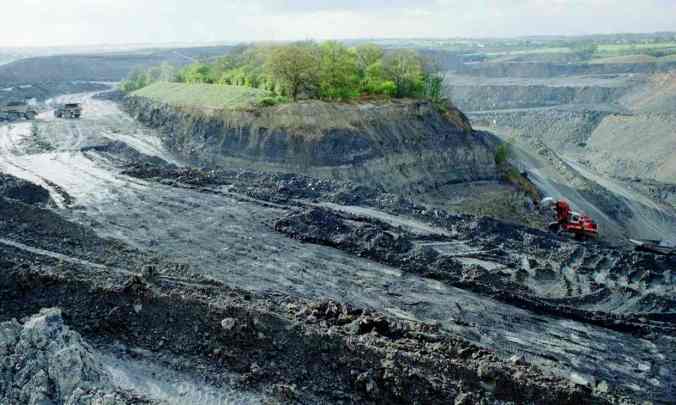
How millions of trees brought a broken landscape back to life

After 25 years, the decision to site the National Forest amid derelict coal and quarry workings has borne spectacular fruit

by John Vidal

Twenty-five years ago, the Midlands villages of Moira, Donisthorpe and Overseal overlooked a gruesome landscape. The communities were surrounded by opencast mines, old clay quarries, spoil heaps, derelict coal workings, polluted waterways and all the other ecological wreckage of heavy industry.

The air smelt and tasted unpleasant and the land was poisoned. There were next to no trees, not many jobs and little wildlife. Following the closure of the pits, people were deserting the area for Midlands cities such as Birmingham, Derby and Leicester. The future looked bleak.

Today, a pastoral renaissance is taking place. Around dozens of former mining and industrial communities, in what was the broken heart of the old Midlands coalfield, a vast, splendid forest of native oak, ash and birch trees is emerging, attracting cyclists, walkers, birdwatchers, canoeists, campers and horse-riders.

Continue reading