Biomass Reconsidered

biomass-b235a828247f79eff9f6f0d3846599d44ae6b453-s1400-c85

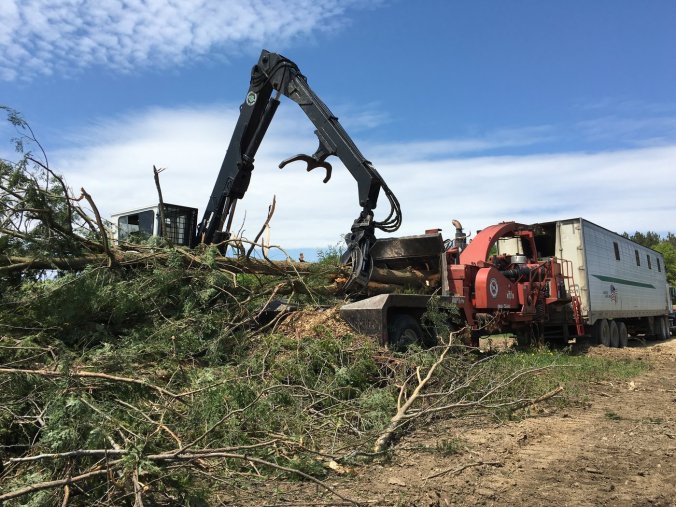
Logger Greg Hemmerich and his crew feed low-value trees into a wood chipper, before bringing the chips to ReEnergy Holdings’ biomass plant in Lyonsdale, N.Y. David Sommerstein/NCPR

Thanks to National Public Radio (USA) for this:

Is Burning Trees Still Green? Some Experts Now Question Biomass

by DAVID SOMMERSTEIN

In northern New York state, logger Greg Hemmerich and his crew are clearing out an old pasture at the edge of a forest.

“There’s a lot of balsam, lot of spruce, thorn apple trees,” Hemmerich says. “Ninety percent of this lot is low-grade wood.”

In other words, it’s no good for furniture or paper or sawmills. But he’ll make $80,000 to run the wood through a chipper and truck the chips to a nearby biomass plant.

“Everybody said that green power was supposed to be the wave of the future,” Hemmerich says. “So I went full in.” Continue reading

Demolition, Conservation & Creative Destruction

Puppet2

THE STAGE LIFE OF A PUPPET Watch as Dan Hurlin’s puppets from “Demolishing Everything with Amazing Speed” come to life.

Dance is not one of the art forms I have ever immersed myself in, so I only occasionally read articles by a Dance critic. Joan Acocella, however, is also a great book reviewer and I know I should always at least glance at what she publishes. This was one of those times when I was pulled in, and could not stop reading (or watching; click above to go to a short video based on the subject of her review).

Her brief description of a series of puppet shows captures my attention, in spite of my not having seen a puppet show in decades. First, it has to do with lost and found heritage being valorized by a talented artist–a variation on what we call entrepreneurial conservation. And the mix of written and video presentation of the review is a fine example of the rapid paced march of an old school, paper-based magazine to the drum of its new digital platform, something we can appreciate as the same happens in our sector (travel and hospitality). In that sense even the title of the work being reviewed, “Demolishing Everything with Amazing Speed,” echoes the Schumpeterian notion of creative destruction.

FORGOTTEN FUTURIST PUPPET SHOWS

Dan Hurlin stages Fortunato Depero’s unproduced plays at Bard SummerScape.

In 2013, Dan Hurlin, a performance artist and puppet artist, was working at the American Academy in Rome when he stumbled on evidence that during the First World War Fortunato Depero (1892-1960), one of the Italian Futurists, had written four puppet plays that were never produced. Where were they? Hurlin travelled to Depero’s home town, Rovereto, at the foot of the Italian Alps, to examine the man’s archive. “I sat at this big table, wearing those white cotton gloves they make you wear,” Hurlin remembers. Continue reading

Art In The Name Of Environment

9778_f52b43f6e0e444510cf55c5869d8d06b

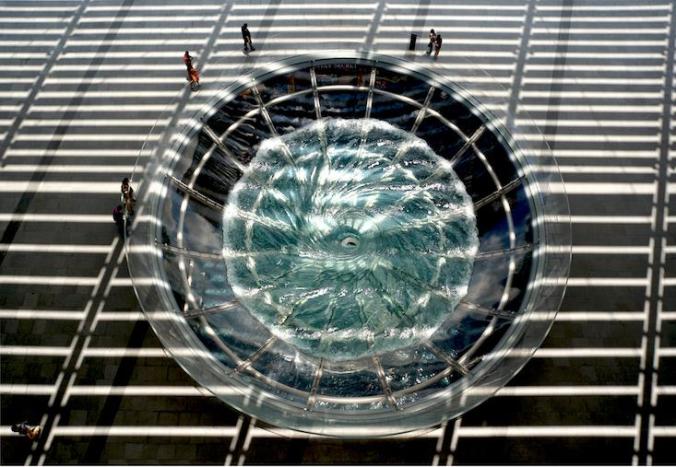
RAIN OCULUS: In Marina Bay Sands, Singapore, a large whirlpool—functioning as both a skylight and a rain collector—forms inside a 70-foot diameter acrylic bowl and falls 2 stories to a pool below. Kahn, collaborating with Moshe Safdie, completed this artwork in 2011. Photo courtesy of Ned Kahn

Nautilus has brought our attention back to a subject that, on last look made us uncomfortable, but now our fascination and wonder are back where they belong:

The environmental artist Ned Kahn, a MacArthur Foundation “genius grant” awardee, gravitates toward phenomena that lie on the edges of what science can grasp—“things,” he tells me over the phone, “that are inherently complex and difficult to predict, yet at the same time beautiful.” The weather, for example, has, because of its chaotic yet orderly nature, “fascinated me for my whole career,” he says. For almost the last 30 years in particular, he’s been creating dynamic installations that he thinks of as “observatories”: Since they frequently incorporate wind, water, fog, sand, and light, he states on his website, “they frame and enhance our perception of natural phenomena.”

Take his most recent project, the “Shimmer Wall”. Composed of over 30,000 tiles, it will be a 1,100-foot long façade of a new building, home to the “Ocean Wonders: Sharks!” exhibit, set to open this year at the New York Aquarium (over $80,000, toward a $100,000 goal, has been donated for its construction). It will house over 100 species of animals, including but not limited to a variety of crustaceans, sharks, fish, rays, and turtles. “They were struggling with the façade and someone on the design committee knew about my work and approached me,” says Kahn. “That led to the idea that we’re doing a skin for the aquarium inspired by fish skin, shark skin, scales. I’ve been doing a number of faceted, fragmented, kinetic artworks influenced by scales—that move with the wind and, when you step back, you get an idea of how the wind affects it.” Continue reading

Amazon’s Architectural Adventure

11AMAZON5-superJumbo

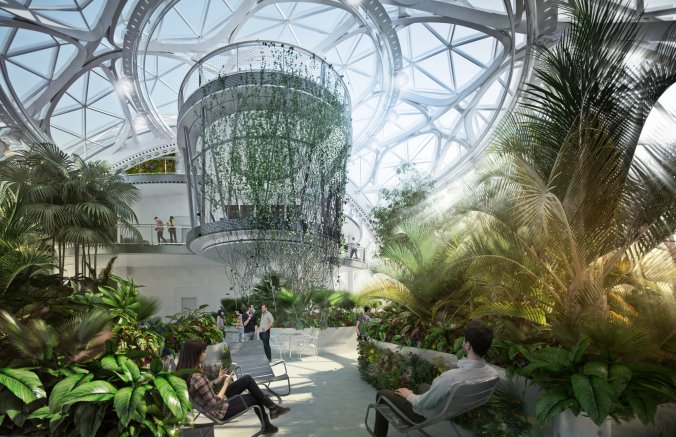
Renderings of the spheres at Amazon that show what the interiors are expected to look like. When they open in early 2018, the spheres will be packed with a plant collection worthy of top-notch conservatories. CreditNBBJ

An article in the New York Times helps to illuminate the logic of a company with billions of dollars to spend on its office infrastructure, a company that occupies”creative” space in the global economy, when they design the HQ of the future:

…“The whole idea was to get people to think more creatively, maybe come up with a new idea they wouldn’t have if they were just in their office,” said Dale Alberda, the lead architect on the project at NBBJ, a firm that has also worked on building projects for Samsung, Google and the Chinese internet company Tencent.

Tech companies have been eager to test ways to make workplaces more conducive to creativity. Some turn their offices into grown-up playgrounds, with beanbag chairs, ball pits and Ping-Pong tables…

Creative1.jpg

In New York City’s Chelsea neighborhood, the tech-centric creative company Barbarian Group created a fluid Superdesk to gather their employees at one endless table. Photo from The Creative Workplace

This comes not long after Apple’s own utopian creativity nest, among others in the cash-aplenty sector. A few months ago a book titled The Creative Workplace came to our attention.

We were already primed to think about office space again when we saw the book. A portion of our team was going to be transferring over to the client side at Xandari, starting July. This would give us some space to be creative with. And so we have done. Already we have welcomed the Rainforest “client-side” team into our office.  SCreative2hared office space, akin to what we saw in one of the WeWork spaces in San Francisco recently, suits our office space well.

So the images from this book have been perfectly timed to stimulate our thinking. In our first round of office creativity thinking in 2011 we had a shell that dictated constraints. One of those was economic, aka rational business logic. We needed a certain “feel” to reflect our aesthetic, and to accommodate our workflow, but did not want to go over the top because that is not how we do things.

But we like pretty shiny things as much as the next person, so Continue reading

New Hybrid Bike Concept from Schaeffler

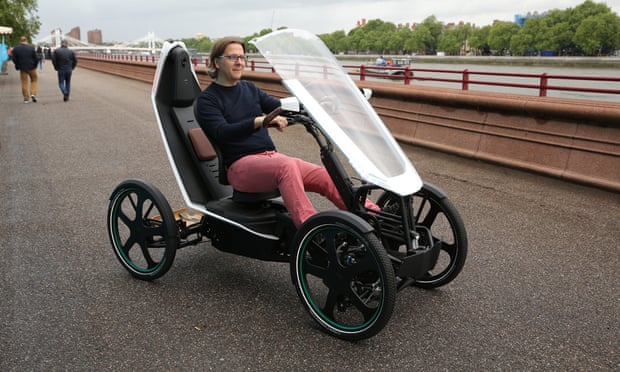
Damian Carrington testing the Schaeffler Bio-Hybrid. Photograph: Schaeffler

We like bikes, including fresh designs or materials for them, and with news from Paris that vehicles built before 1997 will no longer be allowed in the city during weekdays, having more vehicles like this concept design could be useful for commuters looking for a change. Damian Carrington reports for The Guardian:

I’m sitting in a cross between an electric-assisted bicycle and an electric car that looks like a cool golf buggy.

The model I am in is also the only one in the world and cost a lot of money to build. So no pressure as I take this concept vehicle for my first spin. The Schaeffler Bio-Hybrid looks hi-tech, but luckily it is very easy to drive. Or do I mean ride?

Continue reading

Paris Bans Pre-1997 Cars from Roads

Good news comes from the French capital in an effort to reduce smog and carbon emissions on the streets in the city of light, but the United States is stuck trying to discourage driving in much weaker fashion, Camille von Kaenel reports for Scientific American:

Cities around the world are driving vehicles off the streets by imposing strict anti-pollution measures, but the car still rules in the United States.

This week, the city of Paris launched a ban on vehicles built before 1997 during weekday daylight hours. Mayor Anne Hidalgo has been candid about her desire to expand the ban to cut back on smog from diesel cars and to “reclaim” the city for pedestrians and bikers.

Continue reading

I Love IPA, And I Know Why

HopsOne of the ironies of living in India for six years, as a devotee of IPA, is that IPA is not to be found in India. So, I have it only when I travel, and mostly in the USA where the craft of brewing in small batches has grown radically in recent years.

The book to the right is a tiny drop in a big bucket of evidence of how the craft of brewing has reached far and wide, and it came to my attention when I visited a website associated with its authors:

IPAWhich came to my attention in this post by Russell Shorto, which must be read in its entirety (it takes only a few minutes) if you care about IPA, hops, ethnobotany or just excellent non-fiction writing, and includes these two paragraphs:

…while an emphasis on hops has likewise boosted the business of small-scale brewers, I.P.A. aficionados are known to be among the most fickle of beer consumers, flitting from one label to another in their endless search for new flavor elements. That puts pressure on brewers to come up with new beers, which, in turn, leads to a hunt for new hops varieties.

Enter Paul Matthews, who is to hops what John James Audubon was to birds. He has been involved in the search for wild hops strains from Colorado to the Caspian Sea; from these he teases out flavor components. Spicy, floral, grassy, citrus, herbal, evergreen: the horizon keeps expanding, and still the crowd wants more…

Ha! Top that. Actually, he does. Keep reading it. Continue reading

The Sense Of A Place

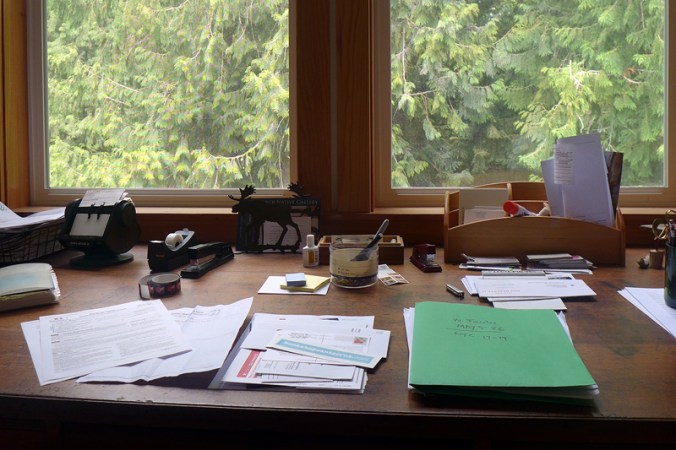
proulx-desk

What Annie Proulx says about places she has lived–through her fiction especially but also in this interview below–rings a bell for us, considering the number of places we have chosen to live to do what we do. What the interview echoes specifically for me is the inherent improbability of accomplishing one of our key objectives: we want travelers to become as attached to places as we are, so that they will care about the conservation mission of our initiatives in each location as much as we do. It occurs to me that our guests spend about as much time with us in any given location as a reader spends on any given book by Proulx; also, books and our locations share in common the fact that they can be revisited an indefinite number of times.

That said, we want our guests to care more about these locations than even the most devoted reader cares about a Proulx character; not because we think less of her characters but because our conservation mission is about places in need of constant support. Improbability in this context refers to the question: how can our guests become intensely attached–as happens when a reader is gripped by a compelling character in a deeply human situation in an exquisitely described location–in a limited amount of time and continue to care intensely after they depart? That is our challenge, and we are constantly finding new ways of answering that question.

Another echo from reading what Annie Proulx says about the places she has lived, about belonging, feels strongly relevant. If we are a fraction as good at what we do as she is at what she does, belonging becomes irrelevant. What matters is how much sense we make of the place, and how much sensibility we harness in showcasing it to our guests. If you have read any of her books, you know how evocative place can be–like an additional character–and if that captures your attention you should read the interview that follows the introductory section excerpted below.

HOW THE WRITER RESEARCHES:
ANNIE PROULX

JOHN FREEMAN INTERVIEWS THE PULITZER PRIZE WINNER IN HER SNOQUALMIE VALLEY HOME

Annie Proulx is 80 years old and still not sure where she belongs. Standing in the atrium of her home in the Snoqualmie Valley, the Pulitzer Prize-winning novelist eyes a photograph of the cottage she once occupied in Newfoundland, the setting of her 1993 novel, The Shipping News. “I fell in love with that landscape,” Proulx says, speaking in the tone of a woman describing an ex-lover. Continue reading

Increasing China’s Wind Power Production

Dabancheng wind farm in China’s Xinjiang province (Source: Bob Sacha/Corbis, via Dailytech.com)

Wind power, as we’ve written before, has great potential as an alternative energy source, although there are certain issues to take into account. China is installing the most new wind turbines per year, but has yet to produce the most wind-generated electricity given barriers by the coal industry. Prachi Patel reports for Conservation Magazine:

China is the world’s top wind energy installer. The country’s wind installations have a capacity of generating 145 Gigawatts, twice that of the United States and about a third of the world’s total wind power. Yet the country produces less wind electricity than the US. Last month, researchers from Harvard University and Tsinghua University argued in the journal Nature Energy that this underperformance is due to deliberate favoring of coal over wind by grid operators, delays in connecting new wind farms to the grid, and sub-par equipment.

Continue reading

Tapping Other Types Of Rewards

060616_Duhaime_046_605.jpg

Jon Chase/Harvard Staff Photographer. Radcliffe fellow and HMS professor Ann-Christine Duhaime, whose new project explores how inherent brain drive and reward systems may influence behaviors affecting the environment and global warming.

One possible breakthrough approach to countering the causes of climate change is to frame the issue as an epic scale equivalent to what we do to improve our diets, or to address conspicuous consumption of other varieties. If a neurosurgeon has an idea that I can relate to, that gives some hope after an otherwise kind of gloomy week of news. Thanks to the Harvard Gazette for this one:

Turning the brain green

Neurosurgeon wants to unleash our anti-hoarding tendencies

By Colleen Walsh, Harvard Staff Writer

Could a better understanding of the brain’s reward system — a network fine-tuned over millions of years and laser-focused on survival — help mankind skirt environmental disaster? Continue reading

Nature, Color, Science

Screen Shot 2016-07-09 at 5.50.02 AM

If you happen to be in London, starting July 15 this exhibition at the Natural History Museum looks worth a worth a visit:

Investigate how different animals see the world, and explore your own relationship with colour, through interactive experiences and immersive films.More than 350 specimens feature, from beautiful birds to fossils of the first organisms with eyes. And British artist Liz West has produced a stunning light installation, inspired by Newton’s colour spectrum and blue morpho butterflies in the Museum’s collection.

The BBC gives it a strong review here:

_90172043_b583d8fa-da3c-4d0a-aece-83ff65cc48a5

A new exhibition exploring the relationship between colour and vision in the natural world is opening at the Natural History Museum.

Intense and vibrant natural colours will be displayed in specimens and photographs of insects, animals and plants. At the heart of the exhibition – Colour and Vision, which opens on 15 July – is the question of how we perceive colour. Continue reading

Rethinking Fish

5120

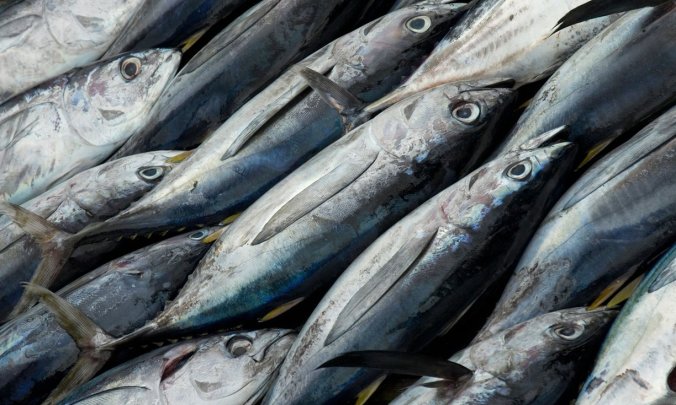
More than 40% of popular species such as tuna are being caught unsustainably, UN FAO says. Photograph: Alamy

Articles like this have me thinking about the meal I had last night, which had not one bit of animal protein in it, and wondering whether I could happily resist adding my own weight to the immensity of the food problem, especially with regard to fish:

Global fish production approaching sustainable limit, UN warns

Around 90% of the world’s stocks are now fully or overfished and production is set to increase further by 2025, according to report from UN’s food body

Continue reading

What Would I Read At Villa del Faro?

Proust

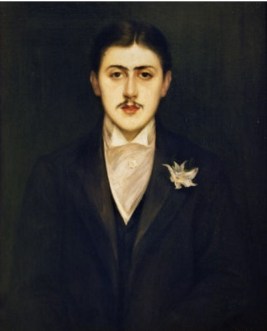
As a teen-ager, Marcel Proust filled out a questionnaire as part of a parlor game. His responses have experienced a startling afterlife. PHOTOGRAPH BY IMAGNO / GETTY

Seth’s post, followed by Jocelyn’s post, both reach me just after reading this fascinating short history on the so-called Proust questionnaire, which I first encountered in the back pages of Vanity Fair magazine when I had nothing better to do. I am reminded of two things: guilty pleasure reading, and actual reading of something other than news, news analysis, or long-form non-fiction–which are a mainstay of my contributions on this site.

I am reminded of a third thing: Amie’s marathon reading of Proust, and the view of this 3-volume set around our home for a long stretch of time. Those books that she would lug around were the sign of an unreformed, unrepentant student of literature, whose career started as a book editor in New York City, when she had nothing better to do.

41vfEDKvg7L._SY344_BO1,204,203,200_

I say that mainly to contrast what I did with my guilty pleasure reading time back then, and what she did with hers. I say that because in more recent times, especially the past six years in India, she has had something much better to do, and plenty of it to do, and I think we are all better for that. Which has me thinking: if I had the time, what would I read if I could just leave it all behind right now and land at Villa del Faro with nothing but books (and at least a couple changes of clothes, of course)? Would I find that Proust set Amie has in storage? As an amateur nostalgist with limited writing talent, I might choose those volumes as a self-help guide.

9780394711843I write on this site partly to share about events, people and places that I believe are worthy of others’ attention; but also for the sake of further reflection and sense-making of those. Patterns repeat; some people and places important once come back to be important again.  For example, nearly five years ago I was on my third of five extended periods of work in Baja California Sur.  It was on an earlier visit in 2008 that I had met Andy Murphy, then with WWF, with whom I became friends and then eventually more with our project in Ghana. Continue reading

The Melody of Villa del Faro

20160707_160842_zpsqsalmexsMy first sightings of southern Baja California from the finger-smudged airplane window surprised me. I expected to gaze upon a flat peninsula with dirt roads connecting a sprinkling of homes; my expectation turned out to be half correct (and I dare readers to guess which part before peeking to the next line). Continue reading
Floating Dairy Farm Planned in Netherlands

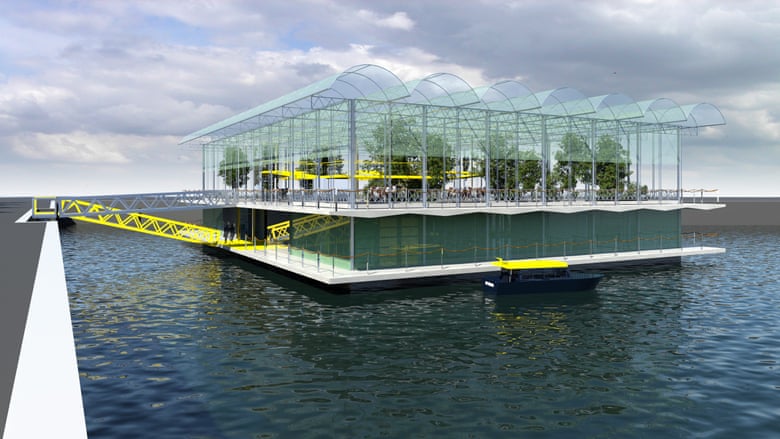
Illustration of proposed floating farm by Beladon.

We’ve written about floating solar panels before, and created a floating fence at Xandari Harbour to keep out water hyacinth, but there are plans in Rotterdam for a floating cow farm that will process milk and yogurt, according to Senay Boztas, writing for the Guardian:

Do cows get seasick? It’s not a question farmers often ask, except in the Dutch city of Rotterdam where a team of developers plans to build a floating dairy.

“They won’t here,” says Minke van Wingerden of Beladon, a company involved with water-based projects from a luxury hotel to this floating farm proposed for Rotterdam harbour. “In Friesland, where I come from, sometimes they bring cows from one place to another on a small barge,” van Wingerden recalls. “[The floating farm] will be very stable. When you are on a cruise ship, you aren’t seasick.”

Continue reading

Villa del Faro’s Layout

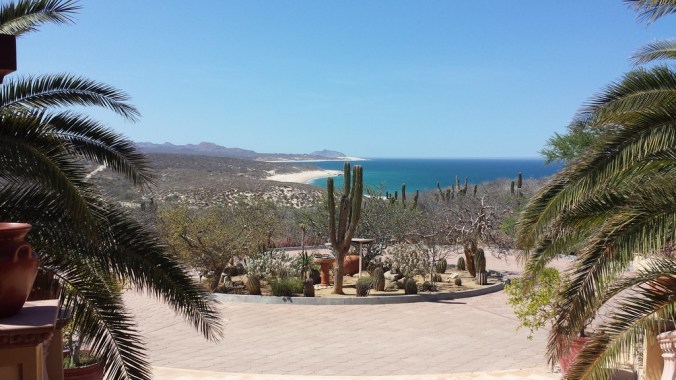
The hotel entrance

There are just over a dozen buildings on property, and most of them are for rent by guests wanting to get away from bustling cities or hectic work environments and come down to Baja for some relaxation and the sound of wind and waves.

Villa del Faro’s website references the architecture and interior design as a blend of Mexican hacienda and Italianate villa, which I think perfectly reflects the feel of the structures and decorations experienced as one wanders through the gardens and arches.

Continue reading