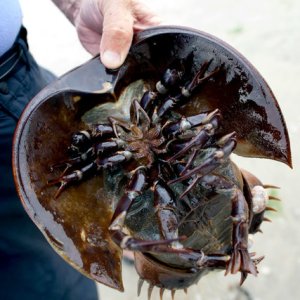
A horseshoe crab. Credit Brian Harkin for The New York Times
Thanks to a Nature essay in the New York Times, timed to be read over the Memorial Day weekend typically associated with the beginning of summer in the USA, a reminder of one of the joys of the season (at least on the Atlantic coast of the USA) just beginning:
 Logic, even if it seems to be missing much of the time, provides a set of rules by which the world can at least make more sense. It may not always help one rule the world, but it helps understand some of the rules of the world. Mr du Sautoy’s idea here is akin to the one we make, and link out to from time to time, about the value of liberal arts education for the sake of learning how to think and communicate clearly:
If I ruled the world: Marcus du Sautoy
Understand Euclid’s proof and ban people from saying “I’m bad at maths”
by Marcus du Sautoy
If I ruled the world, the first thing I would do is to make sure that everyone understood Euclid’s proof that there is an infinity of prime numbers. To some people that might seem like a strange suggestion, so let me explain. In itself, Euclid’s proof is not particularly useful for anything. But what it shows is the power of analytical thinking and the magic of mathematics. Continue reading

Hopkinson Smith playing the German theorbo built for him by Joel van Lennep. Photograph by Philippe Gontier/Courtesy of Hopkinson Smith
When a musician of this talent dedicates his life to mastery of instruments that keep an old tradition alive, we take notice. When he describes J.S. Bach as a recycler, we understand in a fresh context the value of this concept that we tend on these pages to relegate to the reduction of waste. Recycling is also about adaptation, evolution, improvement (thanks to Harvard Magazine):
HOPKINSON SMITH ’70 describes J.S. Bach as a musical ecologist. “He recycled so many of his own works,” Smith explains. “He never stopped trying to adapt what he’d written.” It was an accepted musical practice at the time, but one imagines the composer was driven at least in part by pragmatism: his posts in a number of German cities required him to produce new compositions at a fierce pace. Refashioning musical materials helped him keep up with those demands. “Even so,” Smith adds, “writing a cantata a week would not have been a manageable task for the rest of us mortals.” Continue reading

The Glen Canyon Dam, on the Arizona-Utah border, as seen in the documentary “DamNation.” The efficiency of the dam has dwindled. Credit Ben Knight/Patagonia via NYTimes
Dams are a recurring theme on this blog, probably due to their strong effect on their environment and on the people around them. Last week, Abraham Lustgarten, a writer on climate change, energy, and water, among other issues, wrote an op-ed in the New York Times considering the possibility of “Unplugging the Colorado River”:
WEDGED between Arizona and Utah, less than 20 miles upriver from the Grand Canyon, a soaring concrete wall nearly the height of two football fields blocks the flow of the Colorado River. There, at Glen Canyon Dam, the river is turned back on itself, drowning more than 200 miles of plasma-red gorges and replacing the Colorado’s free-spirited rapids with an immense lake of flat, still water called Lake Powell, the nation’s second-largest reserve.
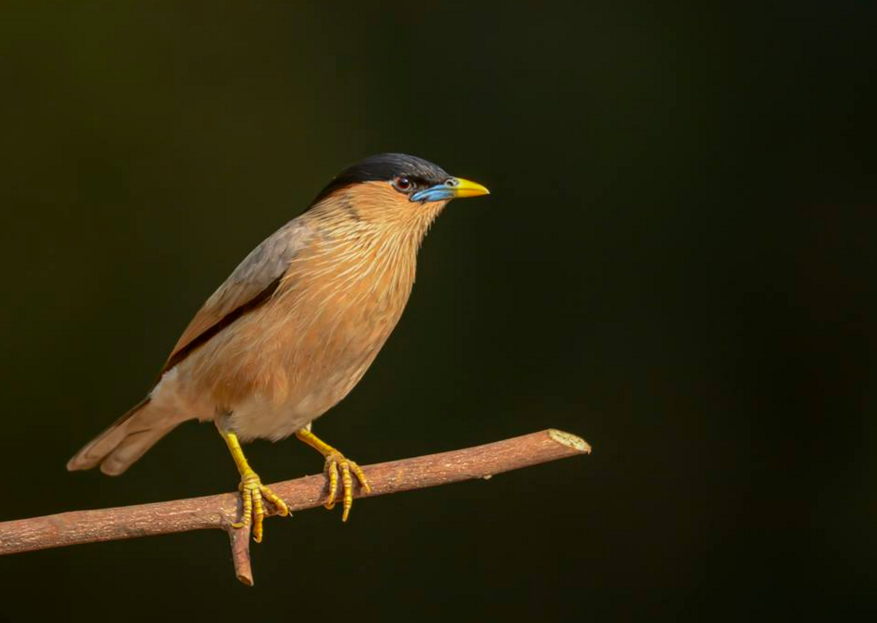
Masinagudi, Tamil Nadu

A few days ago I mentioned, in reference to my recent visit to Belize, an earlier visit to Tikal in Guatemala. In the photo above, taken in 1999, three future La Paz Group contributors (Seth Inman, me, and Milo Inman from left to right) were getting our “om” on in preparation to climb the stairs in the background.
Amie Inman, who took that photo, reminds me that she and I had been to Tikal earlier, without our two sons. On both occasions we had the kind of mystical experiences for which this location is known. We had climbed the temple in advance of sunrise, as recommended (no photos from that with us currently, so credit for the photo below goes to a fellow wordpress blogger; click the photo for attribution).

What we all remember about our visits to Tikal, and on a separate journey to Copan in Honduras we had the same sense, was how the archeologists and the relevant authorities in these particular national parks had done just the right amount of excavation. Some things were left to the imagination. Seth and Milo, in a conversation we overheard, said that Tikal was much better than Disney World, because it was real – it was like being Indian Jones. Our understanding of “real” was “unspoiled” in the sense that one could see plenty of uncovered evidence of Mayan culture, and also see that these artifacts of that culture eventually were swallowed by the jungle. Continue reading

The artist Terence Koh recently installed a single-occupancy “bee chapel” upstate, left; at right, the chapel has been reconstructed in a modified form at Andrew Edlin Gallery on the Bowery.Credit From left: Stewart Shining; Olya Vysotskaya
The New York Times has a story currently that would interest anyone aware of the crisis related to bees and other pollinators; it helps if you also see art as a worthy tool of engagement for addressing complex major challenges facing the planet, and humanity; have a read either way:
An Art World Provocateur Returns to New York With an Unexpected Subject: Bees
By
“Good afternoon,” the elusive artist Terence Koh said over the phone earlier this week. He’d called to discuss his new show, which opened at Andrew Edlin Gallery over the weekend. “I’m inside the bee chapel. I’m lying down and looking straight up at the ceiling. They’re really busy today because it’s sunny.”
The Beijing-born, Canadian-raised enfant terrible was once the poster boy of aughts excess — a decade ago, he gold-plated his own feces and sold them at Art Basel for about a half-million dollars; he also once, rather infamously, told T, “I am the Naomi Campbell of the art world.” But the past few years have brought a different turn: He discontinued his gallery representations and, in 2014, moved to a mountaintop in the Catskills. The relocation was widely construed as a ceremonial retirement of sorts, but Koh insists the opposite: “I never had any intention of quitting the art world, I just moved to a different part of the world,” he says. “It was something that happened naturally.” He has since lived peacefully in what he describes as a personal Eden dusted with goldenrod and apple trees. In the branches of one, he built a hut and called it a “bee chapel,” which would become the titular heart of his new exhibition. Continue reading
We’ve reviewed ecosystem services several times over the years, including payment for them, the potential for ecotourism as a service, and we’re glad to read that the idea is becoming popular again with the new Paris Agreement. Kelly Barnett reports for GreenBiz, starting with coverage on the Adaptation Futures conference in Rotterdam:
In just three days here, roughly 40 presentations focused on the subject of “ecosystems and ecosystem based-adaptation,” and they focused on everything from the restoration of salt marshes that protect coastal communities from rising tides to the protection of Brazil’s Atlantic Forest, which supports a massive agricultural economy.
The event comes just two weeks after Earth Day, when 175 countries signed the Paris Agreement to combat climate change — in part by “ensuring the integrity of all ecosystems, including oceans, and the protection of biodiversity, recognized by some cultures as Mother Earth.”

Tiruchirappalli, Tamil Nadu

Bleached coral in the Great Barrier Reef. Credit Agence France-Presse/XL Catlin Seaview Survey
Today’s editorial, from his current perch in Australia, is typical of the most reasoned editorialist currently writing for an English language major daily that we know of; so, worth a read:
Coral vs. Coal
Roger Cohen
MELBOURNE, Australia — Tim Flannery, a scientist and environmentalist who was named Australian of the Year in 2007, lost his job in 2013. The right-wing government of then-Prime Minister Tony Abbott shut down the Climate Commission that Flannery headed in a peremptory move designed to demonstrate its contempt for climate change. The commission had been established two years earlier to provide “authoritative information” to the Australian public. Continue reading
Some of us contributors to the blog are Kindle users. We all have friends that are obstinate book-handlers and would never give up the feeling of rustling pages or the musty smell of yellowing paper, and we understand the appeal, but sometimes the convenience of having several books packed into one slim package is too much to give up. But one thing we’ve taken for granted is the relatively new technology of e-ink. How does it work? When was it invented? Chau Tu reports for Science Friday in an article from a few weeks ago:
When Amazon introduced its first Kindle back in 2007, it raved about the e-reader’s “crisp, high-resolution electronic paper display that looks and reads like real paper, even in bright sunlight.” The tablet did not use the LCD screens that most consumers saw on their laptops or TVs. “It reflects light like ordinary paper and uses no backlight, eliminating the eyestrain and glare associated with other electronic displays such as computer monitors or PDA screens,” Amazon boasted.
Over the years we have referenced Ecovative Designs before, as a mycological solution for styrofoam and way to reduce reliance on petrochemicals. Recently we learned about a new method of replacing plastics that doesn’t involve fungus–at least not directly. Using the byproducts of beer-making (which technically includes yeast, a fungus), the Saltwater Brewery partnered with WeBelievers to create edible six-pack rings for beer cans, as you can see in the video below:
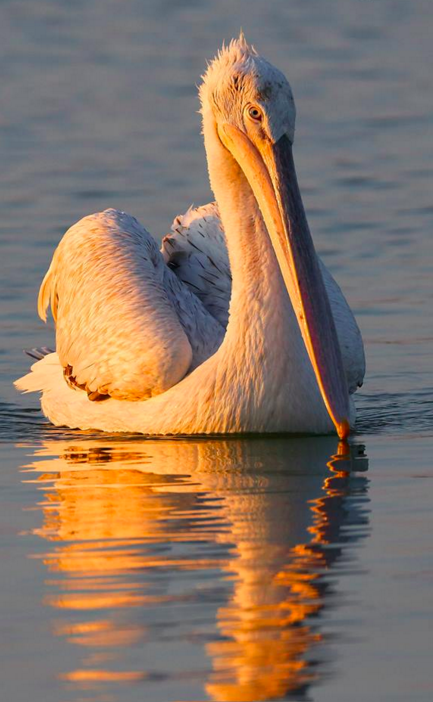
Charakla Salt Pans, Gujarat
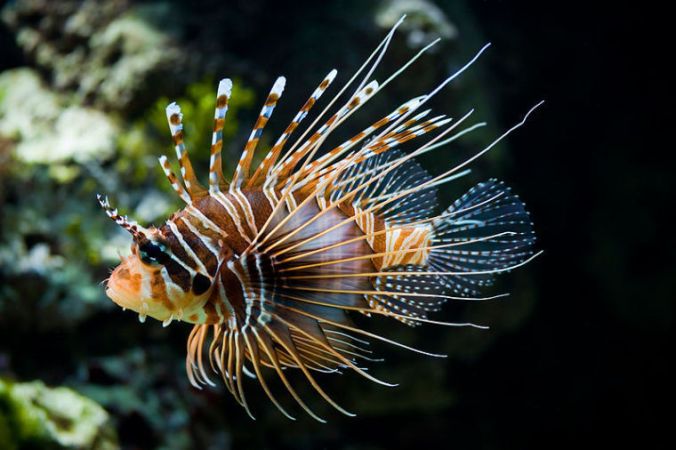
Florida Stores First Region to Offer New “Spearited” Catch of the Day
We are not purposely low tech, but we do not use tracking devices for news topics we care about (this topic we have tended to leave to Phil Karp, a contributor who first brought it to our attention a few years ago, and is highly attuned to the news and trends related to lionfish entrepreneurial conservation). We just watch the news sources we are inclined to trust, and try to get exposed to new news sources as frequently as possible. Those of us tracking news from India sometimes are late picking up important stories, like this one that has already been out for more than a day as it comes to our attention.
No matter. We like it, and for the record we want to share good news when we encounter it. This comes from ABC television affiliate WWSB in Florida, USA. We consider it a public service announcement, and so quote in full here, but still please click to the source of the story so they get credit:
A hub for certified sustainable seafood, Whole Foods Market® is excited to offer shoppers a fresh and delicious new seafood option – lionfish. The fish is a nonnative, invasive species that has a potential negative impact on indigenous species and habitat. By reducing the number of lionfish in the wild, Whole Foods Market® will help to improve the serious environmental threat they cause. Continue reading

Image © prweb.com
The Guardian just keeps the good environmental news coming. Any initiative to reduce carbon emissions is helpful, and to have big companies with clout promote such a goal is admirable and a good sign of cooperation to come. Arthur Nelsen reports:
An alliance of companies including Ikea, Nestle and Heathrow airport have called on the EU to pass new laws cutting truck emissions within two years, to meet promises made at the Paris climate conference.
Heavy duty vehicles make up less than 5% of Europe’s road traffic but chug out a quarter of the sector’s carbon emissions – more than airplanes – and their fuel efficiency has hardly changed in two decades.

Tacacori, Costa Rica
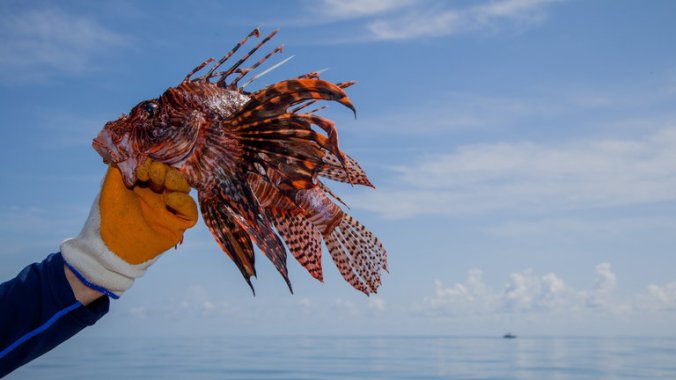
Capturing lionfish is typically done by divers with spears. Credit Angel Valentin for The New York Times
We never tire of hearing about new initiatives to eradicate this introduced species, and like the way the folks in Florida are thinking outside the box:
Florida Needs a Lionfish King or Queen. It Could Be You.
By
Ladies and gentlemen, behold an opportunity to become maritime royalty. The Florida Fish and Wildlife Conservation Commission is hosting the Lionfish Challenge, a statewide hunting competition intended to encourage divers to capture, kill and eat the beguiling beauties, which have been invading western Atlantic waters and gobbling up native species for at least two decades. The title of Lionfish King or Queen goes to whoever captures the most lionfish by Sept. Continue reading

I had the opportunity to visit a site in Belize that had been on my radar for most of the last two decades. On my radar, but chance had conspired to keep me away, until last week. I will write more about that visit soon, but for now I want to share a thought on the photo above, and the one below (since I neglected to snap photos while standing in exactly the same location as the photographer who took these two, my thanks to him for his website’s provision of these two images).

These are commonly referred to as looter’s trenches, on opposite sides of a Mayan burial site. They are relatively fresh. The family that owns the property on which these trenches were dug, by tomb raiders looking for valuables, decided that the best way to protect the patrimony of this site was to ensure that there were always people nearby to keep looters away. A lodge was built, and it became a pioneering success story in protecting both archeological and natural patrimony. In other words, what we call entrepreneurial conservation. Continue reading

Tar sandstone from the Monterey Formation of Miocene age; southern California, USA. Photo © Wikimedia contributor James St. John
Obviously we never thought that extracting oil from tar sands was ecologically friendly, but a new study published in Nature has found that, in Canada (but presumably everywhere else too), the process releases much more fine particle air pollution than previously believed. Bobby Magill reports for Scientific American:
In one of the first studies of its kind, scientists have found that tar sands production in Canada is one of North America’s largest sources of secondary organic aerosols—air pollutants that affect the climate, cloud formation and public health.
The study, published Wednesday in the journal Nature, showed that the production of tar sands and other heavy oil—thick, highly viscous crude oil that is difficult to produce—are a major source of aerosols, a component of fine particle air pollution, which can affect regional weather patterns and increase the risk of lung and heart disease.
 Organikos