Creative Conservation

White rhinos in South Africa. Photo © Michael Jansen / Flickr via Cool Green Science

From our counterparts at TNC’s blog Cool Green Science comes a second post on the wacky strategies sometimes implemented to save endangered wildlife species. Poisoning rhino horns so people can’t use them for so-called medicine, treating bats for fungus with banana bacteria, killing invasive snakes with acetominophen-filled dead mice thrown from helicopters, the list goes on. Justine Hausheer writes:

Consumers of illegal rhino horn products might be in for a bit of a nasty gastrointestinal shock. In an effort to protect their population of rhinos from poachers, the South Africa’s Sabi Sand Game Reserve is injecting parasiticides and pink dye into their rhinos’ horns. The chemical cocktail isn’t lethal (to humans or the rhinos) but it will send anyone that ingests powdered horn racing for the nearest restroom. Reserve staff have already treated more than 100 rhinos and put up sign warning poachers of the treatment.

Continue reading

Drones Shed Light on New Perspective

Aerial night photograph by Reuben Wu, via ThisIsColossal

Photographer Reuben Wu has been practicing a new form of his trade using drones–which many people are, nowadays, but none that we know of so far have used this recent technology to create dramatic scenes at night with lighting from above. On his website, Wu writes of this project, titled Lux Noxtis, that it is:

a series of photographs depicting landscapes of North America within the framework of traditional landscape photography but influenced by ideas of planetary exploration,19th century sublime romantic painting, and science fiction.

We are overwhelmed everyday by beautiful images of the familiar. I imagine these scenes transformed into undiscovered landscapes which renew our perceptions of our world.

Continue reading

All the Ducks in a Row…

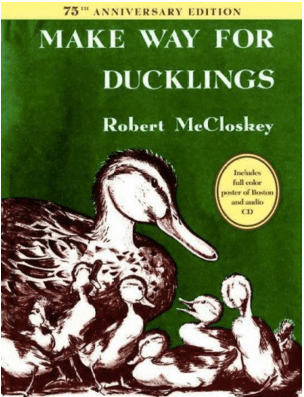
Of the many volumes in our family bookcase, Robert McCloskey’s Make Way for Ducklings and Blueberries for Sal always held pride of place. The stories, the charm and personality of the illustrations, made them family favorites to be read over and over at story time.

It’s not surprising to read that the artist took his work so seriously as to fill his Greenwich Village apartment with a clutch of ducklings for inspiration.  Continue reading

Better For The Bees

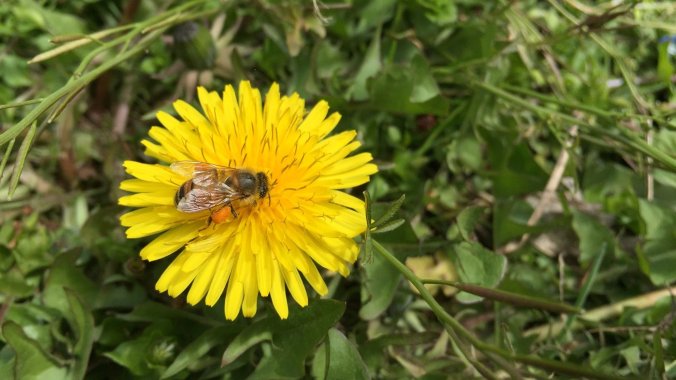
bee_wide-620b0e28784802026939d4d72fe1ae54cfa80f7d-s1400-c85

A bee gathers pollen from a park in Kensington, Md. With bee health in mind, home and garden products giant Ortho has announced it will phase out neonics, a class of pesticides, from its outdoor products. Allison Aubrey/NPR

We never expected to be publicly thanking a company like this one for an action it has committed itself to, but credit where it is due:

Home And Garden Giant Ditches Class Of Pesticides That May Harm Bees

A leading brand of home and garden pest-control products says it will stop using a class of pesticides linked to the decline of bees.

Ortho, part of the Miracle-Gro family, says the decision to drop the use of the chemicals — called neonicotinoids, or neonics for short — comes after considering the range of possible threats to bees and other pollinators. Continue reading

Food Supply Change

5184

Accor plans to plant 1,000 vegetable gardens at its hotels by 2020. Photograph: Alamy

Only by scaling up the farm-to-table concept will we see a change to the industrial food production processes that lead to waste and related problems. We cheer our colleagues at Accor for this initiative:

Major hotel chain to grow vegetables at 1000 properties to cut food waste

Accorhotels, which includes Sofitel, Novotel, Mercure and Ibis, will reduce number of main courses on offer and record all food thrown away

One of the world’s biggest hotel chains has announced it will plant vegetable gardens at many of its hotels as part of a plan to cut food waste by a third. Continue reading

Processed Views

Although a previous post that embraced the sculptural qualities of food had a far more lighthearted intent, the juxtaposition of Carleton Watkins’ classic photographs and Barbara Ciurej and Lindsay Lochman’s irreverent dioramas has to be viewed with a certain level of irony. The iconic photos of America’s great national parks brought a sense of the country’s vastness home.

The pioneering nineteenth-century landscape photographer Carleton Watkins visited Yosemite during a time of rapid industrialization in the American West, but you’d never know it from the majestic tranquility of the rivers, mountains, forests, and rock faces he depicted. In her book “River of Shadows,” Rebecca Solnit, chronicling the life of another influential photographer of the time, Eadweard Muybridge, whose studies of high-speed movement helped to pioneer motion-picture technology, wrote that Watkins’s landscapes “looked like the true world everyone sought but no one else could locate among the mining booms, railroad building, land grabs, mobs, and murders” of the period. And yet Watkins’s images—which provided many people back East their first views of Yosemite’s idyllic splendor—were, in some sense, an advertisement for the possibilities of the West, and the vast untapped resources that American corporations of the eighteen-sixties and seventies were rushing to exploit. Continue reading

The Endangered Yellow-eyed Penguin

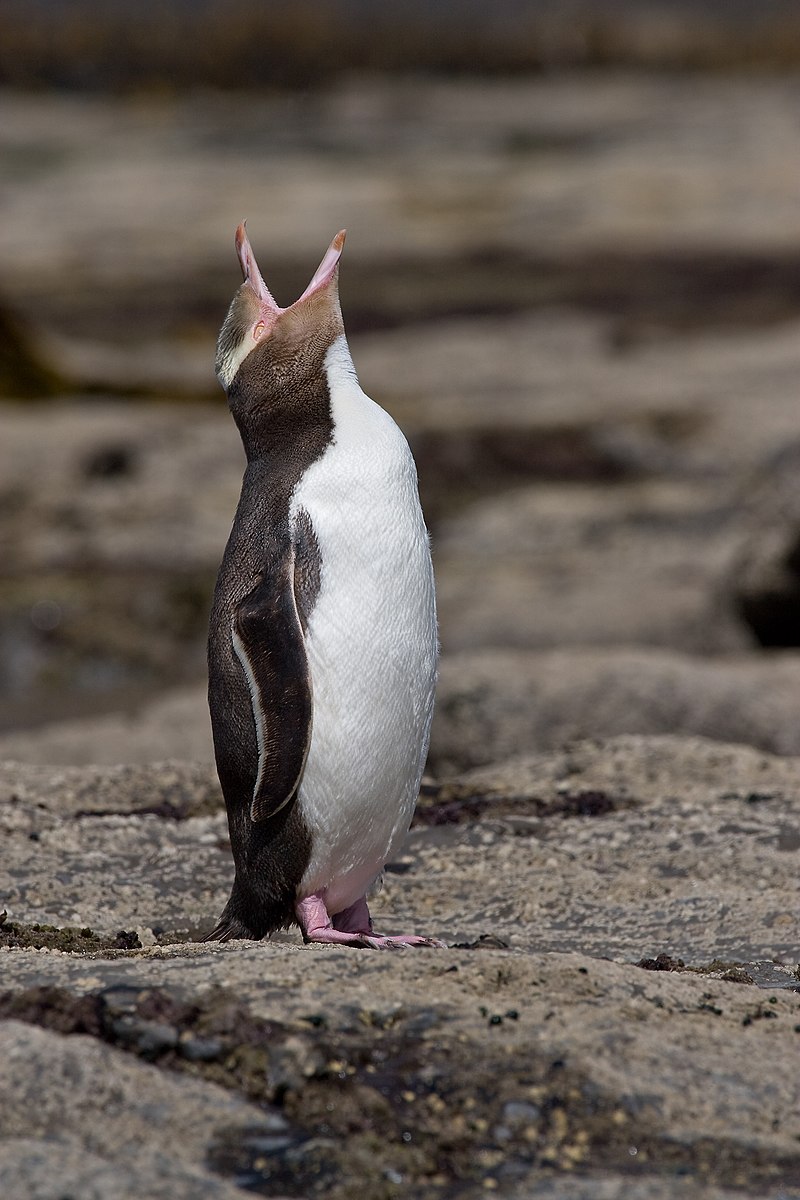
A Yellow-eyed Penguin (Megadyptes antipodes) in the Curio Bay, New Zealand. Photo by Christian Mehlführer via WikiMedia Commons.

We all like penguins, probably since they’re such unique birds with an aptitude for cuteness. We’ve written about their protection before, even in the same country this post is concerned with, New Zealand. A species that numbers only in the few thousands, the Yellow-eyed Penguin, is clearly at risk of extinction due to habitat and food source loss. Marcel Haenen reports for the New York Times:

DUNEDIN, New Zealand — Only a keen-eyed observer can spot the rare yellow-eyed penguin in the impenetrable forest hills that hug New Zealand’s South Island beaches.

Native to this region, the birds mostly lurk under a canopy of thick shrubs, trees and branches, dashing for hiding places as soon as a human approaches.

Incredibly shy, the yellow-eyed penguin is truly odd. Measuring about 65 centimeters, or just over two feet tall, with striking yellow eyes and a yellow band across its head, it is the rarest species of penguin, nesting in the forest and returning to it. It is also severely endangered.

Continue reading

WWF Reports Half of World Heritage Sites Put at Risk by Development

Ambatotsondrona cliffs, in the Marojejy National Park of Madagascar. This park is one of several included in the UNESCO World Heritage Site named Rainforests of the Atsinanana, which has been declared In Danger. Photo by Jeff Gibbs via WikiMedia Commons

We deeply care about UNESCO World Heritage Sites anywhere on the globe, and believe they can be a great conservation tool, so reading that the World Wildlife Fund thinks almost three times more of the Sites are threatened than UNESCO lists as “In Danger” is worrisome, to say the least. Fiona Harvey reports for the Guardian:

Close to half of the sites around the world designated for special protection as areas of outstanding importance for nature are now being threatened by industrial development, a new survey has shown.

The sites, which include Australia’s Great Barrier Reef, the Grand Canyon in the US, and China’s giant panda sanctuaries in Szechuan, are all supposed to be protected under the United Nations’ designated world heritage status. But encroachments from industries, including fossil fuel exploration and illegal logging, are threatening to destroy the valuable habitats, the conservation charity WWF said on Wednesday.

Continue reading

Support Conservation In India!

12xp-tigers-master675

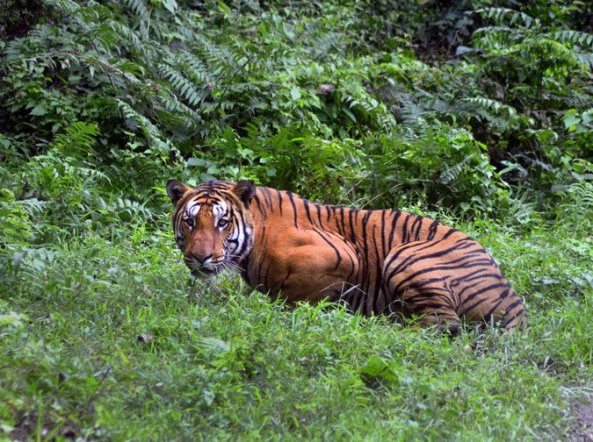
A Royal Bengal Tiger at Kaziranga National Park in India in 2014. CreditAgence France-Presse — Getty Images

Some moderately good news from the home front here in India gets us back in the mood to shout out in the interest of conservation-focused tourism:

Number of Tigers in the Wild Is Rising, Wildlife Groups Say

There are now an estimated 3,890 wild tigers, mostly in Asia, up from a worldwide tiger population of 3,200 estimated in 2010, the World Wildlife Fund and Global Tiger Forum announced on Monday. Wild tigers are considered endangered and had seen shrinking numbers because of hunting, poaching and loss of habitat, such as deforestation, particularly in Sumatra, for palm oil, and paper and pulp industries, the groups said. The official count had declined every year since 1900, when tigers numbered an estimated 100,000. Continue reading

The Little Things In Life Provide New Perspective

wealthofunsu

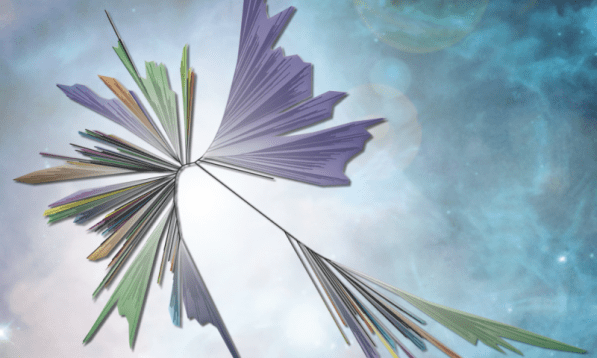
This is a new and expanded view of the tree of life, with clusters of bacteria (left), uncultivable bacteria called ‘candidate phyla radiation’ (center, purple) and, at lower right, the Archaea and eukaryotes (green), including humans. Credit: Zosia Rostomian, Lawrence Berkeley National Laboratory

It has been years since we sourced our last story link from this source, but we chose the perfect day to go back snooping. Those of us who learned our trade in Costa Rica have long believed that there is a lot to be said for charismatica microfauna, and this news gets us thinking back on that topic with new perspective:

Wealth of unsuspected new microbes expands tree of life

The tree of life, which depicts how life has evolved and diversified on the planet, is getting a lot more complicated.

Researchers at the University of California, Berkeley, who have discovered more than 1,000 new types of and Archaea over the past 15 years lurking in Earth’s nooks and crannies, have dramatically rejiggered the tree to account for these microscopic new forms.

“The tree of life is one of the most important organizing principles in biology,” said Jill Banfield, a UC Berkeley professor of earth and planetary science and environmental science, policy and management. “The new depiction will be of use not only to biologists who study microbial ecology, but also biochemists searching for novel genes and researchers studying evolution and earth history.”

Continue reading

Message In A Bottle, Future Perfect

Print

Researchers are hoping to “assist” evolution in order to produce hardier corals and tougher trees. ILLUSTRATION BY HARRY CAMPBELL

We are just browsing through the new edition of one of our favorite weekly sources of material–favored for its variety of topics, and its long form approach–and this Kolbert report hits the right spot for starting a new week with vim and vigor and creative spark:

Unnatural Selection

What will it take to save the world’s reefs and forests?

Ruth Gates fell in love with the ocean while watching TV. When she was in elementary school, she would sit in front of “The Undersea World of Jacques Cousteau,” mesmerized. The colors, the shapes, the diversity of survival strategies—life beneath the surface of the water seemed to her more spectacular than life above it. Without knowing much beyond what she’d learned from the series, she decided that she would become a marine biologist.

“Even though Cousteau was coming through the television, he unveiled the oceans in a way that nobody else had been able to,” she told me. Continue reading

Journeys That Set Our Lives In Motion

9780544706262_custom-197e5387589323c99cfd561caf58b83ba52e68bb-s500-c85

You do not need to be an admirer of the works of this author to appreciate the value of the story told in this book review (thanks to National Public Radio, USA):

In 1913, the 21-year-old Ronald Tolkien should have been studying for his exams. He was halfway through his Classics degree — the subject all the best students did at Oxford in those days. Getting admitted to Oxford on a scholarship was a great opportunity for young Ronald, an orphan who had always struggled to stay out of poverty. A Classics degree would have set him up for almost any career he chose. But he wasn’t studying. Instead, he was trying to teach himself Finnish.

Why would a brilliant student with so much at stake let himself go astray at such a crucial time? There were two reasons: love and the Kalevala.

Tolkien’s twin obsessions at the time were his future wife, Edith Bratt, and the Kalevala, the national epic of Finland. This collection of poems, myths, spells and hero-tales had been collected and published in the early 19th century, but the poems themselves are thought to be far older. Its unique voice, resembling no other European mythology, thoroughly captured the mind and heart of young Tolkien. “The almost indefinable sense of newness and strangeness … will either perturb you or delight you,” he wrote at the time. Continue reading

Food For Thought

PollanLecture_audienceByTonyRinaldosm

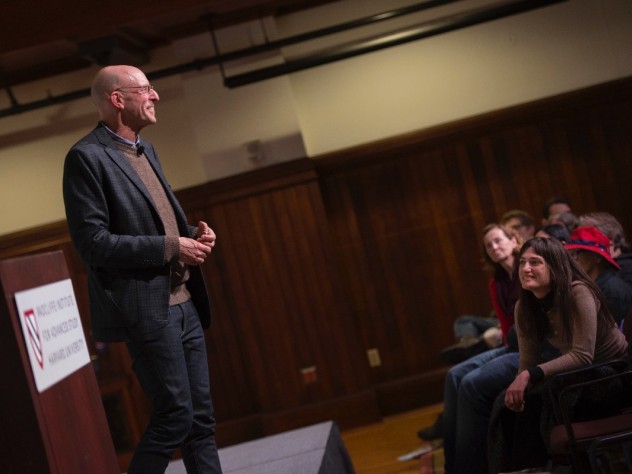
Author Michael Pollan speaks to a packed house at Radcliffe. Photograph by Tony Rinaldo

And to round out our links outward today on food-related themes, this one from Harvard Magazine seems a fitting complement to today’s two other news-feature items:

Michael Pollan’s Crooked Writing Path

WHETHER HE IS WRITING a book on big farming and the way Americans think about food, or interviewing terminal cancer patients who have had life-altering experiences through hallucinogenic drugs, author Michael Pollan’s career as a writer has been anything but traditional. Continue reading

Get Ready For New Foods

4167

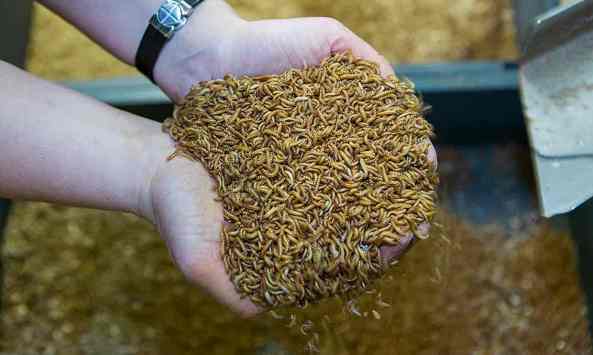
Edible insects are currently expensive, but bug farmers believe economies of scale will bring lower prices. Photograph: Proti-Farm

We cannot help but wonder which type of salt may be considered most appropriate for the new menu items coming soon to a table near you; but seriously, get ready:

The worm has turned: how British insect farms could spawn a food revolution

With meat prices expected to soar, agricultural entrepreneurs believe invertebrate livestock can provide the protein we need. But will the mainstream ever be ready to eat mealworms?

It could be the tumbledown, moss-covered drystone walls marking the boundaries of land that has been farmed since the arrival of the Norse settlers. Or the gentle meanderings of the river Eden through the shadows of the Cumbrian fells. Or the proximity of the Settle-Carlisle railway line. All in all, Thringill Farm seems an unlikely setting for a 21st-century food revolution. Continue reading

Know Your Salt

salts_750

What once was a simple decision between iodized table salt or sea salt has become a sensory overload. Walk into Whole Foods to restock on salt and you’ll be confronted with a dazzling array of colors, textures and price points.

Thanks to EcoWatch for this primer on the various salt choices we face:

Salts have exploded with popularity. What once was a simple decision between iodized table salt or sea salt has become a sensory overload. Walk into Whole Foods to restock on salt and you’ll be confronted with a dazzling array of colors, textures and price points. But, what really differentiates specialty salts? Are expensive salts actually worth the money?

Here is a guide to nine different culinary salts that will help you decide what salt is best for your needs.

1. Table

Table salt is created by superheating natural salt to 1,200 degrees Fahrenheit, which destroys most beneficial compounds. Fortified with essential iodine, table salt is also bleached and devoid of trace elements, so it’s certainly not the healthiest salt you can shake. This type of salt can often contains additives to slow moisture absorption so it is easy to sprinkle in your salt shaker. Continue reading