The Minecraft Generation

Screenshot of the first hour of survival mode in Minecraft

In this past week’s edition, the New York Times Magazine published a very interesting story by Clive Thompson about the popular video game Minecraft, which he argues is becoming an educational tool in a way, particularly in the arena of coding and problem-solving. I’ve played the game myself for a number of hours (probably somewhere between 50-150, which among the “Minecraft generation” would be considered pennies). I can affirm that this Swedish blockbuster–the game is built on cubes of different materials that you can break down and build up–is addictive, a creative outlet, and a fun way to spend time with friends.

As Thompson states, the STEM educational movement, where science, technology, engineering, and math are especially encouraged in the US system to increase competitiveness in students, can benefit from some of the habits and skills that Minecraft helps develop for those interested enough. The article is worth reading if you have kids who might play, enjoy playing yourself, or are interested in checking the game out:

Jordan wanted to build an unpredictable trap.

An 11-year-old in dark horn-­rimmed glasses, Jordan is a devotee of Minecraft, the computer game in which you make things out of virtual blocks, from dizzying towers to entire cities.
Continue reading

National Park Week

On August 25th this year, the United States National Park Service will turn 100 years old, and this week, from April 16th to the 24th, it’s National Park Week, when the US celebrates its natural and cultural heritage with special events and free admission to any national park.

Continue reading

The Sound of Silence

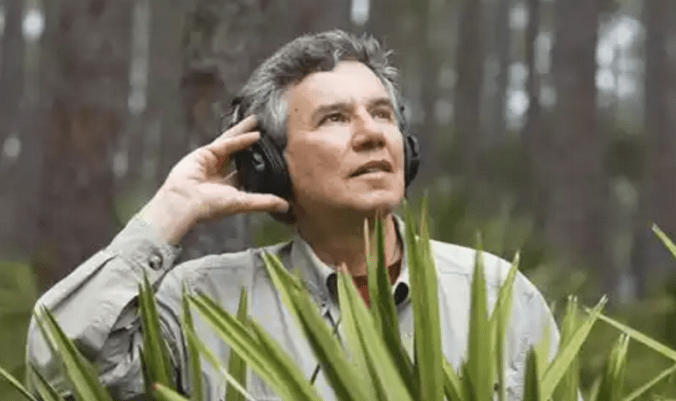
Musician and naturalist Bernie Krause has spent 40 years recording over 15,000 species in many of the world's pristine habitats. Photograph: Courtesy of Hachette Book Group

Musician and naturalist Bernie Krause has spent 40 years recording over 15,000 species in many of the world’s pristine habitats. Photograph: Courtesy of Hachette Book Group

For many of us, part of the joy of a walk in the woods is the range of senses engaged. The wind rustling through the trees is enhanced by the diversity of the creatures that call that ecosystem home. But with habitat loss due to either changing climate or other human impact. many of the sounds heard for millennia are falling silent.

Bernie Krause has spent his life archiving these sounds. They’re worth more than just a listen. They’re a call to action.

When musician and naturalist Bernie Krause drops his microphones into the pristine coral reef waters of Fiji, he picks up a raucous mix of sighs, beats, glissandos, cries, groans, tones, grunts, beats and clicks.

The water pulsates with the sound of creatures vying for acoustic bandwidth. He hears crustaceans, parrot fish, anemones, wrasses, sharks, shrimps, puffers and surgeonfish. Some gnash their teeth, others use their bladders or tails to make sound. Sea anemones grunt and belch. Every creature on the reef makes its own sound.

But half a mile away, where the same reef is badly damaged, he can only pick up the sound of waves and a few snapping shrimp. It is, he says, the desolate sound of extinction. Continue reading

Respecting, And Loving, Wild Places

Screen Shot 2016-04-16 at 6.26.00 AM

Click above to watch the video an click here for the written story:

The wild, romantic side of Britain

The Lake District is now considered a beautiful part of the country – but it was once an unloved wilderness. Alastair Sooke describes the moment this changed. Continue reading

Another Addition to the Annals of Dung

We’ve written about dung before, when it came to beetles rolling it for the poop’s role (ha) in their life cycle, and when it’s been used for recycled paper, and even household cooking gas derived from biodigested manure. Now, we’re learning via Audubon Magazine about another use for the dried doo, and we figured that would be a good time to share about another interesting excremental story from the natural world, which happens to be the fastest moving organism, in a sense.

Both the Black Lark, a bird species found in Europe and western Asia, and the genus of fungi called Pilobolus, more widely distributed around the world, have to deal with something called the Zone of Repugnance when it comes to dung. Although the ornithologists in the Audubon article aren’t quoted using this phrase, it is accepted in mycologist parlance for those who study livestock excrement or something related to it: animals will avoid eating grass or greens in an area where fecal matter is present. Around every pile of poop is a perimeter that the grazers try to not chew on. Black Larks take advantage of that fact to build their nests in no-step zones, and Pilobolus need to shoot their spores behind enemy lines. Matt Soniak, for Audubon:

Continue reading

Reusing Plastic Bottles in a New Way

Plastic bottle cutter by Pavel & Ian, via Kickstarter

We’d never thought of bottles being used in this fashion, but from the video on this Kickstarter project by two French guys, it looks like a pretty cool idea: turn bottles into plastic rope! Any way to reuse or recycle is a great thing in our book. From Pavel & Ian:

The absolutely astonishing amount of plastic bottles that everyone uses and throws into the garbage can every day is truly impressive. This represents an economic waste, since the plastic of bottles is a commodity that is worth money and can be reused. Also, from an ecological perspective, this poses several problems. Even when sent for recycling, the volume of plastic bottles makes it challenging to transport and accommodate them efficiently.

Continue reading

Mysterious Sea-Floor Activity

Screen Shot 2016-04-15 at 11.37.52 AM

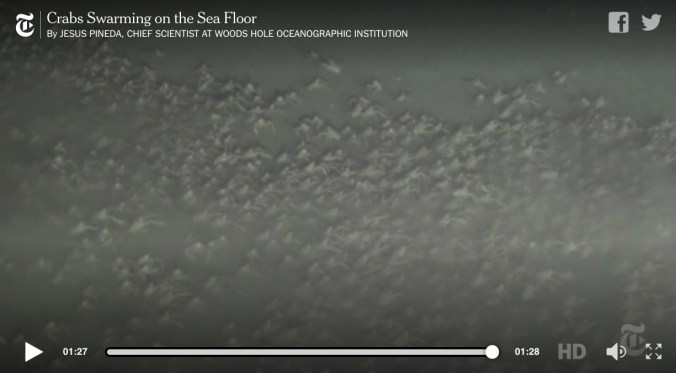
Thousands of red crabs swarmed the ocean floor off the coast of Panama. By JESUS PINEDA, CHIEF SCIENTIST AT WOODS HOLE OCEANOGRAPHIC INSTITUTION on Publish Date April 14, 2016. Photo by Jesus G. Pineda/Woods Hole Oceanographic Institution.

Watch the video above as an introduction to a fascinating story from the Science section of the New York Times:

Uncovering a Deep-Sea Swarm of Zombie Crabs

The team stumbled upon the horror movie moment last April while exploring the aptly named Hannibal Bank Seamount, an underwater mountain home to a plethora of sea life. Continue reading

Orchids in the Citizen Science Arena

Burnt orchid (Neotinea ustulata) at Mount Caburn. Photo © Keith Wilson / Flickr through a Creative Commons license, via Cool Green Science for TNC

We’re always learning about new groups of organisms or cultural/scientific projects that are receiving more attention from groups welcoming citizen-provided data to promote increased study and focused conservation efforts: lichens, birdstrees, reptiles and amphibians, pollinators, birds, fish, and a number of Internet-based projects on stars and literature, including birds. In the United Kingdom (why not Costa Rica?), there’s a movement to document the strange flowers that make up the orchid family. Read our post about the same project last year, or check out what Lisa Feldkamp writes about Orchid Observer for the TNC citizen science blog this week:

Frail, exotic, delicate, alluring; orchids call to mind stories of romance, intrigue and obsession. Indeed from the time when “orchid fever” first swept Victorian England people have been driven to steal and even risk their lives in the quest for these gorgeous plants.

Orchids are also notoriously difficult to grow. Though modern technology and growing techniques have made it easier to have an orchid in your home, wild orchids are often adapted to specific climactic requirements and depend on symbiotic relationships to survive.

Continue reading

Creative Conservation

White rhinos in South Africa. Photo © Michael Jansen / Flickr via Cool Green Science

From our counterparts at TNC’s blog Cool Green Science comes a second post on the wacky strategies sometimes implemented to save endangered wildlife species. Poisoning rhino horns so people can’t use them for so-called medicine, treating bats for fungus with banana bacteria, killing invasive snakes with acetominophen-filled dead mice thrown from helicopters, the list goes on. Justine Hausheer writes:

Consumers of illegal rhino horn products might be in for a bit of a nasty gastrointestinal shock. In an effort to protect their population of rhinos from poachers, the South Africa’s Sabi Sand Game Reserve is injecting parasiticides and pink dye into their rhinos’ horns. The chemical cocktail isn’t lethal (to humans or the rhinos) but it will send anyone that ingests powdered horn racing for the nearest restroom. Reserve staff have already treated more than 100 rhinos and put up sign warning poachers of the treatment.

Continue reading

Drones Shed Light on New Perspective

Aerial night photograph by Reuben Wu, via ThisIsColossal

Photographer Reuben Wu has been practicing a new form of his trade using drones–which many people are, nowadays, but none that we know of so far have used this recent technology to create dramatic scenes at night with lighting from above. On his website, Wu writes of this project, titled Lux Noxtis, that it is:

a series of photographs depicting landscapes of North America within the framework of traditional landscape photography but influenced by ideas of planetary exploration,19th century sublime romantic painting, and science fiction.

We are overwhelmed everyday by beautiful images of the familiar. I imagine these scenes transformed into undiscovered landscapes which renew our perceptions of our world.

Continue reading

All the Ducks in a Row…

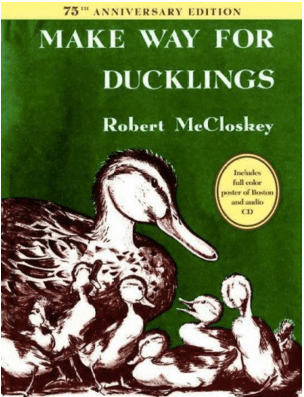
Of the many volumes in our family bookcase, Robert McCloskey’s Make Way for Ducklings and Blueberries for Sal always held pride of place. The stories, the charm and personality of the illustrations, made them family favorites to be read over and over at story time.

It’s not surprising to read that the artist took his work so seriously as to fill his Greenwich Village apartment with a clutch of ducklings for inspiration.  Continue reading

Better For The Bees

bee_wide-620b0e28784802026939d4d72fe1ae54cfa80f7d-s1400-c85

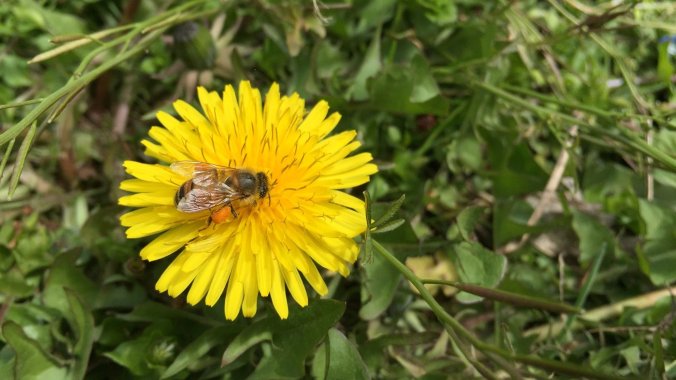
A bee gathers pollen from a park in Kensington, Md. With bee health in mind, home and garden products giant Ortho has announced it will phase out neonics, a class of pesticides, from its outdoor products. Allison Aubrey/NPR

We never expected to be publicly thanking a company like this one for an action it has committed itself to, but credit where it is due:

Home And Garden Giant Ditches Class Of Pesticides That May Harm Bees

A leading brand of home and garden pest-control products says it will stop using a class of pesticides linked to the decline of bees.

Ortho, part of the Miracle-Gro family, says the decision to drop the use of the chemicals — called neonicotinoids, or neonics for short — comes after considering the range of possible threats to bees and other pollinators. Continue reading

Food Supply Change

5184

Accor plans to plant 1,000 vegetable gardens at its hotels by 2020. Photograph: Alamy

Only by scaling up the farm-to-table concept will we see a change to the industrial food production processes that lead to waste and related problems. We cheer our colleagues at Accor for this initiative:

Major hotel chain to grow vegetables at 1000 properties to cut food waste

Accorhotels, which includes Sofitel, Novotel, Mercure and Ibis, will reduce number of main courses on offer and record all food thrown away

One of the world’s biggest hotel chains has announced it will plant vegetable gardens at many of its hotels as part of a plan to cut food waste by a third. Continue reading

Processed Views

Although a previous post that embraced the sculptural qualities of food had a far more lighthearted intent, the juxtaposition of Carleton Watkins’ classic photographs and Barbara Ciurej and Lindsay Lochman’s irreverent dioramas has to be viewed with a certain level of irony. The iconic photos of America’s great national parks brought a sense of the country’s vastness home.

The pioneering nineteenth-century landscape photographer Carleton Watkins visited Yosemite during a time of rapid industrialization in the American West, but you’d never know it from the majestic tranquility of the rivers, mountains, forests, and rock faces he depicted. In her book “River of Shadows,” Rebecca Solnit, chronicling the life of another influential photographer of the time, Eadweard Muybridge, whose studies of high-speed movement helped to pioneer motion-picture technology, wrote that Watkins’s landscapes “looked like the true world everyone sought but no one else could locate among the mining booms, railroad building, land grabs, mobs, and murders” of the period. And yet Watkins’s images—which provided many people back East their first views of Yosemite’s idyllic splendor—were, in some sense, an advertisement for the possibilities of the West, and the vast untapped resources that American corporations of the eighteen-sixties and seventies were rushing to exploit. Continue reading

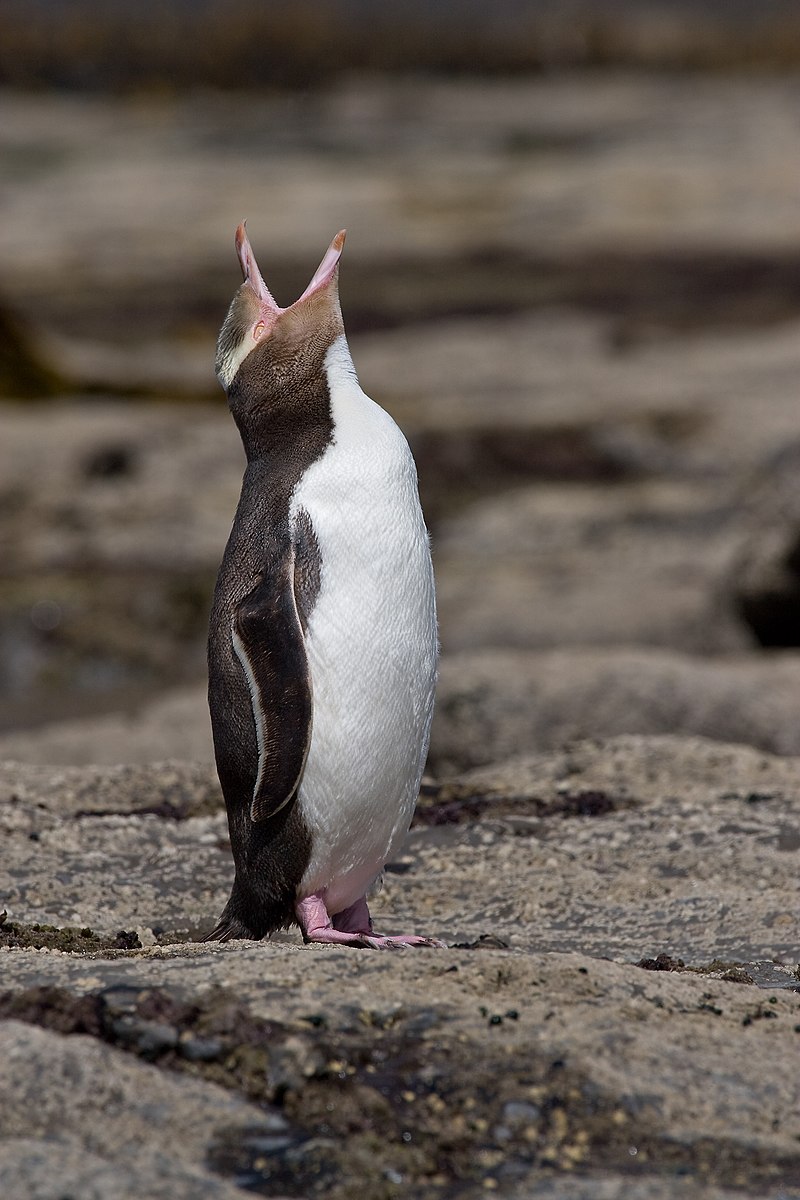
The Endangered Yellow-eyed Penguin

A Yellow-eyed Penguin (Megadyptes antipodes) in the Curio Bay, New Zealand. Photo by Christian Mehlführer via WikiMedia Commons.

We all like penguins, probably since they’re such unique birds with an aptitude for cuteness. We’ve written about their protection before, even in the same country this post is concerned with, New Zealand. A species that numbers only in the few thousands, the Yellow-eyed Penguin, is clearly at risk of extinction due to habitat and food source loss. Marcel Haenen reports for the New York Times:

DUNEDIN, New Zealand — Only a keen-eyed observer can spot the rare yellow-eyed penguin in the impenetrable forest hills that hug New Zealand’s South Island beaches.

Native to this region, the birds mostly lurk under a canopy of thick shrubs, trees and branches, dashing for hiding places as soon as a human approaches.

Incredibly shy, the yellow-eyed penguin is truly odd. Measuring about 65 centimeters, or just over two feet tall, with striking yellow eyes and a yellow band across its head, it is the rarest species of penguin, nesting in the forest and returning to it. It is also severely endangered.

Continue reading