The Guardian story below captures vividly the meaning of the law of unintended consequences that sometimes governs in cases of conservation:
The American bison once faced extinction – now they’re being culled. Native American photographer Joe Whittle attends a hunt held by tribal members
by Joe Whittle at Yellowstone National Park
Every winter the small town of Gardiner, Montana, welcomes Native American tribal members from around the Inland Northwest. Hospitality businesses are happy to see them arrive during the off-season, but they’re not the only ones – ranchers are thrilled.
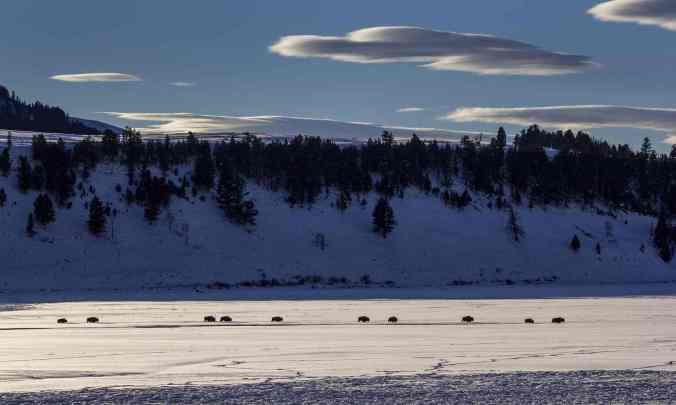
The tribal members are there to hunt American bison (or buffalo) that wander out of Yellowstone national park to find forage during winter. Bison are naturally migrating animals, and as the frozen snows of winter make finding sustenance difficult and competitive, herds start to head to lower elevations to seek sufficient feed.
The north entrance of Yellowstone is at the edge of Gardiner, and the wild roaming bison that leave the park often walk right into town or on to private property. That’s when the interests of the bison and private landowners begin to conflict. Continue reading