Inside the Eye

eyes_zpstq8hccww

Photo credit: David Liittschwager for National Geographic

Congratulations to science writer Ed Yong, who we know from his blogging in National Geographic‘s “Phenomena” Science Salon (which we’ve been sharing for a while now), for his first full feature story in the magazine he writes for on the web! It’s a fascinating piece on the eye, “nature’s most exquisite creation,” as his subtitle affirms. And indeed, we learned a lot about vision in the animal world thanks to Yong’s story:

Some see only in black and white; others perceive the full rainbow and beyond, to forms of light invisible to our eyes. Some can’t even gauge the direction of incoming light; others can spot running prey miles away. The smallest animal eyes, adorning the heads of fairy wasps, are barely bigger than an amoeba; the biggest are the size of dinner plates, and belong to gigantic squid species. The squid’s eye, like ours, works as a camera does, with a single lens focusing light onto a single retina, full of photoreceptors—cells that absorb photons and convert their energy into an electrical signal. By contrast, a fly’s compound eye divides incoming light among thousands of separate units, each with its own lens and photoreceptors. Human, fly, and squid eyes are mounted in pairs on their owners’ heads. But scallops have rows of eyes along their mantles, sea stars have eyes on the tips of their arms, and the purple sea urchin’s entire body acts as one big eye. There are eyes with bifocal lenses, eyes with mirrors, and eyes that look up, down, and sideways all at the same time.

Continue reading

On Food Waste

800px-caqui_chocolate_em_fundo_preto_03

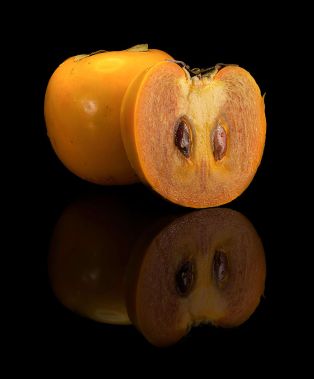
Oriental Persimmon by Rodrigo Argenton. Licensed under CC BY-SA 4.0 via Wikimedia Commons.

We’ve featured food waste here many times before, since it’s such a global and upsetting problem–an issue that one could call a “wicked problem” for its difficulty in solving, its myriad causes, and its changing nature. Several of our shared stories in just the last year, however, have offered some hope: a food truck chef in Denmark showed that expired or just-expiring products can still be consumed;  another foodtrucker in the US helped develop a software to create a more sustainable kitchen by modeling what products are being over- or under-ordered; and two startups worked on different ways of drying food that would otherwise spoil, one because the fruit would go bad but could be dried and powdered, and the other because developing countries don’t always have appropriate storage or energy to refrigerate food, so they came up with a solar food-drier.

The common theme in these posts is the reiterated phrase: approximately one-third of all food produced around the world is wasted, representing about $1 trillion in losses every year. This week, two of our favorite magazines, Conservation (by University of Washington) and GreenBiz repeated these statistics and shared pieces of their own.

Continue reading

Sorry, Bolivia!

bolivia

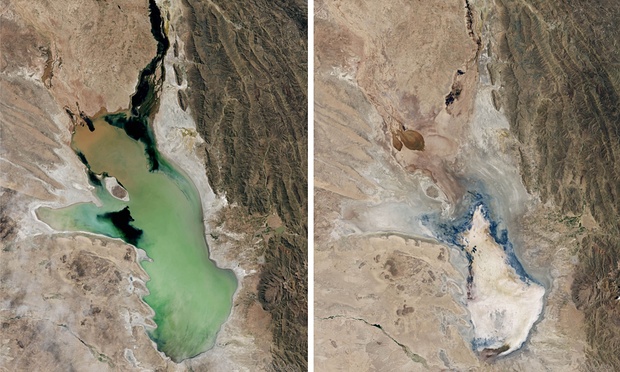
NASA satellite images show Bolivia’s Lake Poopo filled with water in April 2013 (left), and almost dry in January 2016. PHOTO: NASA/AP

Drying rivers, lakes, and reservoirs. Fancy a list? Here and here, you go. The world’s waters are rapidly running dry, threatening wild habitats and human civilization, exacerbating climate change. In turn, livelihoods, ecosystems, energy generation are all affected. Like in Bolivia, which just lost its second largest lake.

Continue reading

An American Soldier, World War, and India

photo

28 years ago, a Chicago-based couple found a shoebox of photographs of the Indian countryside and they traveled halfway across the world to find their origin. PHOTO: Scroll

Here’s the plot: In 1988, a couple visited an estate sale of a deceased friend and stumbled upon a shoebox of old photographs tucked under a couch. It contained more than a hundred envelopes filled with negatives and contact sheets for photographs depicting India in 1945. The identity of the photographer: unknown.

But only until they set out to discover the man behind the lens. The answer (and the photographs) hang at Delhi’s Indira Gandhi National Centre for the Arts till January 31.

Continue reading

Love For, Of the Planet

claude-and-norma

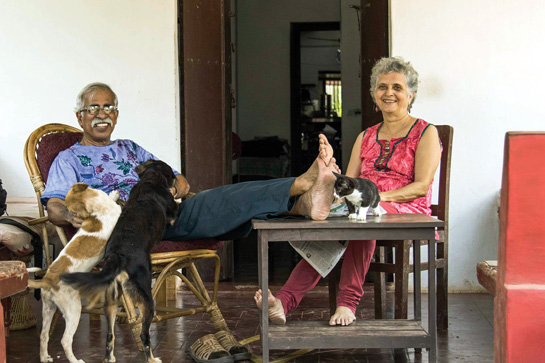
Claude and Norma Alvares are the pillars of conservation in India’s extreme tourist city of Goa. PHOTO: Rahul Alvares, Scroll

There’s a small but wonderful tribe of people who keep the dignity of life on the planet. Call them eco warriors, guardians of tomorrow, nature’s advocates. No tag can do justice to their lives spent preserving, restoring, and protecting life. Goa, the tourist mecca of India, has sundowners, music, beaches and a welcoming culture going for it. It is also the base of Claude and Norma Alvares’ environmental movement of over 40 years.

Continue reading

Oceans Of Plastic

Feature-NPEC

You may have seen headlines in recent days with predictions about plastic overtaking fish as the primary mass of our planet’s oceans. Go straight to the source to get the facts (below is the press release from the foundation that funded the research; see the chart after the page break below to really get a punch of reality from the scale of this problem):

Applying circular economy principles to global plastic packaging flows could transform the plastics economy and drastically reduce negative externalities such as leakage into oceans, according to the latest report by the World Economic Forum and Ellen MacArthur Foundation, with analytical support from McKinsey & Company.

The New Plastics Economy: Rethinking the future of plastics provides for the first time a vision of a global economy in which plastics never become waste, and outlines concrete steps towards achieving the systemic shift needed. The report, financially supported by the MAVA Foundation, was produced as part of Project MainStream, a global, multi-industry initiative that aims to accelerate business-driven innovations to help scale the circular economy. Continue reading

The Lost Frog Of India

_87821587_92b1068a-e193-4352-b00f-ddafaf388815

AP Image. Unusually, the frogs feed mostly on vegetation, rather than insects or larvae

Thanks to the BBC’s website for this note of encouragement:

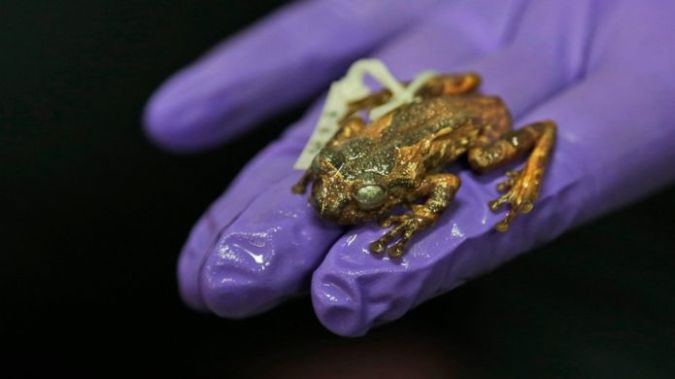
An extraordinary tree frog thought to have died out more than a century ago has been rediscovered in India

The discovery was made by renowned Indian biologist Sathyabhama Das Biju and a team of scientists, in the jungles of north-eastern India.

It is hoped the frogs might now be found across a wide area, from China to Thailand.

Studies of the frog have also led scientists to reclassify it as an entirely new genus. Continue reading

Hiking for E-mail

mahabir pun

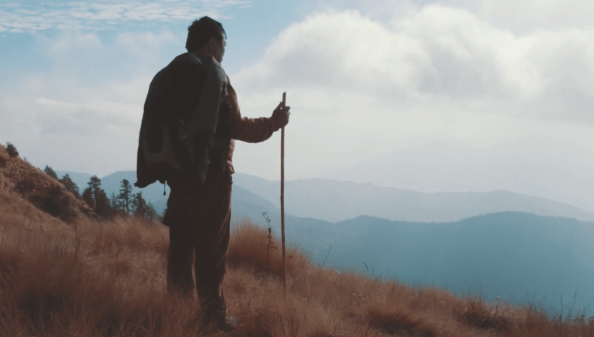
For six years, Mahabir Pun trekked long distances to check emails in Nepal. Until he brought the Internet home to his remote village. PHOTO: Hiking for Emails, Vimeo

In India, there exists this dwindling practice of writing letters to the Editor. Of publications. Most people write on current affairs, some write to highlight issues that range from a lack of streetlights to dissent. Some write in to commend actions, public campaigns. A handpicked bunch of these are published in a column titled Letters to the Editor. Mahabir Pun of a remote village in the mountainous country of Nepal wrote to BBC, asking for help to bring the Internet home.

Continue reading

If You Happen To Be Outside Early Morning

19PLANET-superJumbo-v2

All five planets will arrange on an arc across the sky. Mercury will appear the closest to the horizon, followed by Venus, Saturn, Mars and Jupiter. The stars Antares and Spica will make cameos as well, twinkling between Saturn and Mars, and Mars and Jupiter, respectively. Credit Sky & Telescope

For the next six weeks, the sky is calling:

Prepare for a Celestial Spectacle as Five Planets Align

Five planets will parade across the dawn sky early Wednesday in a rare celestial spectacle set to repeat every morning until late next month. Continue reading

More Reasons For A Plant-Dominated Diet

4368

Global fish catches rose from the 1950s to 1996 as fishing fleets expanded and discovered new fish stocks to exploit. Photograph: Eyal Warshavsky/Corbis

We serve fish. We love fish. We love fish too much, all of us. Every day we get more evidence of the logic for shifting more of our diet to be plant-based, and this article in today’s Guardian adds one more powerful data point:

Overfishing causing global catches to fall three times faster than estimated

Landmark new study that includes small-scale, subsistence and illegal fishing shows a strong decline in catches as more fisheries are exhausted

Global fish catches are falling three times faster than official UN figures suggest, according to a landmark new study, with overfishing to blame. Continue reading

TNC: Prairie Restoration with Wild Seeds

closeup_of_baldwin27s_ironweed2c_a_common_tallgrass_prairie_plant_seen_on_the_konza_prairie2c_12c000_acres_of_virgin-_-_nara_-_557190

Closeup of Baldwin’s Ironweed, a common tallgrass prairie plant, by Patricia D. Duncan via WikiMedia Commons. 1974.

The word “restoration” might bring to mind an artistic connotation of preservation and repair, as in a World Heritage Site, but lately where we’ve seen it the most is in an ecological sense: whether it’s wildlife in a forest, algae control in wetlands, or coral health in the oceans. Whole landscapes can be restored to an extent, as in the case of Tianjin, China, where forests and wetlands are being rebuilt while also studying the effectivity of different strategies.

That’s part of what The Nature Conservancy has been doing in the prairies of Minnesota, rebuilding the diverse grasses that used to exist in a landscape that was fragmented and degraded by huge farms during the last century. Justin Meissen and Meredith Cornett, two of the co-authors on a paper recently published in Restoration Ecology, report for the TNC blog:

Glacial Ridge is truly huge — at ~36,700 acres it’s one of the few places on Earth where you can look to all horizons and experience what early American pioneers once called the “sea of grass.”

But it wasn’t always like this. Only a few years ago Glacial Ridge was a patchwork of mostly farm land and a few prairie remnants. So what was the Nature Conservancy’s prescription for bringing this massive landscape back to life? Seeds — lots of seeds.

Continue reading

When Wheels Move the Soul

skating

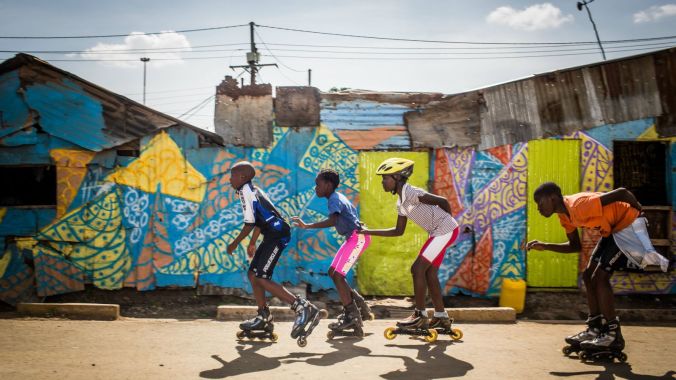
Korogocho skaters are taking advantage of some of the best streets in one of Nairobi’s poorest slums. PHOTO: Will Swanson 

Can a paved road and a pair of used skates aid development? An emphatic yes. This is the story of a failed slum upgrading project that saw the light of day when kids took to the streets. Over scavenging in the dump for things they could resell, the children took to the streets this time to skate. To keep out of trouble. To compete. For a chance at life.

Continue reading

Green Investing Sees Boost from NY State

img_7424_zpsm6rbrbaj

Wind turbines seen across the Central Valley from Xandari Resort, Costa Rica

We’ve been hearing about divestment from fossil fuels for a while now, whether it be from university endowment funds (and full or partial divestment), and also featured a story from the Guardian about Bill Gates, who argued that divestment would have little impact, and rather backing green energy and investing in high-risk technologies makes more of a difference in combatting climate change.

In last week’s Opinion pages of the New York Times, Tina Rosenberg describes New York State’s new Common Retirement Fund, which is the United States’ third-largest pension fund and will put $2 billion into a Goldman Sachs investment fund that selects companies to invest in with smaller carbon footprints but have similar risk and return to typical benchmark index funds. From the sound of it, greener investment opportunities will start becoming more common and easily accessible to those of us without Bill Gates levels of money to invest in the higher-risk technologies:

Goldman created the investment fund only for New York State. But similar funds
introduced in 2014 or 2015 are open to other investors, although they have not yet attracted the capital to match New York State’s investment. And more are likely to come — especially after New York’s vote of confidence in a form of green investing that may become mainstream.

Continue reading

Flying Between Pages

birdsong

“There is no such thing as a stooped or a graceless bird”, writes Krishnan. PHOTO: Scroll


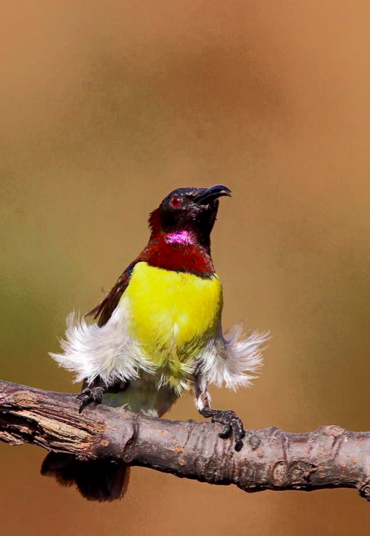
“Chugging out of New Delhi Railway Station on an early morning train, I’ve often amused myself by looking out for the “telefauna,” or birds perched on telegraph wires.” Bird lovers on here, there’s a new word for you right there. Of Birds and Birdsong, penned by Indian writer Krishna, is all at once a journal and a tribute. To him, it’s a record of winged creatures sighted around, while to his reader the names of these beauties bring to heart a familiar nostalgia.

Continue reading

Short Essay On The Commons

160125_r27591-320

ILLUSTRATION BY CHRISTOPH NIEMANN

Several times since 2011 I have referenced my doctoral dissertation, which addressed the “tragedy of the commons,” in these pages. Seth, during his study on the history of environmentalism movements, has also posted on this concept. Now, , excellent writer of one page essays explaining complex economic issues, takes a recent odd news item and helps us understand the role of government in regulating the use of the commons:

Ammon Bundy, the leader of the armed militia that stormed the Malheur National Wildlife Refuge, in Oregon, has a simple solution for fixing the economy of the West: get the federal government out of the way. His group’s chief demand is that the federal government hand over all of Malheur to local control. The ultimate goal, he says, is “to get the logger back to logging, to get the rancher back to ranching, to get the miner back to mining.” Bundy’s tactics make him easy to dismiss as a kook, but his ideology is squarely in the mainstream of Western conservatism, with its hostility to government ownership, skepticism about environmental rules, and conviction that individual enterprise is being strangled by government regulations. Continue reading