The long tail of diversity’s many intrigues, as Mr Zimmer seems uniquely capable of summoning up with such clarity:
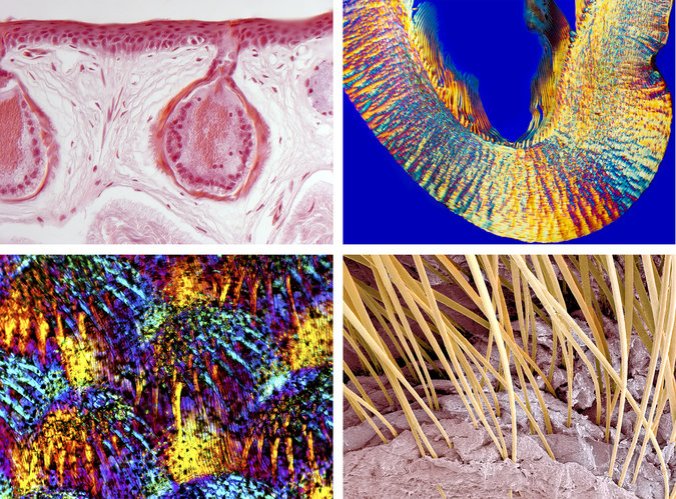
Narwhals and newts, eagles and eagle rays — the diversity of animal forms never ceases to amaze. At the root of this spectacular diversity is the fact that all animals are made up of many cells — in our case, about 37 trillion of them. As an animal develops from a fertilized egg, its cells may diversify into a seemingly limitless range of types and tissues, from tusks to feathers to brains. Continue reading →
Ecowatch, every day, provides something we can use in our extended La Paz Group operations, and in our daily lives. This one, for our homes:
…The idea of growing an indoor farm, full of healthy food you can spoil yourself with over summer may sound too good to be true. But with a little love and care, whether you live in a house or a flat, you can grow a variety of fresh vegetables, fruit and even edible flowers ready for your next dinner party—guaranteed to impress… Continue reading →
LEGO creation by Mike Doyle, image via ThisIsColossal
We all love LEGO, whether it is being used for beautiful creations or as useful inventions, and were happy to learn last year of the company’s goal to move toward sustainable materials and away from petrochemicals. An artist who works his sculptures only in LEGOs, Mike Doyle, has recently published a third book titled Beautiful LEGO, this time subtitled “Wild!” (the first had no subtitle and the second was subtitled “Dark“). Kate Sierzputowski covers Doyle’s new book showcasing works of natural LEGO marvels (by other artists as well as himself) on ThisIsColossal:
One of Doyle’s own pieces that appears in the book is a new piece titled Appalachian Mountaintop Removal (2015), a work composed of more than 10,000 pieces that directly references the act outlined in its title.
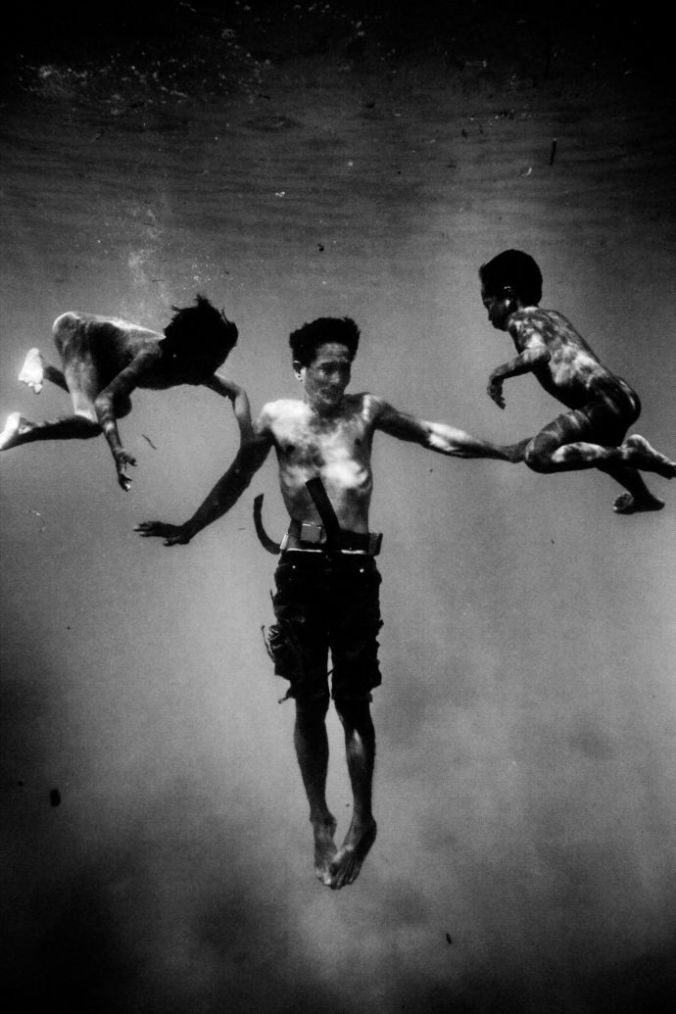
A group of Sea Badjao are photographed in Denawan Island, Borneo. Malaysia.
Raxa Collective was invited in 2014 to scout a location for a new conservation project in Borneo, and the Sea Badjao were among the most important cultural features of the island locations being scouted. The scouting resulted in a “pending” return plan, and for sometimes pending implies years (as in this case) so all we can say at the moment is that this item reminds us:
For hundreds of years, nomadic groups known as Badjao have lived on boats in the waters of Southeast Asia, heading to shore only to trade or to take shelter from threatening weather. They are free-diving fishers by tradition, swimming many metres underwater, without equipment, to harvest seafood and pearls off the ocean floor. It is only in the past few generations, facing rising costs and reduced seafood catch, as well as myriad other threats, from extreme weather to pirates, that Badjao families have settled in fixed communities. Living in homes near the water or perched above it, on stilts set into old coral reefs, they have undertaken a slow and difficult transition to modern life. Continue reading →
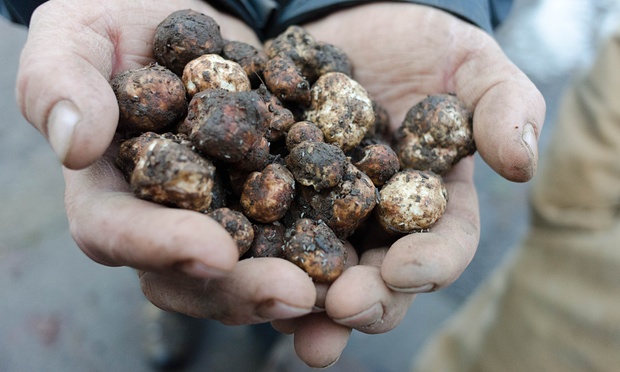
‘You could take an iron rake and rip outwards several feet from the trunk of a fir until you gathered up every truffle in the vicinity.’ Photograph: Jason Wilson for The Guardian
Two Raxa Collective representatives made their way in late autumn (northern hemisphere) to Istria, Croatia. Those same two, and their two sons, had lived in Croatia 2006-2007 but had stayed on their island at the very southern limit of Croatia; never had the chance to make it to Istria during truffle season. So, the two who finally went made the Istria visit a culinary weekend, which will need to be the subject of another post.
The exposure to truffles in their native habitat is an experience that is difficult to describe, because it is at once a deep immersion in a very comforting deciduous forest ecosystem during a time of delicious decay; and it is simultaneously a whetting of the appetite. We are now inclined to seek out more places where we can experience this. For now, the foodies among us, and particularly the mycologically oriented, will appreciate this article in today’s Guardian Environment section, which clues us in on one possible next location for next autumn:
Hunting for the underground fungus delicacy with dogs ensures ripe truffles and minimum environmental impact – and it’s a great way to bond with a canine
Jason Swindle has already learned the best and hardest lesson that his dog can teach. “It’s about trust. River does the craziest things when we’re out here – she charges up cliffs or hillsides – and I have really just had to learn to trust her.”
This trust is perhaps even sweeter than the prize she helps him find beneath the forest floor: truffles. Continue reading →
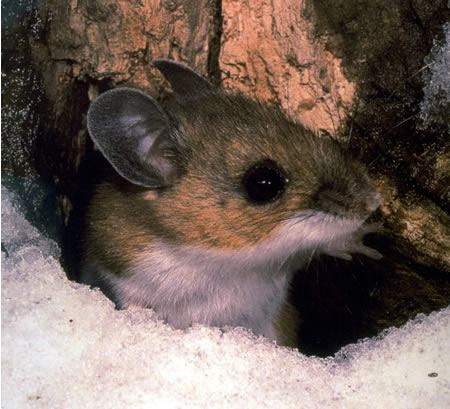
Deer mouse photo by National Park Service, via Wikimedia Commons
We should all be concerned with animal diseases, especially if those pathogens have the potential to become zoonotic, or transmittable to human beings. And if you agree that biodiversity is one of Earth’s great treasures and essential to the health of its ecosystems, then it won’t come as a surprise to hear that there seems to be a link between a habitat’s biodiversity and fewer zoonotic diseases in the respective area.
This situation is known as the dilution effect in epidemiology, and Jason Goldman reports for University of Washington’s Conservation Magazine on the case of a certain hantavirus (which is a zoonotic virus carried by rodents) studied within deer mice in Utah:
Deer mice are the natural hosts for the Sin Nombre hantavirus, or SNV. When contracted by humans, the virus can lead to the sometimes fatal Hantavirus Pulmonary Syndrome.
To test the dilution effect in a deer mouse population, the researchers trapped 155 of the rodents on BLM land in Juab County, Utah, and implanted small microchips inside them. They also took a small blood sample to test for SNV infection. Then they distributed an array of feeding trays in the desert, half in areas of high biodiversity and half in areas of low biodiversity.
National Public Radio (USA) is carrying this story, which we guess will catch the interest of Phil Karp, among others interested in the health of our ocean ecosystems:
Climate change, pollution, and unsustainable fishing practices have threatened the world’s largest coral structure but there’s some hope for Australia’s Great Barrier Reef. An intelligent robot is ready to protect it. Continue reading →
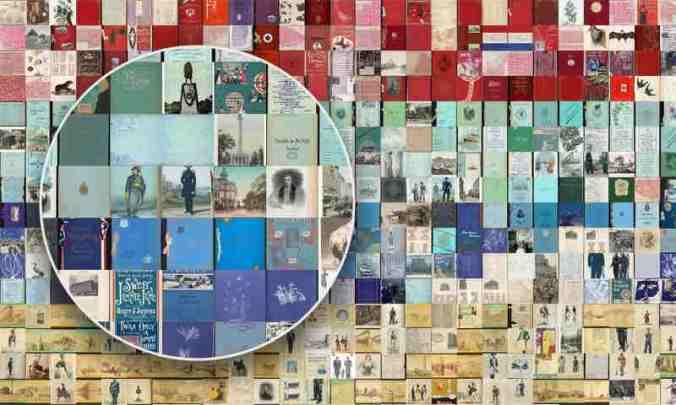
We appreciate the efforts of the New York Public Library, which we have posted on numerous times previously for its innovative as well as its occasionally worrisome institutional changes, to make more of its collection more available to more people for more uses. This blog post by Shana Kimball, Manager of Public Programs and Outreach at NYPL Labs, explaining the value to all of us:
Today we are proud to announce that out-of-copyright materials in NYPL Digital Collections are now available as high-resolution downloads. No permission required, no hoops to jump through: just go forth and reuse!
The release of more than 180,000 digitized items represents both a simplification and an enhancement of digital access to a trove of unique and rare materials: a removal of administration fees and processes from public domain content, and also improvements to interfaces — popular and technical — to the digital assets themselves. Online users of the NYPL Digital Collections website will find more prominent download links and filters highlighting restriction-free content; while more technically inclined users will also benefit from updates to the Digital Collections API enabling bulk use and analysis, as well as data exports and utilities posted to NYPL’s GitHub account. These changes are intended to facilitate sharing, research and reuse by scholars, artists, educators, technologists, publishers, and Internet users of all kinds. All subsequently digitized public domain collections will be made available in the same way, joining a growing repository of open materials. Continue reading →
Artist’s reconstruction of a forest during the Carboniferous period. From ‘Science for All’ by Robert Brown (London, c1880). Illustration by World History Archive, Alamy
National Geographic‘s website has enlisted one of our favorite science communicators for its Phenomena section, and we are suddenly aware of how long it has been since we featured one of his ponderings (and excellent illustrations):
… whose trees “would appear fantastic to us in their strangeness,” write Peter Ward and Joseph Kirschvink in their book A New History of Life.
Some of them were giants: 160 feet tall, with delicate fernlike leaves that sat on top of pencil-thin trunks. This was the age when plants were evolving, climbing higher and higher, using cellulose and a tough fiber called lignin to stay upright. Had you been there, you would have felt mouse-sized.
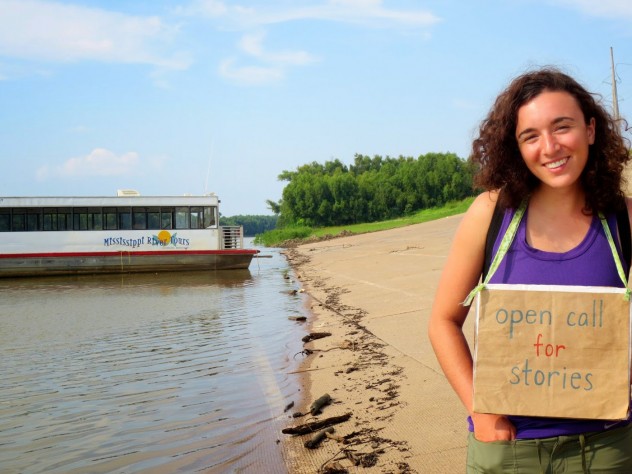
Collecting stories by the river in Vicksburg, Mississippi. August 2013. Photograph by Devi K. Lockwood
You will be in good company, in terms of other “Come to Kerala” invitees mentioned on this blog. We appreciate the Folklore & Mythology, and especially the Art of Storytelling inspirations to your purposeful wandering form of activism. Come say hello.
LEO AND I SIT across the table from each other in the home his family rents in Dunedin, New Zealand. The kitchen smells of roast garlic. Two days ago I cycled up the big hill to his house with all my belongings strapped and clipped to my bicycle: clothes, food, audio recorder, and a tiny guitar. Continue reading →
Come say hello. Amie and I are representing Xandari at the Costa Rica stand in North America’s largest consumer travel show. Today through Sunday they are expecting nearly 30,000 visitors to enter the premises of this show. For $20 you can have a whirlwind tour of the world, and some interesting Event Speakers (for our few recommendations, click the titles to go to the ticket page): Continue reading →
Adoniya. Daughter of Sini, cook in the staff cafeteria at Xandari Pearl, and Jimmy, a fisherman who fishes just outside the resort.
Sunset colors with the little one.
Freezing time with Adoniya and her mother.
Adoniya and her toy in the sky
“Unstuck”. The quotation marks in this post below are all too familiar. They stemmed from well-worded conversations that traveled across the 16,894 kilometers between Kochi, India, and Costa Rica. Between me and Crist Inman. About “getting back in”. Going back and forth on happiness and redefining it. On dreaming. Together.
And, I remembered this bouncing, hugging ball of happiness that owned me by the beach at Xandari Pearl in Kerala. Little person, but home of good things.
The Raxa Collective blog caught the attention of colleagues in Thailand a few years ago, and we have been exchanging visits, and ideas, with those colleagues ever since. And now we have taken it from informal mutual admiration to formal collaboration. We have just started a strategic alliance with Asian Oasis, a pioneering sustainable tourism/hospitality company in Thailand.
Raxa Collective will now collaborate with Asian Oasis on the global promotion of their properties, which Amie and I have been getting to know with site visits over the last two years. We will begin introducing those properties on this blog, and look forward to your response.
And that was last year, the Year of the Wooden Sheep according to local astrological tradition (search on that term for some interesting discoveries). The Year of the Red Fire Monkey (again, search it: you will find results describing it as the year of strength and determination; setting goals and achieving them; and business flourishing) begins February 8th, 2016 and ends on January 27, 2017. We look forward to earning the Monkey’s goodwill through our good works.
A strategy called “design thinking” has helped numerous entrepreneurs and engineers develop successful new products and businesses. But can design thinking help you create healthful habits?
Bernard Roth, a prominent Stanford engineering professor, says that design thinking can help everyone form the kind of lifelong habits that solve problems, achieve goals and help make our lives better.
“We are all capable of reinvention,” says Dr. Roth, a founder of the Hasso Plattner Institute of Design at Stanford and author of the book, “The Achievement Habit.” Continue reading →
For the accountant, what’s under the line is the balance – and for the draughtsman? Strictly speaking, what’s under the draughtsman’s line is the paper – no paper, no line.
At Xandari we offer a garden and farm tour that consists of showing guests through our botanical garden, Mandala garden, and orchid house and educating them on the properties of each of the plants. When I was asked to translate the tour for our head gardener Jose Luis I immediately accepted. However, after agreeing to be the translator it dawned on me that my rudimentary knowledge about plants (species, genus, and all that scientific terminology amounts to high school level biology) could be a limitation to the learning experience of the guests. Adding to my worry, the guests taking the tour are well versed in plant identification and were hoping to learn more about the tropical plants we have. To prepare myself, I skimmed the plant identification binder we have, decided to take it with me on the tour, and hoped for the best.





 We appreciate the efforts of the New York Public Library, which we have posted on numerous times previously for its innovative as well as its occasionally worrisome institutional changes, to make more of its collection more available to more people for more uses.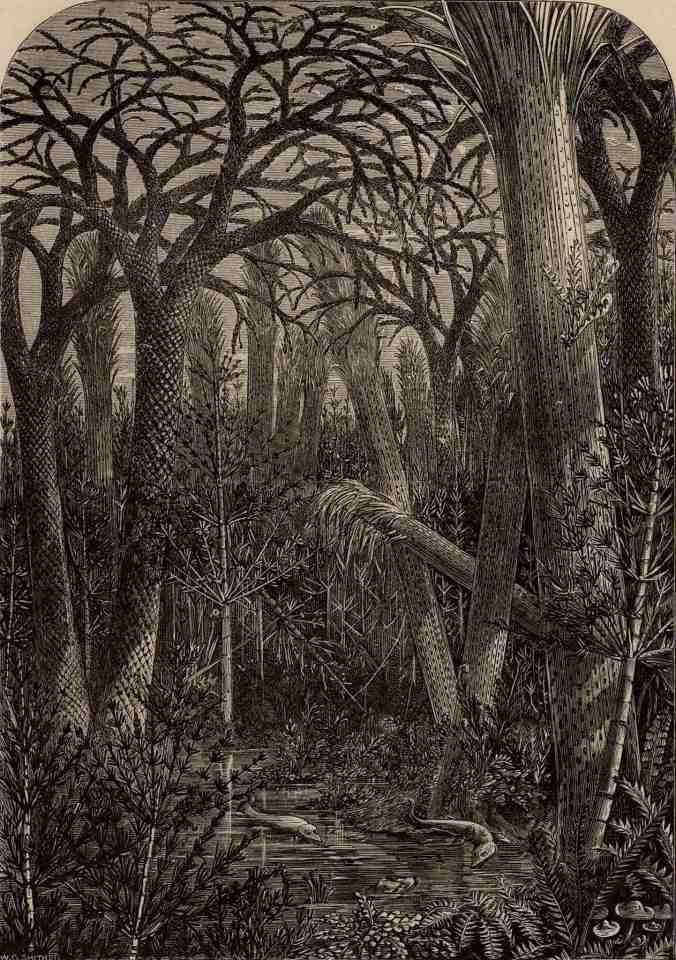




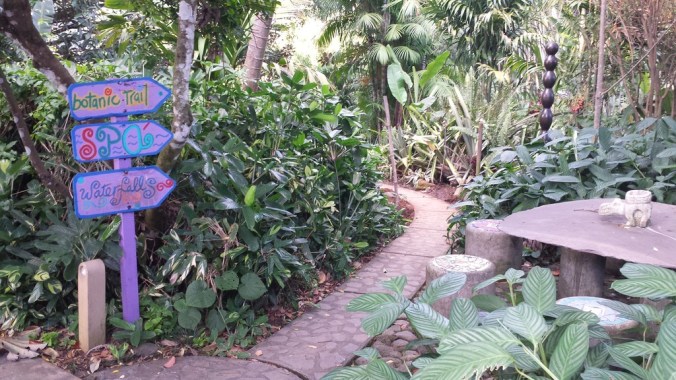 At Xandari we offer a garden and farm tour that consists of showing guests through our botanical garden, Mandala garden, and orchid house and educating them on the properties of each of the plants. When I was asked to translate the tour for our head gardener Jose Luis I immediately accepted. However, after agreeing to be the translator it dawned on me that my rudimentary knowledge about plants (species, genus, and all that scientific terminology amounts to high school level biology) could be a limitation to the learning experience of the guests. Adding to my worry, the guests taking the tour are well versed in plant identification and were hoping to learn more about the tropical plants we have. To prepare myself, I skimmed the plant identification binder we have, decided to take it with me on the tour, and hoped for the best.
 Organikos