Speaking from the Roof of the World

New research challenges stereotypical views of Tibet as an isolated and inward-looking society before the British and Chinese arrived. PHOTO: Maxi Science

New research challenges stereotypical views of Tibet as an isolated and inward-looking society before the British and Chinese arrived. PHOTO: Maxi Science

Tibet. It’s called the ‘Roof of the World’ with good reason — the Tibetan Plateau stands over 3 miles above sea level and is surrounded by imposing mountain ranges that harbor the world’s two highest summits, Mount Everest and K2. While the world’s mountaineers regularly attempt to summit the forbidding peaks, the remote area is home to a rich variety of cultures. Less well-known is the story of how the Tibetan Plateau and the craggy peaks that surround it formed. The geologic tale is familiar to many schoolchildren: About 50 million years ago, the Indian subcontinent began to collide with Eurasia, and as it slammed into the bigger landmass, the plateau and the Karakoram and Himalaya ranges were born.

Only recently did Tibetan scholar Lobsang Yongdan revisit a long-ignored section of a historic text to reveal how Tibetans were engaging with western scientific knowledge two centuries ago.  His research into a geography of the world, first published by a lama (Buddhist spiritual leader) in 1830, challenges stereotypical views of Tibet as an isolated and inward-looking society.

Continue reading

Yoga – Popular and Partisan in Nature?

India celebrates its first International Yoga Day today. PHOTO: Members of the Navy performing Yoga at sea.

India celebrates its first International Yoga Day today. PHOTO: Members of the Navy performing Yoga at sea.

On Sunday morning, the Indian capital New Delhi’s broadest and grandest avenue, Rajpath, will be covered in a sea of yoga mats, with some 35,000 people expected to indulge in mass physical contortions to mark the first International Day of Yoga—a pet initiative of India’s Prime Minister Narendra Modi. He pitched the idea to the U.N. General Assembly (UNGA) in his maiden speech at the annual diplomatic confab in September. A formal UNGA resolution to establish an international yoga day was passed in December, with more than 170 countries co-sponsoring the move. Modi’s government has since gone all out to promote the first yoga day, calling its diplomatic corps into service to plan events in more than 190 countries.

The Modi government is attempting to set two world records, including the largest yoga lesson (the current record was set in India in 2005, when nearly 30,000 students from more than 360 schools participated in a yoga session in the central Indian city of Gwalior). It also wants to set a record for the number of nationalities involved in a single yoga lesson, a category it hopes to pioneer.

Continue reading

What’s That You Hear on Uganda’s Streets?

Uganda has the world’s youngest population, with over 78% below 30 years of age. PHOTO: campustimesug.com

Uganda has the world’s youngest population, with over 78% below 30 years of age. PHOTO: campustimesug.com

Uganda is a ‘young’ country if the above numbers are anything go by. And that makes the nation’s present population one that is acclimatized to he ways of the English language. A consequence of it is the development of a new language  – Luyaaye. Designated an Urban Youth Language (informal varieties, the new variant is a combination of mostly English, Sheng (a Swahili-based cant, originating among the urban underclass of Nairobi, Kenya), and other Sudanese languages. Now, why should anybody pay attention to this nascent dialect, that is less rigid than traditional languages and mainly involves word play? And should its dark past be forgotten, the one about the language helping criminals do their business?

“Programmes have been carried out to spread information about AIDS but even with increased dissemination there was a decrease in the take-up of that information,” she said. “When asked what would help, people said ‘speak our language’.

Continue reading

Support Needed for Lionfish Jewelry Workshop

© Seavenger’s Trident Super Dive Store

For the past several years, I have been involved in helping to develop markets for lionfish jewelry as a way of addressing the threat posed by this invasive species, which is severely compromising the health of coral reefs throughout the Caribbean by eating reef-dwelling fish. Belize is home to the second largest barrier reef in the region, and its lobster and conch fisheries could really benefit from a break of overexploitation, so encouraging lionfish fishing in any way possible will promote reef recovery.

My last post, in fact, was about my trip to northern Belize last summer, when I collaborated with two local NGOs in Belize to train women from a coastal community on how to create lionfish jewelry. This August, I will again be joining one of these groups – Blue Ventures, for a lionfish jewelry workshop for women from other areas. As you can see from the pictures here and in my previous posts, lionfish fins, tails, and spines are beautiful; they’re also relatively low-cost to transform into jewelry. These parts of lionfish were previously discarded, but when kept and transormed into jewelry the value of landed lionfish catch increases by up to 40%, creating additional incentives for fishers to target and remove lionfish Continue reading

When Soap Makes the Difference

Sundara is a soap making operation in Mumbai that collects bar soap waste from hotels and recycles it for underprivileged children who cannot afford to buy soap. PHOTO: Sundara

Sundara is a soap making operation in Mumbai that collects bar soap waste from hotels and recycles it for underprivileged children who cannot afford to buy soap. PHOTO: Sundara

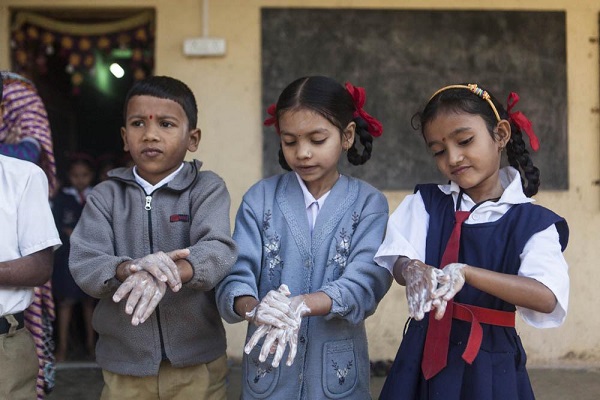
Ever wondered what happens to the barely used soaps that you leave behind in hotel rooms? Think they get reused? We’ve got bad news – they don’t. In fact they are normally tossed away, cluttering our already crowded landfills. The solution at our Raxa Collective properties is to use dispensers filled with all-natural liquid soaps to avoid the waste of bar soaps. Sundara, a soap making operation in Mumbai has a community-based solution to the problem. They collect bar soap waste from hotels, sanitize and recycle it and distribute the new soaps to underprivileged children and adults who cannot afford soap. To date they have regular soap distributions reaching over 6,000 underprivileged children and adults in Mumbai slums. They have also saved thousands of kilograms of waste from going to landfills in the process.

And it started with a University of Michigan graduate. And she didn’t let a near-death experience with dengue hemorrhagic fever stop her from making the world and its people a little more clean.

Continue reading

Spider’s Silk, Minus the Crawlies

Bolt Threads' technology was inspired by the spider, but it has broadened into a platform of programmable polymers: a protein material that can be tuned to create a nearly limitless array of properties PHOTO: Researchgate

Bolt Threads’ technology was inspired by the spider, but it has broadened into a platform of programmable polymers: a protein material that can be tuned to create a nearly limitless array of properties PHOTO: Researchgate

Welcome to the age of slow fashion. Fashion that’s got its sense and sensibility focused on sustainability. Slow fashion represents all things “eco”, “ethical” and “green” in one unified movement. It was first coined by Kate Fletcher, from the Centre for Sustainable Fashion, when fashion was compared to the Slow Food experience. Carl Honoré, author of “In Praise of Slowness”, says that the ‘slow approach’ intervenes as a revolutionary process in the contemporary world because it encourages taking time to ensure quality production, to give value to the product, and contemplate the connection with the environment. And now meet Bolt Threads. A company that started out to make spider’s silk sans the creepy crawlies. Have they succeeded?

Continue reading

Your Worst Dragons Are Your Best Teachers

PHOTOGRAPH BY ELI REED/MAGNUM

PHOTOGRAPH BY ELI REED/MAGNUM

Amie and I lived around the corner from the Chelsea Hotel during the second term of Ronald Reagan’s presidency. At that moment in our lives, newly married and full of that kind of hope, we nonetheless observed with concern the culture of the USA changing radically around us. New York City, in particular seemed an epicenter for the demonization of “welfare queens” (Reagan terminology) and homeless people (of which there was a sudden massive increase due to various social safety nets being eliminated, a result of the “Reagan revolution”), while the values associated with speculative money, and cronyism, were ascendant.

It seems to me in hindsight that it was the moment when entrepreneurial capitalism receded as a driving force of the culture, giving way to a strong strain of some other form of capitalism. A much darker, or at least shadier, form that culminated in the economic tragedies of recent years in the USA, including contagious sub-strains that made their way to Europe and can be seen in the Greek tragedy today.

Reading that the Chelsea Hotel is g0ing “boutique” is at first depressing, but then not; it is a reminder of how New York City has been transformed by the new rules of capitalism; yet encouraging, even if the Chelsea Hotel’s role as an institution will be lost, because some of its core values remain intact as residents live out their terms there. The heartless strain of capitalism that bred and multiplied in the 1980s, which we have thought monstrous, has forced us to look for answers, which in turn has led us to the entrepreneurial conservation concept that animates our work, daily. The dragon sometimes teaches:

At a moment when the once beautifully entangled fabric of New York life seems to be unravelling thread by thread—bookstore by bookstore, restaurant by restaurant, and now even toy store by toy store—it might be time to spare a thought or two for the Chelsea Hotel. At the hotel on Twenty-third Street, famously rundown and louche—the Last Bohemia for the Final Beatniks, our own Chateau Marmont, where Dylan Thomas drank and Bob Dylan wrote “Sad-Eyed Lady of the Lowlands” and Leonard Cohen wore (or didn’t; people argue) his famous blue raincoat, and Sid Vicious killed (or didn’t; they argue that, too) Nancy Spungen—the renovators and gentrifiers have arrived. The plastic sheeting is everywhere, the saws buzz and the dust rises. In a short time, the last outpost of New York bohemia will become one more boutique hotel. Continue reading

Hawaii Hits the Road to Help Homeless

Old city buses in Hawaii are going to be converted into homeless shelters if architecture firm Group 70 International is successful.

Old city buses in Hawaii are going to be converted into homeless shelters if architecture firm Group 70 International is successful.

Hawaii has one of the worst homeless rates in the country. In a 2014 “State of Homelessness in America” report, Hawaii ranked highest among the 50 states for homeless people per capita with 45.1 percent; the national rate was 19.3 percent. Up to 70 old city buses in Hawaii are going to be converted into homeless shelters if architecture firm Group 70 International is successful. The vehicles are to operate in fleets, with different units dedicated to different purposes, from living spaces to recreation rooms.

The design “is based on the premise that you could walk in to a hardware store, buy everything you need in one go and build everything with no trade skills,” so that it can be built by a team of untrained volunteers. LIFT, the volunteer organization helping to execute the project, hopes to build two buses by the end of this summer. 70 buses and all the material required for renovations will be donated.

Continue reading

Coca-Cola Thinking Plants

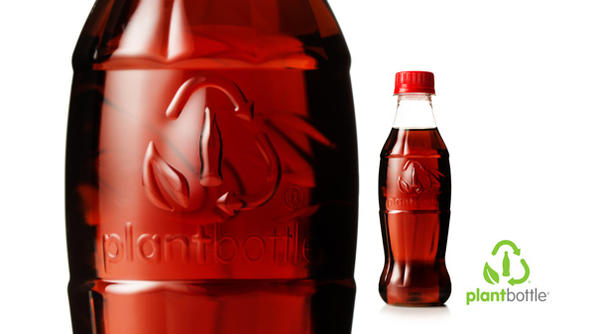
BUSINESS THE BITE Coca-Cola debuts 100% plant-based bottle as companies go eco-friendly (+video)  csmonitor icon Latest News MORE EMAIL Subscribe Coca-Cola has unveiled a bottle made entirely of plant-based materials. The new Coke bottle is the latest sign of the company's growing shift toward more environmentally friendly practices. By Ellen Meyers, Staff writer JUNE 4, 2015 About video ads Coca-Cola to release plant-based recyclable bottles WSBTV - Atlanta Coca-Cola to release plant-based recyclable bottles Coca-Cola debuted an updated version of its PlantBottle, its first bottle made from 100 percent plant materials at the Expo Milan 2015 on Wednesday. The Atlanta-based beverage giant did not specify when the 100 percent plant-based bottles would be available to consumers. However, the company said it wants its current version of its PlantBottle, made of 30 percent plant-based materials, to be used in all of its products by 2020. “Our vision was to maximize game-changing technology, using responsibly sourced plant-based materials to create the globe’s first fully recyclable PET plastic bottle made entirely from renewable materials,” Nancy Quan, the company’s global research and development officer, said in a press release. Recommended: Who owns Gatorade: Coke or Pepsi? Take our 'parent company' quiz! Since the 2009 launch, Coca-Cola has distributed more than 35 billion bottles in nearly 40 countries using its current version of PlantBottle packaging, according to the release. The company estimates that the packaging helped save the equivalent annual emissions of more than 315,000 metric tons of carbon dioxide. TEST YOUR KNOWLEDGE Who owns Gatorade: Coke or Pepsi? Take our 'parent company' quiz! PHOTOS OF THE DAY Photos of the day 06/16 In 2011, Coca-Cola licensed the technology for making PlantBottles to H.J. Heinz to use in its ketchup bottles. In 2013, Ford Motor Company said it plans to use the same material found in PlantBottle packaging in the fabric interior in certain test models of the Fusion Energi hybrid sedan. Coca-Cola says the new bottles will be the world's first entirely plant-based PET bottles. PET, known as polyethylene terephthalate, is a plastic resin and the most common type of polyester, according to the National Association for PET Container Resources (NAPCOR). It was discovered and patented in England in 1941, but it was not until the late 1990s when more companies and manufacturers started to make and use PET containers for products. NAPCOR says PET is appealing for both consumers and manufacturers for its low weight, strength, and recyclability, and its use in packaging materials, like bottles, has ticked up over the past few years. However, PET has its drawbacks. It can be an expensive packaging material to produce, according to a 2004 report from the Recycling Operators of New Zealand. RONZ also found that “PET acts as a gas ‘sieve,’ slowly allowing oxygen in and carbon dioxide out. This means the shelf life of beverages can be limited by the reduction, over time, in carbonation and oxygen degradation of flavours.” In other words, the carbonation in soda could go flat faster.  In terms of recycling, quality and quantity of supplies are also still major concerns. For reclaimers – professional recycling centers – PET packaging can be harder to clean than other plastics, Reclaimers still reported high levels of contamination in PET containers in 2013, according to NAPCOR’s 2014 report on recycling activity for PET containers. That complication can mean less PET materials are actually reused. In fact, only 22.6 percent of recycled PET containers in the US went on to be used in other products.   NAPCOR also reported that domestic collection of PET containers in the US is growing, but it is not enough to meet current and potential demand from reclaimers. That's led them to import PET from places like Canada, Mexico, and Latin America. While PET recycling has a long way to go, Coca-Cola's latest move highlights a long withstanding trend: the importance of businesses being more envronmentally conscious

While PET recycling has a long way to go, Coca-Cola’s latest move highlights a long withstanding trend: the importance of businesses being more envronmentally conscious

Coca-Cola has unveiled a bottle made 30% of plant-based materials. The new Coke bottle is the latest sign of the company’s growing shift toward more environmentally friendly practices. Can it be sustained? That remains to be seen.

Since its introduction in 2009, PlantBottle packaging has been distributed in a variety of packaging sizes across water, sparkling, juice and tea beverage brands—from Coca-Cola to DASANI to Gold Peak. Today, PlantBottle packaging accounts for 30 percent of the Company’s packaging volume in North America and 7 percent globally, some 6 billion bottles annually, making The Coca-Cola Company a large bioplastics end user.  In 2011, the company licensed PlantBottle Technology to H.J. Heinz for use in its ketchup bottles. In 2013, Ford Motor Company announced plans to use the same renewable material found in PlantBottle packaging in the fabric interior in certain test models of the Fusion Energi hybrid sedan. And in 2014, the first reusable, fully recyclable plastic cup made with PlantBottle Technology rolled out in SeaWorld and Busch Gardens theme parks across the United States. More.

Continue reading

The Food Cart Just Turned Green

One hundred of the first carts will be funded by MOVE and reserved for disabled veterans, and the remaining 400 will go to vendors who sign up—at no cost to them, because the pilot program will be sponsored. PHOTO:  Today's the Day I

One hundred of the first carts will be funded by MOVE and reserved for disabled veterans, and the remaining 400 will go to vendors who sign up—at no cost to them, because the pilot program will be sponsored. PHOTO: Today’s the Day I

Food carts are an iconic part of New York City’s street life. NYC has over 5,000 licensed trucks and carts, and an estimated 3,000 unlicensed ones on the streets. Cart operators, representing diverse ethnicities and cuisines, serve approximately 1.2 million customers every day. A food cart can be started with little capital and improved with sweat equity. However, until now, this industry has had no choice but to rely on smoke-spewing carts and their antiquated technologies that are dirty and unsafe. But hold on, the MRV100 is here.

Most food carts run off a diesel generator that’s designed to run only a few hours. Vendors run them for stretches of up to 14 hours, leading to a high output of greenhouse-gas emissions such as carbon monoxide, nitrous oxide, and particulate matter. You can see the smoke with the naked eye, but the hard facts are even more frightening: The research and consulting firm Energy Vision found that each cart produces the same amount of nitrous oxide as 186 cars on the road.

Continue reading

This Furniture Can Grow You Dinner

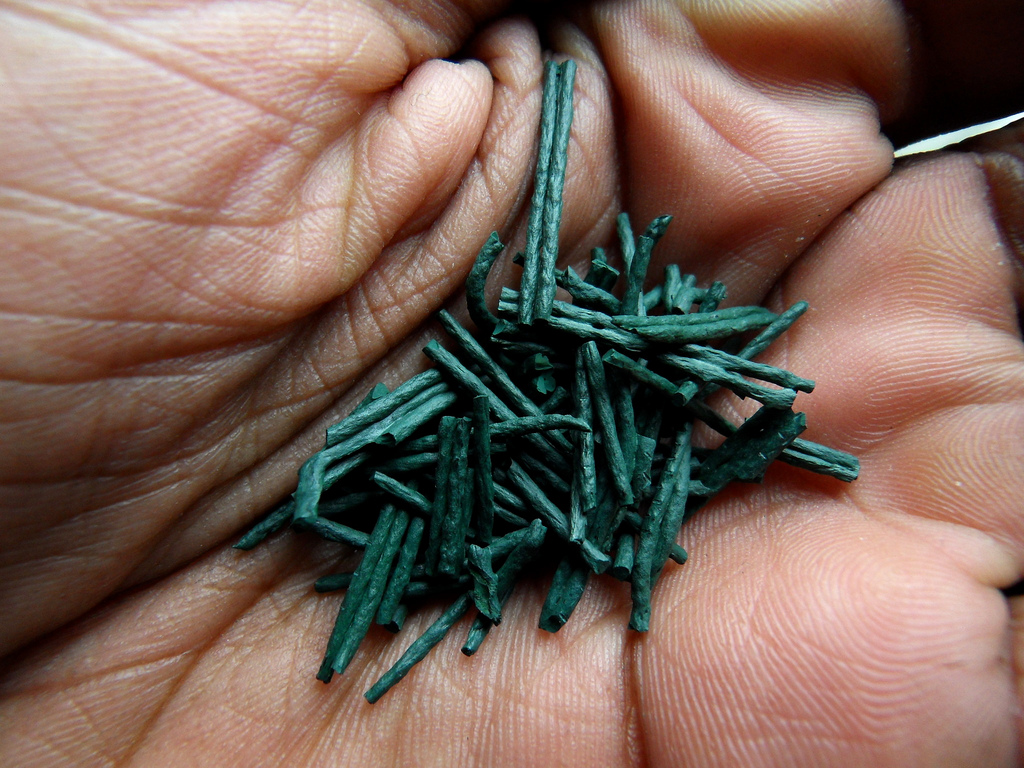
Spirulina is said to be the richest food in iron, 20 times higher than common iron-rich foods; and its iron is twice as effective than iron found in most vegetables and meats. COURTESY: Esse Spirulina

Spirulina is said to be the richest food in iron, 20 times higher than common iron-rich foods; and its iron is twice as effective than iron found in most vegetables and meats. COURTESY: Esse Spirulina

In the living room of the not-so-distant-future, you might have a glowing green blob of microorganisms next to your sofa instead of a lamp. A new line of photosynthetic furniture is filled with spirulina—a tiny, edible bacteria—that the designers imagine could help feed us without the incredible environmental footprint of conventional agriculture.

A new line of photosynthetic furniture is filled with spirulina… The custom glass bioreactors use waste heat, light, and carbon dioxide from a home to feed the spirulina inside. Periodically, someone can turn a tap, empty out the green sludge, and eat it.

Continue reading

Stop Typing!

Sustainable fonts require the least amount of energy to load. Using one also allows one to process more even when internet speeds are low.

Sustainable fonts require the least amount of energy to load. Using one also allows one to process more even when internet speeds are low. Is Ryman Eco one of them?

It’s only been an exact week since we discussed the ‘most eco-friendly’ ad campaign. And we vaguely remember a 14-year-old from a Pittsburgh-area middle school challenging the government to use the Garamond font in official communication to save up to $136 million each year. Find the original study here. So, clearly the sustainability debate has reached the doors of design. Supporters and naysayers abound, as is the case with Ryman Eco, whose creators claim it can reduce ink usage by 33 per cent.

“Ink is only about 15 percent of the total carbon footprint of a printed page. Despite the rise of e-everything, paper use is prodigious in the United States. Americans still use an average of 10,000 sheets of office paper per year, which is a lot.”

Continue reading

Sri Lanka Takes the Ecofeminism Route

The new national scheme aims to set up 1,500 community groups around Sri Lanka's 48 lagoons, which will offer alternative job training and micro-loans to 15,000 people. The groups will be responsible for the upkeep of designated mangrove forests.

The new national scheme aims to set up 1,500 community groups around Sri Lanka’s 48 lagoons, which will offer alternative job training and micro-loans to 15,000 people. The groups will be responsible for the upkeep of designated mangrove forests. PHOTO: Outdoor Conservation

Big news for the environment: Sri Lanka’s new government just took the unprecedented, historic step to protect all of its mangroves. The move, the first of its kind anywhere in the world, will provide long-term environmental, social and, last but not least, economic benefits to the Indian Ocean island nation, and provide a model for other vulnerable tropical nations to follow. Whose are the champions of this mission? Women.

Started in the 1970’s and gaining in much popularity during the next two decades, ecofeminism seeks to foster a connection between repression of women with the damage caused to nature and natural resources. It is based on the philosophy that both women and nature exhibit the same values and characteristics like nurturing and hence see it as the responsibility of women to undertake ecological causes. One of the most memorable events of ecofeminism occurred in Kenya when rural women planted trees as part of a soil conservation effort to avert desertification of their land as a part of the Green Belt Movement formed by Wangari Maathai. The women of Greenham Common Peace Camp were instrumental in the removal of nuclear missiles there, a fight lasting for over ten years. Sometimes ecofeminism has also been an avenue through which minority and repressed communities like the Native Americans have found their voice. Mohawk women along the St. Lawrence River established the Akwesasne Mother’s Milk Project to monitor PCB toxicity while continuing to promote breastfeeding as a primary option for women and their babies. More.

Continue reading

What’s in Your Tequila?

Although demand for tequila is booming, the younger generation of laborers is deserting the land of the agave in Mexico, from which the liquid is extracted. PHOTO: The Huffington Post

Although demand for tequila is booming, the younger generation are deserting the land of the agave in Mexico, from which the liquid is extracted. PHOTO: The Huffington Post

Find yourself taking a shot at the tequila often? Or are you one to cook with it, whipping up some tequila wings, tequila-cured salmon or infusing the liquid in cheesecakes and ice cream? Not to forget those breezy cocktail mash-ups featuring flavors of rose, mango, strawberry, and even pepper! Now that we have your attention, we are going to take a shot at bringing you this story from the home of the drink – Mexico. A story with a mood-board that will definitely not have you screaming “One tequila, two tequila, three tequila, floor”. One that may possibly leave you with questions about the future of the drink and Mexico’s loss of a family tradition.

The craft of the agave harvest, still done entirely by hand, has remained virtually unchanged since around 1600 when tequila was first invented by the Spanish conquistadors. It is also one that has traditionally remained in families, with each generation teaching the next, ensuring that the mechanization of the tequila harvest has been kept at bay.

Yet traditions of the jimador, a figure still cloaked in romantic mystique in literature and even Mexican telenovelas, are slowly disappearing. While the demand for high-quality tequila is rising year on year, with the industry worth over $1bn and seven out of 10 liters produced now exported worldwide, the younger male generations who would once have taken on the mantle of their fathers to become jimadores are turning away from the agricultural way of life in droves.

Continue reading

Stepping Up to the Plate

Polystyrene lunch plates are being shown the door in some US cities. PHOTO: NRDC

Polystyrene lunch plates are being shown the door in some US cities. PHOTO: NRDC

New York, Los Angeles, Chicago, Miami, Orlando, and Dallas. Six cities. 4,536 schools. 2,848,000 students enrolled. 469,000,000 meals served annually. And one organisation that unites them all and its plans to combine purchasing power and coordinate menu creation and food service in schools. Meet the Urban School Food Alliance. And here’s their latest idea: ditching polystyrene lunch trays and replacing them with compostable lunch plates. It’s a significant move since all together, the schools in the Alliance serve up 2.5 million meals a day.

But what’s most revolutionary about these new plates is what they’re made of. The polystyrene used in traditional lunch trays is a petroleum-based plastic that won’t break down for hundreds of years. When the trays end up in landfills — and 225 million of them do every year — they leech pollutants into the water and air, according to the group. The new plates, by comparison, are made of recycled newsprint and can break down within a matter of weeks in commercial composting facilities. They’re also only a tiny bit more expensive, at $0.049 apiece compared with $.04 apiece for the plastic trays.

Continue reading

Wind Powered Race Goes To Team Elsie Piddock

Team Elsie Piddock sails up Nichols Passage south of Ketchikan on the way to winning the Race to Alaska. TAYLOR BALKOM / KETCHIKAN DAILY NEWS

Team Elsie Piddock sails up Nichols Passage south of Ketchikan on the way to winning the Race to Alaska. TAYLOR BALKOM / KETCHIKAN DAILY NEWS

Fishermen gonna fish, sometimes pushed to do remarkable things under extreme challenge. Sailors gonna sail, sometimes pushed to do remarkable things under extreme challenge. We thank Seattle radio station KUOW for sharing the news of the conclusion of this race that has had our attention for the last week:

Screen Shot 2015-06-15 at 4.36.40 AM

Ross Reynolds talks to Jake Beattie the director of the Northwest Maritime Center in Port Townsend and the organizer of the first ever Race to Alaska contest about how Team Elsie Piddock managed to defy expectations and win the race in one week and a day.

See more at the Ketchikan Daily News.

Fishing for Life

Greece is now heavily investing in open-ocean fish farming to meet demand.  PHOTO: Gerald Brimacombe

Greece is now heavily investing in open-ocean fish farming to meet demand. PHOTO: Gerald Brimacombe

The traditional Greek fisherman casting a net from his small wooden caique is a postcard image of the Mediterranean. In the past, these fishermen supplied tavernas and fish markets. But fish stocks are so low now that many say they can’t make a living. Reason? Commercial trawlers scoop most of the fish out of the sea, there’s over-exploitation of marine wealth, and fishing regulations are lax. National Public Radio tells this story from the port of Laki, a fishing village on the Aegean island of Leros:

It’s a sunny afternoon on the port of Laki, a fishing village on the Aegean island of Leros. The seaside tavernas are filled with happy tourists and local families listening to traditional violin music and eating fresh grilled fish. But fisherman Parisi Tsakirios is not celebrating. He’s on his wooden fishing boat, cleaning a bright yellow net. Two days at sea, he says, and barely a catch.”We caught just 20 pounds of fish,” says Tsakirios, who, at 29, has been fishing for 15 years. “We can sell that for 200 euros (about $225). But fuel costs almost as much, so we’ll be lucky if we make 20 euros (about $22).”

Continue reading