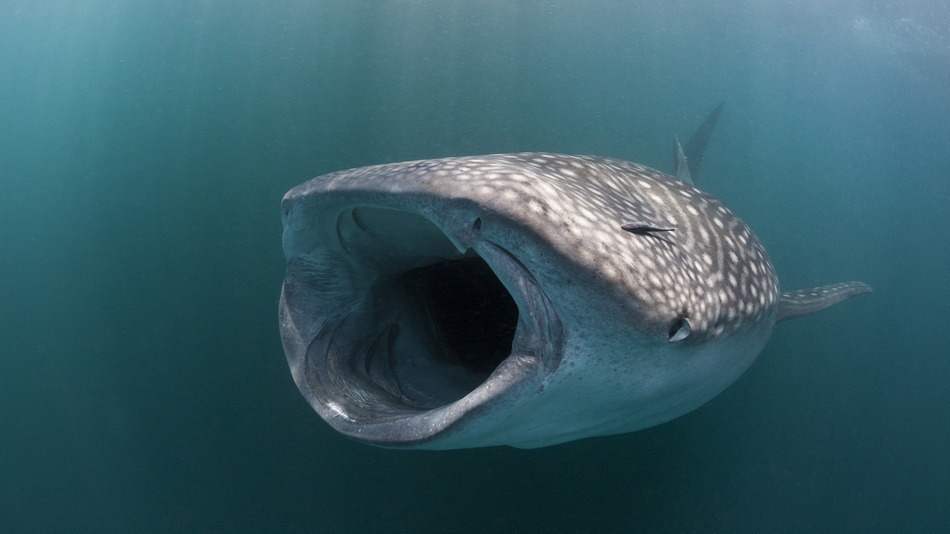
Feeding Whale Shark, in Triton Bay, West Papua, Indonesia. PHOTO: REINHARD DIRSCHERL/CORBIS
Be it the flash floods in Texas or a heat wave in India that has killed over 2,000 people to date, the signs of global warming and the consequent extremes are telling on land. The sea has not been spared either – the acceleration of global sea level change from the end of the 20th century through the last two decades has been significantly swifter than scientists thought. And a closer look at the oceans reveal that by the end of the century, the polar regions may have some of the most abundant sea life on the planet. The tropics, which are currently the crown jewel of marine species richness, may be drained of much of its iconic marine life, opines a recent study published in the journal Nature Climate Change.
If warming is held at the 2-degree target, the changes that will occur throughout the global ocean “will be relatively benign for the ecosystem.”The tropical regions would see a net loss in biodiversity with average global warming of 2 degrees Celsius, while polar areas could see a 300% increase in biodiversity as species seek out more hospitable areas.




 While in Cockpit Country for our first expedition to Jamaica looking for the Golden Swallow, John, Justin and I watched in awe as hundreds and hundreds of bats flowed out of a cave and flew in a distinct path right by us over the course of half an hour. The slightly shoddy video below can only partly convey the sensation of having the flapping mammals zoom past in a steady stream. We’ve recently featured a couple stories of scientific developments in bat research on the blog, including









 Organikos