If You Happen To Be On Ponce De Leon

Screen Shot 2015-04-25 at 5.25.37 AM

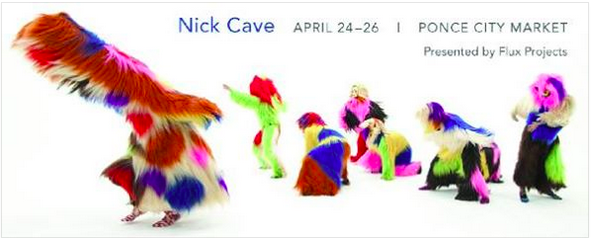
It’s been awhile since we wrote about Nick Cave and the inspired and inspiringly creative form of upcycling he applies in his “happenings”. It seems particularly appropriate that this particular Flux Project (sounds pretty pop-up, right?) takes place at Atlanta’s Ponce City Market, an adaptive reuse renovation of the historic 1926 Sears & Roebuck building into an urban community of hub of living, work and public space.

About the work

Up Right: Atlanta is a “call to arms, head and heart” for Cave initiates—the lead characters of this work. Through the performance, they are prepared mind, body and spirit to face the forces that stand in the way of self-hood, to enter a world over which they have complete control. Initiates become warriors of their own destiny.
Continue reading

Thanks Ed, This One Is For Our Go-To Marine Ecosystem Colleague

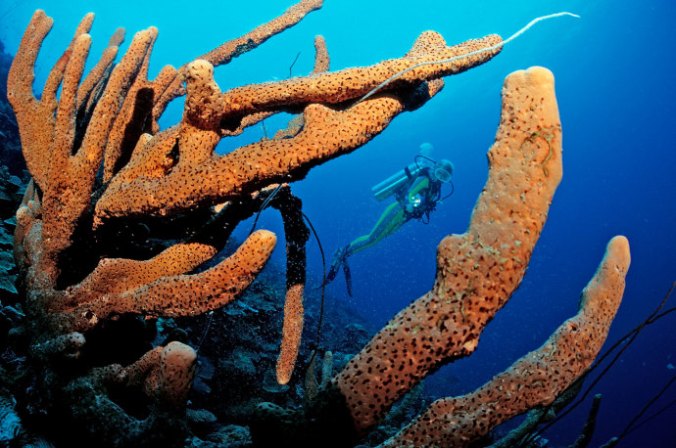
By ignoring sponges, we blind ourselves to a wondrous hidden biology and get a misleading view of evolution. CREDIT PHOTOGRAPH BY REINHARD DIRSCHERL/ULLSTEIN BILD VIA GETTY

By ignoring sponges, we blind ourselves to a wondrous hidden biology and get a misleading view of evolution. CREDIT PHOTOGRAPH BY REINHARD DIRSCHERL/ULLSTEIN BILD VIA GETTY

In the words of the FM disc jockeys of our youth, we send this one out to Phil:

In the final exams for our undergraduate zoology degrees, my fellow-majors and I were given an assortment of petri dishes, each of them containing an animal. Our task was to classify the creatures to the phylum level. Now, more than a decade later, I can conjure up only two of the test dishes. The first contained a dead cockroach (phylum: Arthropoda). The other contained a rock in a thin layer of water, with a green, slimy film on one of its faces. Midway through the allotted time, the invigilator observed aloud that many of us seemed to be trying to classify the rock. It was, he assured us, a rock. The unspoken corollary: we should perhaps focus instead on the slime. Continue reading

Invasive Species, Animated Variety

Our promise to not participate in the cute kitten economy remains steadfast. This is different. Really. It fits into this category, sort of, or perhaps this one.  Hopefully not this one. We like what we see here. Nicolas Deveaux‘s variety are certainly welcome on our pages, one of the many places they were intended to be:

Art & Food, Food & Art

9781614284321_custom-458a1838430962f2508b82415502232ea5d3b9a8-s400-c85

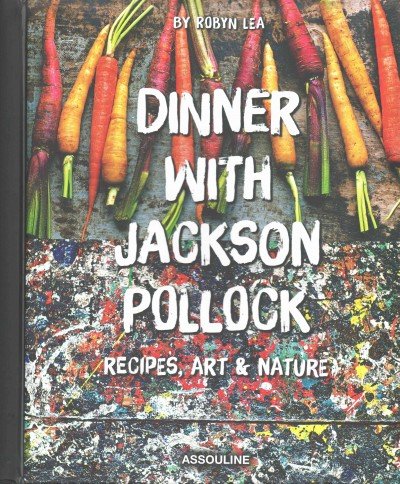
This book review, on the salt (thanks NPR, USA) covers two books for the foodie/arts-oriented audience we sometimes find lurking here:

…We all need to eat, and our preferences are intensely personal. Yet food is often overlooked in the biographies of anyone who wasn’t a chef or gastronomic icon.

Two new books focusing on the culinary lives of artists — Monet’s Palate Cookbook, by Aileen Bordman and Derek Fell, and Dinner with Jackson Pollock, by Robyn Lea — show this to be an oversight. The artists’ approaches to food provide a new way of thinking about their very different approaches to art, and of understanding the artists themselves.

As Francesca Pollock, the artist’s niece, writes in Dinner‘s introduction, “He painted the same way he cooked: Endlessly using leftovers; keeping and re-using; trying one color or shape and then another. There was never ever any waste. Painting, like cooking, was a way of living.”…

monets-palate_custom-6c7383097b98ea23fd7902df2b0f5ec14718a798-s400-c85

…Food only occasionally appears in Monet’s work, mostly in still-lifes. But though he never painted his private kitchen garden, at 2.5 acres, it was sizable in its own right, and surely at least as much a fixture in his life as its more famous blooming cousin. And Monet himself put a premium on food, according to the authors.

“Almost every franc that he earned, after taking care of his family’s welfare, he would spend on the freshest ingredients for meals and improving the interior and exterior of his house” — originally, a farmhouse and cider press, Bordman and Fell write. Monet, we learn, employed a cook, and his diet included eggs from his own chickens. He was actively involved in directing which vegetables were planted (he liked experimenting with new varieties), and which ones ended up on the dinner table… Continue reading

Prosek, Eels, Conservation

Screen Shot 2015-04-24 at 4.54.32 AM

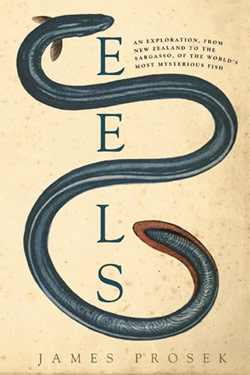
When we invited James Prosek to Kerala it was in part due to his artistic sensibility with eels, and a year after that invitation we gave that peculiar but enchanting sensibility more attention.  But by then we had already noticed his bird work at the Cornell Lab of Ornithology, which Seth had watched as it went up, and his family went to inspect at the time of his graduation from Cornell. And so while Prosek has a long history with aquatic conservation Raxa Collective had a new view of Prosek that gravitated to his work with birds.

We are now glad to be reminded of his aquatic passions, in a blog post about conservation by Silvia Killingsworth, the managing editor of The New Yorker, where Prosek features as one of several consulted experts on the fate of the “lowly” eel, which turns out to be much more fascinating than expected (do read the post from start to finish for both conservation and foodie reasons):

book_eels-lg…Both the Japanese and European species have been listed as endangered by the International Union for the Conservation of Nature.

And yet, according to James Prosek, an artist, naturalist, and the author of the book “Eels,” the American eel will never be listed under the Endangered Species Act. The E.S.A, Prosek told me last week, “works well for creatures that could go down to a population of six hundred, and eels will never get down to that. Maybe a million, and that won’t be enough to sustain collective consciousness”—it won’t sound bad enough to make the public care. Continue reading

Monemvasia

Monemvasia

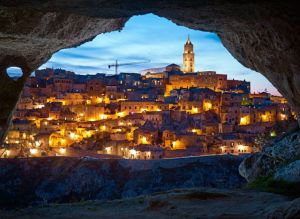
In 2008 Amie, Seth and Milo made a pilgrimage with me, accompanying my mother to her village in the mountains north of Sparta, in the region of southern Greece’s mainland known as the Peloponnesos. My mother’s village is in a region known for producing some of the finest olives on earth. More on that later. While there for some days we had outings, including to the walled fortress town of Monemvasia, built nearly 1,500 years ago.  In the picture to the right you can see a photo I took from inside a hermitage, a cave where various monks lived throughout centuries, above the walled city.

When I opened the New Yorker this week, I was struck by a photo accompanying one of the stories. It reminded me of the photo I took, but the story below could not be more different than the story I would tell about this hilltop town in southern Greece:

Inhabited since prehistoric times, the caves of Matera, in the Basilicata region, housed mostly the very poor until recent renovations. CREDIT PHOTOGRAPH BY SIMON NORFOLK / INSTITUTE

Inhabited since prehistoric times, the caves of Matera, in the Basilicata region, housed mostly the very poor until recent renovations. CREDIT PHOTOGRAPH BY SIMON NORFOLK / INSTITUTE

Take any road in Italy, look up, and you’ll see a lovely hilltop town: a campanile, a castello, a few newer buildings spilling down the slope, as if expelled for the crime of ugliness. But even amid this bounty there is something exceptional about Matera. It clings to a denuded peak in the extreme south of the country, in the Basilicata region—the instep of Italy’s boot. Travellers are often shocked by the starkness of Matera. Continue reading

Action, Louder Than Words, Easier Said Than Done

Screen Shot 2015-04-23 at 5.15.09 AM

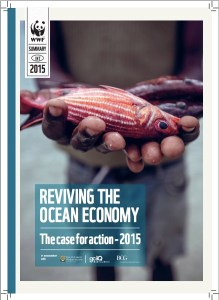
WWF today released a report at once alarming (the photo on the report cover to the right, put in context, is a visual gateway to reporting on par with writings of the gloom maven, which we cannot get enough of) and at the same time inspiring (the photo below of a young girl participating in mangrove restoration hints at the hope for the future), which is motivation enough to read it. The key word is action. Action we must take. And for our part we are committed to sharing as broadly and deeply and as often as possible on actions considered, actions taken, and the result of actions. Click the image to the right to download a low resolution pdf copy, or at least read the summary below from the WWF website:

The value of the ocean’s riches rivals the size of the world’s leading economies, but its resources are rapidly eroding, according to a report released by WWF today. The report, Reviving the Ocean Economy: The case for action – 2015, analyses the ocean’s role as an economic powerhouse and outlines the threats that are moving it toward collapse.

The value of key ocean assets is conservatively estimated in the report to be at least US$24 trillion. If compared to the world’s top 10 economies, the ocean would rank seventh with an annual value of goods and services of US$2.5 trillion.

Mangrove restoration. Mangroves store carbon and provide over 100 million people with a variety of goods and services, such as fisheries and forest products, clean water, and protection against erosion and extreme weather events. The rate of deforestation of the planet's mangroves is three to five times greater than even the average global forest loss.

© Jürgen Freund / WWF. Mangrove restoration. Mangroves store carbon and provide over 100 million people with a variety of goods and services, such as fisheries and forest products, clean water, and protection against erosion and extreme weather events. The rate of deforestation of the planet’s mangroves is three to five times greater than even the average global forest loss.

Continue reading

If You Happen To Be In New York City

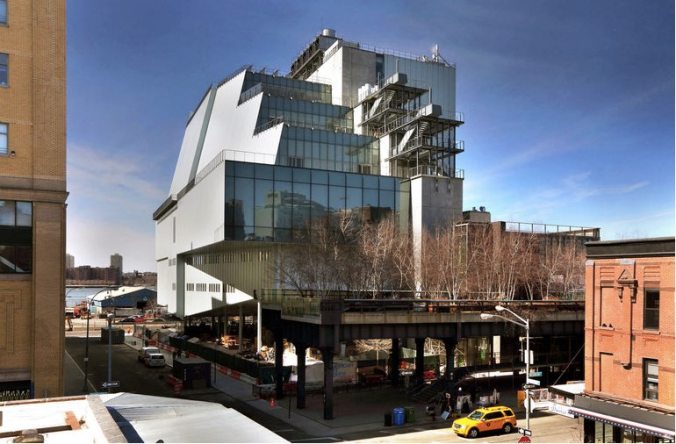
Whitney Museum of American Art. Photograph by Ed Lederman

Whitney Museum of American Art. Photograph by Ed Lederman

We have a thing for public spaces, especially when they combine with community activism. We try to get firsthand experience, and when we have learned enough about such places, we share what we can here. Ditto for museum exhibits, special library exhibitions, and unusual library thingys. It is not every day we get to announce the opening, or re-opening, of one of the greatest museums in the world, right in the midst of such a public space:

THE NEW WHITNEY OPENS MAY 1, 2015 BUY ADVANCE TICKETS NOW

The reviews convince us that this will be worth the visit, and this particular wording puts it in perspective:

The Whitney Museum of American Art, long the odd duck among the Big Four of Manhattan art museums—a cohort that includes the mighty Metropolitan, the starry Modern, and the raffish Guggenheim—takes wing on May 1st, when it reopens in a new, vastly expanded headquarters downtown. The fledging owes a lot to the Italian architect Renzo Piano’s ingenious building, on Gansevoort Street, which features six floors of shapely galleries, four open-air terraces, spaces for performance and screening, a library and reading rooms, a restaurant, a café, and an over-all feeling of seductive amenity—a bar on the piazza-like ground floor bodes to be one of the toniest trysting spots in town. It is likely to win far more fans than the Whitney’s old home, Marcel Breuer’s brutalist “inverted ziggurat,” which opened in 1966, on Madison Avenue, and which it vacated six months ago and leased to the Met. Piano’s museum stands at the southern end of the High Line and hard by the Hudson River, in what remains of the tatterdemalion meatpacking district. It looms like a mother ship for both gallery-jammed Chelsea, to the north, and the puttering West Village, to the south. It is instantly a landmark on the cultural and social maps of the city—and on its poetic map, as a site to germinate memories. Continue reading

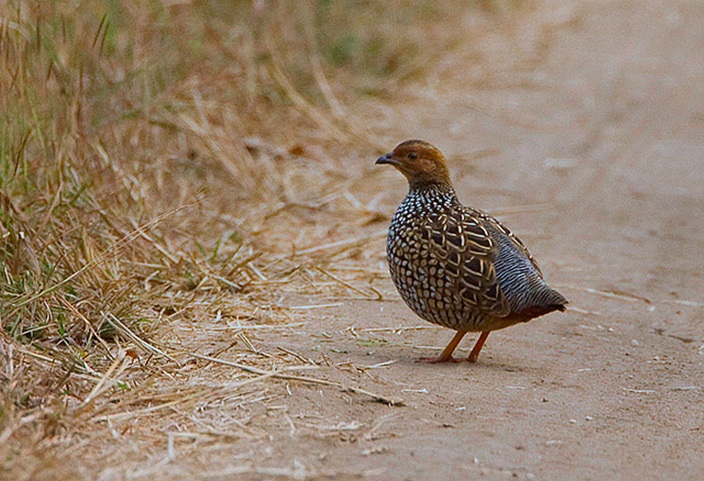
The Rufous-throated Solitaire

Back when I wrote about our ascent of Blue Mountain Peak, I mentioned that the Rufous-throated Solitaire is a bird that can be pretty tough to spot.

In that prior post, I had a picture of the same individual featured in the video above. If you turn the volume up, you can hear all the shrill details of the bird’s call, and imagine sounds like those echoing through the misty hills — the guidebook to Jamaican birds actually describes the vocalizations as “ventriloquial,” which we found to be accurate.  Continue reading

Green, Cause And Effect, Explained

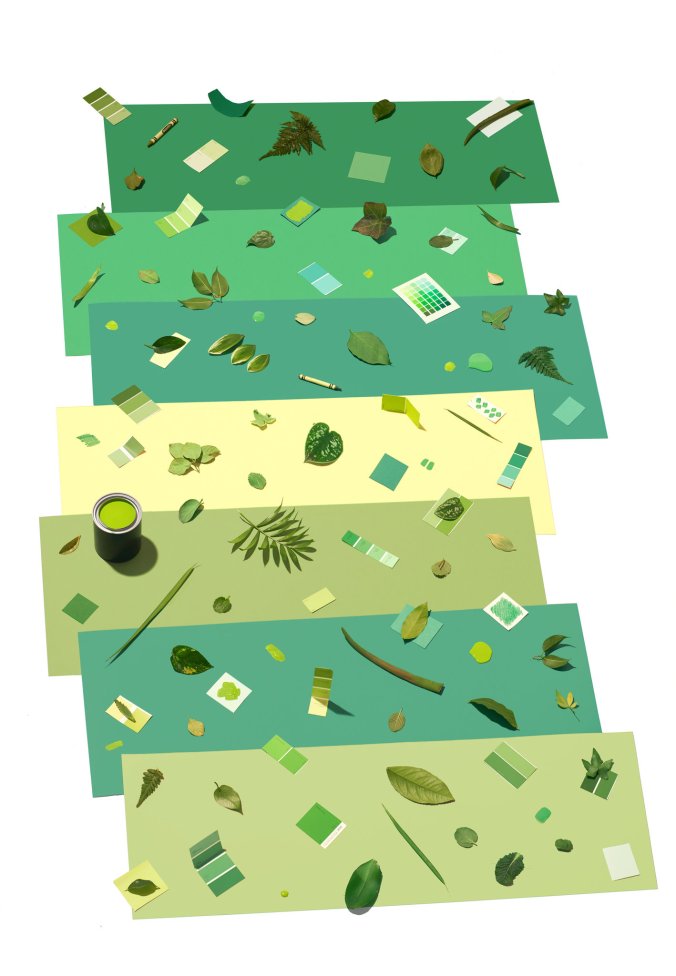
Photo Illustration by Andrew B. Myers for The New York Times

Photo Illustration by Andrew B. Myers for The New York Times

Considering she is one of our favorite science writers, it has been a while; just over a year in fact, since we last we read of her, at which time she was in one of our favorite locations. The wait was worth it, because this article helps us understand why we reference green so often in these pages:

…Goethe praised green as the “soothing” marriage of the chromatic opposites yellow and blue. George Washington called green “grateful to the eye,” and painted his Mount Vernon dining room a brilliant verdigris. And let’s not forget that everybody’s favorite elephant, Babar, wore a dapper suit in a “becoming shade of green.” Continue reading

Ethiopia, Diaspora, Community, Success

21MARATHONweb3-sfSpan-v3

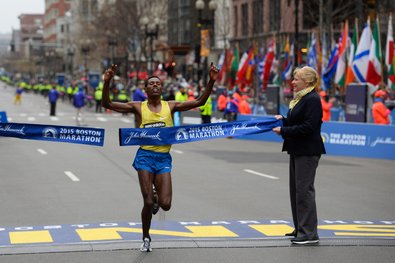
C.J. Gunther/European Pressphoto Agency. Lelisa Desisa crossing the finish line. As he rounded Hereford Street for a well-honed sprint to the finish, he cast off his hat in pre-emptive triumph and waved to the crowd.

Today’s news about an Ethiopian man winning the Boston Marathon gives me the hook to write a post that has been on my mind since Friday. Back before I knew much about Ethiopia from actual experience, I heard an interview with a man from Ethiopia, an emigre in New York City. Adopted man. Adopted city. And a worldview, a lifeview, that I could relate to with a powerful intensity that I did not fully understand at the time:

This Time, Lelisa Desisa Wins Boston Marathon for Himself

Something in that interview began changing the structure of my thoughts about Ethiopia. And then within months of that one of our colleagues from the Zaina Lodge project started telling me that the next place I “must, must, must” explore is Ethiopia. The dial moved even further because that colleague told me stories I could hardly believe about the beauty of Ethiopia. And when I finally made my first visit, I was nonetheless awed beyond what the colleague had led me to expect. So, Ethiopia has been on my mind every day for a couple months now.

And then a couple of days ago, another Ethiopian emigre to New York City checked in to Marari Pearl. Continue reading

A Traveler in My Own Land – Introduction

Dear coffee-stained diary,

1016402_10151817477384853_833963116_nIt’s been a while since you and I turned pages together, but then there were no new stories to tell. Now we say ‘hello’ at the start of a new line for am on the road again; taking paths that wind through tea gardens and forests, hug beaches and overlook a harbor in this homeland I call Kerala (India). The sights are plenty, so are the stories.

Yours to know are tales of ships docking here to trade in spices and those of communities striving to keep their identities alive. Yes, you’ve had your generous share of the history of the Chinese fishing nets but perspectives are things of beauty. Oh, I almost forgot the people. Continue reading

Stripes in Focus

Understanding Depth of Field

I get a lot of queries asking me how I blur the background in my images. First let me say that I don’t manipulate my images. There are some folks on the internet who do it regularly using photoshop…but in my case it’s mainly due to shallow depth of field by using a long tele lens and lower aperture number.

A lot of beginners feel that equipment is the main thing for good images. Not necessarily…though is plays an important role. The primary thing is understanding the key concepts of photography, which is as simple as understanding the exposure triangle: the combination of ISO, aperture and shutter speed and what kind of impact they have on images. Continue reading

The Great Golden Swallow Gear Review: Part 4

A mongoose in the Havahart 1090

Havahart Medium 1-Door Collapsible Easy Set Trap, Model 1090:

Justin:  Great product all-around.  Lightweight, foldable, and easy to set once you’ve learned how to do so.  It’s a solid unit that can take some hits and very rarely did the trap spring by itself.

Garmin Oregon 650 3-Inch Worldwide Handheld GPS with 8MP Digital Camera:
Justin:  Most reliable and intuitive GPS that I’ve ever used.  The touch screen and layout is user-friendly and easy to navigate.  I chose this unit based on reviews that claimed it’s its high-sensitivity, WAAS- and GLONASS-enabled GPS receiver and HotFix® satellite prediction would allow for reliable accuracy, even in deep forest in remote locations.  Sure enough, even under the most dense canopy cover, we were always able to quickly gain satellite reception and an accuracy of 30ft or better.  In less demanding environments, satellite precision was 5ft or less.  The ability to load Continue reading

Full-Spectrum Farming

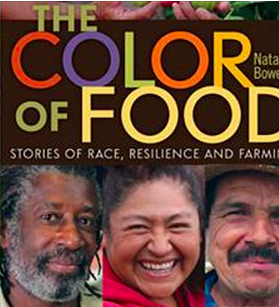
We haven’t met Natasha Bowens but her perspectives on the cultural empowerment of growing one’s own food tell us she’s a kindred spirit.

 Storytelling & Photography

The Color of Food is photographic and documentary in nature because I wanted to capture the personal stories of these farmers while also changing the image of agriculture as it is currently portrayed in the media. This project is not only political in it’s message, but also helps us celebrate and preserve the history, tradition and beautiful culture that make up our agricultural communities.

Continue reading

Sun, Sense, Sensibility

In Hawaii, where 12 percent of the homes have solar panels, handling the surplus power is putting pressure on the state’s biggest utility, which is fighting to reduce what it pays for the energy. By Erik Braund and Eugene Yi on Publish Date April 18, 2015. Photo by Kent Nishimura for The New York Times.

In Hawaii, where 12 percent of the homes have solar panels, handling the surplus power is putting pressure on the state’s biggest utility, which is fighting to reduce what it pays for the energy. By Erik Braund and Eugene Yi on Publish Date April 18, 2015. Photo by Kent Nishimura for The New York Times.

Thanks to the New York Times for their ongoing coverage of how we manage to make do on this planet, including in the various well known gardens of Eden:

Continue reading