Standing, Healthy Forests Are Essential

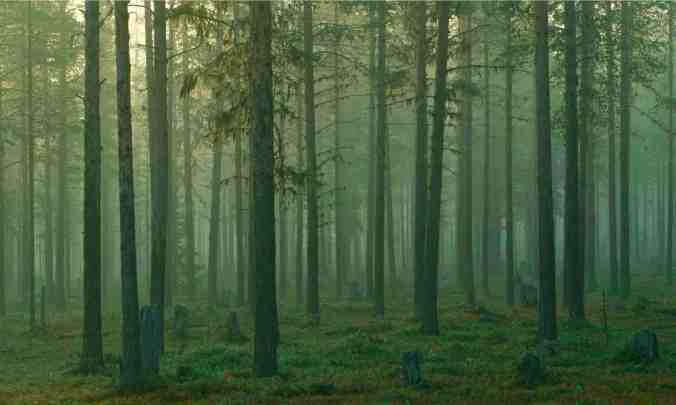
A managed forest near Jokkmokk, Sweden. Humanity will not limit global heating to safe levels without forests and woodland. Photograph: Peter Essick/Aurora/Getty Images

We thank Patrick Greenfield for this opinion in the Guardian:

Root and branch reform: if carbon markets aren’t working, how do we save our forests?

The world has looked to offsetting schemes to protect forests, fund conservation and fight the climate crisis – but many fail to fulfil their promises. Here are five ways to keep our forests standing

Keeping the world’s remaining forests standing is one of the most important environmental challenges of the 21st century. Continue reading
Cashmere, Goats & Accounting Flaws

An aerial photo of goats grazing on the Mongolian Plateau.

Goats grazing on the Mongolian Plateau in Central Asia. Gilles Sabrié for The New York Times

Goats have appeared in our pages from time to time over the years–usually related to their ecological contributions. Thanks to National Public Radio (USA) for the article below, which references the New York Times op-ed where the photo to the left was on display. Now it is time to talk about flaws in the accounting for the true costs of cashmere:

A goat that provides cashmere fibers grazes on foliage. Finnbarr Webster/Getty Images

The uncomfortable hidden costs behind the rise in cheap cashmere

The coveted material known for its luxurious softness has become much more accessible and affordable in recent years. But at what cost?

Who are they? Well, the fellers providing the goods are cashmere goats, many of whom live in parts of Central Asia, like northern China and Mongolia. Continue reading

Responsibility For Technology

Illustration by Ricardo Tomás

Cal Newport’s essay is an important declaration of our responsibility with regard to regulating technology:

It’s Time to Dismantle the Technopoly

As technology accelerates, we need to stop accepting the bad consequences along with the good ones.

In the fall of 2016—the year in which the proportion of online adults using social media reached eighty per cent—I published an Op-Ed in the Times that questioned the popular conception that you need to cultivate a strong social-media brand to succeed in the job market. “I think this behavior is misguided,” Continue reading

Authentica, Nicoya Peninsula

Traveling by car from Monteverde to Palo Verde National Park should take about 90 minutes

The Nicoya Peninsula is one of the Blue Zones we have mentioned previously. For our family there is a memorable connection to the wetlands area where we are opening a shop this month, just as there was in Tamarindo. In 1998 we had a dozen family members visiting and organized a small bus to transport us to Arenal, Monteverde, and onward to the Palo Verde National Park. Continue reading

Nature’s Choice, Best Science Images

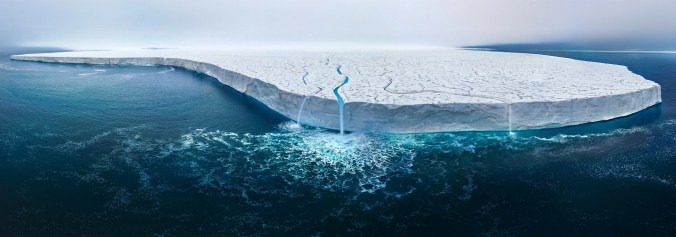
Credit: Thomas Vijayan

We encourage you to go to Nature to see the entire selection, if you think this one is amazing:

Melt warning. This shot of melt water pouring through the Austfonna ice cap on the Arctic island of Nordaustlandet, Norway, won the Nature category in the 2023 Drone Photo Awards. “I have visited this place several times before, but last year it was disheartening to witness the sea ice melting as early as June,” said photographer Thomas Vijayan.

Cop28 Resolution Translated Into Common Language

Peter Dejong/Associated Press

David Wallace-Wells keeps our attention focused on the real message out of Dubai:

It only took 28 years. When Sultan Ahmed Al Jaber banged his gavel on the resolution text of COP28 in Dubai on Wednesday, it marked what has been widely called a historic achievement: the first time nearly every country on Earth agreed that oil and gas play a role in driving global warming, and the first time they nodded toward the need for a fossil fuel drawdown. Continue reading

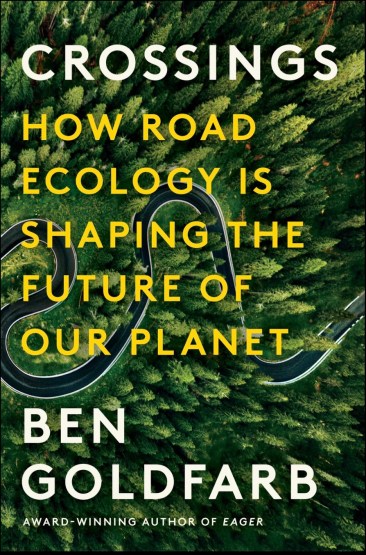
Crossings, By Ben Goldfarb

This journalist and author of the book to the left, surprisingly, has not appeared in our pages before. Here is what he says about himself:

Hi, I’m Ben, an independent conservation journalist. I’m the author of Crossings: How Road Ecology Is Shaping The Future of Our Planet, named one of the best books of 2023 by the New York Times, and Eager: The Surprising, Secret Life of Beavers and Why They Matter, winner of the 2019 PEN/E.O. Wilson Literary Science Writing Award.

And about the book he shares what others have said:

An eye-opening and witty account of the global ecological transformations wrought by roads, from the award-winning author of Eager.

Some 40 million miles of roadways encircle the earth, yet we tend to regard them only as infrastructure for human convenience. While roads are so ubiquitous they’re practically invisible to us, wild animals experience them as entirely alien forces of death and disruption. Continue reading

Beavers’ Resilience On Display In Canada

Beavers are not always welcome, but where they belong, they are a wonder to behold. Ian Frazier offers this dispatch from the great North:

Deep in the Wilderness, the World’s Largest Beaver Dam Endures

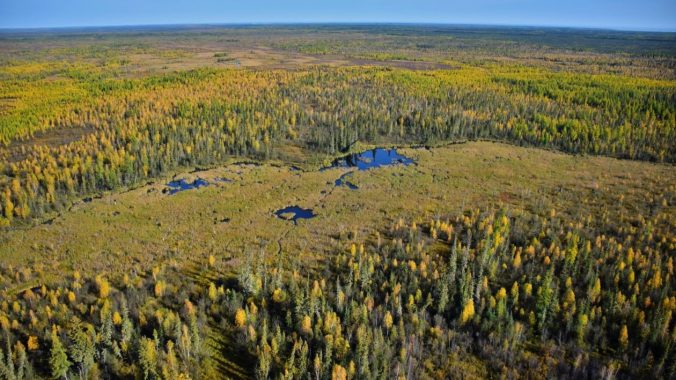
The largest beaver dam on Earth was discovered via satellite imagery in 2007, and since then only one person has trekked into the Canadian wild to see it. It’s a half-mile long and has created a 17-acre lake in the northern forest — a testament to the beaver’s resilience.

Wood Buffalo National Park, the largest national park in Canada, covers an area the size of Switzerland and stretches from Northern Alberta into the Northwest Territories. Continue reading

Copping To The Resolution

United States’ Special Presidential Envoy for Climate John Kerry(L) and China’s special envoy for climate change Xie Zhenhua (R) attend a press conference during the 2023 United Nations Climate Change Conference (COP28), in Dubai, United Arab Emirates, on December 13th, 2023. Martin Divisek/ZUMA

It started on a flawed premise, that a petrostate bigwig could honestly lead the forum to a legitimate outcome. We knew it was not going to end dirtier than it should have, but still we must parse what just happened. Thanks to Mother Jones for republishing Damien Carrington’s explanation from the Guardian:

Good Cop, Bad Cop: Breaking Down the UN’s New Climate Resolution

Some call the COP28 agreement “historic,” others call it weak. Here’s why.

Language on coal power was no stronger than that of Cop26 in 2021. Photograph: Maxim Shipenkov/EPA

The decision text from Cop28 has been greeted as “historic,”  for being the first ever call by nations for a “transition away” from fossil fuels, and as “weak and ineffectual” and containing a “litany of loopholes” for the fossil fuel industry. An examination of the text helps to explain this contradiction.

Reducing Fossil Fuel Use

The text states the huge challenge with crystal clarity: Continue reading

Cactus Conundrum

Illustration by Nicholas Konrad / The New Yorker

Cactus is an infrequent topic in these pages, sometimes with attention to their beauty–and that leads to an environmental problem we had not been aware of:

Inside the Illegal Cactus Trade

As the craze for succulents continues, sometimes the smuggler and the conservationist are the same person.

The succulent Dudleya pachyphytum is known as the Cedros Island live-forever. It has also been called the panda bear of plants, on account of being so cute. It has sweet, chubby leaves, is pale, and is powdered as if with confectioner’s sugar, and its shape is most often that of a rose. D. pachyphytum grows slowly, as succulents generally do, and many specimens would fit in your coat pocket. Continue reading