Gandhi’s Deep Ecology

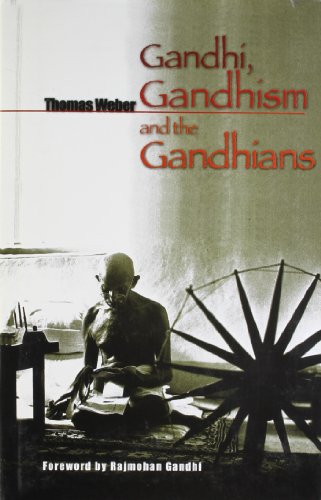
Among the many writings about Gandhi, Thomas Weber’s books seem to be held in esteem in India, with the book to the right being the most recent:

Mahatma Gandhi and his philosophy of truth and non-violence have intrigued the world for decades. Looking at the Western and Indian influences that had gone into making Gandhi the Mahatma, and the central importance of Gandhi to non-violent activism, these essays reclaim the power of truth and non-violence, which can still change the destinies of people and nations. In this collection, Weber discusses Gandhi, his ideology, and how India and the rest of the world is interpreting and reinterpreting the Mahatma. The doctrine of conflict resolution theory, new environmentalism, peace research, deep ecology, and Buddhist economics based on Gandhian principles renews the world`s belief in Mahatma and his teachings for our lives and our times.

One of the most visible and active Gandhi-focused websites posted an essay by Weber* about Gandhi’s influence on what eventually came to be known as deep ecology, and that seems a fitting reference on our site to commemorate this year’s birthday, which is also a national holiday in India.  A few snippets: Continue reading

Action Capture, Part 2


I captured this leaping Bonnet Macaque was photographed at Daroji Sloth Bear Sanctuary near Hampi, Karnataka. Although the photograph represents a split second of activity on the animal’s part, it represents a great deal of thought and patience on mine.

One of the important aspects in wildlife photography is to study the behaviour of your subjects, which will help you in your planning and image making. In this case I noticed the monkeys had a pattern of climbing the left rock and jumping to the right rock to get onto the trees on that side. Continue reading

Happy Birthday, Mahatma, And Thanks Also For The Mangos

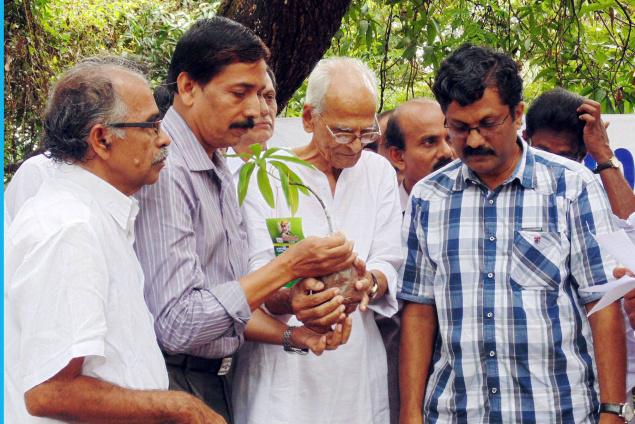
The freedom fighter Appukuttan Poduval handing over mango tree grafts cultivated from shoots of the historic mango tree planted by Gandhiji at Payyannur in 1934.


Nonviolence. India. Artisanal salt. Artisanal everything else. Among the many reasons to celebrate his birthday today, Raxa Collective is pleased to have learned and is happy to share:

Planting saplings grafted from twins detached from a Malgoa mango tree planted by Gandhiji at Payyannur nearly eight decades ago is a novel way of celebrating Gandhi Jayanthi. Continue reading

Community, Alive And Well, Downtown NYC


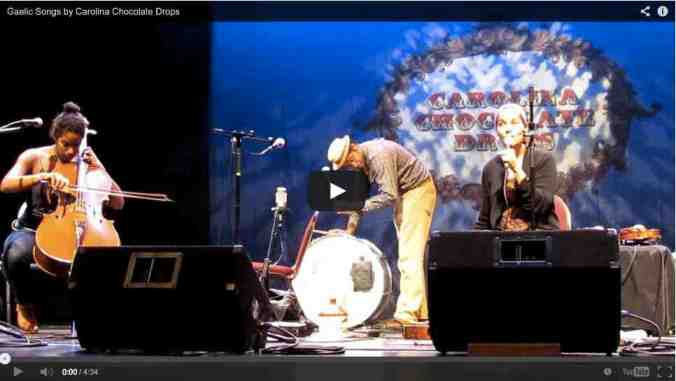
Among the more interesting revelations, during his tenure as Editor of the New Yorker magazine, is that he is a big fan of The Boss.  He has posted on the magazine’s website several times following his profile of Bruce Springsteen in the magazine last year.  We normally shy away from posts about music on this site, for the same reason we shy away from cute kitten videos: you do not need more of that.  But David Remnick’s writing is different.  It is about community as much as it is about music.  And his post today about this event in New York is not only about community, but about keeping heritage alive by infusing it with innovation–that is, entrepreneurial conservation:

When it comes to “Inside Llewyn Davis,” the new Coen brothers movie, I’ll respectfully leave the critical work to my colleagues Anthony Lane and David Denby, except to say that the movie’s appreciation of its great subject—the folk-music scene in Greenwich Village in the period just before Bob Dylan’s arrival—is wry, but full and soulful. Inspired by Dave Van Ronk’s wonderful memoir, “The Mayor of MacDougal Street,” and many other sources, the Coens have their fun about the scene, but their love for the music—the depth and variety of it—could not be more evident. Continue reading

Thazhathangadi Snake Boat Race

Photo credits : Ramesh Kidangoor

Photo credits : Ramesh Kidangoor

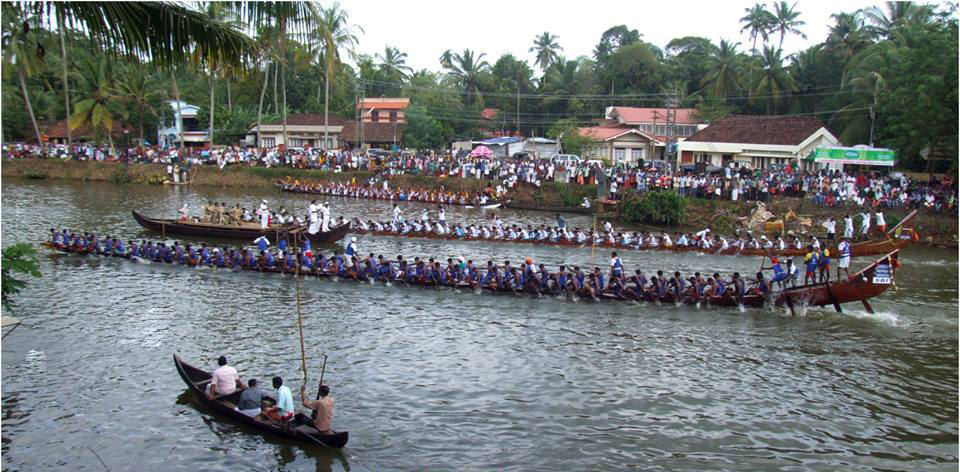
Thazhathangadi is  located near to Kottayam town, by the bank of River Minachil. It is one of the oldest trade centers in Kerala and during its prime it was essential to the trade in the region.  At the end of the Onam Festival Thazathangadi hosts the oldest snake boat competition in Kerala . Continue reading

Food Futures

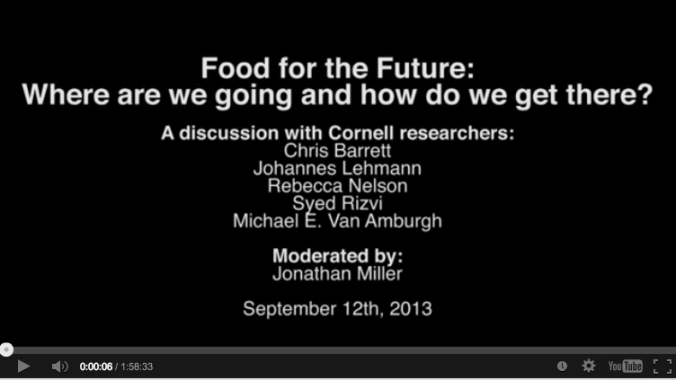
No one would mistake this for entertainment.  It is two hours of research findings, all wrestling over complex food issues. No gastronomic delights. Rather, the puzzle over how to feed a rapidly multiplying human population.  Click the screen above to go to the video:

By 2050, 2 billion more people are expected to be vying for food and energy. Access to fresh water and arable land will be heavily constrained. And the food supply for the world’s 9 billion people will be increasingly produced under flood conditions, drought or both, as climate change accelerates. Continue reading

The Big Thaw

2009 Jökulsárlón, Iceland. Destined to melt, an 800-pound chunk of ice glows in moonlight, from the National Geographic story “Meltdown.”

2009 Jökulsárlón, Iceland. Destined to melt, an 800-pound chunk of ice glows in moonlight, from the National Geographic story “Meltdown.”

On our pages we like to narrate stories, sometimes stories that people would rather not hear. If a “picture is worth a thousand words” then James Balog’s images for National Geographic tell a poignant narrative.

The pictorial language has the unique ability to penetrate the human heart and mind and photography has the power to alter the course of civilization through perception. My main subject has been the collision between human needs and nature, it’s always seemed to me that’s one of the pivotal issues of our moment in history Continue reading

Orangutans Will Appreciate Your Support

The well-known supporters of World Land Trust make a strong case for all of us to to our part during this upcoming campaign:

Big Match Fortnight

Date and Time: 2 – 16 October 2013

Big Match Fortnight is World Land Trust‘s (WLT) major fundraising effort for 2013. During the fortnight all donations to WLT will be matched making them go further.  Continue reading

Naivedyam – Kadum Payasam

Photo credits : Ranjith

Photo credits: Ranjith

Naivedyam (Kadum Payasam) is offered on banana leaves after a pooja ceremony at many South Indian temples. The traditional dessert is placed before the temple deity and consumed as a holy offering. Continue reading

Extinction Reversal

When Phil first mentioned the series he would share here, the fit could not have been more perfect. It was based on his own experience as a diver; on his own informed understanding of environmental challenges at once universal and personal (as a diver, he has witnessed changes that disturb him); on his role as a citizen science participant; and on his belief in entrepreneurial conservation as a solution to some otherwise intractable challenges.

We prefer the first person here, but also share as much as we can of what science has to say on these subjects through our reliable cadre of science journalists. Carl Zimmer, over at National Geographic‘s Phenomena site, writes about genetically engineering in the wild, which raises important, obvious and not so obvious ethical issues:

Back in April, I wrote in National Geographic about the provocative idea of bringing extinct species back to life. In the five months that have passed since then, I haven’t spotted any mammoths or saber-tooth lions drifting through my front yard. If “de-extinction” ever does become real, it won’t for quite a while.

What I have seen over the past five months is a new conversation. Part of the conversation has revolved around the specifics of de-extinction. Some people are open to the possibilities of rebuilding genomes and embryos of vanished species. Some people find it a flashy distraction from the real work of fighting the current wave of extinctions. Continue reading

How To Get To And From Kerala

As FAQs go, the one we answer most often at Raxa Collective is: what is the best way for me to get to Kerala? As answers go, we could not do better than refer you directly to the video above and for that we give thanks to our colleagues at Kerala Tourism.  Try not to smile every time the narrator says the name of the capital city…

Kamal Mahal – Hampi, Karnataka

Photo credit : Ramesh Kidangoor

Photo credit: Ramesh Kidangoor

Hampi is a World Heritage Site village located on the southern bank of the river Tungabhadra in Karnataka. Kamal Mahal is one of Hampi’s secular or non-religious structures  Its unusual design blends elements of Muslim and Hindu architecture. The building’s function is not exactly known but the quarters are believed to have been used by Hampi’s female guards.

Speaking Of Science Journalism

“This is our artificial sun,” Joel Ager said, as he gestured with mock grandeur toward a metal box about the size of an old computer tower. A glowing lens, which looked like it was transplanted from a projector, shined out of a hole in its side. It was aimed at a beaker filled with water sitting a few inches away. Ager’s colleague produced a metallic toothpick-sized stick, alligator-clipped it to electrodes, and dunked it. Under the light, the submerged stick became a luminous red.

And this is Annalee Newitz, Andrew Revkin said, as he got on with down-to-earth reporting at his Dot Earth blog.  She writes clearly. She looks funny (as in, she has a sense of humor, which is equally clear from her writing). This is Annalee Newitz in her own words.

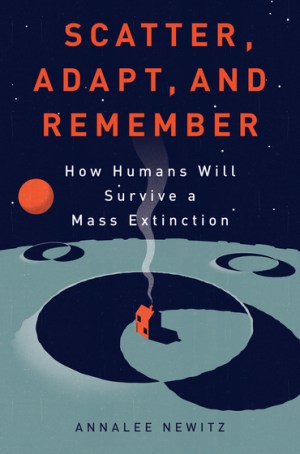
And this is Annalee Newitz, in her own words, on the topic of the end of the world as we know it (click the image above, or here, to go to the full version of her recent post on the New Yorker website) in her new book:

This speculative and hopeful work of popular science focuses our attention on humanity’s long history of dodging the bullet of extinction—and suggests practical ways to keep doing it. From bacteria labs in St. Louis to ancient underground cities in central Turkey, we discover the keys to long-term survival. This book leads us away from apocalyptic thinking, into a future where we live to build a better world.

Science reporting is an art as much as it is anything else. Facts are an essential ingredient (along with humor and others) in our daily doses of information-sharing.

Science Journalism And The Dynamics Of Democratizing Commentary

Wellcome Images

Wellcome Images

Lovely, thoughtful, radical stuff happening over at this old school publication as it navigates the new world of social media (click the image above to go to the source):

Comments can be bad for science. That’s why, here at PopularScience.com, we’re shutting them off.

It wasn’t a decision we made lightly. As the news arm of a 141-year-old science and technology magazine, we are as committed to fostering lively, intellectual debate as we are to spreading the word of science far and wide. The problem is when trolls and spambots overwhelm the former, diminishing our ability to do the latter. Continue reading

Zombie Ants

African ant (Pachycondyla sp) attacked by an insect eating Fungus (Cordyceps sp) Guinea, West Africa. Photo © PIOTR NASKRECKI/ MINDEN PICTURES/National Geographic Creative

A few years ago I wrote about a curious and very specific relationship between some beetles and their wood-eating fungus symbiotic partner, and we’ve also shared other work on crazy parasitic creatures that can alter their hosts’ behavior, sometimes pretty radically (warning, creepy video). Believe it or not, the photo above isn’t some weirdly-antlered African ant–well, actually it is, but the antlers aren’t part of the ant’s body, they’re the spore-spreading apparatus of a parasitic fungus. Read on for more about the real-life World War Z that has been going on between ants (as well as other insects) and a family of zombifying fungi for millennia.

Earlier this week I went to a lecture hosted by Cornell’s Department of Neurobiology and Behavior titled “Zombie Ants: the precise manipulation of animal behavior by a fungal parasite.” The lecturer was David Hughes, Professor of Entomology at Penn State University, whose faculty webpage provides PDF links to most of the articles that he has contributed to if you’re interested in checking out the actual journal pieces on this topic.  Continue reading