170 Million Year Old Barometer For River Water Quality

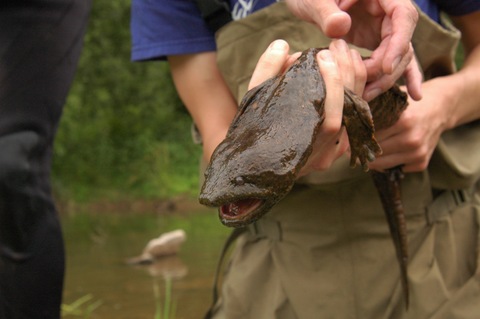
Matt Neff from the Smithsonian’s National Zoo holds a hellbender salamander that he caught in the Blue Ridge mountains of Virginia. Scientists hope to learn how healthy and viable the population is. Photo by Rebecca Jacobson

Thanks to the Public Broadcasting System of the USA for this story segment as their Science Wednesday feature this week:

…At the end of a long day snorkeling in the clear streams of southwestern Virginia’s Blue Ridge Mountains, Terrell and her team assumed their positions. As three scientists lifted a flat, heavy rock, Terrell groped underneath the stone, let out a muffled cry through her snorkel mask and popped out of the water.

“Where did it go? Did you see it?”

The biologists checked their nets and scoured the water. Sarah Colletti from the Aquatic Wildlife Conservation Center pointed at the slick rocks under the water. “Right there, he’s looking right at you.” One of the biologists lunged, secured a firm grasp, and triumphantly pulled it out: a nearly two-foot long hellbender. Continue reading
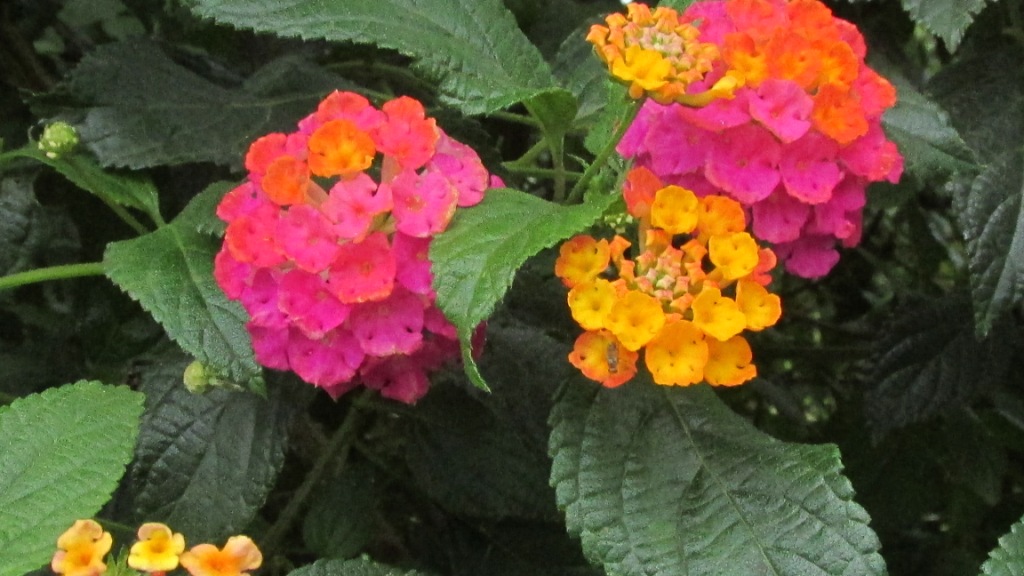
Common Lantana – Lantana camara

Lantana

Lantana

Lantana is native to the American tropics but is now naturalized throughout India. A widespread invader, this plant has taken over large tracts of land. Lantana is an evergreen, strong smelling perenial with stout recurved prickles. It is commonly used in home and public gardens as the flowers and subsequent fruit attract butterflies, moths and birds. The leaves and stems are also used in traditional medicines. Continue reading

Eid ul-Fitr – Muslim Festival

Eid ul-Fitr is celebrated after the conclusion of Ramadan, the Muslim month of fasting. Ramadan is always in the ninth month of the lunar year, so the date it falls in the calendar year varies. During this time Muslims abstain from eating and drinking throughout the day, and spend time in prayer to purify the body and soul. The onset of the festival is indicated by the sighting of the crescent Moon on the Western horizon. Ramadan is celebrated by Muslims all over the world. Continue reading

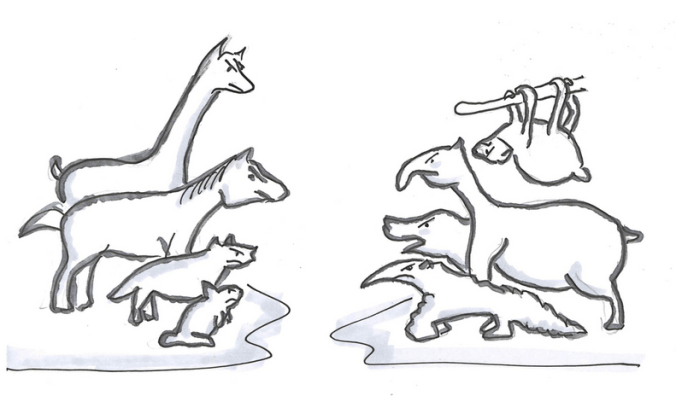
Prehistoric Hemispherical Face-Off

Robert Krulwich/NPR

Wondrous prehistory, thanks to Robert Krulwich:

This is the story of two continents doing battle, North America versus South America. It is also a biological mystery.

For a very long time, North America and South America were separate land masses. The Pacific Ocean slipped between them, flowing into the Caribbean. The Isthmus of Panama was there, but it was underwater. The two continents didn’t touch.

As a result animals on both continents, especially mammals, evolved independently. They didn’t, couldn’t, interbreed. And yet, both North and South America had mountains, plains, long lazy rivers, deltas and supported similar forms of mammalian life. In fact, when biologists look back at the fossils, they found almost mirror like populations. Continue reading

Innovation, Collaboration & Illustration

Thanks to the man who, without fail, coaxes a smile with another New York Times blogpost keeper:

After spending the first 15 years of my life drawing and painting analog, I first dabbled in computer-generated graphics in the mid-1980s on a Sinclair ZX81, followed by an Amstrad CPC664. “Drawing” with these machines meant entering strings of binary code to manipulate ASCII codes into something vaguely resembling images. Continue reading

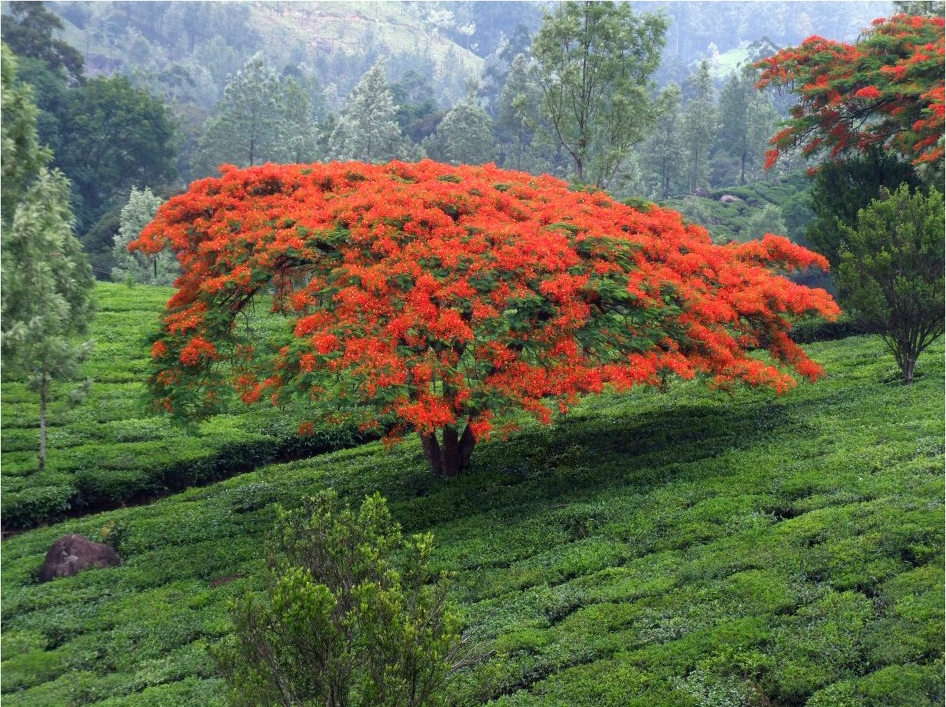
Beauty Of Munnar – Gulmohar Trees

Photo credits: Ramesh Kidangoor

Photo credits: Ramesh Kidangoor

Located at 5000 ft above sea level, Munnar hill stations were the summer resorts of the British administration in South India. Although famous for tea plantations flowering trees and plants thrive in Munnar and the surrounding region. Continue reading

Ecological Modernism Elucidated

Thanks  to Yale Environment 360 for this big mental poke:

New Green Vision: Technology As Our Planet’s Last Best Hope.

The concept of ecological modernism, which sees technology as the key to solving big environmental problems, is gaining adherents and getting a lot of buzz these days. While mainstream conservationists may be put off by some of the new movement’s tenets, they cannot afford to ignore the issues it is raising.

by Fred Pearce

There is a new environmental agenda out there. One that is inimical to many traditional conservationists, but which is picking up kudos and converts. It calls itself environmental modernism — which for many is an oxymoron. Continue reading

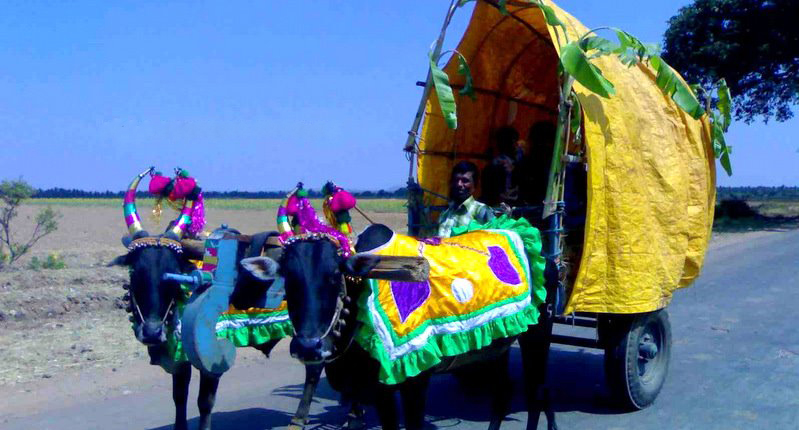
Bull Festival Karnataka

Photo credits: Ramesh Kidangoor

Photo credits: Ramesh Kidangoor

The Bull Worshiping Festival is celebrated by Indian farmers, mainly in the State of Karnataka. On this day farmers bathe their bulls, decorate them with ornaments and shawls, paint their horns, and place garlands of flowers around their necks. Continue reading

Kettuvallom – Houseboats

Photo credits:Ramesh Kidangoor

Photo credits: Ramesh Kidangoor

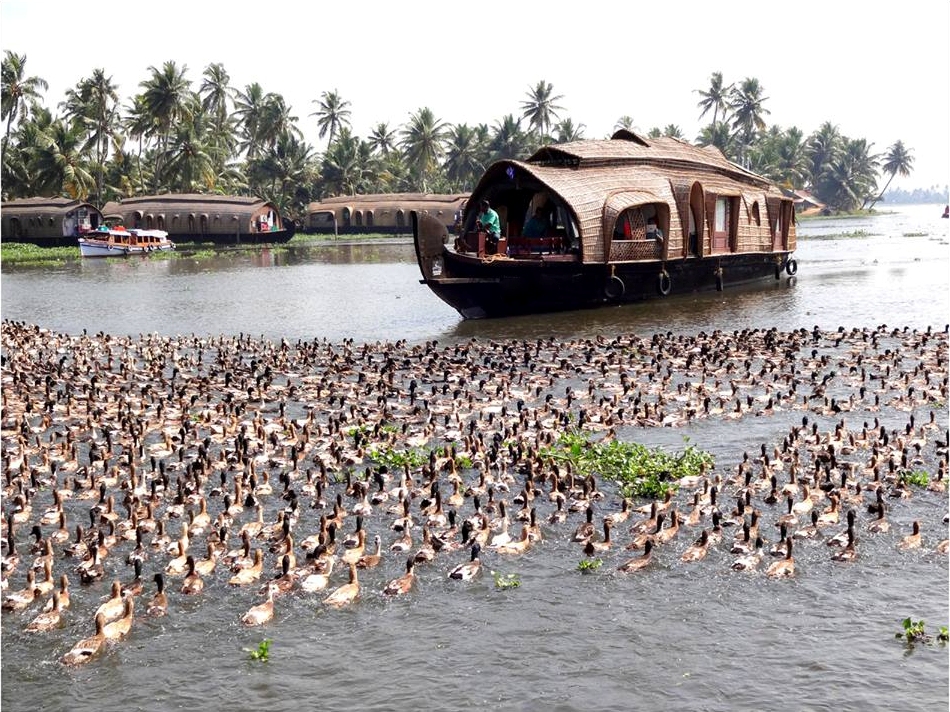
The publishers of the most recent edition of the Lonely Planet India place Kerala’s backwaters as second only to the Taj Mahal in their “must do” list of the country. The houseboat experience is partially the reason why. Traditional Kettuvallom are thatch-covered barges built to carry rice and other commodities through the waterways that once formed the lifeline of Kerala’s transportation systems. Continue reading

Spirit + Energy + Water + Patience + Talent = National Geographic Traveler Photo Contest Winner

Photo and caption by Wagner Araujo

Thanks to the National Geographic Society’s many innovations, and in particular for the small ones like this photo contest:

I was in Manaus, Amazonas, during the Brazilian Aquathlon (swimming and running) championship. I photographed it from the water and my lens got completely wet, but there was so much energy in these boys that I just didn’t worry about that. —Wagner Araujo Continue reading

Protecting The Largest Forests

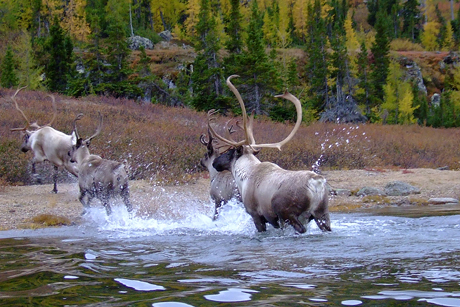
Photo courtesy Valerie Courtois, Canadian Boreal Initiative. Migratory tundra caribou in the boreal region of Quebec migrate hundreds of miles and require large tracts of protected wilderness.

Photo courtesy Valerie Courtois, Canadian Boreal Initiative. Migratory tundra caribou in the boreal region of Quebec migrate hundreds of miles and require large tracts of protected wilderness.

Thanks to Krishna Ramanujan for this story in the Cornell Chronicle about the new mega-scale of conservation planning:

At least half of Canada’s 1.4 billion acre boreal forest, the largest remaining intact wilderness on Earth, must be protected to maintain the area’s current wildlife and ecological systems, according to a report by an international panel of 23 experts. Continue reading