
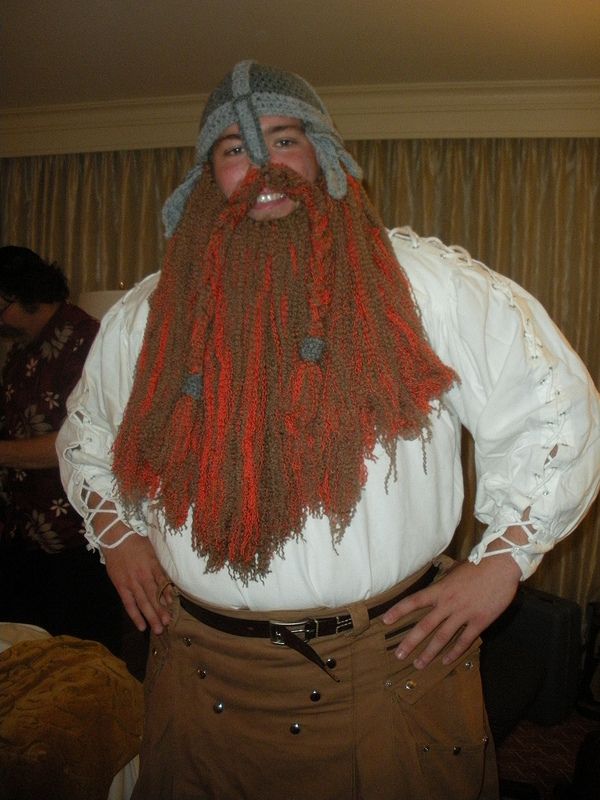
A fan sporting a dwarf beard and helmet woven from yarn. Both photos of convention by Flickr user Caliopeva.
My brother Milo and I spent the July 4th long weekend with some family friends in Baltimore, which neither of us had visited before. We were all there primarily for the North American Discworld Convention of 2013, a gathering of fan(atic) readers of Sir Terry Pratchett’s Discworld series at the Baltimore Waterfront Marriott, where the Church of God in Christ also had an event over the weekend (Marriott’s booking office has a sense of humor, it seems). We all had a great time attending various interesting panels and amusing activities, and seeing the diverse array of costumes that readers created and brought to display, and look forward to the next convention in 2015! If you haven’t read any of Pratchett’s work, he specializes in British satire and is often compared to P.G. Wodehouse and Douglas Adams. I like recommending Men at Arms or Night Watch to those interested in reading any of his Discworld series (soon over 40 books total), but he also wrote a book with Neil Gaiman called Good Omens that is one of my all-time favorites.
Speaking of books, if you’re ever in Baltimore on a weekend, you should most definitely check out the Book Thing and revel in the strange feeling of walking out of a building with bags full of books that you haven’t paid for: Continue reading
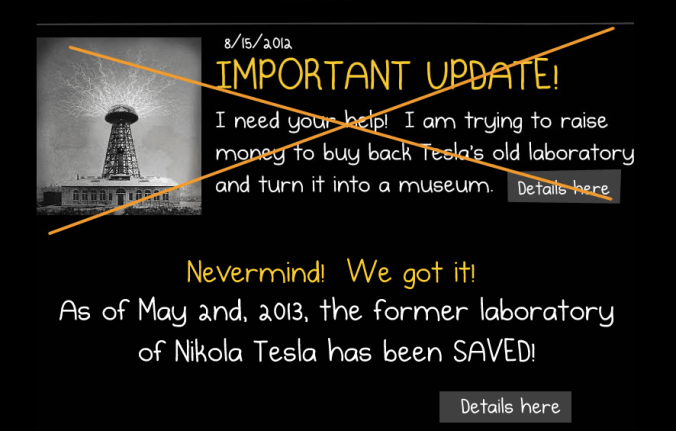
Last August we recommended reading to the end of Mr. Inman’s mischievously hilarious tribute to Nikola Tesla, partly because every bit of it was great, but the end asked for attention to an initiative that rang true to us: the conservation of patrimony related to this exceptional man. A couple months ago, when we saw on Mr. Inman’s site that the initiative had succeeded we decided to investigate further before celebrating this. Now, in honor of Tesla’s birthday, seems like a good time to highlight it. Click the image above to see the results. There have been some birthday tributes to Tesla elsewhere and we share one of those as well. Continue reading
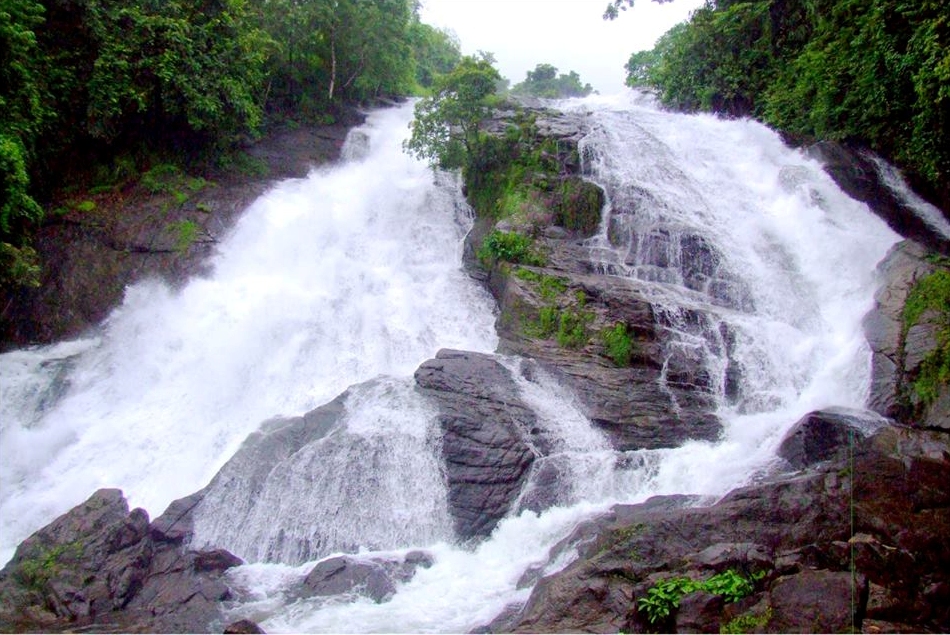
Photo credits: Ramesh Kidangoor
Vazhachal Waterfalls is located 78 kilometers from Cochin. Set amidst the lush green foliage at the entrance of the Sholayar forest, the famous waterfall is a popular location in the Indian film industry. Continue reading

The Shinkai6500 deep-sea submersible. Photograph: Jon Copley
Told in the first person, we appreciate Jon Copley’s account of his most recent amazing work, and the Guardian’s coverage of it:
Five kilometres, or 3.1 miles, is not a great distance on land – the length of a pleasant stroll. But five kilometres vertically in the ocean separates different worlds. On 21 June I had the opportunity to make that short journey to another world, by joining Japanese colleagues for the first manned mission to the deepest known hydrothermal vents, five thousand metres down on the ocean floor. Continue reading
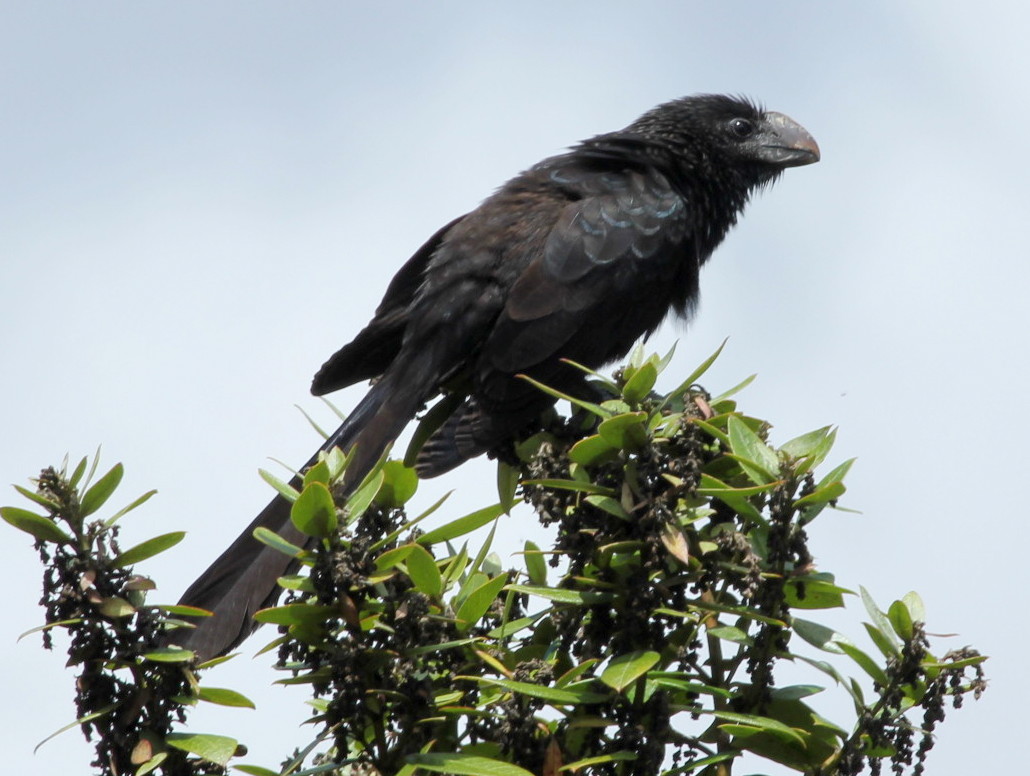
Parque Valle Nuevo, Dominican Republic

When “first world” travelers are planning a trip to the “third world”, their doctors often require them to take a handful of vaccinations, and a few prescriptions. This summer, about 40 students from a graduate program at the University of Western Ontario interned in Kerala, hosted by Raxa Collective; many of them, to err on the side of caution brought medicines for tropical diseases, including malaria. However, most of those medications are not needed in Kerala, whose health profile is comparable to Costa Rica, and which happens to be malaria-free.
As weeks progressed, many of the interns stopped taking their pills and consequently they were left with an excess, which are worth much more to those in need than in the garbage can back home. Continue reading
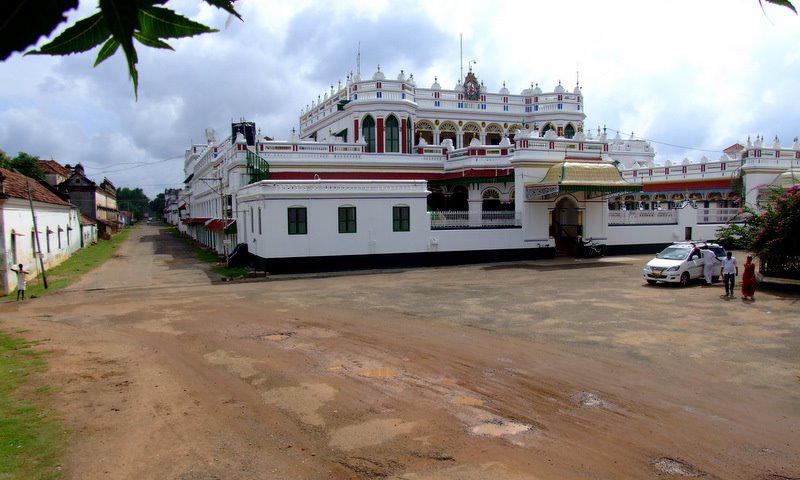
Photo credits : Ramesh Kidangoor
Chettinadu, loacated in the Sivagana district of southern Tamil Nadu, is the homeland of Nattukottai Chettiars (also known as “Nagarathars”), who are the highest class of the Chettiar Tamil community. Nattukottai Chettiars, are often prosperous individuals in either the banking or business community. Due to their rich cultural heritage such as their art, architecture, and antiques, their mansions are often a popular attraction for visitors. Continue reading
Thanks to the University of Washington’s magazine Conservation, we found our way to this video, and the magazine’s blurb about the source of the video is a worthy introduction because of its explanations of the images that accompany:
For Antony Turner, pictures make a story come alive—and in the climate change story, one of the main characters is invisible. In 2009, together with artist/scientist Adam Nieman, he founded Carbon Visuals to help people “see” the carbon dioxide that’s trapping heat in Earth’s atmosphere. Continue reading
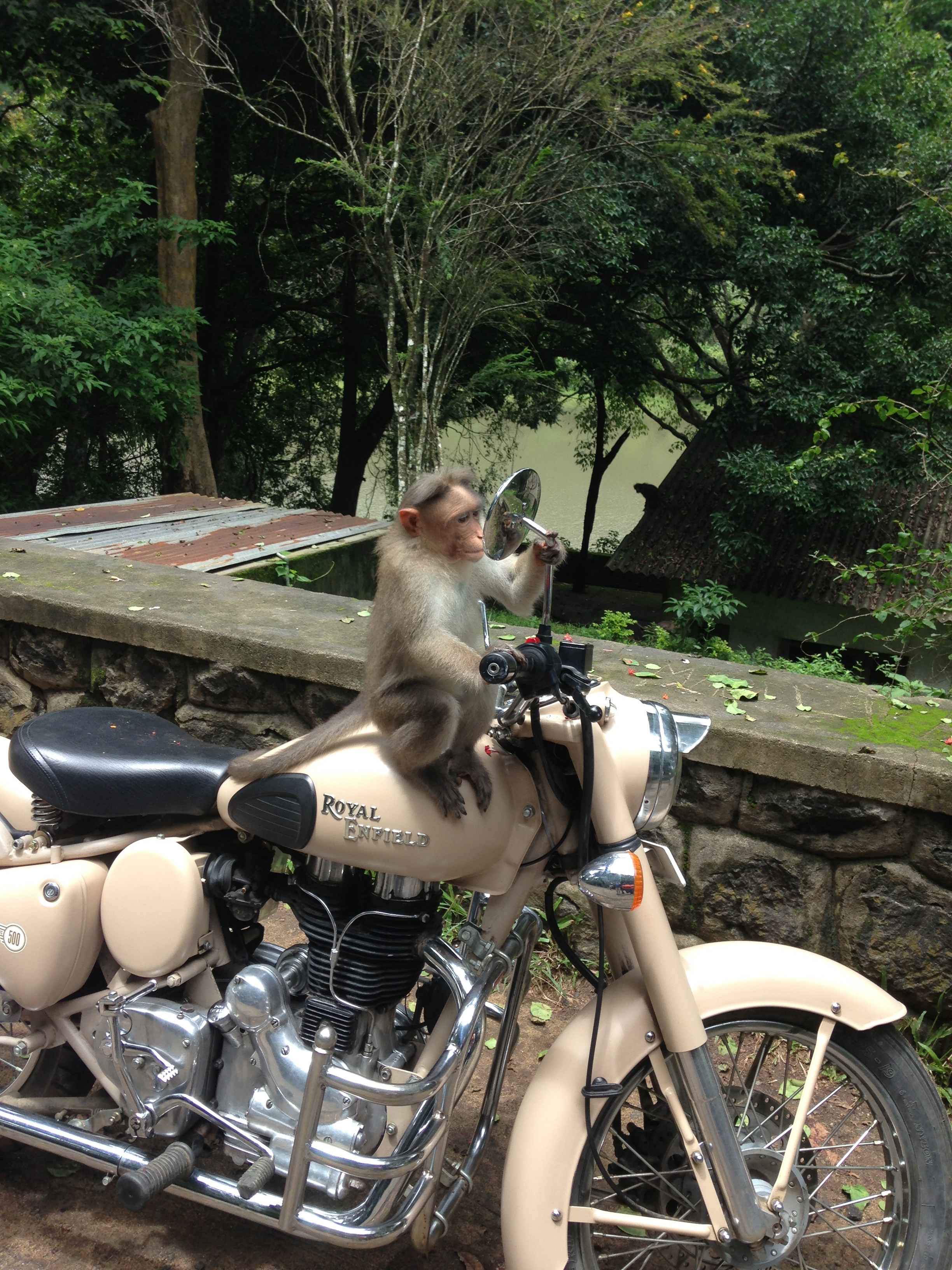
Photo Credit: Darren Meister

Þórsmörk. Glacier descending from Eyjafjallajökull. Collodion print by Frederick W. W. Howell ca 1900. Bequest of Daniel Willard Fiske; compilation by Halldór Hermannsson; Cornell University Library Rare & Manuscript Collections.
How Icelanders themselves saw the inner regions of their country, and the differences in perspective between the more and less educated segments of the population, can give valuable insight to the environmental practices of Iceland today, as well as portray the influence of European teaching on the more erudite Icelanders.
Although my focus is on the eighteenth and nineteenth centuries, it will be useful for me to explore the roots of Icelandic and European thought on unused open land and Nature, especially since much of the rural Icelanders’ perceptions were tinted by folklore and legend. Therefore, at least a cursory background of Icelandic folklore as it relates to my research topic is necessary, so I will consult the multitude of translated Icelandic myths, folk stories, and sagas, as well as the vast literature on wilderness and Nature in European thought, that Cornell Library owns in its Icelandic collection. Continue reading

The big guns of the tech world have the financial weight to reinvest in new services, but can startups give them a run for their soul?
I have not tested it yet, but there is a new, alternative search engine worthy of checking out. Click the image above to go to the Guardian story about would-be giant-killing do-gooders (or is it giant-killing would-be do-gooders?):
A new breed of internet startup is taking on the big guns of the tech world. Seeking to capitalise on consumer disillusionment with the established order in the wake of headlines about tax-dodging, personal data profiteering and poor factory conditions, these startups represent the radical face of the internet.
Unusually for a tech company, however, it is not technological innovation that gives them their unique selling point. Rather it is the promise to do social and environmental good.
“They started with decent values – Google and Apple,” says Christian Kroll, founder of Ecosia, an eco-conscious search engine based in Berlin. “They wanted to build something that improves the world. But as soon as you become a public company, shareholders exert influence.” Continue reading


Photo credits: Dileep
Skandagiri Hills is located near the town of Chickballapur, in the Indian state of Karnataka. Skandagiri Hills is very famous for its night trekking, and consequently, can be a trekker’s paradise during an evening with a full moon. Part of the allure of a Skandagari trek is with the high altitude one feels to be “walking above the clouds.” Additionally, there is a small temple stationed on top of the hill that is worthy of a visit. Continue reading

Biologist Erika Cuéllar says that unless the indigenous inhabitants are involved it will be impossible to save the biodiversity of the Gran Chaco. Photograph: Dan Collyns
Thanks to the Guardian for its coverage of the Chaco’s guardians in this story, Bolivia’s indigenous people join fight to save Gran Chaco wilderness, by Dan Collyns:
Second largest wilderness in South America threatened by farming, ranching and drugs trade
Only from Cerro Colorado – a rocky outcrop that rears vertiginously over the treetops – is it possible to make out the vastness of the Gran Chaco as it stretches from this corner of Bolivia beyond the horizon into Paraguay. This enormous swath of dry forest and scrubland, where every plant or tree bears thorns, is South America’s second largest wilderness after the Amazon rainforest.
The Gran Chaco is threatened on all sides: Mennonite cattle ranchers have bought up large tracts in Paraguay and Brazilian farmers looking for cheap land for their soy crops have flooded across the border. Continue reading
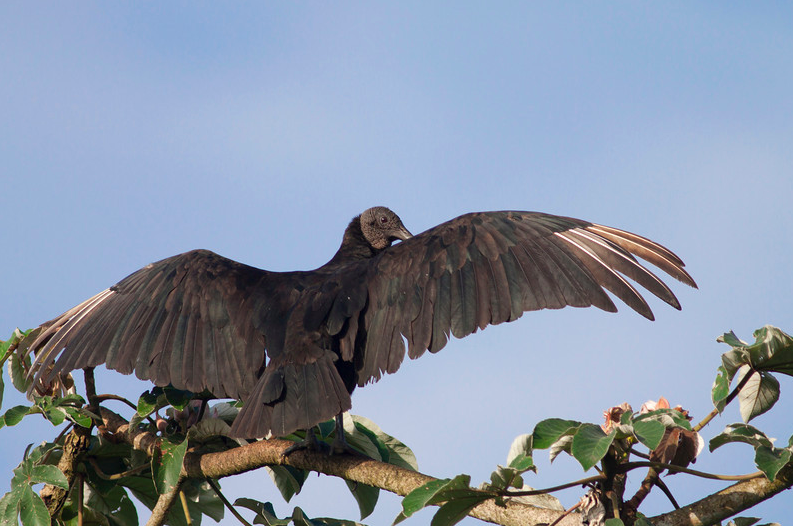
Ek Balam, Mexico
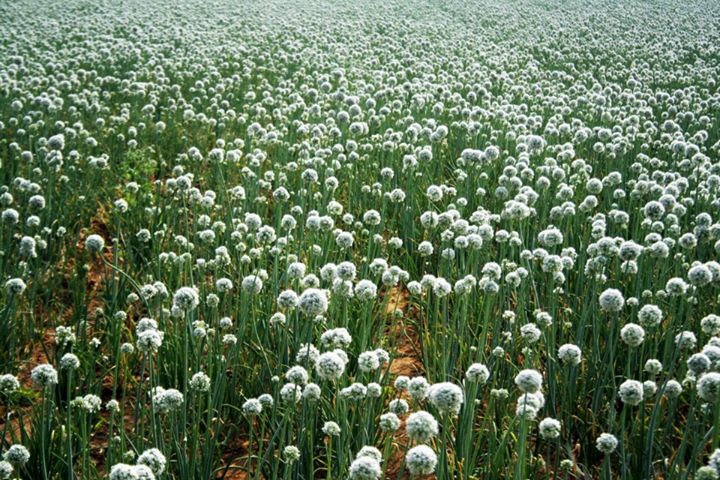
Photo credits: Dileep
In India and throughout the world, onions are often used as a spice, and are an essential ingredient in many meals. Specifically in India, onions are considered to be one of the most important cash crops. They are a staple food, and are relied upon by everyone from the rich to the poor. Continue reading

Thanks to this interview podcast on Fresh Air, we learned about Ava DuVernay and through her we learned about @AFFRM (click the banner above to go to their site, and be sure to read her interview with Director Spike Lee). DuVernay is a cultural entrepreneur, par excellence, and we salute her sense of community and collaboration:
Before she started making movies a few years ago, DuVernay made a name for herself through her marketing and publicity firm DVA Media + Marketing, which has handled films by brand-name directors like Clint Eastwood and Steven Spielberg. Continue reading

The two first edition volumes of Captain Richard F. Burton’s “Ultima Thule; or, a Summer in Iceland,” 1875. Photo by Bauman Rare Books.
I’ve mentioned before that throughout the literature from the 18th and 19th centuries in Iceland I’ve found a conflict between traditional and modern conceptions of the land’s nature, but I want to clarify that this was likely not limited to a simple farmer-or-scientist dichotomy. My aim is to more closely examine any relationships between the writings of Icelanders and Europeans that were meant for a European audience (in the case of the former this involves contemporary translations) and tease out the nuances between them. I believe these scientists, travelers and explorers from various cultures sought the same thrill of setting foot on ground that had never been touched by “civilized” man before; they traveled untrodden lands whose exploration allowed them to feel a sense of discovery and lonely grandiosity while experiencing wilderness; and in some cases they desired the satisfaction of improving scientific knowledge of a natural area.
When I talk about looking at ‘writings’, I mean primary sources like Continue reading
 Organikos