The Bishnois of Rajasthan: The First Environmentalists

Khamu Ram Bishnoi fights against the pollution carried by discarded plastic bags in India since 2005. Every year during Mukam festival, the Bishnois, his community, must bring sand on top of dunes to solidify them and block the advance of the desert.  Lately pilgrims had taken the habit of collecting the sand in plastic bags, causing a widespread pollution in the Thar desert. To protect the landscapes and the animals who regularly ate plastic bags, Khamu Ram started to demonstrate noisily to educate his community about alternatives to plastic bags.

In 2008, he was invited to talk at a series of environmental conferences in  France. When looking at the street dustbins in Paris, Khamu Ram had the idea of a mobile public dustbin.  Since 2010, he installs these dustbins complete with jute bags in public places, during festivals, pilgrimages, and organizes their collection. Last February Khamu Ram Bishnoi received the award of “Extraordinary man of India” in Jaipur, Rajasthan.

If Khamu Ram Bishnoi is an extraordinary man, he’s also part of an extraordinary community. He is a bishnoi. Continue reading

Vidyarambham – The Beginning Of Learning

Photo Credits: Ramesh Kidangoor

Photo Credits: Ramesh Kidangoor

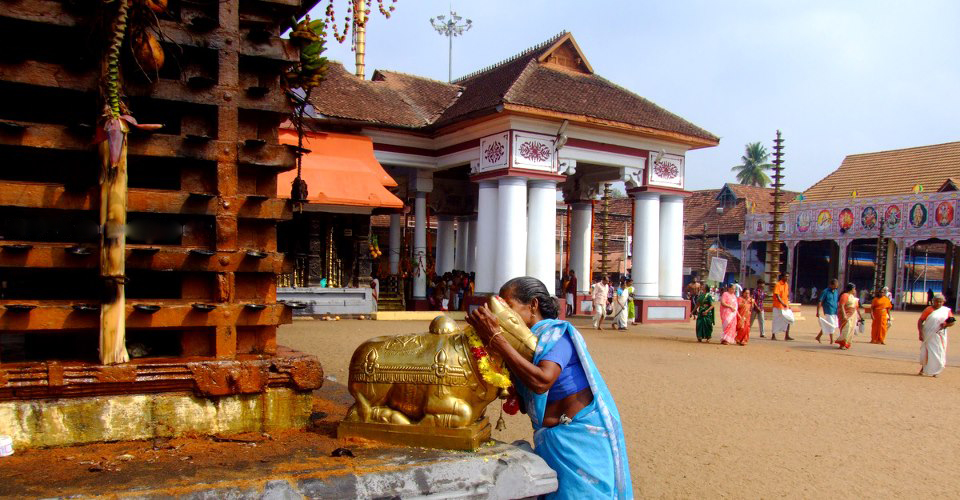
Vidyarambham means the beginning of education, or being initiated into the world of learning. As the auspicious day of Mahanavami approaches, devotees get ready to pray to Sarasvati, the Goddess of Knowledge and Education. On the eve of Mahanavami books and equipment associated with one’s vocation are placed before the Goddess to invoke her help in surmounting obstacles in the path of learning. The ritual of Vidyarambham is performed on the following day, Vijayadashami, which is the last day of the 9-day Navaratri festival. On the Vijayadashmi day from early morning hundreds of children between the ages of three and five are initiated into the world of education in various temples across the state. Continue reading

Sticky Science Reporting

Thanks to Mr. Krulwich for pointing this out:

In a cluttered, noisy world with so many distractions, it’s yet another way to stop people in the middle of their day and make them say, “Really?” Science intimidates people. Yet we’re all curious. The sly goal here is to poke folks with a good question, and then say, “You want to know the answer?”…

Continue reading

Rural Bees

Our soft spot for bees is self-evident. We also have a soft spot for Greece in general and the Peloponnese in particular, the southern part of this southern European country that forms the “sweet spot” for olives, olive oil, wine and yes, honey.

Unblended honey is one of the world’s amazing taste experiences, with sensory “notes” as varied as herbal, floral, citrus and wood. The Peloponnese and the rest of the country provides a wide range of habitats with distinct blooming periods because the majority of its land is home to forests and wild ecosystems with less than a third of it allocated to farming.

“Colony collapse disorder”,  a problem in the United States and some European countries has not yet reached Greece, partially because the beekeepers are still able to maintain a safe distance from commercial farming, and the pesticides so frequently used there.

Beekeeping is a way of life in rural Greece. Continue reading

Flavours Of Kerala – Banana Chips

557298_418938768156506_518875458_n

Photo Credits : Ramesh Kidangoor

Kerala cuisine is noted for the many snack items to be enjoyed, especially during tea time or in between major meals during the day. Banana Chips are a common example found throughout the state in any bake shop, snack shop or tea stall. They are are also included in the traditional Kerala sadya meal. Continue reading

Red-tailed Hawk Chicks Hatch on Earth Day at Cornell University

Photo by Cornell Lab of Ornithology

If you were up around 6AM this Earth Day you probably didn’t think to check the Cornell Lab Bird Cams, but if you had, you might have seen two hawk chicks hatch into their nest atop a light pole on one of Cornell’s athletic fields.

According to the Lab’s news release, the third chick (i.e. the egg in this picture) is due to hatch in the next 48 hours, so keep a close watch by following the link in the photo, and enjoy your Earth Day! As you check out the live feed, you’ll probably see the father hawk, Ezra (named for Cornell University’s co-founder Ezra Cornell), or the mother, Big Red (after Cornell’s sports teams) taking turns incubating the egg and chicks.

Be sure to refer to the Red-tailed Hawk cam frequently asked question page, and also check out the Great Blue Herons in Sapsucker Woods!

Festival Of Kerala- Thrissur Pooram (April 21 , 2013)

Photo Credits: Ramesh Kidangoor

Photo Credits: Ramesh Kidangoor

Thrissur Pooram is the grandest of festivals in Kerala, filled with elephants decorated with headdresses, beautifully crafted parasols, decorative bells and ornaments. The atmosphere is set by the ensemble of panchvadyam and pandimelam; the riveting orchestras  dominated by percussion. The fireworks display in the early hours of the day following the pooram will rival shows held anywhere in the world. The Thrissur Pooram takes place every year in the Vadakkumnathan temple. Continue reading

Documentary: Shunte ki pao! (Are you listening), the life of a family of climate refugees in Bangladesh

Shunte ki pao (Are you listening) (c) Beginning Production

When introducing his documentary at the Paris International Documentary festival, Cinéma du Réel, director Kamar Ahmad Simon said to the audience: “Thank you for being here. I will be back at the end of the screening to discuss the film with you. I’d like to know your opinion and to answer any questions you may have, whether you liked the film or not, so I can go forward and progress.” If I had to sum up the response from the audience and jury it would be something like: “Please keep going. We’ll follow.”

Click here for the  trailer  of Shunte Ki Pao ! (Are you listening)

Rakhi and Soumen are a beautiful couple, they are young, in love and are the happy parents of little Rahul. You could say they have it all. That’s if their region of the coastal belts of Bangladesh had not been wiped out by the tidal in 2009. Rakhi and Soumen are climate refugees. A couple among  almost a million homeless, stranded under the open sky on an ancient dyke. They now live in a small village named Sutarkhali. Rakhi and Soumen were from the middle-class, today three years after the tidal, they buy fruits by the unit, fish for their meal and line-up on neverending queues for food aid. And life goes on.  Shunte Ki Pao ! (Are you listening) is not about disaster, it tells how people build a life afterwards. Continue reading

Cooked By Pollan


A new book by one of our go-to food writers in a publication new to us:

The following is an excerpt from Michael Pollan’s Cooked: A Natural History of Transformation, out from the Penguin Press on April 23.

As I grew steadily more comfortable in the kitchen, I found that, much like gardening, most cooking manages to be agreeably absorbing without being too demanding intellectually. It leaves plenty of mental space for daydreaming and reflection. One of the things I reflected on is the whole question of taking on what in our time has become, strictly speaking, optional, even unnecessary work, work for which I am not particularly gifted or qualified, and at which I may never get very good. This is, in the modern world, the unspoken question that hovers over all our cooking: Why bother? Continue reading

Lost and Found In Ghana

White-necked Picathartes - Photo Credit: David Shackelford Rockjumper Birding Tours

White-necked Picathartes – Photo Credit: David Shackelford Rockjumper Birding Tours

In March we’d introduced the White-necked Rock Fowl in our Bird of the Day series, and then neglected to tell the full story behind this charismatic bird. Shame on us! But better late than never I’m happy to share it now.

West Africa’s Upper Guinean forest block stretches along the coast from Sierra Leone to Ghana, and along with the Congolian forest block is considered a biodiversity hotspot. Up until the mid-1960s-early 1970s it is believed there were at least 200-300 breeding pairs of the endemic white-necked picathartes in Ghana alone. But up until 10 years ago there hadn’t been reports of the bird for nearly 4 decades, leading conservationists to believe it eradicated from the region.

Our colleague John Mason from the Nature Conservation Research Centre (NCRC) in Ghana has provided us with this fascinating story:

Efforts to locate rockfowl were not successful until 2003, when a research team from Louisiana State University, working in collaboration with NCRC and WD, re-discovered rockfowl in Ghana.  A single individual was mist-netted and one breeding site was recorded in the Subim Forest Reserve.  Subsequently the Ghana Wildlife Society located two additional colonies near this first site.  Continue reading

The Darien Gap, Panama

Darien


Remarkably, a second article in the same issue of the New Yorker devoted to one of our favorite topics–the wonders of nature. Click the image above to go to the source. The first one we linked to is by one of the magazine’s most distinguished writers, and we are pleased to encounter the author of the following for the first time:

The Pan-American Highway runs sixteen thousand miles, from Anchorage to Tierra del Fuego, with one significant interruption: an expanse of rain forest along the border of Colombia and Panama. The road ends abruptly on the Panama side, just north of a national park, and picks up again as a dirt path, sixty miles southeast, in Colombia, in the floodplain of the enormous Atrato River. The region in between, which spans two coasts with jungles and mountains and a confounding web of rivers, is known locally as the Tapón del Darién—the Darién Plug—for its seeming impassability. Continue reading

Uthralikavu Bhagavathy Temple – Kerala

Photo Credits: Ramesh Kidangoor

Photo Credits: Ramesh Kidangoor

Uthralikavu is a Devi temple surrounded by paddy fields near Thrissur. The Uthralikavu Temple Festival is one of the most popular temple celebrations in central Kerala. The annual pooram festival is conducted by three villages near by. The temple is dedicated to Goddess Sri Rudhiramahakali. Continue reading

Swept Away

The “Three C’s” on our banner are more than words. They solidify into reality and action when people with similar views and interests reach out to us after reading them. This is what happened recently when Jennifer Harrington, a Toronto-based illustrator, writer and graphic designer introduced herself to us. Her collaboration with illustrator Michael Arnott on an eBook and animated short film versions of the The Spirit Bear and other stories is aimed at educating children about conservation while entertaining them at the same time.

Although sounding like a character out of Native American legend, the ghost or spirit bear actually

come from a small community of bears called Kermodes, which are a subspecies of black bears. Kermode bears may be black or white, but they all carry the recessive gene for white fur. 10% of Kermodes will fully express the recessive gene, and will be born with white or cream-coloured fur. Continue reading

Shravanbelagola – Jain Temple, Karanataka

Photo Credits: Ramesh Kidangoor

Photo Credits: Ramesh Kidangoor

Located strategically between the two hills of Chandagire and Indragiri near Hassan, the picturesque hill town Shravanbelagola is a renowned site for Jain pilgrimages. This Jain temple was built in 983 AD by Chandragupta Maurya, the grandfather of the Great Ashoka. Continue reading