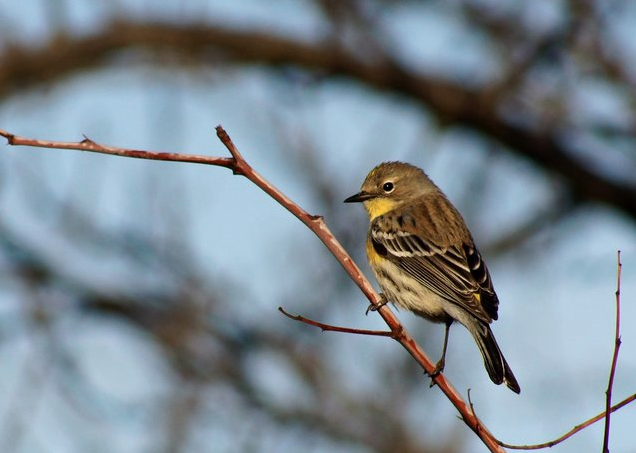
San Jose, CA
San Jose, CA

Inimitable. Some of us love superlatives, and some of us find them tedious; but all of us will agree that this fellow is inimitable (click the image above to go to his work directly):
Recently, I created an app called Petting Zoo. It is an interactive app for iPhones and iPads, and creating it was a difficult but interesting process. Continue reading
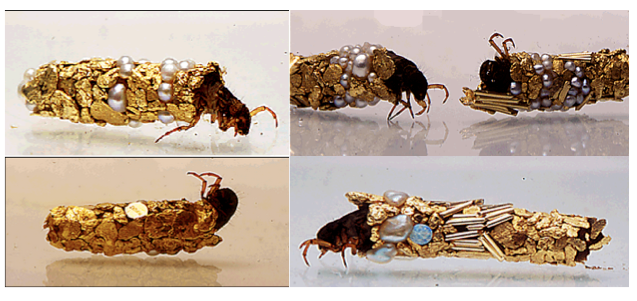
The caddis worm (order Trichoptera) may not be as popular as its famous shiny cousin, the scarab beetle, but it carries the extra charisma of an intrinsic aesthetic behavior.
French artist and science enthusiast Hubert Duprat took his natural curiosity to an elaborate level when he began providing these case building larva with gold spangles and semi-precious materials in lieu of the bits of sand and gravel they would normally use.
An amazing observation is that the worms seem to approach their work with an artistic eye, choosing the color and quality of the materials they use. In the 1930s an American entomologist observed in a Nevada river that “among all the little particles of sand and minerals swept along by the water, the Trichoptera make meaningful selections of bright blue opals—in other words, the most conspicuous or garish materials.” Continue reading
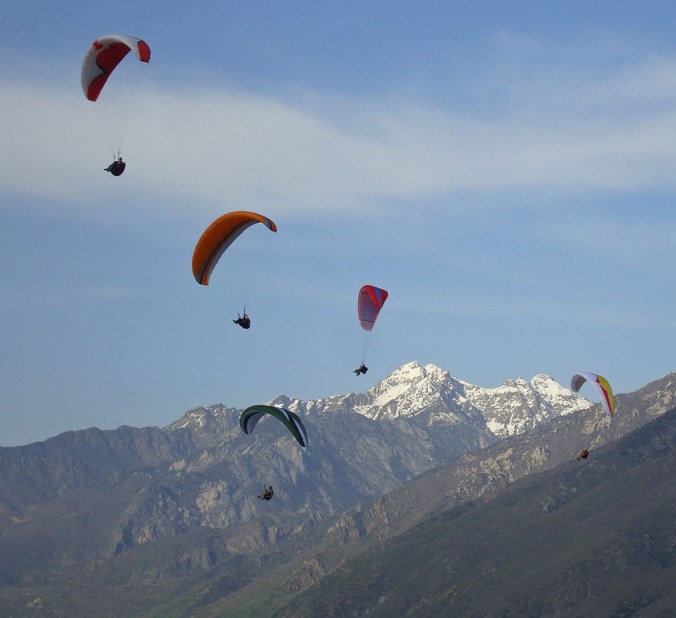
Click the image above to go to the full post by James Fallows at Atlantic Monthly‘s website:
Short version: a unique natural mountain configuration has made a site in Utah the best place in America for one particular pursuit. The pursuit is paragliding, and the location, Point of the Mountain south of Salt Lake City, has a very unusual combination of topography and natural windflow that makes it a perfect soaring spot. Point of the Mountain has attracted devotees from around the world, as shown below, and built a substantial tourist economy. But to get more gravel, a mining company has for the past ten days been bulldozing away the very ridgeline that is the basis for this world-renowned activity — as if earth-movers started chewing up a famous skiing slope or dredging sand from Malibu or Waikiki. It’s the familiar story of mountain-top removal mining, in a new setting with new effects.

Photo credits: M N Shaji
Situated south of Palakkad Gap in an area once famed for its luscious oranges, Nelliyampathi is now blanketed in tea, coffee and cardamom plantations. The region was once owned by the Maharajas of Kollengode and Kochi and is now a part of the Nenmara Forest Division. It’s close proximity to the Parambikulam, Anamalai and Peechi-Vazhana wildlife sanctuaries add to its appeal. Continue reading

Photo credit: John Mason

A meeting of doctors at the university of Paris. From a medieval manuscript of “Chants Royaux”, Bibliothèque Nationale, Paris.
Click on the image to the right to go to the source, an online publication we have consistently enjoyed so far:
The lone survivor of traditional Western European ‘scientific’ culture is science.
It has survived because it is now the handmaid of technology, without which contemporary civilization would collapse utterly. Anyone who doubts this should try to get a research grant for genuinely “pure” research.Today, in European cultures, and in other cultures that have borrowed it, science per se is strictly peripheral at best. It is not only inseparable from technology; it is all but completely divorced from philosophy. This is a far cry from the Middle Ages.
The centrality of science in all spheres of Western European culture was ensured when the crucial elements — all of them — were borrowed during the Crusades, more or less simultaneously, from Classical Arabic civilization. Continue reading

Click the banner above to go to the blog, and the image below to go to the most recent post:
Boucher’s Birding Blog: Mamba Meets Bushbaby
MARCH 15, 2013 | by: Timothy Boucher
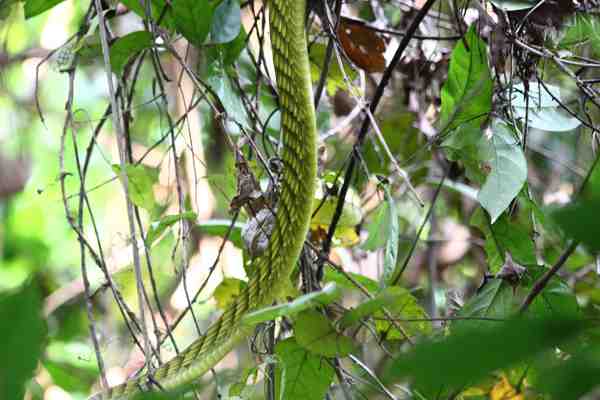
Many visitors see the canopy walkway as a low-tech amusement ride. But look closely, and wonders await: like this green mamba slithering past. Tim Boucher/TNC
Sometimes when you go birding, you can’t help but see other animals – elephants, army ants, beautiful butterflies.
Occasionally, if you get out early (as birders always do), you can get to a park before the crowds and you might see something really special (and, in this case, gruesome).
In January, we traveled to Ghana for some superb birding. Our visit included the famous canopy walkway at the Kakum National Park near the Ivory Coast. The seven bridges strung high up in the trees usually teem with visitors who have no appreciation of the amazing birdlife. Continue reading
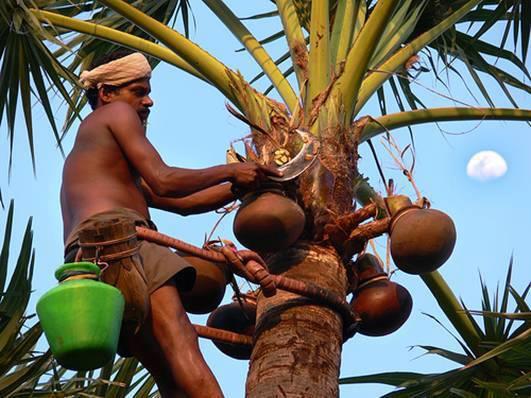
Photo Credits: Vishnu Rajendran
Popularly known as kallu, toddy is Kerala’s own coconut liquor. In fact, kallu is probably the first (and perhaps the only!) Malayalam road sign a tourist will learn to read. Made from the sap of the coconut flower before it blooms, the drink gives no intoxication when freshly tapped, but the level of alcohol increases as it ferments. When fresh it has a mildly yeasty flavor. Continue reading
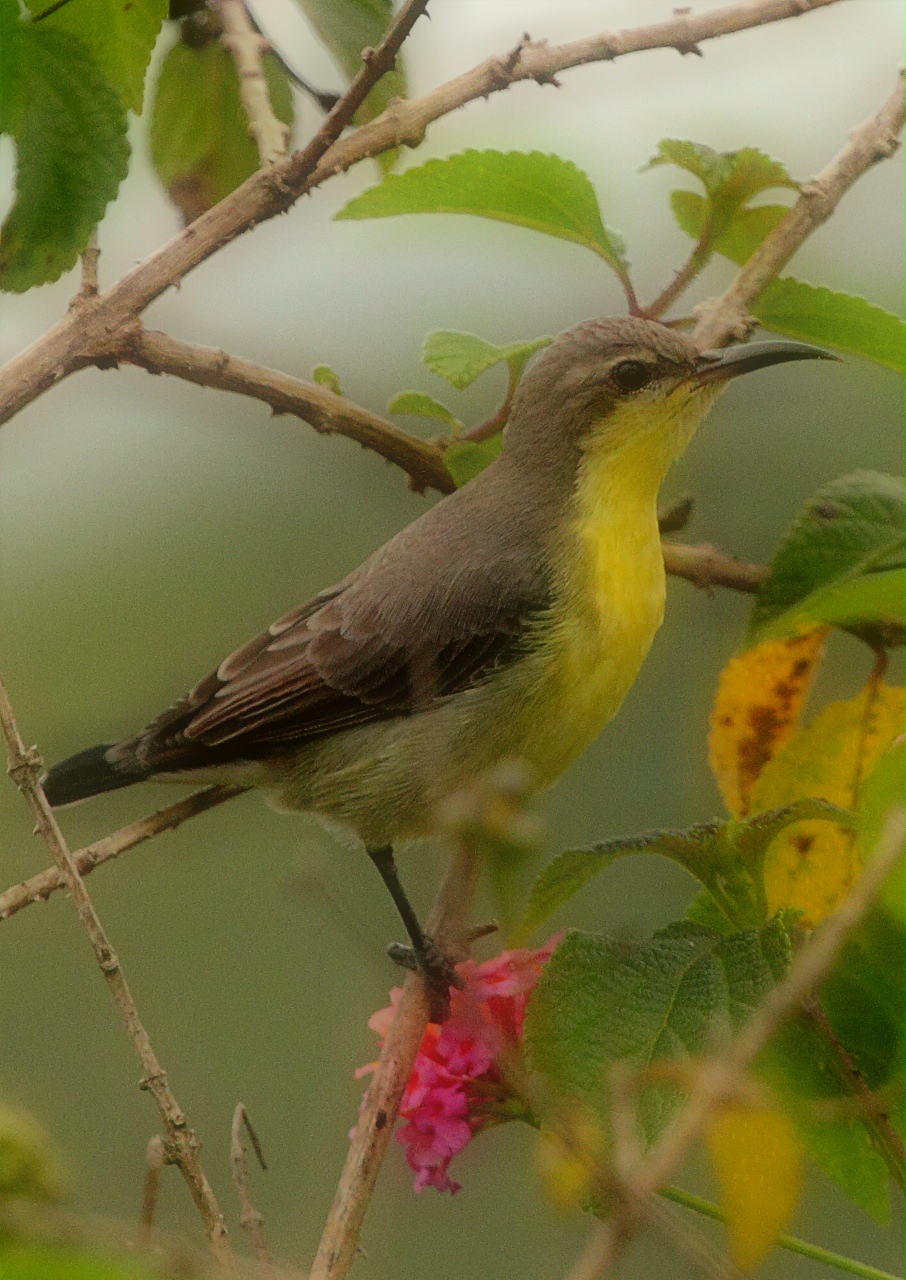
female – Bandipur National Park, Karnataka

Photo credits: Ramesh Kidangoor
Mohiniattam is a gentle and graceful semi-classical dance form of Kerala. The orgins of this dance are traced to Dasiattam, the dance performed by women in temples as an offering to propitiate the Gods. The customary costume for Mohiniattam is a cream two-piece pleated sari with a wide gold border and traditional gold ornaments. The eyes are lined dramatically with kohl to enhance the dancer’s expressions. The hair is tied in a bun, placed at the side of the head and encircled by a string of fragrant jasmine flowers. Continue reading
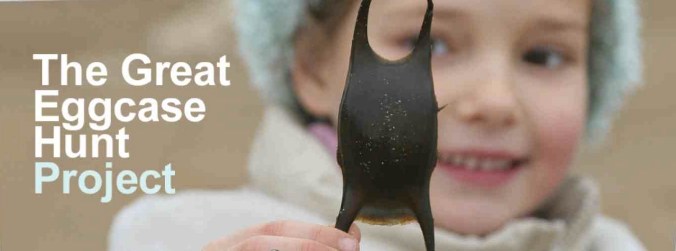
If you are like most people, the words shark and trust do not normally work well together in the same sentence. Sharks are predators, and predators predate. So unless you are a professional you should not take anything for granted when in their waters. But the two words work together well in a sentence about this organization, and the project they have launched to help sharks is intriguing. Entrepreneurial, even. Click the image above to read more about this initiative:
With over 600 species of skate and ray worldwide, at least 16 species have been regularly recorded in UK coastal waters; most of these species reproduce by laying tough leathery eggcases on the seabed. Of more than 30 species of British sharks, only two species lay eggcases that are commonly found on our beaches; the Smallspotted Catshark and the Nursehound. Continue reading

Carl Safina. In Amboseli National Park in Kenya, a herd of savanna elephants moved toward hills where they would spend the night.
What words might make us care enough to take action on behalf of these animals? Perhaps the words of those in the field, watching the paramilitary-style poachers, and who have traced the value chain for which those killers kill. From today’s New York Times a powerful editorial from two such people:
…In China and other countries in the Far East, there has been an astronomical rise in the demand for ivory trinkets that, no matter how exquisitely made, have no essential utility whatsoever. An elephant’s tusks have become bling for consumers who have no idea or simply don’t care that it was obtained by inflicting terror, horrendous pain and death on thinking, feeling, self-aware beings…

Kumily

Photo Credit: John Mason
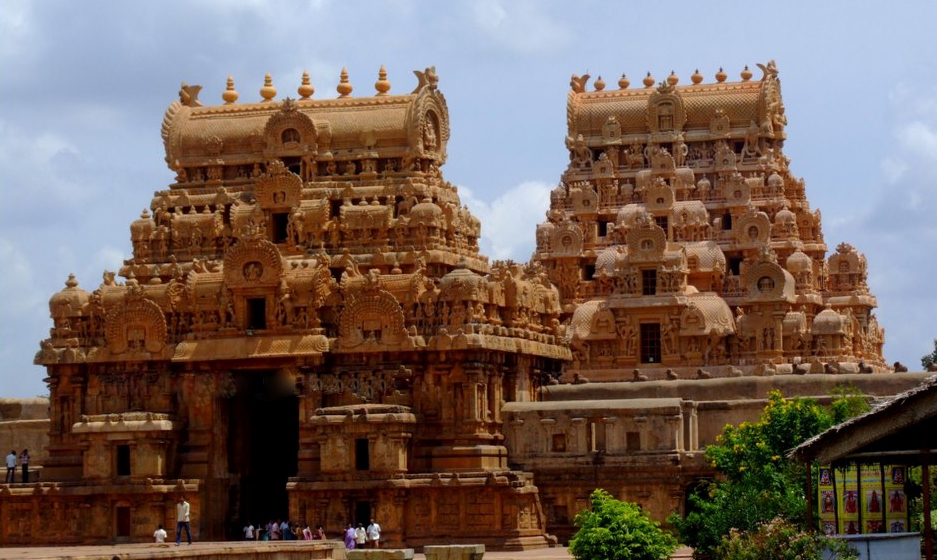
Photo credits: Ramesh Kidangoor
The temples and shrines at Thanjavur are amoung the finest examples of South Indian architecture of the late Chola period. Dedicated to Lord Shiva, the Breehadishwara Temple is considered the greatest single undertaking of its time, taking almost 15 years to complete the full structure. Continue reading
Krulwich is our go-to guy on a certain kind of day. A day when important scientific ideas might otherwise put us to sleep, and just need a fresh approach to get our attention. Today is one of those days, and the pied piper of fun science delivers a short and sweet one:
Continue reading

There are plenty of reasons to be concerned about the intersection of business interests and political interests around the world. As an entrepreneurial organization, we take a business approach to what we care about, and believe in the rights and responsibilities associated with influencing public policy. But we also believe in the importance of transparency, clear rules of the game, and common sense decency. We do not believe in making a buck at any cost. We do not believe companies who cut corners and sacrifice others’ wellbeing for the sake of making a buck are serving society’s interests.
So, in a series of shout outs to investigative journalists whose critical work points us to the ugly back alley activities of businesses and open air atrocities of little countries as well as otherwise commendable huge countries, we now return to one company for the second time:
Remember that one time? In Congress? When an anonymous group of House Republicans tried and failed to sneak a rider into the farm bill that would have exempted agribusiness from liability for biotech crops and all but eliminated the government’s power to regulate them? Good times. Continue reading

San Francisco Bay Trail, CA

In this week’s New Yorker, two great things that add up to more than two great things:
Jane Kramer reviews “Consider the Fork: A History of How We Cook and Eat,” by the British food writer and historian Bee Wilson. It’s more than a book review, though: The New Yorker’s European correspondent brings into it her own passion for cooking and her years of writing about food.
The book review mentioned above is discussed in a podcast on the magazine’s website, meaning the book to the left generating two contributions from one of that magazine’s finest writers. How does 1 + 1 add up to more than 2? Here is a magazine, against all odds of print journalism in the 21st century, adding value with the very technology that is killing other publications. Creative destruction, culling out weaker publications, is also working its magic. Continue reading
 Organikos