

A red swamp crayfish. ‘Alien’ species cost the European economy €12bn a year, a study shows. Photograph: FLPA/Alamy
The Everglades are not the only location where invasive introduced species are causing harm:
Animals and plants brought to Europe from other parts of the world are a bigger-than-expected threat to health and the environment costing at least €12bn (£10bn) a year, according to a study published on Thursday. Continue reading

Photo credits: Ramesh Kidangoor
The Bharathapuzha is the second longest river in Kerala. It takes its origin from the Western Ghats and joins with the Arabian Sea after a long journey of 209 kms. Considered as the Nile of Kerala it is also known as ‘Nila”. Continue reading

Parque Valle Nuevo, Dominican Republic
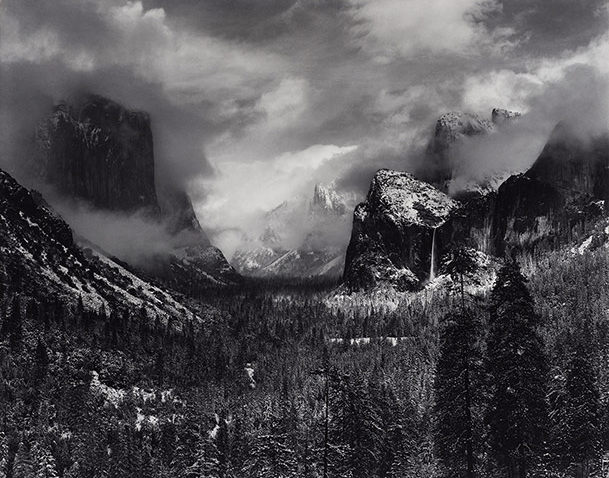
Clearing Winter Storm, Yosemite national park, California, about 1937
Ansel Adams has become almost synonymous with the environmental movement in general and Yosemite National Park in particular. He first visited the park when he was 14 and the impression he had at that age would last a lifetime. His photographs played a seminal role in convincing Congress to place that amazing landscape under federal protection.
Yosemite Valley, to me, is always a sunrise, a glitter of green and golden wonder in a vast edifice of stone and space. I know of no sculpture, painting or music that exceeds the compelling spiritual command of the soaring shape of granite cliff and dome, of patina of light on rock and forest, and of the thunder and whispering of the falling, flowing waters…
— Ansel Adams, The Portfolios Of Ansel Adams Continue reading

Ruth Fremson/The New York Times. A sign in Bangla language in the front window of a shop in Astoria, Queens, in this March 7, 2001, file photo.
From our friends at India Ink:
I take pride in the fact that despite being born and raised in New York City, I speak Bangla fluently. I credit this mostly to my Bangladeshi parents for being brutal in their approach to teaching my younger sister and me a language that that was so violently fought for. Feb. 21 is recognized by the United Nations Educational, Scientific and Cultural Organization as International Mother Language Day in honor of linguistic diversity, Continue reading

Near Vytilla Junction, Ernakulam
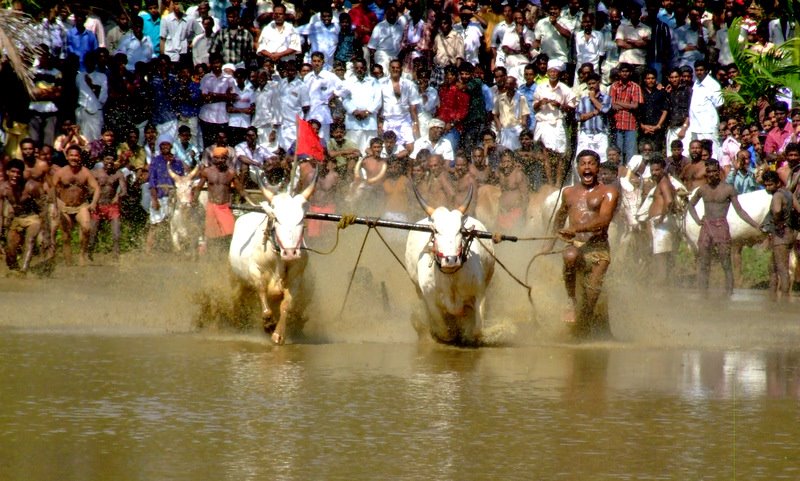
Photo credits: Ramesh Kidangoor
Kakkoor Kalavayal is a traditional post-harvest festival celebrated by the farmers of Kakkoor and the surrounding villages near Cochin. Legend has it that this is the annual meeting of the Goddesses of the villages of Edapra and Ambassery. The most exciting moment of this festival is the grande finale of the bullock race. Continue reading

Machines and Gods: Dionysus at MCCM
The Musei Capitolini Centrale Montemartini is an interesting place, to say the least: it combines Italian machinery of mammoth proportions from the Industrial Revolution with ancient Roman statuary. These statues include the monolithic “Fortuna Huiusce Diei” (“Fortune of This Very Day”), various Greek gods (Venus, Dionysus as pictured above, and others), Roman emperors, famous statesmen, and lesser known wealthy citizens; the machinery, on the other hand, consists in titanic pieces of metal that when whirring generated tens of thousands of horsepower. Continue reading
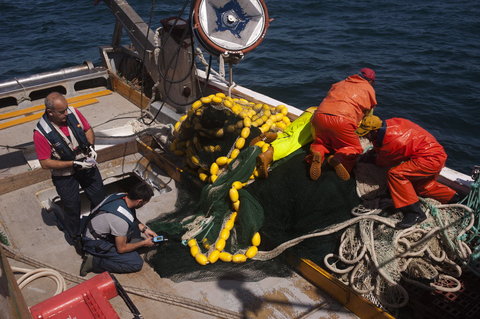
Laura Leon for The International Herald Tribune
Government inspectors, left, check out a fishing vessel off the Spanish port of Cádiz.
Thanks to Green Blog:
Two weeks ago, the European Parliament voted overwhelmingly to require that the 27-nation bloc’s fisheries be managed on a sustainable basis within a few years. Continue reading


Photo by Tim Laman.
We’ve written about the birds-of-paradise before, mostly to share great images of them. But all that is about to be topped by the same folks who brought us two out of the three links above: Tim Laman and Ed Scholes. On February 19th, a new website was released that contains over two hours of footage never seen before, specifically designed to serve as an educational base for anyone trying to learn more about the whacky birds.
The Cornell Lab of Ornithology was one of the main funders for the project (others include the estate of Madelon G. and Robert Wehner, Conservation International, and the National Geographic Expeditions Council). According to their official press-release, the “website, videos, and interactive features were produced by the Cornell Lab’s Multimedia program with sound and video from the archives of the Lab’s Macaulay Library. Producer Marc Dantzker said the production team sorted through more than 2,500 video clips, almost 40,000 photos, and hundreds of sound recordings to find close-up examples of each adaptation, courtship pose, display feather, and dance move.”
So after eight years of painstaking research by Scholes and Laman, we get to enjoy this unforgettable imagery! Watch the video below of the King-of-Saxony, Continue reading
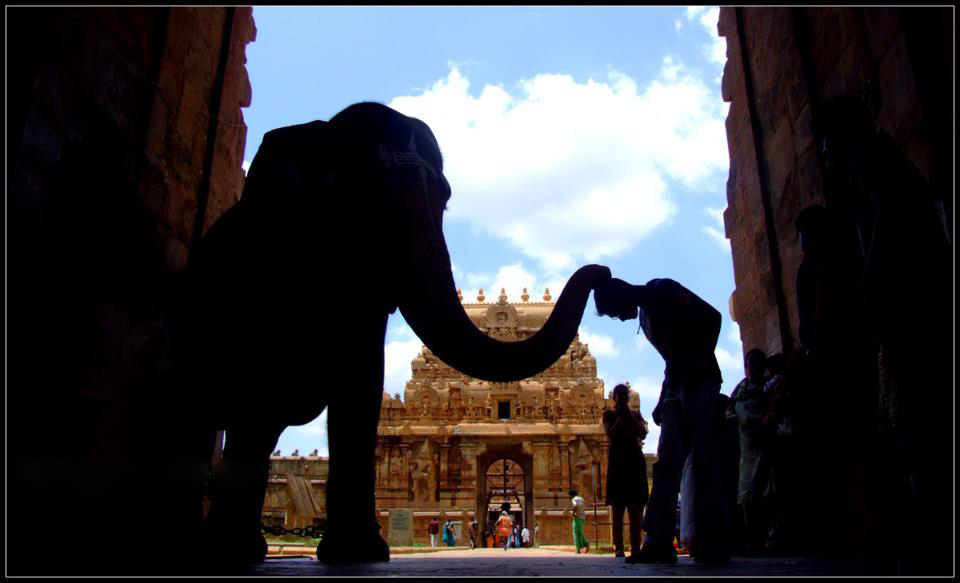
Photo credits: Ramesh Kidangoor
Elephants are important part of many temple ceremonies and festivals in India especially in the southern states. Frequently the temple elephant carries the idol of the Lord Ganasha and walks in procession around the temple grounds to receive offerings and give blessings in return by placing the trunk gently on the devotee’s bowed head. Continue reading
Sometime in recent months we discovered a blog on the New York Times website called India Ink. It is meant to keep the readers of that newspaper apprised of important information from the world’s largest democracy (and the world’s largest English-speaking country). Most days, for those of us living and working in India, we have already seen that news in the newspapers here. Also, most days most of the posts on that blog tend to the dark side of India’s news–always important news but not enough of the positive, vibrant stuff we see each day here. We tend to pass on 90% of the posts, but the other 10% are always worth a look. Today’s keeper is here:
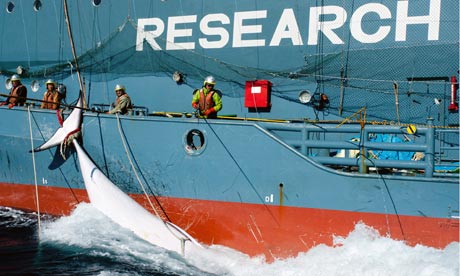
The Sea Shepherd vessel Bob Barker tries to stop a whale from being loaded on to the Nisshin Maru. Photograph: Glenn Lockitch / Sea Shepherd Australia
From the Guardian’s ongoing coverage of some of our favorite activists (click the image above to go to the story):
I don’t think that there is a more isolated, more remote, or more forbidding place on this planet than where we find ourselves at this moment.
Draw a line due south from Sri Lanka for 4,404 nautical miles and it will bring you to Prdyz Bay, deep in the Cooperation Sea, close to the massive Amory ice shelf. Continue reading


Nedumbassery

Photo credits: Ramesh Kidangoor
The history of worship in Indian is difficult to chronicle with certainty because the recorded history depends on oral traditions handed down through generations. Hindu religion is beautifully preserved in southern India. The art of temple building made its transitions from temporary structures in wood to more enduring stone edifices that have stood through the ravages of time. Continue reading

Click the image above to go to the video:
The Ripple Effect: Inspiring Conservation Through Teaching Continue reading
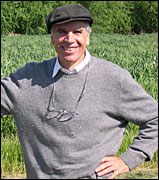
Doug Tompkins, Co-Founder, North Face
Click the image to the left for a podcast interview worth listening to. If you are a fan of this man, chances are you are also a fan of this man, who has carried out more tangible action for deep ecology than anyone, perhaps ever:
Entrepreneur, conservation philanthropist, and documentary filmmaker are some of the titles that Doug Tompkins has possessed over his career. Doug’s love of mountaineering led him to start North Face, the outdoor apparel company. He then cofounded the international clothing giant, Esprit, which he later sold. Doug has spent the last few decades focusing his energies on sustainable farming, land conservation and biodiversity preservation in Chile and Argentina. With the purchase of more than 2 million acres of land in South America, Doug has pioneered one of the largest private conservation efforts in the world.
Doug speaks to Jessica about his journey from selling dresses out of a van to conserving South America’s natural environment, from scratch.

