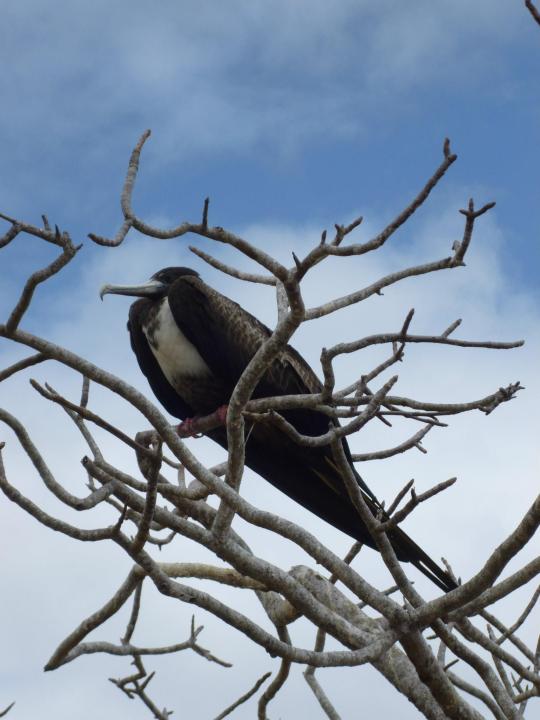
North Seymour Island, Galapagos, Ecuador
North Seymour Island, Galapagos, Ecuador
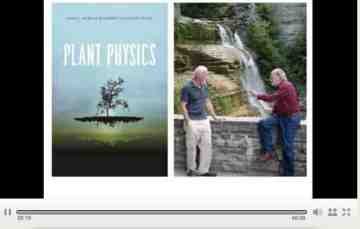
Another in the excellent series of Cornell luminaries sharing their work in informal presentations (i.e. “in the stacks”) for lay folk like us. Click the image to the right to go to the video of this talk:
Over 90 percent of all visible living matter is plant life. Plants clean the air, provide food and fuel, fibers for clothing, and pharmaceuticals. Interweaving themes that emphasize biology and physics, the book explains how plants cannot be fully understood without examining how physical forces and processes influence growth, development, reproduction, evolution, and the environment. Continue reading
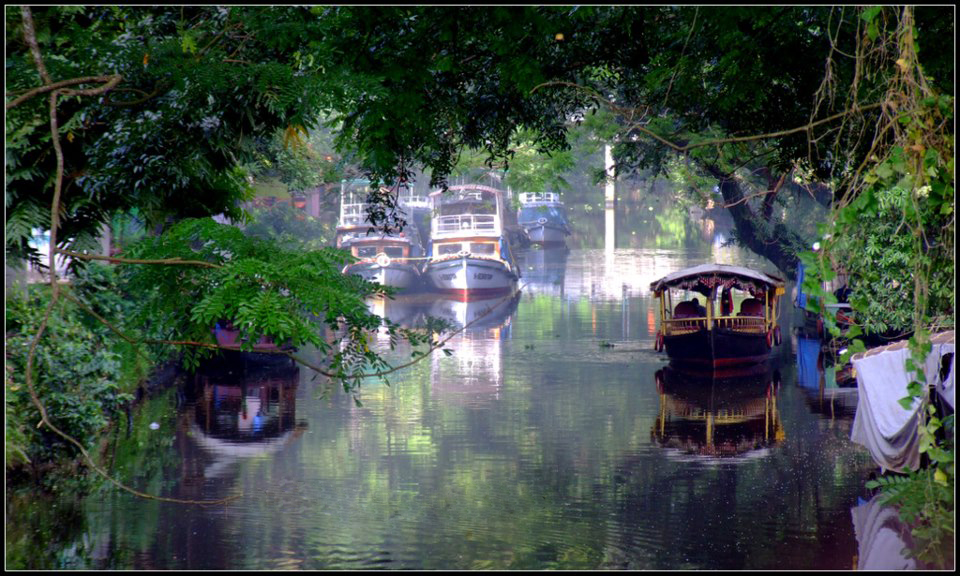
Photo credits: Ramesh Kidangoor
Sandwiched between the Arabian Sea and Vembanad Lake on a sliver of land barely 4 km wide, Alappuzha has the dual advantage of cheap inland water transport on its eastern end and calm seas suitable for an all-weather port on the west. Its criss-crossing canals, which were once busy waterways, historically evoked comparisons with Venice. Continue reading

Photo by Karl Phillips, University of East Anglia. Because sea turtles live far out to sea, little has been understood about their breeding habits until now.
Thanks to our friends in East Anglia, for the extra effort:
Studying any animal in the wild is hard enough, let alone one that spends 30 years at a time out at sea. Because of its ocean-faring lifestyle, scientists know next to nothing about the life style of the critically endangered hawksbill sea turtle, save for the fleeting observations they make when female turtles come to beaches to lay their eggs. Continue reading

Yelapa, Mexico

Thiruvananthapuram
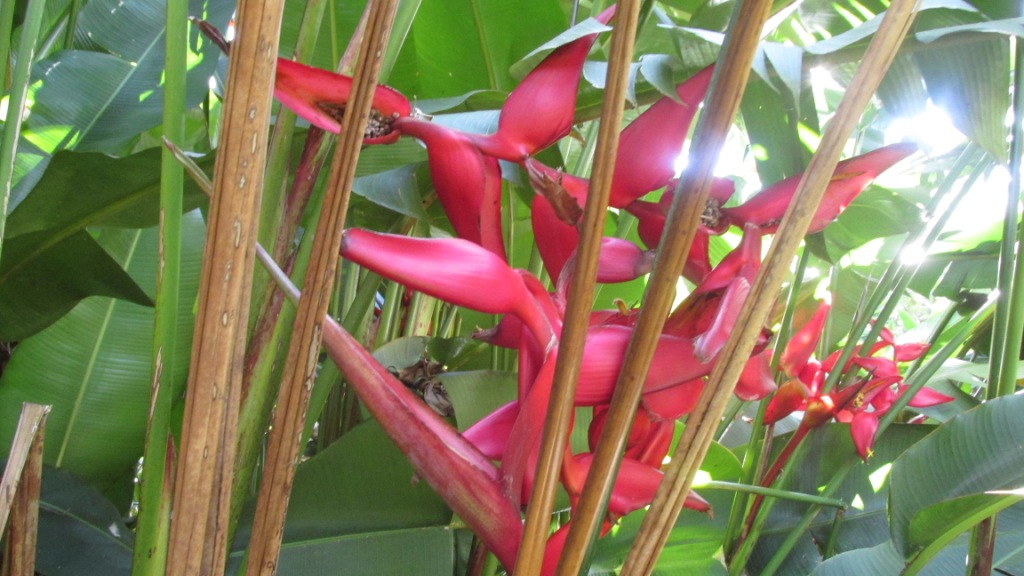
Heliconia Collinsiana is an ornamental plant native to Central America that grows widely as a popular garden plant in India’s Western Ghats above 800 metres. Continue reading

Click the banner above to read the whole entry at its source:
Diary
Rebecca Solnit
The buses roll up to San Francisco’s bus stops in the morning and evening, but they are unmarked, or nearly so, and not for the public. They have no signs or have discreet acronyms on the front windshield, and because they also have no rear doors they ingest and disgorge their passengers slowly, while the brightly lit funky orange public buses wait behind them. Continue reading


Subodh Gupta, Sara Hildén Art Museum, Tampere, Finland, 2011
Photo: Jussi Koivunen
One thing that the Nelson-Atkins Museum of Art and the Kochi-Muzuris Biennale 2012 have in common is the artist Subodh Gupta.
The Bihar born sculptor/painter/installation artist has been at work for twenty years but is currently at the vanguard of modern Indian art. He has taken the ubiquitous metal articles of India and followed the tenets of the 19th century conceptualist artists who elevated the ready-made and everyday into objets d’art.
As Gupta describes his work
“All these things were part of the way I grew up. They are used in the rituals and ceremonies that were part of my childhood. Indians either remember them from their youth, or they want to remember them… Continue reading
 We appreciate the Guardian‘s coverage of this issue, and activists like this one:
Last week Gareth Morgan, an economist and conservation campaigner, called for cats to be confined or eradicated from his native New Zealand to protect the wildlife. Meanwhile, in the US, a study published this week in the journal Nature found cats are killing more birds and mammals than previously thought. Writer Tom Cox, who shares his home with four cats, and Morgan discuss whether it’s time we learned to live without our feline friends. Emine Saner listens in.

Click the image at left to go to the video of this presentation by the author of his book:
In “Earth: A Tenant’s Manual,” distinguished geologist Frank H. T. Rhodes, President Emeritus of Cornell University, provides a sweeping, accessible, and informed guide to the home we all share, showing us how we might best preserve the Earth’s livability for ourselves and future generations. Continue reading
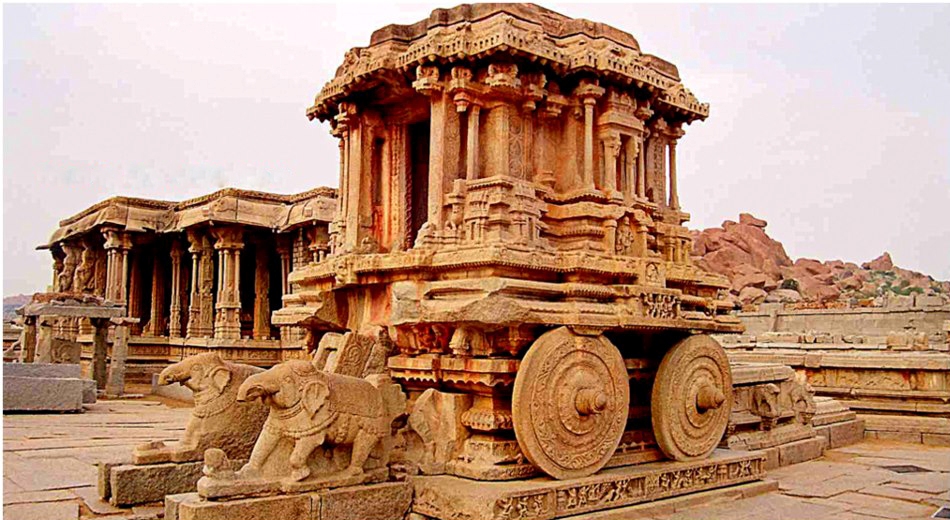
Photo credits: Ramesh Kidangoor
Standing on the southern bank of the Tungabhadra River, the Vitthala Temple is the most magnificent of the religious edifices at Hampi. Vitthala portrays the aesthetic perfection of the Vijayanagar style during the time of Devaraya-II (A .D. 1422-1446). Continue reading

Jalisco, Mexico

Bracted Strawflowers are a native Australia perennial that has naturalized in the hill stations of India’s Western Ghats above 1500 meters. The parchment-like flowers bloom in a wide range of colors, including yellow, white, red and pink. Continue reading

Further to the provocative statement on vegan ethics here, we have chosen this as a follow up to highlight this new publication’s value–on a subject we actually talk about in our office and a our resort operations:
Joy in the task
Even the finest restaurants are serving coffee made with capsules. Have we lost faith in the human touch?

Ernakulam
A strong statement on Harvard Business Review’s blog site about the role of finance, specifically the venture capital model, in the future of social enterprise, which is in very close proximity to entrepreneurial conservation both conceptually and in practice. Substitute ecosystem degradation for poverty or educational shortcomings and the framework with which Raxa Collective approaches its various initiatives:
During the past century, governments and charitable organizations have mounted massive efforts to address social problems such as poverty, lack of education, and disease. Governments around the world are straining to fund their commitments to solve these problems and are limited by old ways of doing things. Social entrepreneurs are stultified by traditional forms of financing. Donations and grants don’t allow them to innovate and grow. They have virtually no access to capital markets and little flexibility to experiment at various stages of growth. The biggest obstacle to scale for the social sector is this lack of effective funding models. Continue reading
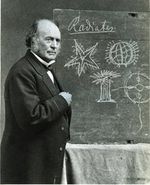
Because of its importance to this idea we work with, entrepreneurial conservation, we pay attention to the history of natural sciences. We are curious, as individuals and collectively, about how we found our way here. In the Books sections of the New York Times Rebecca Scott reviews the Christoph Irmscher study on the Swiss immigrant scientist Louis Agassiz and his contributions to science–and therefore nature and conservation–in his adoptive country:
Nonetheless, there is no arguing with the claim that Agassiz, a Swiss immigrant, was pivotal to the making of American science. He was “one of the first,” Irmscher writes, “to establish science as a collective enterprise.” He was extraordinarily prolific and influential in many fields, including paleontology, zoology, geology and glaciology. Continue reading
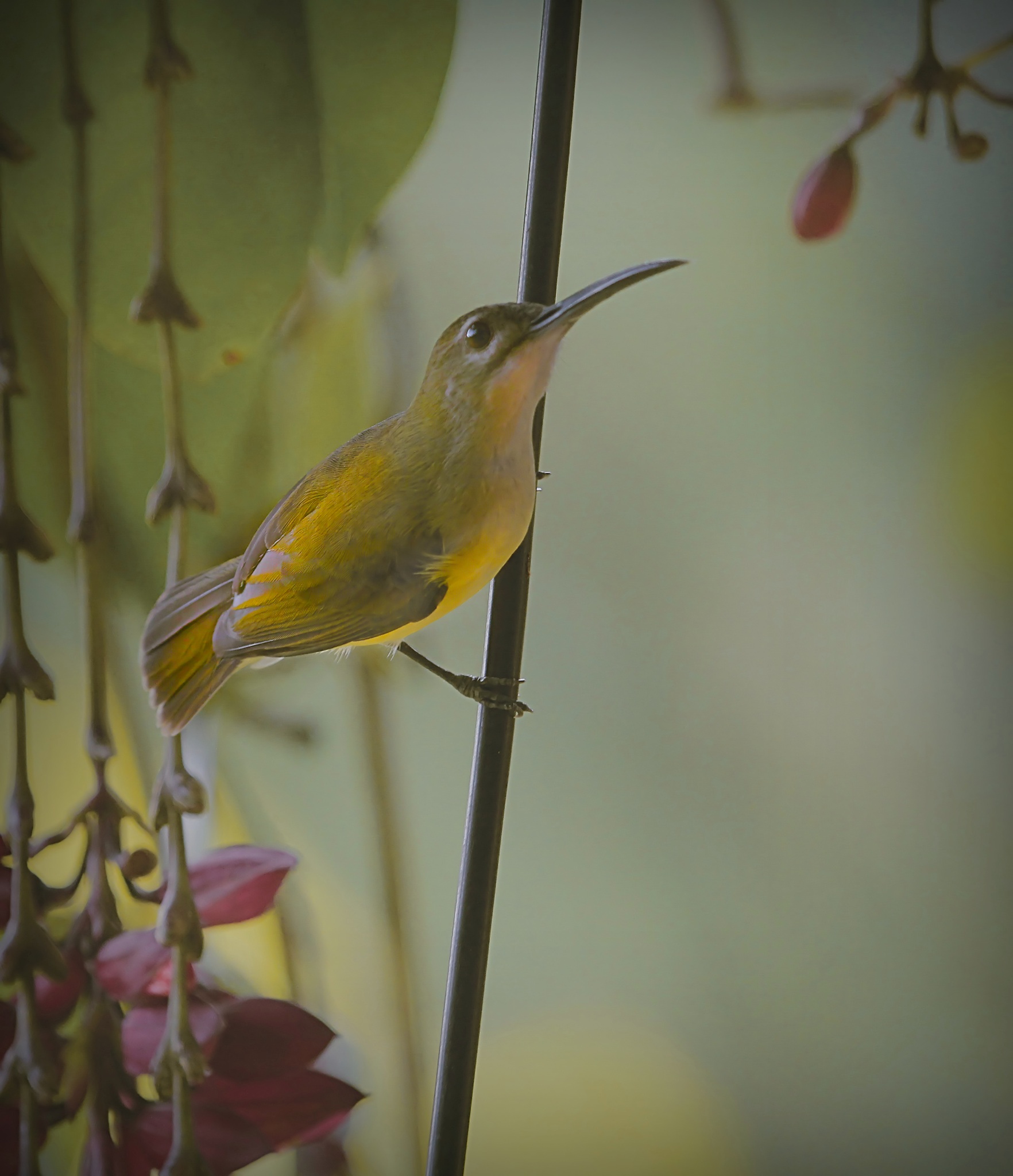
Gavi Forest, Kerala