Thoreau’s Flowers

orchid-blog480

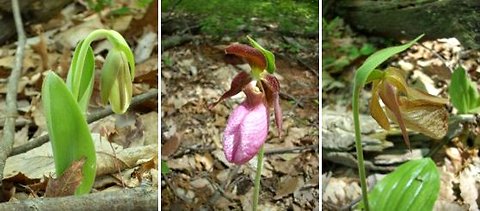
Zoe Panchen. Earlier flowering times: the progression of Cypripedium acaule, the pink lady slipper orchid, on April 23, May 7 and May 20, 2010.


From Green Blog:

Henry David Thoreau was a peculiar fellow. After his secluded stint at Walden Pond, his fixation with the natural world only grew. Starting in 1852, his journal turned into a two million-word project documenting seasonal observations around his small Massachusetts township, Concord. Over the next six springs he could be seen racing about town like a madman in an effort to spot and record that year’s first elusive blooms, all the while taking notes. Continue reading

Industrialized Biofuels Part 1: US Production

Image via Renaissance Ronin

The United States plans to produce 70 billion liters of advanced biofuels by 2020. In 2007, the global production of all biofuels roughly matched this amount, and the US used 24% of its corn to produce its share of the ethanol included in those 70 billion liters. Even given this impressive amount of corn used for ethanol, American corn ethanol only accounted for 1.3% of the US’ national liquid fuel consumption. An increase in either corn harvests or ethanol production efficiency is clearly necessary if the US is to meet the 2020 goal with corn alone. Given the significant drawbacks to producing more corn, and the unlikelihood of efficiency increasing enough to meet requirements, it would be more prudent to invest in second- and third-generation, or advanced, biofuels.

These biofuels, such as ethanol made from cellulose, biogas, or hydrocarbon fuels converted from biomass to liquid (BtL) are made from feedstock rich in cellulose like grass and wood. Advanced biofuels have better environmental profiles than what are referred to as first generation biofuels (e.g. ethanol produced from corn or sugarcane) because they generally require less land and are converted from biomass more efficiently—the processes also use less energy and water than ethanol since they do not involve distillation. A biofuel’s emissions depend largely on land considerations, nativity to the region, and feedstock technology. If land was converted from forest or prairie, the feedstock was not native to the region, and the feedstock required excessive fertilizers to grow, then GHG emissions are higher. Continue reading

Monument To The Great Visionary

IMG_4219 - Copy

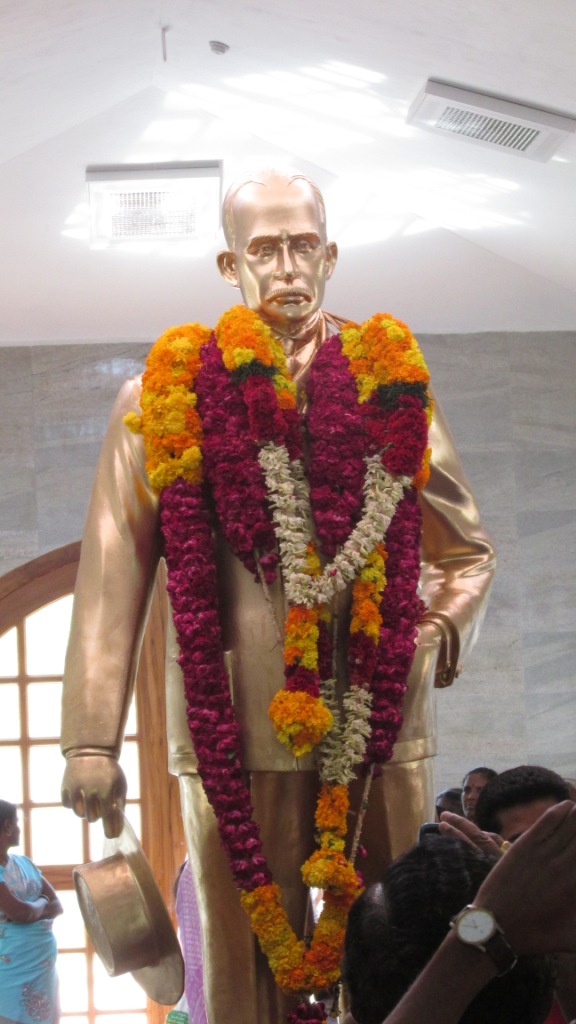
The government of Tamil Nadu recently honored Colonel J. Pennycuick, the architect of the Mullaperiyar Dam which had been built in 1895. The chief minister of the state commissioned a small memorial building which includes a statue of Pennycuick and a rare collection of  photos taken during the dam construction. Continue reading

If You Happen To Be In New York City

photo4384

Join Sea Shepherd Conservation Society NYC chapter for a training session for on-shore activists. Learn about Sea Shepherd Conservation Society, our history, our tactics, and our campaigns. Learn how to effectively outreach to individuals who attend our events and come to our tables. Please RSVP to nyc@seashepherd.org as space is limited.

From the Sea Shepherd Conservation Society’s website events calendar page:

On-Shore Volunteer Training – New York, NY

Wed, 23 Jan, 2013 6:30 PM – 8:00 PM

Continuum Coffee 199 Avenue B New York, NY

Fees:   Free

Largest Gathering On Earth

This slideshow requires JavaScript.

The Atlantic‘s photographic coverage of Kumbh Mela is accompanied by this explanation:

Tens of millions of Hindu pilgrims are now descending on Allahabad, India, joining an estimated 8 million already there for the Maha Kumbh Mela. Continue reading

What’s The Problem? The Key Question Of Entrepreneurship

Click the image above to watch this brief, powerful statement on entrepreneurship from Cornell’s 2012 Entrepreneurship Summit in New York last October. Between the fourth and fifth minute Jay Walker lays out in his own words the promoted purpose of the Summit:

BREAKING APART PROBLEMS.
TO FIND BETTER SOLUTIONS.

Every entrepreneur is pushed forward by the drive to fill an unmet need. Finding solutions to real-world problems is why we invent, build, and grow. At the first annual Cornell Entrepreneurship Summit, some of the world’s most innovative minds will share their experiences addressing complex challenges and paving new solutions. They will provide insights from their own achievements, as well as looking ahead to the problems we must tackle next.What are you solving?

Traditional Welcome at Cardamom County

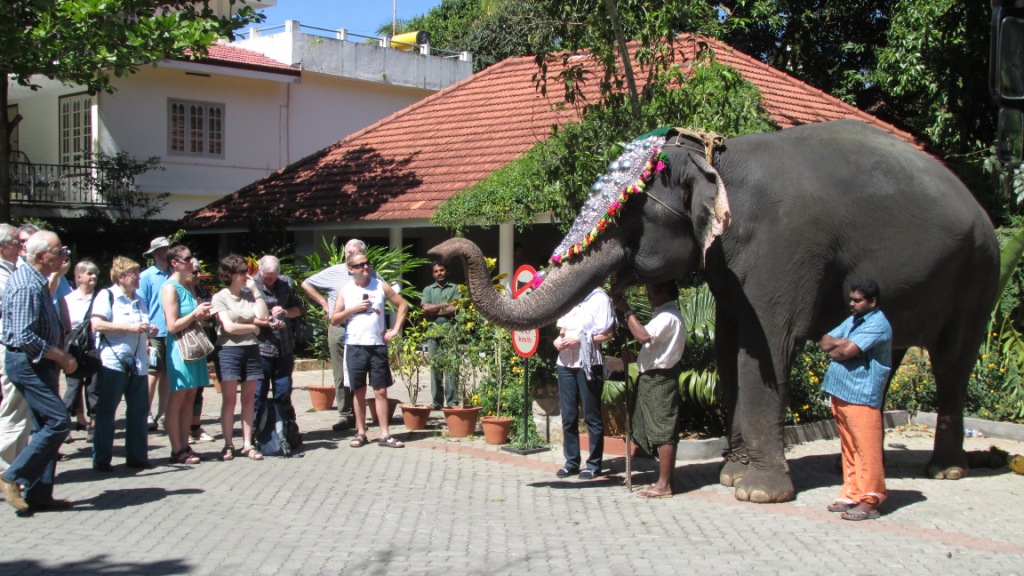
A group of 20 guests at Cardamom County enjoyed a traditional Kerala welcome today with a caparisoned elephant, traditional Chenda melam band, flower garland and sandalwood paste Tikka.

Continue reading

Sculpture And Animation In The Interest Of Nature

Art or craft, we are inclined to sculptures and animation for reasons we cannot quite explain–sometimes just for fun, sometimes for contemplation, sometimes both simultaneously. What it means is best left to those experiencing it.  We categorize it as friendly to the themes we care about on this site, so hope to see more of his art. From the Asia Society’s website we learn that

U-Ram Choe is a Korean artist born in 1970 in Seoul. He is best known for his meticulously designed kinetic sculptures made of acrylic and stainless steel, each animated by robotics developed and programmed by the artist. Continue reading

Tell Them It Cannot Be So

The Guardian and New York Times are the two newspapers of record in the English language that have invested well in coverage of environmental issues.  This news below is not welcome and we hope it is not final.  Why did we learn this news in the Guardian?  Can we influence the reversal of this decision?

The New York Times will close its environment desk in the next few weeks and assign its seven reporters and two editors to other departments. The positions of environment editor and deputy environment editor are being eliminated. No decision has been made about the fate of the Green Blog, which is edited from the environment desk. Continue reading

Mystery Bestseller

GetImage


Click the image of the book cover to go to the page in Guardian’s bookstore where it is available.  Click here to look at its standing on their best seller list.  Then, someone please explain its standing as the bestseller this week based on this synopsis:

Provides information on the fundamentals of biological oceanography. This book covers the properties of seawater which affect life in the ocean, classification of marine environments and organisms, phytoplankton and zooplankton, marine food webs, larger marine animals, life on the seafloor, and the way in which humans affect marine ecosystems. Continue reading

Beauty Of Munnar – Tea Plantations

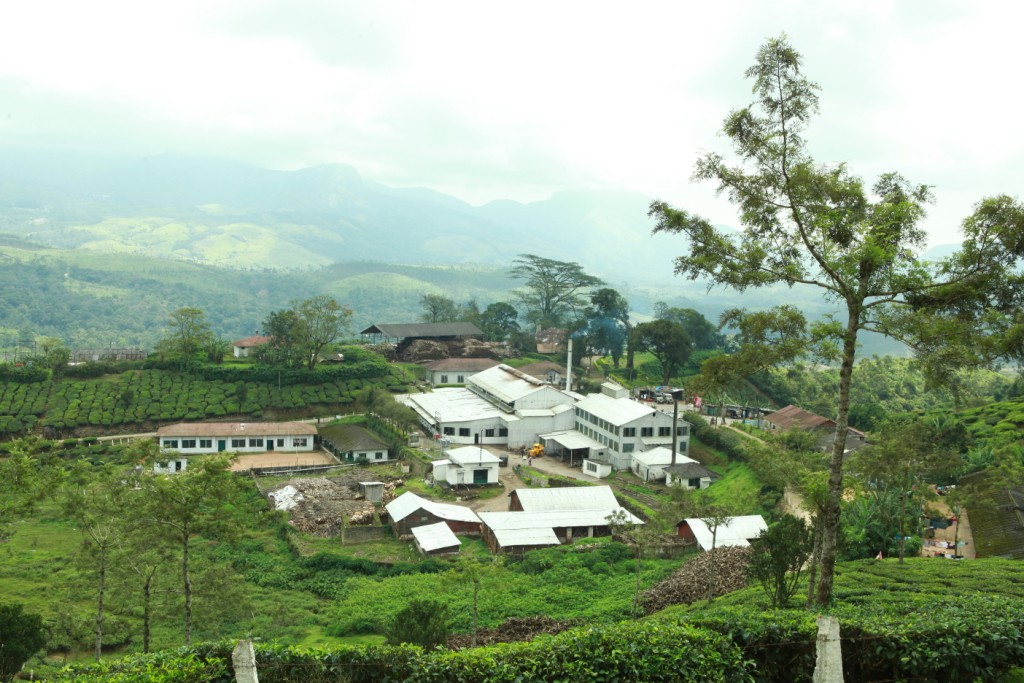
Munnar is famous for its tea plantations, most of which are privately owned. With its rolling hills, sparkling waterfalls, sprawling tea estates and undulating valleys, Munnar has all the makings of an ideal hill destination.  The ‘discovery’ of Munnar dates back to the 1870’s when British Resident JD Munro recognised the agricultural  potential  of the region and started planting crops such as coffee, cinchona, sisal, tea and cardamom. The pioneer planters found that tea was best suited for the area.  Continue reading

Cause For The Ages

noise-465

Click the image to the right to go to the story at the New Yorker website. We are not the only generation to be concerned about the boundaries between the beautiful and necessary sounds of life, and the excessive sounds of noise pollution. Even a century back in New York, sound had its judges and quiet had its activists:

…Sound does not persist, neither across space nor across generations, so the tremendous rattle of horse-drawn drays, the clink of cupboards, the sneezes and shuffles of domestic life fall into the vacuous, silent crevices of history. “How did diners respond to the switch from pewter to china?” Schwartz wondered aloud. “How did a midwife register the sound of a new baby coming into the world? How did a person walking out in the woods register the sound of thunder or lighting?” In the course of nearly two decades of research, Continue reading