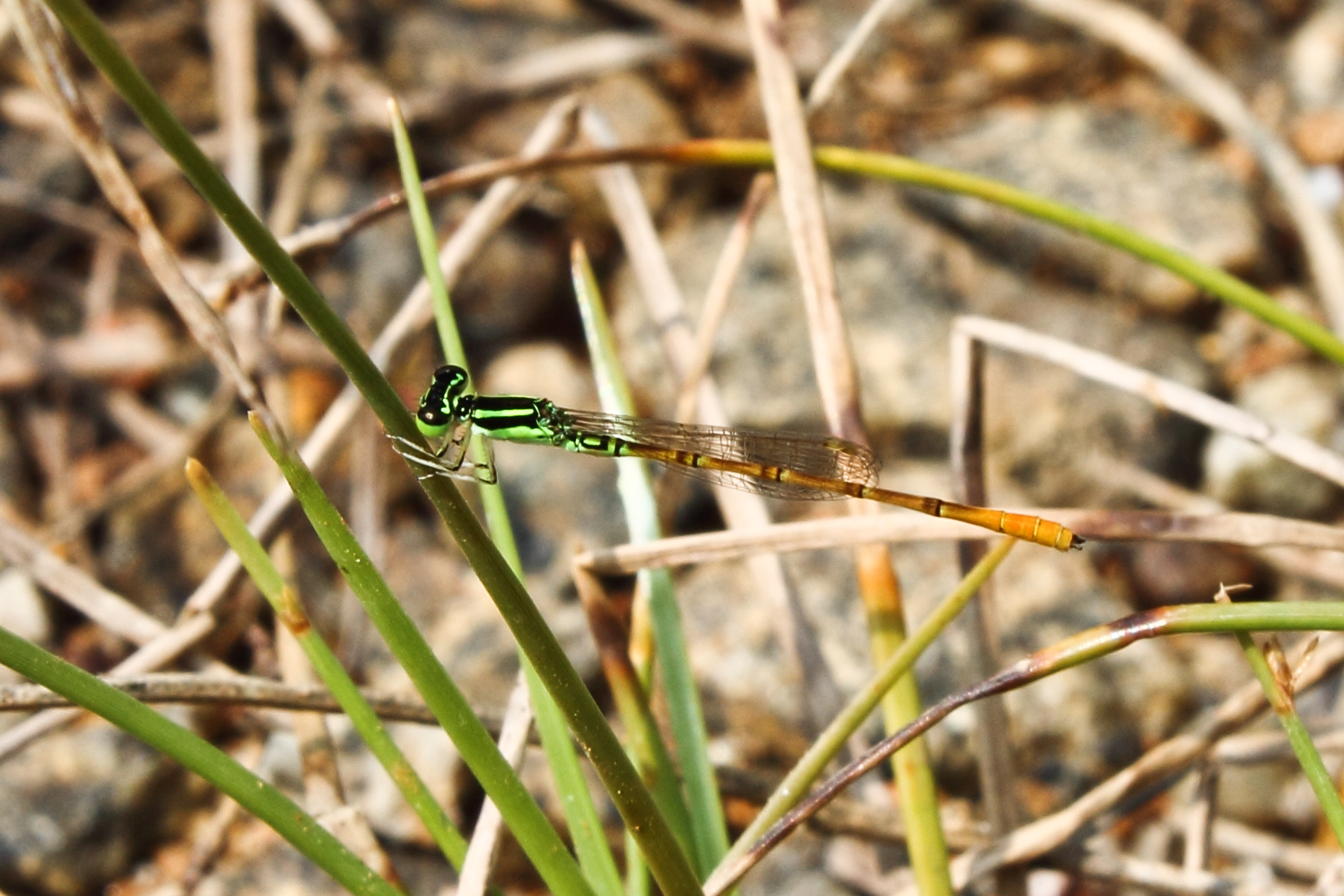
The Pygmy Dartlet is a very widespread species of damselfly, surprisingly enough. Measuring about 16 millimeters, Agriocnemis pygmaea is undoubtedly the smallest damselfly or dragonfly I’ve seen. The species is known to have many different appearances, with both male and female displaying up to three or four different color combinations. The male is pictured above, and the female below. Continue reading
Mahatma Gandhi In Paris
With a mission like this how could we not pay attention? The image above links to the story about two of our favorite subjects, brought together by The Caravan. The image is from a French magazine, which covered the Mahatma’s visit to Paris (and elsewhere) with reverence.
Wonderful Krulwich
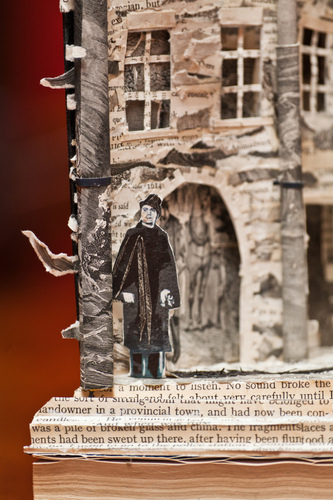
…somebody has been dropping glorious little paper sculptures into libraries and museums all over Edinburgh, Scotland, and we’ve just heard … that there are now three more…
3 Minute Wonders: You Get What You Pay For
It is easy to be skeptical about the relationship between buzz and art, where buzz is meant to be a synonym for meaningful discussion. At 2:23 in this clip one person eloquently suggests that this is art because it has generated discussion. But has it?
Bird of the Day: Sanderling (Galapagos Islands, Ecuador)
Exploring Kenya: Lake Nakuru
My first trip to Kenya was about two years ago; unfortunately, I never ventured outside the borders of Nairobi. This time, I pledged to experience the nation’s countryside firsthand. Above is a sample of what I saw from Lake Nakuru and the drive to the Masai Mara. Continue reading
Tal’s Photos, Michael & The Tiger Trail Crew
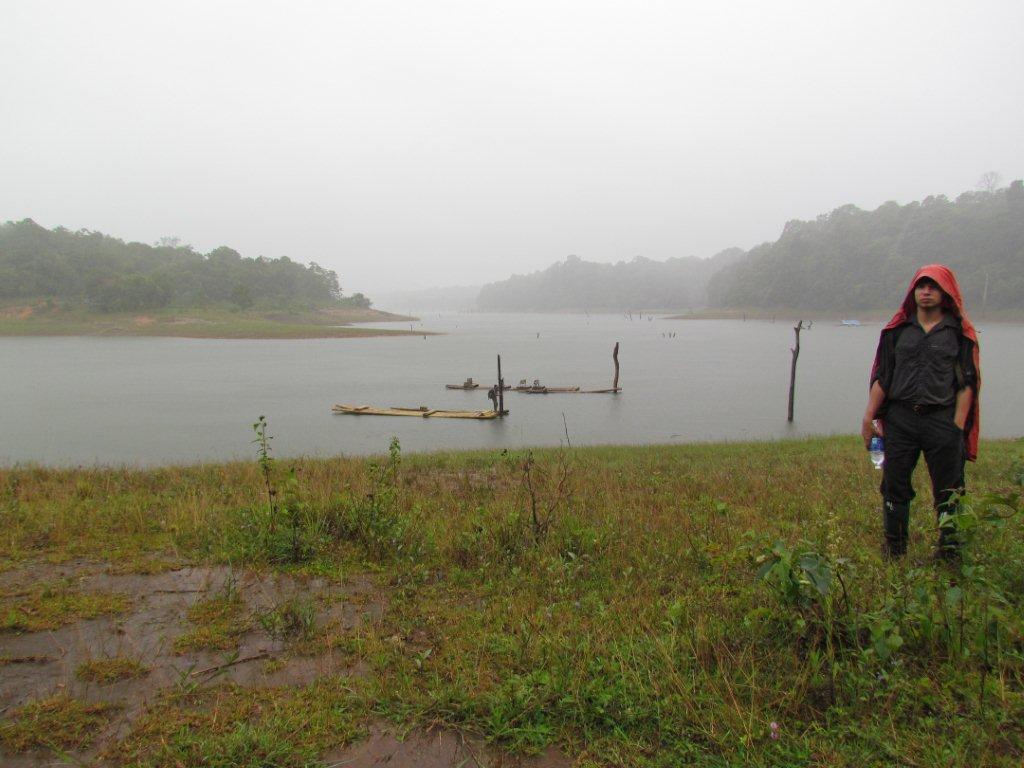
It was an experience worth revisiting. Here’s one more the photo that Tal shared, Michael on that misty morning.
Swampbuster

My last post introduced the problem of hypoxia in the Gulf of Mexico, and I promised to start trying to answer that question. Today I’ll shed some light on some subsidies and federal policies that could be altered and bolstered in the right ways to stop nutrient-rich runoff from reaching the Mississippi River. I’m going to point out right away that although the most obvious way of preventing hypoxia is by reducing fertilizer use, this is also the most difficult and expensive tactic to implement. My goal is to start laying out elements of a more cost effective, pragmatic plan for ameliorating hypoxia in the Gulf of Mexico.
The agricultural subsidies that I discuss here are measures that can be implemented through various policy tools (e.g. direct payments, technical assistance, tax incentives) to reduce costs for producers and attempt to benefit the economy in doing so. One positive form of subsidy, known as a cross-compliance program, discourages creation of farmland from current wetlands or land that is highly erodible. Continue reading
Arts & Science
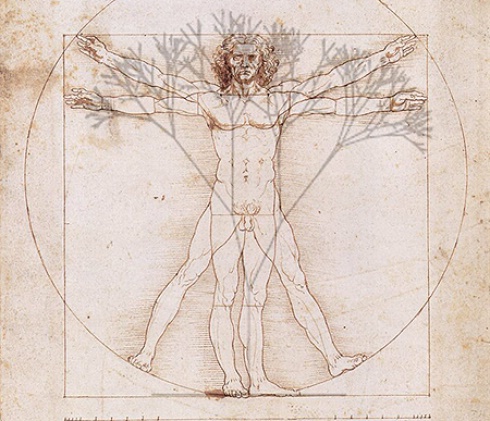
Every year, some percentage of undergraduate students majoring in an academic discipline within the liberal arts, often aka Arts and Science, wonder: what’s next? As in, what will I do when I complete my degree? Many do not need to wonder because they are on a clear path–pre-med or pre-law for example. But for those wondering, we hope our site sheds some light on the variety of possibilities. For one example (click the image above for the source) we like the idea of literally combining art and science (so did da Vinci):
…a mysterious, nearly universal growth pattern first observed by Leonardo da Vinci 500 years ago: a simple yet startling relationship that always holds between the size of a tree’s trunk and sizes of its branches. A new paper has reignited the debate over why trees grow this way, asserting that they may be protecting themselves from wind damage.
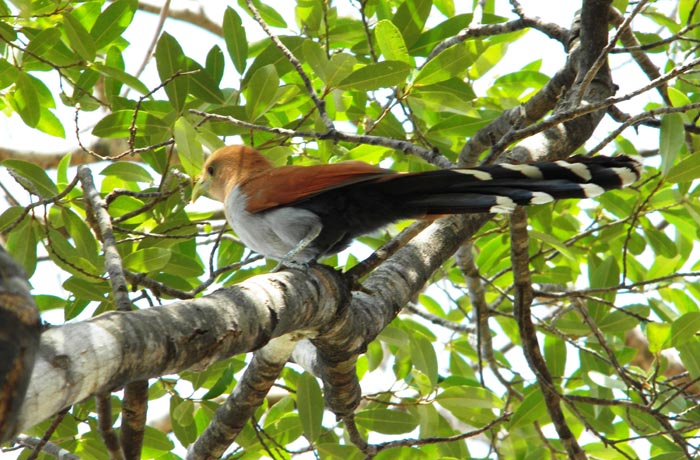
Bird of the Day: Squirrel Cuckoo
Our Gang, Thevara (#2)
In more than one earlier post, we might have given the impression that only fellows are out and about for snapshots in the neighborhoods we visit. Not so.
Bird of the Day: Great Cormorant (Thekkady, India)
Emergence
Rainforests have dense canopies. The plants in the undergrowth struggle to survive using the limited sunlight that reaches the lower levels of the jungle, and many plants don’t make it. When the weak plants die, their lifeforce nourishes the survivors. It has been this way for millions of years, and walking through the forest, the evidence crunches and crackles underfoot, or in more moist areas, decomposes rapidly into a soft, nutritious humus. Easing oneself out of the forest and into a clearing can be soothing – only upon emerging into the vivid sunlight and open air does one realize how resonant the forest can be. Continue reading
Do Not Tresspass
Wordsmithing: Authentic
We have been using this word for years as a shorthand for one of the core objectives of our entrepreneurial conservation work: collaborating with communities to assist in the retention of heritage that has meaning, and that those communities feel should remain essentially as it was. It is therefore interesting to consult OED (finally) on exactly what this means.
Top of the list of entries:
a. Of authority, authoritative (properly as possessing original or inherent authority, but also as duly authorized); entitled to obedience or respect.
Waterborne Mysteries
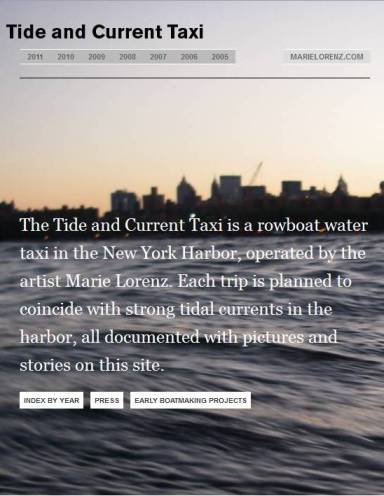
Click the image to the left and you will find yourself somewhere in the Marie Lorenz realm. It may be easier to understand this realm if you see some of her more “traditional” art, and especially the evolution of that art, at her own website first.
If you happen to be in New York City, you have an advantage: you can experience this realm firsthand. If not, maybe a description of some of her other recent art will give a small portion of perspective to the Tide and Current Taxi:
Recently I have been making collographs of things that I find on the beach. This project is an attempt to find out the story that an object tells about itself. I think of it as another way to collaborate with the tide – because of how the harbor collects things from the city, and distributes them around the shore according to their density, buoyancy, and shape. Continue reading
More Stephen Jay Gould On The Simplicity Of Darwin
Six minutes continuing the lecture (the first five minutes were posted here) given by one of the greatest scholars of evolutionary theory since Darwin himself.
A Dead Zone
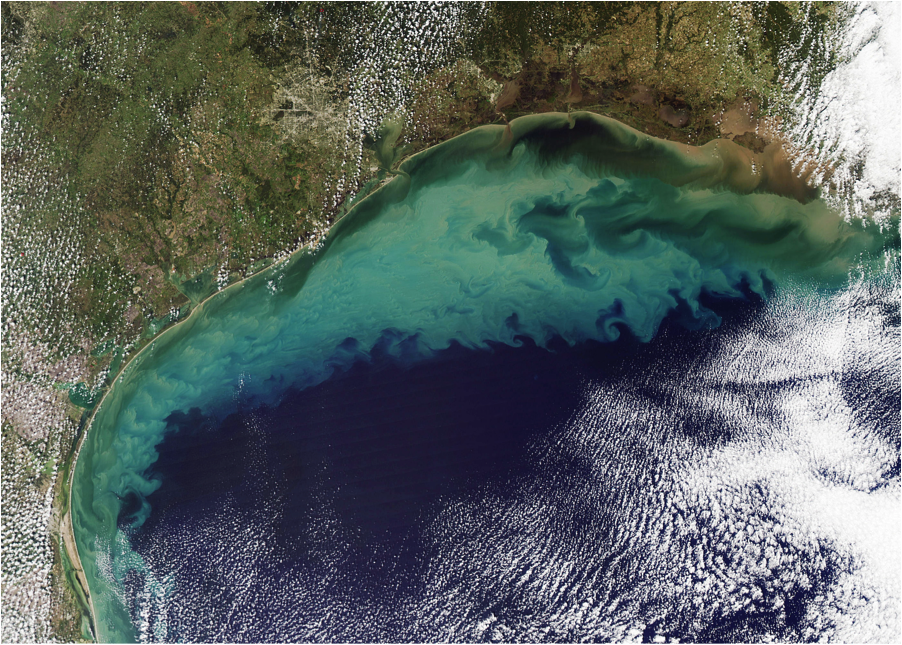
This picture is of the hypoxic area in the Gulf of Mexico, the largest “dead zone” in the western Atlantic. Since the beginning of this site we have tried to accentuate the wonders of nature, creative and collaborative approaches to conservation, and other fun stuff. Every now and then a dose of scientific explanation helps put this in perspective, even if it is a downer like hypoxia.
Hypoxia occurs when oxygen concentrations in the water are too low to sustain most life, and is created by a process known as eutrophication. This is the over-enrichment of water by nutrients, which cause dense growth of algae that consumes oxygen as it multiplies and decomposes. The resulting lack of oxygen can cause large die-offs of marine life, seriously threatening ecosystems in the Gulf.
Bird of the Day: Mangrove Cuckoo
From 81 Years Back
It has been our preference not to to succumb to the second most acute syndrome plaguing file-sharing on the internet. Not that those kittens, monkeys and elephants are not adorable–they are. But the video clip above is different… Continue reading