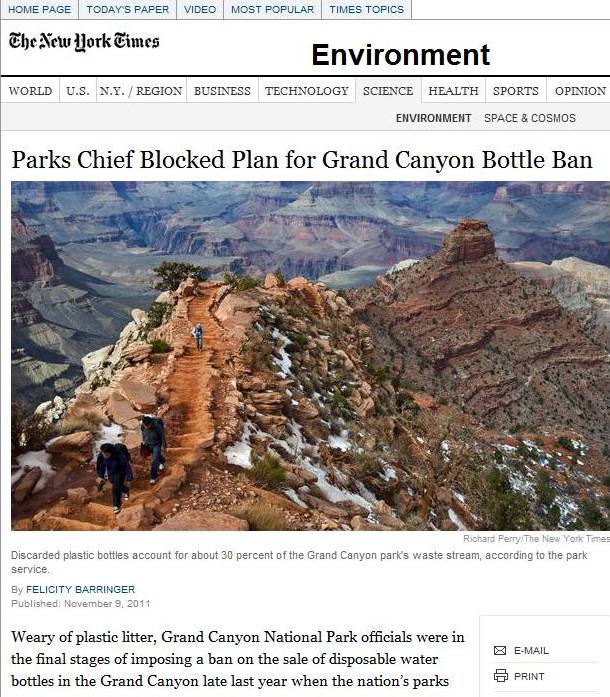
Click on the image above to be taken to the story, which describes a great trash reduction plan in the Grand Canyon National Park that suddenly got scrapped under mysterious circumstances. The circumstantial evidence suggests that Coca Cola was influential, if not responsible, for that canceled plan. Every day this newspaper seems more worth the subscription price. Continue reading
Tourism: A Potential Economic Pillar for South Sudan?
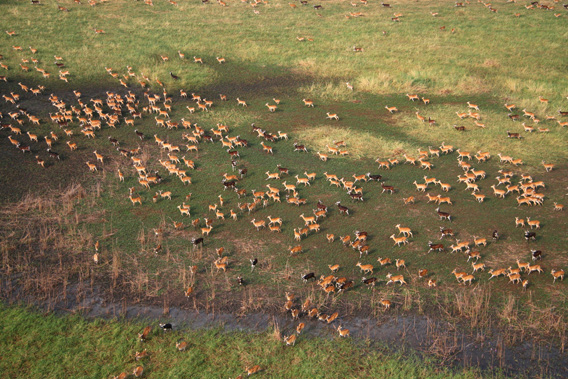
A few weeks ago, I attended a Rotary Club meeting on tourism development in South Sudan. Bishop Lanogwa and Mr. Olindo Perez of South Sudan’s Ministry of Wildlife Conservation and Tourism led an exciting conversation and inspired all of us in the room to think of South Sudan’s tourism potential. As a new nation reliant on oil as its main economic engine, the ministry believes tourism can be South Sudan’s second economic pillar. South Sudan boasts six national parks and thirteen reserves. The nation has arguably the largest wildlife migration in Africa. Although the second Civil War (which lasted over two decades) negatively affected wildlife, South Sudan is still home to large populations of beautiful kobs, giraffes, elephants, chimpanzees, and other wildlife.
I believe tourism is a very powerful economic tool; however, its social and environmental consequences can be both negative and positive. Continue reading
Bird of the Day: Magpie Jay (Morgan’s Rock, Nicaragua)
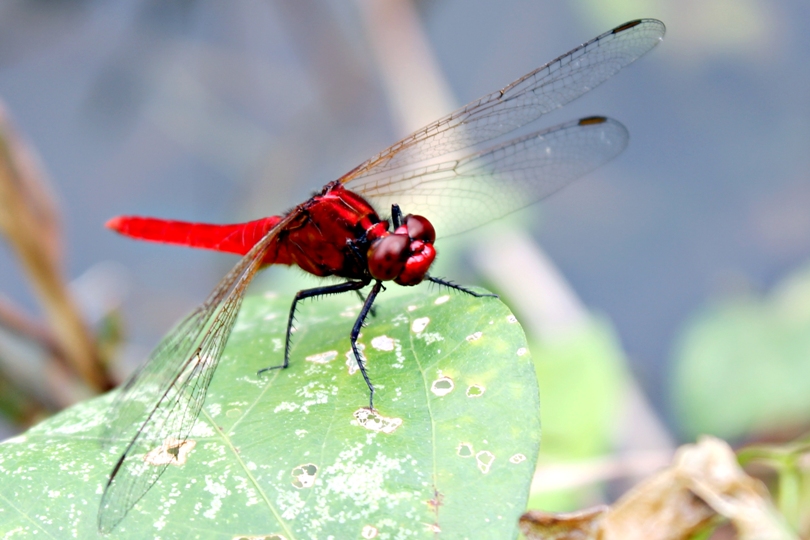
Scarlet Skimmer
One of the fastest and most agile dragonflies I’ve seen, this red male was sighted on a riverbank in Alleppey, Kerala. Although not unusually large, this insect stands out due to its bright red body and head. Most of the red dragonflies I have seen (in the genus Orthetrum for the most part) have some combination of colors – azure eyes, black face, blue thorax and red abdomen (O. pruinosum); black eyes, red face, brown thorax and red abdomen (O. chrysis), etc.
For Our Surfer Friends
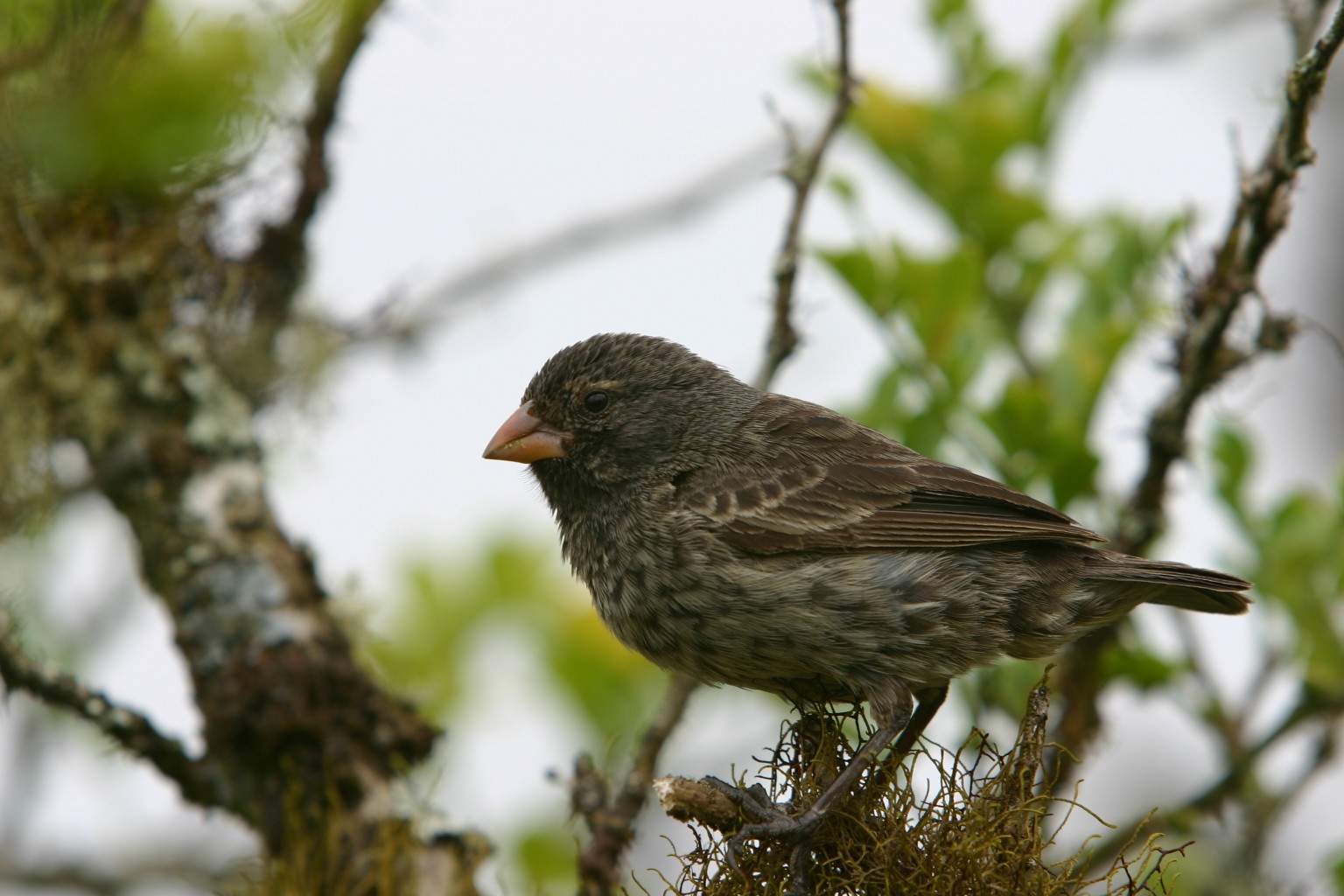
Bird of the Day: Small Ground Finch (Galapagos Islands, Ecuador)
Amphibians of Periyar
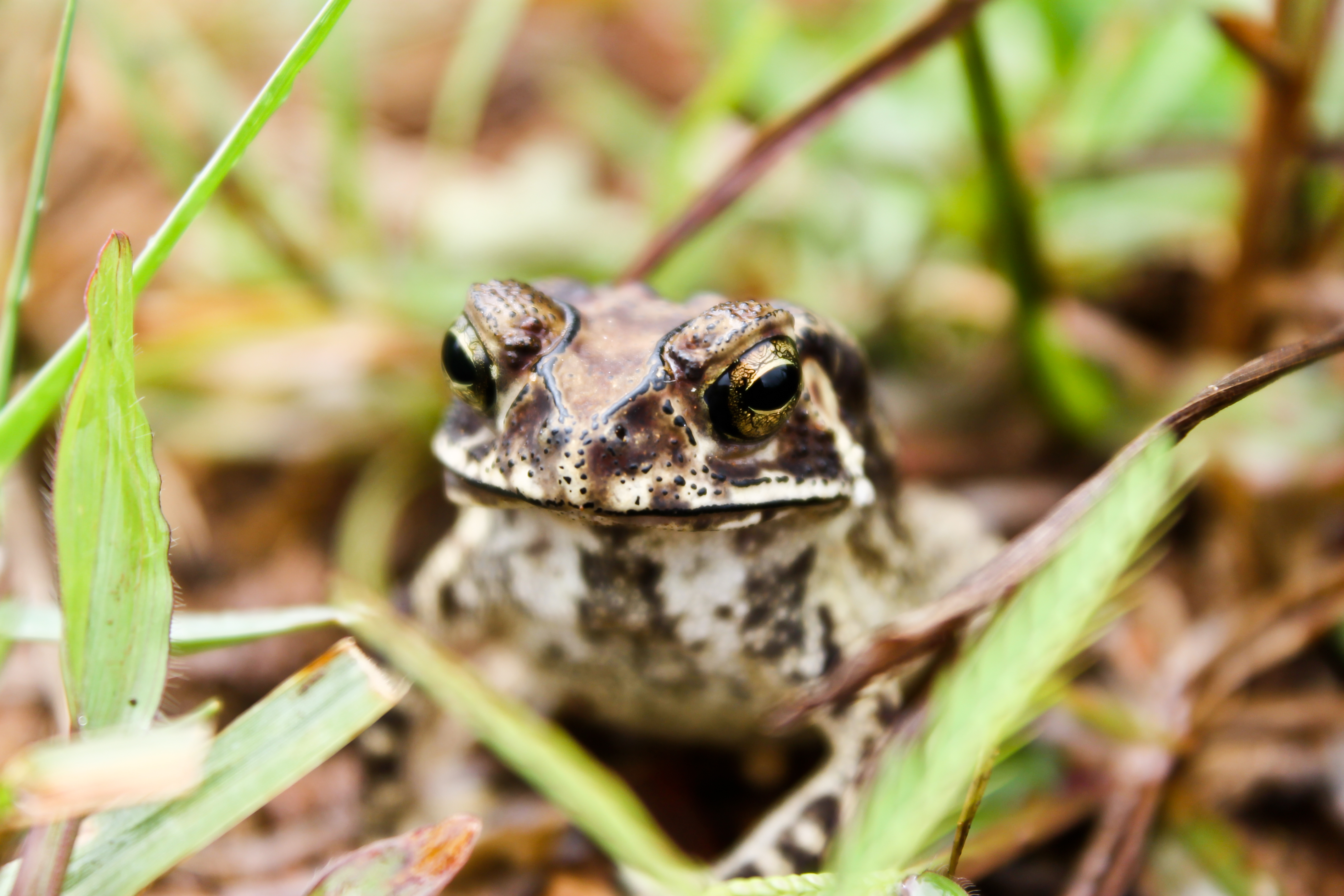
So far, my treks in the Periyar Tiger Reserve have yielded a generally consistent array of wildlife sightings. Insects and spiders are a constant, birds of some sort or other are common, boar and gaur are to be expected, deer are a pleasant (but not huge) surprise. Elephants are not uncommon to see, but don’t stand around modelling for pictures, and are usually sighted from a great distance. Tigers are out of the question to see, except for the extremely fortunate. Of course, this leaves out dozens of categories of creatures, and hundreds (possibly thousands) of species. Amphibians are a pretty constant sighting, mainly in the form of frogs and toads. To be honest, I don’t really know the difference, but I do have a definite ID on one species: the Common Indian Toad (Duttaphrynus melanostictus).
Thank You, Mr. Friedman
When I began teaching a new graduate course ten years ago–an elective course that considered the impact of globalization on entrepreneurship–I assigned The Lexus and the Olive Tree as required reading. The diploma for the masters degree was coming from Cornell University, the course was being taught in Paris, and my students were from 23 different countries. The discussion around that book were the best I ever experienced as a professor.
I am now based in India, in a business partnership with a student from that course, and we often find ourselves using words like hot, flat and crowded as shorthand when discussing strategy (ours is an entrepreneurial business much affected by technology and globalization). Continue reading
Good As You Want To Be
I have been thinking further on the Tiger Trail, and its connection to the purpose of this site. Usually I muse on the wisdom of the judge that took the risk to allow convicted poachers to serve out their life sentence in the national park rather than in prison. The opportunity we have to visit the wilderness with them, and to relay that story, is certainly a privilege, for this site and for the individuals who write about it.
But the reason I keep coming back to it is that the men who represented the risk have, by all appearances, made good on their promise not to return to poaching for all these years. Why?
If the men were inherently good, an argument could be made, they would not have hunted and killed tigers for money, or destroyed the cinnabar ecosystem for money. But to meet the men today, they certainly seem good, by nurture if not by nature. And so, why? Continue reading
Wordsmithing: Sustainability
While the development economics paradigm known as sustainable development has been with us for merely a generation or so, the adjective sustainable goes back to 1611, according to OED. A derivative of that adjective, the noun sustainability, came into use much more recently, which may explain the name attached to the paradigm:
1980 Jrnl. Royal Soc. Arts July 495/2 Sustainability in the management of both individual wild species and ecosystems is critical to human welfare.
We cannot help but agree with the application in that reference.
Eye of the Beholder
Being a macro photographer without a macro lens is complicated. There are plenty of corners that can be cut, and crutches to lean on, but in the end, the best way to get a high-quality macro image is using the right equipment. The trick I use most often is cropping – my 18-55mm lens can focus on relatively close subjects, although not nearly close enough to get the desired macro effect. If the focus falls upon the right points, the final image can be cropped, and the subject’s size increased without distortion.
These three images are all created from the same one – the one on the left. To see the increased detail, click the picture for a full-size version. Continue reading
Bird of the Day: Vermilion Flycatcher (Galapagos Islands, Ecuador)
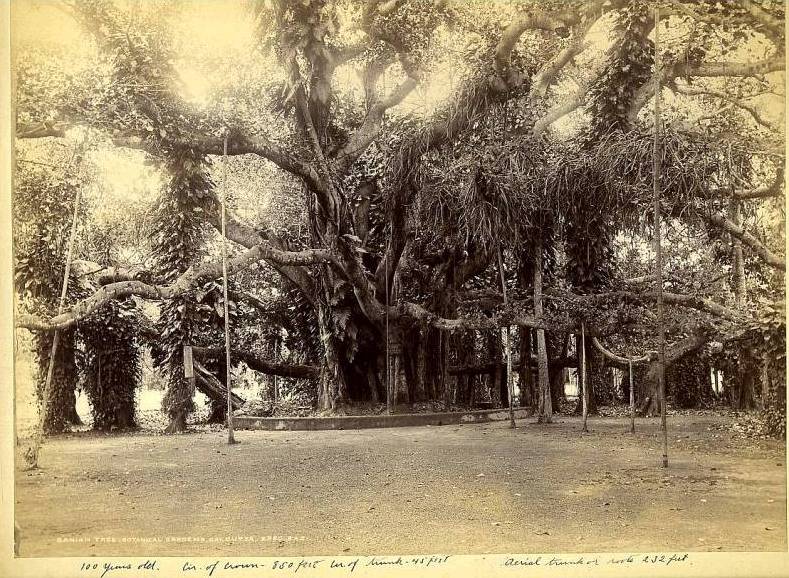
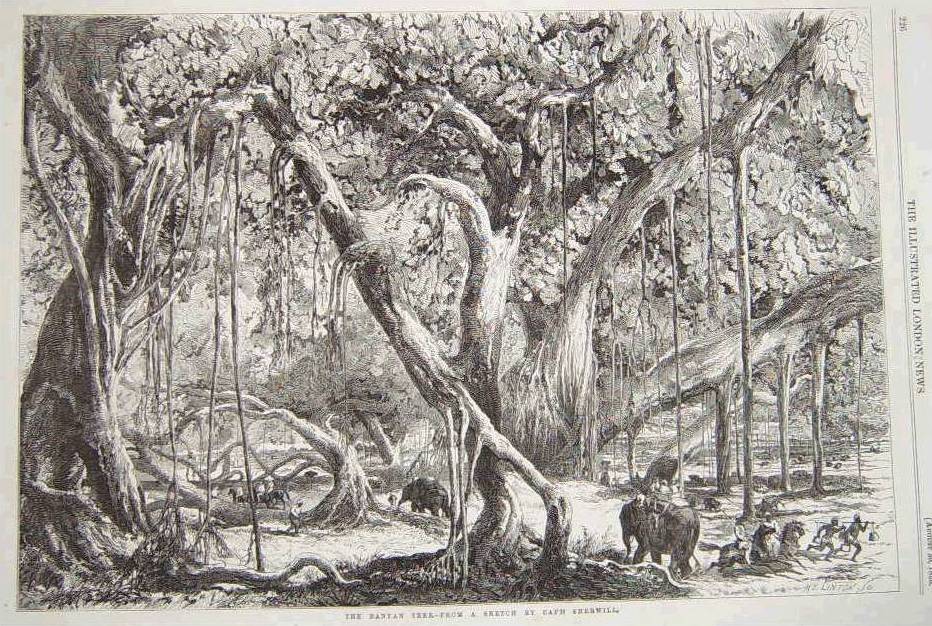
Sacred Trees
The fig-tree at this day to Indians known
In Malabar or Deccan, spreads her arms,
Branching so broad and long, that on the ground
The bended twigs take root, and daughters grow
About the mother tree, a pillar’d shade,
High over-arched and echoing walks between.
–John Milton, Paradise Lost
Sensible Sight, Visionary Sense
Milo’s post reminded me of the surprise I had, 30 years after first reading Brave New World, when (thanks to the generosity of The Paris Review, which started providing some of their archives online, free for the taking) I came across an interview with Aldous Huxley. By most accounts, not least your high school English teacher’s, he was a visionary, right? So ponder this, if you did not already know it:
…INTERVIEWER
How did you happen to start writing? Do you remember?
HUXLEY
I started writing when I was seventeen, during a period when I was almost totally blind and could hardly do anything else. I typed out a novel by the touch system; I couldn’t even read it. I’ve no idea what’s become of it; I’d be curious to see it now, but it’s lost. My aunt, Mrs. Humphry Ward, was a kind of literary godmother to me. I used to have long talks with her about writing; she gave me no end of sound advice…
Bird of the Day: Greater Flamingo (Galapagos Islands, Ecuador)
Blind Sights
An interesting question to ask about a fully intact and functional brain’s cognitive abilities is this: how do we know that each individual’s perception isn’t unique, whether it’s visual, olfactory, or of any other sense? Processing and emotional responses aside – how do we know that people actually see things the same way, physically? The color I identify as red might appear as residing on the opposite end of the spectrum to someone else, despite the light’s wavelength being constant. The smell I identify as vanilla may be different from another person’s perception of vanilla’s odor, but because we are both correctly identifying the scent as that of vanilla, it is both futile and impossible to determine whether or not the stimulus is perceived identically between the two people.
Enter science! Everyone’s nose (at least those without ‘abnormalities’) has the same scent molecule receptors, meaning we all have the same capabilities for smelling the odors in the air (yes, they are molecules! they are not magically dispersed by the scent fairies, contrary to popular belief). Continue reading
Artifacts
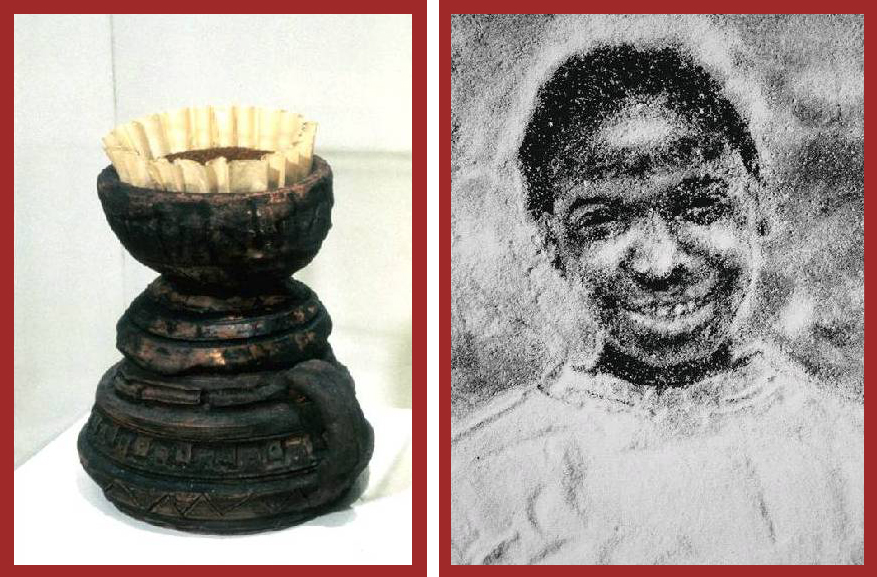
When I posted about the artist Vik Muniz a few days ago I wrote primarily about his collaborative film with director Lucy Walker. I feel I didn’t do justice to the general wit of his work. Like fellow artists Chris Jordan and Mary Ellen Croteau, Muniz is an ultimate recycler, but his “puckish” personality informs his work, both through his choice of medium (sugar to create shimmering portraits of the children of cane workers on St. Kitts) or visual jokes (Pre-Columbian drip coffee maker). Continue reading
2011 Sustainability Roundtable at the Hotel School
Last week, I had the pleasure of attending the 3rd annual Sustainability Roundtable at Cornell University. The roundtable was attended by several notable industry executives from Marriott, InterContinental, Starwood, and Wyndham. It covered five topics: sustainability across global platforms, standardizing environmental footprints of hotel stays, customer choices, sustainability in the meetings/events sector, and leveraging trends and overcoming barriers in sustainability. Participants came from a wide variety of backgrounds; hospitality franchisors, owners, operators, suppliers, consultants, utility providers, investors, and researchers were all represented. In short, it was a meeting of the best, most passionate minds in sustainable hospitality. Although their discussion covered a wide range of important issues, the session that I found most interesting was “Sustainability and Customer Choices,” which I’ll briefly touch on.

Little L Liberalism
The first time I remember having heard of Nicaragua was during an evening newscast sometime in the autumn of 1980. The first time I had the opportunity to vote in a presidential election was November, 1980. Most of the students I knew at that time were somehow very certain about what was right and wrong in general, about what would be best for Nicaragua, about who could best lead the United States, and about lots of other things. And most seemed to have similar views to one another. Some days I was impressed by the coherence and consistency, others nauseated.
It was the nausea, in the end, that motivated me. That sickening feeling was not the result of judging people around me, but of realizing that I did not have sufficient experience to have such strong viewpoints. That was why I left college (the ad below, which I did not see until a few years after graduating college, summed up in 30 seconds what I had been looking for).
Freeze Frame
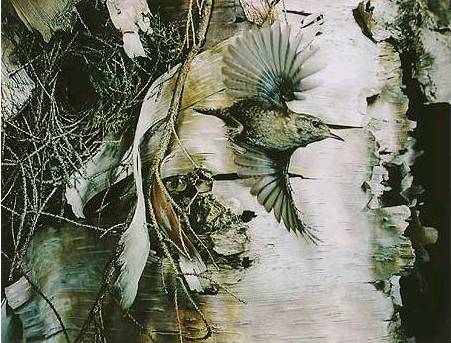
Eliot Porter Winter Wren, 1969 Amon Carter Museum Collection*
Sometimes it takes a scientific mind to re-calibrate the artistic eye. Eliot Porter’s parents had instilled a love of nature and science in him from an early age, and he’d been photographing birds since received his first camera at the age of 10. His training in medicine and as a chemical engineer didn’t dampen his interest, in fact he was among the first to bridge the gap between photography as a fine art and its foundations in technology and science. Continue reading