Our Gang, Feynan

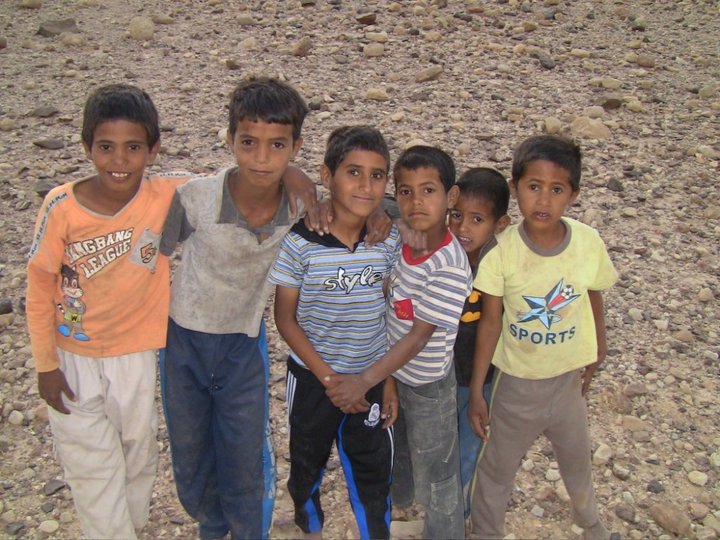
Juggling stones, racing barefoot, learning English, playing with rope swings on the desert trees…

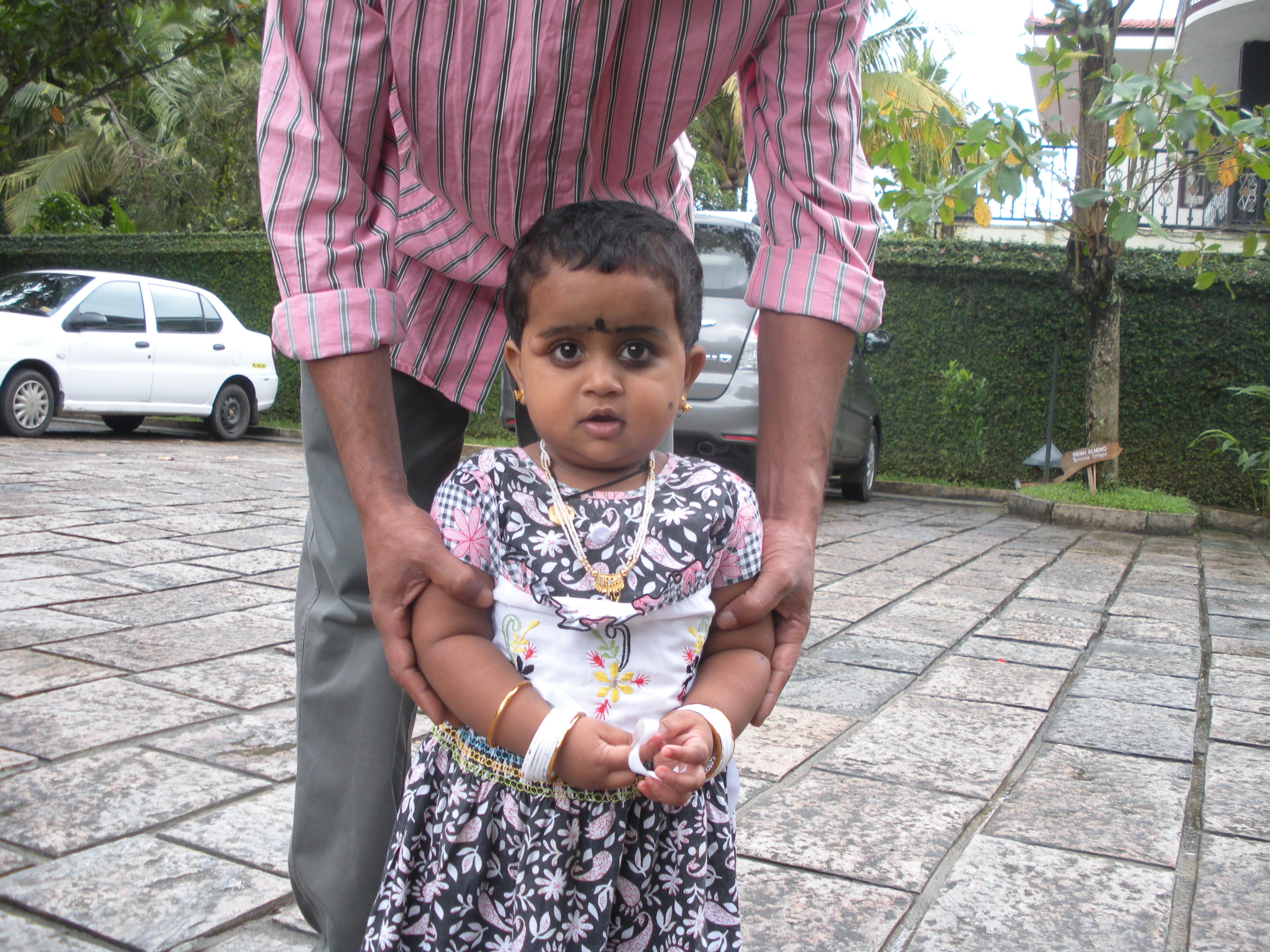
5,000 kilometers away from Our Gang in Thekkady, but the spirit of fun and dance and play is the same.

Mismatched and scruffy, there’s a history here, a story, something fundamental to childhood…being pals, chums, buddies, one of the gang.

Waterlife by the NFB

The National Film Board of Canada (NFB) has created an extraordinarily touching and informational website on the devastation humans have unleashed upon the Great Lakes of North America – the largest group of freshwater lakes in the world, though not by volume. The Great Lakes face many challenges brought about by neglect, misinformation, and the poor judgement of industrial bodies. The website, http://waterlife.nfb.ca/ provides a lake of information on the problems, causes, and solutions, from political changes to the environmental healing carried out by caring and responsible citizens of both the United States and Canada.

Sculpteur Par Excellence

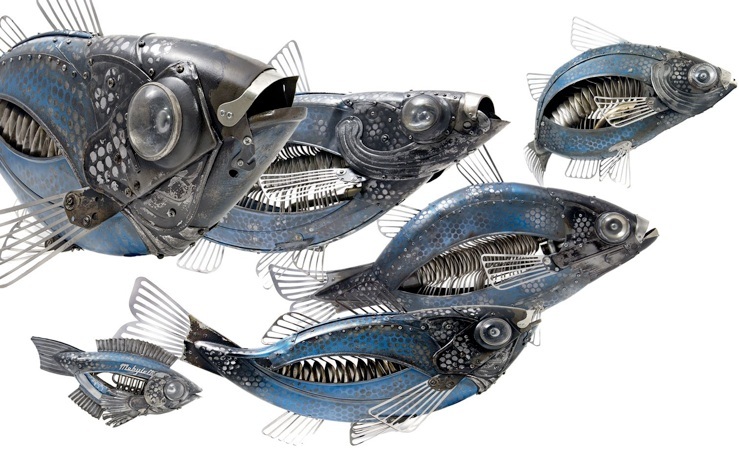
If you were as amused as we were by this animation, and especially if it gave you hope related to beautiful, if not organic, marine ecosystems of the future, then this display of sculpture is probably for you.  Edouard Martinet’s lovely and lovable marine life is rivaled by his entomological wonders, which you will see at his entry page but be sure to dig deeper to find the other lovelies.

The Structure Of Relevance

In bringing stories of community, collaboration and conservation to these pages, we try to rhyme as much as we try to reason.  The rhyme can come in visual format, for example with photos like these, or like these; combinations of photos and video like these and like these.  We also share plenty of rhythmically-accompanied visuals as well as links out to items that seem to be in the general spirit of what we do when we are not contributing here.

But writing about our activities with meaning, in words, is what we hope to do best on this site. Writing (and reading) are just as important as the visual and aural cues we bring attention to, and our Contributors are committed to writing as an art form.  So it is worth noting the master of long form journalism on some fundamental ground rules of telling a story well.  John McPhee interviewed in The Paris Review:

Structure is not a template. It’s not a cookie cutter. It’s something that arises organically from the material once you have it. In “The Encircled River” I go to Alaska, and make that trip, and soak up that world. And when you’re up there, the most impressive thing is the cycles of that world.

Continue reading

“Go Green, Young Man (or Woman)…!”

When Horace Greely (well, actually John B. L. Soule) said “Go West, young man, and grow up with the country!” he was speaking from the perspective of limitless possibilities. The Lewis and Clark Expedition had helped map out the west and many young men, and later women, answered the call.

With wilderness in peril, that same entrepreneurial spirit has opened up a new world of empowerment and possibilities for later generations. The California Conservation Corps and Southwest Conservation Corps have teamed with the non-profit Veterans Green Jobs in a win-win program to support both the country’s military veterans and the country’s national parks. Continue reading

EZ Water Fountain

From the side the water fountain looks like most others: a spigot shoots arcs of water from a corner when you press a button somewhere. But when you face the EZH2O water station — a bottle-filling station — you see that the spigot in the corner is not the only mechanism on the wall.

I’ve been carrying around aluminum or hard plastic bottles for years, and am always annoyed when I have to replenish from a water fountain that doesn’t shoot water in a high enough arc so that my bottle can fill to the brim. With the EZH2O, all you have to do is place a bottle in front of the motion sensor in the back panel, or simply stand it on the grey plastic platform, and water will come down in a straight and soft stream.

As your bottle fills, a little meter in the top corner of the panel tallies how many plastic bottles have been saved by using reusable bottles. Also, the bottle filling station has a WaterSentry filter (and a light in the top right corner that shows when it needs to be replaced). So far, I have only seen these in Cornell’s Olin Library, both in the stacks and the basement. Hopefully they will spread to every building at Cornell.

An Abundant Life

I recently read an essay in the Wall Street Journal titled, “Living to 100 and Beyond.”  As I read about the technology that is rapidly increasing human longevity, the movie Death Becomes Her began replaying in my mind.  I imagined myself following in Meryl Streep’s and Goldie Hawn’s footsteps and taking some magic potion that makes me immortal.  However, instead of the body deteriorating with age like the Streep and Hawn rivalry, advances in modern technology will likely not only increase life span but also health spans.   Living for centuries may seem appealing on the surface, but we should consider the overall effects of a longer life.

Continue reading

Water Harvesting & Accumulated Wisdom

As Gourvjit pointed out in an early post, Cardamom County is in the process of revamping its water management systems.  The search is still on for learning resources.  Besides an accent and wit that are mesmerizing, this man’s stories and visual accompaniments are stunning.  Learning is sometimes a simple matter of respecting elders.  Especially those who are so at ease on a stage as big as this one.

From Sea to Sand

There seems to be no limit to the spirit of creativity!  Art often represents a “call and response” relationship to the natural world.

Water is elemental.  Earth and wind follow.   Are these the mechanics of life?

Cardamom County, Kids’ Country

The energy was different at Cardamom County today. The delighted squeals of children replaced the semi-usual morning chatter of monkeys outside my room. Infants, toddlers and their pre-teen brothers and sisters outnumbered the adults at the buffet line at least 2:1. The splashes in the pool were made not by raindrops but by curious children, the plasticky click of ping-pong balls filled the recreation area, and each unexplored nook of the property made a perfect hiding place for games of hide-and-seek. It’s a virtual summer camp around here! Parents followed their young ones, not even feigning a chase, patiently flicking their billowing saris over their shoulders. I felt like I was reliving family field day at my primary school all over again, but in an alternate cultural and physical context. Continue reading

Desert Blues

Last year, during the summer prior to starting college, I worked at Feynan in Jordan teaching English to the children of the local Bedouin community.

The hybrid of Berber, Arab, Western and black African music styles of the Malian group Tinariwen serves as a sound track to his experience.  I had the pleasure of hearing some members of the group in a small venue last year, and that sound of desert yearning, or “asuf”, was almost palpable.   Take a listen to the embedded songs in the multimedia files in both of the above links and tell me if you agree.

…soon it will once again be time for Tinariwen — which operates as a collective, with anywhere from five to nine members, depending on factors like who has herds to tend or whose wife is pregnant — to move out of its cultural space and into ours.  And with that, the feeling of asuf will return, feeding a yearning for the desert even as it powers the music.

This slideshow requires JavaScript.

Honey, Hope & Future Cod

Milo’s post yesterday is of special interest to various initiatives we support related to food.  We will have much more to say on bees (and honey), but for now, it gets us thinking. Combined with Seth’s recent post, touching on the subject of overfishing (do read Mark Kurlansky’s books related to food, in addition to Cod), provide a reminder to stop and take a breath.  In a world full of challenges that daunting, how do we keep our wits about us?  How do we remain, fundamentally, hopeful?  An answer, but not necessarily with explanation, can be found sometimes in art (defined as you choose).  If we do not solve the tragedy of the commons with fisheries, might we still hope for a beautiful future for marine life that looks something like this?

Honeybee Mystery: Solved?

For years now, scientists have been trying to determine why honeybees are suddenly falling off the face of the earth, and activists have been demanding a solution. Honeybees don’t just provide us with the sticky sweetener Winnie the Pooh loved so much – they are essential pollinators for many of our most important crops. Without pollinators, it is impossible for the agriculture of certain plants to occur on the scale necessary to sustain our population. This team of French scientists has apparently pinpointed the widespread use of insecticides as the cause of dwindling honeybee populations. Why has the production of fruits and vegetables come to these drastic measures? Are they really necessary? In the past, natural solutions were the only ones available for natural problems – to me it seems that reverting to the old ways (with a few possible improvements) is the only viable option if we want to save the bees (and therefore ourselves).

Can Your University Do This With Paper?

Originally motivated by the Big Ideas article, and further motivated by looking into Cornell University’s many resources to try to get answers to those questions, now Seth’s mention of banana paper deserves a pointer to the amazing university that got that movement started.  If you visit Costa Rica, you should visit EARTH University, which is oddly modest in mentioning its history with regard to banana paper.  If you are not on your way to Costa Rica, but live in the United States, try to find a Whole Foods supermarket if for no other reason that to purchase one of several EARTH-branded products.  EARTH is our idea of the perfect mix of practical education, entrepreneurial conservation initiatives, and quality outcomes–things we care deeply about–so purchasing their products may lead to the next breakthrough innovation in sustainable agriculture.

Environotes

While shopping for notebooks at Cornell University’s bookstore yesterday I came across a brand that I hadn’t seen before. The cover of the dark, forest-green notebook said “Environotes sustainable paper products” in the lower right corner, and a removable card-stock label declared the paper to be a “green” product.

I was somewhat skeptical, because I know how many trees are cut down in the US to provide Americans with paper (about a billion a year) and the only sustainable mass-produced paper I’d ever seen was the banana leaf paper sold in Central America.

Then I saw that the one of the companies behind the notebooks was called Cane Fields, and that the paper was not only made from sugar cane fiber, but the fiber left over from the sugar-making process. This reduces landfill waste, is recyclable, and saves trees! To make it even better, the manufacturing process is powered by wind and biomass renewable energy, doesn’t use acid or chlorine bleaches, and is carbon-neutral through carbon trading. Needless to say, I purchased one of these notebooks, and got a 3-subject one to save space.

I’m glad that the Cornell Store carries these sorts of products; just today when I stopped back at the Store to get small pocket notepads, I found notebooks made by one of Cane Fields’ partners, Roaring Spring Paper Products. With 60 sheets of recycled 5″ by 3″ paper, the so-called “little green book” has a nice little recycling symbol on the front. I bought two.
Copyrights & Creativity

After a bit more investigation, without even getting any lawyer friends involved, it becomes clear that there is plenty of thought going into the question of how Alan Lomax might own some of Jay-Z’s stuff.  This simplifies the history for us:

Nature’s Art

Our relationship with the natural world has shifted considerably along with our technological advances.

The drawings in Lascaux morphed into Egypt’s hieroglyphs; into Greece’s elaborately painted frescos and urns; into the Renaissance’s Nature morte. 

Photo by Milo Inman

But the more precise the depiction became, the more likely it was that the animal in question had to meet its demise in order to be immortalized. Continue reading