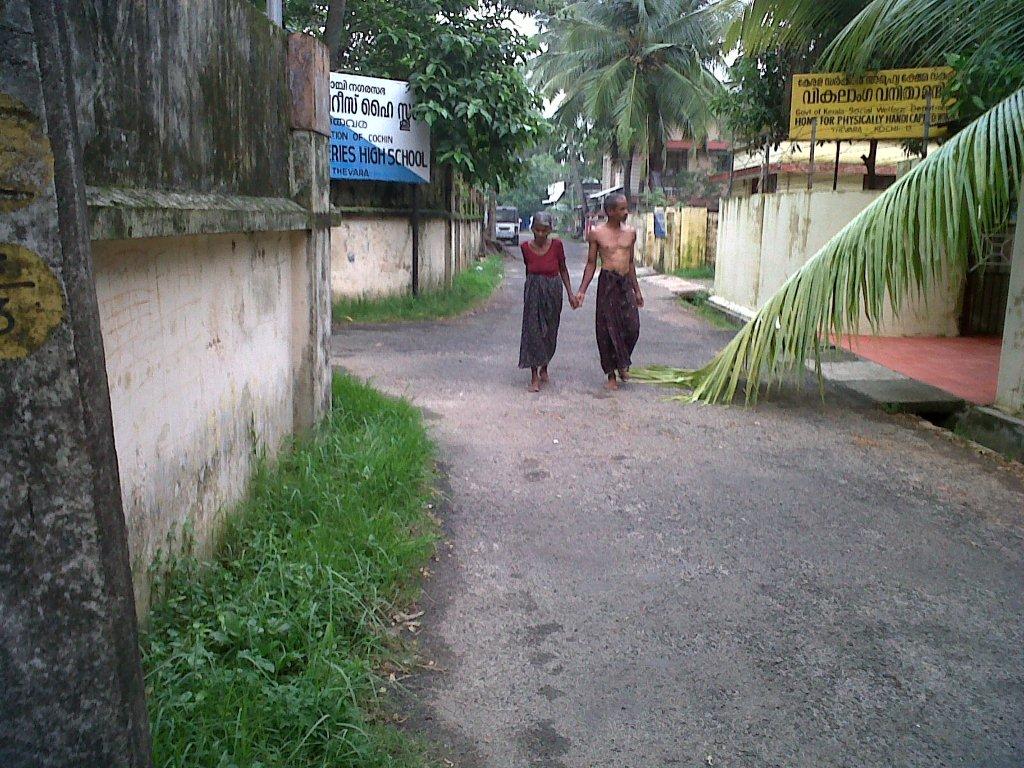
Kerala’s Finest
A previous post described the beliefs about land usage that settlers brought to New England, and the resulting impact on the environment. The same source material (Cronon’s “Changes in the Land”) provides a fascinating description of what Native Americans had been doing to “improve the land” since pre-Columbian times.

In southern New England they would burn large areas of the surrounding forest once or twice a year, creating forests that Europeans saw as “open and parklike.” The fires would consume all the undergrowth so that the result was “a forest of large, widely spaced trees, few shrubs, and much grass and herbage.” Wherever Native Americans in southern New England lived, the English traveler (1633) William Wood noted, “there is scarce a bush or bramble or any cumbersome underwood to be seen in the more champion ground.”
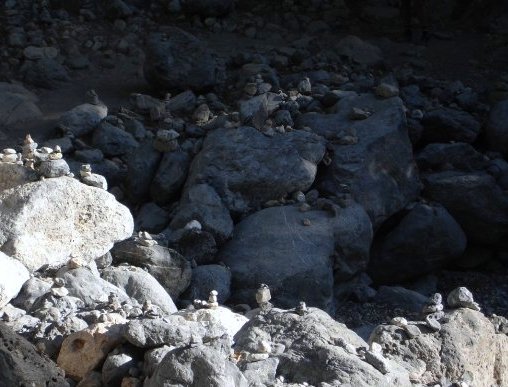
Stacked stones at Samaria Gorge on the Greek island of Crete
Many of us enter a wilderness area to get away from the obvious signs of human habitation. We go to commune with nature, to be awed by rock, tree or water that has power and age beyond what we can comprehend.
Ancient ruins and other cultural conservation sites have no less appeal. To stand near a structure built with the often inexplicable ingenuity of early civilizations can be literally breathtaking.
The desire to leave a time capsule of that moment by means of a scratched name and date is nothing new. Greeks, Romans, Egyptians, Mayans, not to mention Eighteenth Century Romantic Poets have succumbed. (Lord Byron’s carved name on a column of the Temple to Poseidon at Cape Sounion, Greece is likely one of the world’s most famous pieces of graffiti.) Continue reading
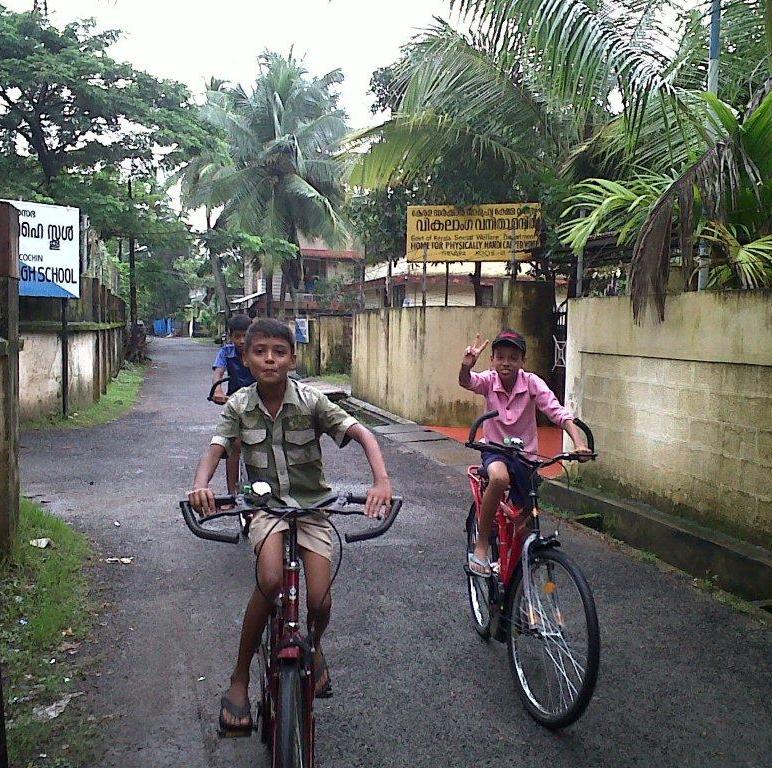
For anyone who has lived in a great city with street-level public transit the experience is familiar: traffic is a lullaby; snooze; random awakening; the window frames something that seems important. There are plenty of visual reasons to take a bus, for residents as well as visitors. This view was taken from such a window in Mumbai a few days ago, at a place that evoked a strong memory. Neither was it 5th Avenue at 60-something Street, nor was that Central Park behind the wall. But it was, for a moment. For one particular person. A madeleine, of sorts?
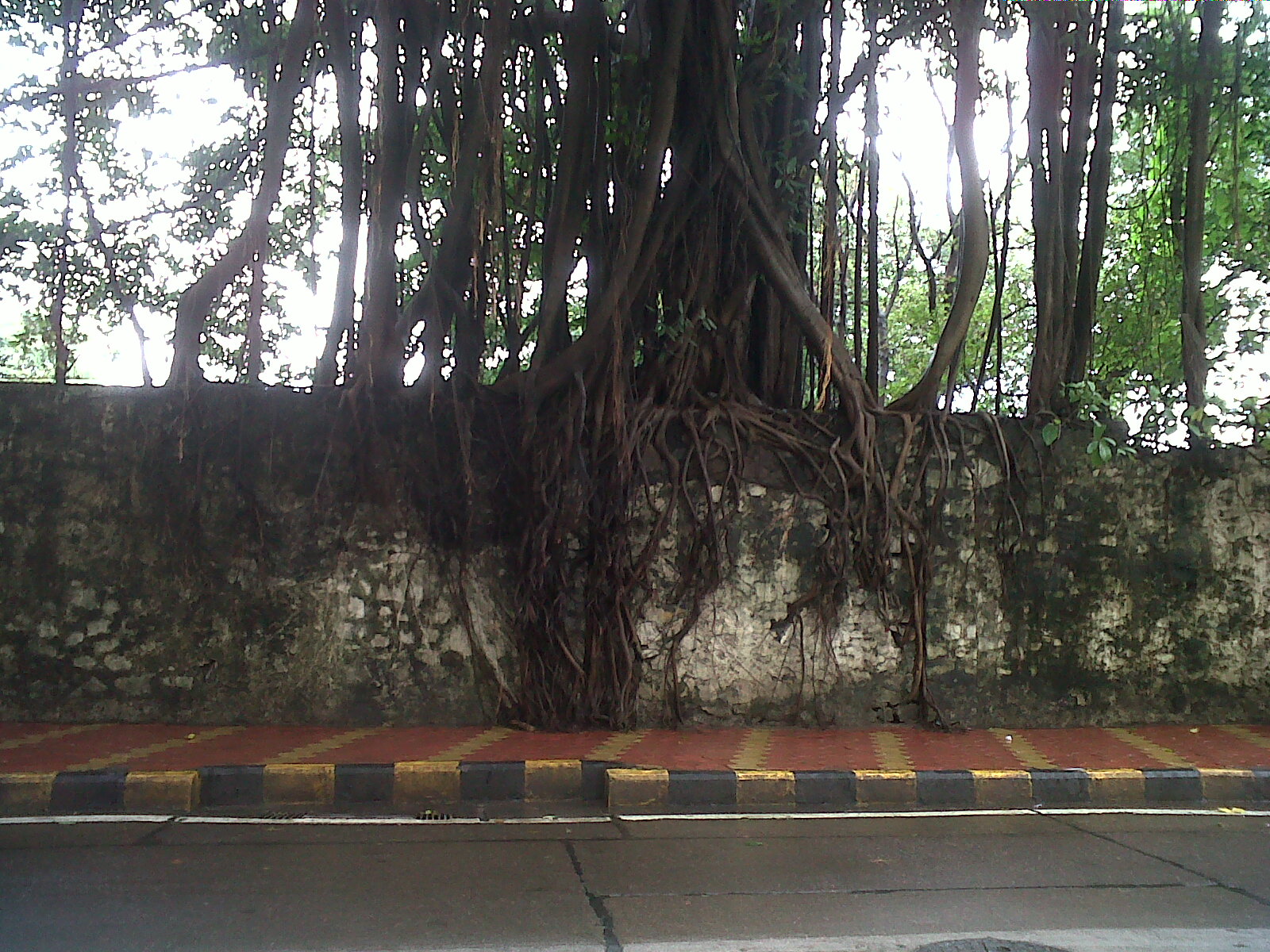
Just a moment later, before the cab started moving again:
Everyone who has lived apart from the culture they associate with “home” is familiar with the notion of comfort food. Sometimes it is nourishing, like oatmeal, and other times more of a guilty pleasure, like this one:

As with all guilty pleasures, you avoid thought. You just enjoy. It brings you home, for a moment, wherever that may be. But sometimes, your eye is caught by the glint on the packaging and you learn something new. By the good graces of modern technology and thanks mainly to the requirements we place on companies to share helpful information about the things they produce that they call food–we may have unexpected vocabulary-enriching experiences, like this one:
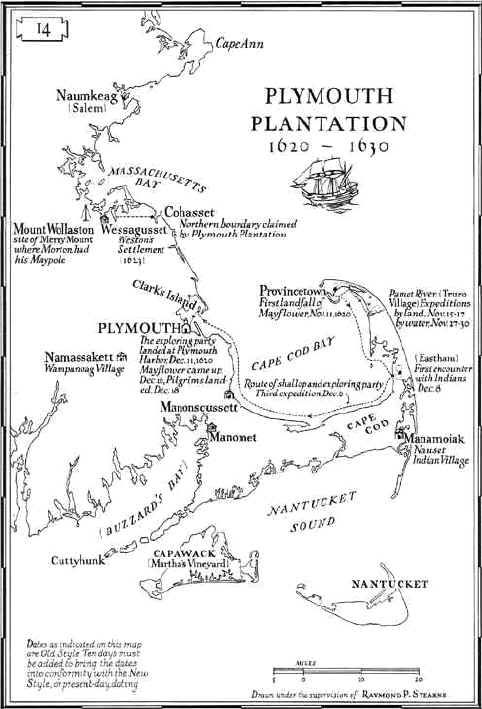 When the English arrived on the coasts of New England to form colonies in the 17th Century, they generally viewed Native Americans as savages who, despite their skills at hunting and farming, didn’t rightfully own the land they occupied.
The northern tribes didn’t practice agriculture at all, and the southern tribes were partially agricultural: during temperate months they would harvest corn, beans, and squash, and when winter came they moved north because it was easier to track and hunt animals in the snow. All tribes were fairly nomadic; every year they picked up their few possessions and traveled wherever seasonal sustenance was to be had.
In the King James edition of the Bible, which Pilgrims carried across the ocean, Genesis 1:28 has God commanding man to “fill the earth and subdue it.” To say the least, Puritan colonists took these words very seriously. When they saw that Native Americans weren’t taming the land as the norms in Europe dictated, it was clear evidence that they did not have the right to own it.
Vimeo is one of the many slippery slopes on the mountainous terrain aka the internets. The creativity unleashed there can knock you head over heels. Nonetheless, we must risk those slopes. And give credit where it is due. Just two hours ago Moritz Oberholzer commented on this video, and how it was created (including his credit where due): Continue reading

Sign post to the world in Punta Arenas, Chile
Many of us take having an address for granted. We all know the obvious formula: house number, street name, town or city name, state, zip code, country (when it differs from our own). But what may not be obvious is the fact that fewer places in world are so “perfectly aligned” than we think. Continue reading
This post from a few days ago brought the phrase “respect your elders” to the fore, because the man presenting those ideas commands respect. Not in the Napoleonic sense of command, but in the gentle, humble sense. Not to mention the witty sense. So, if there are variations on how to command, are there also variations on respect? Of course. And they are just as surprising as some previous wordsmithing investigations have discovered for other well-worn words.
If you are musically inclined, you might go with Aretha’s definition. It probably gets at the common usage definition that most North Americans of a certain age carry around with them. But in OED territory “giving propers” can be seen in a different light with the first two entries for respect:
1. n. regard, gaze; visual attention.
2. v. to postpone, to suspend; to relieve temporarily.
Neither form of the word, especially the verb form, matches what we thought if we had Aretha’s (or Napoleon’s) definition in mind. Nor is either a definition we had ever even heard of. Yet when we gaze at those water-collecting and storage devices of old in the desert, we regard them in awe; and they do, temporarily, relieve us of our belief that innovation is only forward-looking.

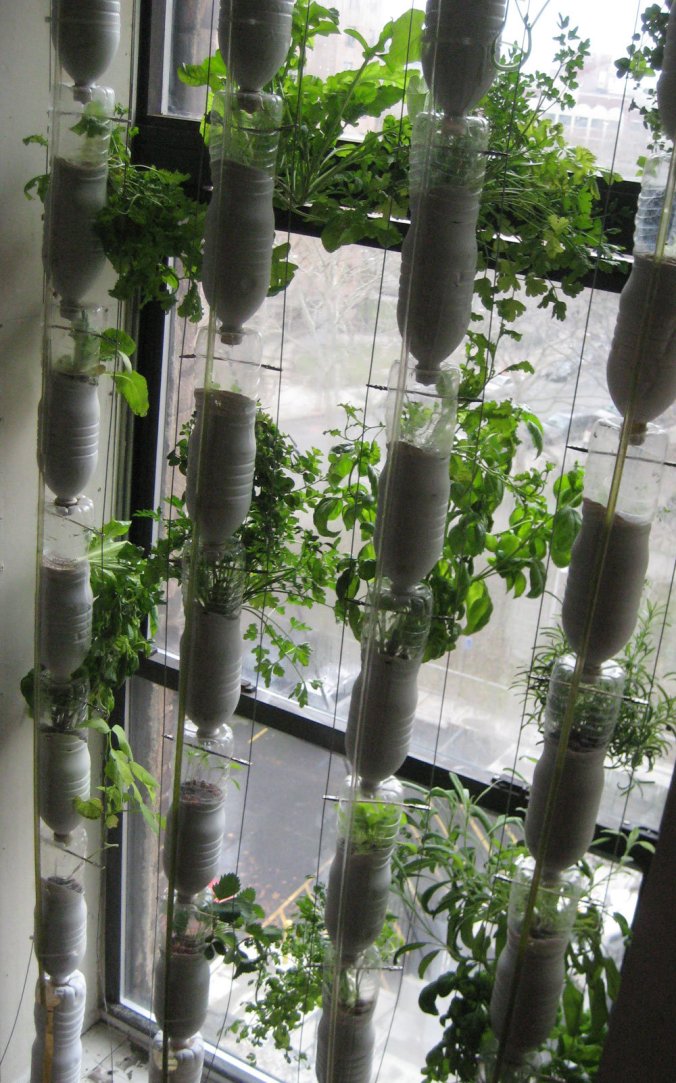
In one of my earlier posts, I discussed some of the basics of hydroponics, one of the less popular but more efficient forms of urban gardening. Today I won’t discuss the technical aspects of hydroponic gardening, but display an example of an entrepreneurial venture taking advantage of the underdeveloped market. Most people with hydroponic gardens are either aficionados or professionals – very few grow soil-less produce casually.
Windowfarms, an American open-source project concerning itself with urban agriculture, not only offers the blueprints for solar window-contained hydroponic gardens, but also the option of purchasing a kit of varying dimensions (for those less comfortable with the technical specifications). In addition to its mission of reducing urbanites’ carboon footprints by enabling them to grow their own produce, Windowfarms are being used to educate schoolchildren on the benefits and ease of urban farming.
It is getting more and more challenging to find locations with good, let alone great, star-gazing opportunities. Seeing the images, let alone the craftsmanship, in this video we say wow, and double wow. It looks a bit artificial at first, and artifice is not inherently unpleasant unless it comes off as, well artificial. This builds, with the music, into brilliant artifice: we wish we were there. Amazingly, Randy Halverson also shares the full explanation of the craft. Triple wow. Shall we ask Billabong to do the same with their double wow?
Last month I wrote about the Dunwoody Community Garden, and commented on my surprise at its seemingly exponential rate of growth and improvement. I also promised to check out Dunwoody High School’s (DHS) current involvement with the community garden, and I can finally deliver on that one:
Grow Dunwoody is a community enterprise designed to bring gardens directly to Dunwoody’s schools. According to Danny Kanso, a senior at DHS, the purpose of the program is
to integrate hands-on learning into science, wellness, and special education, to produce renewable classroom and community resources, and to instill sustainable practices and values within our student body.
 This fall, many new faces will be arriving on campus, and many old ones will be returning. But for both groups, the same question will await them. This question has lived on Emory’s campus—all college campuses— for generations. It lurks around Asbury Circle; stalks the stacks after midnight in Woodruff Library; and patters through the fiendishly designed halls of Tarbutton when all of the faculty have gone home. It’s insistent, but patient, always around the next corner, but it never goes away: it is the question of, “what should I do?” Or as it maybe more frequently presents itself, “who should I be?”
 Organikos