Monsooning Coffee & Tasting The Place

Monsoon_Malabar_m.pngWe have been beta on a service that allows an actual taste of the places where we work.  Coffee, from our friends in Nicaragua; honey, wild-hunted in India, Africa and South America; the salt that Ghandi promoted; and the pepper that we have written about more than once.  And so on. The point is that you can taste the difference of a food or a beverage based on where it comes from, and that is evocative. For example, coffee grows all over the world, and not only the growing conditions vary but so do the post-harvest traditions:

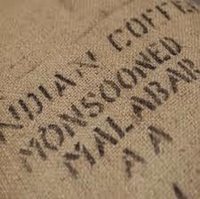
I head off to attend a friend’s wedding in India.  It happens to be at the same time as the beginning of the monsoon season so I can’t resist the temptation of organizing to visit the coffee monsoon processing town of Mangalore on the Malabar coast.  It is the only place in the world where this most unique of coffees is processed: Monsoon Malabar

I land at the new Bangalore airport which is now world-class, slick, big and impressive.  It is so far removed from the old Bangalore airport I last visited sixteen months ago where you were jolted into a profound awareness that you were in a foreign country for real: with hordes of people lining the exit ramp and traffic going in six directions at once and a cacophony of horns, calls and mass humanity pressing on all sides. The new airport is much more sedate and orderly and the immersion into the wonderfully varied and exotically, pungent Indian culture is now a little more gradual. Continue reading


Beta-Think Is Better

Jeff Jarvis has this to say in a post combining the topics Beta-Think and End Malaria Day:

The modern cure to Voltaire’s paradox [“Le mieux est l’ennemi du bien,” or “the best is the enemy of the good”]—and a gift of the digital age—is the beta: the unfinished and imperfect product or process that is opened up so customers can offer advice and improvements.

Those of us who have worked in bricks and mortar environments, especially hospitality businesses, might wonder: did he never hear of a “soft opening” before?  Those have been around since long before the digital age.  But he likely means, and we agree, that digital and especially social media facilitate more effective soft openings of all kinds, everywhere.

Onam Festival at Cardamom County

As Amie and other contributors mentioned in their posts, the Harvest Festival and the time of giving thanks has come to Kerala and to Cardamom County.  I had the great opportunity to be on property and experience the colorful festival of Onam.  Being part of both guest and staff, I could see all aspects of the event: from preparation to the final event.  Onam is a ten day festival as Amie’s post explains, but the most important day of Onam is the 9th day, which is oddly called “First Onam” because that is the day that King Mahabali actually descends to Kerala.  But any day of Onam seems like the Keralites’ spirits were soaring.  All the staff at Cardamom County have great warm and happy smiles but during this festival season it felt like their warmth was doubled.

This slideshow requires JavaScript.

Go Grinnell!

The inauguration of Grinnell College’s 13th president Raynard S. Kington, M.D., Ph.D in 2011 marked a transition point for the college. The prize commemorates the occasion and celebrates Grinnell’s historic and future commitment to positive social change.

News(Paper) Power

Despite the now ubiquitous use of the internet to follow both local and world news, newspapers continue to exist for many people as their daily connection to current events.  In many countries that’s not their only use of course.  We’ve written about the recycling initiatives of newspaper bags and baskets, as well as their use as wrappers and packaging in markets around the world.  But used for fueling our cars?  Now that’s news!

Tulane University associate professor of cell and molecular biology Dr. Mullin and his team have just applied for a patent for a method to produce the biofuel butanol from organic material.  Continue reading

Borneo On Our Mind

If you enjoyed Nicole’s post, you will definitely want to watch this.  We had the opportunity to exchange emails with Willie and can affirm what you will see at 1:11 (one minute and eleven seconds) into this TED talk: being an activist for a cause you care about can be frustrating and challenging enough that applause is not a motivator.  He is already recognized by enough famous organizations that our two cents will seem a pittance, but we consider him a hero of entrepreneurial conservation, so must say: thank you Willie!

If you feel the same way after watching this video, say so by visiting this website and then this one.  Especially this latter link should give you some ideas about how to get involved and make a difference.

Borneoculars: Observations from a Scientific Expedition in Borneo

Guest Author: Nicole Kravec

Indiana Jones would be proud of the entire scientific expedition team.  For two weeks we trekked through the jungles of Malaysia’s Imbak Canyon, the “biological gene bank” in the heart of the Malaysian state of Sabah in northern Borneo.  It was one of the best – and most adventurous – trips of my life.

Continue reading

Flattering Mother Nature

The Art and Design worlds are constantly giving us examples of our interpretive abilities when it comes to nature.  In fact, the very roots of Art go back to those expressions. But if “Imitation is the Sincerest Form of Flattery” then scientists and engineers are also following the adage that “form follows function” in ways that have the potential to direct us out of some of our environmental problems.

Lindsey Doermann writes about how an elephant’s trunk, water strider’s legs, woodpecker’s beak, peacock’s feathers or a beetle’s back (to name a few) are inspirations toward conservation focused engineering.

Continue reading

Jellyfish Preserves

Ever heard of Jellyfish Lake? Located on the Eil Malik island of Palau, Ongeim’l Tketau (as the natives call it) is a lake which was formed about 12,000 years ago by the Pacific Ocean. Along with the clean blue waters of the Pacific, the tides brought in  immigrants – jellyfish of the genus Mastigias . Today, after 12,000 years of isolation and removal from the predator-rich environment of the Pacific Ocean from which they originated, the jellyfish have evolved into a significantly different organism. Due to the fact that the only predators the scyphozoans have is a species of anemone which is significantly removed from their swimming depth, they reduced their defensive mechanisms to virtual non-existence, meaning that unlike most beach-faring jellyfish, they don’t sting.

Due to this remarkably friendly gesture, Jellyfish Lake has become a popular snorkelling destination, and those fortunate enough to swim those waters are graced with an ethereal sensation of a world different and far removed from our own.


[vimeo 23079092]

The Buffet Personality Test

There’s the Myers-Briggs test, the Jungian archetypes, the Japanese with their blood types and the astrologically inclined with their zodiac signs. These are all ways of putting people into classifications of one kind or another, to see which boxes they check and use this as a means of understanding their personalities. These taxonomies are useful for some in their attempts to easily judge books by their covers (or perhaps by their tables of contents). But I’ve got a new one: the buffet approach – comparably empirical but a lot more fun!

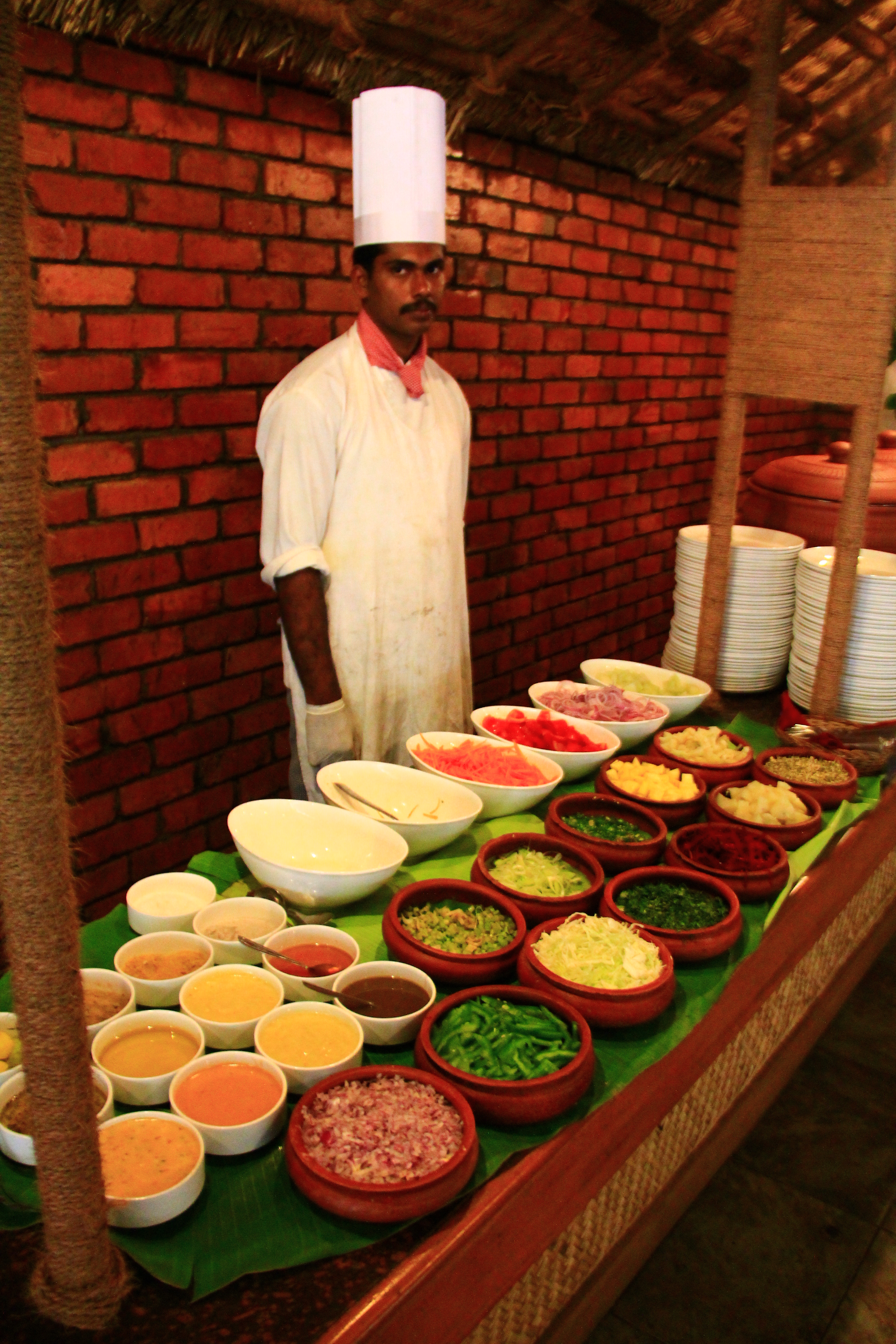
When you’re at a buffet, do you take a little of everything for the first round, then go back for bigger helpings of the dishes you liked best? Or do you browse at first, automatically writing off the red stuff for its overt similarity to a vegan rump roast and skipping the crunchy stuff for its unrecognizable position on the food chain? Or do you phase through it, bit by bit, going back for the things you’ve not yet tried? In my highly rudimentary and anthropologically unqualified analysis, I’d be willing to take your “buffet approach” as a proxy for your “approach to life.”

There are the grazers, particular and self assured. Then there are the nibblers, shy, disciplined and unimposing. And at the other extreme you have the all-out face-stuffers, decadent adventurists for whom a plate’s inadequacy of surface area is just another reminder of the fact that there aren’t enough hours in a day. Of course there would be the combo personalities, like the high-piling sharers, ambitious enough to stack up the sweets yet self-restrained and manipulative enough to make their partner eat the rest. Or the serial nibblers, philosophically conservative yet constitutionally indulgent. I’m telling you, this could be the new Rorschach test. Continue reading

Challenge: Nappie-free Landfills

Even if the jury is still out comparing the environmental impacts and carbon footprints of cloth vs. disposable nappies, it’s clear that standard disposables are a landfill problem.  As in, a space problem if nothing else.  Being a petroleum-based product, they pose other problems as well.

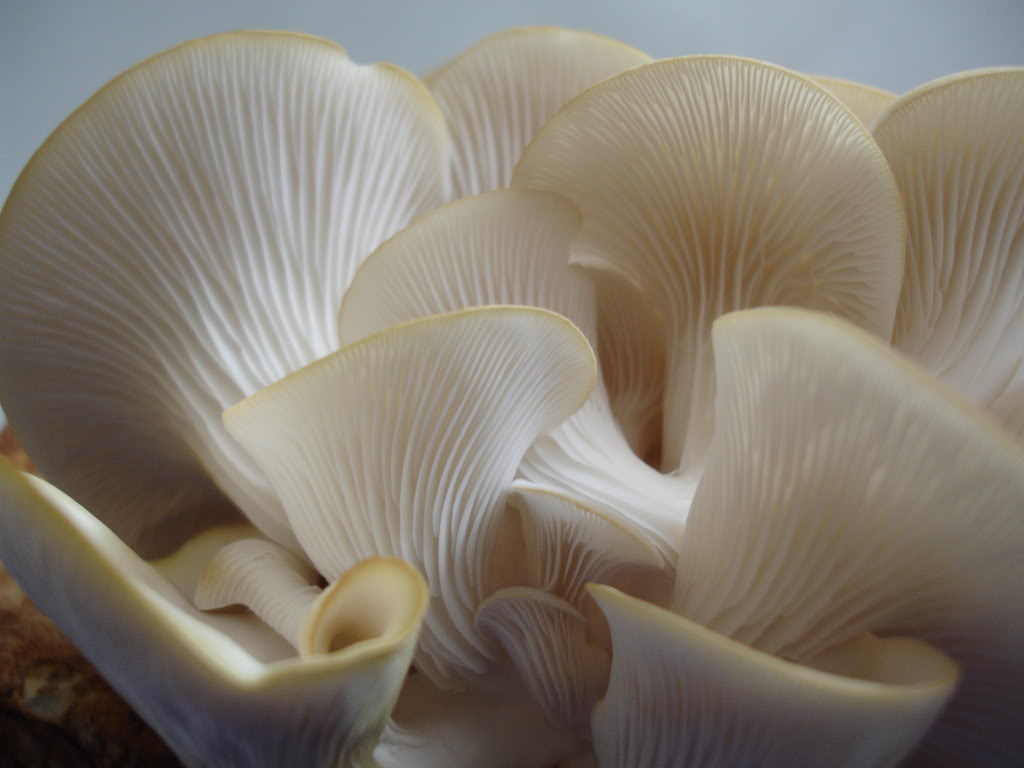
But since the main component of these stubbornly indispensable items is cellulose,  and mushrooms are nature’s cellulose-eating machines, Mexican scientist Alethia Vázquez-Morillas of The Autonomous Metropolitan University in Mexico City has found a solution.   Continue reading

How So?

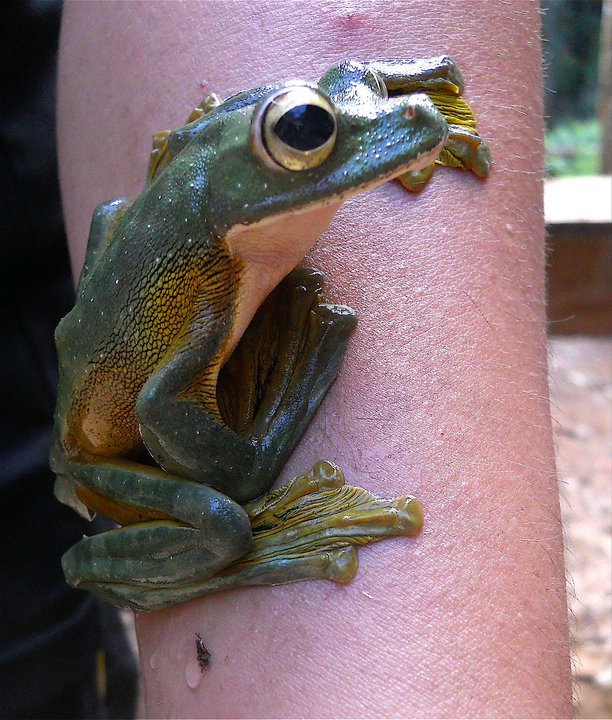
After watching some random video captures of natural scenes and especially creatures interacting, by more than one of our Contributors over the last few months, the temptation is to follow the cute animal trail where it leads.  No.  But from time to time, if for no other reason than to wonder how they did that video, we do not hesitate to share something that seems worth a moment of wonder:

Let Us Give Thanks

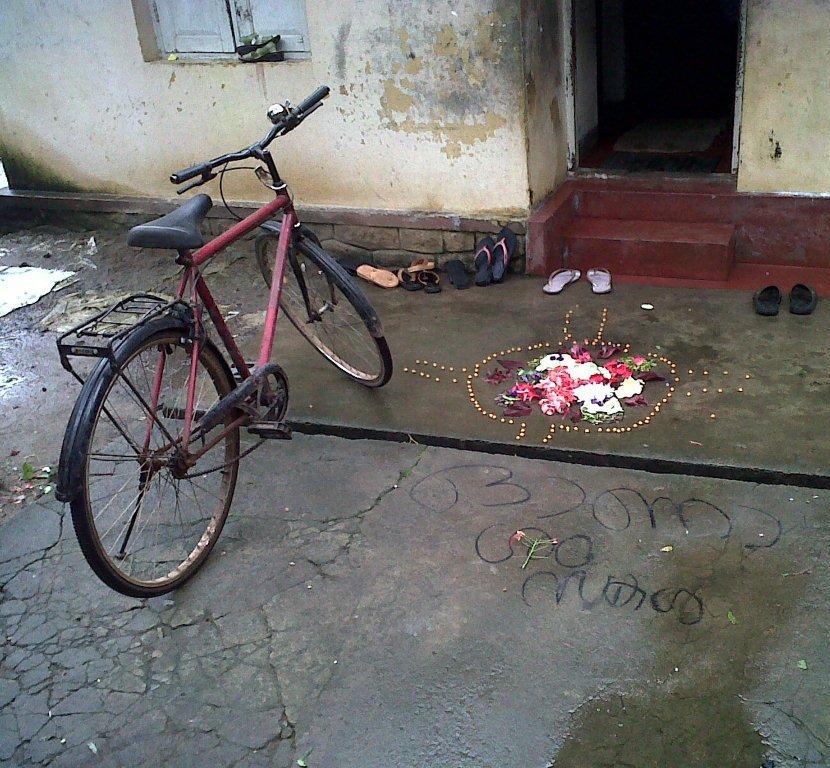
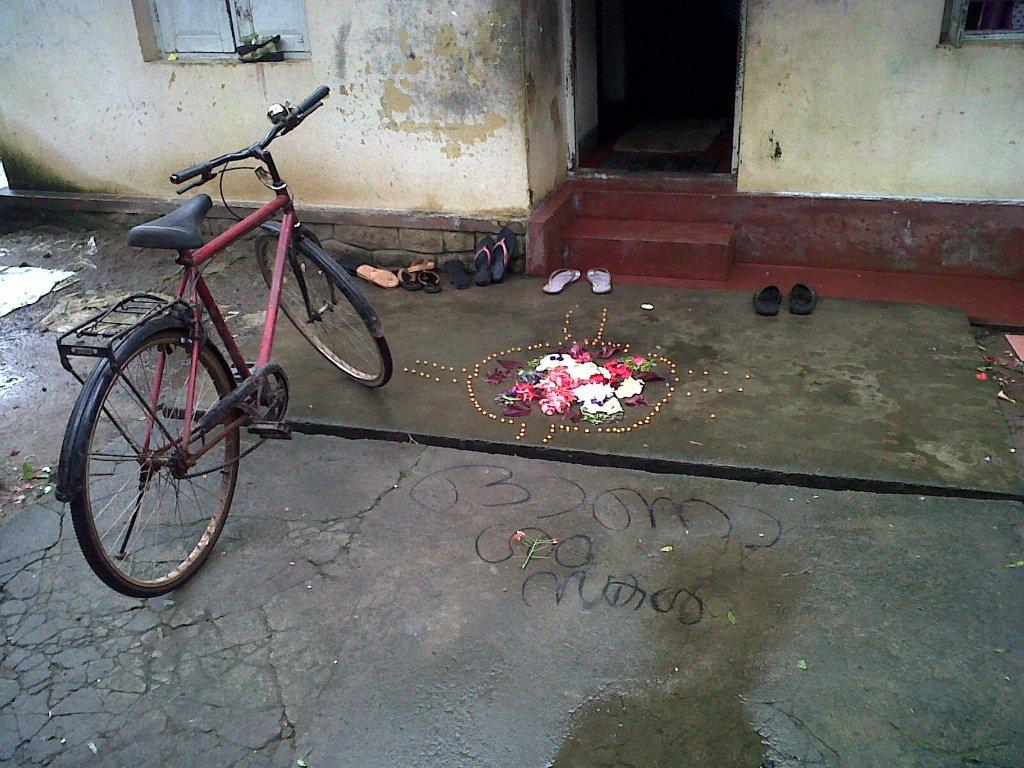
The Kerala Harvest Festival Onam transcends religion and region, making it one of the most important festivals of the state. All signs of abundance and prosperity are incorporated into the celebrations: Elaborate pookalams (mandalas made of flowers and leaves, shown below) adorn the courtyards of homes and business; and elaborate multicourse meals called Onamsadya are served on banana leaves.

This slideshow requires JavaScript.

The festival celebrates a story, not unlike the Greek myth of Persephone when she was kidnapped to the underworld but allowed to return once a year for the spirit of rebirth in spring.  The Kerala story is about a beloved king during a time of great prosperity who sacrificed himself, saving the earth from an avatar of Vishnu.  For his devotion he is granted the boon of being able to return to his country once a year to visit his people, who prepare for his coming with an abundant harvest to assure their King that the land still flows with milk and honey. Continue reading