Equitable Origin–Certified Responsible Oil Production

Whether one believes that oil is the lifeblood of our modern society, or that we need to rapidly transition to more sustainable forms of energy, it is clear that society will be using petroleum for decades to come. In this post and in those that follow, I’ll describe my present work as well as underline the importance of responsibly produced oil. As it stands, despite the ubiquity of petroleum products in our global economy, there is no internationally implemented standard to monitor the social and environmental impacts of its exploration and production. Through a collective effort that brings together petroleum exploration and production companies (E&Ps), NGOs, academics, governments and indigenous and local communities, my company, Equitable Origin LLC, has created the first stakeholder-negotiated rating system for the oil and gas industry that is objective and verifiable.

Our standard, the EO100 recognizes and rewards world-class performers in the oil and gas industry while ensuring transparency as well as environmental and social accountability. It also allows certified operators to differentiate themselves quantifiably, based on their social and environmental performance, and to realize the added financial and brand value associated with certification. By developing this standard, EO is also creating a new marketplace for responsibly-produced oil and its derivatives, akin to those created for FairTrade Certified coffee, Kimberly conflict-free diamonds and Forest Stewardship Council Certified paper products.

If you’re interested in the work of Equitable Origin please visit our website.
Defensive Insects

My younger brother Milo has posted about Entomotography, sharing his excellent “macro” pictures of dragonflies in India. Yesterday I was walking in the woods at Morgan’s Rock when I remembered that I had promised to describe in more detail the cornizuelo tree, which fronts fierce fire ants and sports sharp spines on its branches. Since these trees are all over the place, I set my camera to macro mode and looked for a good specimen. Below is a video that shows just how diligently the ants patrol their home, both when no imminent danger is present and also when a threat is detected. At the end of the video I’ve included footage of a caterpillar.


When I first saw the little balls on the caterpillar’s back, I wasn’t all that surprised. Many insect species (and other animals like fish and crustaceans, for that matter) cover themselves with debris to disguise themselves from predators. What struck me as odd, however, was that this caterpillar, clearly a poisonous species (or at the very least an example of Batesian mimicry), felt the need to cover itself with crap (which, as the video shows, I discovered to literally be true) and thereby potentially avoid predation. Of course, it may be Continue reading

Forest Department Training and LiveBlog

Tomorrow is an exciting day of great import for the social enterprise we’re assisting the Forest Department with. If you haven’t read our previous entries (here’s Michael’s, here’s Amie’s, and here’s Diwia’s), we’re starting a sustainable micro-enterprise here in Thekkady aimed at employing local (mostly) women and making useful bags out of recyclable and recycled material, namely, excess newspaper. This evening, Diwia Thomas, who began a similar enterprise in Cochin, will arrive to provide a weekend training session that begins tomorrow morning at 10. We’re expecting upwards of 40 women to attend, all with the hopes of being part of this business. She will guide them through and teach them how to make quality bags, as well how to maintain and organize the operations of the business. All our meetings and conversations with Forest Department officials and local women should hopefully pay off tomorrow, and the operation should be on it’s feet by the end of the month.

Given how exciting this is for all of us, we will be hosting a live conversation about what is happening in the training session, hopefully deploying photos and videos to help you, our readers, get a sense of the event. This conversation will take place at coveritlive.com, a free liveblogging service. If you’re not familiar with this format, ‘liveblogging’ is often used for streaming important information about sporting and political events. We think it is also worth applying for this event.

So please join us! Tomorrow morning I’ll post a link, which will lead you here: click here.

We’ll be starting at around 9 AM (11:30 PM EST). If you’re in a different time zone, you can at least catch the beginning and maybe the end. It’s easy to post questions and respond on coveritlive, and the format will work much better with added voices.

See you tomorrow!

Prince’s House

Without words to describe the day, I present more photos from Sung. These were taken during our visit with Prince, who lives with his mother and father in the hills just a few km higher in altitude than the site where I hiked earlier in the week. Prince, a bellhop at Cardamom County, was raised on a 5-acre cardamom and pepper plantation. Although I had walked through other plantations while here, this was the first time I was able to actually look around and witness the lifestyle of a planter and his family.

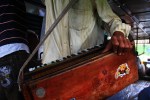
There was a glut of sensory detail so the smells and sounds be-damned; the pictures will have to do. Note, however, that the cicadas were in full force, and that there was an incessantly barking dog (named Tiger); and that the cows bellowed, not so much in ‘moos’ but in rounder ‘mows;’ and that the busker (the man pictured below) and his little sister sang out of tune and without rhythm; and that the tapioca and cardamom and jack fruit and pepper go on for acre after acre; and that Prince continuously warned us to be careful while walking on the slippery dirt road (‘slowly, slowly’) always in the same cadence and tone, the ‘oh’ in ‘slow’ every-so-slightly drawn out and the first ‘l’ slightly rolled. None of this the pictures can say. Nor can they quite capture what it’s like to be in a cardamom field where the stalks have grown ten feet high (like being in a cardamom fantasy-jungle), nor how steep is the hill that Prince and his family climb everyday after getting off the bus. And of course, what perhaps gave me the greatest pleasure: Prince’s brothers are named Rince and Rinso. That is, they are together Prince, Rince, and Rinso. You just can’t make that up.

Fruit Hunters

There’s a particular fruit stall that I frequent on Thevera Road. Its wares almost literally spill out onto the street, with filled bins overflowing the boundaries of the shop interior, fruit stacked high on shelves going up the ceiling on both walls of the narrow space. The back of the shop has a few tables where people can purchase fruit drinks, but I think the majority of their sales are of the fruit themselves.

There always seems to be something new, depending on the season (or week within the season). One day I entered to find a table overflowing with small, reddish purple plums. I’d never seen what I would call “stone fruit” in India before, so I excitedly pulled out one of my cloth bags and started picking through the pile for the ripest looking specimens. When I see plums it reminds me of living in Europe—where I used the multiple varieties in my version of the classic Tarte Tatin. Before living in Paris I actually had no idea there were so many types of plums, but as summer progressed new varieties would arrive at the Marché, each with more melodic names than the last: Reine Claude, Mirabelle, Belle de Louvain… and with each addition I would remake the tarte, and the family would pronounce that each one was the “perfect” plum for the recipe, eaten of course with a spoon of crème fraîche and the guilty expression of one caught licking the plate upon completion.

Here in India I brought the bag of plums home Continue reading

Moments of Peace

We will have more to say about cars in India.  Michael made brief mention here, but the environmental questions of an emerging middle class in countries as populous as India, most of whom see cars as a definition of progress and success (thank you Mr. Ford and Engine Charlie!), are blog-cloggingly numerous.  So we will tread only occasionally into this terrain.  And when we do say more, we will focus primarily on one form of treachery: the horn and its contribution to noise pollution.  Reading Mr. Egan’s account of a unusual moment of mass inspiration in an erstwhile car-struck city reminds us of our need to elaborate on our own plans for inspiring tranquility in the land of please-honk…

Bonds In Theaters

Here on the southern coast of Nicaragua, I have tracked reviews of the latest Harry Potter movie without yet being able to see it for myself.  My parents and brother went to see it in Kerala today.  Their review was less about the movie itself than about the fact that being in a movie theater in India is a kind of spectacle in its own right, apart from whatever may be happening on screen. I’ll describe the Indian experience in more detail later; for now I think back in time.

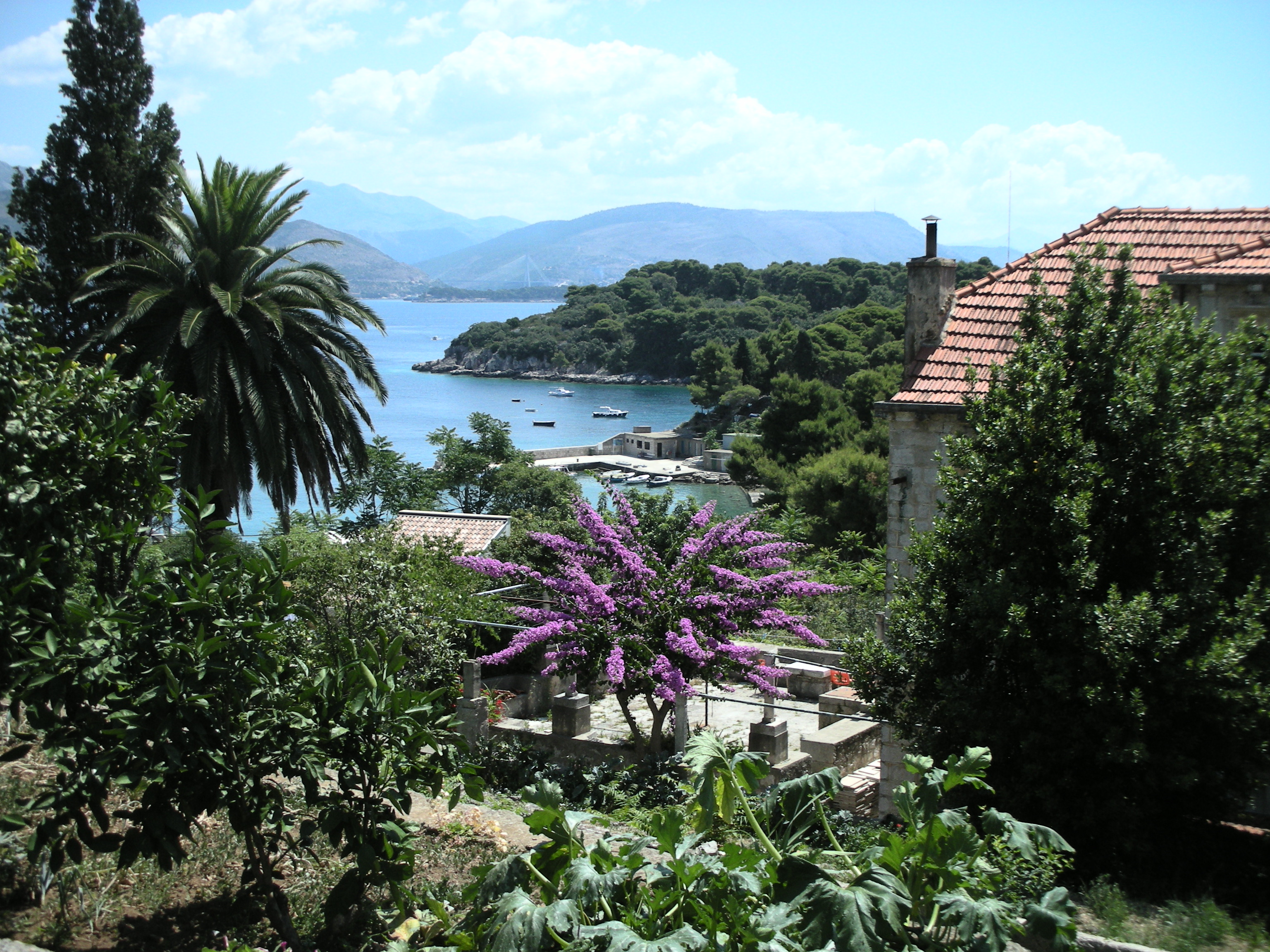
In 2006 my family was living on a small island off the coast of Dubrovnik (that is the view from our home in the photo above). About 150 people lived on the island, mostly the families of fishermen, who only spoke Croatian and maybe a little Italian.  The old city of Dubrovnik had a small cinema that sometimes played movies in English.  I recall when the latest James Bond film, with a new actor whose performance everyone was eager to review, started playing in this theater–in English with Croatian subtitles. “Casino Royale,” the movie was called.

Continue reading

What They Do Not Teach You At Cornell Hotel School

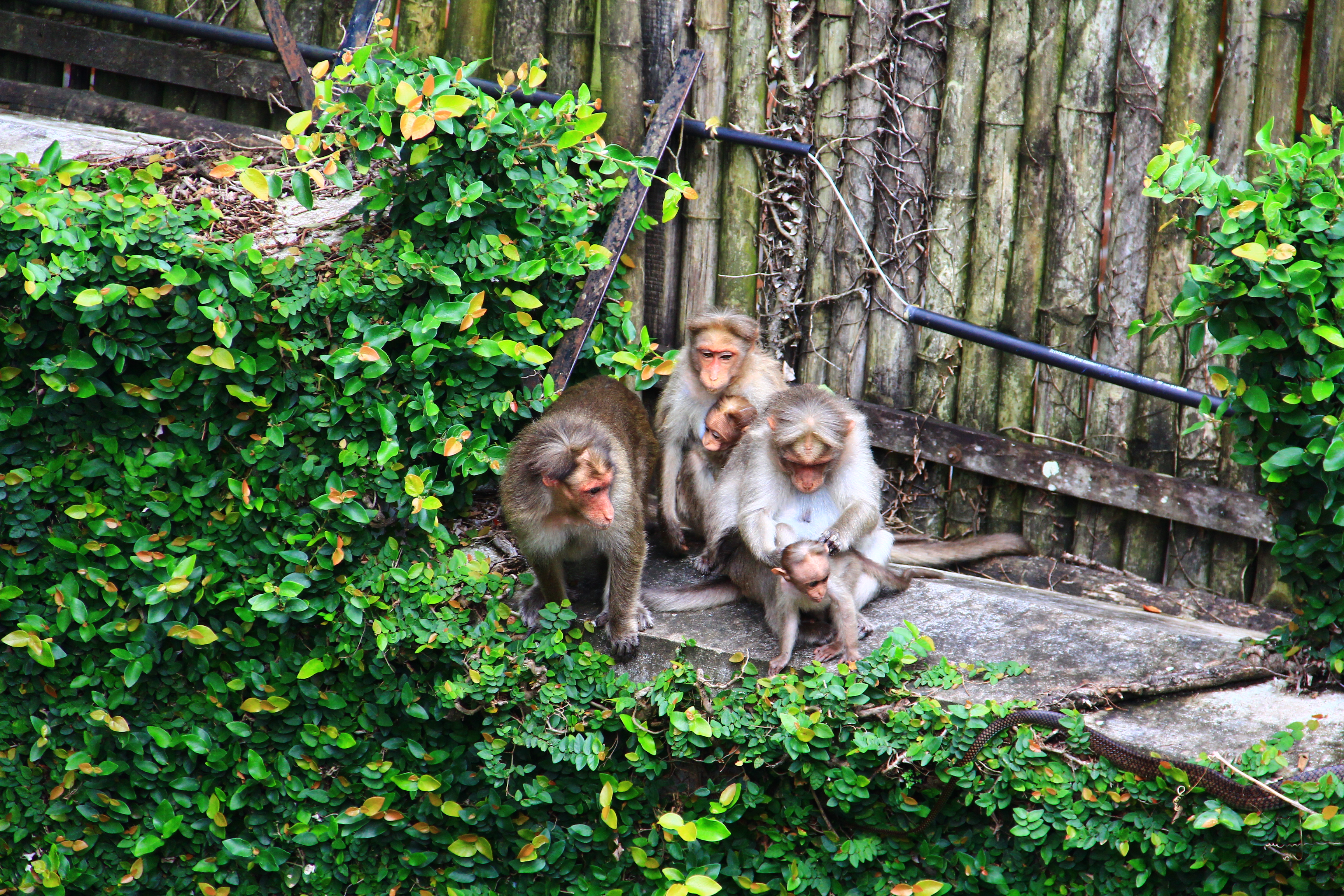
A couple of days ago, Michael wrote the post “Monkey Business…”.  The post illustrated my surprise seeing 20-ish monkeys, which to Michael was not an unusual event. Over the last week I too realized that a sudden appearance of the Macaque was just a part of daily life here.  However, I definitely enjoyed my first encounter of a Macaque family outing. I hope you enjoyed as well.

As I was enjoying the post by Michael, something in the second picture caught my attention after a while. In case like me you did not notice it in Michael’s post, it seems like the Macaques are observing something on the lower right.  If you click the picture you will see a larger view.

Did you see the dark ribbon (or it may look to you like a leather belt, if you read Seth’s post on a similar topic)?   Continue reading

A Campesino Breakfast Revisited

About three weeks ago, I was on the Campesino Breakfast Tour when I had the chance to see a boa sleeping in the chicken barn. This morning, the collection and preparation of breakfast ingredients went by without such an exciting event. But since unlike last time today I had a video camera with me, I can share some of the audiovisual details of the breakfast tour that were lost last time. I still recommend reading the previous post for a more elaborate text description than that which you will find here.


When we left the fowl barn and headed to Doña Candida’s traditional Nicaraguan house,  Continue reading

Profile: Jijo & Night Duty

Over the past few weeks it’s been great getting to know some of the extremely friendly, open, and welcoming members of Cardamom County working with them on a daily basis. One such member is Jijo, who I’ve had the pleasure of spending a few night auditing duties with and even going down to the local gym together with a bright red sign and a muscular fellow plastered to it aptly entitled “Masterpiece”.

Jijo actually started out at Cardamom County just short of a year ago, which means this August will be his first year anniversary as a part of the team. Before this, however, Jijo talked to me about his two years at Club Mahindra’s Tusker Trail, which was an enjoyable stay where he acquired the majority of the English skills he holds today through persistence and practice with guests and colleagues. However, because it was more of an exclusive club atmosphere, there were many regular visitors who were mainly originated only from India. Thus, Jijo came to Cardamom County because he wanted to meet many different kinds of people from all over the world including people of different cultures, religions, ideas, and languages to learn new things every day, which also encompasses what is his favourite part about the hospitality industry.


But Jijo’s real passion was triple jumping, and long jump on the side. The sport as he described it requires extreme physical fitness in conjunction with a high level of technicality and a precise balance and coordination of arms and legs to achieve the longest distance possible. Continue reading

Back to Nature

I was recently walking around in a neighborhood park, and I saw birds splashing in a pool of water.  I watched a pair of squirrels play tag up and down a large oak tree, and I admired an elderly couple walking hand-in-hand in a flower garden.  Then, I heard a car door slam and my eyes beheld children entering the park hardly lifting their gaze from their electronic devices as debris flew from their car.  As I raced to retrieve and dispose of the litter, my mind quickly volunteered pieces of itself to give to them and their parents.  How could this world’s future generation be so oblivious to the natural environment?  And especially when global climate issues are so prevalent? Continue reading

Air up There

Yesterday I finally accomplished a minor goal I had set for myself early in my stay at Cardamom County, namely, hiking to a cross set high in the hills that ensconce Kumily and the low-lying areas of the Periyar. Unlike the ‘Cloud Walk,’ which took us into the forest for a view of the town and the Mannan/ Pelleyan settlements, this hike allowed me to pass households and schools, small Pentecostalist parishes and eye-catching Catholic Churches. This hilltop is nestled amidst privately owned plots teeming with cardamom and pepper plants, the variously-sized plots of largely middle-class farmers (for probably the fifth time this summer I thought ironically of the admonitory cliché, ‘money doesn’t grow on trees’).

Continue reading

By the Fire (or, How I Learned to Stop Worrying and Love the Tiger Trail)

We had reached an impasse, and I was becoming frustrated.

“I understand he’s gained a new awareness,” I said. “What I don’t understand is what exactly that awareness is.”

I had slipped into fact-collecting—or, more precisely, ‘attitude-collecting’—mode, a sort-of aggressive pose I sometimes assume when given the attention of a person whose life has been distinctly different from mine. I admit that this happens more often when I’m in the midst of a culture I think I don’t adequately understand. There’s no judgment inherent to this culling, but there is something predatory about it; if I want your words, to add your Weltanschauung to my reserves, I will work hard to procure them. And if I don’t get what I’m looking for, I can get testy. Continue reading

Certification of Sustainability

Unlike most of my other posts, practically all the hyperlinks in this post link to an aptly corresponding webpage instead of a picture I took. Also, please note that my previous post on the reserve at La Cumplida has been corrected. You can find the corrections in bold at the top of the post.

*

La Cumplida’s coffee farm is accredited by UTZ CERTIFIED and Rainforest Alliance. These two organizations are worldwide leaders in assessing and monitoring sustainable practices. UTZ is solely concerned with agriculture—coffee, cacao, and tea farms, mostly. The group states that through their standards, farmers see increases in productivity, efficiency, and quality:

Productivity

“In 2007, before being certified, my farm of 2.1 hectares produced 7,000 pounds of parchment. Now, in 2009, I have a productivity of 11,000 pounds. That represents an income increase.” (Cooperativa San José El Obrero, Guatemala)

Efficiency

“Before certification I fertilized 3 times a year with 80 grammes per plant, now I fertilize two times a year and apply 100 grammes per plant; with this measure I saved labor and fertilizers, while farm productivity has not been affected. Savings have been US $39 / ha”. (Cooperativa Anserma, Colombia)

Quality

The percentage of Class 3 & 4, which fetch better prices, has increased above 80% since certification, unlike 2006/2007 when they only produced 26.1% of class 4. (Rianjagi Coffee Farmers Cooperative Society (RFCS), Kenya)

Continue reading

Official Friend

I spend much of my non-operations time at Cinnabar, an open-air café at Cardamom County with a perfect view of the Periyar Reserve, to use wifi.  There are a few locations at the resort with a strong signal, but my preference is here. I feel welcome. The open air and scenery set the scene; Vishnu emanates a sense of welcome the way a friend would.

Ever since I started my internship here, I have been greeted by Vishnu at  Cinnabar the same way most days.  He has a great smile that could only be described as genuinely friendly. He also follows local custom and always greets with “Namaskaram sir.”  The “sir” part of that felt kind of official and formal at first, but I get it now.

Continue reading

Ayurveda v. Allopathy

A quick word before my note on this weekend’s three-day perambulation through tiger territory:

From this morning’s Hindu

Personalised Ayurvedic interventions have demonstrated clinically significant improvement in rheumatoid arthritis on a par with allopathy treatment with the added advantage of lesser side-effects, according to a study…

“We cannot make any tall claims with the results since it was a pilot study and the sample size was small. However, the study got a major stimulus when Dr. Edzard Ernst, the first professor of complementary medicine, called it a blueprint for research in Ayurveda,” Dr. Ram Manohar told The Hindu over telephone…

While the study was specific to rheumatoid arthritis, it also looked into whether complex Ayurvedic interventions could be studied in a clinical trial. The double-dummy, double-blind randomised clinical study has clearly shown the feasibility of further studies of this kind.

I haven’t mentioned in previous posts (though Gourvjit has) that Cardamom County Resort houses an Ayurvedic center, nor have I spent time detailing the history of this local art of healing and wellness. I ought to have, however, because this ‘alternative medicine’ is a conspicuous presence in Kerala, and is one reason many travelers are compelled to come here. Although this study doesn’t prove Ayurveda’s general validity from a scientific perspective, it is a first step in bridging the acceptance-gap between allopathic, Western medicine and this traditional, holistic approach.

Take a look at the article, and look out for future studies on Ayurveda’s efficacy!

The Organic Solution

When rain seems like only a dream, taps are turned and water begins to flow from sprinklers onto family lawns across the U.S.  In many areas, water has not been given the value it deserves making this precious resource easy to take for granted.  As the global population and industrialization and urbanization increase, the rising demand for water will only cause more harm to the environment.

The UN estimates by 2025, a combined population of 2.8 billion people across the world will face freshwater drought or “scarcity,” and according to water.org, about 70 percent of all freshwater withdrawals go to irrigated agriculture; with these statistics, turning the water tap on to quench the backyard will soon no longer be an option.

Water is important to just about every natural phenomenon and artificial activity.  The more I think about water the more I realize the countless times I use it throughout my day.  I mean it is my drink of choice…and the main ingredient of many other favorites.

So, as water conservation becomes increasingly more urgent, I began to research some efforts geared to the alleviation of the largest use of freshwater—agriculture.  The media is saturated with advertisements of drought-resistant and other GMo and hybrid plants.  And in response to the ever-changing climate, chemical-producing companies are racing to release the first species of drought-tolerant corn.  They claim these genetically modified and hybrid plants may be the answer to a potential food crisis, but they also seem to have an ulterior motive of extorting millions of already economically drained farmers.

While these developing drought-tolerant plants may be one aspect of reducing the stress of water conservation, another solution has already been proven and researched that farmers can do instantly without paying for special seeds from these mega producers. Continue reading

La Cumplida’s Private Reserve

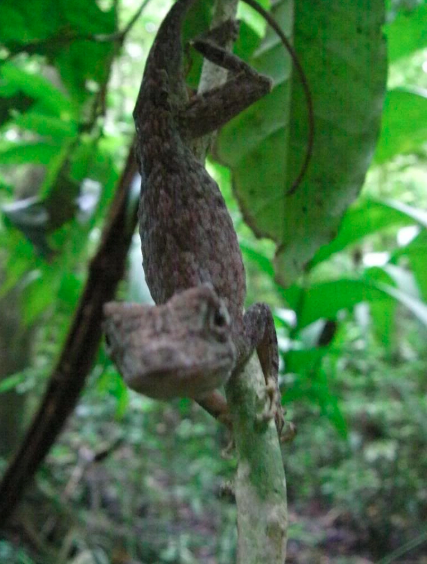
Author’s Note 19/7/11: The lizard pictured at the beginning of the post has been identified as a pug-nosed anole. The first group of stinkhorn pictures (paragraph 2) are of the species Phallus duplicatus, and the second group of pictures (last paragraph) are of Phallus indusiatus. The green mushroom linked to by the word “others” (paragraph 4) is Hygrocybe sp. and the grey/white ones are Psathyrella candolleana. Credit and thanks for mushroom identification goes to Milo Inman.

*

The untouched forest of the reserve at La Cumplida is a hilly cloud forest with few trails and many streams that served as much of our path through the trees. My guide, a local named Santos, and I started in the foothills outside of the reserve and entered the forest by climbing up some steep, muddy inclines.

The protected area amounts to 600 hectares, or 1,482 acres. Santos and I had walked for only about twenty minutes when I spotted the first attraction of the day: some stinkhorn mushrooms. Two were just a white line of pulp, but one was still not fully decomposed and looked as phallic as ever, having lost its veil.

Only around half an hour of hills later, Santos stopped me and pointed out a sapling in front of us. He said some words that I didn’t understand, so I tried looking more closely to decipher his meaning. At last I saw the outline of a faint figure sticking out of the tree’s trunk. I slowly approached and saw that a lizard, perhaps the length of my hand, was grasping the sapling and facing downwards, its scales a mottled variety of wood colors, like a camouflaged chameleon but clearly not of that species based on its head shape. The poor lighting in the forest didn’t allow for the best pictures, but I was glad to get a couple, especially these ones of the lizard curiously raising its head at the closely approaching camera lens.


We advanced further into the forest and saw only the dense and variegated foliage around us

Continue reading

Sustainable School Sponsoring

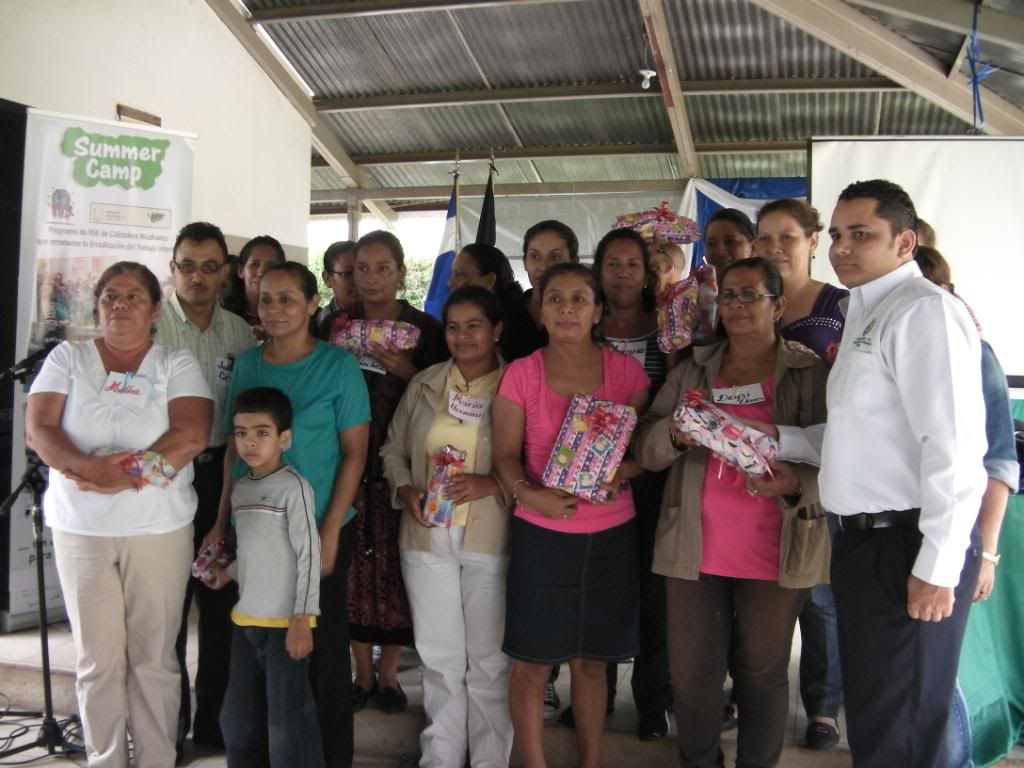
Last week, teachers from schools supported by Morgan’s Rock Hacienda & Ecolodge, Cafetalera Nicafrance, S.A., and Exportadora Atlantic S.A. met at finca La Cumplida to celebrate Teachers’ Day a little late and discuss the importance of education to Nicaragua’s future.

Morgan’s Rock sponsors six schools in the San Juan del Sur area; Cafetalera Nicafrance (essentially La Cumplida) helps eight in the Matagalpa area; and Exportadora Atlantic (EA) just recently picked up a school. In Spanish, the sponsoring is known as “godfathering/godmothering” depending on the name of the school (they are named after national heroes, martyrs, etc.). Each seat at the long tables was supplied with a folder, notepad, pen, and calendar provided by EA , as well as a schedule of the day’s activities and suggested readings printed by José Tomás Gómez Valdivia, who is in charge of the whole school sponsoring program under the Nicafrance Foundation, which all the previously mentioned companies are associated with.

Gift presentation to schoolteachers


Continue reading

Solar Powered

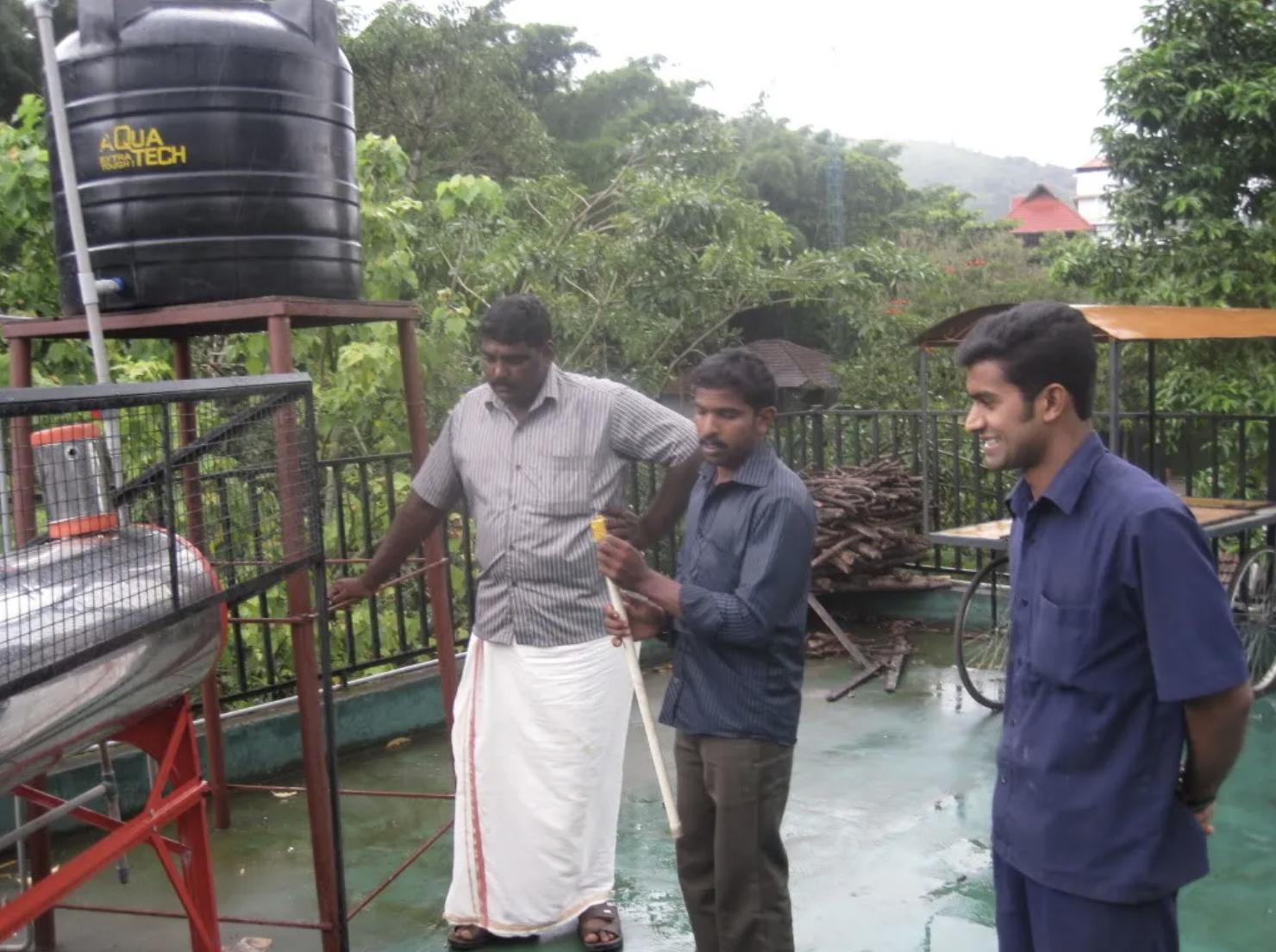
Over the last couple of days solar panel engineers have been arriving at here in Kumily to gauge the possibility of installing solar panels as well as examining the solar tubing water heating system to increase its efficiency. This involved the measuring and examination of various areas including the open rooftop of the All Spice Restaurant and the wide expanse of organic plantations, including the area cultivating ginger root, turmeric, and two varieties of yam: the typical sweet potato and the elephant yam.


Our team of engineers including Suresh and Santosh listed the various outlets of energy in the resort to help the solar paneling engineers estimate the input that could be provided as a supportive energy source. This included the fans, plug outlets, and the CFL or compact fluorescent lamps that are a very low 6W (watts). The solar paneling engineers mentioned that the last project that they had worked on was quite a large one, which involved a 65kW power source that took approximately six months to complete. As a reference, the nearby 25 meter high power line, which is provided by the Kerala State Electricity Board (KSEB), is an 110kW power source. It has not yet been determined how the space can be utilized here and how much wattage it will be able to harness from the power of the sun because as I’m quickly learning, it is a long and complicated process.

Continue reading