La Cumplida’s Harvest Diversity

Part of the La Cumplida farm diversification involves growing crops apart from coffee. I’ve already mentioned the tree cultivation and bananas, and here I can go into more detail about the wood production and other harvests.

Ferns cover many of the hills in the upper ranges of the finca. Sheltered under black netting to block out the sun, these billions of fronds are handpicked and bundled in different sizes. The vast majority is sent to Netherlands, but other European countries and the United States receive the ornamental plants as well. Why is Netherlands the main customer? Because the country holds the largest flower market in the world at Aalsmeer, has long been the production hub for the European flower industry, and is a major international floral supplier. Many bouquets contain not only blossoms but ornamental leaves as well, and these ferns work well in many arrangements.

Wilfredo led us through the fern fields and told us a bit about its cultivation. One of the problems they have while growing the ferns is fungal disease, which turns them yellow and brown as they die; fungicide and physical culling are necessary to control the spread. About every two months they have new fully matured fronds that can be harvested, bundled up, washed, and bundled again under bags. Then they are boxed and sent under refrigeration to their destination (if I remember correctly, at 7 degrees Celsius). Below is a short and simple video that includes some of this explanation and process.


Continue reading

Patagonian Expeditions


I am joining Raxa Collective’s creative communications here at the request of La Paz Group, for which I have worked in the past—I have no doubt this will stretch me in new and interesting ways just as my last round of work with that team did. Having enjoyed the posts of the other contributors here, I should note that I am neither in Nicaragua, nor India; nor am I an intern.  But my goals are aligned with the goals of this site in ways I will try to demonstrate here in my first post.  First, I know some of the other bloggers—I was a neighbor to Amie Inman and Milo Inman for the first half of 2010, they in “casa roja” while I was a few steps away in “casa amarilla”.  In fact, our homes were within 50 miles of the southern-most tip of land in the Americas.  Second, Michael and I have something in common in that I graduated from Amherst College and I know very well what senior year is going to be like for him.  More on that another time.  The others I have gotten to know only through their writing, but I am glad to be part of a diverse team.

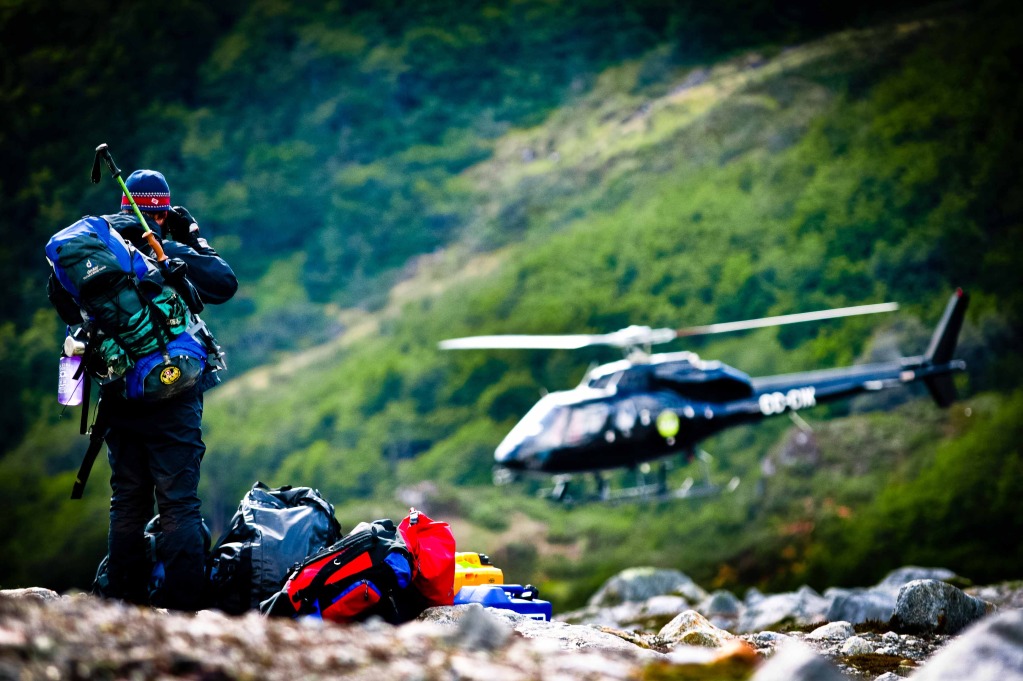
Back to my neighbors in South America now.  I arrived in Punta Arenas, Chile, in October of 2009 dirty, teary-eyed from lack of sleep, and a bit frightened of my near incompetent Spanish.  These insecurities, however, left me quickly as I realized that I had arrived in Southern Patagonia, ready for adventure as a liaison between LPG and the Wenger Patagonian Expedition Race, a race that is considered by adventure athletes as one of the last true adventure races left in the world. Continue reading

PaperTrail

Guest Author: Diwia Thomas

Two years ago, during the economic crisis that swept over world economies, I encountered many women, in my very own social circles, who found it difficult to keep the home fires burning. Their stories were all different- husband’s who lost their jobs, businesses that had to be shut down due to non-viability, sudden disease that struck the sole breadwinner of the family, etc. Whatever the story, the effect was the same. I felt a strong urge to help them out.

Collecting newspaper from my kith and kin, I taught these women the basics of  making a newspaper bag, found customers to buy them and PaperTrail was blazing its own trail.

Continue reading

Why Am I here?

Before I start posting for this blog I thought a self-introduction would help.  My name is Sung Ho Paik and some of you might know that a name divided into three parts like that indicates that I am an Asian.  I am in fact a Korean.  Until I went to the U.S.A. for my high school education, I lived in Korea with my family.  I am currently a rising senior at Cornell University studying Hotel management–specifically a Managerial Leadership concentration and Real Estate minor.

Screen Shot 2019-06-03 at 10.28.19 PM

You might wonder why someone like me would spend his precious summer time working in an internship (that is, not a regular paid summer job) in Kumily, India.  The answer is simple.  Because I CARE. Because my education has taught me that the world that I am living in is not just about me.  The whole world is somehow all inter-connected.  Yes I do believe in the butterfly effect.  Not to the extreme but I believe that the amount of land–specifically natural forests–that we preserve reduces the relative amount of pollution in the world.   Continue reading

Damsel in Distress

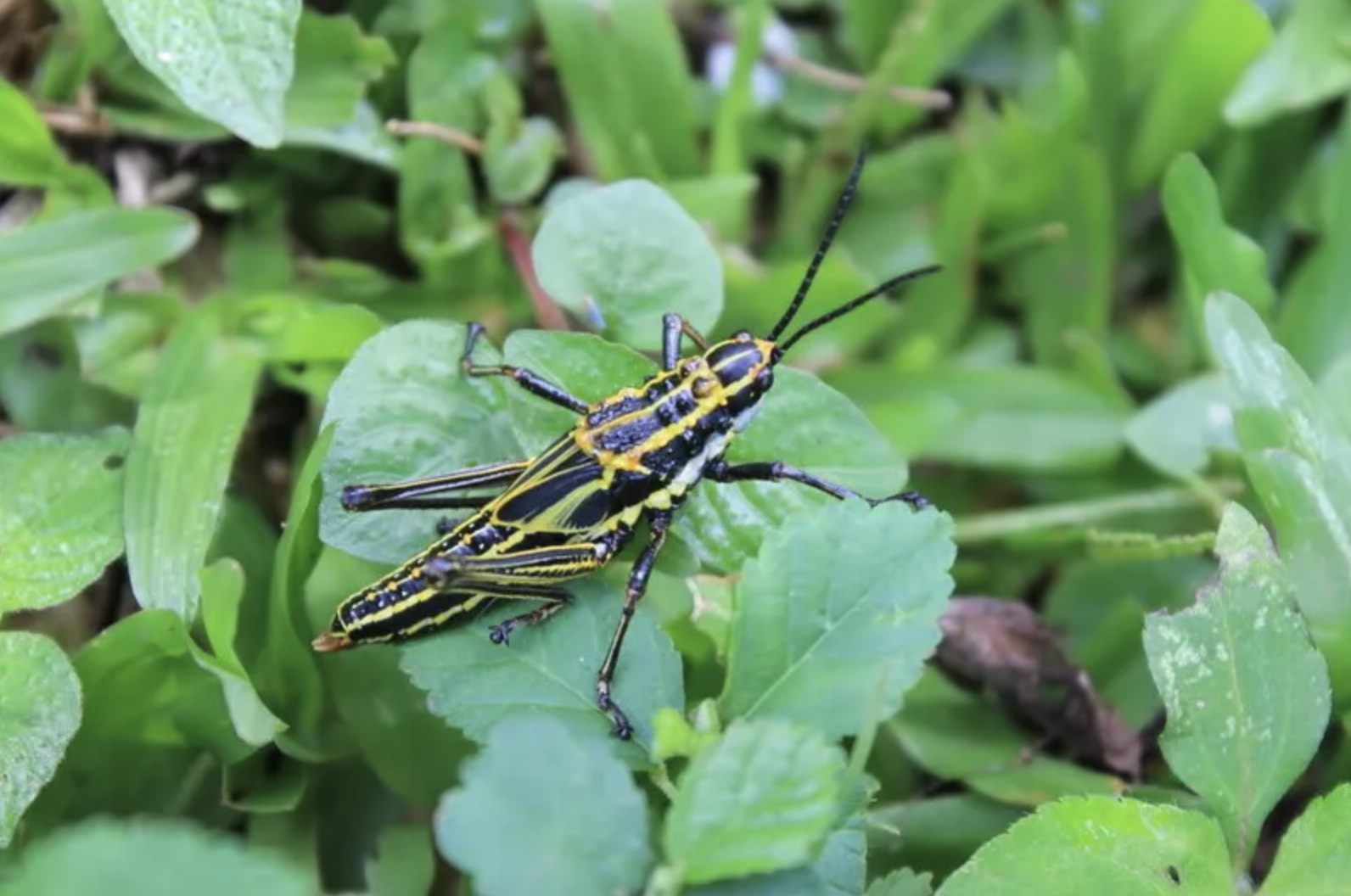
Although I was slightly disappointed at not having been able to track any of the more sought-out fauna of the reserve, I was content with the numerous photographs of a wide variety of bizarre and alien-like insects I was able to take during the Cloud Walk. I know that I am one of few who appreciate the seemingly unpretentious and trivial organisms of the class Insecta, and it is my hope and objective to arouse both interest and awareness of the mind-boggling diversity that reside not only in protected areas, but literally in our backyards.


Insects compose well over three quarters of all animal species – there are well over a million species, and the number of new species discovered each year isn’t decreasing despite rapid deforestation. Continue reading

Monkey Business, if you will

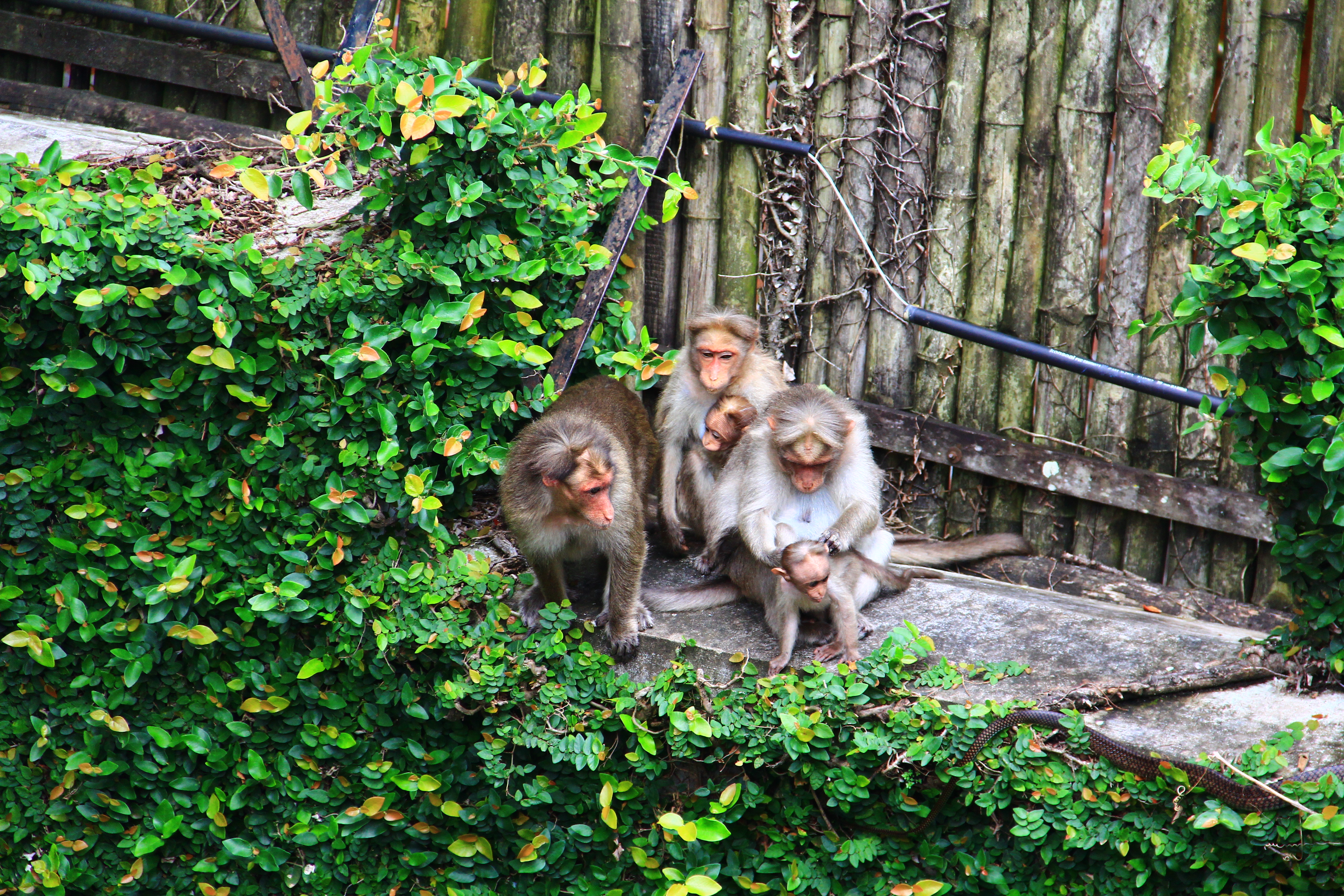
If only to illustrate the contrast between the cool, sleek Nilgiri langur and the pesky, marauding band of bonnet macaque, I offer this beautiful photographic evidence captured by the one and only Sung, whose telephoto abilities far outstrip my own. Sung was (un)fortunate enough to meet this savvy bunch on the roof of the resort restaurant where he had been pleasantly snapping pics of the local bat population (more on them later, I can assure you, esp. now that Sung is on the case). He called to me from across the property, gesturing wildly, and shouting something along the lines of: ‘There are like a thousand monkeys up here!’ Credulous as ever, I thought perhaps there were in fact a thousand monkeys and sprinted from my seat to witness the fracas. (Un)fortunately, I found a mere twenty-ish, a far more manageable pack than the thousand-strong throng promised me. I looked on rather unimpressed. But the high-pitched excitement in Sung’s voice revealed his fundamental anxiety in the face of his first, true encounter with the MACAQUE.

I’ll let these photos tell the story and you, Dear Reader, can be the judge of mine and Sung’s sanity. After all, I do hate to over-dramatize (can’t you tell?). Still, I feel it is my duty as intern, resident, and world-citizen to present the truth as I see it. I should say, however, that about two nights ago I caught the tail-end of a rather tragic Discovery Channel program about the forced re-location of the macaque from one Indian town. I watched these macaque as they were dragged and tricked into tiny cages where they were slammed one on top of another, and it was all deeply disquieting, and just about made me re-think my position towards these struggling sons and daughters of our Planet Earth. I would sincerely regret my paranoia regarding my grey-haired distant cousins engendering an honest fear. Therefore, I hope that, perhaps, their better qualities will also shine through in these photos.

But besides all that garbage, Sung really took some beautiful photos.

Continue reading

Unexpected Visitors

This afternoon, just after lunchtime, the staff and guests of Cardamom County were greeted with a thrilling surprise: the unannounced arrival of three Nilgiri Langur,  the haunting, strong and motile black monkey endemic to the Western Ghats. I ran into Gourvjit and the resort’s driver, Baburaj, watching from the parking lot as they jumped from tree to tree, and as we lingered they took the bold step of running and leaping from roof to roof through the resort– over the lobby, over the open-air bar, past porches and rooms and into the back of the property, where they perched in a jack fruit tree. I followed after them, was hissed at by one, and managed to catch this video of another from an appropriate distance.

The thick, shiny black of its fur and the shock of bronze colored hair that haloes its head lend the Nilgiri langur a mysterious and dramatic appearance, especially when bounding through the otherwise calm resort grounds (though I couldn’t help but, at times, think that they looked as if they were each wearing Donald Trump’s tupee). It is by habit a shy, tree-dwelling monkey (in stark comparison to the brazen macaque) and markedly wary of human interaction. Nilgiri langur have been hunted in this area for their flesh, which is considered to have medicinal properties, and for their fur, which is used to cover drums. Baburaj said they have not been on property for two years and that this threesome was likely a reconnaissance team of sorts, so it seems we’re likely not to run into them again outside of the Reserve. But to get so close to them, to watch them interact and find their way in this environment, which is wholly different from their usual station 60m up in the thick of the Periyar, was a truly rare experience. (And they scare the macaque away to boot!)

Where Your Espresso Might Come From

Pierre and I went on a tour around La Cumplida’s coffee plantation with Wilfredo. La Cumplida is a huge finca of over 1,600 hectares (this includes 700 ha. for coffee and 600 ha. for protected reserve) situated in the region of Matagalpa, which is very well known for its coffee production. First we went to the processing plant, which is under repair because some of the machines were being too rough on the coffee beans. Despite the fact that none of the machines were currently working, he walked us through the bean process: loading, skinning, washing, and reloading the beans. The drying and roasting takes place at another location. If we had been here any time from October through February, the machines would have been whirring and red beans would come by the truckload to be processed, since over 2000 coffee pickers would be hard at work in the hills, collecting beans.

Below is a video of some of the coffee work we watched. Wilfredo’s explanation of the deshijo is translated in brief three paragraphs below.


Continue reading

Where They Simply Sell Wood

The Simplemente Madera store is full of furniture and wooden objects that are rarely purchased directly from the Managua venue, but more often selected as part of a furnishing package for a whole home. These furnishing contracts, which sometimes include interior design, are mostly for Nicaraguan houses and hotels, but also many projects in the US and Costa Rica, and normally last from one to six months, depending on the scale. Unless the project can fill one of their shipping containers, which are 20 ft2, Simplemente Madera doesn’t send furniture to the US. One of these containers can fit enough material to furnish a three-bedroom house, so the company is mostly concerned with high price-tag clients.

Simplemente Madera Group

What a US homeowner will normally do is send SM a blueprint of their house and select from a line of products in the SM catalogue (Mombacho is currently the most popular, with natural deformations in the wood). Then the designers at SM will fit the furniture to the house and the style and send the homeowner some sketches. Some people want a more hands-on approach and pay to bring a designer to their house in the US. Simplemente Madera designers also often make custom designs for clients according to their requests.

Simplemente Madera’s Workshop

Here is the second installment of the Simplemente Madera factory tour. Below is a video of the production line in the workshop–watch for the Ocean Green surfboard at the end!


Up next is a written and photographic swing by the Simplemente Madera store in Managua.

“To Market, To Market…”

Living abroad has illustrated vast differences in how one procures or purchases their food.  Although U.S. style supermarkets exist outside those borders, there are a world of other options visited on a daily basis elsewhere.

In France for example, one can indeed go to the “Hyper-Marché”, fill up your cart and be on your way.  But it is far more interesting to shop at your neighborhood street marché, where depending on where you live you can fill most of your culinary needs.  Even a small neighborhood would have a temporary agricultural market at least twice a week, and these would usually include cheese makers, and stalls with olives, cured meats and the like as well.  That’s not including the plethora of boulangeries, fromageries, boucheries, pâtisseries….my mouth is watering too much for me to continue!

Costa Rican towns have their weekly Feria de la Agricultura—filled with fruits, vegetables, eggs, cheeses, flowers and baked goods. On the southern tip of Croatia, Dubrovnik had multiple markets, some stationary like the one at the new Gruž Harbor and some  “floating” in the squares of the old city.

All forms of Farmer’s Markets can now be found all across the United States, one needn’t travel abroad to find them.  But I don’t think any of these compare to the sensory experience of an Indian market. Continue reading

The Other Side

When I was 9 my family relocated from Upstate New York to Orlando, Florida, an odd hodgepodge of concrete and drywall that is less a city and more a network, an expanse of strip malls and toll roads stretching for miles with no discernible locus—i.e. a place without place, a harbinger of the New America—both model for and copycat of other American NonCities. At the heart of this network, not in place but in time, is Walt Disney World, Orlando’s reason-to-be and essence, which lies below and hangs around the accretions and habits of Orlando-residents like a living ancestor. As Orlando’s originary purpose, it touches its inhabitants even if they try to avoid it; it shapes you, no matter how far away from it you stand.

I say this not only because I enjoy holding forth on the metaphysics of place (I do), or because I want to suggest I’m some sort of DisneyChild (I don’t), but because a curious circumstance surrounded our ‘Cloud Walk’ on Sunday morning that caused me to think about my relationship to where I grew up, and how these ‘living ancestors’ affect how we experience our environments. Continue reading

Drying Wood at Simplemente Madera

Pierre and I left Morgan’s Rock on Friday to go visit the Simplemente Madera factory outside of Managua. It is a huge facility that receives wood almost entirely from fallen forests on the Atlantic coast of Nicaragua that were destroyed by Hurricane Felix in 2007. We took a tour with one of the quality inspectors, who showed us around the plant and explained every process the wood went through from log to rocking chair (most of these steps are for another post). The following video covers the initial drying the timber must go through to make it the highest quality wood available. The best part of this process is that it is completely sustainable — it only uses open air and scrap wood! Please give the video’s subtitles some time to load, unless you speak Spanish.


Here is an additional picture of the scrap wood and a view of the six closed drying ovens, which are often rented by other woodworking companies to dry their wood, since nobody else in Nicaragua has the drying capacity of Simplemente Madera.

Meeting with the Forest Department

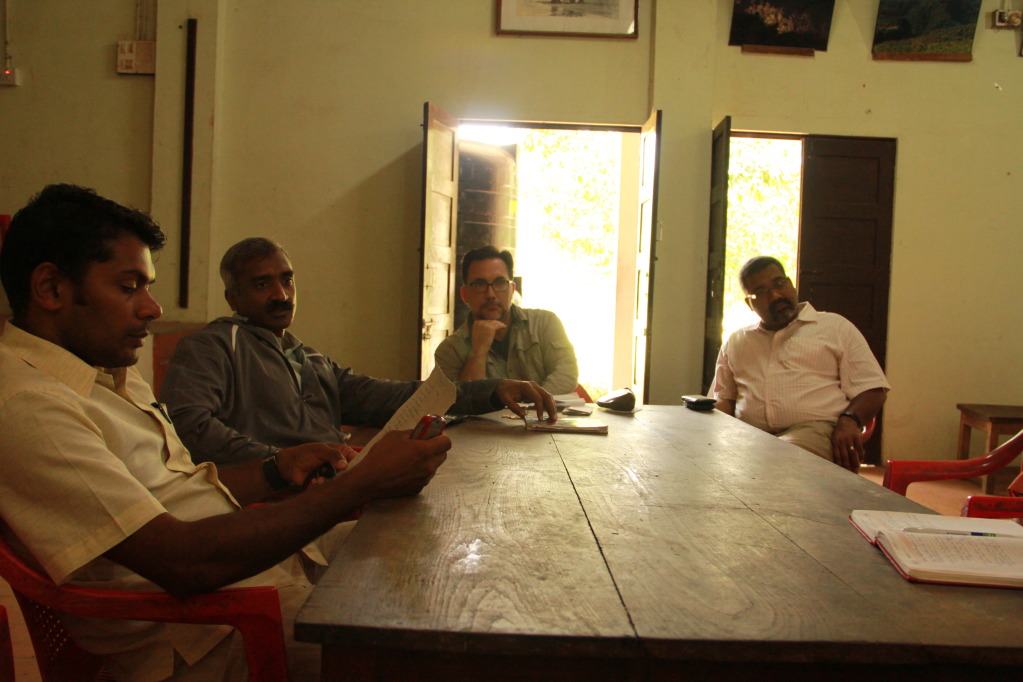
Developments in our community development initiative haven’t come easily for the past two weeks in Kumily. With our primary Forestry Dept. contact away from his office for a little more than a week, and given that the time table agreed up at our last meeting (June 26th) allowed for a ten day period during which our ‘talent scout,’ as it were, would make contact with potential producers, we at the resort were, in the meantime, left playing a bit of a waiting game. But with the distraction of staff tour revelry behind us and anticipation for the arrival of our newest intern, Sung, at a high, our idle and indolent interlude came to a happy end today when we met with several FD officials and functionaries, some of whom none of us had met previously, including a ‘Forest Guard’ (a title I hope to earn someday) who runs the protection agency focused on the tribal community.

For while we in Thekkady had been sitting on our proverbial hands, Crist and Amie had been actively ascertaining details from our sister bag-making enterprise in Kochin. Continue reading

Sustainable Operations in Kumily

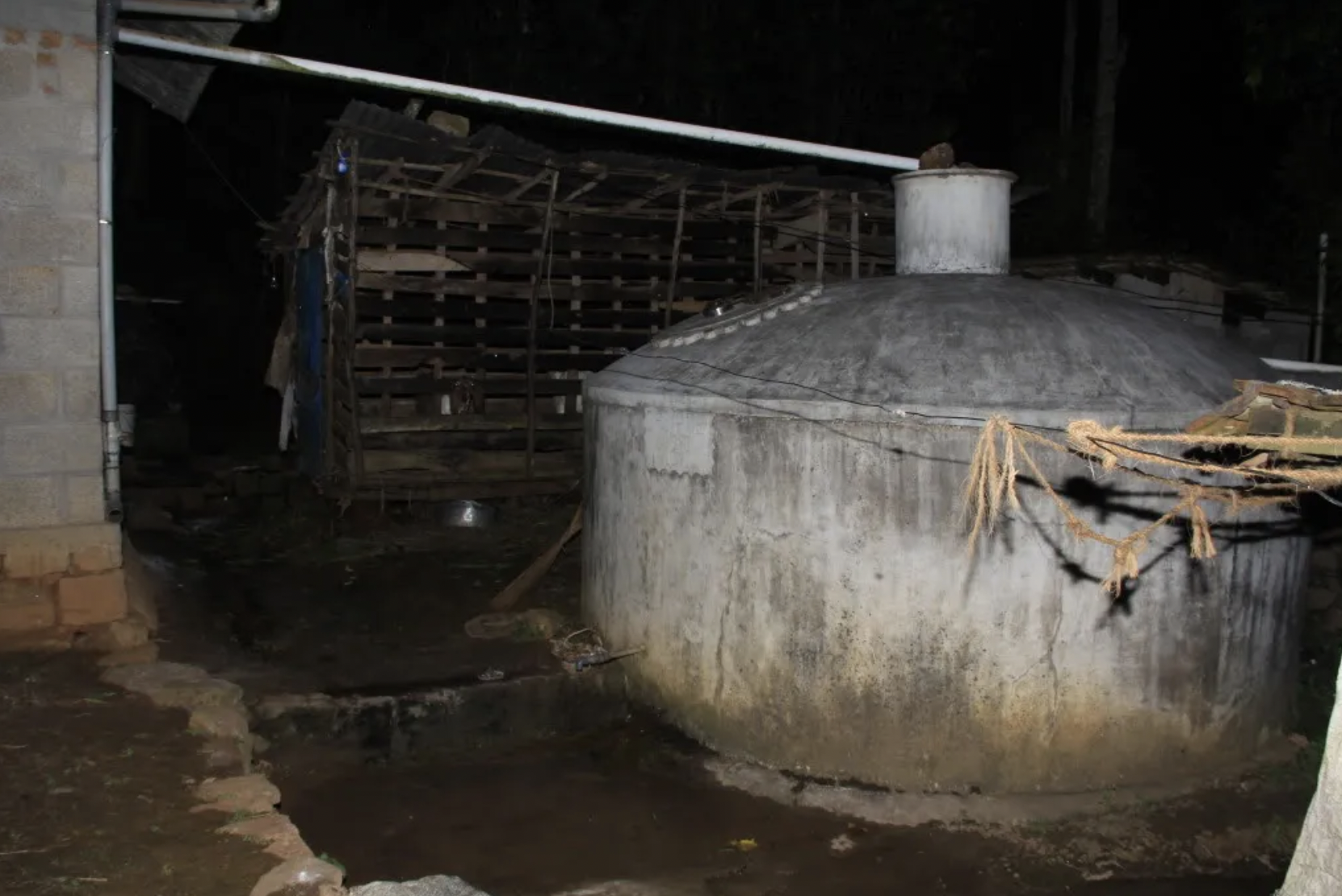
Sustainable tourism and operations are what initially drew me in to coming to Kerala, India at the Cardamom County. Water conservation is a central issue facing the world today. Coming from Canada, which is said to store up to 20% of the world’s fresh water, the idea of not having water to drink is a strange one. Of all the water on our planet, 97.5 per cent is sea water and three-quarters of the remaining 2.5 per cent is locked in polar ice caps. The tiny bit left over is drinkable. Natural rainwater harvesting is a common practice throughout much of the Thekkady area and Kerala in general. Pots and larger storage vessels like the one pictured below are often used by the locals to hold rainwater that is abundant during the monsoon season from June to August.


It is considered fairly clean for use in washing clothing, dishes, and people themselves. The bottled water, however, in the form of individually packaged Aquafina bottles poses an issue. Fortunately Pepsico and Aquafina do use UV treatment, reverse osmosis, ozonisation, carbon filtration, and sand filtration to treat their water and has a protocol of giving back more water than is taken in a program called “Positive Water Balance”. Pepsico India saved 836 units more water than it consumed in 2009, which is an uplifting thing to hear about.

On-site organic farming results in a great number of useful plants and herbs which can be made into oils, creams, and pastes which are central to the Ayurvedic Centre run by certified ayurveda practitioner Dr. Vinu. Among the more interesting herbal remedies is from the serpentine root or rauvoifia tetraphylla which provides an antidote for snakebites.


Continue reading

Spider Monkey Threats

On one of our walks through the forest, Pierre and I found another green-backed spider (see my previous post) that spewed some white droplets at us. Unless we had an unusual double coincidence of interrupting arachnid bowel movements, I now believe that the spiders meant to deter us with the liquid. Whether it was excrement, poison, or liquid silk material remains to be seen.

Later on the trail we reached the main road and were about to pass under a group of huge mango trees when several mangoes thumped loudly onto the ground in front of us after the branches crashed around a bit. We looked warily into the trees to see a group of fleeing spider monkeys, which are very timid and don’t enjoy being anywhere near humans. Through the camera’s zoom, I was able to spot a mother with her baby hanging on her back. She was bouncing up and down, shaking a branch to startle us away. Once her mate arrived next to her, she left, and about half a dozen other monkeys followed her, causing a further bombardment of unripe (hard and dangerous) mangoes to hit the road at our feet.

The hazardous fruit attracts all three Morgan’s Rock species of monkey (howler, white-faced, spider), so it is a good place to watch them enjoy the mangoes while making sure to not stand too close to the trees. With the addition of the muñeco trees that I wrote about in another post, the roads should be great places to spot the tree-bound mammals.

The Power of Clean

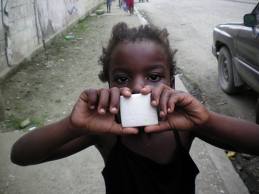
What happens to those little bars of soap in many hotel rooms?  Specifically, what occurs after a guest opens a carefully packaged bar and uses it?  Most guests often do not use all of it.  Some wrap it back up and take it; most leave it for housekeeping.  I have mostly seen the latter; and having some experience in housekeeping operations now, I am shocked at the amount of amenities that are thrown to overflowing landfills every day.  However, my anxiety about this abundance of waste was reduced slightly when I stumbled upon a small, not for profit organization, Clean the World Foundation, Inc., that collects these gently used bars of soap and recycles them to distribute amongst several developing countries and underprivileged communities.

According to Clean the World, millions of pounds of soaps are discarded each day in North America.  These bars not only get wasted and take up space in an overflowing landfill, but they also contribute to groundwater contamination.  Continue reading

Take Out Breakfast

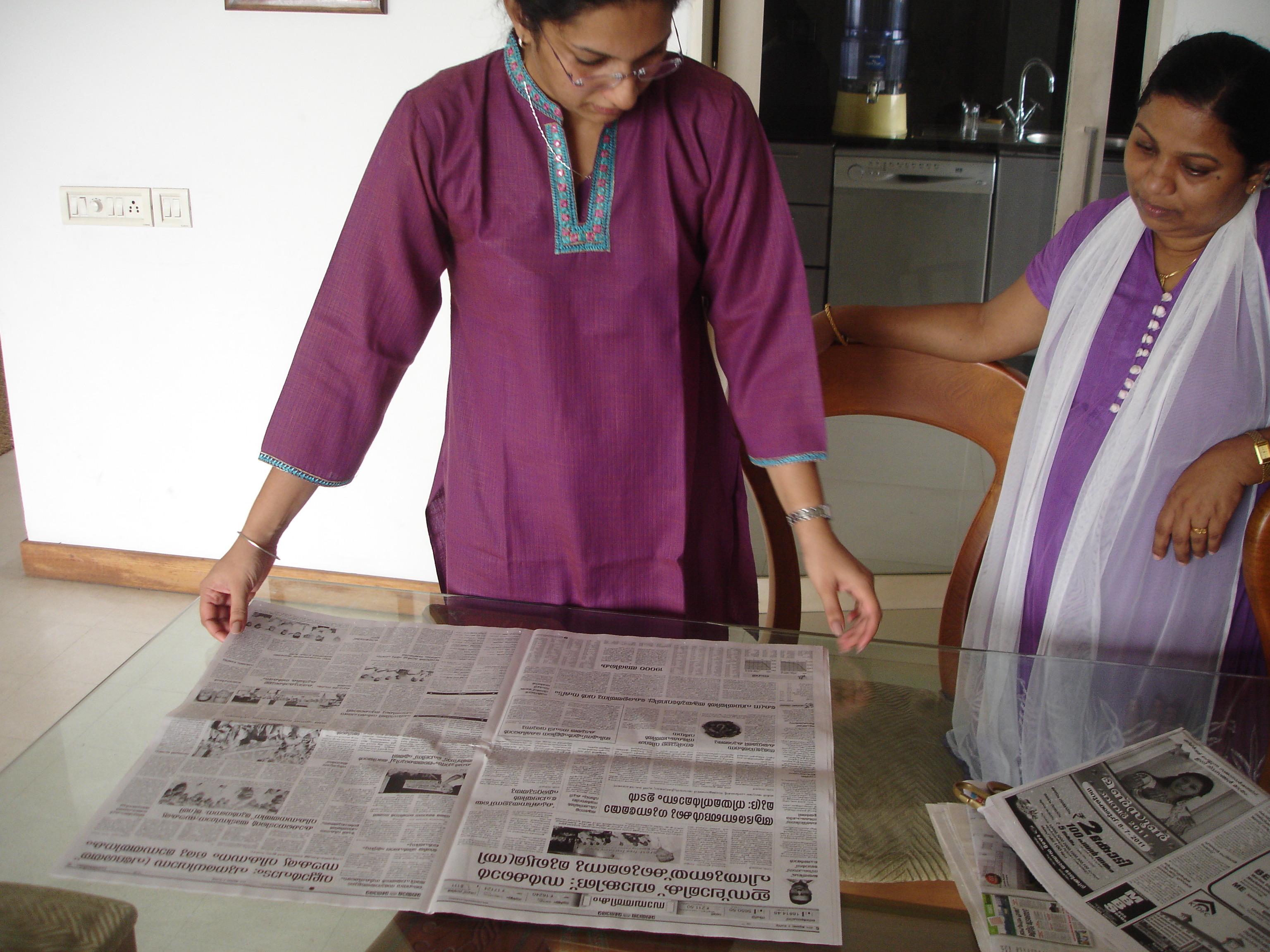
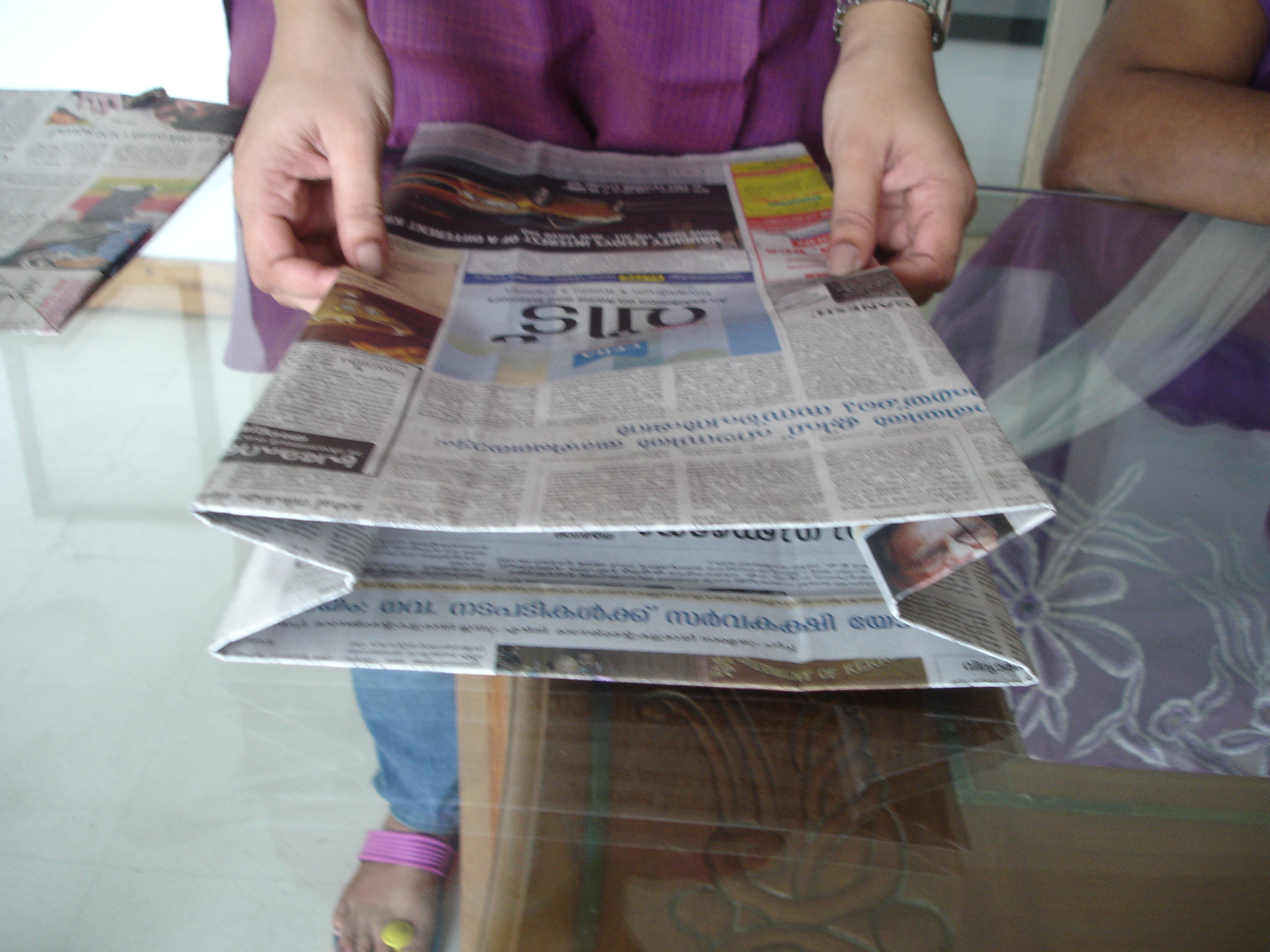
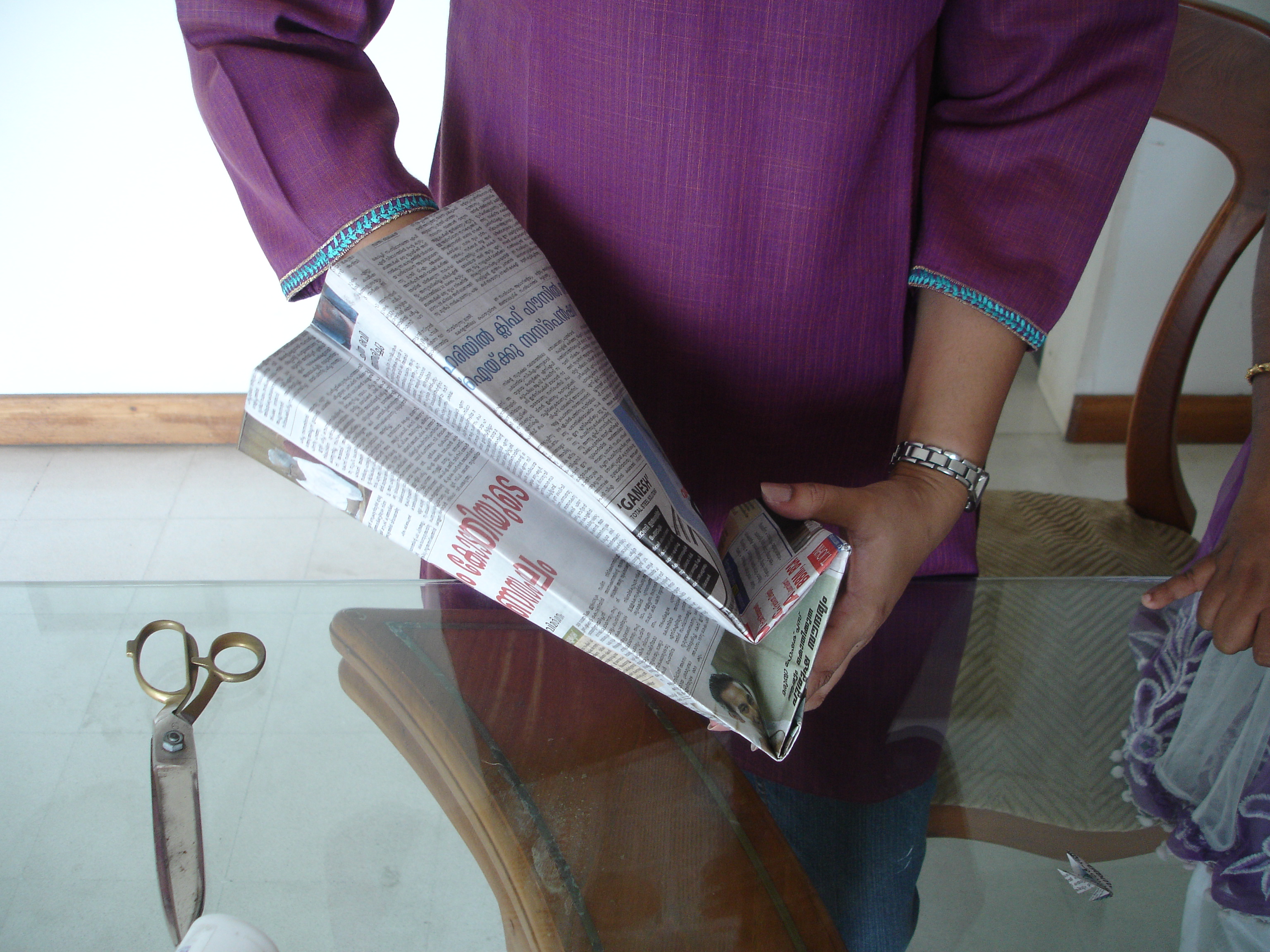
This morning I joined Diwia Thomas at her proverbial kitchen table for breakfast.  After the meal Deepa arrived for a lesson in newspaper bag making.  For those with experience in origami, paper airplanes, paper boats, or paper hats, this would be a relatively easy task.  Even gift or school book wrapping experience would come in handy.  (Unfortunately very few of those skills rank highly on my CV.)  I could also see how Henry Ford’s assembly line theories could assist in this case…precision is important and that often is more easily achieved through repetitive action.

During the hands on tutorial Diwia spoke about the evolution of the bag process.  She had taken a course some years ago and then used those skills to teach others.  But like a game of telephone the process has developed, with each “generation” of folders refining the systems to work more cleanly and speedily.  Diwia commented that she stands amazed watching some of the women working so quickly in their own style with such precise results.

What is so wonderful about the bags is their essential simplicity.  Made from newspaper, wheat paste glue and basic hemp string, they transform items found in most home kitchens into a useful and desirable commodity.  So useful in fact, that when they’ve been taken to a meeting in South America an argument ensued as to who would get to keep the bag as a sample. So combine that simplicity with the steady piecework income they provide and one has the perfect recipe for a community development project.

Gobar Gas

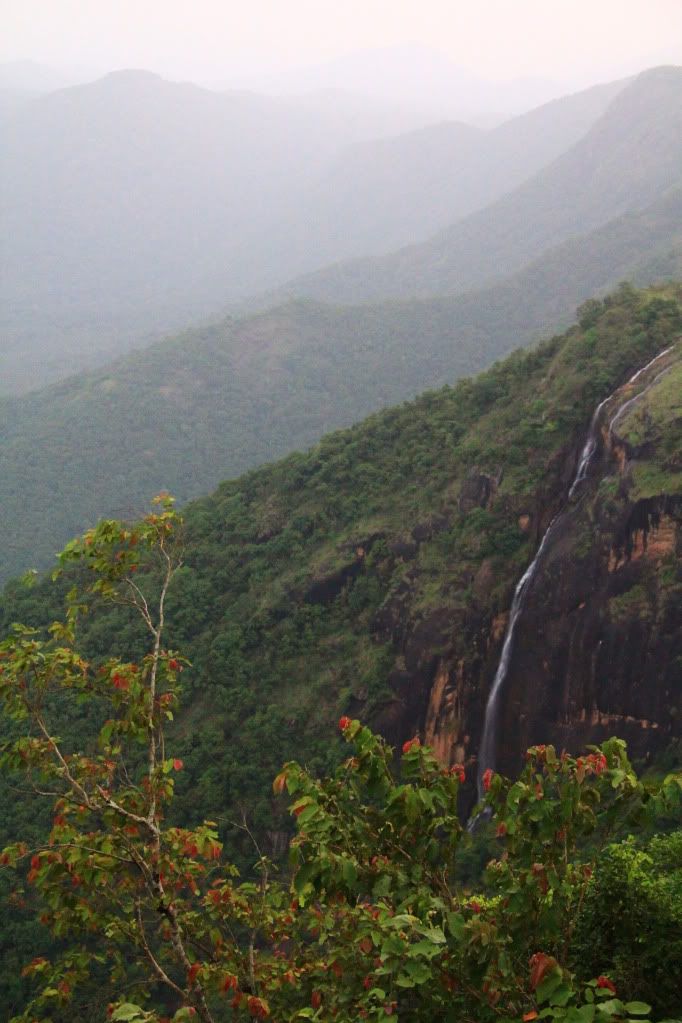
Is it just me, or is there nothing quite like a casual sight-seeing venture yielding a lesson in biogas and anaerobic digestion? I mean, don’t get me wrong; there’s plenty of value in a pretty vista– what was in today’s case a view of Tamil Nadu’s agricultural smorgasbord and a breathtaking, silky and sleek waterfall. But despite the landscape, I was left most impressed by an ingenious contraption we happened upon while passing through the family-owned spice plantation between our parking space and the scenic spot. Continue reading

Colonial History & Volcanic Mystery

We left in the morning with Bismar and the guests, transported by the senior driver Inocencio. Our first stop was about an hour and a half away: a town called San Juan de Oriente but known as La Cuña de los Artesanos, or “Artesans’ Cradle,” because literally everyone in town works with crafts for sale to tourists or hotels. We entered one of the pottery shops and went downstairs into the workshop, where a young man was waiting to give us a short presentation on pottery. He explained about his family’s business slowly in Spanish and Bismar translated for the guests. Then he took his seat at a wheel and started shaping a small bowl, using several homemade tools—a bicycle spoke, for example—to straighten its edges. The expression on his face showed how much he enjoyed the work, which certainly looked fun even should one have to shape clay all day, every day. After a couple minutes, a small and perfectly round pot was on the table in front of us. He talked some more about clay and then said, “At this moment in the process, the clay is still very fragile,” and demonstrated by plunging his fingers into the side of the vessel, leaving a deep impression in it.

Leaving the wheel, he led us to a larger table where wall lampshades were being made. Tools like a polished beach pebble and a child’s plastic spinning top were used to spread and smooth the paint that was applied with a brush made of a hollow pen and the hair of the girls in the family. A small kiln sat smoking in the corner, baking about twenty of the lampshades. Once the guests asked a couple questions, we thanked the young man, whose unbefitting name it turns out was Stalin, and went up to, of course, the pottery store. Continue reading