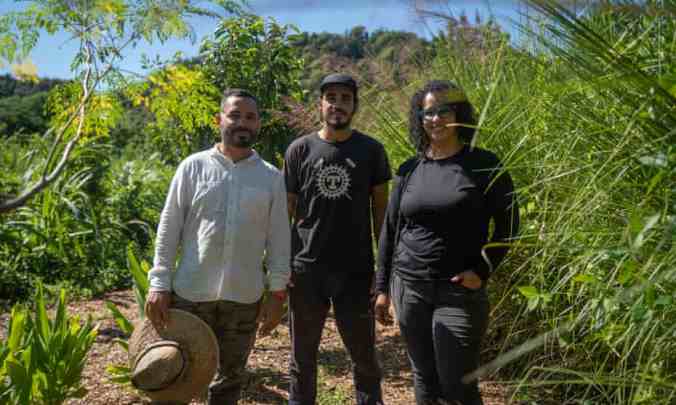
Francisco Diaz Ramos, 44, Marissa Reyes, 32, and Jan Paul, 29, run the Güakiá Colectivo Agroecólogico, an 11 acre farm in Dorado, Puerto Rico. Photograph: Angel Valentin/The Guardian
When we look at these young farmers and the work they are doing we see a greener future.

A farmer prepares the land at the El Josco Bravo argoecology farm in the Toa Alta mountains. Photograph: Nina Lakhani/The Guardian
Thanks to Nina Lakhani and The Guardian for this story:
‘An act of rebellion’: the young farmers revolutionizing Puerto Rico’s agriculture
The island imports 85% of its food but these three farms are part of the agroecology movement that seeks food sovereignty and climate solutions
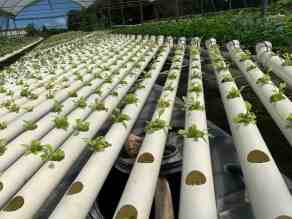
A hydroponics greenhouse at Frutos del Guacabo is used to grow a range of herbs and greens quickly and without soil. Photograph: Nina Lakhani/The Guardian
Puerto Rico was once a thriving agricultural hub thanks to its tropical climate, rich biodiversity, and sustainable farming traditions.
Today, less than 2% of the workforce is employed in agriculture and tens of thousands of acres of arable land sit idle. Meanwhile 85% of the food eaten in Puerto Rico is imported, grocery prices are among the highest in the US and last year two in five people experienced food insecurity. “Unemployment is brutal, prices are brutal, migration from the island is brutal,” said Denise Santos, who runs Puerto Rico’s food bank. Continue reading


 Organikos